News
Tesla is coming to Estonia and Latvia in latest European expansion: report
Tesla seems to be accelerating its regional expansion following its recent launch in Lithuania.

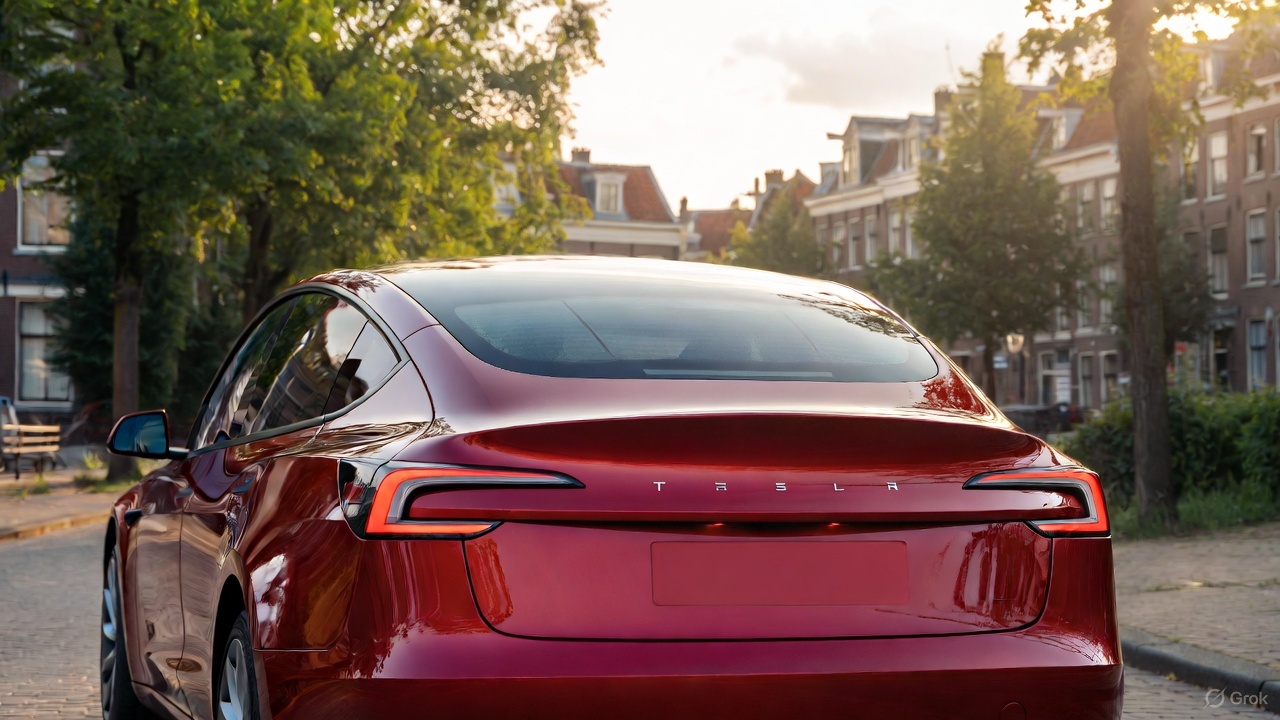
Recent reports have indicated that Tesla has taken a step toward entering the Baltic states by registering new subsidiaries in Latvia and Estonia.
Filings suggest that Tesla is accelerating its regional expansion following its recent launch in Lithuania, with service centers likely coming before full sales operations.
Official entities in Latvia and Estonia
Tesla has established two new legal entities, Tesla Latvia SIA and Tesla Estonia OÜ, both owned by Tesla International B.V., as noted in an EV Wire report. Corporate records show the Estonian entity was formed on December 16, 2025, while the Latvian subsidiary was registered earlier, on November 7.
Both entities list senior Tesla executives on their boards, including regional and finance leadership responsible for new market expansion across Europe. Importantly, the entities are registered under “repair and maintenance of motor vehicles,” rather than strictly vehicle sales. This suggests that Tesla service centers will likely be launched in both countries.
The move mirrors Tesla’s recent Baltic rollout strategy. When Tesla entered Lithuania, it first established a local entity, followed by a pop-up store within weeks and a permanent service center a few months later. It would then not be surprising if Tesla follows a similar strategy in Estonia and Latvia, and service and retail operations arrive in the first half of 2026.
Tesla’s European push
Tesla saw a drop in sales in Europe in 2025, though the company is currently attempting to push more sales in the region by introducing its most affordable vehicles yet, the Model 3 Standard and the Model Y Standard. Both vehicles effectively lower the price of entry into the Tesla ecosystem, which may make them attractive to consumers.
Tesla is also hard at work in its efforts to get FSD approved for the region. In the fourth quarter of 2025, Tesla rolled out an FSD ride-along program in several European countries, allowing consumers to experience the capabilities of FSD firsthand. In early December, reports emerged indicating that the FSD ride-along program would be extended in several European territories until the end of March 2026.


Lifestyle
Tesla Cybertruck targets job site crews with new Tailgate Utility Track and Bed Gear Box accessory
Tesla launched a $350 tailgate track and a $985 lockable Bed Gear Box for Cybertruck.

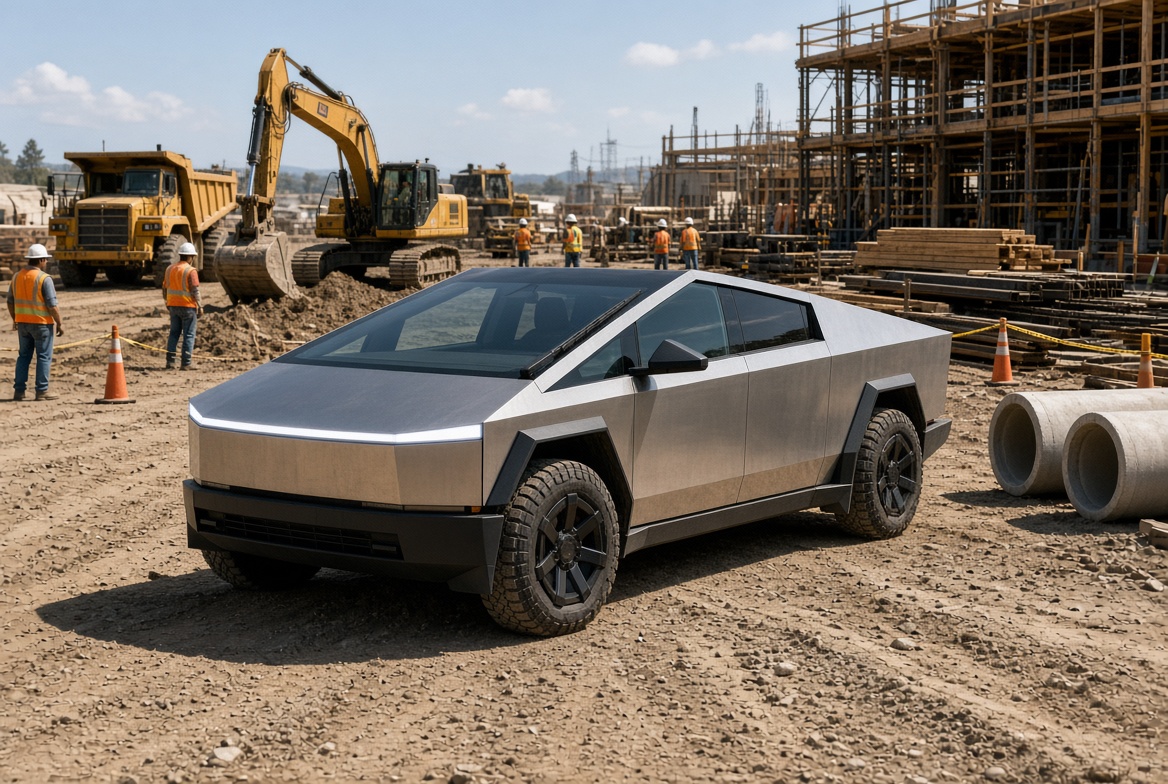
Tesla’s Cybertruck team added two more items to the Tesla Shop, targeting job site crews and owners who use the truck bed for actual work rather than just showing it off. The official Cybertruck X account posted the Tailgate Utility Track and the Bed Gear Box within minutes of each other, part of a five item batch that also included a reflective jacket, a spray paint hat and an updated reflective tee.
The Tailgate Utility Track runs $350 and turns the folded down tailgate into another mounting surface. It’s a single aluminum track with a T-slot for sliding accessories and two L-track attachment points, plus two load stops included in the box. The pitch is straightforward: strap down oversized cargo, like lumber or a cooler, that hangs off the back of the bed without it sliding out mid-drive. It bolts onto the existing tailgate and works on every Cybertruck trim.
Tailgate Utility Trackhttps://t.co/PCAYXlFBvS pic.twitter.com/sCV2NVxf1W
— Cybertruck (@cybertruck) September 3, 2026
The Bed Gear Box costs $985 and is a different kind of accessory. It’s a lockable aluminum storage box, 55.78 inches long, 19.8 inches wide and 7.79 inches tall, that mounts to the bed’s L-track rails and comes with two internal bins for smaller items. According to Tesla, at just over 57 pounds empty, it’s meant to stay in place rather than come in and out with each trip, giving owners a factory-fit alternative to loose totes for tools, recovery gear or emergency supplies. Tesla’s listing notes that Long Range and Dual Motor AWD Cybertrucks need the L-Tracks accessory installed separately before the Gear Box will mount, since L-tracks come standard only on certain configurations.
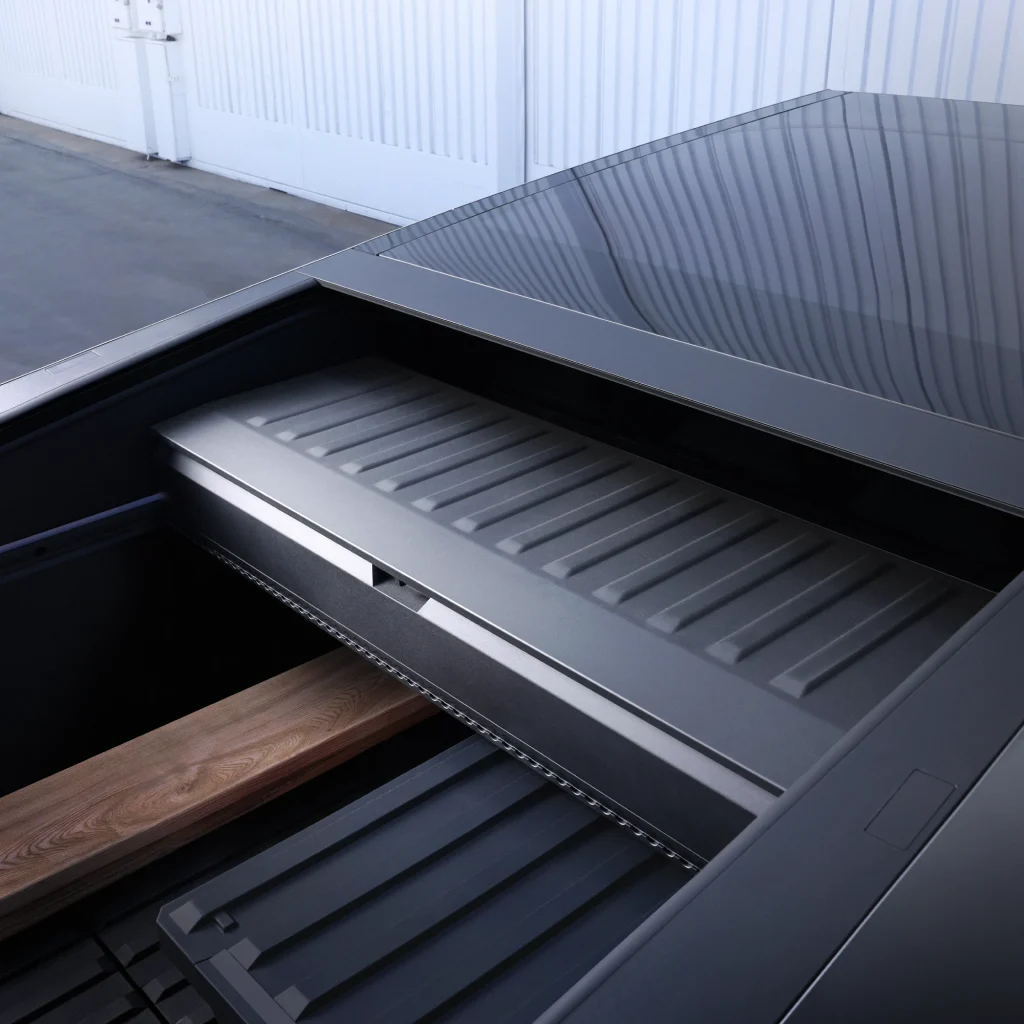
Tesla Cybertruck bed gear box accessory
Both accessories lean on the idea Tesla has been building toward since Elon Musk first described the Cybertruck’s third-party attachment strategy at the 2023 shareholder meeting, when he said the truck would ship with mounting points so outside companies, and Tesla itself, could keep adding gear without redesigning the bed. That’s the same L-track backbone underneath the tailgate shield and jumpseats Tesla launched last year, and the off-road armor package that arrived through the same X account in 2025.
Owners looking to round out the rest of the L-track ecosystem, cargo dividers, MOLLE panels, bed racks and similar gear, can find a wider range of options through our Cybertruck accessories collection.

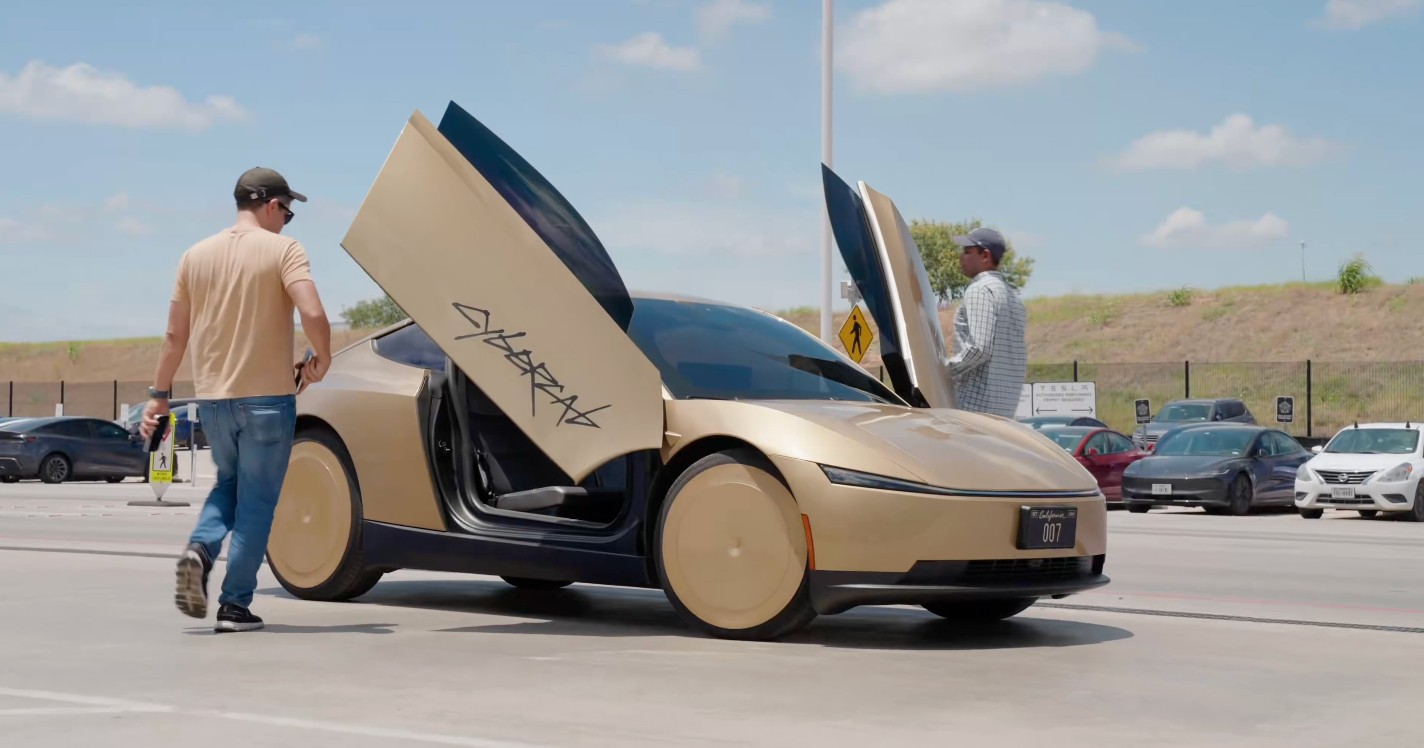
Tesla Cybercab rides are officially open to the public in Austin, Texas, as the company confirmed on Thursday following its launch event that the two-seater would be available in the company’s Robotaxi fleet.
Cybercab is Tesla’s first vehicle completely void of any manual controls. It has no steering wheel and no pedals, and it will utilize Tesla’s Full Self-Driving fleet to operate. The first rides have already happened, as those at the event were able to hail a Cybercab to any location within the company’s geofence in Austin.
Tesla’s $25K car is the Cybercab with no steering wheel or pedals
The addition of Cybercab to the public Robotaxi fleet is a major statement in Tesla’s trek to launch fully autonomous driving. For years, critics have complained about the need for drivers to continuously supervise the vehicle.
With Cybercab, there are no manual controls in the cockpit other than to control the seat, the center screen, and the climate. The vehicle is fully geared toward being a living room on wheels in a sense: equipped with Starlink V5 satellites, CEO Elon Musk said the vehicle would enable 4K live video, gaming, and other entertainment options during travel.
Cybercab is basically a super comfortable lounge on wheels with a great TV and epic sound https://t.co/X1aWKoJdJV
— Elon Musk (@elonmusk) September 3, 2026
Musk noted that Cybercab is “designed and built for maximally efficient autonomous operation.”
Tesla continues to push the envelope on autonomy, and over the next several months, the company could start selling Cybercab units to the public.
The company opened up a public interest form on its website to gauge demand, and many have already submitted requests to purchase a fleet of Cybercab units for their own personal ride-hailing side hustle.
The launch of Cybercab in this area marks a major accomplishment for Tesla, as it also announced that it has reached 1 million unsupervised autonomous miles since launching driverless rides on the Robotaxi fleet.
Things are moving along at a fine pace, and although we have waited for this for some time, the day has finally come when Tesla is offering self-driving rides of some kind to the public.
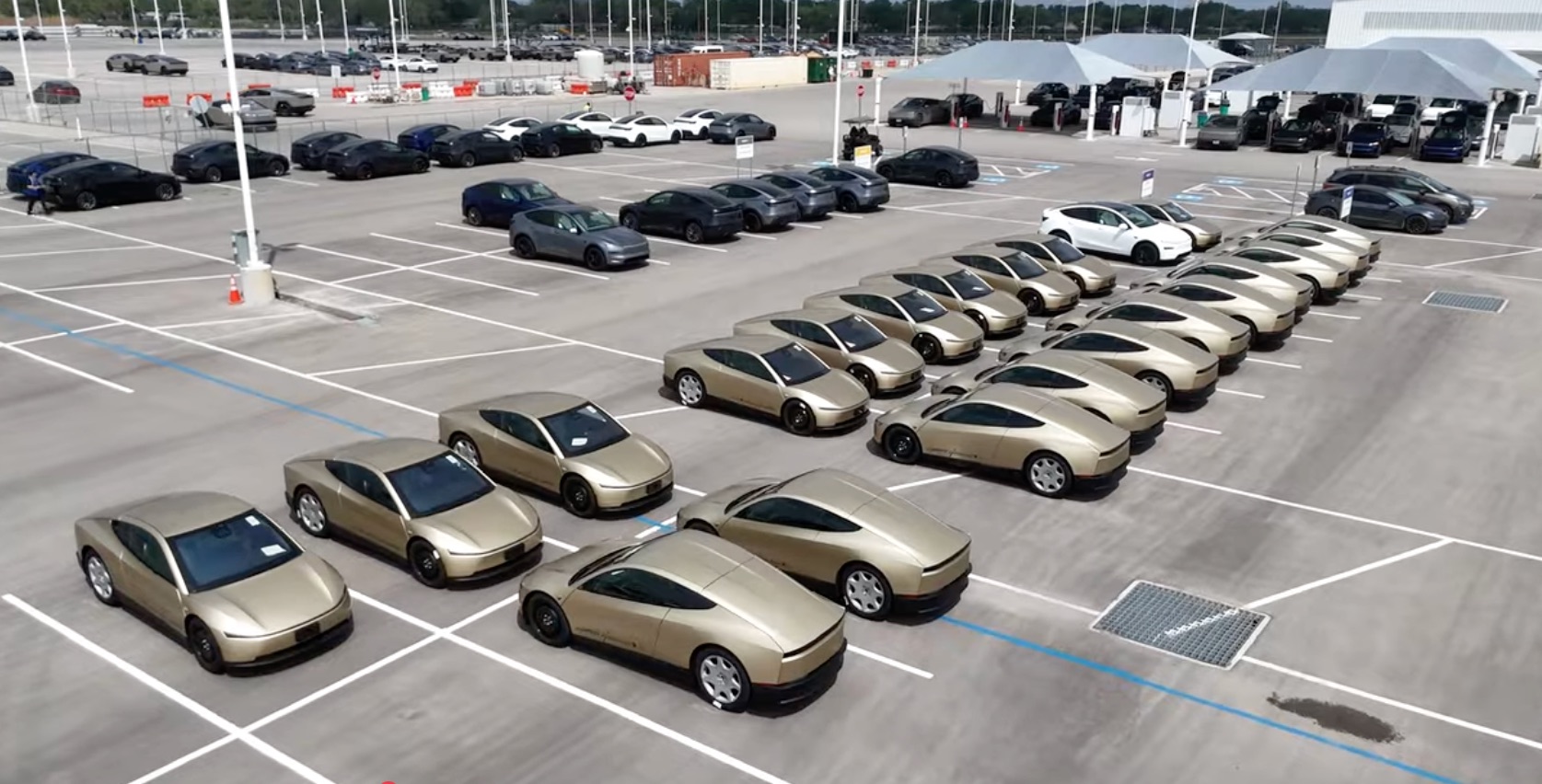
Tesla has quietly opened a public interest form for companies that want to buy fleets of its purpose-built Cybercab robotaxis, marking the first official channel for commercial purchases of the two-seat autonomous vehicle. The form went live on September 3, the same day Tesla hosted an invite-only Cybercab launch event in Austin, Texas.
Tesla titled the page “Help Us Build Our Robotaxi Network.” Applicants provide name, email, phone number, company name, and deployment region. They then select one or more categories: Cybercab fleet vehicle purchasing, mobility hubs and infrastructure, event collaboration, or other. Tesla says a representative will follow up with those who express commercial interest.
Tesla has introduced a new form that you can fill out if you are interested in purchasing a fleet of Cybercabs:
Form: https://t.co/Ut0yoiEyXD pic.twitter.com/uuaCXmksIO
— Sawyer Merritt (@SawyerMerritt) September 3, 2026
f
Until now, the company had no public ordering path for the vehicle, which was first shown as a concept at the October 2024 “We, Robot” event.
The Cybercab is designed from the ground up for unsupervised operation. It has no steering wheel and no pedals.
Regulatory filings list a 48-kilowatt-hour battery, a single 219-horsepower front motor, a curb weight of 3,113 pounds, and an EPA-adjusted range near 290 to 300 miles. Tesla has already registered dozens of the vehicles with Texas authorities and has been testing them on public streets around Austin.
Tesla Cybercab sightings broaden well outside of Austin with autonomy in focus
The company’s existing Robotaxi service, which currently uses modified Model Y vehicles in parts of Texas and Florida, is expected to add Cybercabs as production ramps up at Gigafactory Texas.
The form signals that Tesla is preparing to treat the Cybercab as more than an in-house fleet asset. Investors and operators have discussed buying groups of the vehicles and placing them on Tesla’s ride-hailing network, with Tesla taking a platform fee. High-profile figures have publicly stated plans to acquire fleets if Tesla allows third-party ownership.
The new page gives those parties a direct way to register interest rather than waiting for a conventional configurator.
Whether the form leads quickly to firm purchase agreements remains unclear. Regulatory approval for widespread unsupervised operation still varies by state, and Tesla has not published pricing or delivery timelines for fleet customers. The company has previously discussed a target price near $25,000 to $30,000 per vehicle.
For now, the form is an early signal that Tesla wants partners to help scale the network rather than operate every Cybercab itself.
Pairing the launch of the Cybercab fleet form with the Austin event is no coincidence. Tesla is inviting businesses to participate in the next phase of its Robotaxi plan at the moment the production vehicle first appears in public.

Tesla Cybertruck targets job site crews with new Tailgate Utility Track and Bed Gear Box accessory

Tesla opens Cybercab rides to the public, with no steering wheel or pedals


