Cybertruck
Tesla Cybertruck’s head-scratching trim sold terribly, recall documents reveal
The head-scratching offering was only available for a few months, and evidently, it did not sell very well, which we all suspected. New recall documents on the vehicle from the National Highway Traffic Safety Administration (NHTSA) now reveal just how poorly it sold.

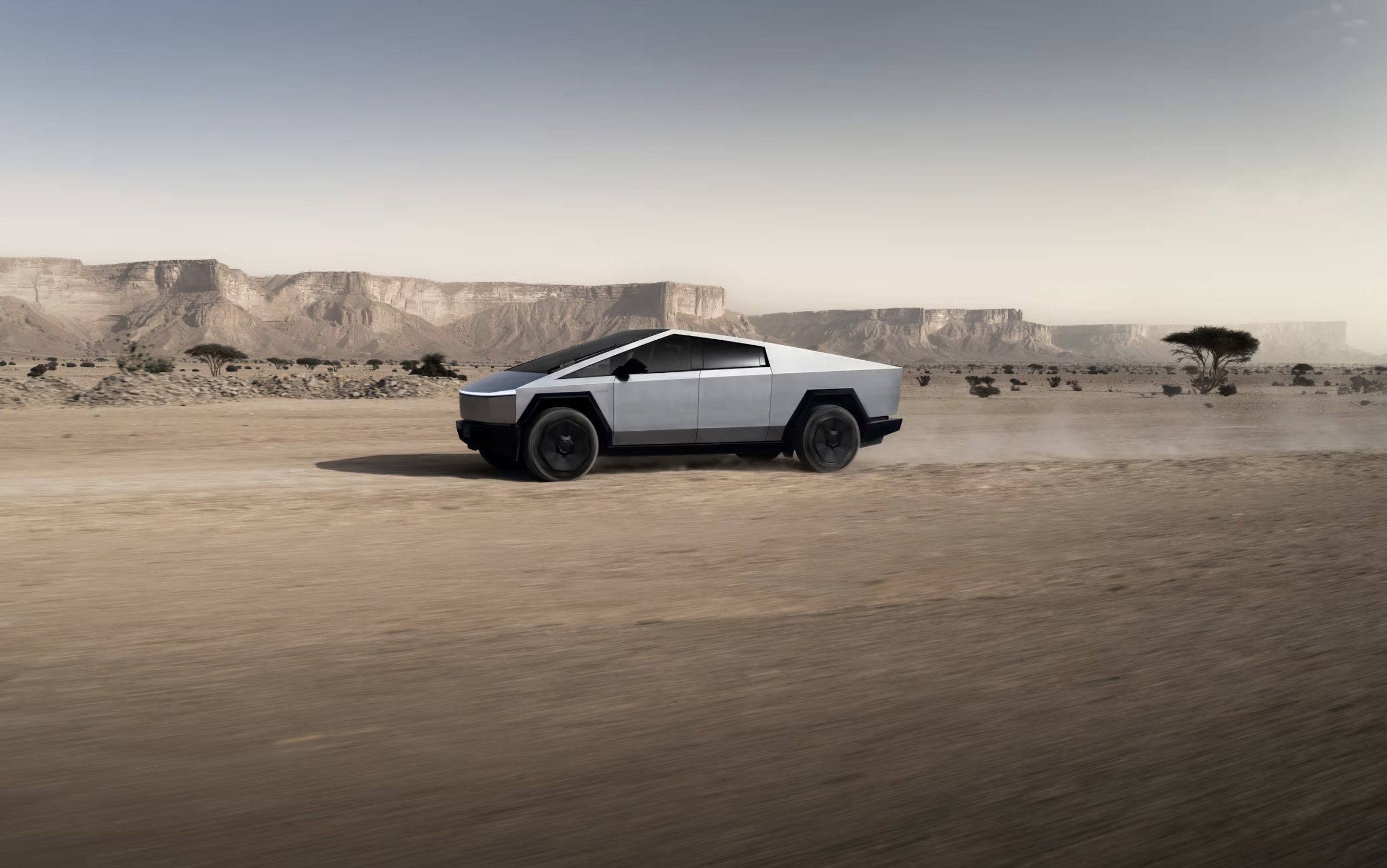
After Tesla decided to build a Rear-Wheel-Drive Cybertruck trim back in 2025, which was void of many features and only featured a small discount.
The head-scratching offering was only available for a few months, and evidently, it did not sell very well, which we all suspected. New recall documents on the vehicle from the National Highway Traffic Safety Administration (NHTSA) now reveal just how poorly it sold.
The recall deals with a potentially separating wheel stud and potentially impacts 173 Cybertruck units with the 18-inch steel wheels. The Cybertruck RWD was the only trim level to feature these, and the 173 potentially impacted units represent a portion of the population of pickups. Therefore, it’s not the entire number of RWD Cybertruck sold, but it could show how little interest it gathered.
The NHTSA document states:
“On affected vehicles, higher severity road perturbations and cornering may strain the stud hole in the wheel rotor, causing cracks to form. If cracking propagates with continued use and strain, the wheel stud could eventually separate from the wheel hub.”
Only 5 percent are expected to be impacted, meaning less than 10 units will have the issue if the NHTSA and Tesla estimates are correct. Nevertheless, the true story here is how terribly the RWD Cybertruck sold.
Tesla ended production and stopped offering the RWD Cybertruck to customers last September. For just $10,000 less than the All-Wheel-Drive trim, Tesla offered the RWD Cybertruck with just one motor, textile seats instead of leather, only 7 speakers instead of 15, no Rear Touchscreen, no Powered Tonneau Cover for the truck bed, and no 120v/240v outlets.
For just $10,000 more, at $79,990, owners could have received all of those premium features, as well as a more capable All-Wheel-Drive powertrain that featured Adaptive Air Suspension. The discount simply was not worth the sacrifices.
Orders were few and far between, and sources told us that when it was offered, sales were extremely tempered because customers could not see the value in this trim level.
Even Tesla’s most loyal supporters thought the offering was kind of a joke, and the $10,000 extra was simply worth it.


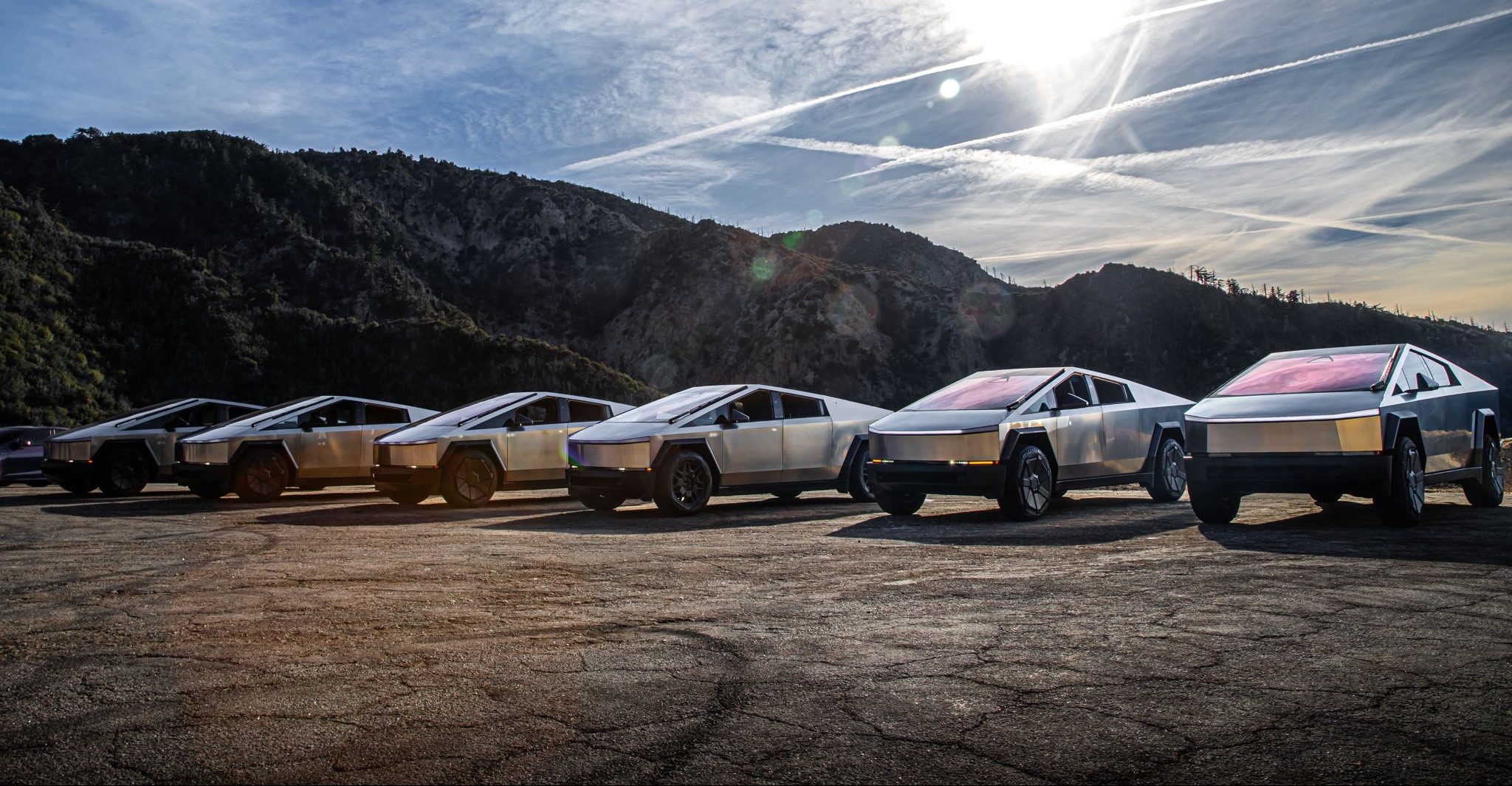
Tesla is ending Cybertruck production sometime in mid-2027, according to CEO Elon Musk.
Musk made the announcement on X last night, which came as a shock to many. He said that the Cybertruck will end production “to make room for increased Cybercab production” at Gigafactory Texas.
It is a huge blow to the fans of Tesla who have come to love the Cybertruck and identify with it as a symbol of their fandom. It has been the best-selling electric pickup, but it has had an underwhelming sales performance in terms of what was expected. This is mostly due to Tesla not meeting the prices it planned to offer the Cybertruck, as its unveiling and actual release were four years apart.
Tesla will be winding down production of the Cybertruck at Gigafactory Texas around the middle of next year to make room for increased Cybercab production
— Elon Musk (@elonmusk) November 6, 2026
Overall, the responses were mixed. Some fans understood the move toward Cybercab production, especially as Tesla is truly pushing the autonomous future through its Robotaxi platform. However, others did not understand it.
“Damn, how many Cybercabs do you guys need?” one response read. Another said it was “Sad but understandable.”Even analyst Gary Black had responded to the news, stating he hoped Tesla planned to replace it with a traditional pickup design.
It doesn’t seem like that will be the case.
Tesla is so hell-bent on delivering autonomy and eventually providing a driverless service that owning a car seems like an arbitrary idea, according to their thesis. Instead, Cybercabs will be available to pick you up and drop you off on demand, safely, without any human help.
As a result, Tesla has thinned its lineup considerably, and one can only ask where the vehicle lineup goes from here. Eventually, it seems like Cybercab could be the only vehicle that Tesla will sell.
Cybertruck
Tesla’s most delayed Cybertruck feature is finally here
Tesla finally links Cybertruck Powershare with Powerwall 3 for extended home backup after years overdue.


Tesla’s Cybertruck can now pair with a Powerwall 3 to keep a house running longer during an outage, a feature the company first promised when the truck launched in November 2023.
The official Cybertruck account posted the update on X Thursday: “Powerwall 3 & I can now power your house together. This extends your home backup by over 3 days, equivalent to 9 additional Powerwalls,” Cybertruck lead engineer Wes Morrill confirmed the rollout separately, calling it the first time a vehicle and a home battery have worked together this way. Powerwall 2 and Powerwall+ compatibility is still coming later this year, per both the Cybertruck account and Morrill.
Powerwall 3 & I can now power your house together⁰ ⁰This extends your home backup by over 3 days, equivalent to 9 additional Powerwalls pic.twitter.com/8G2twIm6AN
— Cybertruck (@cybertruck) September 10, 2026
Powershare itself is not new. Tesla enabled the version that lets Cybertruck power tools, appliances or another EV through its bed outlets when the truck launched in 2023. Home backup through a Powershare Gateway and Universal Wall Connector arrived in 2024, and Tesla extended that support to homes with solar the following year. What has been missing until now is Powershare working alongside an existing Powerwall, instead of functioning as a separate backup source competing for the same job.
The pairing matters because a single Powerwall home battery typically covers a home for about a day, less if usage is heavy or the outage stretches into a heat wave or freeze. A second Powerwall for more backup storage costs several thousand dollars installed. A Cybertruck instead uses a battery the owner already has, one large enough here to add roughly three more days of backup without mounting another unit or booking an installer visit. For households in wildfire, hurricane or winter storm regions where outages run past a day, that keeps the refrigerator and medical equipment running instead of shutting down.
The company told owners in October 2024 that Powerwall integration was coming sometime in 2025. That date passed, and in December 2025 Tesla pushed the target to mid-2026, with Morrill explaining at the time that two grid-forming devices need to negotiate which one manages a home during an outage, and that certifying the process across multiple generations of Powerwall took longer than expected.
For owners who bought Powershare hardware expecting it to work with whatever battery setup they already had, Thursday’s update closes a gap that has shown up repeatedly in owner complaints since Cybertruck deliveries began. Tesla has also rolled out a separate Powershare grid support program in Texas, letting Cybertrucks send power back to the grid during high demand events, so the truck’s role in a home’s energy setup keeps expanding even as individual pieces of it arrive later than promised.
Yesterday, we reported on Tesla Cybertruck getting some major adjustments from a manufacturing standpoint in an effort to make the all-electric pickup more cost-effective, more reliable, more serviceable, and more easily produced.
Tesla Cybertruck engineer reveals new changes in ‘constantly evolving’ pickup
One of those changes was the addition of a self-reinforcing polypropylene aero shield that sits underneath the truck. Previously, Tesla utilized aluminum for this, but the self-reinforcing polypropylene was more durable while also being cheaper and lighter.
Tesla has revealed another small change it made to the Cybertruck, and it has to do with the side repeater cameras.
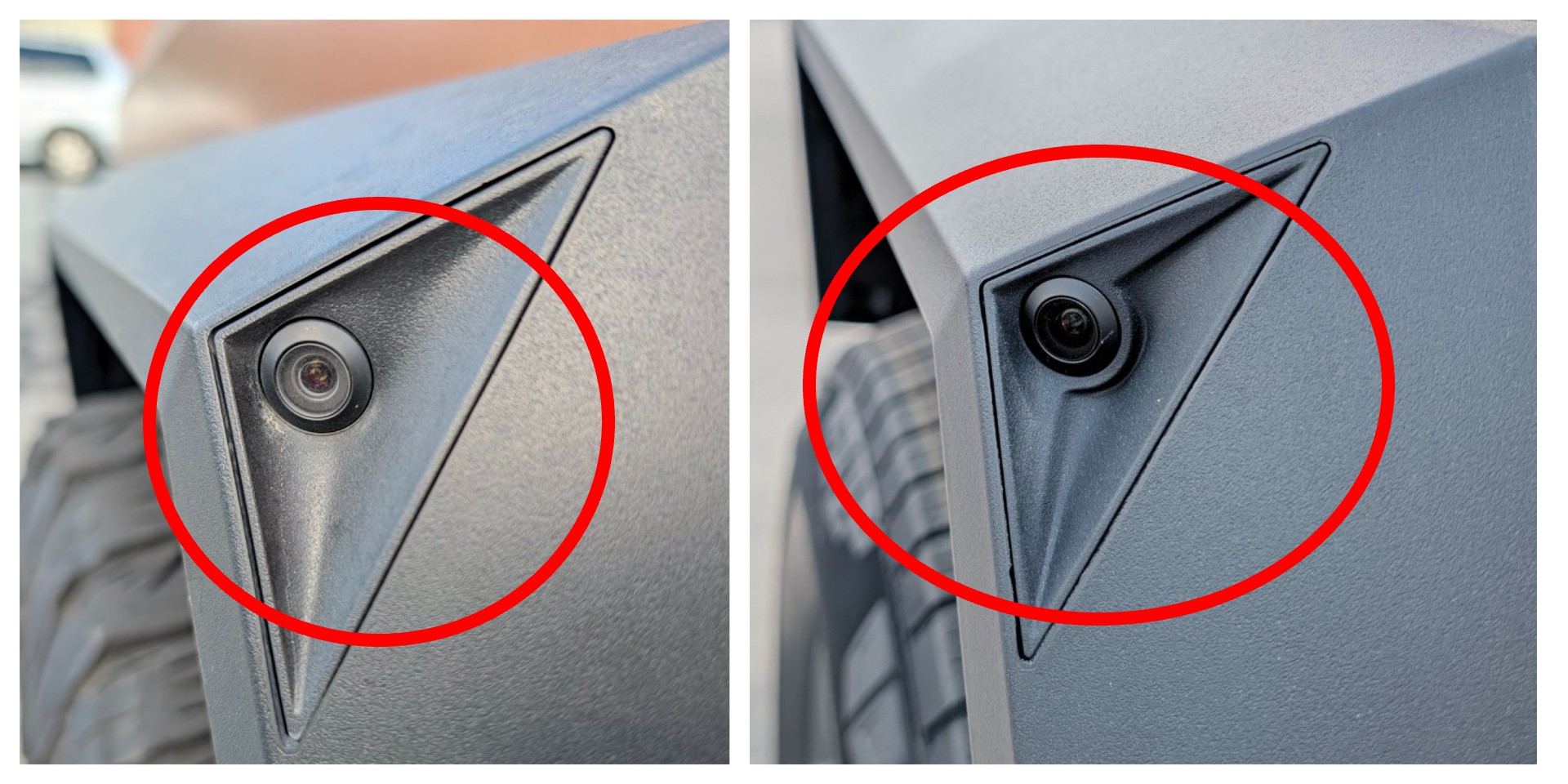
Tesla does not wait for a new model year to improve its vehicles. On September 8, Cybertruck lead engineer Wes Morrill posted side-by-side photos of an updated side repeater camera housing now rolling off the line at Gigafactory Texas.
The triangular camera pod mounted on the front fender looks almost identical at first glance. A closer look reveals a revised contour that uses the air already flowing around the truck to keep the lens clearer in rain and road spray.
The side repeater camera was updated – the version on the left is the newer part which uses passive geometry to create airflow disturbance that better keep water off the lens while driving. No cost penalty, just pure vision improvement. pic.twitter.com/wAbXtcL1Jf
— Wes (@wmorrill3) September 8, 2026
The side repeater cameras sit in an exposed position on the Cybertruck’s angular stainless-steel body.
In wet weather, they readily collect water droplets that can degrade the image Autopilot and Full Self-Driving use for lane changes and blind-spot monitoring. Early production trucks sometimes left owners wiping lenses by hand or accepting temporary restrictions on driver-assistance features.
Tesla has added washers to cameras on certain other models and on Cybercab prototypes, but those active systems add cost, complexity, and extra potential leak points.
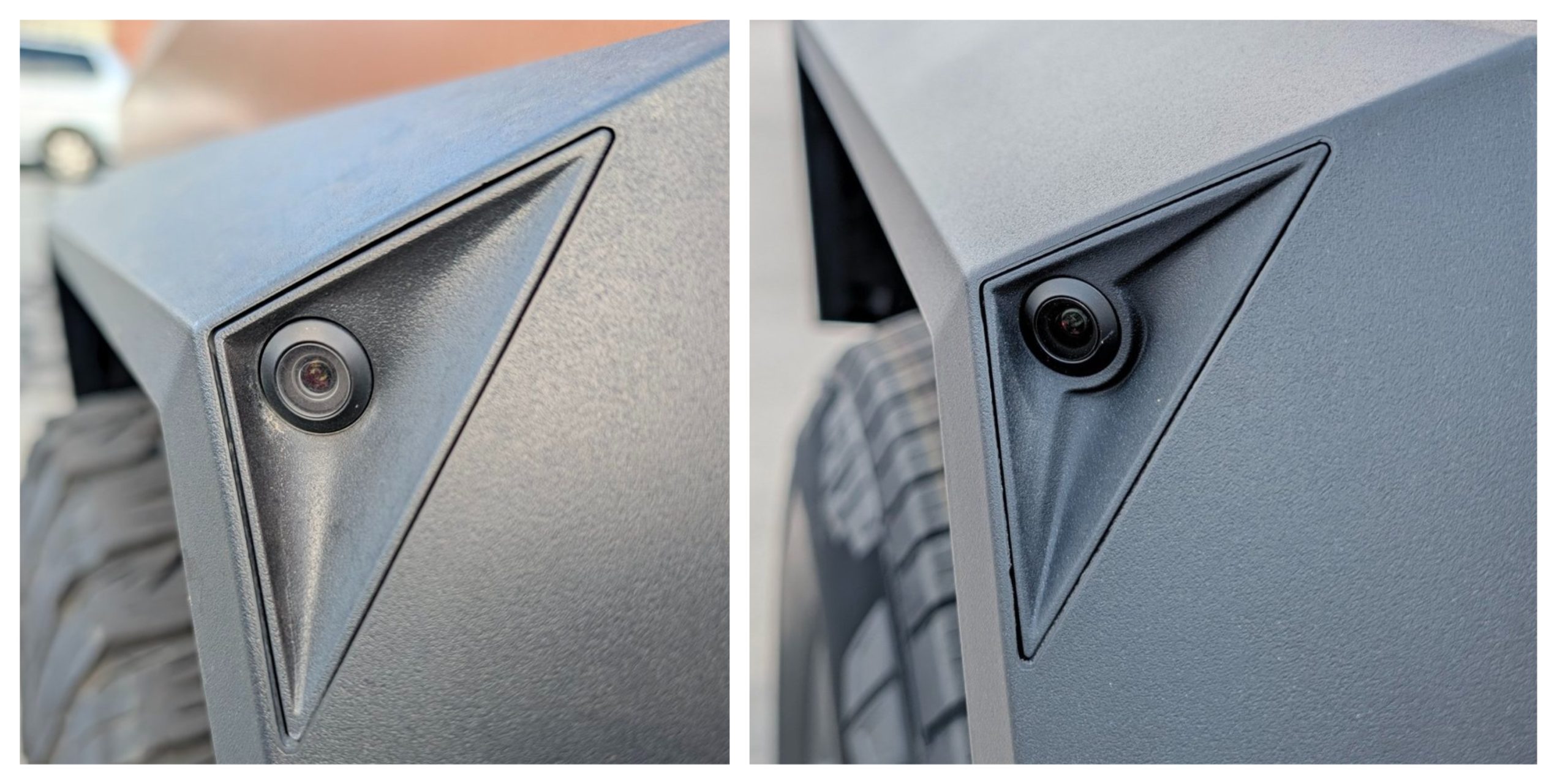
The new housing solves the problem with passive geometry. Subtle changes in the surround create localized airflow disturbances as the vehicle moves. Those eddies physically push water droplets away from the optical surface. Morrill called the result “pure vision improvement” achieved at “no cost penalty.” Once the production mold is updated, every subsequent part costs the same as the original.
The advantages compound quickly. Clearer cameras in rain improve the reliability of driver-assistance features precisely when they are needed most. The design consumes no extra energy and introduces no new failure modes.
New Cybertrucks built after the tooling changeover receive the updated part automatically. Some owners of trucks delivered as late as June 2026 have already confirmed they received the revised housing. Retrofit questions have appeared in replies, and the cameras appear electrically compatible, though Tesla has not announced an official service program.
A few millimeters of reshaped housing will not make headlines the way a new battery pack does, but these changes are incremental and increase the Cybertruck’s effectiveness as a vehicle over time.
This improvement illustrates how Tesla continues to refine the Cybertruck after volume production began. Better wet-weather vision, zero added cost, and no extra hardware add up to a meaningful gain in everyday usability and safety.

Tesla is ending Cybertruck production

SpaceX’s next Starship flight set to make history on Friday the 13th


