News
Tesla responds to allegations of unjust pay and visa violations

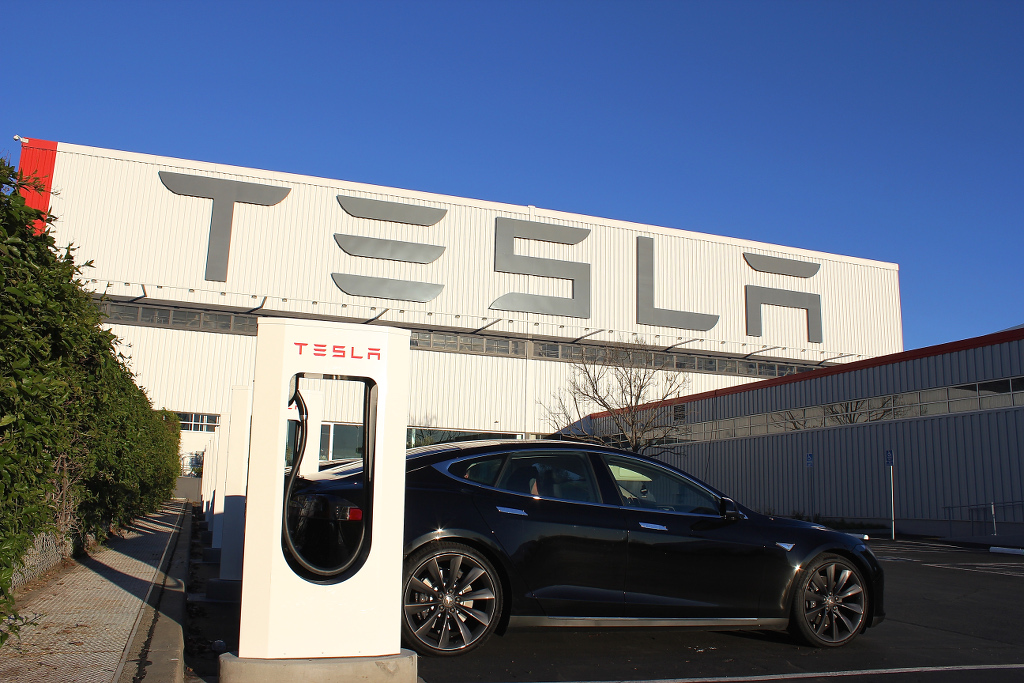
Tesla has issued a response to this weekend’s report that a factory worker who worked on the company’s high-volume paint shop at Fremont, CA plant was part of a group of foreign workers that were paid $5/hr and operated outside the terms of their visas.
The story has gained attention after the San Jose Mercury published a report of its recent investigation on Gregor Lesnik’s suit against the electric vehicle maker and several other defendants for unfair treatment in a workplace. The Mercury reports that a Slovenian company called ISM Vuzem flew Lesnik and a group of foreign workers to the U.S. while housing them in “nondescript apartments” where they would be shuttled from and to the Tesla plant to work six to seven days a week at low wages.
Among the claims in the lawsuit via the Mercury:
- Eisenmann USA wrote letters to the U.S. Embassy on behalf of Lesnik and as many as 200 foreign workers stating they would supervise employees at a U.S. auto plant. Most of the Vuzem workers were nonsupervisory laborers and tradesmen.
- Tesla issued company security badges to the foreign workers, recorded their time on site and shared responsibility for setting safety conditions.
- Vuzem required foreign employees to regularly work between 60 and 70 hours a week. Vuzem paid Lesnik an average of 800 euros per month, or about $900, for a rate of less than $5 per hour. Lesnik was promised an equal amount when he returned home, but the company never paid the balance.
- The companies violated wage and employment laws and benefitted from the cheap labor of foreign workers. Workers were promised $12.70 an hour based on a standard workweek. The suit estimates they are due $2.6 million in overtime and premium pay.
Tesla has issued a response to the story defending their stance that the company operated within legal limits stating that Lesnik’s claim is a moral issue at heart, but the company will see to it that the right thing happens and all are treated fairly should the claims be true.
According to Tesla’s issued response, Lesnik’s accident as a result of slipping on loose tile and falling three stories while working on the company’s high-volume paint shop, was investigated by the government regulator that oversees workplace accidents (Cal/OSHA) and found to be not at fault of the company. Tesla’s statement says, “When Mr. Lesnik brought a workers compensation case, Tesla was dismissed from the case because the judge concluded that we had no legal responsibility for what occurred.”
Here’s a copy of Tesla’s full response to the story.
“At Tesla, we aspire to operate on the principles of hard work and exceptional performance, but always tempered by fairness, justice and kindness. There are times when mistakes are made, but those are the standards to which we hold ourselves. With respect to the person at the center of this weekend’s article in the Mercury News, those standards were not met. We are taking action to address this individual’s situation and to put in place additional oversight to ensure that our workplace rules are followed even by sub-subcontractors to prevent such a thing from happening again.
Gregor Lesnik was brought to the Tesla factory by a company called ISM Vuzem, a sub-contractor brought in by Eisenmann, the firm that we hired to construct our new, high-volume paint shop. We contracted with Eisenmann for the simple reason that we do not know how to build paint shops and they are regarded as one of the best, if not the best, in the world. In our dealings with them, we have found them to be an excellent company, run by good people.
The article describes how Mr. Lesnik came to this country, the conditions under which Vuzem employed him and others to do their work, and how Mr. Lesnik ended up being injured while on the job. Assuming the article is correct, we need to do right by Mr. Lesnik and his colleagues from Vuzem. This is not a legal issue, it is a moral issue. As far as the law goes, Tesla did everything correctly. We hired a contractor to do a turnkey project at our factory and, as we always do in these situations, contractually obligated our contractor to comply with all laws in bringing in the resources they felt were needed to do the job.
Regarding the accident that resulted in Mr. Lesnik being injured, Cal/OSHA (the government regulator that investigates workplace accidents like these) came to our factory, investigated the incident and found that Tesla was not responsible. When Mr. Lesnik brought a workers compensation case, Tesla was dismissed from the case because the judge concluded that we had no legal responsibility for what occurred.
All of that is fine legally, but there is a larger point. Morally, we need to give Mr. Lesnik the benefit of the doubt and we need to take care of him. We will make sure this happens. We do not condone people coming to work at a Tesla facility, whether they work for us, one of our contractors or even a sub-subcontractor, under the circumstances described in the article. If Mr. Lesnik or his colleagues were really being paid $5 an hour, that is totally unacceptable. Tesla is one of the highest paying hourly employers in the US automotive industry. We do this out of choice, because we think it is right. Nobody is making us do so.
Tesla will be working with Eisenmann and Vuzem to investigate this thoroughly. If the claims are true, Tesla will take action to ensure that the right thing happens and all are treated fairly.
Creating a new car company is extremely difficult and fraught with risk, but we will never be a company that by our action does, or by our inaction allows, the wrong thing to happen just to save money.”


Elon Musk
Elon Musk’s AI Grok Bot can now handle banking while your Tesla FSD handles the road
Elon Musk says Grok Bot can manage your finances through linked bank and investment accounts.
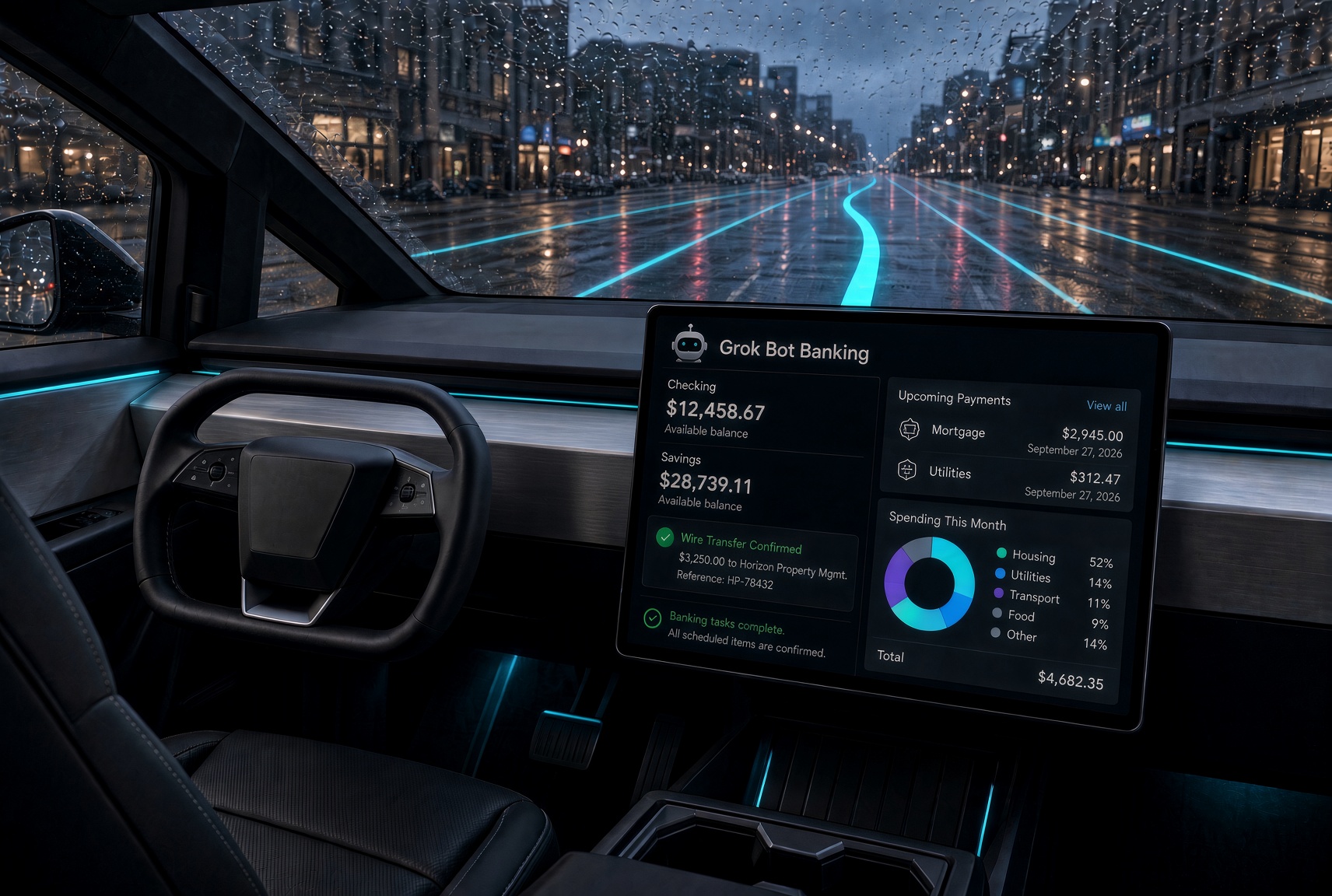
Grok Bot now wants access to your wallet, with SpaceXAI rolling out a new Finance integration for its agent platform that lets users link bank, credit card and investment accounts thereby letting their Bots help manage spending, investments and more. Elon Musk amplified the announcement on X with a short endorsement, “Grok Bot can manage your finances.”
The feature builds on two earlier steps. In early September, Grok gained the ability to answer questions about spending, savings, investments and cash flow using accounts connected through Plaid, starting with users in the U.S. Before that, on August 28, SpaceXAI let Grok Bot buy things online through Link, with users approving every spend request and the Bot receiving a single use card for each payment.
Musk has already shown how far he wants users to push it. In late August, when Tesla investor account Teslaconomics said he was weighing whether to give Grok Bot access to his bank accounts, Musk replied, “Try it out. If Grok Bot messes up, we will make you whole.” That promise goes beyond SpaceXAI’s consumer terms, which make users responsible for what their agents do and generally cap the company’s liability at the greater of fees paid or $100. SpaceXAI’s own documentation recommends requiring approval for purchases and financial transfers.
For Tesla owners, the update lands five days after Tesla brought Grok Bot into its vehicles, letting drivers hand off errands by voice while FSD (Supervised) handles the road. Bot access inside the car is currently limited to SuperGrok Heavy subscribers, though Connectors are open to anyone signed into Grok. With Finance linked, a driver could ask for a spending summary or a check on upcoming bills during the commute.
Grok’s role in the car has grown quickly since Tesla’s Summer Update let it control cabin features by voice. We have been using Grok Bot in our own Tesla for several weeks, and here’s how our latest test went.
Elon Musk
SpaceX just got the green light Starship has waited years for
The FAA has cleared Starship Flight 14, setting up SpaceX’s first orbital attempt on Monday.
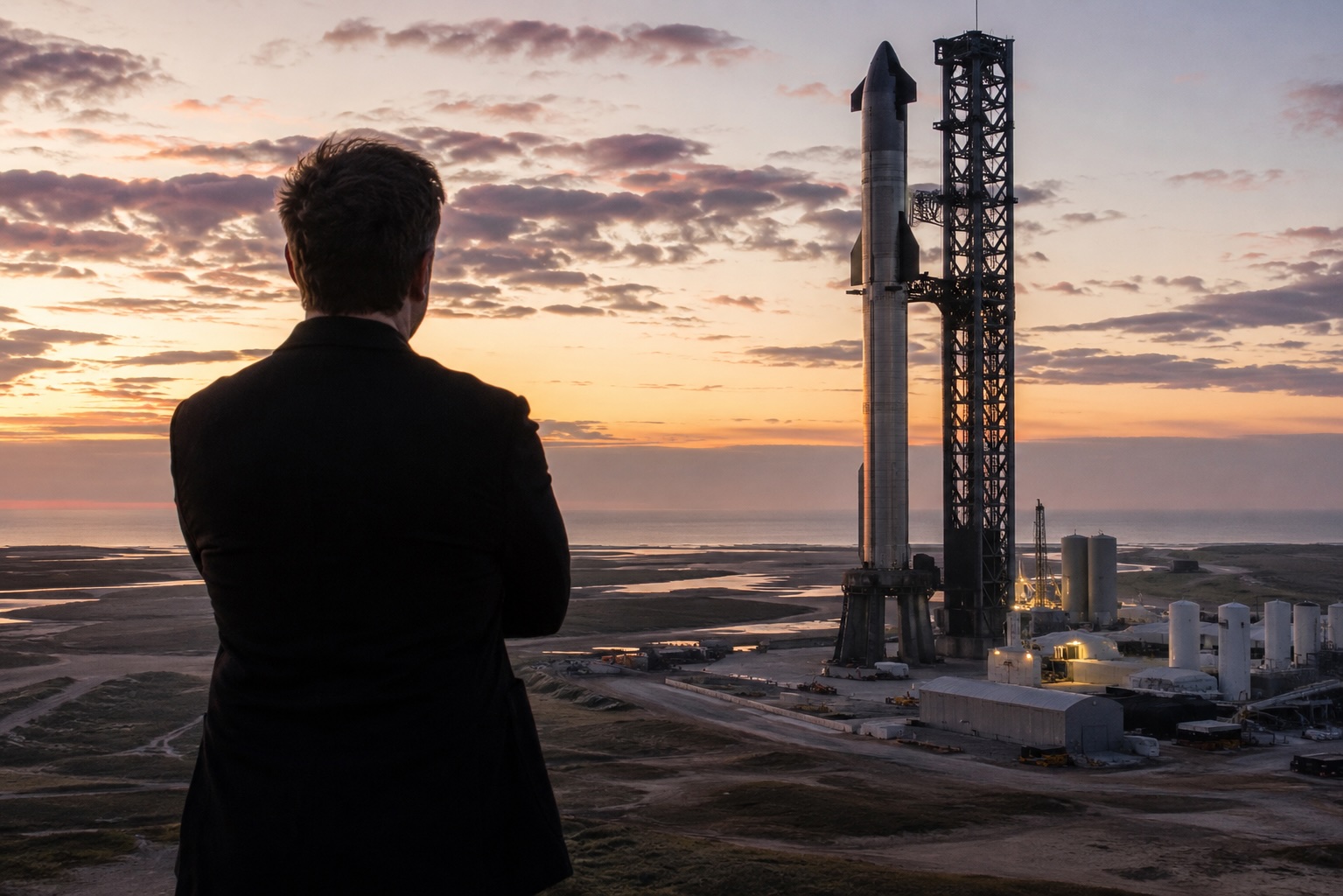
SpaceX has cleared the last regulatory hurdle standing between Starship and its first trip to orbit. The Federal Aviation Administration issued the launch license for Starship Flight 14 late Saturday, keeping the mission on track for liftoff Monday, September 28, from Pad 2 at Starbase, Texas.
The 75 minute launch window opens at 7:15 a.m. Central, and Boca Chica Beach closures are also scheduled for September 29 and 30 as backup dates. This will be Starship’s first revenue generating mission.
The license was the missing piece after SpaceX completed a full wet dress rehearsal with Booster 21 and Ship 41 on September 24. At the time, the company said the flight remained on track pending regulatory approval. Because Flight 14 flies an orbital profile, the FAA had to sign off on a modified license that met its safety, payload and financial responsibility requirements.
Observers combing through the new FAA paperwork also noticed that lightning no longer appears among Starship’s listed launch hazards. If that holds, it matters more for where Starship is headed than for Monday’s attempt. Florida and Louisiana, home to LC-39A and the planned Starbase Louisiana site, see some of the most frequent lightning in the United States.
SpaceX tells the FCC that Starship Flight 14 is going to orbit
Flight 14 is the mission SpaceX has been building toward for months. Ship 41 will carry 26 Starlink V3 satellites, the first operational V3 units to be deployed, and attempt roughly six orbits at about 275 kilometers over a flight lasting just under 10 hours. SpaceX says the ship will only perform its orbital insertion burn after flight controllers confirm enough hardware redundancy remains for the deorbit burn at the end of the mission. Ship 41 is targeting a splashdown in the Pacific west of Chile, while Super Heavy will return to the Gulf of Mexico.
The date carries some symbolism as well. A Monday launch would come 10 years and one day after Elon Musk first presented the Interplanetary Transport System, the design that became Starship, at the International Astronautical Congress in Guadalajara, Mexico.
SpaceX has not announced what comes next, but air traffic planning slides reported this week, list Flight 15 no earlier than October 19 and a first Starship launch from LC-39A in Florida no earlier than October 30. Both dates depend on how Monday goes.
News
SpaceX completes another secret Pentagon launch, adding to suspected Starshield buildout
SpaceX launched the classified USSF-385 mission from Vandenberg, landing its booster on a tenth flight.
SpaceX launched another classified mission for the U.S. Space Force from California early Saturday morning, and the Falcon 9 booster that carried it landed on a drone ship in the Pacific for the tenth time. The USSF-385 mission lifted off from Space Launch Complex 4E at Vandenberg Space Force Base at 7:00 a.m. PT.
Booster B1100 touched down on Of Course I Still Love You roughly eight and a half minutes after liftoff. It was the booster’s tenth flight and tenth successful landing, following the NROL-95 national security mission and eight Starlink launches. Its previous flight, a Starlink Group 15 mission on August 22, came just 35 days earlier. SpaceX ended its livestream shortly after the landing, which is standard for classified payloads, and neither the company nor the Space Force has said what the rocket carried.
Watch Falcon 9 launch the USSF-385 mission from pad 4E in California https://t.co/CAdbx85Ydy
— SpaceX (@SpaceX) September 26, 2026
USSF-385 is the fourth Space Force launch from the same Vandenberg pad in roughly six weeks, following USSF-366 on August 15, USSF-153 on September 10, and USSF-259 on September 17. When SpaceX flew USSF-366 in August, independent trackers noted that the rocket’s stage drop zones matched SpaceX’s Starlink Group 15 missions, pointing to Starshield, the government version of the Starlink satellite bus. The Space Force later cataloged 23 satellites after both USSF-366 and USSF-153, while USSF-259 placed 17 satellites into a different orbital plane, per KeepTrack. Launch databases describe USSF-385 the same way, though the payload remains officially unidentified.
The cadence lines up with the contracts, because in July, the Space Force awarded SpaceX $1.6 billion in task orders for 18 Falcon 9 missions from Vandenberg through the end of 2027. SpaceX also holds contracts to build pieces of that same network, which pushed its Pentagon contract total for 2026 past $8 billion.
Saturday’s flight was also the sixth and final Falcon 9 launch from Vandenberg in September, according to Spaceflight Now, while only one Falcon 9 flew from the East Coast this month as SpaceX shifts its Florida infrastructure toward Starship. Launch trackers list it as SpaceX’s 112th mission of 2026 and the 108th Falcon 9 flight of the year, with SLC-4E turned around about six and a half days after its previous launch.
The West Coast pad will not stay quiet for long, considering SpaceX has another Starlink mission scheduled from SLC-4E on September 30. Meanwhile, in Texas, the company is two days away from Starship Flight 14, which is targeting Monday at 7:15 a.m. CT for the vehicle’s first attempt to reach orbit.

Elon Musk’s AI Grok Bot can now handle banking while your Tesla FSD handles the road

SpaceX just got the green light Starship has waited years for


