News
An inauguration day primer on leadership from Elon Musk to Donald Trump

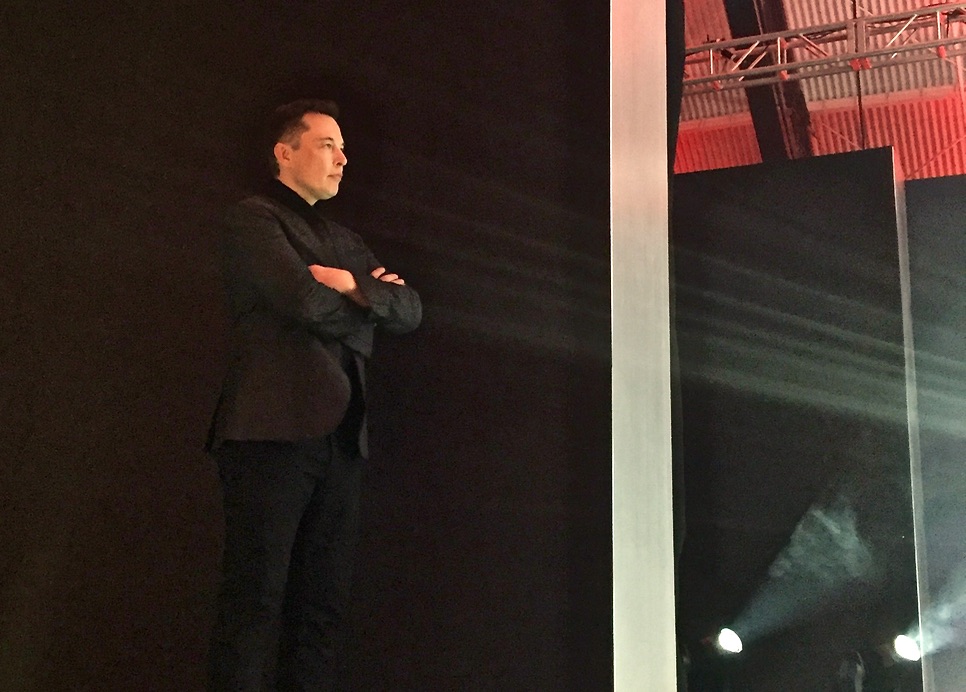
On Inauguration Day, individuals all over the world were wondering what the U.S. presidency of Donald Trump will be like. The real estate tycoon, turned reality TV star, turned President of the United States, has met twice with serial tech entrepreneur Elon Musk and would be wise to take some lessons from his leadership model. Musk’s model of leadership has been the driving force behind innovative businesses and he has single-handedly changed how people around the world view energy and transportation.
Explain how your vision can help humankind. Elon Musk’s powerful vision, as articulated in his latest Master Plan, has always contained diverse elements that fit into a larger whole. Musk wants to accelerate the advent of sustainable energy, so that “we can imagine far into the future and life is still good.”
Mr. Trump can capture a somewhat dissatisfied electorate by laying out a vision that benefits all.
Define your terms. “Sustainability” is a word that’s now overused and applied differently, depending on purpose. For Elon Musk, “sustainable” energy is a concept that matters for everyone. He applies it to an energy economy that he argues “will run out of fossil fuels to burn and civilization will collapse.”
If Mr. Trump’s first 100 days resembles his campaign promises, his governmental reform agenda should be clear, concise, and digestible for all the electorate.
Live by what you preach. Musk has often been critiqued for his nontraditional approaches to business, including investments and borrowing. Musk said, “If I ask investors to put money in, then I feel morally I should put money in as well. I should not ask people to eat from the fruit bowl if I have not myself been willing to eat from the fruit bowl.” He is reported to have invested over $100 million of his own money into SpaceX, around $10 million into SolarCity, and $55 million into Tesla Motors, Inc. Even when his companies have experienced volatility, Musk has been resolute in his commitment and self-confident in his decisions.
Never a shrinking wallflower, Mr. Trump, nonetheless, will have to demonstrate that he can empathize with U.S. citizens of all demographics and beliefs by making sacrifices for the good of all.
Be honest and forthright. In order to make his vision of mass produced fully electric cars a reality, in 2010, Tesla was awarded a milestone-based loan, requiring matching private capital obtained via public offering, by the DOE as part of the Advanced Technology Vehicle Manufacturing program. Tesla repaid the full loan facility with interest in 2013, becoming the only American car company at the time to have fully repaid the government. “I would like to thank the Department of Energy and the members of Congress and their staffs that worked hard to create the ATVM program, and particularly the American taxpayer from whom these funds originate,” said Elon Musk. “I hope we did you proud.”
Mr. Trump, too, should make it a habit to take the high road whenever possible, graciously accepting challenges and thanking individuals across both sides of the U.S. political spectrum for their help.
Do it yourself. Musk’s experience is grounded in his education at the University of Pennsylvania, where, at the age of 24, he received a Bachelor of Science degree in physics from the College of Arts and Sciences, and a Bachelor of Science degree in economics from the Wharton School of Business. He worked toward but did not complete a doctorate in applied physics and materials science at Stanford University. Musk has applied his training as an applied engineer into the systems level of design. He is said to work 100 hours per week, side-by-side with his engineers. He is known to test-drive changes being made to Tesla vehicles before it goes out to customers.
Mr. Trump, who is said to be more of a delegator than a decision-maker, would be well-advised to get into the details of governance, to be less of a talker and more of a doer in the model of Elon Musk.
Back up your policies with peer-reviewed data. Musk argues that the move away from fossil fuels is inevitable, and “virtually all scientists agree that dramatically increasing atmospheric and oceanic carbon levels is insane.” According to NASA, 97% of climate scientists agree that climate-warming trends over the past century are very likely due to human activities, and most of the leading scientific organizations worldwide have issued public statements endorsing this position.
Mr. Trump should look to multi-layered, data-driven sources as the foundation for his policies in order to best serve U.S. citizens.
Seek out and listen to feedback. Musk looks to other innovators as sources of ideas and systems analysis. He retains contact with former business associates and considers their opinions and approaches against his own. Constantly engaged in self-analysis, Musk reflects on what he has accomplished, the people who have helped along the way, and how the process could be improved.
Mr. Trump would be well-served to slow down and engage in a habit of self-reflection at regular intervals; it is critical for his success as the U.S. president and for the future health of the United States.


Elon Musk
Elon Musk’s next Uranium in Uranus merch is Boring Company’s weirdest tease yet
Elon Musk teased a glowing new Boring Company merch idea, complete with a Geiger counter.

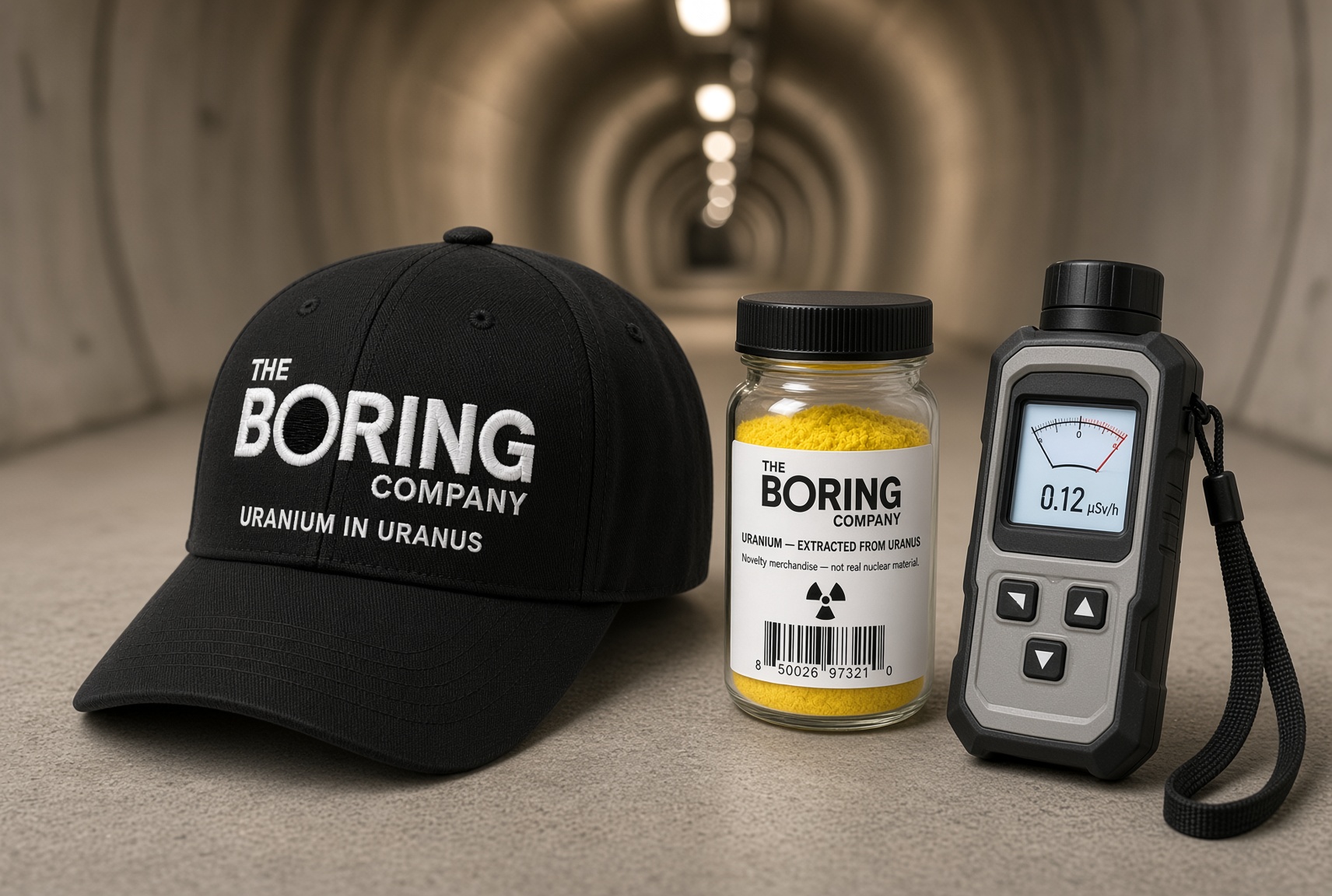
Elon Musk teased the next piece of Boring Company merchandise on X Saturday, and it is exactly as unserious as fans of the company’s product history have come to expect. “The next @boringcompany merch will put Uranium in Uranus,” Musk wrote in a thread posted early Saturday morning. He followed up by explaining that the item would glow in the dark, “because otherwise how could you find it,” and that a Geiger counter would be sold separately as “an optional strap-on.”
Musk closed the thread with a line that doubles as a mission statement for the tunneling company’s merchandise arm: “It’s not easy coming up with something that is both outrageously unsellable and yet extremely popular.”
The Boring Company has built a small but consistent side business out of novelty items that start as jokes and end up selling out. The company’s Not-a-Flamethrower raised roughly $10 million in a few days back in 2018, moving all 20,000 units it produced. Its Burnt Hair perfume, priced around $100 a bottle, sold out fast enough that scalpers were flipping units on eBay for ten times the retail price. Boring Bricks, made from tunneling spoil, followed the same playbook of teasing a product on X months before it became real.
Musk has not said what the actual item will be, only that it involves uranium and glows in the dark. Given the pattern, that vagueness is probably intentional. Past merch announcements have started as one-line jokes and taken weeks or months to turn into an actual product listing on the company’s site, and there is no guarantee this one follows through at all.
The timing lines up with a period of real momentum for the Boring Company outside of the joke merchandise. The company said last week it plans to double the number of operational stations on its Vegas Loop by the end of the year, a target tied to a hiring push for drivers and operations managers. Prufrock-5, one of the company’s tunnel boring machines, also just wrapped a test tunnel in Bastrop, Texas, and is expected to relaunch on its next assignment in November.
Whether the uranium joke turns into an actual product remains to be seen. Musk’s post did not include a price, a shipping date, or even a name for the item, which has historically meant a Boring Company website page goes up quietly, password protected, sometime before an announcement.
News
NASA taps SpaceX for more astronaut missions as Boeing Starliner remains grounded
NASA just gave SpaceX a $946 million contract for three more astronaut missions through 2030.
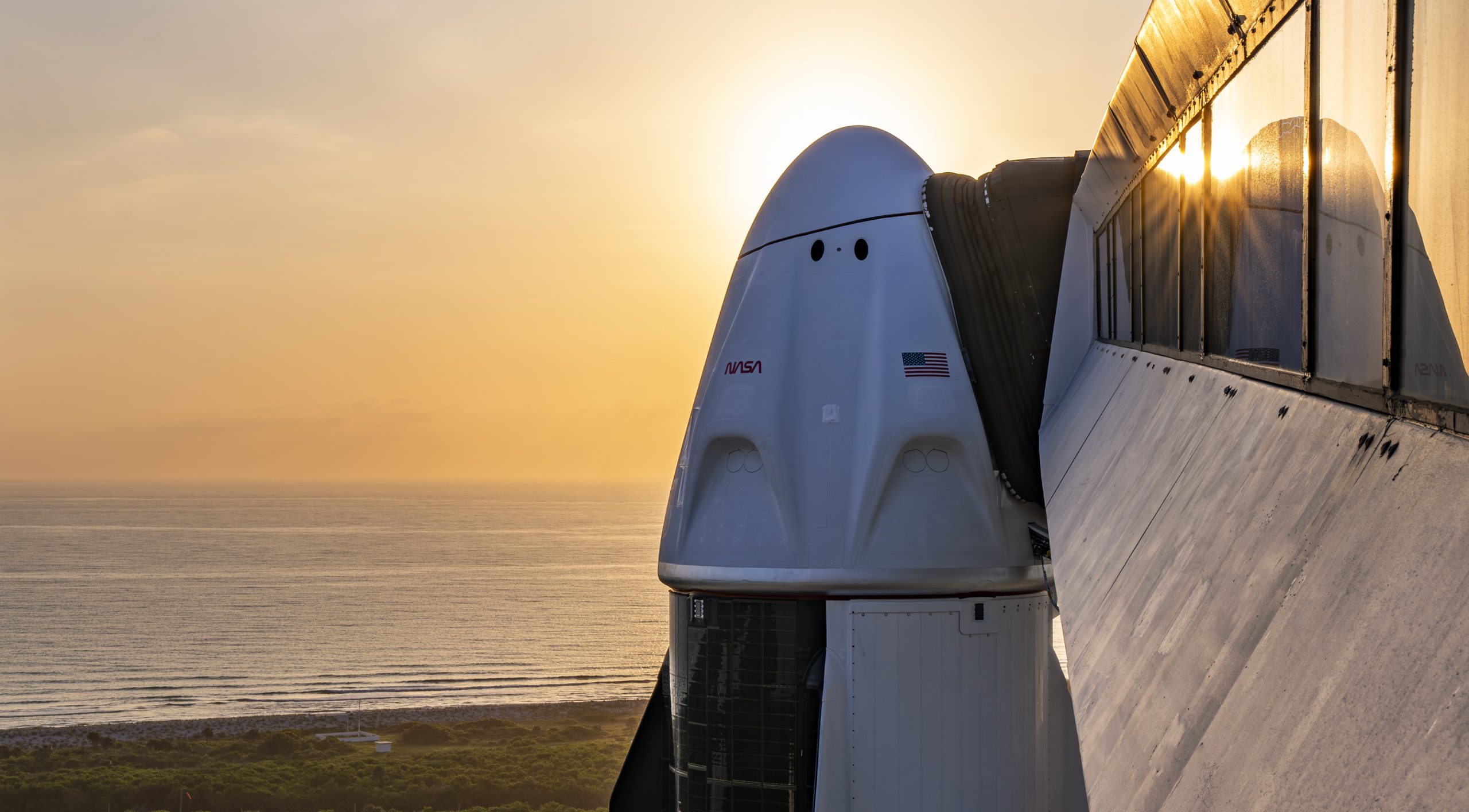
NASA has awarded SpaceX a $946 million contract modification covering three more astronaut missions to the International Space Station, according to an announcement the agency published Friday. The award adds Crew-15, Crew-16, and Crew-17 to SpaceX’s existing Commercial Crew Transportation Capability contract, bringing the agreement’s total value to $5.92 billion across 17 flights.
SpaceX confirmed the award on X, writing that it was excited for Falcon 9 and Dragon to launch NASA’s Crew-15, 16, and 17 missions to the Space Station from Florida. The new missions cover ground, launch, in orbit, and return operations, along with cargo transport and a lifeboat capability while docked at the station, and the period of performance runs through 2030.
We’re excited for Falcon 9 and Dragon to launch @NASA’s Crew-15, 16, and 17 missions to the @Space_Station from Florida https://t.co/Qm16vVK9F3 pic.twitter.com/drg3s7GtuM
— SpaceX (@SpaceX) September 18, 2026
The award follows a notice of intent NASA issued in May, when the agency first signaled it would purchase up to six additional post certification missions from SpaceX. Teslarati covered that filing at the time, noting NASA cited technical issues and schedule delays encountered by Boeing as a driving factor. Friday’s contract modification locks in three of those six missions, with the remaining three left open for NASA to award later, potentially to Boeing if Starliner clears certification.
Boeing’s CST-100 Starliner has still not flown an operational crew rotation mission for NASA. The spacecraft’s most recent crewed test flight in 2024 ended without the astronauts returning aboard Starliner, and the company has spent the time since working through thruster problems. SpaceX President Gwynne Shotwell said this week that SpaceX is not retiring Crew Dragon today, for sure, while stopping short of committing to fly it past 2030.
Crew-12 is currently docked at the space station, and NASA has said Crew-13 is targeting a launch in the coming weeks. The newly awarded Crew-15 through Crew-17 missions extend SpaceX’s role as NASA’s primary way of getting astronauts to and from orbit well into the back half of the decade, regardless of what happens with Starliner or Starship in the meantime.
Investor's Corner
New drone video shows Tesla’s Optimus Factory reaching a turning point
New drone footage shows Tesla’s dedicated Optimus factory steel frame nearing completion at Giga Texas.
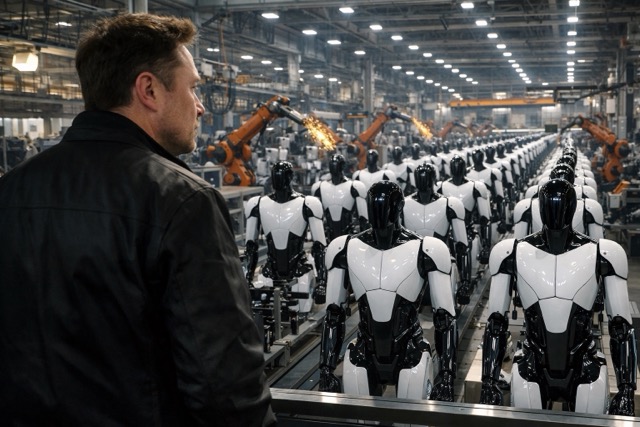
Tesla’s dedicated Optimus factory at Gigafactory Texas is closing in on a finished steel frame, according to drone footage posted Thursday afternoon by longtime site observer Joe Tegtmeyer. In the video, Tegtmeyer said structural steel assembly is now about five column grids away from reaching the building’s north perimeter beam, putting the primary skeleton in its final stretch roughly six months after Tesla broke ground on the North Campus site in late March.
The Giga Texas Optimus Factory latest update … construction keeps moving fast!
Steel assembly is now only about 5 column grids from the north perimeter beam. Concrete is going in on the three upper floors, rebar is still being laid for more pours, and footing / grade-beam work… pic.twitter.com/qvFPvwnYzW
— Joe Tegtmeyer 🚀 🤠🛸😎 (@JoeTegtmeyer) September 17, 2026
Tegtmeyer’s footage shows concrete already going in on three upper floors while crews continue laying rebar and pouring grade beam footings at ground level. That kind of parallel work, steel rising at one end of the site while concrete sets at the other, is a scheduling approach Tesla used at the original Giga Texas building and appears to be repeating here to save time before the plant’s targeted 2027 production start.
Teslarati has tracked the building’s progress since Tesla confirmed construction was officially underway in May, when the first steel structure went up on what was then bare, reclaimed land. The facility is part of a more than 5.2 million square foot expansion of Giga Texas’s North Campus that Tesla has said will eventually run nearly the length of the existing vehicle factory, over 4,000 feet, while sitting somewhat narrower. Musk has pegged the long term output target at 10 million Optimus units a year once the line is running at full capacity, a volume that would dwarf the one million unit pilot line Tesla is standing up separately at its Fremont, California factory.
Tesla Giga Texas to feature massive Optimus V4 production line
The Texas facility sits alongside another major buildout on the same campus. Terafab, the joint Tesla and SpaceX chip fabrication plant that will eventually supply the silicon running Optimus units in the field. Housing robot assembly and chip production on the same grounds is a deliberate supply chain decision, cutting down on the shipping and lead time that would otherwise sit between the two.
Tesla has not given an updated timeline beyond its previously stated goal of bringing high volume Optimus production online at the site in the summer of 2027. Fremont’s smaller pilot line began mass producing the current Gen 3 robot in January, with that plant expected to build tens of thousands of units this year primarily to generate the real world data Tesla needs to refine the robot’s software before Giga Texas ramps up. Six months of visible construction progress, tracked almost entirely through Tegtmeyer’s recurring drone flights, gives the clearest outside look yet at how seriously Tesla is treating that 2027 deadline.

Elon Musk’s next Uranium in Uranus merch is Boring Company’s weirdest tease yet

NASA taps SpaceX for more astronaut missions as Boeing Starliner remains grounded


