News
Tesla discontinuing Model S 60 and 60D on April 17, ahead of Model 3 ramp

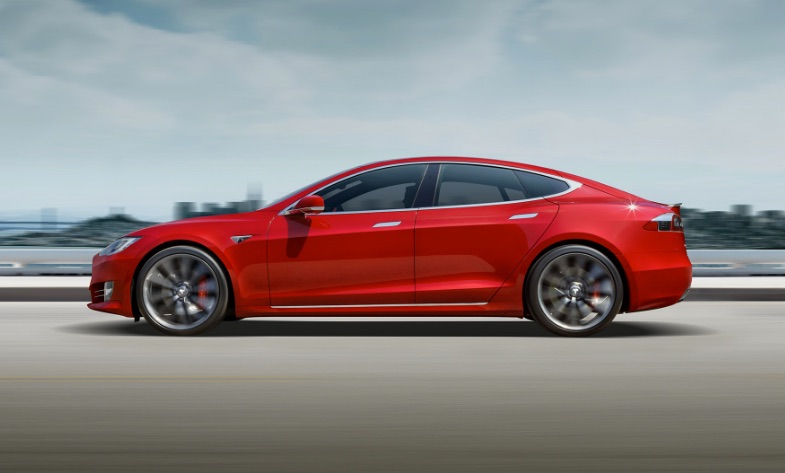
Tesla will be discontinuing the Model S 60 and 60D sedan on April 17, 2017. The announcement made by Tesla via email to Model S customers comes on the heels of a series of discontinuations aimed at maximizing production efficiency.
Tesla confirmed with Teslarati that the current base version of the Model S which is capable of 210 miles to 218 miles of range depending on motor configuration, will be available until mid-April. Both Model S and Model X will share the same battery configurations following next month’s discontinuation of the 60 kWh battery pack, leaving the 75 kWh pack as the entry level battery option.
Tesla’s communication as follows:
“One year ago, we introduced the Model S 60 kWh battery as a more affordable option to accelerate the adoption of electric vehicles. However, most customers ended up buying an equivalent to the Model S 75kWh. To simplify the ordering process for our customers, we will be removing the 60 kWh option from our lineup.
Customers who still want the opportunity to own a 60 kWh Model S will have until April 16, 2017 to place their order. Any 60 kWh Model S will have the ability to upgrade their battery to 75 kWh via an over the air update.”
One can also speculate that Tesla is looking to create as much as a gap as possible between a fully optioned Model 3 and the base Model S. By minimizing overlap between two vehicles aimed at very different target audiences, Tesla can minimize potential cannibalization of Model S sales.
Discussion taking place within the Tesla community seem to suggest that Model 3 could be offered with a battery pack up to 75 kWh in capacity, further validating Tesla’s move to discontinue the Model S 60D in order to avoid overlap. Removing the $68,000 base version of the Model S also leaves room for Tesla to set a higher price cap for a fully-optioned Model 3.
Tesla is expected to begin production of Model 3 in July. A silver Model 3 prototype was recently spotted testing on the backlot of SpaceX.


Elon Musk
Why automakers keep turning down Elon Musk’s Tesla Full Self-Driving offer
Elon Musk confirms no automaker has ever accepted Tesla’s offer to license Full Self-Driving software.
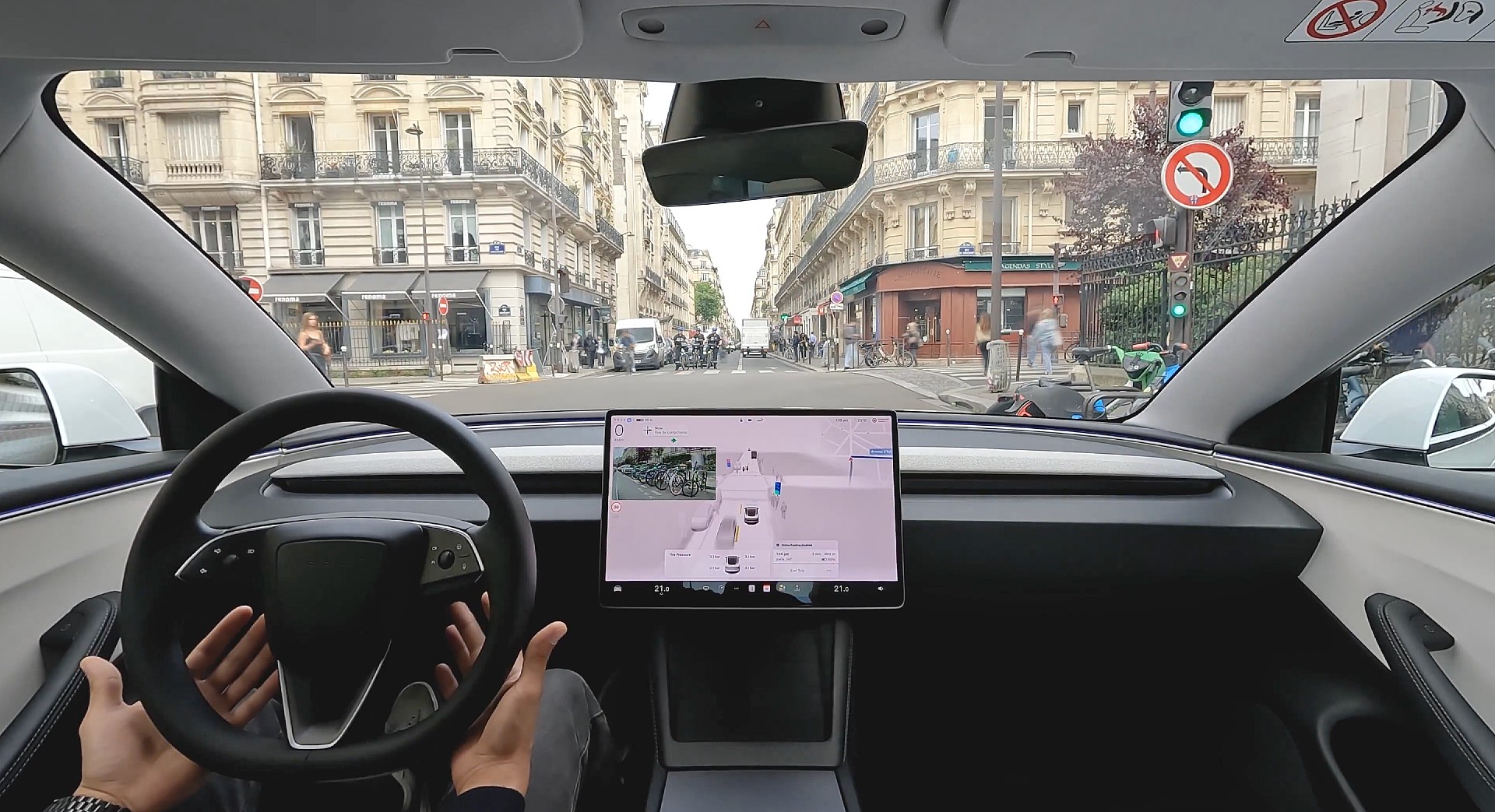
Elon Musk gave a brief answer on X Monday that confirmed that Tesla’s standing offer to license Full Self-Driving to other automakers still has zero takers. Sawyer Merritt wrote that “Tesla has for years openly invited other automakers to license FSD. None of them have accepted,” responding to a prediction from Boom Supersonic founder Blake Scholl that Tesla would eventually open FSD the way it opened its Supercharger network to rival brands. Musk’s reply to Merritt was one word: “Exactly.”
It is not the first time Musk has made this point. He said something similar in November, when he called legacy automakers reluctance to adopt FSD “crazy,” and Tesla has floated the offer publicly since at least 2021. Scholl’s prediction touches on something real. Once NACS became the de facto charging standard, adoption from Ford, GM, Rivian and others followed within about a year. FSD licensing was supposed to work the same way once Tesla built enough of a lead that switching made sense for everyone.
Tesla has for years openly invited other automakers to license FSD. None of them have accepted. https://t.co/kgz4idpoUM
— Sawyer Merritt (@SawyerMerritt) September 22, 2026
The case for licensing now is stronger than it was two years ago. Waymo and Zoox are logging hundreds of thousands of unsupervised autonomous miles, along with Tesla’s own Robotaxi fleet. Every automaker still selling driver assist systems that lag FSD has given the robotaxi conversation to Tesla, Waymo and Zoox by default. Licensing FSD would let a GM or a Ford compete on the same field without spending a decade and billions of dollars building a stack from scratch, the same argument Tesla made when it opened the Supercharger network to bring more EVs onto its chargers.
But FSD is not a connector standard. As one reply to Musk’s post pointed out, licensing FSD is not a software license the way NACS was a plug spec. It requires adopting Tesla’s eight camera layout and its onboard compute architecture, meaning a licensee’s cars would effectively become Tesla hardware wearing someone else’s badge. That is the visible obstacle. The less visible one is data. A licensed FSD stack would report back the same telemetry Tesla collects from its own fleet, giving Tesla a continuous read on how a competitor’s cars are actually driven, where they struggle, and how often drivers intervene. For an automaker trying to build its own autonomy program, or simply trying to keep its build quality and safety record private, handing Tesla that visibility could be a bigger cost than the hardware bill. It is the reason the Supercharger comparison only goes so far. Opening a charging plug cost Tesla very little. Opening FSD would cost a rival something it cannot get back.

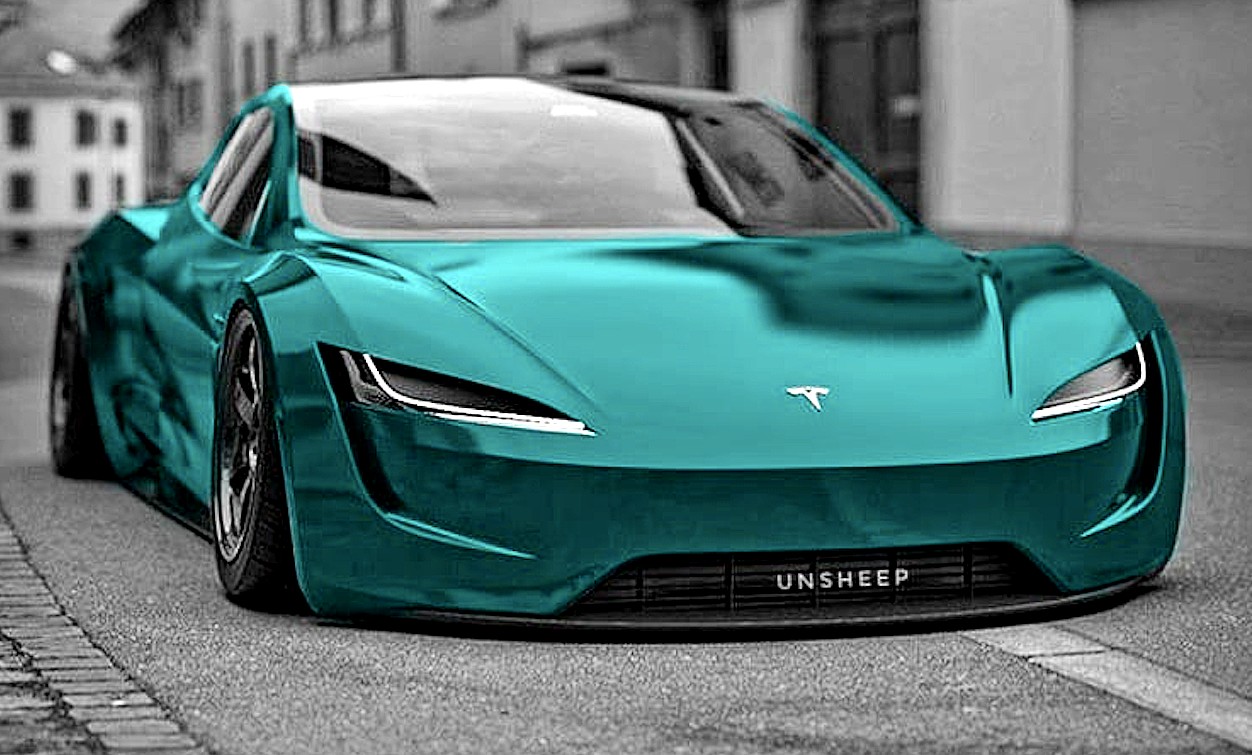
Tesla has reopened reservations for its long-delayed next-generation Roadster, asking buyers for a $50,000 deposit just days before an October 1 reveal event in Waco, Texas. The move revives a reservation process first launched in 2017 and later paused when Tesla pulled pricing from its website in 2021.
The reservation page requires an immediate $5,000 credit-card payment, described as fully refundable, followed by a $45,000 wire transfer due within 10 days, which is identical to what was expected previously. Reservations are not considered final until the wire clears.
The structure matches the 2017 terms Tesla used when it first collected deposits after unveiling a prototype. Tesla has not published a confirmed retail price or production start date on the order page.
Go buy a Roadster pic.twitter.com/n7rhouAmIS
— TESLARATI (@Teslarati) September 21, 2026
The October 1 event is scheduled in Waco, about 90 minutes north of Tesla’s Austin headquarters and near SpaceX’s McGregor rocket test site. Tesla sent invitations to existing reservation holders and posted a “Go for launch” teaser on September 12.
The Federal Aviation Administration (FAA) established a temporary flight restriction over the McGregor area from September 18 through October 2, consistent with plans for a demonstration involving SpaceX-designed cold-gas thrusters. Elon Musk has previously described the optional package as enabling extreme acceleration or brief hovering. Tesla has said the event will include pricing, specifications, and production targets.
The second-generation Roadster was first shown in November 2017 during Tesla’s Semi launch. Musk promised production in 2020, with claimed performance of 0-60 mph in 1.9 seconds, more than 250 mph top speed, and roughly 620 miles of range.
Those targets have slipped repeatedly.
Tesla later pointed to 2022, 2023, 2024, and 2025-2026 before indicating production would not begin until 2027 or 2028 at Gigafactory Texas. Design work has continued, with reports of a sharper, Cybertruck-influenced look replacing the original curvy prototype.
Original reservation holders who paid $50,000 in 2017, or $250,000 for the Founders Series, have waited nearly nine years without a production car. Some high-profile customers canceled. Tesla’s decision to reopen orders now, after previously shutting them down, tests whether new buyers will commit substantial funds before seeing a finalized production vehicle. The October 1 event is intended to answer remaining questions about what those buyers will actually receive and when.

Tesla’s Full Self-Driving (Supervised) is heading to Czechia after the Czech Ministry of Transport recognised the Dutch RDW’s provisional type approval, making the country the seventh EU member state to clear the system for public roads. Tesla Europe announced on 21 September 2026 that “FSD Supervised is now approved in Czechia” and that rollout “will begin soon.”
The decision marks a notable reversal. Earlier in 2026, Prague had declined to automatically recognise the Netherlands’ April approval, citing concerns over speed-limit compliance, traffic-sign recognition and driver-attention monitoring, and arguing that a coordinated EU approach was preferable. Officials said months of expert review, talks with Tesla and other member states, and real-world data from countries already using the system resolved those issues.
🚨 Tesla FSD heading to Czechia 🇨🇿 pic.twitter.com/mkzlM9QjrB
— TESLARATI (@Teslarati) September 21, 2026
“Safety remains the top priority,” the ministry stated.
FSD Supervised remains a Level 2 driver-assistance system: the driver must stay engaged and is legally responsible. Eligible vehicles need AI4, the company’s most up-to-date hardware version. Tesla is expected to push the feature over the air in the coming days, following the pattern seen after earlier national approvals.
Europe’s rollout began when Dutch regulator RDW issued a provisional EU type approval on 10 April 2026 after extensive testing. Mutual recognition then produced a rapid cascade: Lithuania (20 May), Estonia (29 May), Denmark (9 June), Belgium (10 June) and Slovenia (7 September). Czechia now completes that list of seven.
The approvals cover only a modest share of the EU population, but they add political weight ahead of a 6 October vote by the Technical Committee on Motor Vehicles. A qualified majority, at least 15 of 27 member states representing 65 percent of the EU population, could open the remaining markets, including large ones such as Germany, France, Italy and Spain that have so far preferred to wait for a bloc-wide decision.
For Czech Tesla owners, the immediate prize is access to the same supervised highway and city driving already available in the other six countries. For Tesla, each new market generates additional European driving data and strengthens the case that FSD Supervised can operate safely under the continent’s varied road rules. The Czech approval is therefore both a local milestone and another incremental step toward a wider European launch.

Why automakers keep turning down Elon Musk’s Tesla Full Self-Driving offer

Tesla Roadster is available for order once again following brief hold


