Lifestyle
Energy expert explains why Tesla and the electric car industry is here to stay

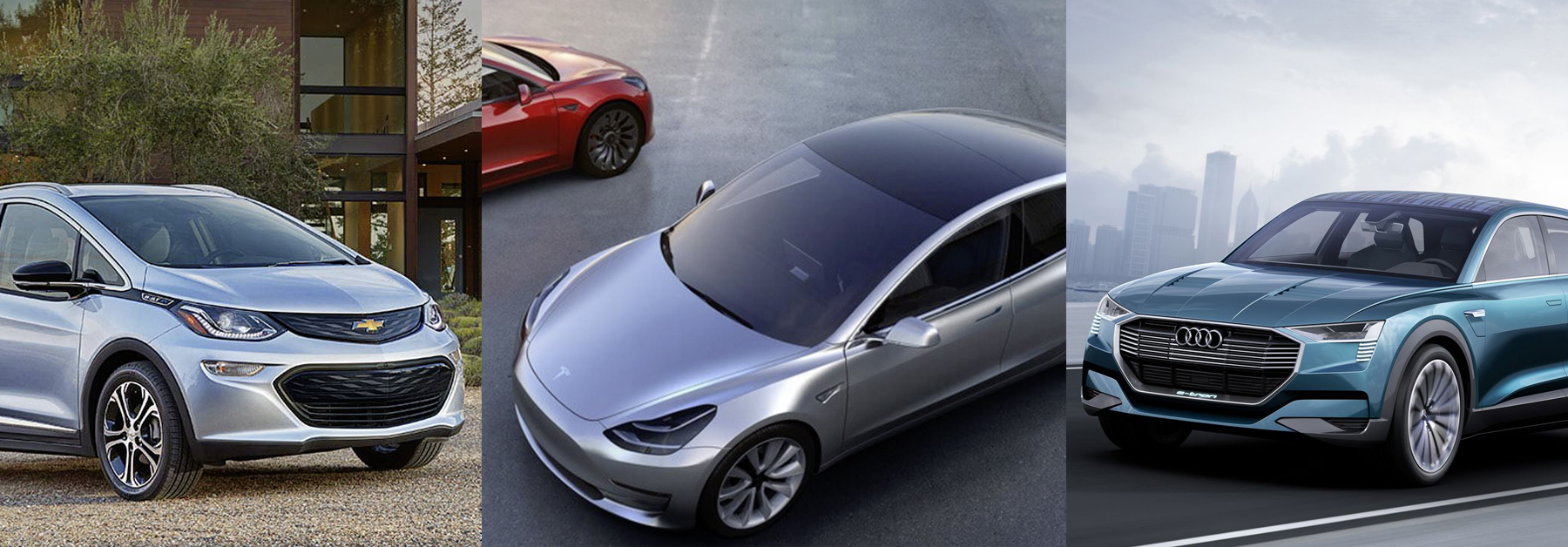
Electric vehicles will be hugely beneficial for our environment but that’s not always what you read. There’s a lot of misinformation out there, with too many articles pushing old myths and bad data. It’s time to set the record straight. As an engineer working in the field of energy and sustainability I’m going to give it a shot.
In all fairness the story of electric vehicles has been advancing rather quickly. Battery costs have fallen 80% since 2010 and affordable long range EVs are beginning to hit the market. But this is just the start. Nearly all major manufacturers are now feverishly working on electric models, with companies like Mercedes, BMW, and VW expecting 25% of their sales to be electric by 2025 and then there’s Tesla, the patron saint of sustainability, targeting production of 500,000 electric vehicles as soon as next year. This information and the benefits however are not universally appreciated, far from it.
Electric vehicles are coming, they’re shaking up long-established industries, and it’s happening much more quickly than people expected. This is a good thing. Here’s why:
1. Our electricity grid is actually pretty clean… and getting cleaner
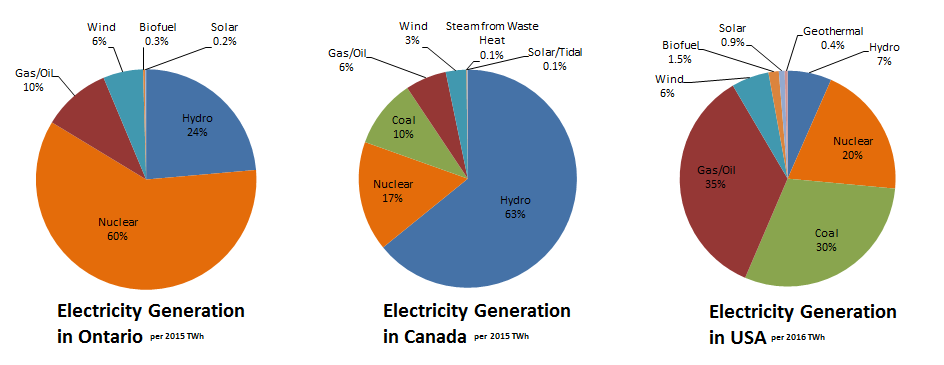
The myth “you’re using fossil fuels to power your electric car” is false. In Ontario Canada, where I live, we have an electricity mix that includes no coal and only 10% from natural gas. Canada-wide 63% of electricity comes from hydro and only 16% from fossil fuels. That’s a lot of carbon free power.
The US average doesn’t look quite as good but it’s improving all the time. A short time ago over 40% of electricity in the United States came from coal (2011). Last year it was 30%, with 34% from natural gas, 20% nuclear, 7% hydro, and 8% from other renewables. That will continue to improve every year as more coal plants are shut down and more renewables are installed. Want proof? From 2014 to 2017 electricity from coal dropped by 23% while solar power generation increased 102%. In 2016 alone US solar capacity went from 28GW to 42GW.
Electricity Mix – Ontario, Canada, USA
2. Using electricity to power your car is way more efficient than gas or diesel
I recently read a Canadian newspaper article that said “burning a fossil fuel to power an electric car is nowhere near as efficient as burning that fuel to power the car directly”. That’s simply not true but more importantly it’s not even a real scenario. Just look at the electricity mixes above. Fossil fuels are not our only source of electricity; in Canada they make up only 16%. Even in the US where fossil fuel use is much higher, natural gas is a cleaner, lower carbon option compared to gas, diesel, or coal. Not all fossil fuels are equal.
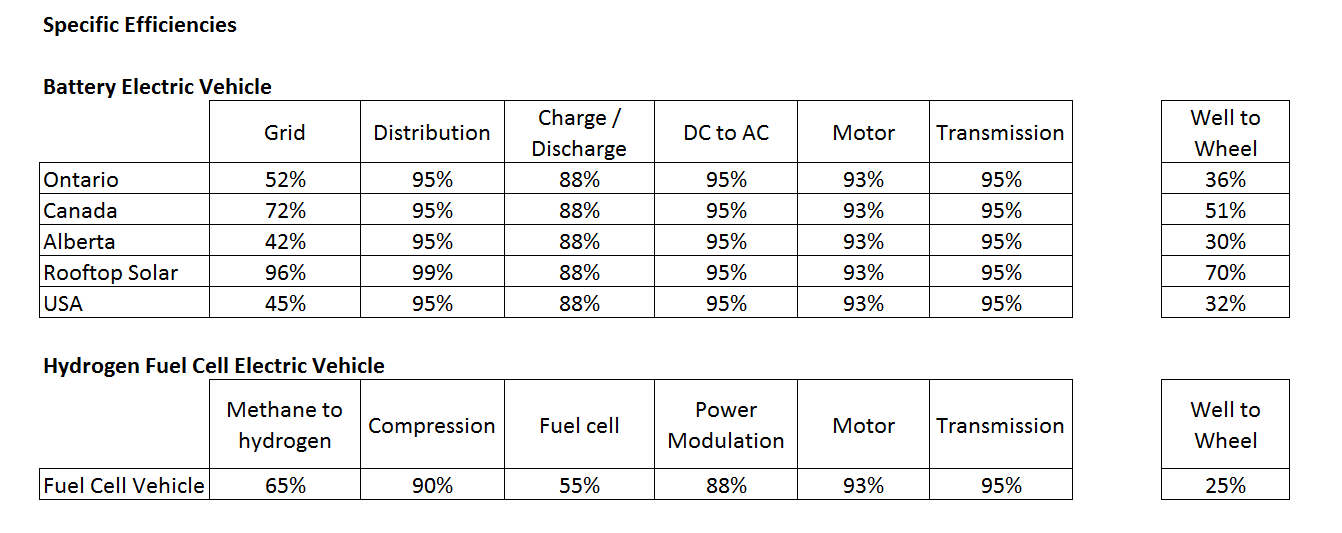
Electric and combustion vehicles are very different so comparing their efficiencies directly, apples to apples, isn’t straightforward. The best way to do it is using “Well to Wheel” efficiency; it’s the total system efficiency right from fuel extraction to the point where power is delivered to the wheels (and all the losses in between). No hiding losses in this calculation.
There’s a lot of background information that goes into the calculations and if you like you can check out the details at the end of the article. The results however are tabulated below. Electric vehicle efficiency on the Ontario grid is double that of diesel and triple that of gasoline. The efficiency goes up if the grid uses more hydro or other renewables, as you can see in the Canadian average or for residential solar. TLDR: it’s the combustion efficiency that’s “nowhere near as efficient”.
Table 1: Vehicle Efficiency Comparison
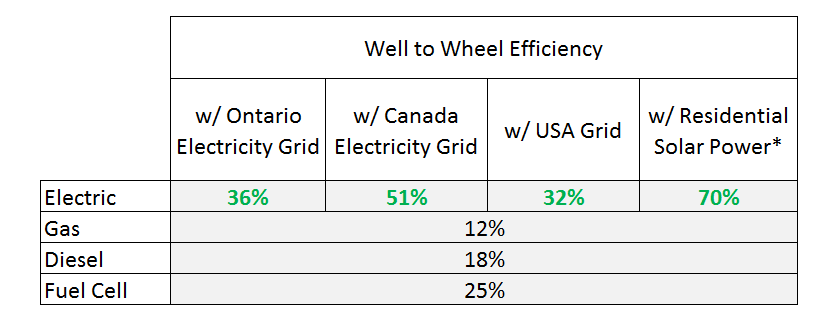
*Efficiency in this situation does not include the conversion of light to electricity since that light energy is not ‘wasted’ but goes on to perform its regular function providing light and heat.
This is clearly a positive result, it means we’re using energy more wisely with electric vehicles. But efficiency is not the same thing as ‘environmentally friendly’. An engine that’s 100% efficient but runs on whale oil isn’t very friendly, at least not to whales. Thus the next section looks at the carbon intensity of the fuel sources.
3. Electric vehicles will reduce emissions… by a lot
There seems to be a large amount of distrust for this, as if electric cars are some sort of scam to hoodwink unsuspecting millennials. Let’s clear that up because it’s a big driver for EVs.
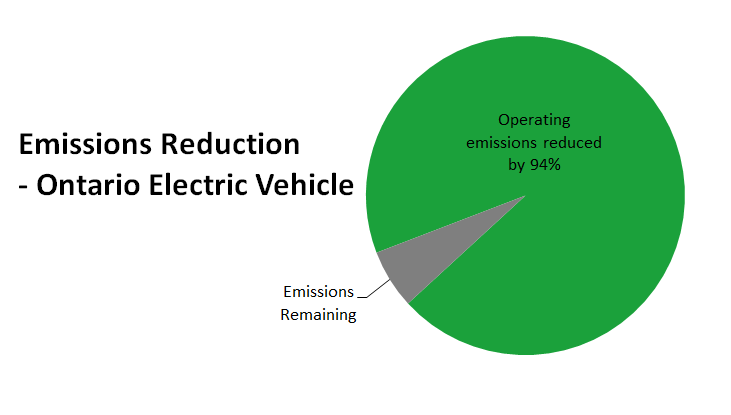
“There’s a 94% reduction in the CO2 equivalent emissions from swapping my gas powered Golf for the Tesla.”
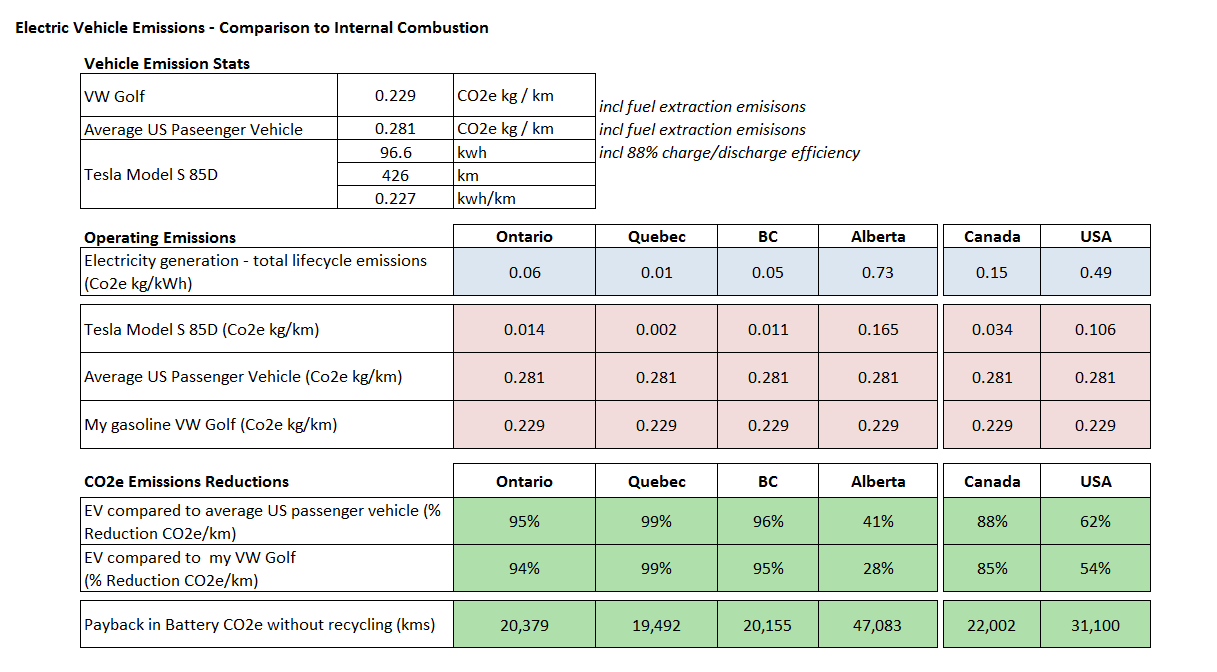
First I assembled the the ‘fuel’ economies of the average US vehicle, my VW Golf, and a Tesla Model S 85D. Those are the three vehicles I wanted to compare. I then determined the CO2e emissions per km for the combustion vehicles and then did the same for the Tesla. Since the fuel source for the Model S is electricity I had to calculate the emissions from each electricity grid. To do that I used the median lifecycle emissions factors from the Special Report on Renewable Energy Sources and Climate Change Mitigation (SRREN), and then compared them to reports specific to Ontario. Then it was a simple matter of comparing the emissions per km of each vehicle. The results surprised even me.
As a resident of Ontario there’s a 94% reduction in the CO2 equivalent emissions from swapping my gas powered Golf for the Tesla. And before you start talking about manufacturing emissions, I looked at those too. The extra manufacturing emissions for the Tesla total approximately 5440 kg of CO2e, almost entirely from the battery. Those emissions would be ‘paid back’ through driving emission reductions by around 20,000 km. This happens to be the average distance driven by a Canadian in a year.
In addition to Ontario, I also ran the numbers for the four most populated provinces in Canada, the Canadian average, and the US average (see table below). All show significant reductions, though coal heavy Alberta has lots of room to improve.
Table 2: Comparison of Vehicle CO2e Emissions
4. Transport emissions are a big part of our national emissions
There are some that claim transport emissions aren’t significant and we should be focusing on other areas. They say this as though our civilization can only do one thing at a time and we weren’t already working on those areas (we are!). One article even stated EVs could never offset more than 12% of Canada’s emissions. This is all very misleading and fundamentally incorrect.
Environment Canada Data – GHG Emissions by Sector
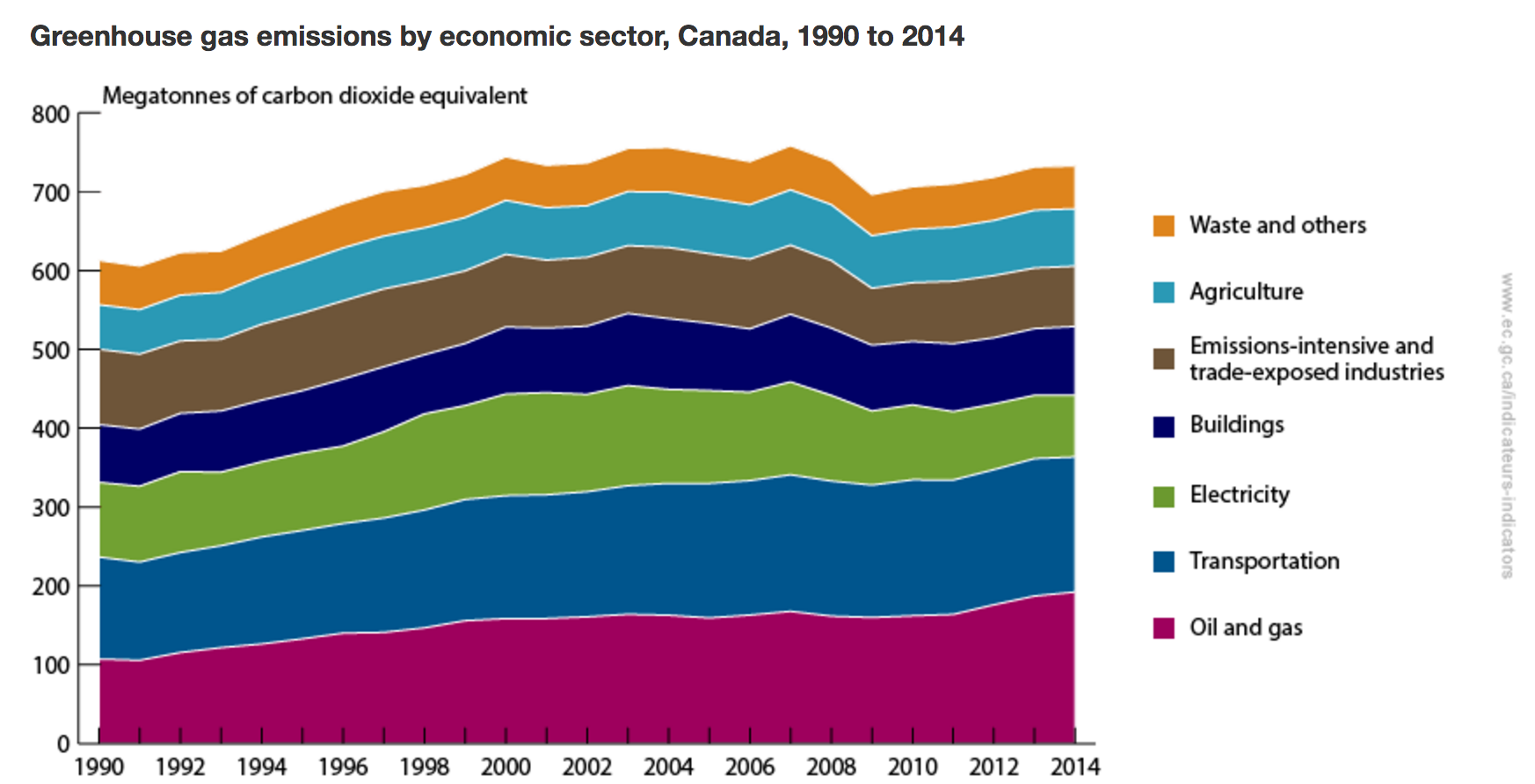
Environment Canada data shows transportation CO2 equivalent emissions are 23% of Canada’s total. Since roughly half of that is attributed to passenger vehicles that works out to the 12% number above, but that’s not the whole story. Not even close. That number excludes buses and freight truck transport, which would see electrification or equivalent. Once included the total rises to approximately 20% of Canada’s national greenhouse gas emissions.
Wait, there’s more.
It leaves out how we got the fuel in the first place. The oil and gas sector, which accounts for 26% of our total national emissions. If we break out the amount related to oil processing for passenger vehicles, buses, and freight trucks the result is another 10%.
Adding the 20% from direct vehicle emissions to the 10% for oil processing, results in a total of 30% of our national CO2e emissions. Thirty Percent! That’s a big deal.
5. Incentives will help make EVs more affordable for everyone, speeding up their adoption across the world
The purpose of incentives is to help a technology mature more quickly so that it will become economically viable for a much broader sector of the public. Thus the benefits of that technology can be had for many more people and much sooner than would otherwise be possible.
Incentives are arguably one of the most democratic ways of advancing a technology; if people don’t want EVs then government money doesn’t go there. Governments also invest in the development of new technologies through things like tax rebates or grants. To decry the incentives for EVs while giving a pass to traditional automakers receiving hundreds of millions in factory rebates or conveniently forgetting the automotive industry bailout is cherry picking the facts.
There are many spin-off benefits from electric vehicle adoption that make them a good public investment. More electric vehicles help balance our electricity demand between day and night, make better use of our resources, grow our economy by replacing old technologies, create new jobs, and reduce pollution which improves quality of life while reducing healthcare costs. I could go on.
6. Electric car batteries can, and are, being recycled.
There are articles that claim “electric car batteries are toxic sludge”. Well Tesla has published a good deal of information about their batteries and recycling programs. Their batteries are RoHS compliant and fully recyclable. RoHS refers to the restriction of hazardous substances directive for electrical and electronic equipment, adopted in 2003 by the EU. Tesla recycles their batteries 100% within Europe and at ~60% in the US, according to their blog. They are also building a new recycling facility at the Nevada Gigafactory. Seems like there won’t be much “toxic sludge” to worry about after all.
7. Show me a better option
There isn’t one. I think it’s fair to say Dieselgate proved that clean diesel wasn’t what we thought (or were told). And fuel cells, for all their promise still have very large hurdles to overcome. To that point I think it’s worth naming a few.
Virtually all hydrogen today is produced through the inefficient steam reformation of fossil fuel methane. And while it’s possible to generate hydrogen from water, it’s extremely expensive. Even if it does get cheaper we would then be using the electricity to create a highly explosive fuel before converting it back into electricity. That might not be so unreasonable if fuel cells were more efficient, or if they didn’t require a battery to regulate the power. There’s also the storage and distribution issue. Hydrogen requires strong pressure vessels to store as a liquid (it’s a gas under normal earthly conditions). Existing gas stations won’t work without massive upgrades (read: new tanks, new pumps). All this is not to say there won’t be applications for fuel cells but for passenger vehicles does it really make sense?
Look, there are some big industries that would love for you to believe the technology to replace them ‘just isn’t there yet’. It’s a common tactic. Remember the cigarette industry that for decades said the research just wasn’t conclusive, all to keep you smoking. Fact is we may not have another 10, 20, 30 years to figure this out. We need to start making real changes today. EVs are part of that change. They are here now and looking better every day.
The breakthroughs have been incremental with the improvements compounding rapidly. It’s happening so fast that people are caught off guard. Today Tesla Supercharger stations can add 270 km in 30 minutes while next generation stations will triple that rate. Batteries are improving every year, with faster charging, higher capacities, lighter weight, and lower cost. Just this year Tesla began manufacturing their new 2170 battery format with a reported 30% improvement in energy density over their 2012 battery cell. Product announcements from other manufacturers suggest another 30% is expected by 2020. This has led to a new benchmark for electric vehicles – affordable battery powered cars with 400km in range. The Chevy Bolt and Tesla Model 3 are but the first of many.
With major automotive manufacturers now committed to EVs, this is truly just the start. Look at VW, BMW, Jaguar, Mercedes, Toyota, Ford, Nissan, Tesla, the list goes on. This broader commercialization will bring larger investments and even more rapid improvements. We are on the cusp of a paradigm shift in our transportation and energy sectors. A shift that will help reduce the effects of climate change, improve our air quality, and preserve our wonderful planet for future generations. To disregard electric vehicles as a fleeting fringe technology is to ignore all indicators to the contrary. Electric vehicles are coming.
Oh and they cost a lot less to operate too.
———————————————————————
Notes:
Wherever possible I completed most of the calculations using raw data. I used multiple sources to justify calculation inputs and to compare the results to other publications as part of my validation exercise. I also performed a sensitivity analysis to determine the relative impact of parameters, such as in the CO2e calculations. I’ve made my best effort to use accurate, representative data and present the information to offer a realistic view of the environmental benefits.
1 Vehicle Efficiency Comparison:
Notes:
- The results for combustion engines are taken from a 2010 MIT study as noted below.
- Tank to wheel efficiency for electric vehicle efficiency includes battery charge/discharge efficiency (~88%), motor (~93%), inverter (95%), and drivetrain transmission efficiency (~95%).
- Well to Wheel for battery electric and fuel cell electric vehicles are calculated per the information below. It should be noted the overall grid efficiency affects the battery electric vehicles efficiency, which is ~74% for Canada due to the large amount of hydro and in Ontario is lower ~52% because nuclear power stations are relatively lower thermal efficiencies of 33% (according to the US EIA, which also shows natural gas stations are 44% efficient). I’ve accounted for fuel extraction energy which did not have a meaningful impact on final efficiencies. Also note that comparing renewable energy efficiencies are somewhat different than fossil fuels or nuclear. In solar and wind the losses are in uncaptured or unconverted solar or wind energy. That energy continues to serve its intended function on the planet. There are system losses however which are accounted for.


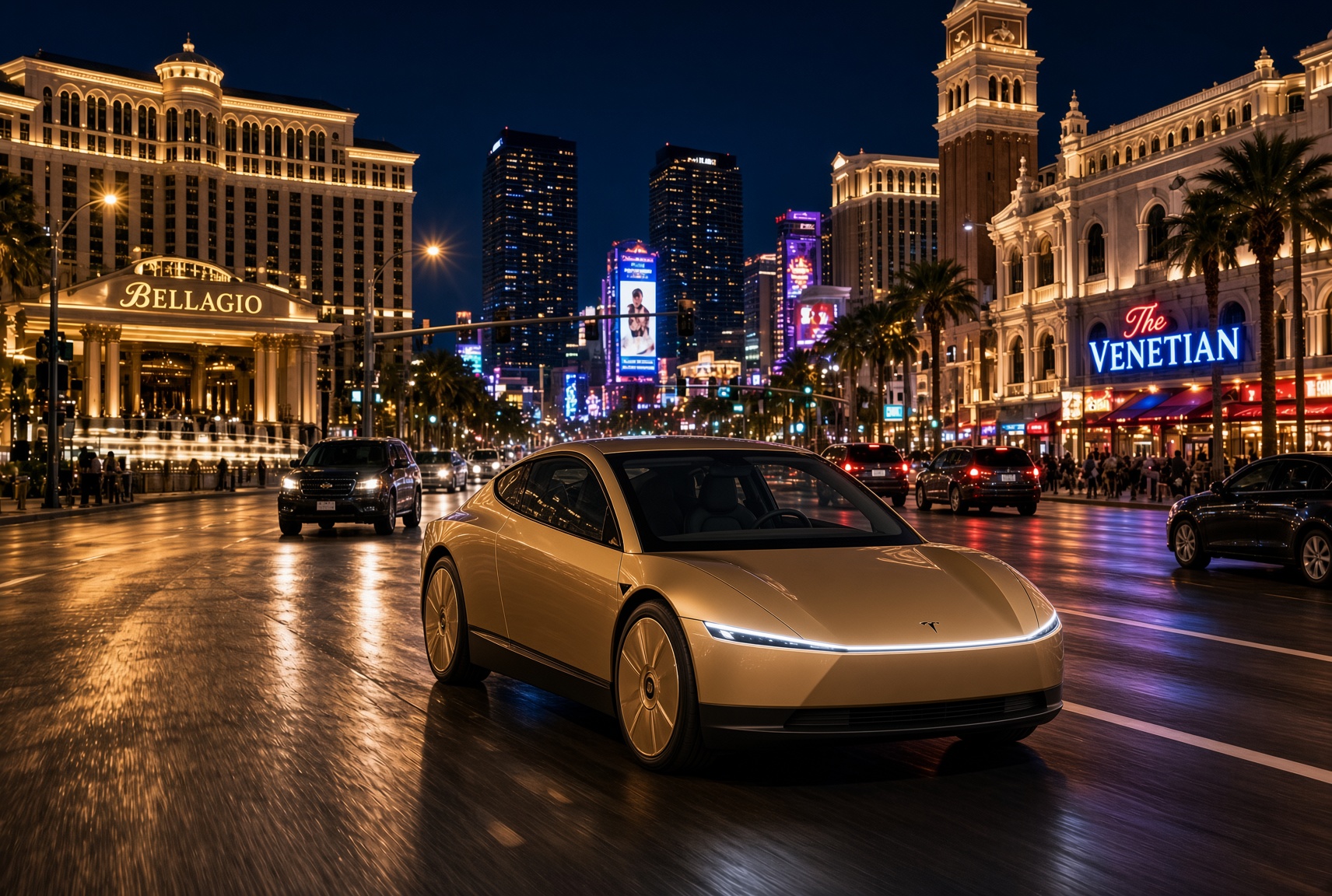
For a century, the car has asked the same thing of its owner, which is basically to pay attention. Even the best ride-hailing app like Uber or Lyft only moved the problem into someone else’s hands. You stopped driving, but you still sat in a stranger’s car, while half listening, and wondering whether to take a phone call in the car without being rude. The Cybercab has no wheel, no pedals and no driver. With Grok @bot now live inside it, it becomes something else entirely, and I think that matters more than the fleet count that everyone is tracking.
Grok @bot is an agent, not a voice assistant. A rider signs in once, and from then on can say what they need and watch it happen. Order dinner from a favorite restaurant. Fill the grocery cart. Move money, answer email, adjust a calendar, push a work project forward. Tesla engineer Yun-Ta Tsai confirmed it is enabled across every Cybercab and the rest of the Model Y fleet, and Tesla’s own pitch is that Full Self-Driving handles the commute while Grok handles the errands.
Think about what that does to a thirty minute ride. Uber sells you a trip, while Waymo sells you the same trip in a more private setting. Tesla is selling the thirty minutes themselves, returned to you with an assistant attached. Errands that used to eat a Saturday get done between pickup and drop off. The ride stops being dead time between two places and becomes a place of its own.
Tesla integrates Grok Bot into its vehicles for the ultimate personal assistant
Best of all, your Bots follow you into any Cybercab, and presumably your own Tesla, then logs you out automatically when you step out. Anyone can bolt a chatbot onto a screen, but much harder to own the vehicle, the autonomy stack and the assistant at once. It also quietly ties SpaceX’s Super Intelligence business to Tesla’s fleet, after Tesla converted its xAI stake into SpaceX equity. The relationship between those two companies is getting harder to describe as separate.
This is also where the hard questions start, because an agent that can spend your money in a vehicle other people also ride in needs some answers. How does it handle a voice it shouldn’t trust? What gets recorded, who can see it, and for how long? What happens when a rider leaves halfway through a task?
If Tesla gets those answers right, the scoreboard changes. We have been counting Cybercabs and wait times. The more telling number may be what riders accomplish per trip. That is data almost no one else will ever have, and it is the real reason to watch Grok @bot.
What do you think? Leave me a comment.
Lifestyle
Tesla’s mirrorless Cybercab will give riders a visibility upgrade
Tesla engineer confirms Cybercab update letting riders pull up rear and repeater cameras on demand.

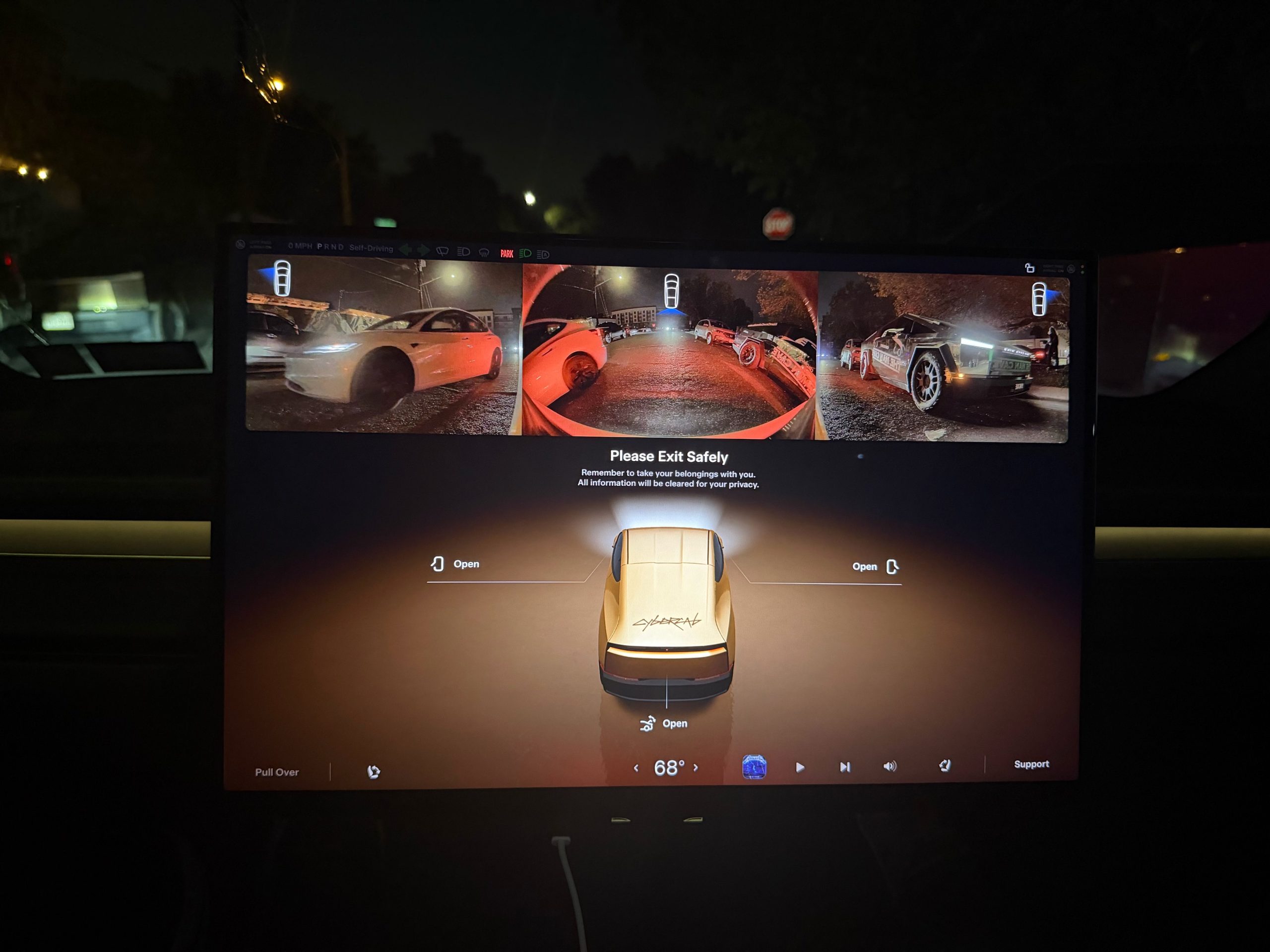
Tesla is working on a Cybercab update that would let passengers pull up the vehicle’s rear and side cameras on demand, and the request came straight from a rider.
The exchange played out on X late Friday. Cybercab rider Dan Burkland shared photos of the two-seater’s cabin screen after an evening ride, praised the UI team’s work, and left one request: let riders open the rear and repeater cameras whenever they want, “especially for peace of mind.” Tesla UI software engineer Evan (@CarCoder) answered with two words: “In development.”
The Tesla UI team absolutely crushed it with the infotainment software. Nicely done @CarCoder!
One feature request: Allow folks to pull up the rear & repeater cameras on demand. This would be great especially for peace of mind. https://t.co/mNAOSLx6pE
— Dan Burkland (@DBurkland) October 10, 2026
The idea fits a pattern Teslarati has tracked since public rides began. Days after paid Cybercab service opened in Austin, Tesla sent riders a survey that asked them to rate the touchscreen, the app and the cabin, and to pick the features they wanted most. We reported on that survey in September, and a camera view is the kind of small software change Tesla can push quickly if riders keep asking.
It also speaks to something unique about the vehicle. With no steering wheel, no pedals and no driver, passengers have no mirror to check and no way to see behind them. The hardware is clearly built for camera awareness, from the repeater cameras to the rear camera. Letting a passenger look through those same cameras would give a nervous first time rider a way to confirm what is around the car.
The timing matters because the fleet is growing fast. Tesla’s Robotaxi account said on Saturday that more than 300 Cybercabs are now serving Austin, an eightfold increase in 30 days, and Tesla AI chief Ashok Elluswamy named Dallas as the next city. More cars and more cities mean more people riding in a driverless vehicle for the first time, which is exactly when small trust features carry weight.
For now, the feature is confirmed only as in development. If Tesla follows its usual pattern with Cybercab software, riders could see it appear in a point release without any announcement, and Teslarati will watch for it.
Elon Musk
Elon Musk’s surprise addition to the X Takeover lineup has fans talking
Elon Musk will join Saturday’s X Takeover at Giga Texas for a live virtual interview.
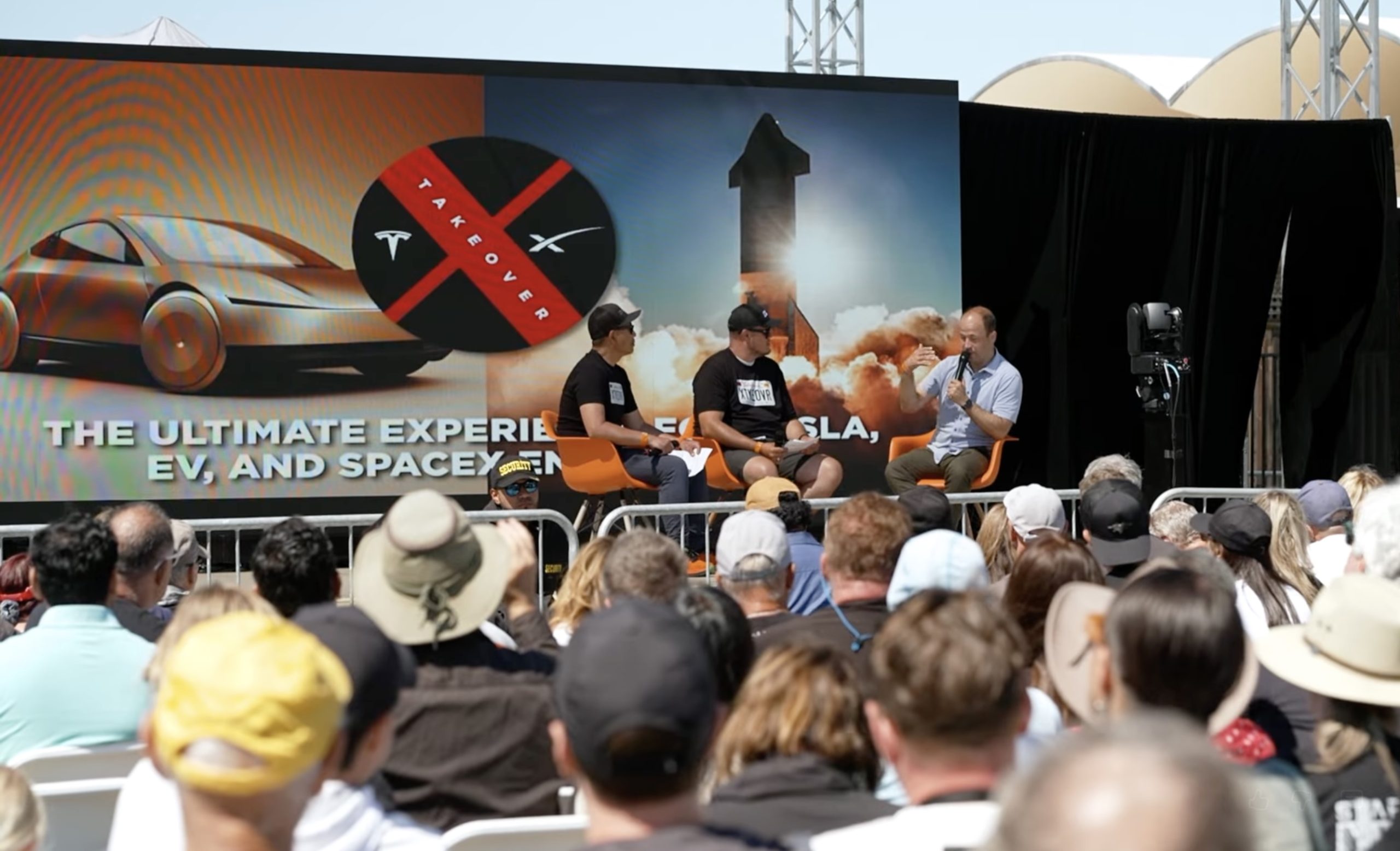
Elon Musk will join X Takeover at Giga Texas on Saturday for a live virtual interview, according to Sawyer Merritt, who shared the news late Thursday. Musk will not be on stage in Austin. The conversation is set to stream for free on the @teslaownersSV account on X.
Organizers had kept expectations in check. In a September update, Tesla Owners Silicon Valley said Musk had appeared at the event twice before but was not promising a third appearance, even as fans hoped he would walk the Giga Texas grounds in person. A virtual spot matches 2024, when Musk gave a surprise interview of about an hour to the crowd in San Luis Obispo, as Teslarati reported at the time.
Wasn’t expecting this 🫡
— Tesla Owners Silicon Valley (@teslaownersSV) October 9, 2026
This year’s edition is a first in several ways. It is the first X Takeover held outside California and the first at a Tesla facility, with tickets selling out in eight days. Tesla provides the venue, but the event is produced independently by Tesla Owners Silicon Valley. The main event runs from 10 a.m. to 6 p.m. CT, followed by a drone and light show at 9 p.m. Maye Musk is the keynote speaker, Franz von Holzhausen is set for a virtual keynote, and Nicki Minaj is the special guest. Joe Tegtmeyer, whose drone footage Teslarati used to track the Optimus factory steel frame at Giga Texas, is also on the speaker list.
Musk’s interview topics have not been revealed, but the backdrop is busy. Tesla doubled its Cybercab fleet in Austin in late September, and last week Musk explained why Robotaxi hours only moved from 10 p.m. to 11 p.m.. Merritt also reported Thursday that Texas DMV records now show 319 registered Cybercabs, up from 169. NHTSA’s deadline for Tesla’s sworn answers on Cybercab certification is October 30, and Tesla reports third quarter earnings on October 21.
Fans who cannot make it to Austin can watch the livestream on X. Musk tends to say more in unscripted settings than he does in prepared remarks, which is the reason this one is worth having open on Saturday.

Elon Musk breaks his silence on the Starlink impact to Ukraine drones

Tesla opens the Q&A for its biggest earnings call yet

Ukraine says Starlink is cutting out its military drones as Poland calls out Elon Musk

The Pentagon taps Elon Musk to design the battlefield of the future

SpaceX reveals how its 1 Million AI satellite network will work and prevent space collisions


