Energy
Tesla launches Powerwall Lease for affordable home backup


Tesla Energy has introduced the Powerwall Lease in conjunction with Tesla Electric, making the service available in Texas. This new option delivers whole-home backup power using two Powerwall units for a net monthly cost of $35 after credits, accompanied by a low fixed electricity rate.
Under the lease terms, customers pay a one-time order fee of $100. The base lease payment for the two Powerwalls is approximately $122 per month during the first year, subject to a 3 percent annual escalator thereafter. Enrollment in a qualifying Tesla Electric Backup plan or Virtual Power Plant plan provides an $87 monthly credit.
Powerwall Lease is now available with Tesla Electric in Texas
Whole-home backup for $35/month, with a low fixed electricity rate
– Two Powerwalls, $0 installation
– Storm Watch outage protection
– One app to manage it all pic.twitter.com/oTzqc6K3aF— Tesla Energy (@teslaenergy) August 13, 2026
This credit lowers the effective cost to roughly $35 per month plus applicable tax.
Installation of the standard system carries no additional charge. The package features Storm Watch for outage protection and allows complete management through a single Tesla application. The system supplies continuous whole-home backup capability.
The Powerwall system enables households to maintain electricity during severe storms that disrupt the utility grid. When outages occur, the batteries automatically provide seamless backup power to the home.
Tesla announces 100k Powerwalls are participating in Virtual Power Plants
Tesla Storm Watch monitors weather forecasts and ensures the units are fully charged ahead of anticipated severe weather events so that power remains available throughout the disruption, keeping lights, refrigeration, and other essential systems operating without interruption.
Availability is restricted to select Texas locations where retail electric choice exists. Participants must lease exactly two Powerwall units and maintain continuous enrollment with Tesla Electric. Solar panels cannot be included under this particular lease arrangement.
The monthly credit activates automatically once the system is installed, receives permission to operate, and enrollment is confirmed. To retain the credit, customers are required to stay enrolled in Tesla Electric and fulfill all program conditions.
Nonstandard installations that involve electrical upgrades or special permitting may lead to extra expenses and might impact eligibility for the credit, so be sure to check with either your installer or Tesla to ensure you will still qualify.



Give the gift of Tesla upgrades.
Shop for someone else or treat yourself. Get more shopping power with a Teslarati gift card.
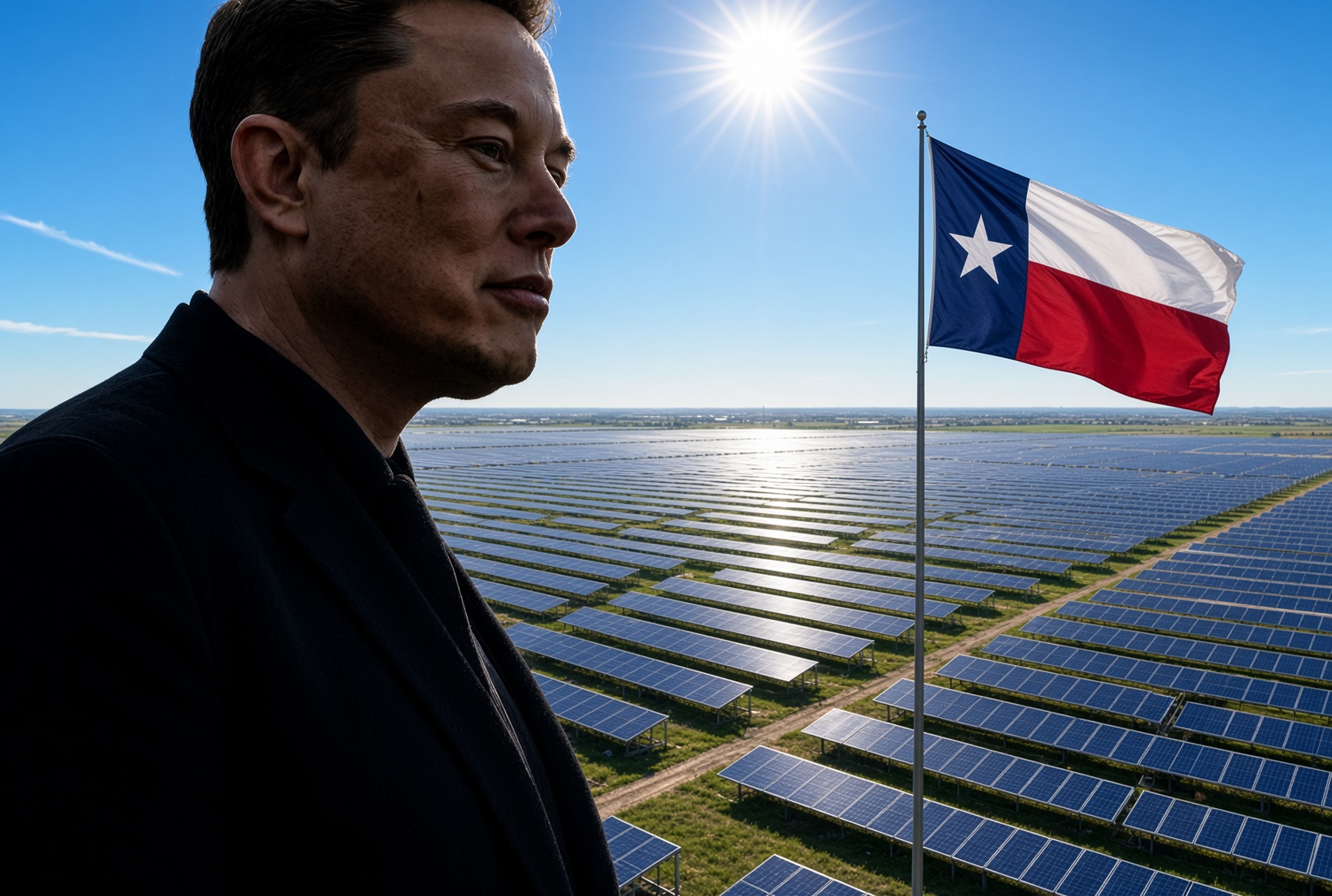
Tesla has started to perform earthworks engineering on the roughly 3,000-acre site in Fort Bend County, Texas, advancing the massive $10 billion Project Crystal Sun plan to build a vertically integrated solar manufacturing complex.
Flyover drone footage from S.E. Robinson, Jr. released this morning shows the location under development. Tesla has crews on site performing large clearings, but you can also see equipment staging areas, the use of an existing homestead, and active leveling across a substantial portion of the property.
Tesla has started construction on Project Crystal Sun, its $10B vertically integrated solar factory near Houston, Texas.
The plant will make everything from silicon ingots and wafers to finished cells and panels, with operations targeted for Q1 2029.
@SERobinsonJr with a great flyover of the facility:
— TESLARATI (@Teslarati) November 9, 2026
Public filings first submitted in July under Texas’s Jobs, Energy, Technology and Innovation Act describe a plant that would manufacture the full solar chain: everything from silicon ingots, wafers, coated cells, and finished modules.
Tesla projects 9,712 permanent jobs by 2033, ramping from roughly 1,900 positions in the first year of operations, plus a peak of about 1,147 construction jobs. Construction is targeted for 2026–2028, with commercial production beginning in the first quarter of 2029. An accompanying economic analysis estimates the project could add roughly $107 billion to Texas GDP over several decades.
Local incentives have cleared major hurdles. Lamar Consolidated Independent School District unanimously approved school-tax limitations in September, and Fort Bend County commissioners approved a package of abatements and related agreements in late October that could extend equipment tax breaks for as long as 35 years.
Tesla had previously indicated it was evaluating a competing out-of-state location.
The effort fits broader statements by Musk that Tesla and SpaceX are each working toward 100 gigawatts of annual U.S. solar manufacturing capacity. If built as described, Project Crystal Sun would stand as one of the largest domestic attempts to create a fully integrated solar supply chain on American soil.
While Tesla has not issued a formal groundbreaking announcement, the visible site preparation and high-profile social media activity represent a concrete step forward for a project that has moved from confidential filings to active earthworks in a matter of months.
Energy
Taiwan power firm bets big on Tesla Megapacks as AI data center thirst grows
Taiwan’s Apollo Power orders 260 Tesla Megapacks, betting AI data centers will need more electricity.

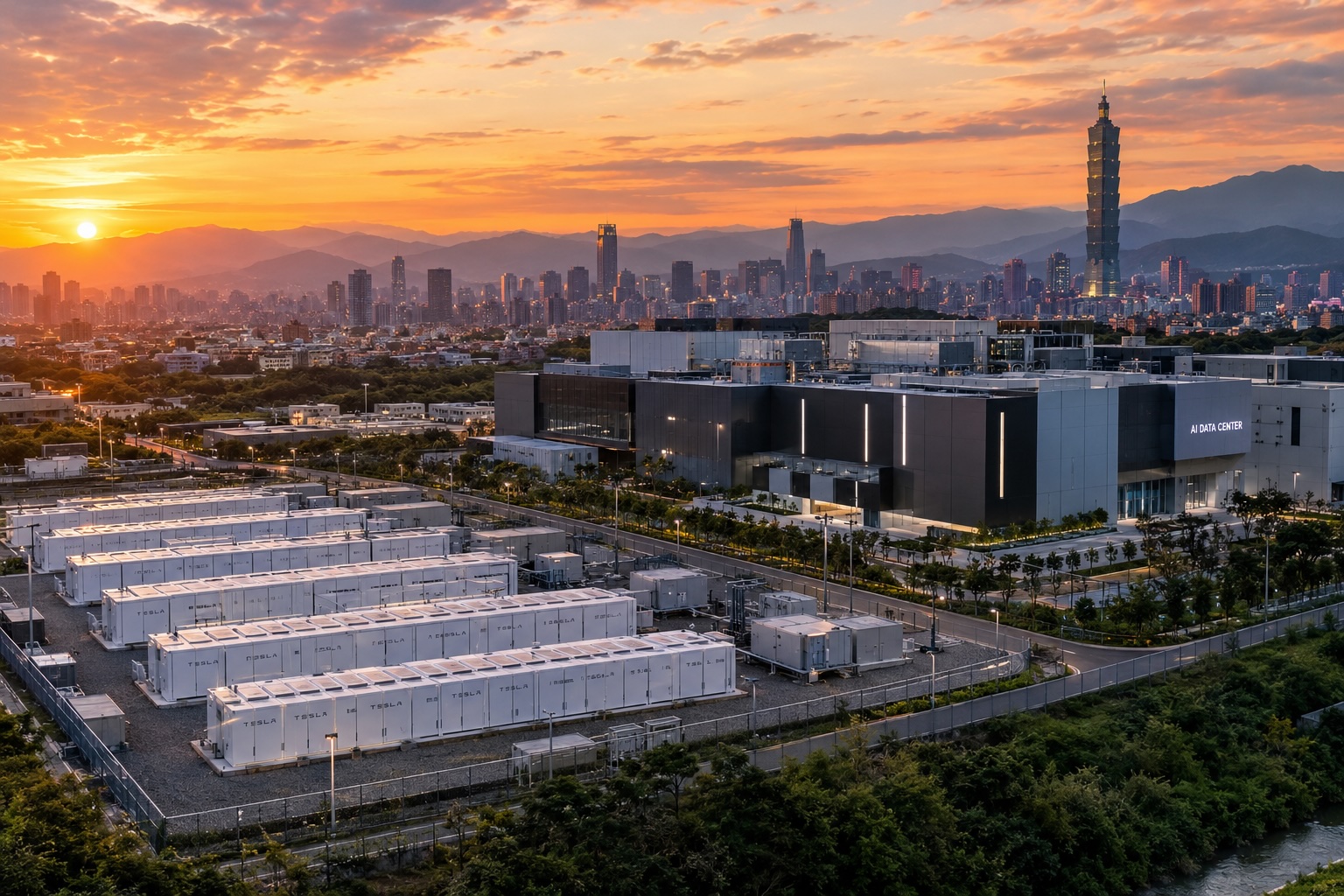
A Taiwanese power company has ordered 260 Tesla Megapack 2XL units, roughly 1GWh of storage, betting that electricity rather than chips will decide how fast AI data centers come online. Apollo Power signed the contract with Tesla’s Taiwan energy arm on October 8, according to the company’s filing with the Taiwan stock exchange.
The filing says the units are meant for behind the meter storage and resilient grid projects, with delivery in batches from the end of 2027 and sites operating in 2028. Apollo and Tesla did not disclose a price, citing a confidentiality agreement. Apollo plans to pay for the equipment through a cash capital increase and bank financing, and it noted the purchase is not revenue and does not mean it holds firm orders from its partners.
Biggo reported that only about 33 units are under signed customer contracts, with roughly 150 more in negotiation. The same report put total project investment near NT$130 billion, but that figure includes installation work, with the equipment itself making up about 40 to 50 percent. In other words, a large share of this order is Apollo reserving supply ahead of demand. Apollo’s chairman told local media global large storage supply is tight, which is why the company locked in the units early, according to Yahoo Taiwan Finance.
Apollo also launched an AI data center and grid resilience alliance with Phison, Gigabyte and Shihlin Electric. The pitch rests on a pilot at Phison’s Zhunan plant, where Apollo and Tesla Energy Taiwan installed grid forming Megapack 2XLs in June. Tesla Energy Taiwan general manager Sun Hsiao-Han said the project went from demo to 1GWh in four months, and that Tesla Energy has deployed more than 50GWh worldwide.
Taiwan’s cabinet has approved amendments that would require large energy users to install their own generation and storage, which gives enterprise storage a regulatory tailwind.
The deal fits a pattern Teslarati has tracked. Tesla’s Megablock targets 1GWh commissioned in 20 business days, a pitch aimed squarely at fast moving data center builds. Megapacks already back xAI’s Colossus in Memphis and a 400MW AI campus in Brazil. Sun Media adds that Megapack 2XL was named among the first products in Nvidia’s DSX Ready qualification for battery storage in AI factories.
Deliveries are more than a year away, so the real test is how much of that 260 unit order turns into signed customer contracts.
Energy
Tesla Model 3 and Model Y can now do what only Cybertruck could
Tesla Model 3 and Model Y can power your home with Powerwall 3 during outages.
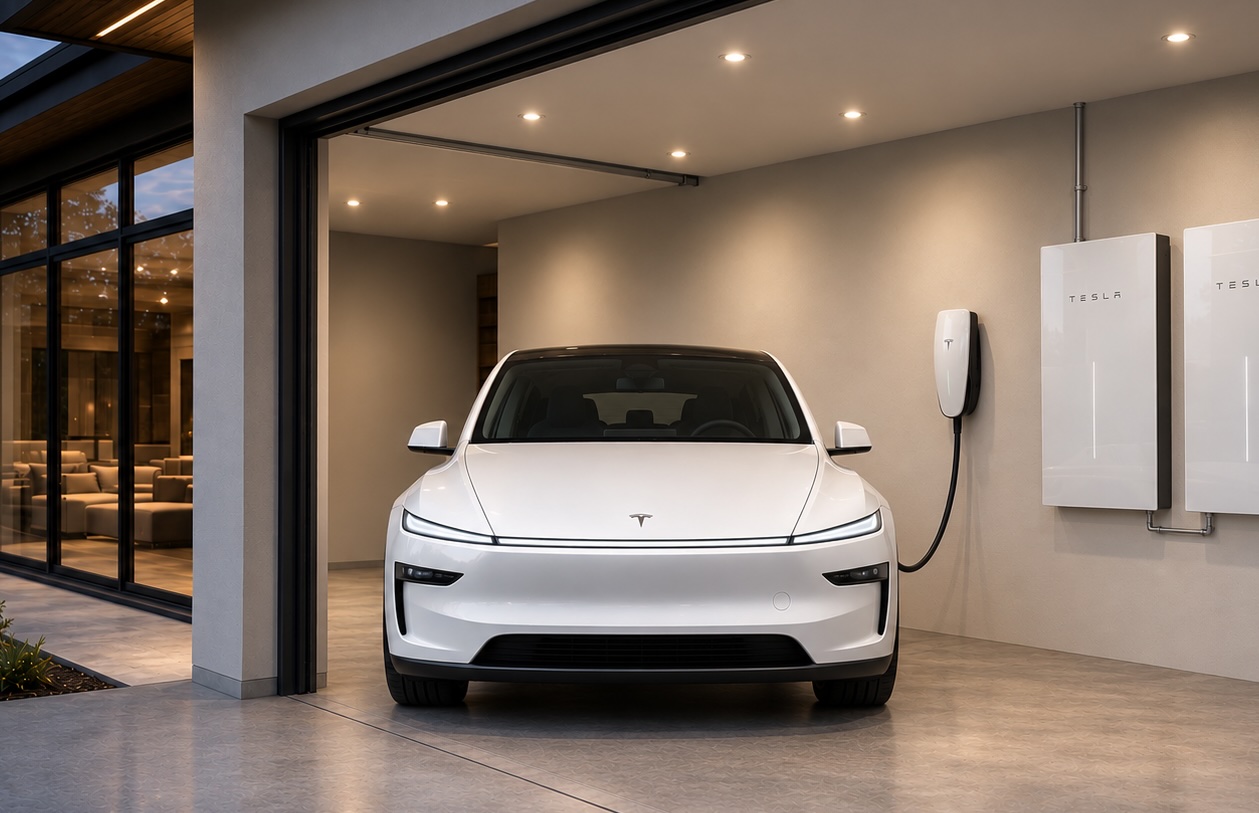
Tesla has turned its two top sellers into backup batteries for the house.
Tesla Energy announced on Tuesday that Powershare Home Backup is now available for new Model 3 and Model Y vehicles paired with a Powerwall 3, saying the car can “extend your home backup by over 2 days.” Minutes later, Tesla’s main account quoted the post with a broader pitch: “With Powerwall 3, every Tesla can now serve as your home’s backup battery.”
Until this week, the Cybertruck was the only Tesla that could send power back into a home, and that capability only began working alongside Powerwall 3 last month, after years of ambitious targets.
Tesla’s updated Powershare page says every Model 3 and Model Y ordered in the U.S. or Puerto Rico on or after October 1, 2026 can use the feature. Some, but not all, earlier cars also qualify. Owners can check on the touchscreen under Software, then Additional Vehicle Information, where a capable car shows “Powershare Support: Enabled.” As Electrek reported, bidirectional power on the two cars runs through an inverter Tesla calls PCS2 Lite, and the company has not said when that part entered production on each trim.
The home side is simpler. A house that already has a Powerwall 3 and either a Wall Connector 3 or Universal Wall Connector needs no additional equipment, and Tesla says compatibility is enabled through a software update. When the grid drops, the Powerwall and the car work together, with up to 11.52 kW of continuous power available. Tesla’s “over two days” estimate assumes a home using 30 kWh per day and a car starting at a 90 percent charge. Standard trims are rated for up to two days, while the Cybertruck adds more than three.
There are limits. Powerwall 2 and Powerwall+ support is listed as “coming soon.” Model S and Model X are not included, and Grid Support, the program that lets Cybertruck owners in Texas send power back to the grid during demand spikes for bill credits, is not available for Model 3 or Model Y.
The rollout also lines up with something Elon Musk said more than three years ago. At Tesla’s March 2023 Investor Day, Musk said, “I don’t think very many people are going to want to use bidirectional charging, unless you have a Powerwall.” Tesla has now shipped the feature for its volume cars with exactly that requirement attached.
The Powerwall pairing was the hard part on Cybertruck. Tesla told owners in December 2025 that Powershare with Powerwall had been pushed to mid 2026, and lead engineer Wes Morrill explained that two devices capable of forming a home’s grid have to negotiate which one leads during an outage, across multiple generations of hardware. With that work done for the truck, Tesla was able to extend it to the Model 3 and Model Y within a month.
Ford and GM have offered home backup from their EVs for several years, but both require a separate inverter and backup hardware. Tesla’s version leans on equipment many Powerwall 3 owners already have on the wall. Powershare for the two cars also ships as part of software update 2026.38.3, the same release that began delivering Halloween Mode on Tuesday.

Tesla FSD v15’s ‘Reality View’ has one complaint and Musk has the solution

Tesla and SpaceXAI CEO Elon Musk reacts to Jensen Huang’s NVIDIA return


