SpaceX
Elon Musk reveals SpaceX’s new scifi-inspired drone ship – A Shortfall of Gravitas

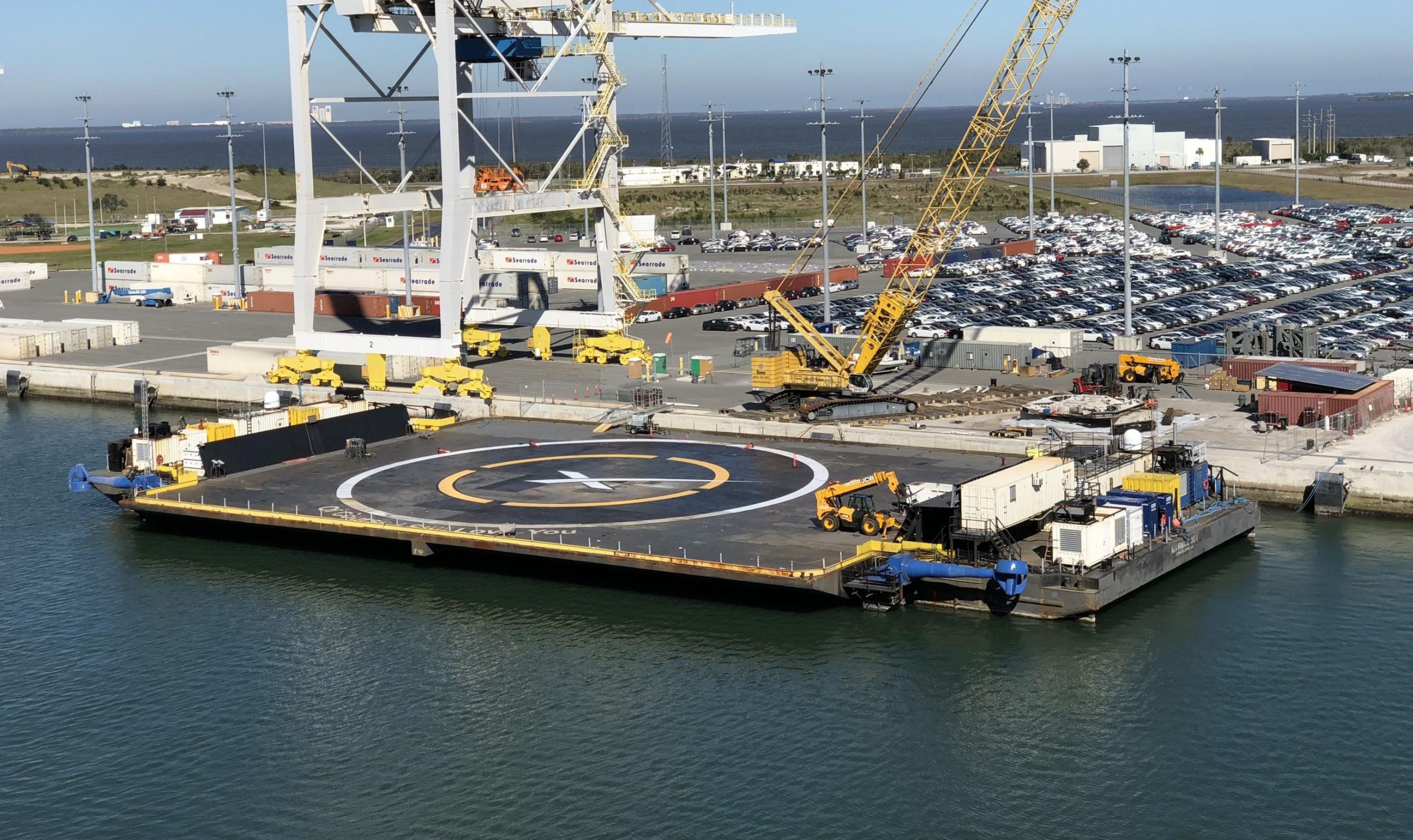
The vessel is to be named A Shortfall of Gravitas
After a highly informative series of Tweets revealed a great deal about SpaceX’s true Falcon Heavy pricing, CEO Elon Musk revealed that the rocket company was in the process of constructing a new autonomous spaceport drone ship (ASDS) for future ocean landings of the Falcon 9 and Falcon Heavy rockets. Following a line of two (really, three) eccentric drone ships, Just Read The Instructions (JRTI) and Of Course I Still Love You (OCISLY), Musk has chosen to continue the trend of using ship names from the acclaimed science fiction series Culture by Iain Banks – the third recovery vessel will be named A Shortfall of Gravitas.
Now, you might ask, why would SpaceX need a third drone ship for ocean recoveries? In fact, this has been a question posed by fans for at least several months. As SpaceX ramps up the frequency of their launches on the East coast, drone ship availability will quickly become a bottleneck for recovery – already, the launch of GovSat-1 occurred just a week before Falcon Heavy’s debut, a likely contributor to SpaceX’s decision to expend the booster in the ocean, rather than attempt recovery. For high energy launches like Falcon Heavy and GovSat-1, the drone ship has to travel several hundred miles East of Florida, and the round trip journey is at a bare minimum 6-7 days, usually more. Once in port after a recovery, SpaceX typically needs a solid 24-72 hours to remove the landed rocket booster from the ship and prepare the ASDS for another mission.
A third is under construction
— Elon Musk (@elonmusk) February 12, 2018
With three drone ships, SpaceX will have no such problems, and could quite possibly support weekly high-energy launches of Falcon 9 with recovery, no need to pick and choose which boosters survive. Further, a second Eastern drone ship means that SpaceX can push Falcon Heavy even harder as a partially expendable launch vehicle, enabling the side boosters to both be recovered at sea. With the additional performance, this would allow, SpaceX could reach 90% of the performance of a totally expendable Falcon Heavy for a price just 5% higher than a fully reusable launch – $90m versus $95m.
Side boosters landing on droneships & center expended is only ~10% performance penalty vs fully expended. Cost is only slightly higher than an expended F9, so around $95M.
— Elon Musk (@elonmusk) February 12, 2018
Ultimately, this news simply suggests that SpaceX is increasingly confident in their strategy of reusable rockets. Growing their fleet of recovery vessels will give the company added flexibility and allow for their already dead-cheap pricing to be even more competitive while they ramp up launch cadence and introduce an even more reusable variant of Falcon 9.
Follow along live as launch photographer Tom Cross and I cover these exciting proceedings as close to live as possible.
Teslarati – Instagram – Twitter
Tom Cross – Twitter
Eric Ralph – Twitter


Elon Musk
SpaceX just got the green light Starship has waited years for
The FAA has cleared Starship Flight 14, setting up SpaceX’s first orbital attempt on Monday.

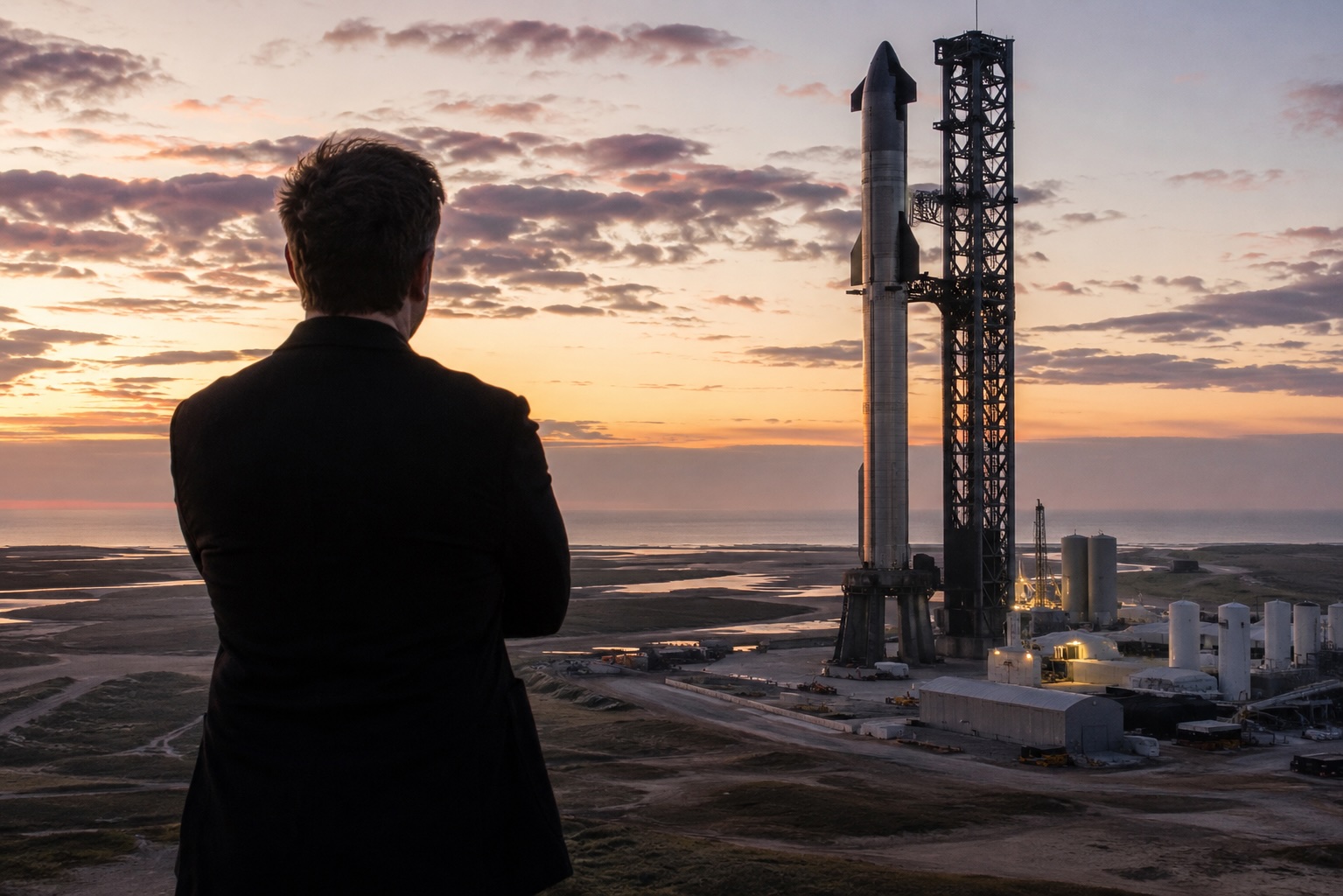
SpaceX has cleared the last regulatory hurdle standing between Starship and its first trip to orbit. The Federal Aviation Administration issued the launch license for Starship Flight 14 late Saturday, keeping the mission on track for liftoff Monday, September 28, from Pad 2 at Starbase, Texas.
The 75 minute launch window opens at 7:15 a.m. Central, and Boca Chica Beach closures are also scheduled for September 29 and 30 as backup dates. This will be Starship’s first revenue generating mission.
The license was the missing piece after SpaceX completed a full wet dress rehearsal with Booster 21 and Ship 41 on September 24. At the time, the company said the flight remained on track pending regulatory approval. Because Flight 14 flies an orbital profile, the FAA had to sign off on a modified license that met its safety, payload and financial responsibility requirements.
Observers combing through the new FAA paperwork also noticed that lightning no longer appears among Starship’s listed launch hazards. If that holds, it matters more for where Starship is headed than for Monday’s attempt. Florida and Louisiana, home to LC-39A and the planned Starbase Louisiana site, see some of the most frequent lightning in the United States.
SpaceX tells the FCC that Starship Flight 14 is going to orbit
Flight 14 is the mission SpaceX has been building toward for months. Ship 41 will carry 26 Starlink V3 satellites, the first operational V3 units to be deployed, and attempt roughly six orbits at about 275 kilometers over a flight lasting just under 10 hours. SpaceX says the ship will only perform its orbital insertion burn after flight controllers confirm enough hardware redundancy remains for the deorbit burn at the end of the mission. Ship 41 is targeting a splashdown in the Pacific west of Chile, while Super Heavy will return to the Gulf of Mexico.
The date carries some symbolism as well. A Monday launch would come 10 years and one day after Elon Musk first presented the Interplanetary Transport System, the design that became Starship, at the International Astronautical Congress in Guadalajara, Mexico.
SpaceX has not announced what comes next, but air traffic planning slides reported this week, list Flight 15 no earlier than October 19 and a first Starship launch from LC-39A in Florida no earlier than October 30. Both dates depend on how Monday goes.
News
SpaceX completes another secret Pentagon launch, adding to suspected Starshield buildout
SpaceX launched the classified USSF-385 mission from Vandenberg, landing its booster on a tenth flight.

SpaceX launched another classified mission for the U.S. Space Force from California early Saturday morning, and the Falcon 9 booster that carried it landed on a drone ship in the Pacific for the tenth time. The USSF-385 mission lifted off from Space Launch Complex 4E at Vandenberg Space Force Base at 7:00 a.m. PT.
Booster B1100 touched down on Of Course I Still Love You roughly eight and a half minutes after liftoff. It was the booster’s tenth flight and tenth successful landing, following the NROL-95 national security mission and eight Starlink launches. Its previous flight, a Starlink Group 15 mission on August 22, came just 35 days earlier. SpaceX ended its livestream shortly after the landing, which is standard for classified payloads, and neither the company nor the Space Force has said what the rocket carried.
Watch Falcon 9 launch the USSF-385 mission from pad 4E in California https://t.co/CAdbx85Ydy
— SpaceX (@SpaceX) September 26, 2026
USSF-385 is the fourth Space Force launch from the same Vandenberg pad in roughly six weeks, following USSF-366 on August 15, USSF-153 on September 10, and USSF-259 on September 17. When SpaceX flew USSF-366 in August, independent trackers noted that the rocket’s stage drop zones matched SpaceX’s Starlink Group 15 missions, pointing to Starshield, the government version of the Starlink satellite bus. The Space Force later cataloged 23 satellites after both USSF-366 and USSF-153, while USSF-259 placed 17 satellites into a different orbital plane, per KeepTrack. Launch databases describe USSF-385 the same way, though the payload remains officially unidentified.
The cadence lines up with the contracts, because in July, the Space Force awarded SpaceX $1.6 billion in task orders for 18 Falcon 9 missions from Vandenberg through the end of 2027. SpaceX also holds contracts to build pieces of that same network, which pushed its Pentagon contract total for 2026 past $8 billion.
Saturday’s flight was also the sixth and final Falcon 9 launch from Vandenberg in September, according to Spaceflight Now, while only one Falcon 9 flew from the East Coast this month as SpaceX shifts its Florida infrastructure toward Starship. Launch trackers list it as SpaceX’s 112th mission of 2026 and the 108th Falcon 9 flight of the year, with SLC-4E turned around about six and a half days after its previous launch.
The West Coast pad will not stay quiet for long, considering SpaceX has another Starlink mission scheduled from SLC-4E on September 30. Meanwhile, in Texas, the company is two days away from Starship Flight 14, which is targeting Monday at 7:15 a.m. CT for the vehicle’s first attempt to reach orbit.
News
Tesla hints at new Roadster design in surprise clip
Tesla ended its Semi event with a Roadster teaser revealing a new front light bar.
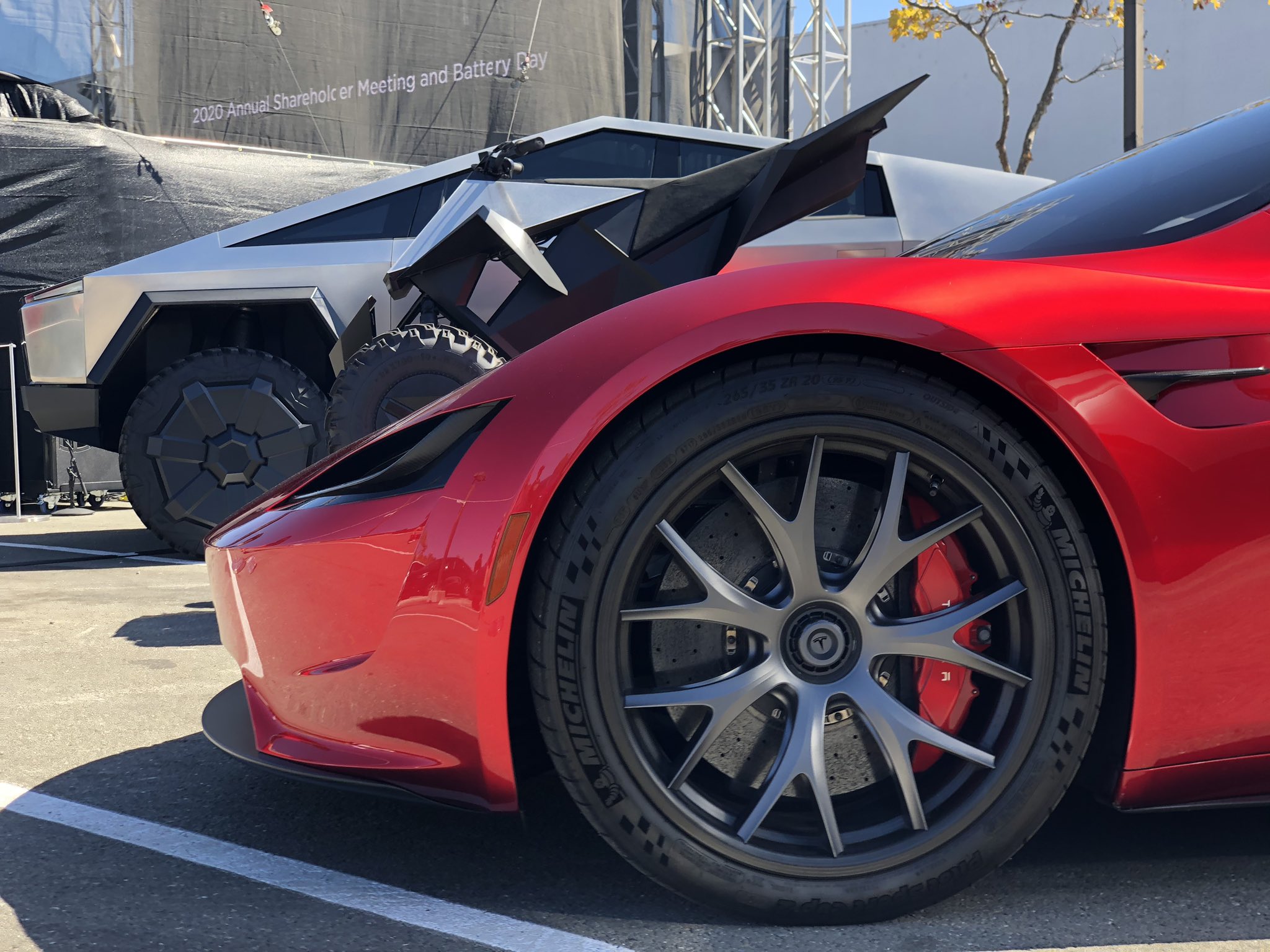
Tesla closed out its Semi event in Nevada on Thursday night with a nod to its own history, dropping a short Roadster teaser that suggests the production car will look noticeably different from the prototype first shown in 2017.
“We can’t have a Semi event without the Roadster,” Tesla engineering executive Lars Moravy told the crowd before the clip played. The line was a deliberate callback. Tesla first revealed the next generation Roadster in November 2017 by driving it out of the back of a Semi trailer at the truck’s original unveiling in Hawthorne, California.
The new video opens on trailer doors swinging apart in the dark. A thin white light bar glows across what appears to be the nose of the car, Tesla and SpaceX logos flash over the frame, and the Roadster name appears before the clip ends on “See you next week.” Tesla posted the nine second clip on X after the livestream wrapped.
See you next week pic.twitter.com/BT52bGVxFu
— Tesla (@Tesla) September 25, 2026
The light bar is the most concrete design detail so far. The 2017 prototype used two separate curved headlamp pods, while a connected front light strip would bring the Roadster in line with the Cybertruck, Cybercab, Semi, and refreshed Model Y. Sawyer Merritt was among the first to point out what looked like part of a SpaceX logo in the video, something Tesla has not addressed.
That logo fits the buildup around the optional SpaceX Package, which Elon Musk has long said would use cold gas thrusters to improve acceleration and possibly allow the car to briefly leave the ground. Tesla’s “Go for launch” post on September 12 set the October 1 date, and invitations sent to reservation holders place the event in Waco, Texas, at 8:30 p.m. Eastern. Waco sits roughly 20 minutes from SpaceX’s McGregor rocket test site, where the FAA has put a temporary flight restriction in place from September 18 through October 2, covering a 1.5 nautical mile radius from the surface up to 10,000 feet.
Tesla is also taking money ahead of the reveal. The company reopened Roadster reservations earlier this week with a $5,000 refundable card payment, followed by a $45,000 wire transfer due within 10 days. That puts buyers at $50,000 committed before Tesla has published a price.
The original pitch set a high bar: 0 to 60 mph in 1.9 seconds before any upgrades, 620 miles of range, a top speed above 250 mph, and production in 2020. That timeline has slipped repeatedly, and Tesla has since pointed to production at Gigafactory Texas no earlier than 2027. The company has said next Thursday’s event will include pricing, specifications, and production targets, the three details original reservation holders have been waiting on for nearly nine years.

Elon Musk’s AI Grok Bot can now handle banking while your Tesla FSD handles the road

SpaceX just got the green light Starship has waited years for


