Investor's Corner
Tesla gets reprieve from tariffs as China pledges to cut auto import taxes

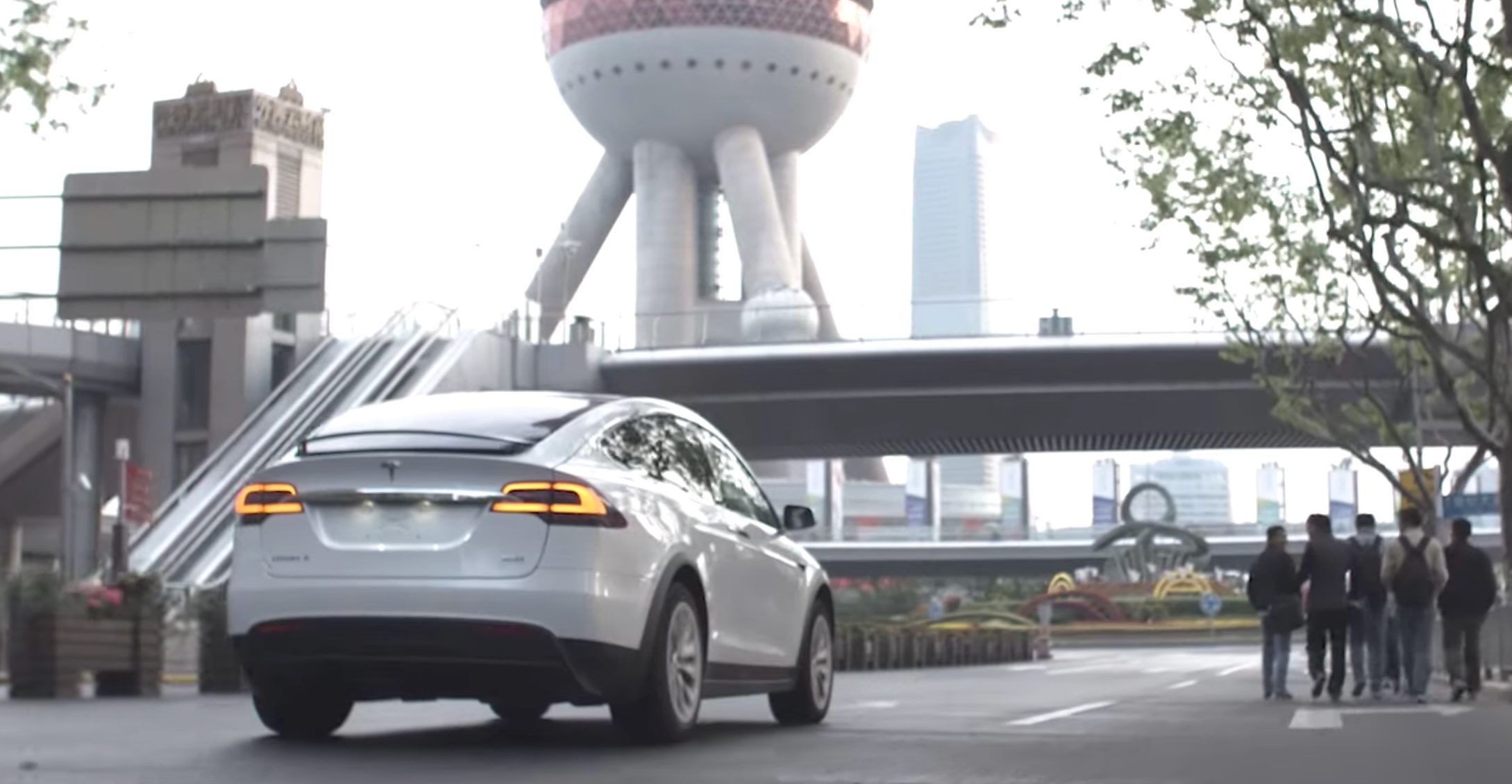
Tesla’s operations in China could be getting a reprieve soon, after Chinese President Xi Jinping announced that he would be cutting auto import taxes. During a speech at a business conference on Tuesday, Xi pledged to open China’s markets and improve conditions for foreign companies.
The new development came as the Chinese president was speaking at the Boao Forum for Asia on the Southern island of Hainan, according to a report from the Associated Press. Amid a trade dispute against the United States, Xi stated that China would be opening its doors wider. The president explicitly mentioned the auto industry in his speech, saying that China will be easing restrictions for foreign automakers.
“China’s door of opening up will not be closed and will only open wider. Beijing will significantly lower tariffs on auto imports this year and ease restrictions on foreign ownership in the auto industry as soon as possible,” Xi said.
China’s softened stance stands to benefit American automakers such as Tesla. Prior to Xi’s announcement, Tesla is operating in the country on a handicap, with its flagship vehicles — the Model S and the Model X — facing a steep 25% import tax, which causes the electric cars to be sold at higher prices than local competitors.
In a recent tweet, Tesla CEO Elon Musk described Xi’s announcement as a “very important action.”
This is a very important action by China. Avoiding a trade war will benefit all countries.
— Elon Musk (@elonmusk) April 10, 2018
Elon Musk addressed this issue in a series of tweets to US President Donald Trump last month, with the Tesla CEO stating that operating a car business in China is akin to playing an unfair game.
“No US auto company is allowed to own even 50% of their own factory in China, but there are five 100% China-owned EV auto companies in the US. I am against import duties in general, but the current rules make things very difficult. It’s like competing in an Olympic race wearing lead shoes,” Musk tweeted.
Xi’s promise of easing restrictions on foreign ownership also stands to benefit Tesla’s manufacturing capability. China, after all, is widely speculated to be the country where Tesla is planning to manufacture its upcoming crossover SUV — the Model Y — as well as some of the Model 3. So far, Tesla and local Chinese officials are reportedly disagreeing about the ownership of the planned factory. With the lighter restrictions in place, however, the company could tap into a formidable workforce that could help Tesla achieve its ambitious manufacturing goals.
Prior to Xi’s announcement on Tuesday, US President Donald Trump also adopted a less confrontational rhetoric against China. In a tweet on Sunday, Trump stated that he and Xi would be friends regardless of what happens in the ongoing trade dispute. Trump also said that there is “great future for both countries.”
Overall, the recent developments in the US-China trade dispute are encouraging overall, according to IHS Markit Senior Director and Asia-Pacific Chief Economist Rajiv Biswas. In a statement to the AP, Biswas noted that Xi’s recent speech could create a good platform to launch a dialogue between the two countries.
“President Xi’s speech could create a very good platform to launch U.S.-China dialogue at the WTO to find a deal on intellectual property rights that will address US concerns. This would be a victory for the world trading system and an important step away from the abyss of rising global protectionism,” he said.


Investor's Corner
New drone video shows Tesla’s Optimus Factory reaching a turning point
New drone footage shows Tesla’s dedicated Optimus factory steel frame nearing completion at Giga Texas.

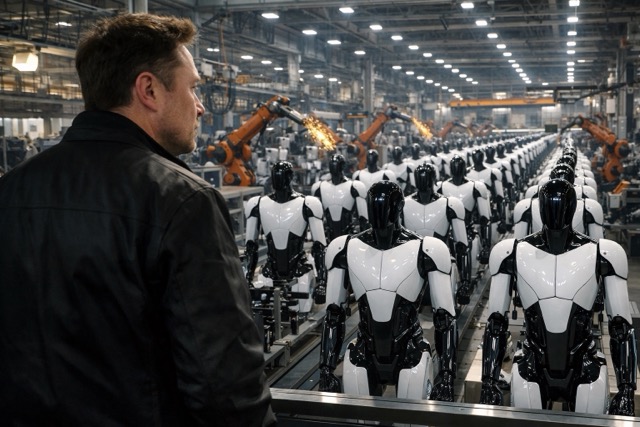
Tesla’s dedicated Optimus factory at Gigafactory Texas is closing in on a finished steel frame, according to drone footage posted Thursday afternoon by longtime site observer Joe Tegtmeyer. In the video, Tegtmeyer said structural steel assembly is now about five column grids away from reaching the building’s north perimeter beam, putting the primary skeleton in its final stretch roughly six months after Tesla broke ground on the North Campus site in late March.
The Giga Texas Optimus Factory latest update … construction keeps moving fast!
Steel assembly is now only about 5 column grids from the north perimeter beam. Concrete is going in on the three upper floors, rebar is still being laid for more pours, and footing / grade-beam work… pic.twitter.com/qvFPvwnYzW
— Joe Tegtmeyer 🚀 🤠🛸😎 (@JoeTegtmeyer) September 17, 2026
Tegtmeyer’s footage shows concrete already going in on three upper floors while crews continue laying rebar and pouring grade beam footings at ground level. That kind of parallel work, steel rising at one end of the site while concrete sets at the other, is a scheduling approach Tesla used at the original Giga Texas building and appears to be repeating here to save time before the plant’s targeted 2027 production start.
Teslarati has tracked the building’s progress since Tesla confirmed construction was officially underway in May, when the first steel structure went up on what was then bare, reclaimed land. The facility is part of a more than 5.2 million square foot expansion of Giga Texas’s North Campus that Tesla has said will eventually run nearly the length of the existing vehicle factory, over 4,000 feet, while sitting somewhat narrower. Musk has pegged the long term output target at 10 million Optimus units a year once the line is running at full capacity, a volume that would dwarf the one million unit pilot line Tesla is standing up separately at its Fremont, California factory.
Tesla Giga Texas to feature massive Optimus V4 production line
The Texas facility sits alongside another major buildout on the same campus. Terafab, the joint Tesla and SpaceX chip fabrication plant that will eventually supply the silicon running Optimus units in the field. Housing robot assembly and chip production on the same grounds is a deliberate supply chain decision, cutting down on the shipping and lead time that would otherwise sit between the two.
Tesla has not given an updated timeline beyond its previously stated goal of bringing high volume Optimus production online at the site in the summer of 2027. Fremont’s smaller pilot line began mass producing the current Gen 3 robot in January, with that plant expected to build tens of thousands of units this year primarily to generate the real world data Tesla needs to refine the robot’s software before Giga Texas ramps up. Six months of visible construction progress, tracked almost entirely through Tegtmeyer’s recurring drone flights, gives the clearest outside look yet at how seriously Tesla is treating that 2027 deadline.
Investor's Corner
Tesla and SpaceX take “Terafab” Trademark fight to Federal Court
Tesla and SpaceX sue a small Illinois firm after cease and desist letters over Terafab.

Tesla and SpaceX are asking a federal judge to rule that their planned Terafab chip factory does not infringe a small Illinois company’s trademark, a request that arrives only after months of quiet negotiation broke down this summer.
The dispute traces to May 18, when Tesla filed three U.S. trademark applications for “Terafab” and “Tesla Terafab,” covering semiconductor chips and related chip making services. TERA-print LLC, a nanotechnology company that has held a federal trademark for “Tera-Fab” since 2021, responded five days later with a cease and desist letter. According to the lawsuit, first reported by Reuters, TERA-print argued that Tesla and SpaceX’s use of “Terafab” would confuse consumers familiar with its own trademark, which covers a desktop photolithography printer sold to researchers for sensor and bioengineering work.
What stands out in the filing is the timing of TERA-print’s own paperwork. One day before sending that cease and desist letter, on May 22, TERA-print applied to expand its existing registration to cover semiconductor materials, silicon chips, nanoelectronic devices and AI design services, categories it had not previously claimed. Tesla and SpaceX call that filing opportunistic in their complaint, noting it arrived two months after Tesla’s public Terafab announcement and just days after Tesla’s own trademark applications went in.
Elon Musk launches TERAFAB: The $25B Tesla-SpaceXAI chip factory that will rewire the AI industry
By June 10, TERA-print was threatening to sue for federal trademark infringement, false designation of origin and unfair competition, the complaint states. Rather than wait to be sued, Tesla, SpaceX and SpaceXAI met with TERA-print six separate times between June and August trying to resolve the dispute directly. Those talks collapsed, and the companies filed for declaratory judgment this week in the U.S. District Court for the Western District of Texas, asking a judge to find that “Terafab” does not infringe TERA-print’s mark before TERA-print can file a claim of its own.
TERA-print isn’t backing down. The company told PCMag it discussed a settlement with Tesla as recently as September 2 and feels misled by what it called Tesla’s professed interest in settling. Its CTO, Andrey Ivankin, said TERA-print holds a Defense Department contract to fabricate semiconductors and partially owns Mattiq Inc., an AI company built on TERA-print’s products, and that the company will vigorously defend its rights.
Tesla and SpaceX argue the overlap is superficial. Terafab is planned as a $16.8 billion complex spanning roughly 100 million square feet at the Grimes County site SpaceX confirmed last month, built to produce chips for Optimus robots, Tesla’s AI computing needs and SpaceX’s orbital data center ambitions, a scale and purpose the companies say no reasonable consumer would confuse with a tabletop lab printer. TERA-print’s product line has stayed focused on lithography tools for biological and sensor research since it registered its mark in 2021.
The trademark fight is the second legal dispute tied to the Terafab project in the past week, following a separate SpaceX suit aimed at keeping company records about the facility out of public view, as KBTX reported. Whether construction proceeds under the Terafab name now depends on a federal judge in Austin.

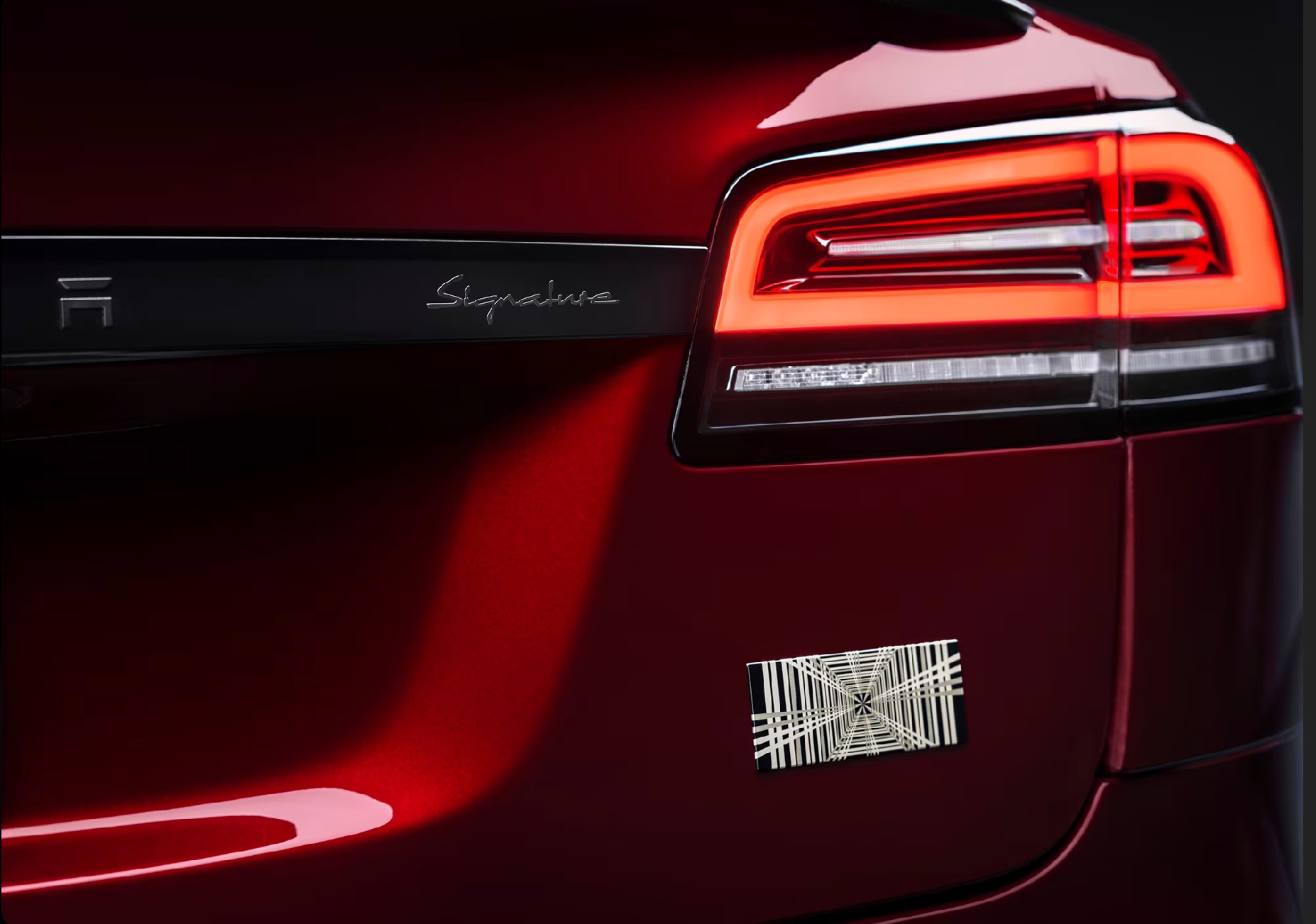
In a new interview on Wednesday, Tesla uber bull Ron Baron said that anyone looking to buy the company’s stock should do so as soon as they can.
Baron, founder and CEO of Baron Capital and one of Tesla’s most persistent institutional bulls, used a CNBC Squawk Box appearance on Wednesday to deliver a familiar message with fresh urgency: In his opinion, Tesla stock is a buy:
“The time to buy the stock is now. FSD is catching on, and it’s going to be bigger and bigger. 55% of new buyers are buying it (Teslas) with FSD. It’s going to be everywhere. It’s safer.”
The Baron Capital frontman’s case is built around Full Self-Driving. Tesla reported 1.48 million active FSD subscriptions in the second quarter, up 56 percent year over year, and company officials have said roughly 55 percent of new North American deliveries left with a subscription enabled.
Baron framed that attach rate as proof the product is moving from enthusiast extra to default expectation, and as a reason software, not just vehicle volume, should drive the next phase of value.
His conviction on Tesla shares is not theoretical, as Baron Capital made its first Tesla investment in 2014, after years of meetings that began around the 2010 IPO roadshow. The firm later built a large SpaceX position starting in 2017.
Ron Baron today in new interview on Tesla:
“The time to buy the stock is now. FSD is catching on, and it’s going to be bigger and bigger. 55% of new buyers are buying it (Teslas) with FSD. It’s going to be everywhere. It’s safer.” pic.twitter.com/Rv5PB0bVZ2
— Sawyer Merritt (@SawyerMerritt) September 16, 2026
Baron said those Musk-led bets have generated about $30 billion of the $71 billion in profits Baron Capital has produced for clients. He put the firm’s current exposure at roughly $25 billion in SpaceX and $5 billion in Tesla. Personally, he described SpaceX as his largest holding, at about $5 billion, with about $1.5 billion in Tesla and additional Tesla exposure through the firm’s funds.
That concentration is also a statement of loyalty. Asked about talk of a SpaceX-Tesla combination, Baron said he had already walked Elon Musk through arguments for and against a deal, then declined to repeat them on air. His public position was simpler: “Whatever you decide is better is what I’m going to support,” he said to Musk.
Baron also said that he picked up the farewell edition of the Model S after Tesla decided to sunset the vehicle earlier this year, calling it his favorite car he’s ever driven.

Elon Musk’s next Uranium in Uranus merch is Boring Company’s weirdest tease yet

NASA taps SpaceX for more astronaut missions as Boeing Starliner remains grounded


