Investor's Corner
Tesla’s (TSLA) fundamentals ‘underappreciated,’ says analyst amid canceled privatization drama

Tesla stock (NASDAQ:TSLA) is showing its trademark volatility on Monday’s early morning trading, as the company deals with the aftermath of Elon Musk’s decision to walk back on his efforts to take the company private. While the electric car maker’s shares dropped as low as 6% during Monday’s premarket, Tesla nonetheless opened at $318 per share, not too far from Friday’s $322.82 close.
Tesla’s stock has been characteristically volatile, but after Musk’s fateful tweet earlier this month when he suggested that funding was “secured” for the company going private at $420 per share, TSLA has experienced even wilder swings than usual. The company’s privatization efforts eventually came to a head on Friday night, when Elon Musk published a blog post on Tesla’s official website stating that the privatization efforts would no longer be pursued. Musk’s decision was met with strong reactions, with many Tesla supporters lauding the CEO’s decision and critics voicing out their frustrations.
Tesla’s abandonment of its go-private initiative has resulted in a wave of criticism from the company’s naysayers. Prominent short-seller Jim Chanos, who believes that TSLA is worth $0, described the company as a “corporate-governance disaster.” Jeffrey Osborne of Cowen Group noted that he sees “mounting obstacles for the company” in the near future such such shareholder lawsuits and SEC investigations over Elon Musk’s behavior.
That said, some of Tesla’s supporters on Wall Street believe that there is a silver lining to the entire go-private drama. Baird analyst Ben Kallo, for one, stated in note on Monday that Baird remains optimistic about Tesla, especially since the company’s fundamentals, which have been steadily improving, might be “underappreciated.” Kallo did admit that a potential SEC penalty would likely weigh against Tesla, though if this does happen, Elon Musk himself would probably be the one who would bear the consequences.
“We expect shares to appreciate over the intermediate term as the focus shifts back to fundamentals, which we believe may be underappreciated. We are buyers on weakness as we expect shares to move higher ahead of third-quarter deliveries and results. A potential SEC penalty will remain an overhang; while it is extremely difficult to predict the outcome of an investigation, historical settlements may demonstrate perceived risks could be overblown. Additionally, we think any penalties will likely be borne by Musk.”
Kallo still maintained his Outperform rating for Tesla, setting a price target of $411 for the electric car maker.
Oppenheimer’s Colin Rusch also maintained his Outperform rating for the company. According to the analyst, stepping away from the go-private initiative “removes a large distraction that had significant chance of failure and the potential to severely limit Tesla’s access to capital while attempting to execute on its ambitious product strategy.” RBC Capital Markets analyst Joseph Spak also noted that while Tesla and Elon Musk’s credibility have taken a hit due to the CEO’s behavior on Twitter, the firm believes that “the story will come back to the Model 3 ramp — not just the units but the profitability.”
The Model 3 ramp has been showing encouraging signs this August. Apart from Elon Musk confirming during the Q2 2018 earnings call that Tesla was able to hit a production rate of 5,000 Model 3 per week during “multiple weeks” in July, the company also passed the 100,000-mark in its VIN registrations for the electric sedan. Analysts from Evercore ISI who toured the Fremont factory also released a favorable report, stating that Tesla has the potential to ramp production to 7,000-8,000 Model 3 per week with “very little incremental capital expenditure.”
As of writing, Tesla stock is trading -3.15% at $312.73 per share.
Disclosure: I have no ownership in shares of TSLA and have no plans to initiate any positions within 72 hours.


Featured
Tesla Cybercab is coming to Asia this month as US service officially begins
Tesla Asia says Cybercab will be on display in Hong Kong, Tokyo, Beijing and Shanghai this month.

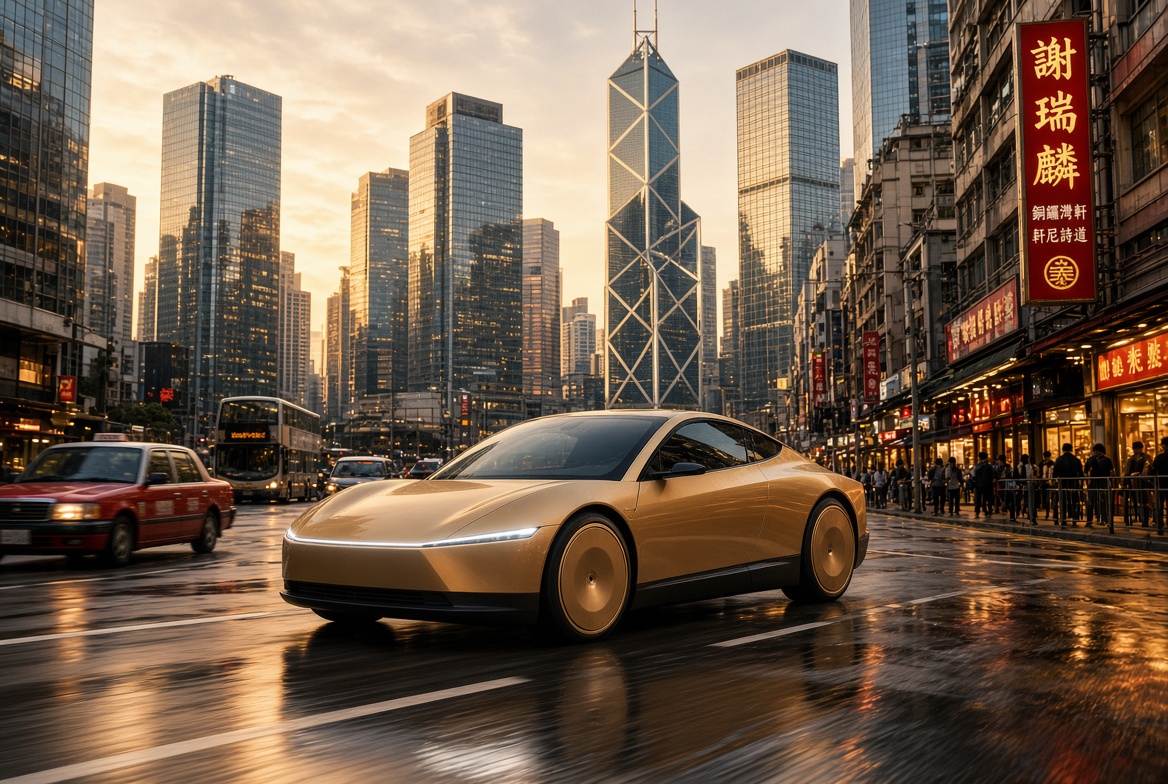
Tesla’s Cybercab is heading to Asia. The official Tesla Asia account posted on X Thursday, inviting Cybercab fans to “Come experience the future of autonomy in Hong Kong, Tokyo, Beijing & Shanghai.” The post went up within hours of Tesla’s own Cybercab milestone in Texas, where the company said Thursday it had begun offering rides in across Austin.
Exact dates and venues for the Asia tour haven’t been released yet, though Tesla Hong Kong replied to the announcement with “Cybercab will be on display in Hong Kong soon,” while Tesla Japan’s response pointed fans to a sign up page for updates. Neither post mentions test rides or a service area, and nothing so far suggests Tesla is launching Robotaxi operations in any of the four cities. Based on how Tesla has run past Cybercab tours, in Europe in late 2024 and at US shopping centers that same December, the Asia stops are almost certainly static displays at Tesla stores or public venues as a means to stimulate buzz for its future driverless ride-hailing service in the big cities.
Cybercab will be on display in Asia this month!
Come experience the future of autonomy in Hong Kong, Tokyo, Beijing & Shanghai. pic.twitter.com/wGmmEastfX— Tesla Asia (@Tesla_Asia) September 4, 2026
The timing lines up with Tesla’s only prior Cybercab appearance in the region, a booth at the China International Import Expo in Shanghai last November, which Teslarati covered at the time. At that event, Tesla’s regional general manager for Shanghai framed the car as evidence of the company’s broader mission, a message Tesla has since formalized in its Master Plan Part IV, which states that “autonomous vehicles have the capacity to dramatically improve the affordability, availability and safety of transportation while reducing pollution, particularly in our increasingly dense global cities.” The same document is where Tesla lays out its “sustainable abundance” framing for Cybercab and Optimus alike, describing the two as the hardware behind an AI driven push to cut the cost of transportation and labor at scale.
Whether Cybercab actually operates as a robotaxi anywhere in Asia remains an open question, considering China has already pushed an autonomous ride-hailing market that’s run on homegrown players like Baidu’s Apollo Go and Pony AI. For now, the four city tour reads as a marketing push timed to Austin’s momentum.
Elon Musk
OpenAI cites distrust of SpaceX in decision to drop Cursor partnership
OpenAI will cut SpaceX-owned Cursor’s model access in November, citing Musk’s history of broken contracts.
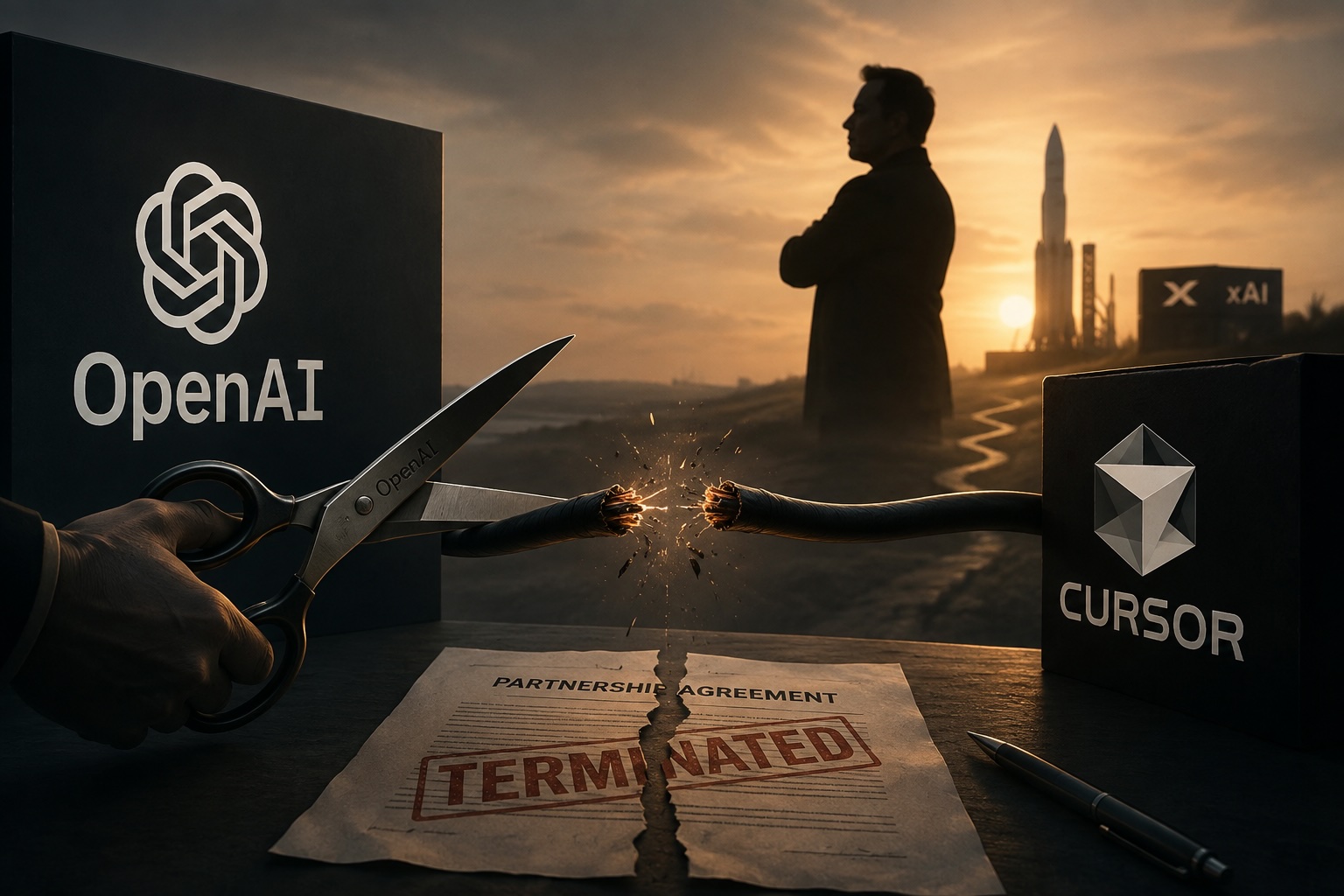
OpenAI, the company behind ChatGPT, announced late Friday that it is ending its partnership with Cursor, cutting off the coding tool’s access to its models on November 12. The move comes two weeks after SpaceX completed its $60 billion acquisition of Cursor’s parent company, Anysphere, folding the popular AI coding assistant into Elon Musk’s growing SpaceXAI division.
In a post on its website, OpenAI said the decision came down to trust, not technology. “We cannot be confident that SpaceX will use our technology within our terms of service, based on our experience with Elon Musk’s companies violating contracts,” the company wrote. OpenAI pointed to two specific incidents: X, now part of SpaceX, allegedly breaking the terms of an existing OpenAI contract after Musk bought Twitter.
That lawsuit is the backdrop for all of this. Musk cofounded OpenAI in 2015, left the board in 2018, and sued Sam Altman and Greg Brockman in 2024, arguing they abandoned the company’s nonprofit mission for profit. A federal jury sided with OpenAI in May, finding Musk waited too long to sue rather than ruling on the merits of his claims. Musk said at the time he would appeal to the Ninth Circuit, calling the outcome a “calendar technicality” rather than a real judgment.
SpaceX’s interest in Cursor predates that verdict by weeks. The company first struck a deal with Cursor in April, securing an option to acquire it for $60 billion or pay $10 billion for joint development work instead. As Teslarati reported at the time, the logic was straightforward: Cursor was paying retail prices to Anthropic and OpenAI, two of its most direct competitors, every time a developer used its product, while SpaceX had idle capacity on its Colossus supercomputer, roughly the equivalent of a million Nvidia H100 GPUs, that Cursor could use to train its own models instead. SpaceX exercised the option in June, days after its own IPO, and the deal closed in mid-August.
Once it closed, Musk moved fast. On an all-hands call with more than 1,000 Cursor employees, he reportedly told staff that SpaceXAI’s Grok was playing catchup in the AI race, unlike Tesla and SpaceX in their own markets, and singled out Anthropic as the company to catch. Cursor CEO Michael Truell now reports directly to Musk inside SpaceXAI.
Losing OpenAI’s models leaves Cursor leaning harder on Anthropic’s Claude, which has its own compute agreement with SpaceX, and on Cursor’s in-house Composer model, the one SpaceX’s compute was supposed to accelerate in the first place. OpenAI framed the November deadline as maximum notice under its contract, and said it wants to “go above and beyond” to help developers through the transition. Whether Anthropic makes the same call is now the open question in AI coding.
Investor's Corner
Tesla Robotaxi gets a massive upgrade in Nevada
Nevada regulators just approved a massive expansion of Tesla’s robotaxi fleet across the entire county.
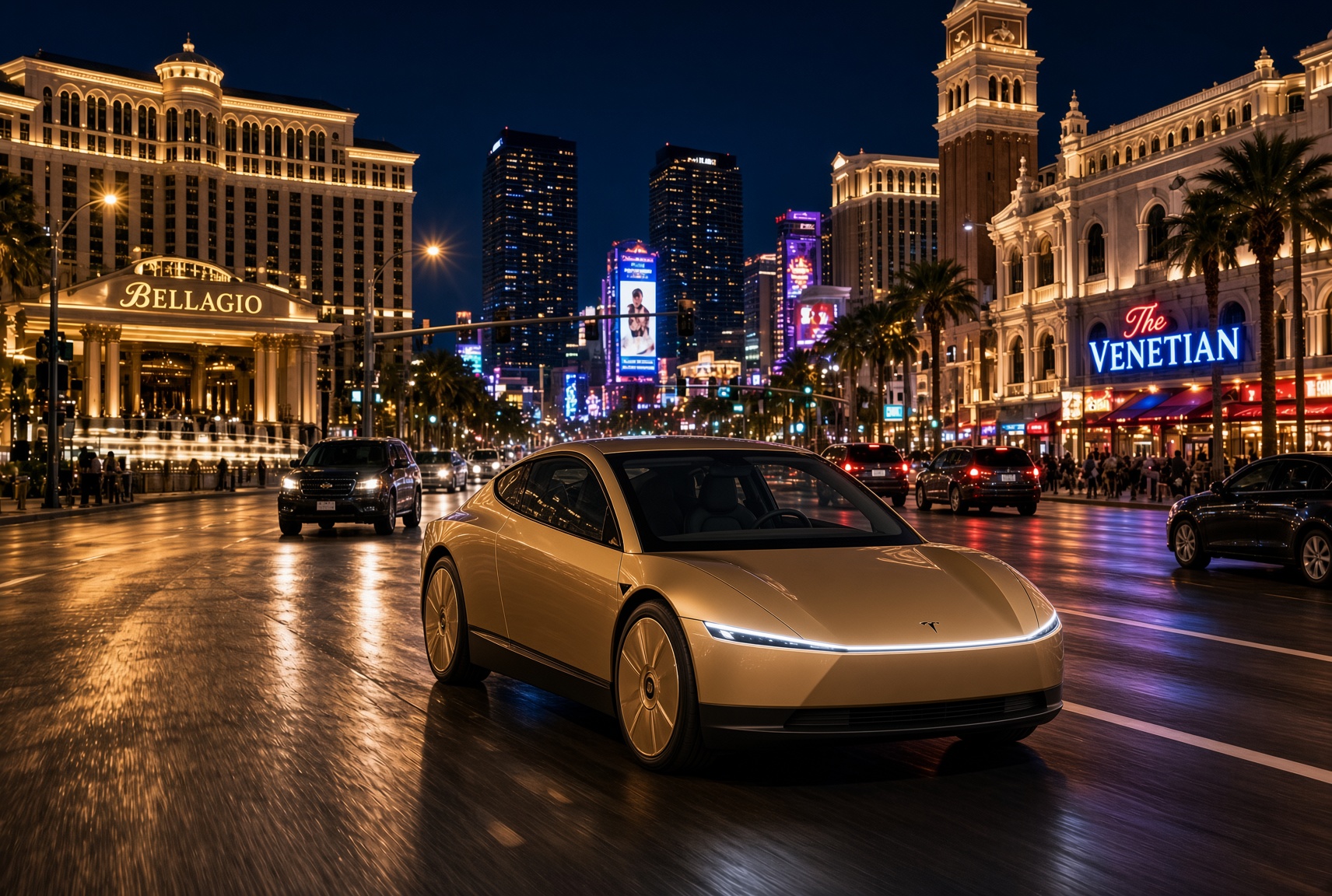
Tesla’s robotaxi footprint in Nevada just grew by roughly 500 times in a single regulatory vote.
The Nevada Transportation Authority approved Tesla’s full Autonomous Vehicle Network Company permit on Thursday, clearing the way for the company to deploy up to 5,000 driverless vehicles across Clark County over the next 12 months. The decision came during a four hour general session meeting that Tesla investor Sawyer Merritt watched live and reported on X, noting the vote replaces the interim order that had limited Tesla to just 10 robotaxis on a narrow stretch of the Las Vegas Strip.
EXCLUSIVE: Tesla has just officially received approval for its full Autonomous Vehicle Network Company permit in Nevada, clearing the way for Tesla to launch a paid public Robotaxi service in Las Vegas.
This officially allows @Tesla to deploy up to 5,000 robotaxis over the next… pic.twitter.com/DPs5UtUlrE
— Sawyer Merritt (@SawyerMerritt) August 20, 2026
That earlier cap, covered here after it surfaced on August 13, came with restrictions that looked stricter than what Tesla runs in Austin: a 45 mph speed ceiling, no airport pickups, and a geofence confined to the Strip corridor. The new approval extends Tesla’s operating authority to all of Clark County, with room to request an even wider geofence across the state.
Tesla representatives at the meeting said they have no intention of putting 5,000 cars on the road right away. Commercial rides are expected to start within 30 days, pending vehicle inspections, insurance filings, and fare approval, the standard steps every robotaxi operator in Nevada has had to clear.
Tesla’s own Robotaxi account replied to the news with a short line, The golden future is upon us.
The timing lines up with Tesla’s broader robotaxi push this month. The company is preparing to open Cybercab rides to the public in Austin as soon as this month, and it opened a sweepstakes for riders to win a seat at the launch event. Tesla filed its original application for a 5,000 vehicle Nevada fleet back in June, a request regulators trimmed to 10 vehicles when they issued the interim order in July. Thursday’s vote effectively grants the number Tesla asked for from the start.
Zoox, the Amazon owned robotaxi operator, has run in Nevada since 2025 and was capped at 100 vehicles before Thursday’s decision. Tesla’s new ceiling puts it well ahead of that comparison on paper, though the company has said its actual fleet size will depend on how quickly FSD v15 rolls out, the software update executives have called the gateway to scaling unsupervised robotaxi operations nationwide.

Tesla Cybercab launch catches NHTSA’s attention who wants to know more

Tesla Cybercab is coming to Asia this month as US service officially begins


