Elon Musk
Elon Musk hints what Tesla’s new vehicle will be
After Musk’s post earlier this week, many considered the possibility that the Tesla CEO was potentially talking about the Roadster, which is slated for an unveiling (again) next month. Some considered the possibility of the Robovan, which was unveiled back in 2024.

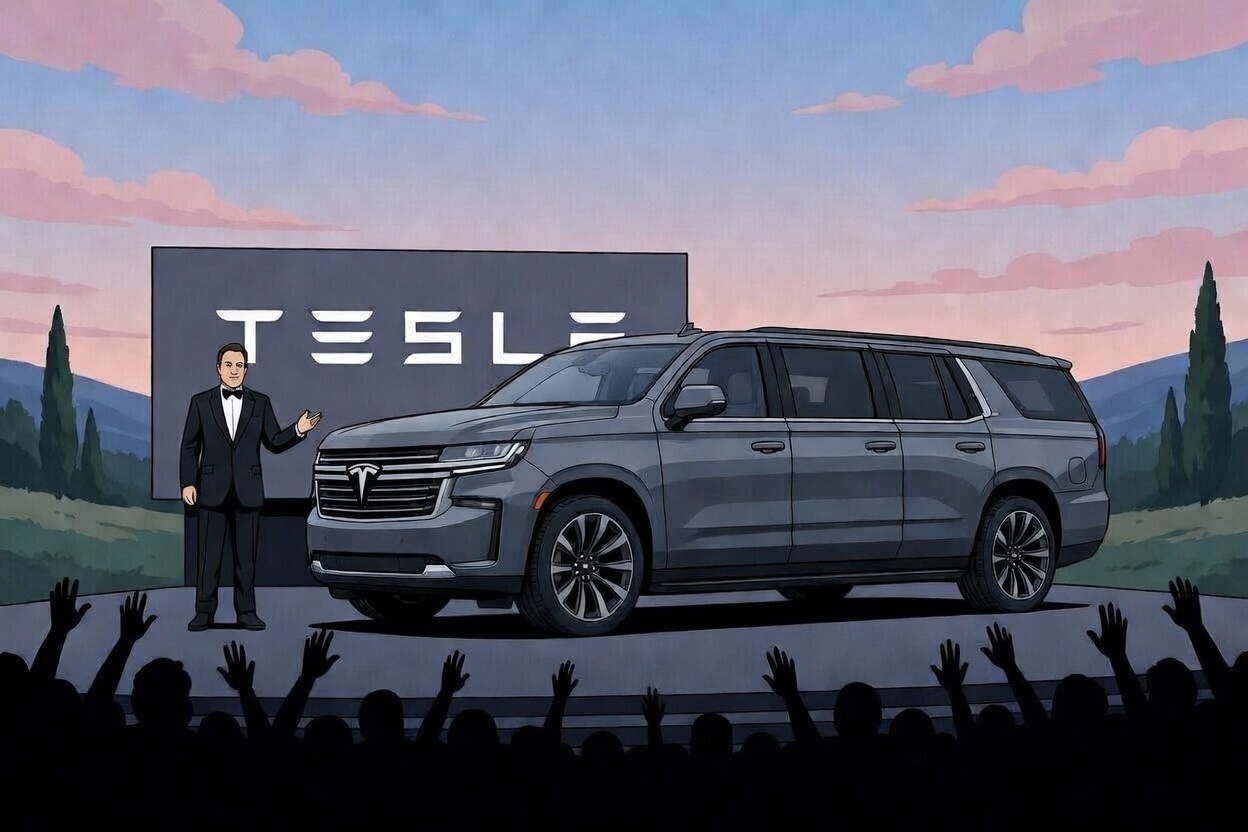
Elon Musk hinted at what Tesla’s new vehicle will be just a day or so after he essentially confirmed the company is developing something that will eventually be available for consumers.
Earlier this week, Musk said that something “way cooler than a minivan” was on the way from Tesla after a fan posted on X that the company needed to build something for larger families. Requesting this type of vehicle has been a move of many Tesla fans over the years, but now, the urgency is even higher for this type of car because of the company’s decision to sunset the Model X.
Following reports of Musk’s plans to build something that will be cooler than a minivan, speculation consisted of what could possibly be on the way.
Tesla has teased a CyberSUV for quite a while, and there were even some clay models built by the company that were strategically placed in a promotional video.
After Musk’s post earlier this week, many considered the possibility that the Tesla CEO was potentially talking about the Roadster, which is slated for an unveiling (again) next month. Some considered the possibility of the Robovan, which was unveiled back in 2024.
However, a new post from Musk seems to indicate that it will be a new project altogether. After one follower of Musk’s said:
“If Tesla makes a car with 3 rows of seats, each with its own pair of doors so nobody has to climb over anybody else to get to their seat, they will create a baby boom the likes of which we haven’t seen in 80 years.”
 -
-
Musk’s reply was simple but definitely shed more insight into the company’s plans, as he said:
“Noted.”
Musk’s simple one-word answer might be enough to essentially expect something large, like a full-sized SUV. This would be an incredible addition to the Tesla lineup, especially as the Model X is going away.
Noted
— Elon Musk (@elonmusk) March 26, 2026
Even the Model X is not quite big enough, and not comparable to vehicles like the Chevrolet Tahoe, so a three-row, six-door SUV might be exactly what Tesla fans want.
It certainly does not sound like Tesla is planning to launch the Model Y L in the U.S., at least not exclusively, or use that car, which is currently built in China, to solve the needs of a larger family.
-
Tesla gives big hint that it will build Cyber SUV, smaller Cybertruck
It seems the time has certainly come for Tesla to answer the call of what consumers want. This has long been requested, and although the company’s sights are ultimately set on achieving full autonomy, there is still a need for larger families, and a full-size SUV could be a great addition for Tesla as it moves into the second quarter of 2026.


Elon Musk
SpaceX’s next trillion dollar bet has nothing to do with rockets, Musk tells staff
Elon Musk told SpaceX staff AI revenue will soon dwarf rockets and Starlink combined entirely.

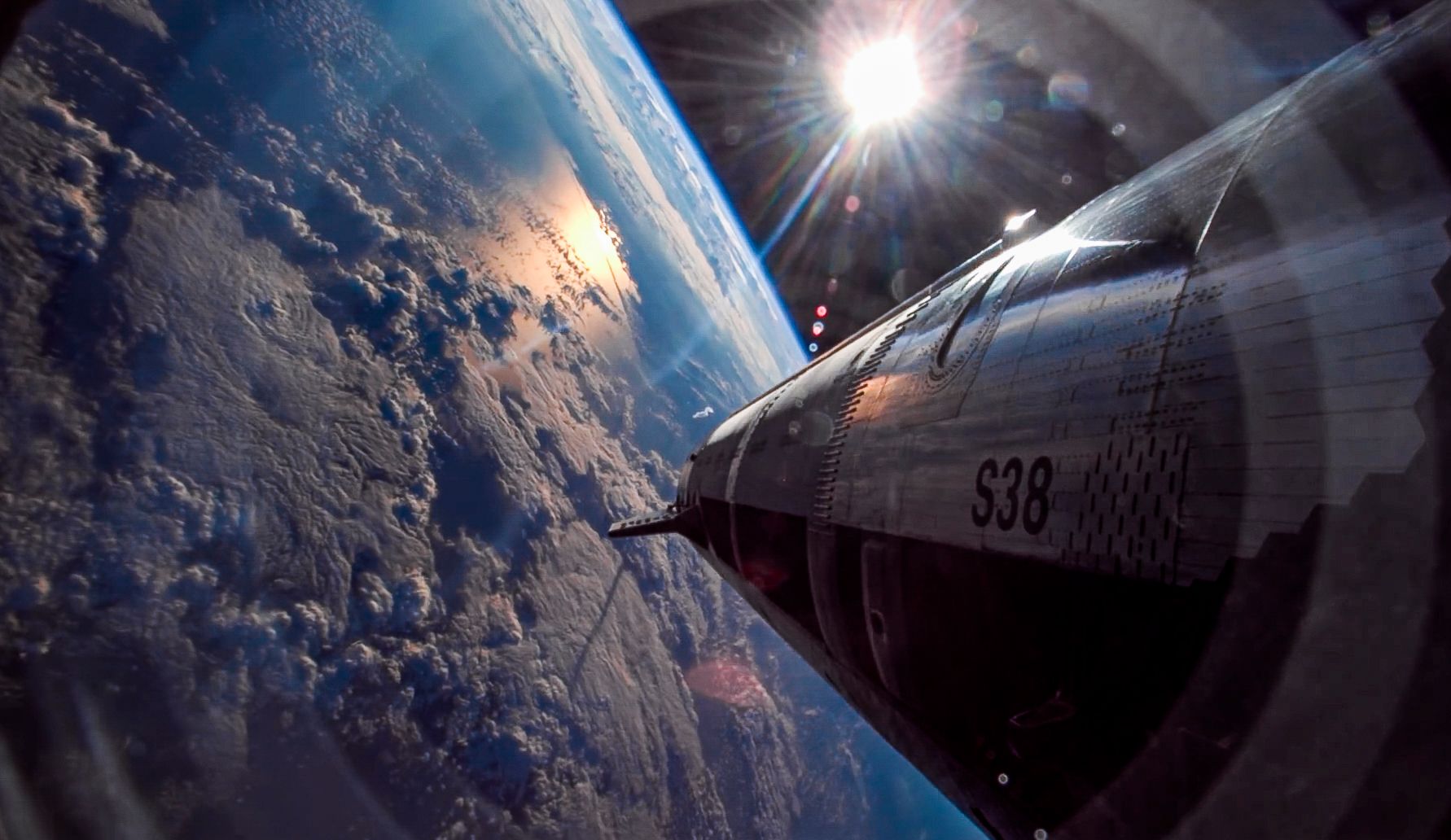
Elon Musk told SpaceX employees this week that artificial intelligence, not rockets, will soon carry the company’s revenue. In a roughly 29 minute internal address posted on SpaceX’s X account on Tuesday, Musk said AI revenue will pass every other line of business at SpaceX “probably in September” and pull further ahead by the fourth quarter.
The numbers he gave are specific. SpaceX currently runs 1.4 gigawatts of AI compute capacity. Musk wants that at 10 gigawatts by the end of 2027, a jump he tied directly to revenue: “if we bring 10GW of AI online by the end of next year, it will be $300 billion to $500 billion a year in revenue.” He called those “big numbers,” which undersells a projection larger than what most countries produce in a year.
We made rockets reusable and are rebuilding the internet in space. The next challenge: making life multiplanetary and understanding the true nature of the universe
Watch @ElonMusk deliver a company update to @SpaceX employees pic.twitter.com/5c8rxoCQfu
— SpaceX (@SpaceX) August 11, 2026
Musk went further on where AI fits into SpaceX’s future. “Probably in four or five years, AI will be 99% of the value of SpaceX,” he told staff, adding that digital intelligence would eventually run “a trillion times” ahead of biological intelligence as computing scales. He tied that growth to the company’s founding mission, telling employees “we must win on AI, because the future is overwhelmingly AI and robots,” with the payoff meant to help fund Starship and a Mars program that increasingly runs through Terafab, the joint Tesla, SpaceX and xAI chip plant.
Elon Musk launches TERAFAB: The $25B Tesla-SpaceXAI chip factory that will rewire the AI industry
-
None of this is entirely new territory. SpaceX told investors much the same story during its first earnings call as a public company on August 4, where Musk moved the company’s $1 trillion revenue target up a year to 2030 and said Starlink could someday carry a majority of the world’s internet. What the all hands video adds is a hard deadline and a specific power figure Musk had not given publicly before, along with a franker pitch to his own workforce that AI, not launch cadence, is now the thing SpaceX is betting its future on.
The AI revenue itself is not coming from SpaceX training its own models. It is largely Starlink acting as the network layer for xAI’s workloads, plus SpaceX renting out compute capacity directly, the same approach behind the roughly $16 billion the company spent on AI infrastructure in a single quarter.
Musk closed the video with a pitch aimed at recruiting and retention rather than investors, telling employees that anyone who helps SpaceX win the AI race will eventually get the chance to go to the moon or Mars themselves. Whether SpaceX can turn 1.4 gigawatts into 10 in seventeen months is the more immediate question, and one that will show up in quarterly numbers well before anyone leaves Earth.
Elon Musk
Another Tesla SpaceX merger prediction by ARK Invest has Elon Musk talking
Elon Musk again denies a Tesla China split as new SpaceX merger speculation resurfaces quickly.
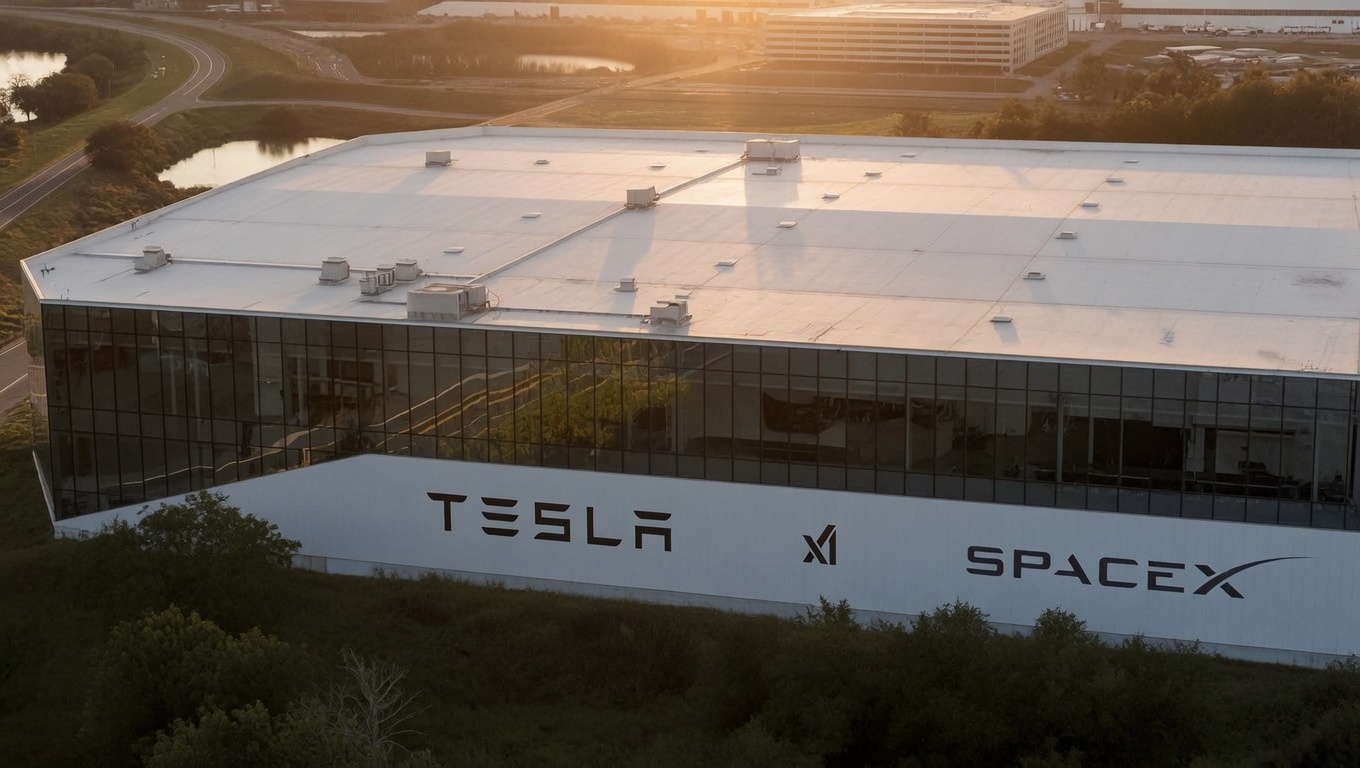
Elon Musk restated that Tesla has no plans to separate its China business from the rest of the company, responding to a new round of merger speculation from ARK Invest.
On the firm’s “Brainstorm” podcast, Cathie Wood’s team, including chief futurist Brett Winton and research director Nick Grous, argued a Tesla and SpaceX combination remains likely, with an announcement possible before the end of the year even if the deal itself would not close that quickly. Winton called Tesla’s Shanghai operations a “small ish wrinkle” for a merger rather than a real obstacle, since SpaceX’s national security work with the U.S. government sits uneasily next to Tesla’s manufacturing base in China.
Musk pushed back on the framing directly. “China is awesome. I strongly encourage people to visit,” he wrote on X. He also repeated language he first used in late July, when the Wall Street Journal reported that Tesla executives had been told to prepare for a possible spinoff, sale, or closure of the China business ahead of a SpaceX tie up. Musk called that report “absurdly fake news” at the time, adding that a separation had “never even come up in a discussion ever,” a line he echoed again this week.
The repeated denial has not settled the underlying question, because Shanghai’s role in Tesla’s business is exactly what makes a merger complicated. Gigafactory Shanghai still ships more than half of Tesla’s global deliveries and functions as the company’s main export hub for Europe and Asia. Teslarati previously reported on Musk’s initial denial, and the merger conversation itself has been building since SpaceX’s IPO gave it public shares to use as acquisition currency.
Wedbush’s Dan Ives has pegged the odds of a Tesla SpaceX merger at 80 to 90 percent by early 2027, and ARK’s prediction of a year end announcement adds another data point to that timeline, even as Musk keeps rejecting the specific mechanics reporters have described. Neither position rules out the other. Musk can deny a China spinoff was ever discussed while analysts still expect some form of combination to move forward, since ARK and Ives are both describing convergence at the corporate level, not necessarily the internal restructuring the Journal described in July.
For now, Tesla’s China business remains intact, and Musk’s comments this week make clear he has no interest in publicly walking that position back, no matter how often the merger question resurfaces.
-
Elon Musk
The real reason Elon Musk wants every car connected to space
Elon Musk says all cars will eventually need Starlink to handle massive AI bandwidth demand.
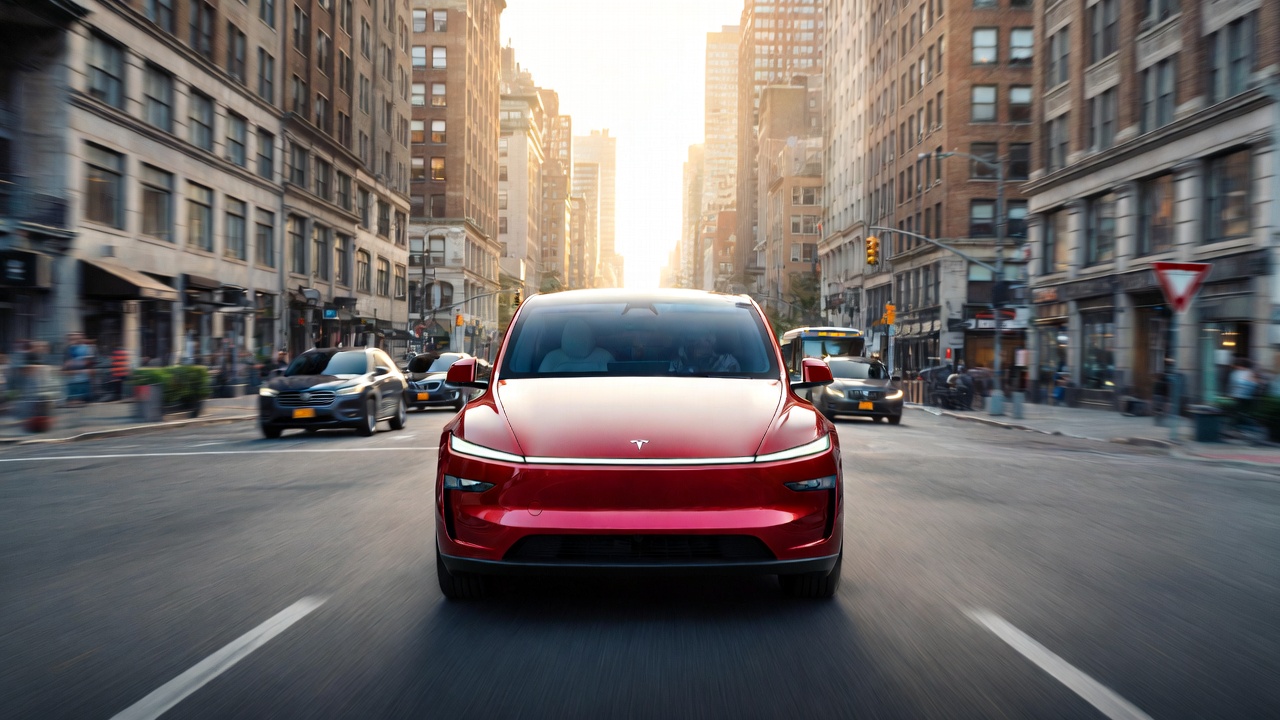
Elon Musk is making the case that satellite internet, not fiber or cellular towers, will end up wired into every car on the road. In a string of posts on X, the SpaceX CEO wrote that all cars will have Starlink in the future and called satellite connectivity the only way to get super high bandwidth to billions of vehicles.
The posts started with Musk endorsing a Cloudflare forecast that traffic generated by autonomous AI agents will soon dwarf traffic generated by humans browsing the internet, a shift he described as not a close call at all. From there he narrowed the argument to infrastructure, writing that the only system that can support the insanely fast bandwidth growth needed by AI is Starlink, before extending the logic to cars specifically.
AI agentic Internet traffic will obviously VASTLY exceed human usage. Not a close call at all.
Cloudflare’s forecast is accurate. https://t.co/VztgrinN5k pic.twitter.com/Wo4FiRKjPU
— Elon Musk (@elonmusk) August 9, 2026
The timing lines up with Tesla’s own hardware decisions. On July 20, Tesla confirmed the Cybercab would ship with a Starlink V5 terminal built into its roof, the first time the company had put satellite hardware in a production vehicle. A day later, Tesla’s head of AI, Ashok Elluswamy, explained the connection wasn’t there for safety and that Cybercab’s driving stack runs entirely on onboard cameras and compute, while the satellite link exists for navigation, customer service, and fleet management instead. Musk followed with his own post about the feature, saying riders would be able to watch 4K streaming video during rides.
By July 22, Musk had already said Starlink would extend beyond Cybercab to Tesla’s full lineup. Sunday’s posts push that same logic outward again, this time framed as a requirement across the industry rather than a feature specific to Tesla, and tied directly to the bandwidth AI systems are expected to consume.
SpaceX’s newest Starmind will make earth data centers obsolete
-
The AI argument has been building on SpaceX’s side for months. The company has an FCC filing pending for a third generation Starlink constellation, and it has separately proposed Starmind, a constellation of up to a million satellites designed to run AI computation directly in orbit rather than just relay data. Musk has said he expects space to become the cheapest place to deploy AI compute within two to three years. Starlink and Starmind serve different jobs inside that vision, one moving data and the other processing it, but Sunday’s posts treat vehicles as one more category of hardware that will eventually need both.
None of this changes anything for Tesla owners today. Cars already on the road keep running on LTE and Wi-Fi, and Tesla hasn’t outlined a retrofit path for existing vehicles. The July 22 commitment applies to future production, not the fleet already delivered. What Musk added on Sunday is the reasoning: satellite connectivity isn’t a Cybercab novelty, it’s a bet that ground based networks won’t keep up with how much data cars, robots, and AI systems are about to generate.

Tesla launches V2L Outlet Adapter for Premium Model Y in the U.S.

Tesla Roadster unveiling nears, and it will fly: The Information


