Elon Musk
Elon Musk’s Biggest Revelations on AI, Robots, and the Future of Work from the Moonshots Podcast

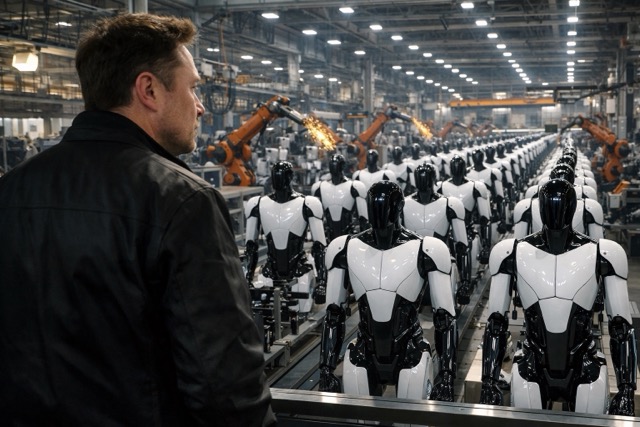
Elon Musk’s appearance on the Moonshots with Peter Diamandis podcast was packed with bold predictions, candid admissions, and surprising tech insights. The nearly three-hour conversation covered everything from artificial intelligence to humanoid robots, geopolitics, and the future of work. Here are the top 10 most intriguing takeaways:
-
Aggressive AGI Timeline Predictions
Musk offered a detailed view on when artificial general intelligence (AGI) could emerge, suggesting it may arrive sooner than many expect, emphasizing both transformative potential and risks.
-
U.S. vs. China in the AI Race
He discussed the strategic competition between the United States and China over AI development, noting that geopolitical dynamics will shape how and who leads in the next decades.
-
Future of Job Markets
Musk touched on how AI and automation could reshape employment, predicting massive boosts in productivity alongside potential disruptions in traditional work structures.
-
Clean Energy Transition
A recurring theme was the role of clean energy in future economies, with Musk reiterating the importance of scaling sustainable power generation and storage.
-
Humanoid Robots Are Coming
On the podcast, Musk elaborated on Tesla’s work on humanoid robots, hinting at timelines and applications that go beyond factories to general-purpose assistance.
-
Tesla Roadster “Last Human-Driven Car”
Outside the core discussion topics, Musk teased features of the upcoming Tesla Roadster — calling it “the best of the last of the human-driven cars” and suggesting safety won’t be its main selling point.
-
The Role of AI in Clean Energy and Robotics
Linking AI to both energy optimization and robotics, Musk explained how smarter systems could accelerate decarbonization and task automation across industries.
-
U.S. Innovation Leadership
Musk argued that maintaining American leadership in key tech sectors like AI, space, and robotics should be a national priority, with thoughtful policy and investment.
-
Job Creation vs. Job Elimination
While acknowledging automation’s disruptive effects, he also outlined scenarios where new industries and opportunities could emerge, particularly in AI, space, and advanced manufacturing.
-
Long-Term Vision for Humanity
Throughout the conversation, Musk revisited his long-term philosophical views — including a belief in humanity’s responsibility to become a multi-planetary and technologically empowered species.
Whether you agree with Musk’s optimism or not, the podcast offers a window into the thinking of one of the most influential figures in tech today, in and why his visions continue to spark debate and inspiration.


Elon Musk
SpaceX files confidentially for IPO that will rewrite the record books
SpaceX files confidentially for a record-breaking IPO targeting a $1.75T valuation and $80B raise, driven by Starlink growth and its xAI merger.
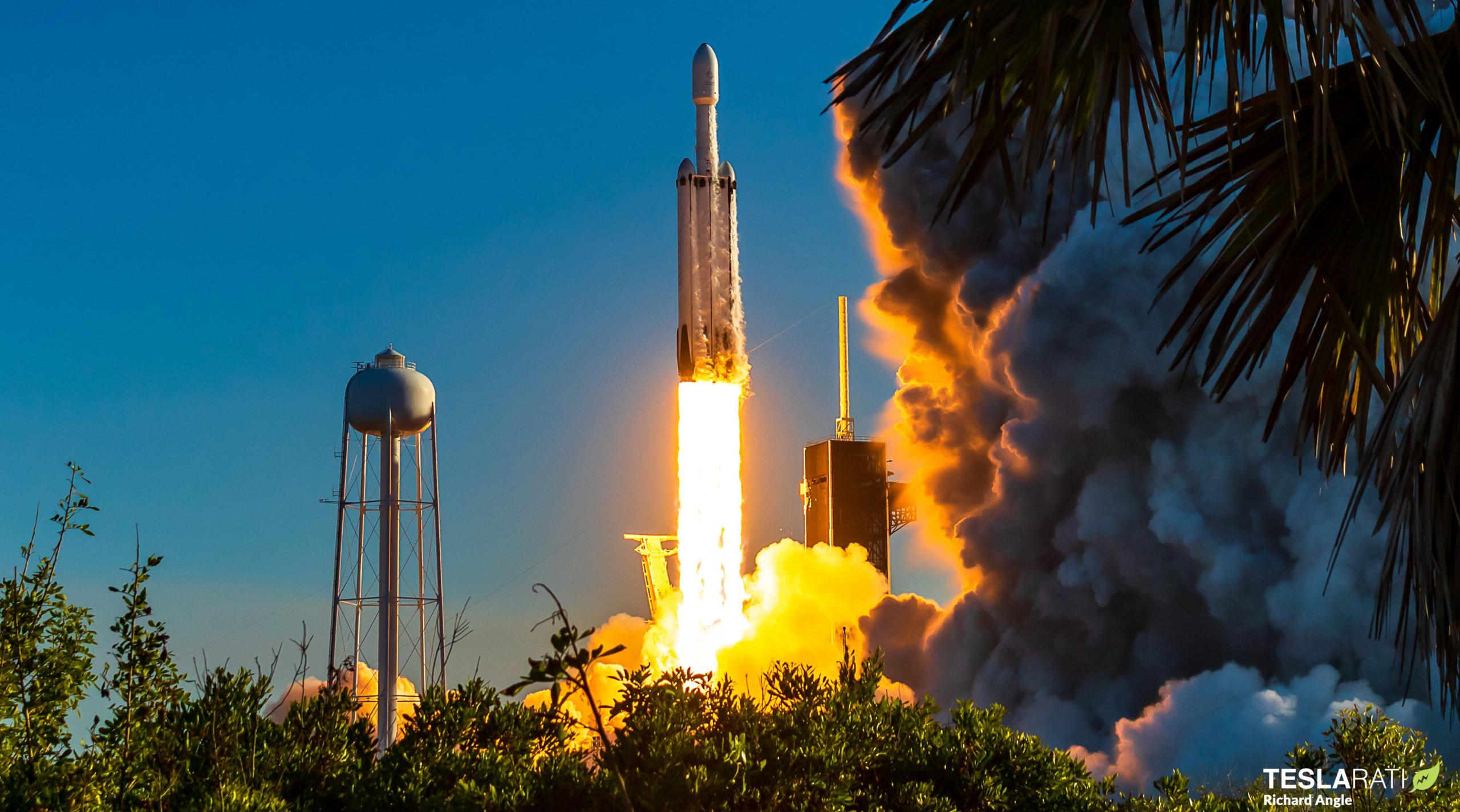
Elon Musk’s rocket and satellite company submitted its draft registration to the U.S. Securities and Exchange Commission today for an initial public offering, targeting June at a $1.75 trillion valuation. This would be the largest in history.
SpaceX has filed confidentially with the SEC, first reported by Bloomberg. SpaceX would be valued above every S&P 500 company except Nvidia, Apple, Alphabet, Microsoft, and Amazon.
The filing uses a confidential process that allows companies to work through SEC disclosures privately before initiating a public roadshow. With a June target, official details through a formal prospectus is expected to go public in April or early May, after which SpaceX must wait at least 15 days before beginning investor marketing.
While SpaceX is best known for its Falcon 9 and Starship rockets, the $1.75 trillion valuation is anchored by Starlink, its satellite internet service. Starlink ended 2025 with 9.2 million subscribers and over $10 billion in revenue, which is a figure analysts project could reach a staggering $24 billion by the end of 2026. A February all-stock merger with xAI, Musk’s artificial intelligence venture, further boosted the valuation.
SpaceX officially acquires xAI, merging rockets with AI expertise
Bank of America, Goldman Sachs, JPMorgan Chase, and Morgan Stanley are lined up as senior underwriters. SpaceX is also considering a dual-class share structure to preserve insider voting control, and plans to allocate up to 30% of shares to retail investors, which is roughly three times the typical norm.
Elon Musk
Elon Musk hints at “official ceremony” with throwback photo to close Tesla Model S, Model X chapter
Elon Musk promises an official ceremony to mark the end of Tesla Model S and Model X production.
Tesla has officially begun winding down production of the Model S and Model X, sending farewell emails to U.S. customers on March 27 and updating the website to reflect the end of the line. Shoppers visiting Tesla.com now find only a limited set of Model S and Model X inventory units available for purchase, with no option to configure a new factory build. The move formalizes what CEO Elon Musk announced on the company’s Q4 2025 earnings call in January, when he said it was “time to basically bring the Model S and X programs to an end with an honorable discharge.”
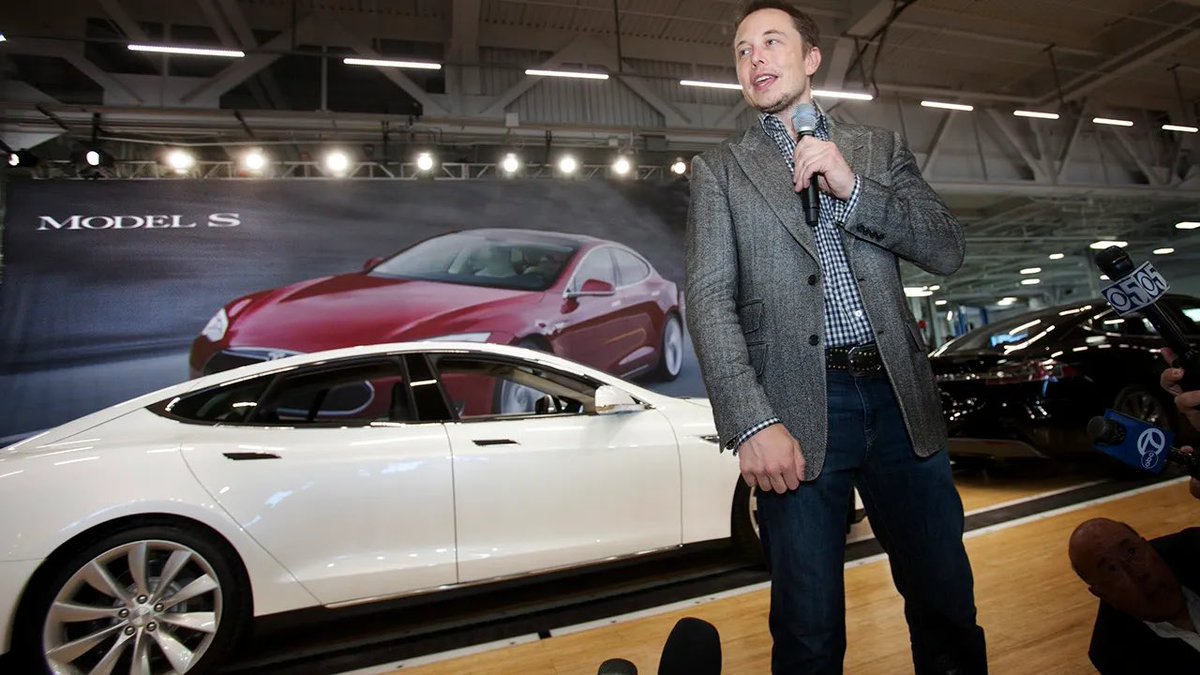
Musk posted on X a throwback photo of himself speaking at the Model S production launch in 2012, and noting “We will have an official ceremony to mark the ending of an era. I love those cars.”
The mention of an official ceremony is notable. Tesla has not held a formal farewell event for a vehicle before, and Musk’s wording suggests this will be something deliberate rather than a quiet line shutdown. Given that Musk’s X post shows a photo of him on stage with a microphone in front of an audience at the Fremont factory, it wouldn’t be too far-fetched to expect a closing ceremony to take place at the same location. Perhaps? Whether it becomes a public event, a private gathering for employees, or a livestreamed moment on X remains to be seen.
Custom orders of the Tesla Model S & X have come to an end. All that’s left are some in inventory.
We will have an official ceremony to mark the ending of an era. I love those cars.
This was me at production launch 14 years ago: pic.twitter.com/6kvCf9HTHc
— Elon Musk (@elonmusk) April 1, 2026
The Model S first went on sale nearly fifteen years ago and was Tesla’s first fully in-house designed vehicle, proving that an electric car could be fast, desirable, and capable of long distance on a single charge. The Model X followed in 2015, turning heads with its unmistakable and distinctive falcon-wing doors, while becoming one of the first all-electric SUVs on the market. Tesla’s two flagship vehicles would ultimately push legacy automakers to take all-electric transportation seriously and help fund development of the more affordable Model 3 and Model Y.
By 2025, however, both models had been reduced to a rounding error in Tesla’s sales figures. Musk was direct about what comes next, stating “We are going to convert that production space to an Optimus factory. It’s part of our overall shift to an autonomous future.”
Elon Musk’s $10 Trillion robot: Inside Tesla’s push to mass produce Optimus
That shift is already underway. Tesla officially started Optimus Gen 3 production at its Fremont factory in January 2026, with the line targeting a run rate of one million units per year. The Gen 3 robot features 22 degrees of freedom per hand, runs on Tesla’s AI5 chip, and shares the same neural network architecture as Full Self-Driving. A dedicated Optimus factory at Gigafactory Texas is also under construction, with a planned annual capacity of 10 million units. The production lines that once built the Model S and Model X are being converted to support that ramp.
Tesla confirmed it will continue to support existing owners with service, software updates, and parts for as long as people own the vehicles. For buyers still interested in a new example, remaining U.S. inventory is discounted and the window is closing fast.
Elon Musk
Elon Musk announces disappointing Tesla Optimus update
In a post on X on March 31, Musk stated that Optimus 3 is mobile but requires some finishing touches before it is ready to be shown to the world. This update comes on the final day of the first quarter, a period when Tesla had previously signaled expectations for a Gen 3 reveal.


Elon Musk announced a disappointing update to the unveiling of Tesla Optimus and its third-generation iteration, missing a timeline it aimed to hit in the first quarter of the year.
Musk has confirmed that the highly anticipated Optimus Gen 3 humanoid robot is already walking around and operational, yet the public unveiling will face a short delay as the company applies final refinements.
In a post on X on March 31, Musk stated that Optimus 3 is mobile but requires some finishing touches before it is ready to be shown to the world. This update comes on the final day of the first quarter, a period when Tesla had previously signaled expectations for a Gen 3 reveal.
Optimus 3 is walking around, but needs some finishing touches before it’s ready to be shown
— Elon Musk (@elonmusk) March 31, 2026
The announcement follows reports of Optimus Gen 3 appearing at the Tesla Diner in Los Angeles, where it was observed serving and moving about until sunset. Images and videos shared by observers captured the robot in action, highlighting its progress in real-world mobility.
Tesla had aimed to showcase the production intent version of Optimus Gen 3 during the first quarter of 2026, positioning it as a major step toward factory deployment and eventual commercial availability. Musk has described the robot as featuring advanced capabilities, including highly dexterous hands with significant degrees of freedom, powered by Tesla’s AI systems for complex tasks.
This minor postponement aligns with Tesla’s iterative approach to development. Earlier statements from Musk indicated that Gen 3 would represent the most advanced humanoid robot yet, designed primarily for internal factory use before scaling to external customers.
Elon Musk’s $10 Trillion robot: Inside Tesla’s push to mass produce Optimus
Production timelines point toward low-volume output starting in the summer of 2026, with volume ramp-up targeted for 2027. The delay underscores the company’s commitment to quality over speed, ensuring the robot meets rigorous standards for safety and performance in practical environments.
Optimus represents a cornerstone of Tesla’s long-term vision beyond electric vehicles. Musk has repeatedly emphasized that successful humanoid robotics could transform industries by addressing labor shortages and enabling new forms of productivity.
Competitors in the space continue to advance their own platforms, yet Tesla’s vertical integration, from custom actuators to end-to-end AI training, positions Optimus as a potential leader. Community reactions on social media range from excitement over visible progress to impatience with shifting timelines, a familiar pattern in Tesla’s innovation journey.
Investors and enthusiasts view Optimus as critical to Tesla’s valuation, potentially surpassing its automotive business in scale. With the robot already demonstrating walking and basic interactions, the finishing touches likely involve software polishing, hardware fine-tuning, and reliability enhancements.
Musk’s update suggests the reveal could arrive in the coming weeks or months, maintaining momentum toward broader deployment.
As Tesla pushes the boundaries of physical artificial intelligence, this latest development keeps Optimus in the spotlight. The company continues to prioritize rapid iteration while delivering on its promises to shareholders and customers. The robotics revolution at Tesla appears closer than ever, promising profound impacts on manufacturing, services, and daily life in the years ahead.

SpaceX files confidentially for IPO that will rewrite the record books

Elon Musk hints at “official ceremony” with throwback photo to close Tesla Model S, Model X chapter

Elon Musk announces disappointing Tesla Optimus update

Elon Musk says Tesla is developing a new vehicle: ‘Way cooler than a minivan’

Elon Musk launches TERAFAB: The $25B Tesla-SpaceXAI chip factory that will rewire the AI industry


