Connect with us
Rivian tackles a bedbug problem at its Normal, IL factory Rivian tackles a bedbug problem at its Normal, IL factory

News

Rivian tackles a bedbug problem at its Normal, IL factory

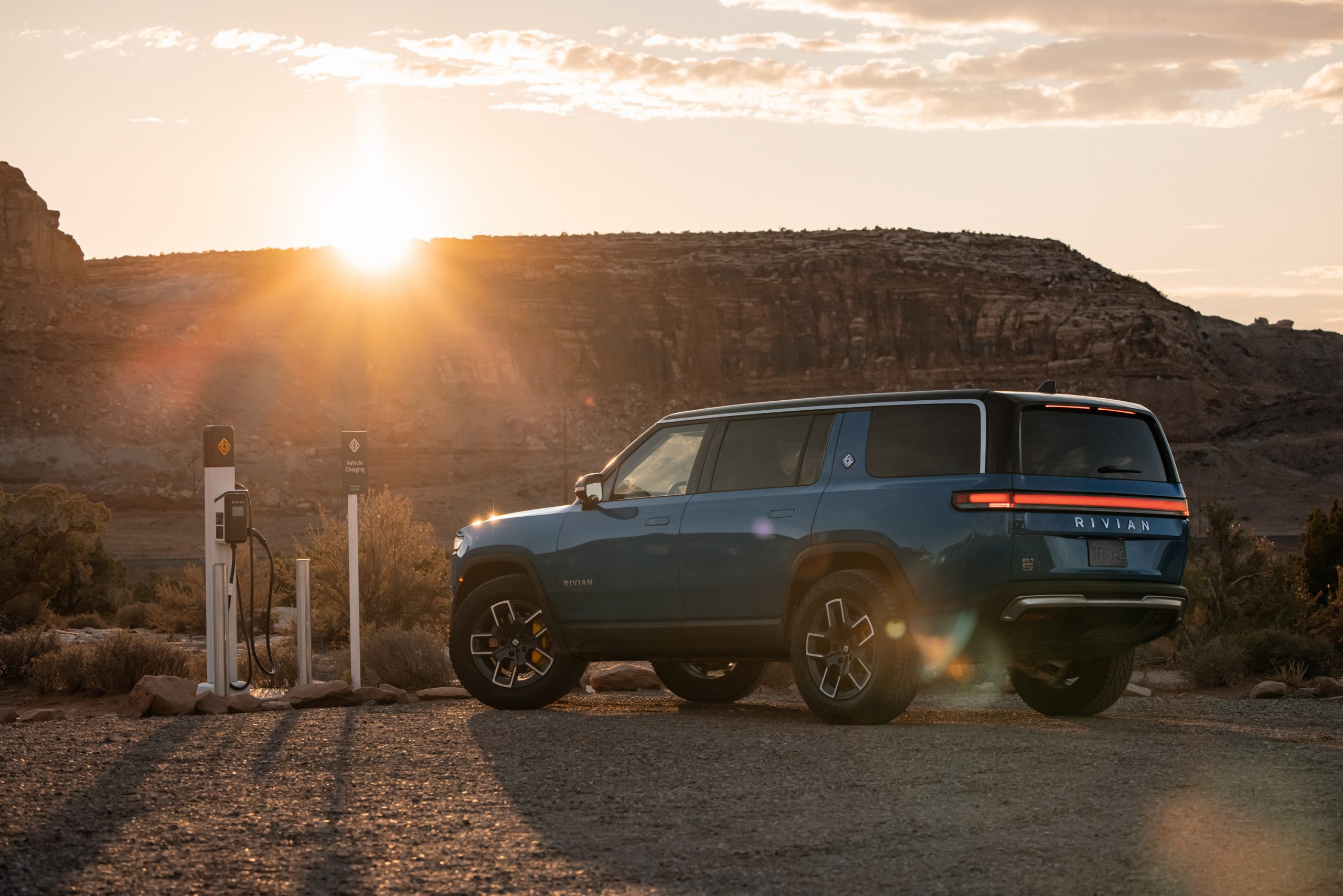
Credit: Rivian

Published

on

Rivian quickly took action after reports of bedbugs on one of the forklifts in the Normal manufacturing facility. The automaker confirmed with The Pantagraph that it hired a professional pest control to deal with the problem.

Zach Dietmeier, senior manager of plant communication and policy at Rivian, said that the company received reports of bedbugs on forklifts in an isolated area of the plant.

“These impacted teams have been notified,” Dietmeier told the publication in an email. “We investigate every report and take appropriate actions per our pest control contractor.”

Rivian took action to quarantine and treat the forklifts in the area and, for preventative measures, is treating the other forklifts and tuggers. The automaker also treated all of the transportation shuttles and plans to treat all warehouse spaces by the end of the week. Dietmeier noted that no other bugs have been found in either of those locations.

Rivian employees contacted The Pantagraph and spoke on the condition of anonymity. One said that there were multiple forklifts parked on Tuesday with signs that said “Bedbugs, Do Not Use” and had plastic bags covering the seats.

Advertisement
-->

“Nobody really wants to bring bedbugs home,” the employee said. “Like, I don’t know what would happen if somebody did actually bring bedbugs home with them … I doubt Rivian would pay for fumigation of personal property.”

Rivian sent its employees an email encouraging employees to report concerns. The automaker said that the facilities were safe and would remain open for production and events. It also said it will continue to investigate reports as they come in and warned against spreading misinformation.

Rivian employees were also complaining about the bedbugs at the factory on Reddit. One of them noted that Rivian may have had the bedbugs on the forklifts for a week or even longer and that the automaker was trying to “keep it hush hush and just throw garbage bags over them.”

Your feedback is welcome. If you have any comments or concerns or see a typo, you can email me at johnna@teslarati.com. You can also reach me on Twitter at @JohnnaCrider1

Teslarati is now on TikTok. Follow us for interactive news & more. Teslarati is now on TikTok. Follow us for interactive news & more. You can also follow Teslarati on LinkedInTwitter, Instagram, and Facebook.

Advertisement
-->

Johnna Crider is a Baton Rouge writer covering Tesla, Elon Musk, EVs, and clean energy & supports Tesla's mission. Johnna also interviewed Elon Musk and you can listen here

Advertisement
Comments

News

Man credits Grok AI with saving his life after ER missed near-ruptured appendix

The AI flagged some of the man’s symptoms and urged him to return to the ER immediately and demand a CT scan.

Published

on

Credit: Grok Imagine

A 49-year-old man has stated that xAI’s Grok ended up saving his life when the large language model identified a near-ruptured appendix that his first ER visit dismissed as acid reflux. 

After being sent home from the ER, the man asked Grok to analyze his symptoms. The AI flagged some of the man’s symptoms and urged him to return immediately and demand a CT scan. The scan confirmed that something far worse than acid reflux was indeed going on.

Grok spotted what a doctor missed

In a post on Reddit, u/Tykjen noted that for 24 hours straight, he had a constant “razor-blade-level” abdominal pain that forced him into a fetal position. He had no fever or visible signs. He went to the ER, where a doctor pressed his soft belly, prescribed acid blockers, and sent him home. 

The acid blockers didn’t work, and the man’s pain remained intense. He then decided to open a year-long chat he had with Grok and listed every detail that he was experiencing. The AI responded quickly. “Grok immediately flagged perforated ulcer or atypical appendicitis, told me the exact red-flag pattern I was describing, and basically said “go back right now and ask for a CT,” the man wrote in his post. 

He copied Grok’s reasoning, returned to the ER, and insisted on the scan. The CT scan ultimately showed an inflamed appendix on the verge of rupture. Six hours later, the appendix was out. The man said the pain has completely vanished, and he woke up laughing under anesthesia. He was discharged the next day.

Advertisement
-->
How a late-night conversation with Grok got me to demand the CT scan that saved my life from a ruptured appendix (December 2025)
byu/Tykjen ingrok

AI doctors could very well be welcomed

In the replies to his Reddit post, u/Tykjen further explained that he specifically avoided telling doctors that Grok, an AI, suggested he get a CT scan. “I did not tell them on the second visit that Grok recommended the CT scan. I had to lie. I told them my sister who’s a nurse told me to ask for the scan,” the man wrote. 

One commenter noted that the use of AI in medicine will likely be welcomed, stating that “If AI could take doctors’ jobs one day, I will be happy. Doctors just don’t care anymore. It’s all a paycheck.” The Redditor replied with, “Sadly yes. That is what it felt like after the first visit. And the following night could have been my last.”

Elon Musk has been very optimistic about the potential of robots like Tesla Optimus in the medical field. Provided that they are able to achieve human-level articulation in their hands, and Tesla is able to bring down their cost through mass manufacturing, the era of AI-powered medical care could very well be closer than expected. 

Continue Reading

News

Tesla expands Model 3 lineup in Europe with most affordable variant yet

The Model 3 Standard still delivers more than 300 miles of range, potentially making it an attractive option for budget-conscious buyers.

Published

on

Credit: Tesla

Tesla has introduced a lower-priced Model 3 variant in Europe, expanding the lineup just two months after the vehicle’s U.S. debut. The Model 3 Standard still delivers more than 300 miles (480 km) of range, potentially making it an attractive option for budget-conscious buyers.

Tesla’s pricing strategy

The Model 3 Standard arrives as Tesla contends with declining registrations in several countries across Europe, where sales have not fully offset shifting consumer preferences. Many buyers have turned to options such as Volkswagen’s ID.3 and BYD’s Atto 3, both of which have benefited from aggressive pricing.

By removing select premium finishes and features, Tesla positioned the new Model 3 Standard as an “ultra-low cost of ownership” option of its all-electric sedan. Pricing comes in at €37,970 in Germany, NOK 330,056 in Norway, and SEK 449,990 in Sweden, depending on market. This places the Model 3 Standard well below the “premium” Model 3 trim, which starts at €45,970 in Germany. 

Deliveries for the Standard model are expected to begin in the first quarter of 2026, giving Tesla an entry-level foothold in a segment that’s increasingly defined by sub-€40,000 offerings.

Tesla’s affordable vehicle push

The low-cost Model 3 follows October’s launch of a similarly positioned Model Y variant, signaling a broader shift in Tesla’s product strategy. While CEO Elon Musk has moved the company toward AI-driven initiatives such as robotaxis and humanoid robots, lower-priced vehicles remain necessary to support the company’s revenue in the near term.

Advertisement
-->

Reports have indicated that Tesla previously abandoned plans for an all-new $25,000 EV, with the company opting to create cheaper versions of existing platforms instead. Analysts have flagged possible cannibalization of higher-margin models, but the move aims to counter an influx of aggressively priced entrants from China and Europe, many of which sell below $30,000. With the new Model 3 Standard, Tesla is reinforcing its volume strategy in Europe’s increasingly competitive EV landscape.

Continue Reading

News

Tesla FSD (Supervised) stuns Germany’s biggest car magazine

FSD Supervised recognized construction zones, braked early for pedestrians, and yielded politely on narrow streets.

Published

on

Credit: Grok Imagine

Tesla’s upcoming FSD Supervised system, set for a European debut pending regulatory approval, is showing notably refined behavior in real-world testing, including construction zones, pedestrian detection, and lane changes, as per a recent demonstration ride in Berlin. 

While the system still required driver oversight, its smooth braking, steering, and decision-making illustrated how far Tesla’s driver-assistance technology has advanced ahead of a potential 2026 rollout.

FSD’s maturity in dense city driving

During the Berlin test ride with Auto Bild, Germany’s largest automotive publication, a Tesla Model 3 running FSD handled complex traffic with minimal intervention, autonomously managing braking, acceleration, steering, and overtaking up to 140 km/h. It recognized construction zones, braked early for pedestrians, and yielded politely on narrow streets. 

Only one manual override was required when the system misread a converted one-way route, an example, Tesla stated, of the continuous learning baked into its vision-based architecture.

Robin Hornig of Auto Bild summed up his experience with FSD Supervised with a glowing review of the system. As per the reporter, FSD Supervised already exceeds humans with its all-around vision. “Tesla FSD Supervised sees more than I do. It doesn’t get distracted and never gets tired. I like to think I’m a good driver, but I can’t match this system’s all-around vision. It’s at its best when both work together: my experience and the Tesla’s constant attention,” the journalist wrote. 

Advertisement
-->
https://twitter.com/Paddy_film/status/1996245521770364947?s=20

Tesla FSD in Europe

FSD Supervised is still a driver-assistance system rather than autonomous driving. Still, Auto Bild noted that Tesla’s 360-degree camera suite, constant monitoring, and high computing power mark a sizable leap from earlier iterations. Already active in the U.S., China, and several other regions, the system is currently navigating Europe’s approval pipeline. Tesla has applied for an exemption in the Netherlands, aiming to launch the feature through a free software update as early as February 2026.

What Tesla demonstrated in Berlin mirrors capabilities already common in China and the U.S., where rival automakers have rolled out hands-free or city-navigation systems. Europe, however, remains behind due to a stricter certification environment, though Tesla is currently hard at work pushing for FSD Supervised’s approval in several countries in the region.

Continue Reading