News
EV owners report issue that “fries” cars when charging at Electrify America

A longtime EV owner and current Rivian R1T driver recently shared a rather disturbing incident while charging at an Electrify America station. The incident left the R1T “fried” and the owner stuck hours away from home. Unfortunately, this does not seem to be the first time that such an incident happened.
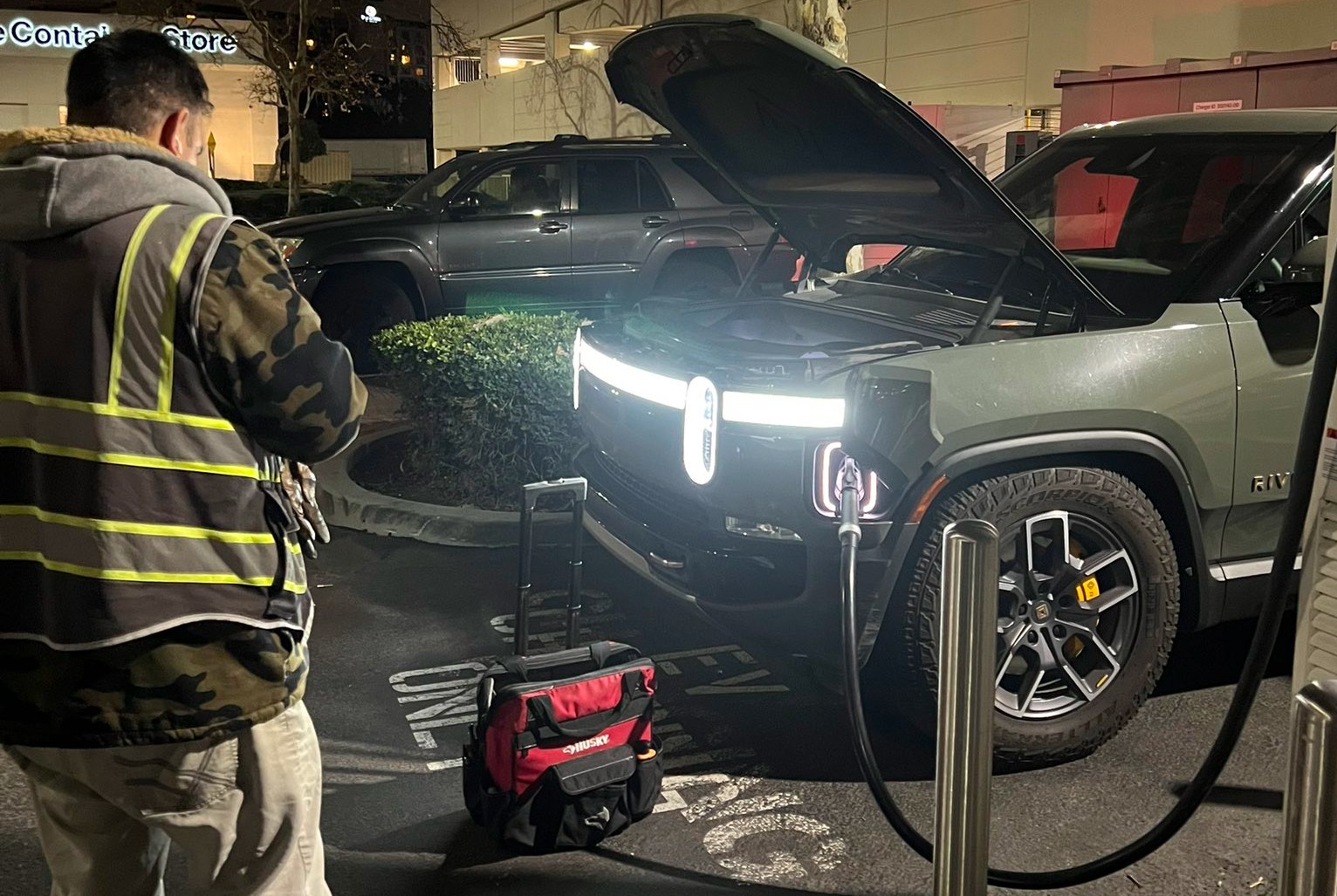
Rivian R1T owner @snkrticians noted that he was charging his all-electric truck at an Electrify America station when he heard a loud sound. The sound seemed to cause a number of error codes on the R1T, resulting in the vehicle being stuck in the charging stall. It ended up taking several hours before a technician was at the site.
Unfortunately for the Rivian owner, he was two hours away from home. Being unable to detach the charger from the R1T, the Electrify America technician reportedly suggested sawing off the charger to free the car, which the longtime EV owner found absurd. Fortunately, Rivian aided the R1T owner by providing him with rideshare credits so that he could come home.
What’s rather disturbing about the Rivian owner’s experience is that this is not the first time the issue was reported. Back in November, Ford F-150 Lightning owner Eric Roe posted about a very similar experience on Twitter. According to the Lightning owner, he was able to plug into an Electrify America charger just fine, but not long after the charging session started, he heard a loud sound. The charger then went dark and the Lightning displayed a number of error codes. The vehicle had to be towed from the station.
What’s unfortunate for the Lightning owner was that the vehicle had been back at the dealership since earlier this month due to one of its main battery modules failing since the Electrify America incident. The wait for parts is expected to be long. Ford service has reportedly advised the Lightning owner to ask the carmaker to buy the vehicle back.
In a response to the Rivian R1T owner’s experience on Twitter, a Chevy Bolt owner claimed to have the exact same experience at an Electrify America charger as well. The incident ended up causing the Bolt owner to reportedly spend $288 to get the all-electric hatchback towed to a dealership. Amidst these reports, electric vehicle owners are clamoring for Electrify America to issue a formal statement about the matter, and as soon as possible, issue a fix to ensure that no electric cars are “fried” anymore.
Teslarati has reached out to Electrify America for a statement on the matter. I will be updating this article if or when Electrify America responds to my inquiries.
Don’t hesitate to contact us with news tips. Just send a message to simon@teslarati.com to give us a heads up.



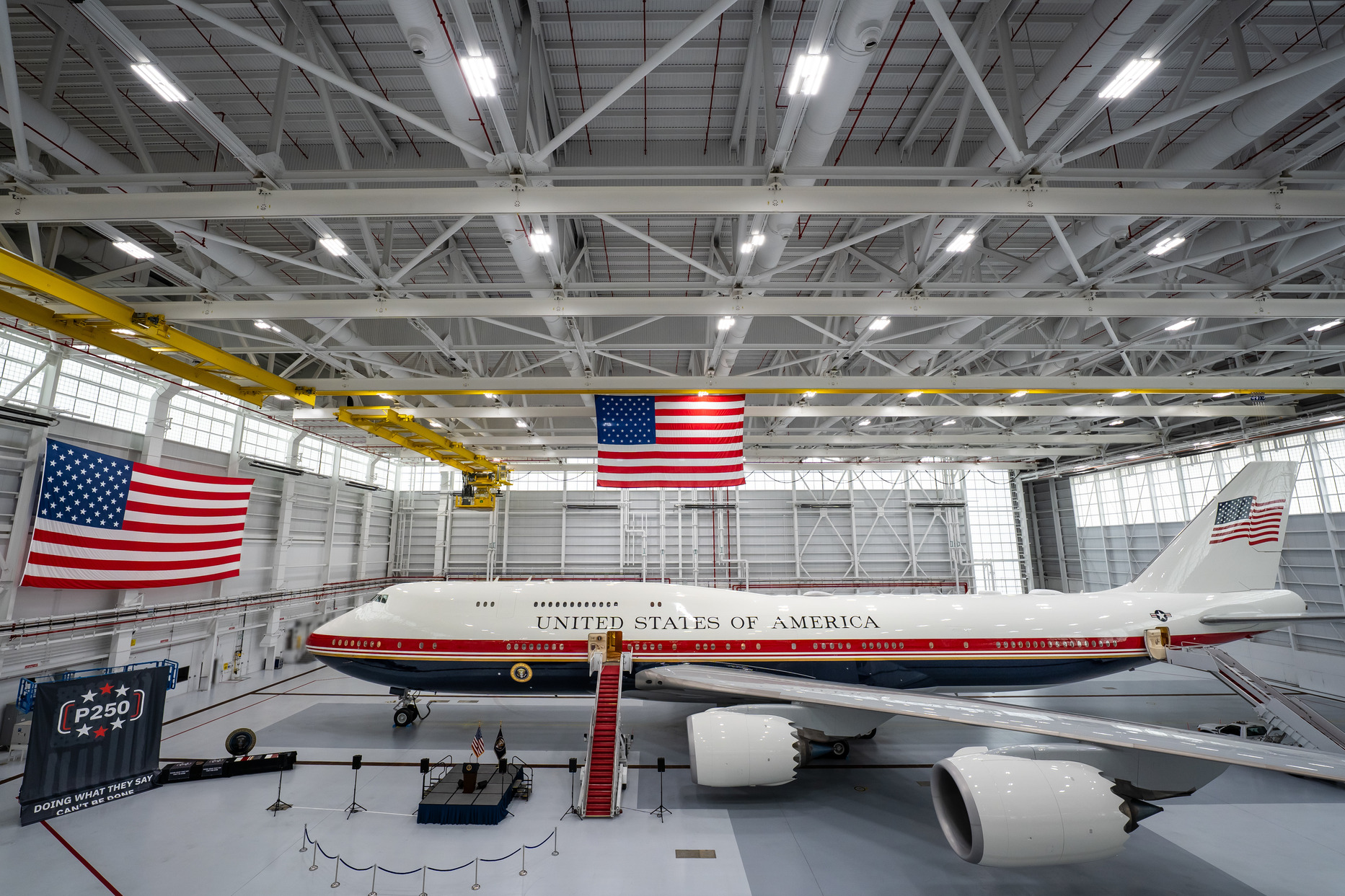
President Donald Trump unveiled an upgraded Boeing 747-8 at Joint Base Andrews on June 19, 2026, describing the Qatar-gifted aircraft as an interim Air Force One equipped with advanced communications systems, including Starlink, Elon Musk’s SpaceX satellite internet service.
The plane, valued at around $400 million and modified for presidential use, serves as a bridge until the delayed VC-25B replacements arrive. Trump highlighted its luxury features and new technology during remarks to service members.
Trump stated:
“We have communication equipment up there that nobody’s ever seen before. It’s the highest level and, uh, including Starlink. My friend Elon is going to be very happy, but, uh, Starlink and we have, uh, four or five different sets of double and triple communications like people haven’t seen.”
He added:
“And it represents what can happen with hard work, innovation, and aggressive timelines because we did this quickly and yet there’s never been communication like is on this plane.”
🚨 President Trump confirmed today that the new Air Force One is equipped with Starlink:
“We have communication equipment up there that nobody’s ever seen before, it’s the highest level and including Starlink…my friend Elon is going to be very happy.” pic.twitter.com/IhkDmtr5hL
— TESLARATI (@Teslarati) June 20, 2026
The aircraft features a redesigned red, white, and blue livery and has been outfitted with Starlink satellite connectivity alongside other secure systems.
Trump praised the plane’s uniqueness, calling it among the world’s most luxurious. The gift from Qatar and subsequent modifications have drawn attention, with the jet positioned as a solution for presidential travel. It is expected to support operations, including potential ceremonial roles such as Fourth of July flyovers.
The event marked the formal introduction of the converted jet, which will help maintain capabilities while the primary Air Force One fleet undergoes modernization. Defense observers note the inclusion of commercial satellite technology like Starlink as part of efforts to ensure resilient communications, crucial to keep the country running as the President is in the sky.
President Trump’s comments underscored appreciation for rapid upgrades and innovation in equipping the aircraft. The plane remains a U.S. government asset and is slated for eventual transfer related to presidential library purposes after its service.
Tesla just gave what is perhaps its biggest signal yet that the launch of the Cybercab, its autonomous ride-hailing-geared car, is imminent.
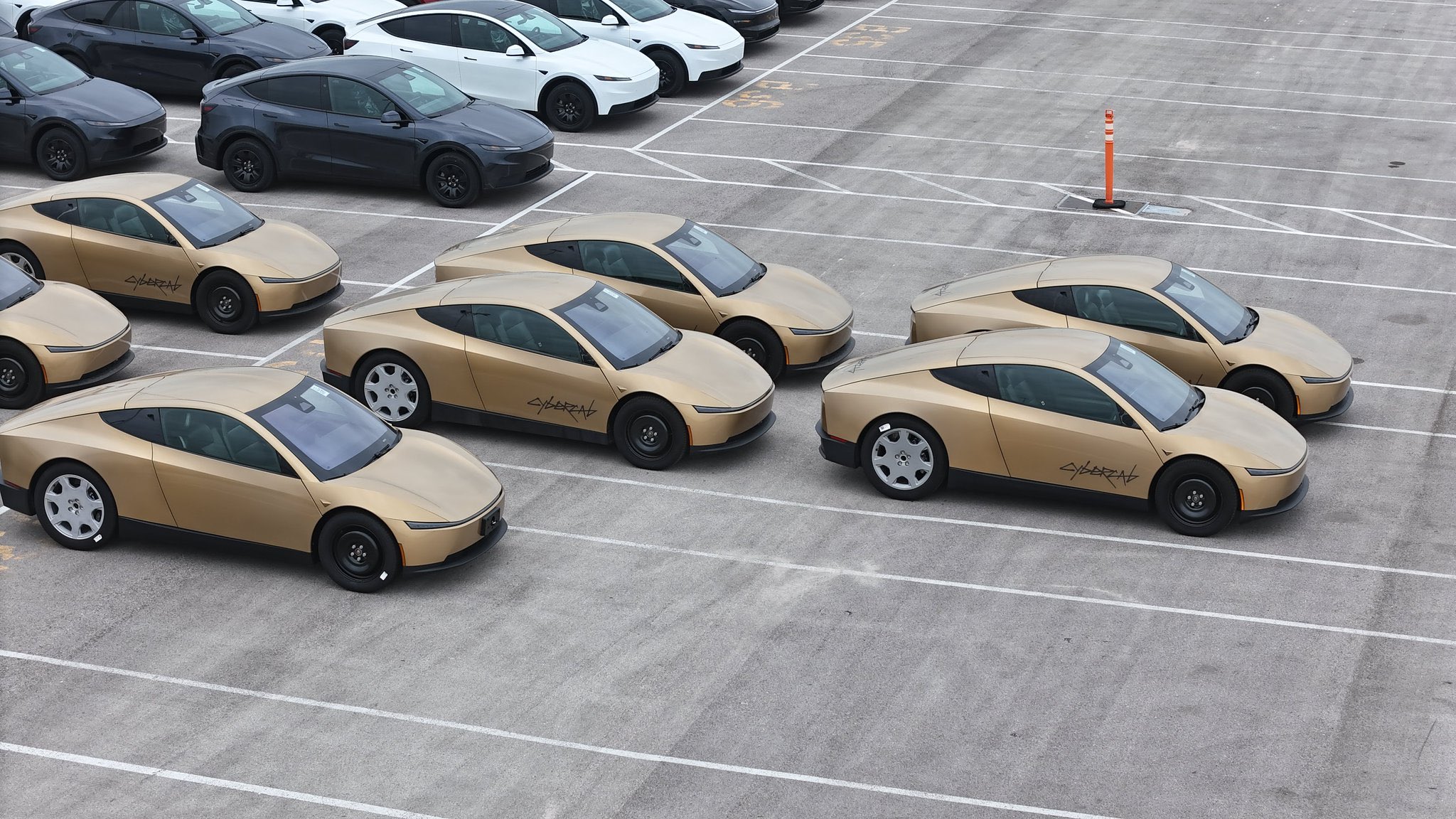
The Cybercab has been spotted outside of Gigafactory Texas in massive numbers over the past few days, with hundreds of units being stored on property just days after the vehicle received a Certificate of Conformity from the EPA.
Today, things were a bit different.
Cybercabs spotted on Giga Texas property today had an addition: a Cybercab decal on the side, reminiscent of the “Robotaxi” ones that were placed on Model Ys just as the company launched its ride-sharing platform about a year ago.
Giga Texas drone operator Joe Tegtmeyer noticed the change today:
Tesla Cybercabs are now getting “Cybercab” logos on the side of them!
Tesla did the same with Model Ys that were given “Robotaxi” logos: https://t.co/DanANtw1m7 pic.twitter.com/FqOhH0S9Ks
— TESLARATI (@Teslarati) June 19, 2026
Tesla could be signaling that the Cybercab is preparing to enter the Robotaxi fleet in the coming weeks or months with this move. It seems more symbolic than anything; Tesla is ready to throw Cybercabs in the ride-hailing platform just as it did with Model Ys last year.
The addition of the Certificate of Conformity awarded to the Cybercab is another major factor working to Tesla’s advantage. The company now has permission from the EPA to allow the vehicle to operate on public roads and enter the chain of commerce. It’s officially street legal.
Tesla Cybercab specs revealed: range, curb weight, range ratings, and more
The big question that remains is whether Tesla will be able to operate the car without a safety monitor, especially considering it plans to put the car out there without a steering wheel or pedals. With the Cybercab only having a seating capacity of two, it is hard to believe Tesla will even consider putting a Safety Monitor in the car.
It did recently self-certify as Level 4 and has the ability to operate driverless vehicles in the State of Texas under a law that took effect on May 28. You can read more about that here:
Tesla’s Robotaxi dreams just took a massive step toward reality
We’d imagine Cybercabs will be on the roads as soon as July, but August will likely be a better estimate of when the car will be entered into the Cybercab fleet. It all depends at where Tesla is, as they’ve truly prioritized safety with the rollout of the Robotaxi platform.
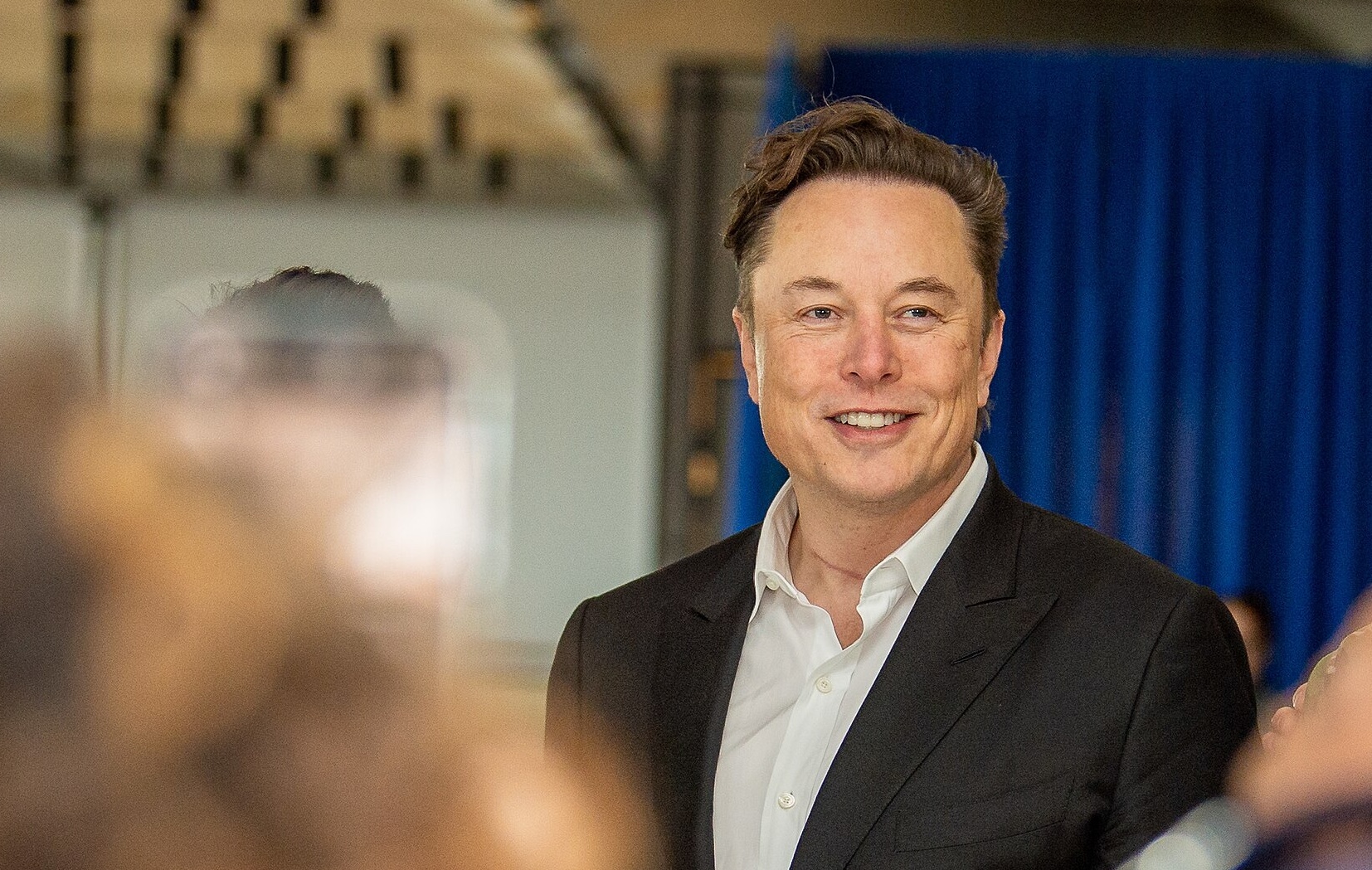
Elon Musk has publicly questioned Moody’s credit assessments following the rating agency’s decision to assign SpaceX a Baa1 investment-grade rating, two notches above Tesla’s Baa3. The comments came amid discussions comparing the two companies’ financial profiles.
SpaceX earned its first-time Baa1 rating with a stable outlook from Moody’s. The agency highlighted the company’s leadership in orbital launches, the growing recurring revenue from its Starlink satellite network, strong vertical integration, U.S. government contracts, and emerging opportunities in AI infrastructure.
These factors were cited as supporting robust cash flows, margin expansion, and financial flexibility.
Musk responded directly: “Tesla’s credit rating is ridiculously low tbh,” and added, “Yeah, makes no sense. Tesla has over $40B in cash, no debt, and is consistently profitable!” His remarks underscored Tesla’s balance sheet strength and profitability at a time when many traditional automakers continue to report losses in the shift to electric vehicles.
Yeah, makes no sense.
Tesla has over $40B in cash, no debt and is consistently profitable!
— Elon Musk (@elonmusk) June 19, 2026
Tesla maintains a leading position in the global EV market, with diversification into energy and storage, battery technology, and robotics through projects like Optimus. Recent financial updates show the company generated positive free cash flow of $1.4 billion in Q1 2026, supported by operating cash flow of $3.9 billion. Cash and short-term investments stood at approximately $44.7 billion.
Moody’s has affirmed Tesla’s Baa3 issuer rating with a stable outlook in periodic reviews, acknowledging the company’s EV leadership, technology strengths, including AI for autonomous vehicles, solid profitability, and strong liquidity.
Tesla (TSLA) scores Baa3 Moody’s rating for ‘stable’ outlook
However, the agency has also noted challenges in the automotive segment and expectations for margin pressures.
Musk’s critique highlights a common debate about how traditional rating methodologies apply to high-growth, capital-intensive technology companies. SpaceX benefits from long-term government-backed contracts and diversified, recurring revenue streams, while Tesla’s valuation reflects heavy investment in future technologies such as autonomy and robotics.
Both ratings remain investment-grade, yet the one-notch difference has fueled online discussion about potential inconsistencies in evaluating innovative firms.
The exchange comes as SpaceX explores financing options following its recent valuation milestones, while Tesla continues executing on its multi-year roadmap. Musk’s pointed response serves as a reminder that credit ratings, though influential for borrowing costs, represent one lens through which markets assess corporate strength—and that company leaders often view their financial positions through the lens of long-term innovation and cash generation rather than short-term risk metrics alone.

President Trump touts new Air Force One with Musk technology

Tesla Cybercab launch is imminent after latest sighting at Giga Texas


