Elon Musk
SpaceX is exploring a “Starlink Phone” for direct-to-device internet services: report
The update was reportedly shared to Reuters by people familiar with the matter.

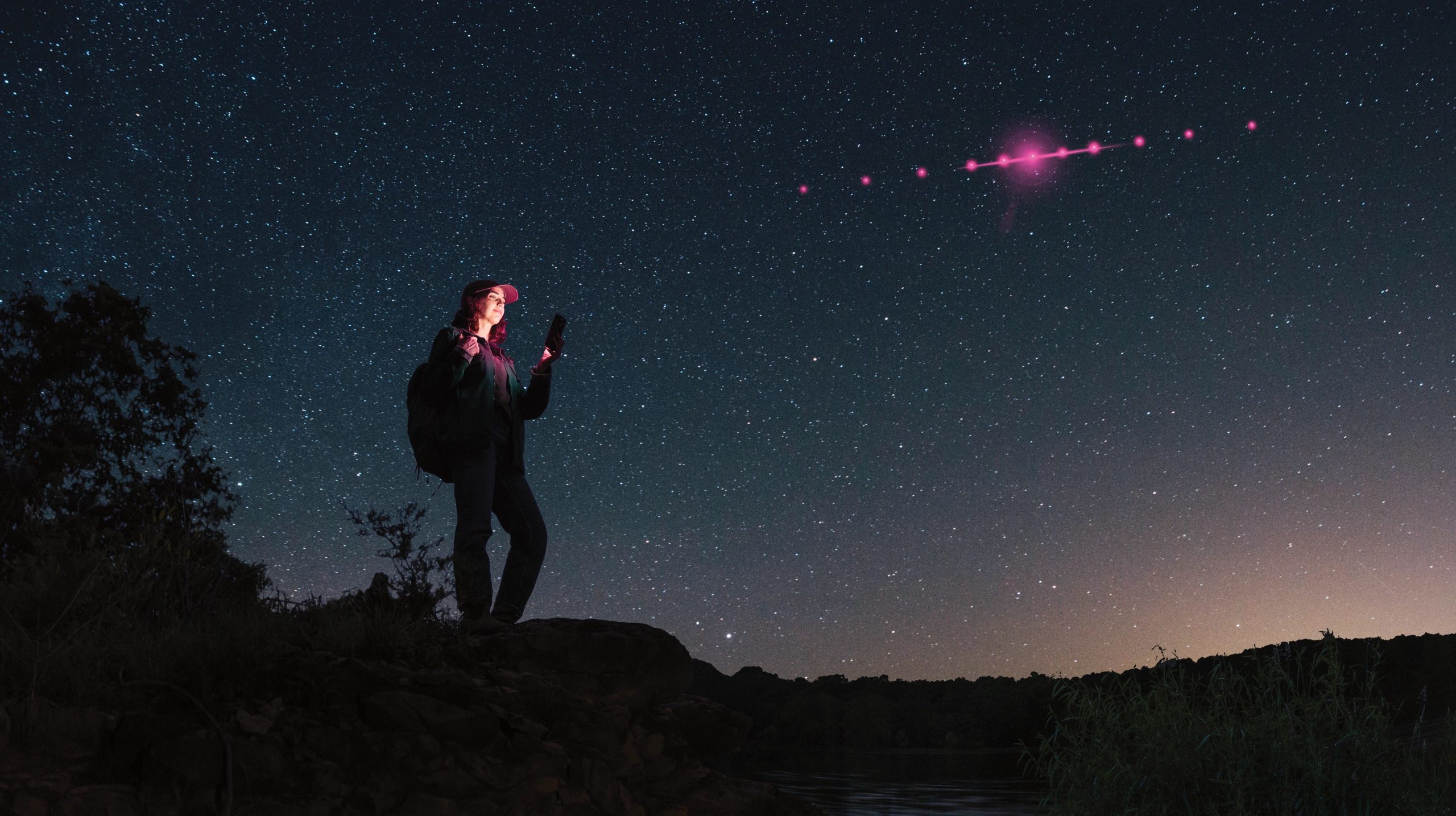
SpaceX is reportedly exploring new products tied to Starlink, including a potential Starlink-branded phone.
The update was reportedly shared to Reuters by people familiar with the matter.
A possible Starlink Phone
As per Reuters’ sources, SpaceX has reportedly discussed building a mobile device designed to connect directly to the Starlink satellite constellation. Details about the potential device and its possible release are still unclear, however.
SpaceX has dabbled with mobile solutions in the past. The company has partnered with T-Mobile to provide Starlink connectivity to existing smartphones. And last year, SpaceX initiated a $19.6 billion purchase of satellite spectrum from EchoStar.
Elon Musk did acknowledge the idea of a potential mobile device recently on X, writing that a Starlink phone is “not out of the question at some point.” Unlike conventional smartphones, however, Musk described a device that is “optimized purely for running max performance/watt neural nets.”
Starlink and SpaceX’s revenue
Starlink has become SpaceX’s dominant commercial business. Reuters’ sources claimed that the private space company generated roughly $15–$16 billion in revenue last year, with about $8 billion in profit. Starlink is estimated to have accounted for 50% to 80% of SpaceX’s total revenue last year.
SpaceX now operates more than 9,500 Starlink satellites and serves over 9 million users worldwide. About 650 satellites are already dedicated to SpaceX’s direct-to-device initiative, which aims to eventually provide full cellular coverage globally.
Future expansion of Starlink’s mobile capabilities depends heavily on Starship, which is designed to launch larger batches of upgraded Starlink satellites. Musk has stated that each Starship launch carrying Starlink satellites could increase network capacity by “more than 20 times.”


Elon Musk
Tesla Full Self-Driving feature probe closed by NHTSA
Actually Smart Summon allows owners to move their parked Tesla via a smartphone app remotely, directing the vehicle short distances in parking lots or private property while the driver supervises from the phone.

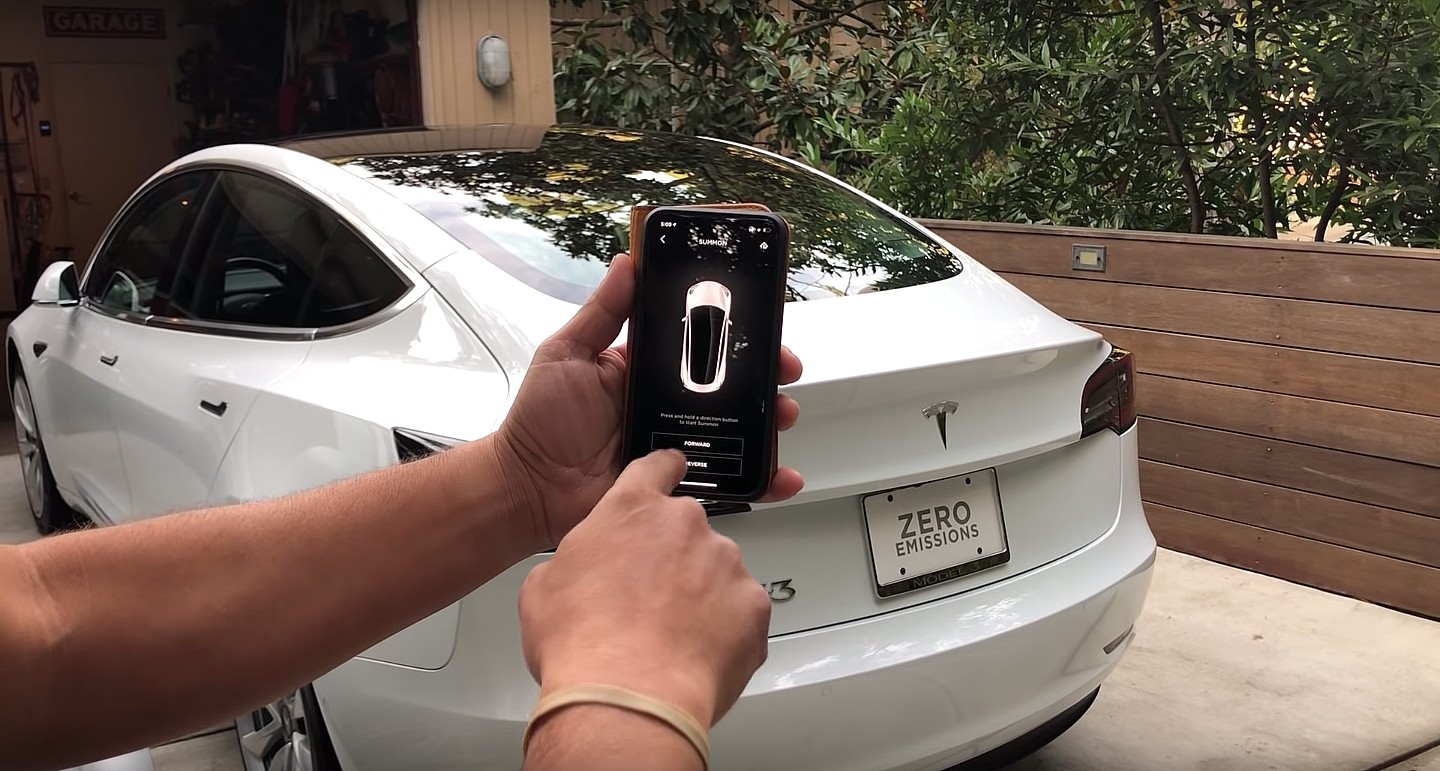
A probe into a popular Tesla self-driving feature has been closed by the National Highway Traffic Safety Administration (NHTSA) after over a year of scrutiny from the government agency.
The NHTSA has officially closed its investigation into Tesla’s Actually Smart Summon (ASS) feature, marking a regulatory win for the electric vehicle maker after more than a year of scrutiny.
Here’s our coverage on the launch of the probe:
Tesla’s Actually Smart Summon feature under investigation by NHTSA
The preliminary investigation, opened last January, examined roughly 2.59 million Tesla vehicles equipped with the feature across the Model S, Model X, Model 3, and Model Y lineups. ASS is not available for Cybertruck currently.
Actually Smart Summon allows owners to move their parked Tesla via a smartphone app remotely, directing the vehicle short distances in parking lots or private property while the driver supervises from the phone.
Here’s a clip of us using it:
Summon has had some good performances for me in the past
This was in October: https://t.co/w69Zp2bqeg pic.twitter.com/PVXSRj19E0
— TESLARATI (@Teslarati) April 5, 2026
Introduced as an upgrade to the original Smart Summon, the feature was designed to enhance convenience but drew attention after reports of low-speed incidents where vehicles bumped into stationary objects like posts, parked cars, or garage doors.
The NHTSA’s Office of Defects Investigation reviewed 159 incidents, including one formal Vehicle Owner’s Questionnaire complaint and media reports.
Notably, all events occurred at very low speeds, resulted only in minor property damage, and involved zero injuries or fatalities. The agency determined that the incidents were “extremely rare”, a fraction of one percent across millions of Summon sessions, and did not indicate a systemic safety-related defect.
A key factor in the closure was Tesla’s proactive response through over-the-air (OTA) software updates.
During the probe, Tesla deployed at least six updates that improved camera-based object detection, enhanced neural network performance for obstacle recognition, and refined the system’s response to potential hazards. These iterative improvements, delivered wirelessly to the entire fleet, addressed the primary concerns around detection reliability and operator reaction time.
Critics of Tesla’s autonomous features had initially pointed to the crashes as evidence of rushed deployment, especially given the feature’s reliance on the company’s vision-only Full Self-Driving (FSD) stack. However, NHTSA’s decision to close the case without seeking a recall underscores the low-severity nature of the events and the effectiveness of software-based fixes in modern vehicles.
It definitely has its flaws. I used ASS yesterday unsuccessfully:
It was pouring when I left the gym so I tried to Summon my Model Y
It turned the opposite way and drove out of range, stopping here and forcing me to walk even further across the lot in the rain for it 🤣
One day pic.twitter.com/iD10c8sriB
— TESLARATI (@Teslarati) April 5, 2026
However, improvements will come, and I’m confident in that.
The closure comes as Tesla continues to push boundaries with its autonomous driving ambitions, including unsupervised FSD rollouts and robotaxi initiatives. For owners, the ruling reinforces confidence in Actually Smart Summon as a convenient, low-risk tool rather than a hazardous experiment.
While broader NHTSA reviews of Tesla’s higher-speed FSD capabilities remain ongoing, this outcome highlights how data-driven analysis and rapid OTA remediation can satisfy regulators in the evolving landscape of automated driving technology.
Tesla has not issued an official statement on the closure, but the move is widely viewed as bullish for the company’s autonomy roadmap, reducing one layer of regulatory overhang and allowing focus on further refinements.
Elon Musk
Tesla uses Model S and X ‘sentimental’ value to enforce massive pricing move
By slashing production and creating immediate scarcity, the company has transformed these remaining vehicles into limited-edition relics. The price hike is not driven by rising material costs or new features.
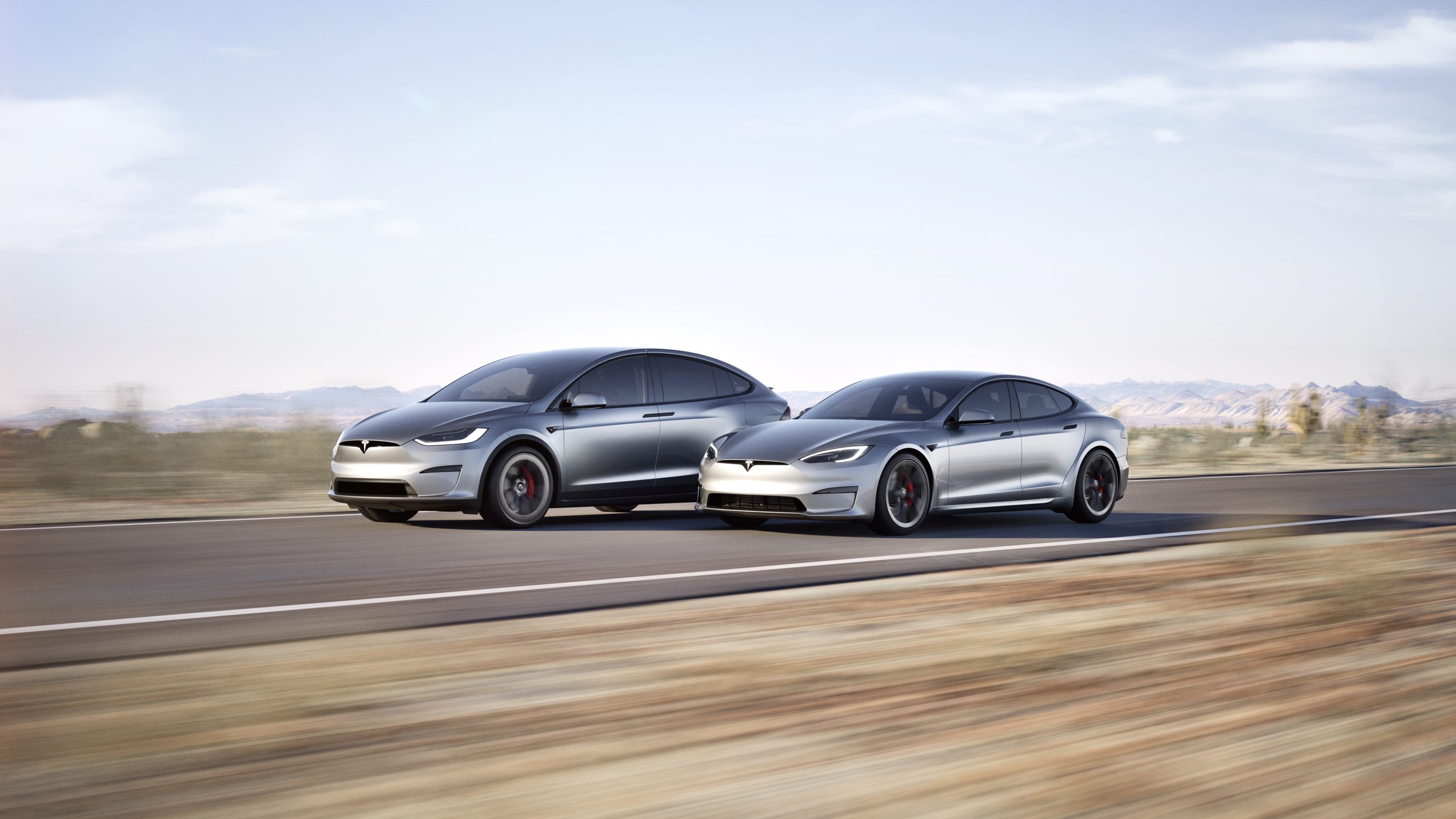
Tesla is using the “sentimental” value that CEO Elon Musk talked about with the Model S and Model X to enforce one of the most massive pricing moves it has ever applied as it begins to phase out the flagship vehicles.
Tesla quietly executed one of its most calculated pricing plays yet. After officially ending production of the Model S and Model X, the company raised prices on every remaining new and demo unit by roughly $15,000.
The refreshed starting prices now sit at:
- $109,990 for the Model S AWD
- $124,900 for the Model S Plaid
- $114,900 for the Model X AWD
- $129,900 for the Model X Plaid
NEWS: Tesla has raised the price on all remaining new (and demo) Model S and Model X vehicles left in inventory by $15,000.
New starting prices:
• Model S AWD: $109,990
• Model S Plaid: $124,900
• Model X AWD: $114,900
• Model X Plaid: $129,900 pic.twitter.com/qBEhsYAfXr— Sawyer Merritt (@SawyerMerritt) April 5, 2026
Every vehicle comes fully loaded with the Luxe Package, Full Self-Driving Supervised, four years of premium connectivity and service, and lifetime free Supercharging. What looks like a simple inventory adjustment is, in reality, a masterclass in monetizing nostalgia.
These are not ordinary cars. For many owners, the Model S and Model X represent the purest expression of Tesla’s original promise—the sleek, over-engineered flagships that proved electric vehicles could be faster, quieter, and more desirable than their gasoline counterparts.
Tesla removes Model S and X custom orders as sunset officially begins
They are the vehicles that carried Elon Musk’s vision from Silicon Valley startup to global automaker.
The final units rolling off the line carry an emotional weight that numbers alone cannot capture. Buyers are not simply purchasing transportation; they are acquiring a piece of Tesla history, the last examples of the very models that defined the brand’s first decade.
Tesla, with this move, understands this sentiment deeply.
By slashing production and creating immediate scarcity, the company has transformed these remaining vehicles into limited-edition relics. The price hike is not driven by rising material costs or new features.
It is driven by the knowledge that a certain segment of buyers, loyalists, collectors, and enthusiasts, will pay a premium precisely because these cars are about to disappear. The strategy converts emotional attachment into margin.
Where other automakers might discount outgoing models to clear lots, Tesla is betting that sentiment is worth more than volume.
The move also quietly rewards existing owners. Scarcity instantly boosts resale values for the hundreds of thousands of Model S and X already on the road, reinforcing brand loyalty among the very people who helped build Tesla’s reputation.
In the end, Tesla’s pricing decision reveals a sophisticated understanding of its audience. As the company pivots toward next-generation platforms, it has found a way to extract one final, lucrative chapter from its heritage.
For buyers willing to pay the new prices, the premium is not just for the car; it is for the feeling of owning the last true originals. Tesla has turned sentiment into strategy, and in the process, reminded everyone that even in the EV era, emotion remains a powerful line on the balance sheet.
Elon Musk
Elon Musk calls out $2 trillion SpaceX IPO valuation as ‘BS’
In a swift rebuke on X, Elon Musk dismissed reports claiming SpaceX had confidentially filed for an initial public offering targeting a valuation above $2 trillion, labeling the information as unreliable.
Elon Musk is quick to call out any false information regarding him or his companies on his social media platform, known as X.
A recent report that claimed SpaceX was aiming to go public with an IPO in the coming weeks at a massive valuation of $2 trillion was called out by Musk, who referred to it as “BS.”
In a swift rebuke on X, Elon Musk dismissed reports claiming SpaceX had confidentially filed for an initial public offering targeting a valuation above $2 trillion, labeling the information as unreliable.
The exchange highlights ongoing media speculation about the rocket company’s future and Musk’s frustration with what he views as inaccurate financial reporting. The report came from Bloomberg.
Don’t believe everything you read.
Bloomberg publishes bs.
— Elon Musk (@elonmusk) April 3, 2026
The controversy erupted on April 2, 2026, when influencer Mario Nawfal amplified claims from Bloomberg.
The outlet posted that SpaceX had boosted its IPO target valuation above $2 trillion, describing it as potentially one of the largest public offerings in history. Musk challenged the story.
It echoes past instances where Musk has corrected valuation rumors about his companies, emphasizing that speculation often outpaces reality.
Background context adds nuance.
Earlier reports indicated SpaceX had filed confidential IPO paperwork with the U.S. Securities and Exchange Commission, potentially positioning it for a record-breaking debut that could eclipse Saudi Aramco’s 2019 listing.
Initial estimates pegged a possible valuation north of $1.75 trillion, building on a post-merger figure around $1.25 trillion after SpaceX absorbed xAI. A subsequent Bloomberg update claimed advisers were floating figures above $2 trillion to investors, with the offering potentially raising up to $75 billion.
SpaceX remains a private powerhouse. Its achievements include thousands of Starlink satellites providing global broadband, routine Falcon 9 rocket reusability, and a mission to slash launch costs, along with ambitions for Starship to enable Mars colonization.
The company also benefits from government contracts with NASA and the Department of Defense. A public listing could democratize access for retail investors while subjecting SpaceX to greater scrutiny and quarterly reporting pressures.
Critics of the reports point to the confidential nature of filings, which limits verifiable details. Musk has previously downplayed inflated valuations, once calling an $800 billion figure for SpaceX “too high.”
Supporters argue that hype around mega-IPOs, especially amid the ongoing AI fervor, fuels premature narratives that distract from core technical milestones, such as full Starship reusability and Starlink constellation expansion.
The incident reflects broader tensions in tech finance. Anonymous sourcing in valuation stories can drive market chatter and betting activity, yet it risks misinformation.
Bloomberg defended its reporting through multiple articles citing “people familiar with the matter,” but Musk’s blunt dismissal resonated widely on X, with users piling on to question media reliability.
Whether SpaceX ultimately goes public remains uncertain. Musk has teased an IPO tied to Starlink maturity, but priorities center on engineering breakthroughs over Wall Street timelines. For now, the $2 trillion figure joins a list of rumored milestones that Musk insists should be taken with skepticism.

Tesla stock gets hit with shock move from Wall Street analysts

Tesla Full Self-Driving feature probe closed by NHTSA


