News
SpaceX fires up Falcon 9 rocket for fifth Starlink launch in four weeks

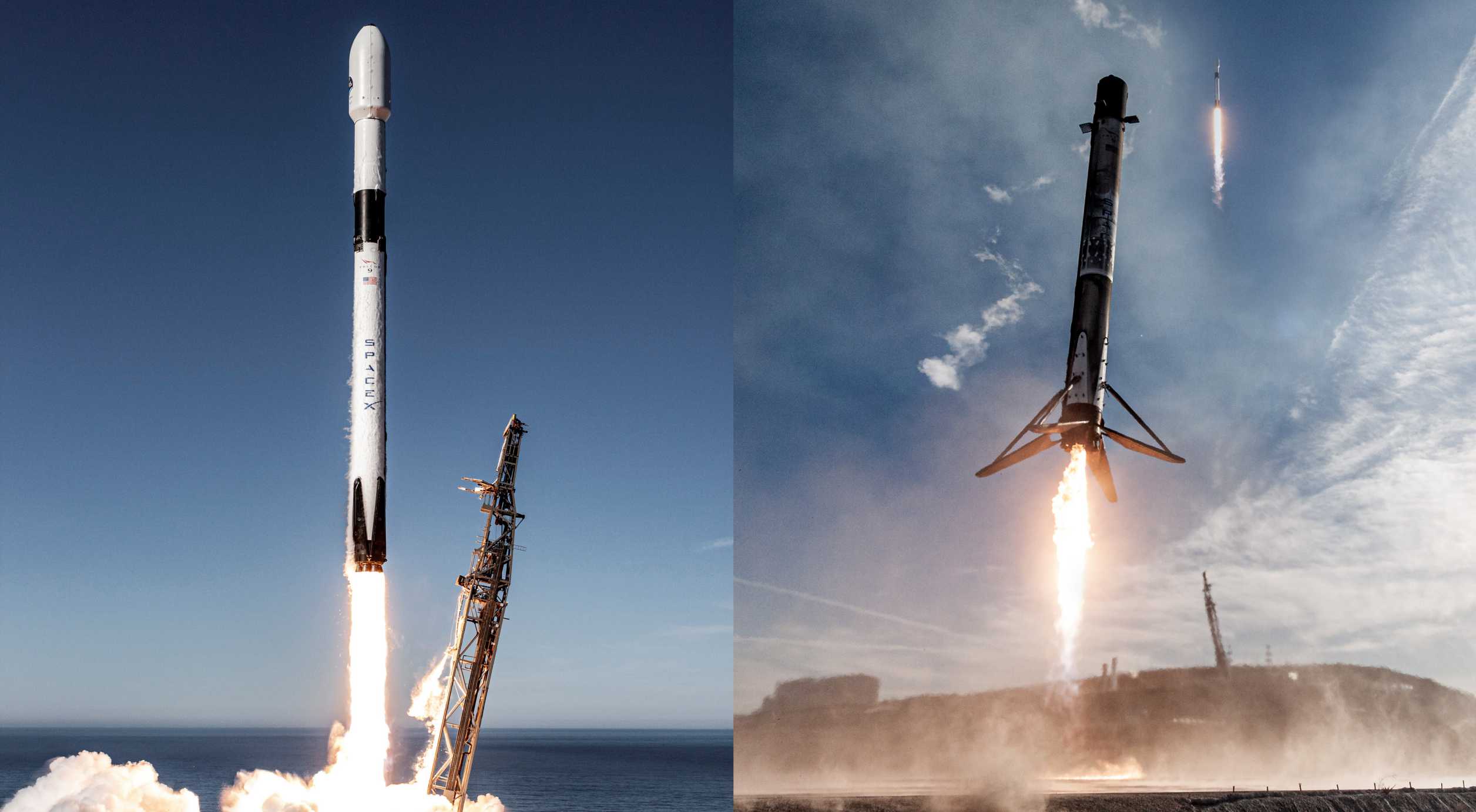
SpaceX has static-fired a flight-proven Falcon 9 booster for what will be the company’s fifth Starlink launch in four weeks.
Set to be the company’s 28th operational launch of Starlink v1.0 satellites and 30th Starlink launch overall, the mission – known as Starlink L28 or Starlink-28 – is scheduled to launch no earlier than (NET) 2:59 pm EDT (18:59 UTC) on Wednesday, May 26th, less than 11 days after Starlink-26. The mission will be SpaceX’s fifth Starlink launch in 29 days and sixth launch in less than five weeks – not including Starship SN15’s successful suborbital launch and landing on May 5th.
As previously discussed on Teslarati, Starlink-28’s successful launch would leave SpaceX just two flights away from a truly remarkable feat of sustained launch cadence.
“If the weather, space station, and SpaceX’s rockets, spacecraft, and pad facilities cooperate, the completion of those three upcoming missions would mark eight successful Falcon 9 launches – carrying two Dragon spacecraft, four astronauts, and almost 300 satellites to orbit – in less than six weeks (41 days). If SpaceX manages that feat and averages one launch every five days, the company will have completed ~45% of its 2021 launches in ~26% of the year to date – a clear pattern of acceleration.”
Teslarati.com – 16 May 2021
Starlink-28 is set to reuse Falcon 9 B1063 after the booster debuted on SpaceX’s West Coast Vandenberg Air Force Base (VAFB) launch site. Some degree of processing was completed at the pad’s facilities before the once-flown rocket was shipped from California to Florida in March 2021. When B1063 arrived, it appeared to be missing several of its Merlin 1D engines, which helps to explain why SpaceX chose to perform an increasingly rare static fire test with a flight-proven booster.
The unusual six-month gap between B1063’s first and second flights can likely be explained by the fact that the booster was at one point expected to stay in California to launch another mission for NASA as early as July 2021. In February 2021, NASA announced that the Double Asteroid Redirect Test – DART – mission’s launch had been delayed by spacecraft issues to a secondary window beginning in late November, which is likely why B1063 headed to Florida a few weeks later.
According to comments made by SpaceX President and COO Gwynne Shotwell just last month, Starlink-28’s successful completion could leave the company with enough satellites for “full [global] connectivity.” Around a third of those Starlink satellites will still need to boost themselves into operational orbits before that (mostly) uninterrupted global coverage can be realized, but it will just be a matter of time once the spacecraft are already in orbit. True global coverage will require a number of dedicated polar launches, but those West Coast Starlink missions could begin as soon as this summer.
Following Starlink-28, SpaceX has two more launches scheduled within eight days of the mission – an SXM-8 radio satellite mission on June 1st and Cargo Dragon 2’s second space station resupply run on June 3rd. Beyond those three launches, SpaceX has at least two or three more missions nominally scheduled in June.


Elon Musk
Tesla named by U.S. Gov. in $4.3B battery deal for American-made cells
What began as an open secret in the energy industry was confirmed by the U.S. Department of the Interior on Monday: Tesla is the buyer behind LG Energy Solution’s blockbuster $4.3 billion battery supply agreement.

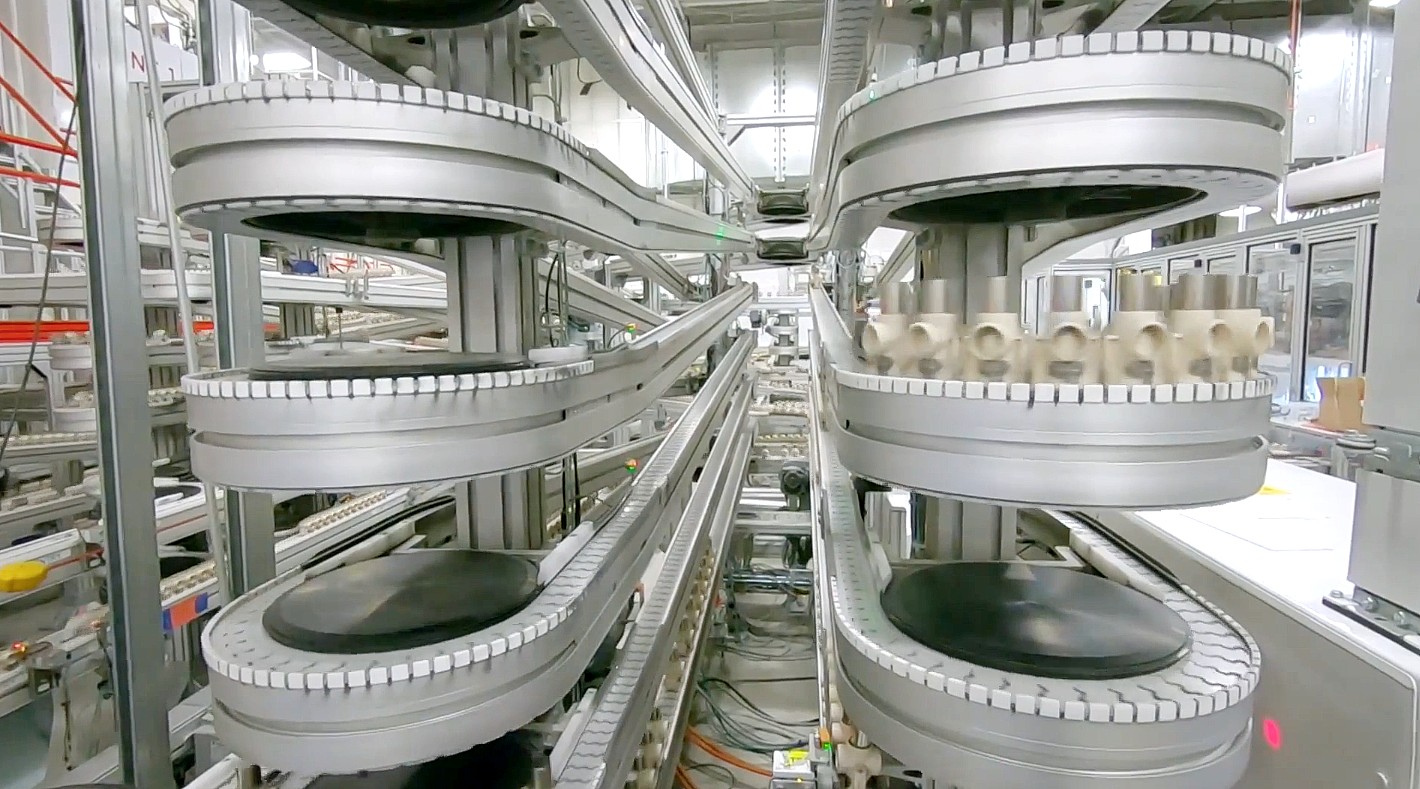
What began as an open secret in the energy industry is becoming more real after the U.S. Department of the Interior named Tesla as the stakeholder in the LG Energy Solution’s blockbuster $4.3 billion battery supply agreement.
Tesla and LG Energy Solution are expanding their partnership to build a LFP prismatic battery cell manufacturing facility in Lansing, Michigan, launching production in 2027. The announcement, made as part of the Indo-Pacific Energy Security Summit results, ends months of speculation.
“American-made cells will power Tesla’s Megapack 3 energy storage systems produced in Houston, creating a robust domestic battery supply chain.”, notes a press release on the U.S. Department of the Interior website.
Tesla has long utilized China’s Contemporary Amperex Technology Co. (CATL), the world’s largest LFP battery maker, as one of its primary suppliers. That relationship made financial sense for years, considering that Chinese LFP cells were cheap, abundant, and reliable. But with escalated tariffs on Chinese imports and an increasingly growing Tesla Energy business that’s particularly reliant on LFP cells for products including its Megapack battery storage units designed for utilities and large-scale commercial projects.
The announcement of a deepened partnership between LG Energy Solution and Tesla has strategic logic for both parties. For Tesla, it secures a tariff-compliant, domestically produced battery supply for its fast-growing energy division. LGES, now producing LFP batteries in Michigan, becomes the only major supplier currently scaling U.S. production, outpacing rivals like Samsung SDI and SK On. LG Energy Solution’s Lansing plant, formerly known as Ultium Cells 3, was previously operated as a joint venture with General Motors. LGES acquired GM’s stake in May 2025 and now fully owns the site, with a production capacity of 50 GWh per year. LG Energy said the contract includes options to extend the supply period by up to seven years and boost volumes based on further consultations.
For the broader industry, the ripple effects are significant. This deal signals that domestic battery manufacturing can be financially viable and not just aspirational. Utilities, energy developers, and rival automakers will take note as American-made LFP supply becomes a competitive reality rather than a distant promise.
For consumers, the benefits will take time but are real. A more resilient, U.S.-based supply chain means fewer price shocks from trade disputes, more stable Megapack availability for the grid storage projects that reduce electricity costs, and long-term downward pressure on energy storage prices as domestic production scales.
Deliveries are set to begin in 2027 and run through mid-2030, and as grid storage demand accelerates, reliable, US-made battery supply is no longer a future ambition. It is becoming a core requirement of the country’s energy strategy.
News
Tesla plans for largest Australian Supercharger yet
The company has a 20-stall site in the city of Goulburn in New South Wales, which is an ideal location for trips between Sydney and Canberra, two major cities.

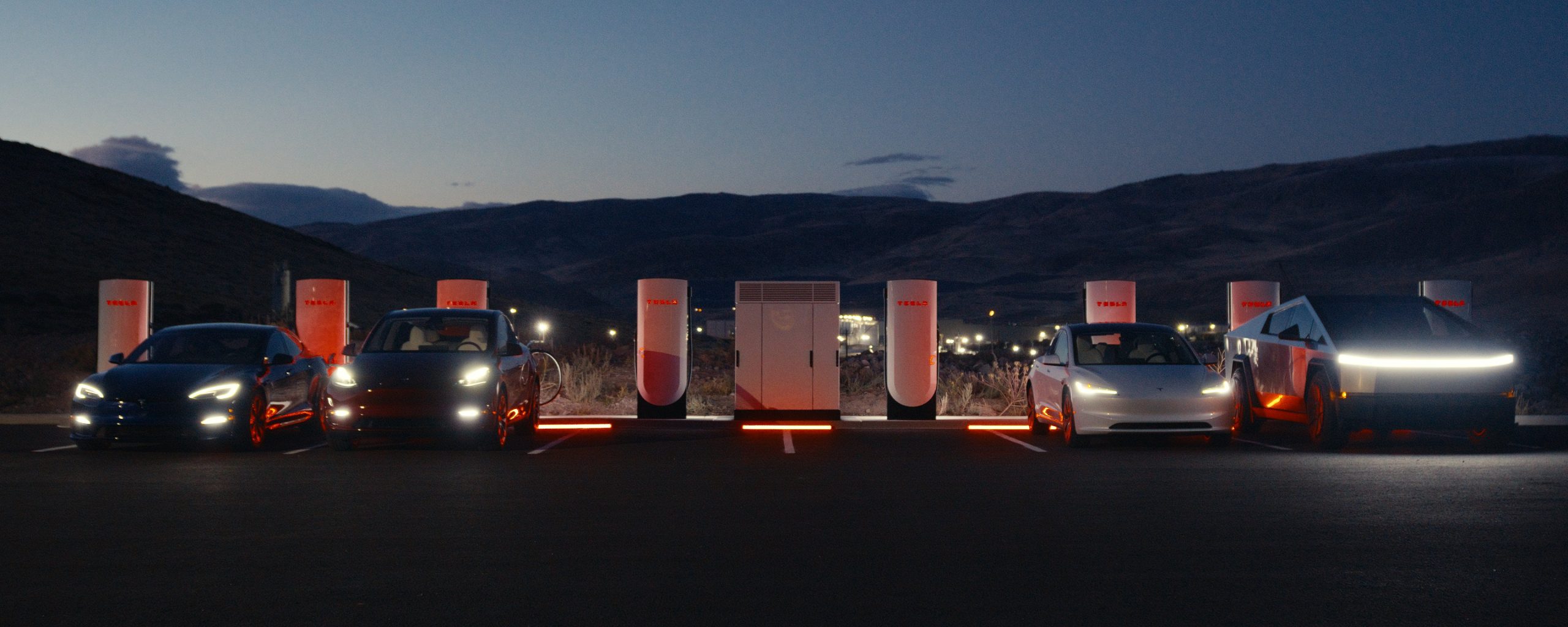
Tesla is planning to build its largest Supercharger in Australia yet, expanding on the infrastructure the company has built for electric vehicles.
The company has a 20-stall site in the city of Goulburn in New South Wales, which is an ideal location for trips between Sydney and Canberra, two major cities.
However, according to The Driven, a new Australian Supercharger is on the way, and it is going to be the biggest in the country, accounting for more than 25 stalls total. They will likely be V4 Superchargers, Tesla’s fastest piles that enable some serious range for cars that will plug in.
@LudicrousFeed Before I forget, one for tonight. Highway service centre near Mackay with 25+ charging stalls!
Website has a couple of video renders too.https://t.co/WkuklxE7tk pic.twitter.com/BxKQ8bDUZ7— ⚡chuqtas (@chuqtas) March 11, 2026
Tesla is operating 148 active Supercharger sites in Australia, with 80 of those being available to non-Tesla EVs as a part of the company’s initiative to make things accessible for all electric vehicle owners.
The expansion of Tesla Superchargers is welcome for all EV owners, especially as there are so many automakers that have access to the network. It is widely reliable and extremely dependable; it is tough to find a Supercharger location that is completely out of service.
The opening of the stalls will be welcome for the Tesla owners of Australia, especially as the Model Y continues to be a major contributor to the company’s prowess in the market.
Tesla’s sales performance in Australia showed a mixed but challenging picture in 2025, with the company delivering 28,856 new vehicles, marking a significant 24.8% decline from 38,347 units in 2024.
This represented the brand’s largest annual drop on record and the second consecutive year of decline, amid intensifying competition from Chinese EV makers like BYD and shifting buyer preferences toward SUVs. The Tesla Model Y remained a standout performer and Australia’s best-selling electric vehicle, with 22,239 deliveries, up 4.6percent year-over-year, accounting for about 77 percent of Tesla’s total sales.
The mid-year launch of the updated “Juniper” Model Y helped sustain momentum in the popular mid-size SUV segment.
In contrast, the Model 3 sedan struggled sharply, plummeting 61.3 percent to just 6,617 units, as consumers favored SUVs and faced growing options in the sedan category.
Despite the overall dip, Tesla held onto leadership in the EV segment, capturing roughly 28 percent of the BEV market. Australia’s EV market grew robustly, surpassing 156,000 sales and reaching 13 percent market share, up 38.7 percent from 2024, highlighting strong broader adoption even as Tesla faced headwinds.
Early 2026 data suggests a rebound, with EV sales nearly doubling year-over-year in February and the Model Y showing strong gains, positioning Tesla for potential recovery amid ongoing competition.
News
Tesla Model Y L gets new entertainment feature
Beyond audio quality, Immersive Sound X aligns with Tesla’s ecosystem of over-the-air updates, potentially allowing future refinements.
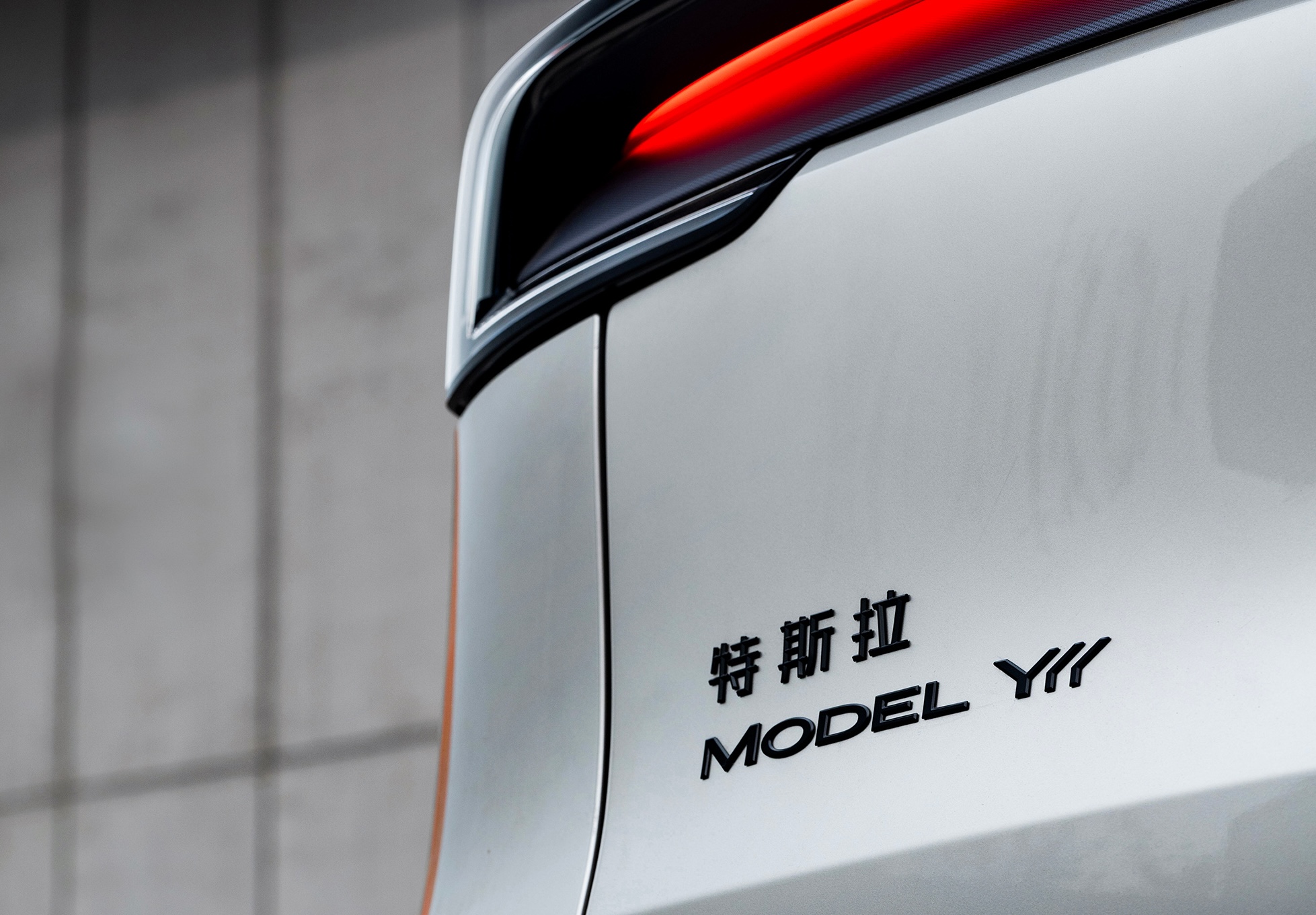
Tesla is including a new entertainment feature in the Model Y L, improving the vehicle even further and making it what appears to be the best configuration of the all-electric crossover globally.
Unfortunately, we in the U.S. do not yet have access to the vehicle, and the plans for it to enter the market remain up in the air, as CEO Elon Musk has said it could appear late this year. However, there is nothing concrete at this time.
Tesla’s latest enhancement to the Model Y L is a new Immersive Sound X feature, exclusive to the Model Y L.
Model YL has new sound system setting. Immersive Sound X. This is NOT on the new Y and 3 pic.twitter.com/7OpJuzyoGf
— Electric Future (@electricfuture5) March 16, 2026
It aims to transform the in-car listening experience into something truly cinematic. First introduced by Tesla China in October 2025, this advanced audio mode is now rolling out to deliveries in Australia and New Zealand, highlighting Tesla’s approach to region-specific premium upgrades.
At its core, Immersive Sound X leverages real-time sound extraction technology to create a customizable 3D soundstage. Using advanced algorithms, it analyzes audio tracks to separate direct sounds, such as vocals or lead instruments, from ambient elements like echoes and reverb.
The system then positions direct sounds front and center while diffusing ambient sounds to the side and rear speakers, simulating an expansive virtual environment. This results in a heightened sense of depth and spatial awareness, making listeners feel as if they’re in a concert hall or studio.
What sets Immersive Sound X apart from the standard Immersive Sound found in other Tesla models is its hardware dependency and enhanced processing. The Model Y L boasts an 18-speaker system with a subwoofer, compared to the 15-speaker setup, plus a subwoofer, in the Model Y Long Range’s previous premium audio configuration.
This upgrade provides more “kick” and precision, enabling finer control over the soundstage. Unlike traditional surround sound, which requires multi-channel mixes like Dolby Atmos, Immersive Sound X works with any stereo source from platforms like Spotify or Apple Music, so every owner will be able to use it.
Tesla Model Y lineup expansion signals an uncomfortable reality for consumers
You can fine-tune the experience via an adjustable immersion slider, scaling the “size” of the virtual space to personal preferences. This caters to a more custom sound.
An Auto mode intelligently adapts based on media type, whether it’s music, podcasts, or videos, ensuring optimal immersion without manual tweaks. This feature is unavailable on standard Model Y variants (with 7 or 15 speakers) or Model 3 trims, underscoring Tesla’s strategy to differentiate higher trims through superior hardware and software integration.
Beyond audio quality, Immersive Sound X aligns with Tesla’s ecosystem of over-the-air updates, potentially allowing future refinements.
For audiophiles and casual listeners alike, it elevates mundane commutes into immersive journeys, proving Tesla’s commitment to blending cutting-edge tech with user-centric design.

Tesla named by U.S. Gov. in $4.3B battery deal for American-made cells

Tesla plans for largest Australian Supercharger yet


