SpaceX
SpaceX & ULA could compete to launch NASA’s Orion spacecraft around the Moon

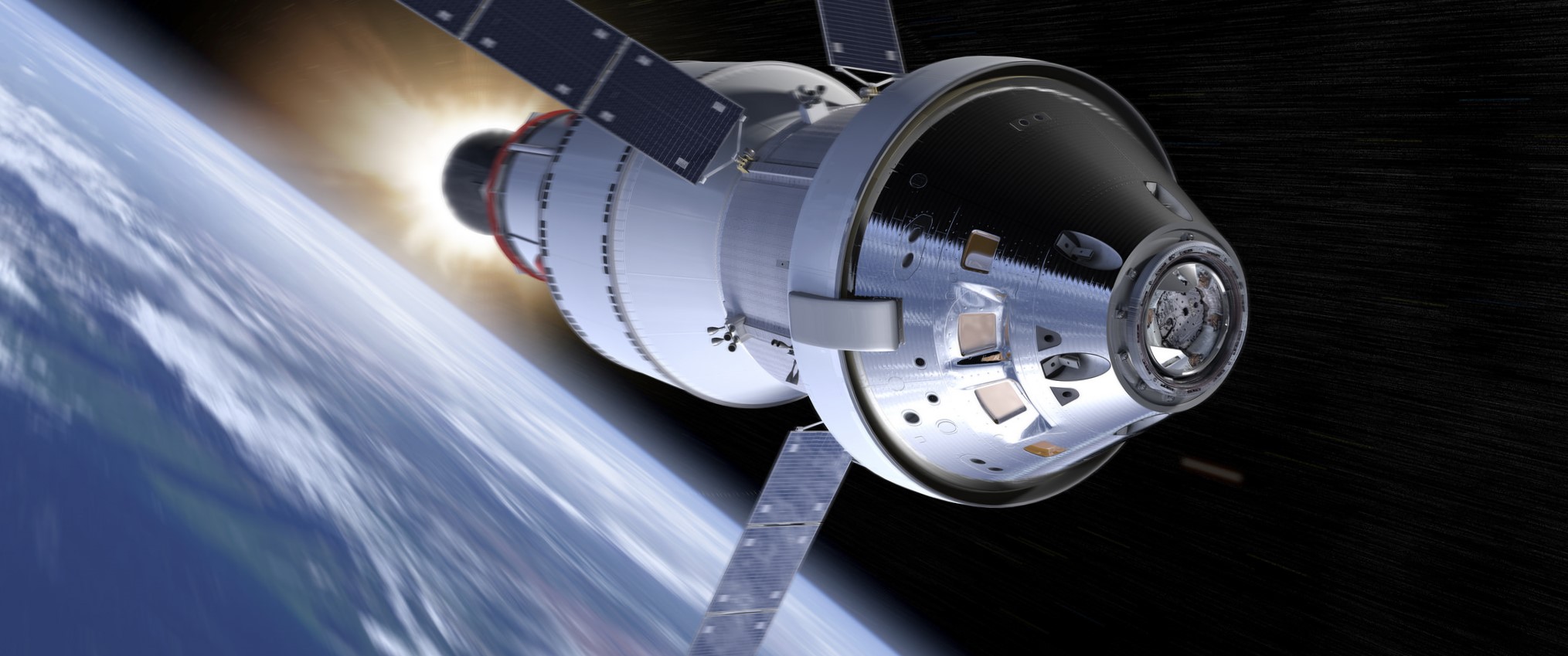
In barely 48 hours, the future of NASA’s SLS rocket was buffeted relentlessly by a combination of new priorities in the White House’s FY2020 budget request and statements made before Congress by NASA administrator Jim Bridenstine. Contracted by NASA to companies like Boeing, the outright failure of SLS contractors to stem years of launch delays and billions in cost overruns has lead to what can only be described as a possible tipping point, one that could benefit companies like ULA, SpaceX, and Blue Origin.
On March 11th, the White House’s 2020 NASA budget request proposed an aggressive curtail of mission options available for the SLS rocket, preferring instead to save hundreds of millions (and eventually billions) of dollars by prioritizing commercial launch vehicles and indefinitely pausing all upgrade work on SLS. On March 13th, Administrator Bridenstine stated before Congress that he was dead-set on ensuring that NASA sticks to a current 2020 deadline for Orion’s first uncrewed circumlunar voyage (EM-1), even if it required using two commercial rockets (either Falcon Heavy or Delta IV Heavy) to send the spacecraft around the Moon next year. In both cases, it’s safe to say that the political tides have somehow undergone a spectacular 180-degree shift in attitude toward SLS, the first salvo in what is guaranteed to be a major political battle.
“Deferred” upgrades
Of the many potential challenges the ides of March have placed before SLS, the first and potentially most significant involves the rocket’s tentative path to future upgrades over the course of its operation. Those upgrades primarily center around the Exploration Upper Stage (EUS) and a new mobile launcher (ML) platform, as well as a longer-term vision known as SLS Block 2. At least with respect to the EUS, NASA (and politicians) were apparently less and less okay with the extraordinary amount of money and time Boeing suggested it would need to develop the new upper stage, to the extent that cutting (or “deferring”) its development could likely save NASA billions of dollars between now and the distant and unstable completion date. Without the EUS, SLS would be dramatically less useful for extreme deep space exploration, effectively the entire purpose of its existence. Instead, the White House included language that would limit SLS launches to crew transfer missions with the Orion spacecraft and nothing more, cutting out heavy cargo missions for science or station-building. Ultimately, those crew transport launches would probably be more than enough to keep SLS Block 1 and Orion busy.
However, two days later, Administrator Bridenstine stated before Congress that he was dead-set on ensuring that NASA sticks to a current 2020 deadline for Orion’s first uncrewed circumlunar voyage (EM-1), going so far as to suggest that NASA was examining the possibility of launching the ~26 ton (57,000 lb) spacecraft on a commercial rocket, followed by a separate launch of a boost stage to send Orion to the Moon. If this were to occur, the consequences could be far-reaching for SLS, potentially delaying the first crewed launch of Orion on SLS until EM-3 and creating a ready-made, one-to-one replacement for SLS at drastically lower costs. At that point, nothing short of political heroics and aggressive bribery could save the SLS program from outright cancellation.
As it stands, the only rockets capable of conceivably supporting a 2020 launch of the 26-ton Orion are ULA’s Delta IV Heavy and SpaceX’s Falcon Heavy, both of which are certified by NASA for (uncrewed) launches. In fact, Falcon 9 was very recently certified by NASA’s Launch Services Program (LSP) to launch the highest priority NASA payloads, signifying the space agency’s growing confidence in SpaceX’s reliability and mission assurance. While the process of certifying Falcon Heavy for an uncrewed Orion launch would be far more complicated than simply grouping Falcon 9’s readiness with Heavy, it would no doubt help that Falcon Heavy is based on hardware (aside from the center core) almost identical to that found on Falcon 9.


The fact that Bridenstine indicated that the primary goal of these potential changes was to speed up EM-1 – an uncrewed demonstrated of Orion functionally similar to Crew Dragon’s recent DM-1 mission – is also significant, as is the fact that such a commercial SLS stand-in would require two separate launches to complete the mission. One launch would place Orion and its service module (ESM) into Low Earth Orbit (LEO), while a second launch would place a partially or fully-fueled upper stage into orbit to propel Orion on a trajectory that would take it around the Moon and back to Earth, similar to the milestone Apollo 8 mission. The need for two launches and the fact that Orion would be uncrewed means that both SpaceX and ULA would be possible candidates for either or both launches, potentially allowing NASA to exploit a competitive procurement process that could lower costs further still.
If Europa Clipper is anything to go off of, launching Orion EM-1 on a commercial rocket could save NASA and the US taxpayer at least $700M (before any potential development costs), aided further by potential competition between ULA and SpaceX. On the other hand, a system that can launch Orion and support EM-1 could fundamentally support all Orion EM missions, of which many are planned. Whether or not Bridenstine and the White House have considered the ramifications, what that translates into is a direct and pressing threat to the continued existence of SLS, with the White House recommending that the rocket be barred from launching large science missions or space station segments as the NASA administrator proposes making it redundant for Orion launches. As Ars Technica’s Eric Berger rightly notes in the tweet at the top of this article, those are the only three conceivable projects where SLS would have any value at all.
If NASA actually went through with this preliminary plan to launch Orion around the Moon on a commercial rocket, they agency would have also fundamentally created a packaged replacement for SLS with a price tag likely 2-5 times cheaper. If Congress had the option to choose between two offerings with similar end-results where one of the two could save the US hundreds of millions of dollars at minimum, it would be almost impossible to argue for the more expensive solution.
Battle of the Heavies
Despite the potential competitive procurement opportunity for a commercial Orion launch, things could get significantly more complicated depending on the political motivations behind the White House and NASA administrator. While Bridenstine explicitly avoided saying as much, the options available to NASA would be ULA’s Boeing-built Delta IV Heavy (DIVH) rocket and SpaceX’s brand new Falcon Heavy. DIVH holds a present-day advantage with active NASA LSP certification for uncrewed spacecraft launches, something Falcon Heavy has yet to achieve.
Nevertheless, it could be the case that NASA, Bridenstine, and/or the White House have a vested interested in potentially replacing SLS for crewed Orion launches entirely. Either way, it’s incredibly unlikely that NASA would launch SLS for the first time ever with astronauts aboard, a massive risk that would also patently contradict the agency’s posture on Commercial Crew launch safety, which has resulted in one uncrewed demo for both Boeing and SpaceX before either be allowed to launch astronauts. NASA also demanded that SpaceX launch Falcon 9 Block 5 seven times in the same configuration meant to launch crew. If NASA is actually interested in at least preserving the option for future crewed launches using the same commercial arrangement, Falcon Heavy is by far the most plausible option Orion’s first uncrewed launch. NASA and SpaceX are deep into the process of human-rating Falcon 9 for imminent Crew Dragon launches with NASA astronauts aboard, meaning that NASA’s human spaceflight certification engineers are about as intimately familiar with Falcon 9 as they possibly can be.


Given that much of Falcon Heavy has direct heritage to Falcon 9, particularly so for the family’s newest Block 5 variant, SpaceX has a huge leg up over ULA’s Delta IV Heavy if it ever came time to certify either heavy-lift rocket for crewed launches. In a third-party study commissioned by NASA and completed in 2009, The Aerospace Corporation concluded that Delta IV Heavy could be human-rated but would require far-reaching modifications to almost every aspect of the rocket’s hardware and software. Most notably, Aerospace found – in a truly ironic twist of fate – that Boeing would likely need to develop a wholly new upper stage for a human-rated Delta IV Heavy, increasing redundancy by increasing the number of RL-10 engines from two to four. As proposed by Boeing, the Exploration Upper Stage – under threat of deferment due to high cost and slow progress – would also feature four RL-10 engines and much of the same upgrades Boeing would need to develop for EUS. Aside from an entirely new upper stage, ULA would also need to develop and qualify an entirely new variant of the RS-68A engine that powers each DIVH booster. Ultimately, TAC believed it would take “5.5 to 7 years” and major funding to human-rate Delta IV Heavy.
Meanwhile, Falcon Heavy already offers multiple-engine-out capabilities, uses the same M1D and MVac engines – as well as an entire upper stage – that are on a direct path to be human-rated later this year, and two side boosters with minimal changes from Falcon 9’s nearly human-rated booster. NASA would still need to analyze the center core variant and stage separation mechanisms, as well as Falcon Heavy as an integrated and distinct system, but the odds of needing major hardware changes would be far smaller than Delta IV Heavy.

Regardless, it will be truly fascinating to see how this wholly unexpected series of events ultimately plays out as Congress and its several SLS stakeholders begin to analyze the options at hand and (most likely) formulate a battle plan to combat the threats now facing the NASA rocket. According to Administrator Bridenstine, NASA will have come to a final decision on how to proceed with Orion EM-1 as soon as a few weeks from now.
Check out Teslarati’s Marketplace! We offer Tesla accessories, including for the Tesla Cybertruck and Tesla Model 3.


Elon Musk
The Starship V3 static fire everyone was waiting for just happened
SpaceX completed a full duration of Starship V3 today clearing the path for Flight 12.

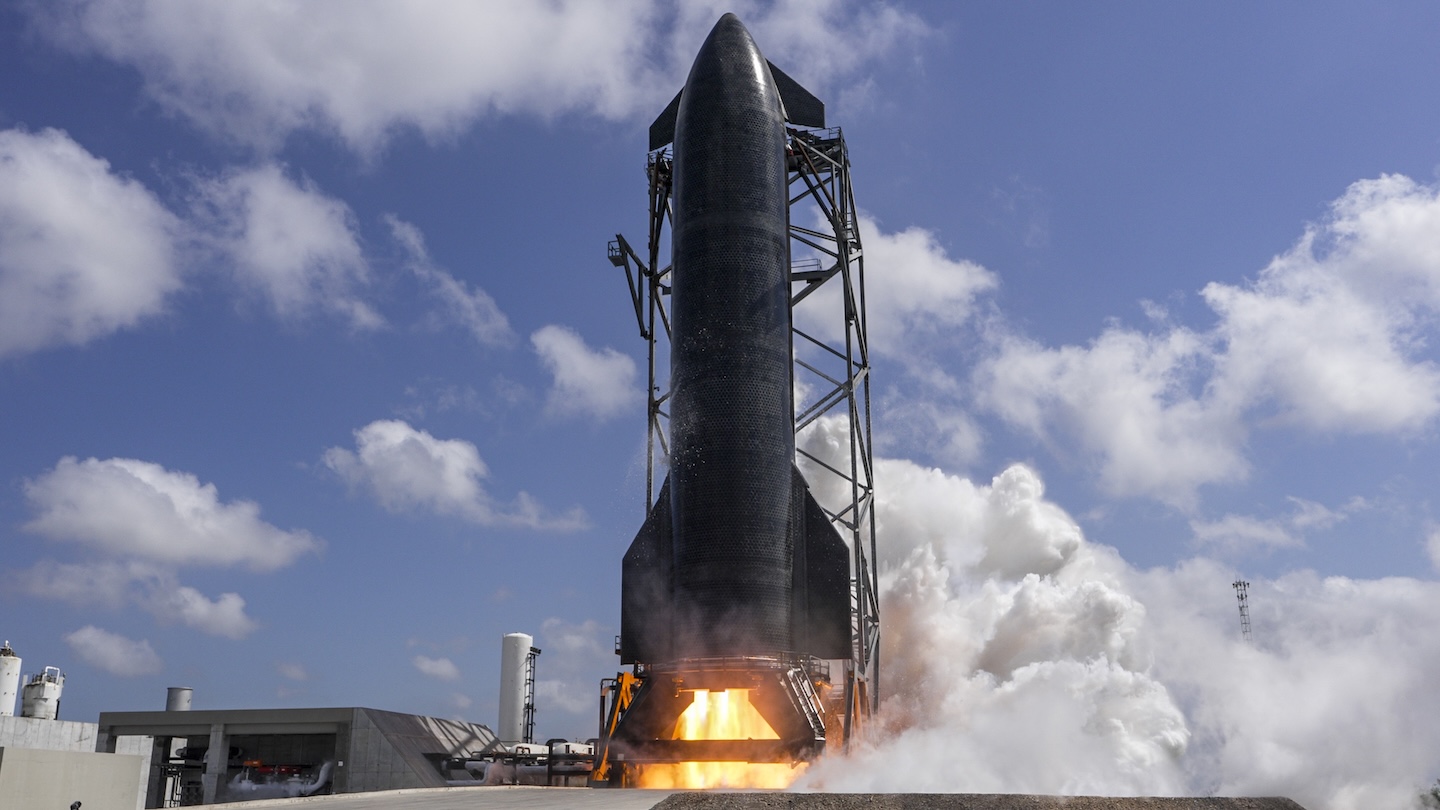
SpaceX is that much closer to launching their next-gen Starship after completing today’s full duration static fire out of Starbase, Texas. This marks a direct signal that Flight 12, the maiden voyage of Starship V3, is imminent. SpaceX confirmed the test on X, posting that the full duration firing was completed ahead of the vehicle’s next flight test.
The road to today started on March 16, when Booster 19 completed a shorter 10-engine static fire, also at the newly constructed Pad 2. That test ended early due to a ground systems issue but confirmed all installed Raptor 3 engines started cleanly. Booster 19 returned to the Mega Bay, received its remaining 23 engines for a full complement of 33, and rolled back out this week for the complete test campaign. Musk confirmed earlier this month that Flight 12 is now 4 to 6 weeks away.
Countdown: America is going back to the Moon and SpaceX holds the key to what comes after
The numbers behind the world’s most powerful rocket are genuinely hard to put in context. Each Raptor 3 engine produces roughly 280 tons of thrust, and with all 33 firing simultaneously from the super heavy booster, this generates approximately 9,240 tons of combined thrust, more than any rocket in history. For context, that’s enough thrust to lift the entire Empire State Building, and then some. V3 stands 408 feet tall and can carry over 100 tons to low Earth orbit in a fully reusable configuration. The V2 generation topped out at around 35 tons.
Historically, a successful full-duration static fire is the last major ground milestone before launch. SpaceX has followed this pattern with every Starship iteration since the program began in 2023. Musk has been direct about the ambition behind all of it. “I am highly confident that the V3 design will achieve full reusability,” he wrote on X earlier this year. Full reusability of both stages is the foundation of SpaceX’s plan to make regular flights to the Moon and Mars economically viable. Today’s test brings that goal one significant step closer.
Starship V3 delivers on two most critical promises of full reusability and in-orbit refueling. The reusability case is straightforward, and one we have seen with Falcon 9 wherein the rocket can fly again within a day rather than building a new one for every mission. It’s the only economic model that makes frequent lunar cargo runs viable. The in-orbit refueling piece is less obvious but equally essential. To reach the Moon with enough payload, Starship requires roughly ten dedicated tanker flights to fuel up a propellant depot in low Earth orbit before it can even begin its journey to the lunar surface. That capability has never been demonstrated at scale, and Flight 12 is the first step toward proving it works. As Teslarati reported, NASA’s Artemis II crew completed a historic lunar flyby earlier this month, the first humans to travel beyond low Earth orbit since 1972, but getting astronauts to actually land and eventually supply a permanent Moon base requires a cargo pipeline that only a fully reusable, refuelable Starship V3 can deliver at the volume and cost NASA’s plans demand.
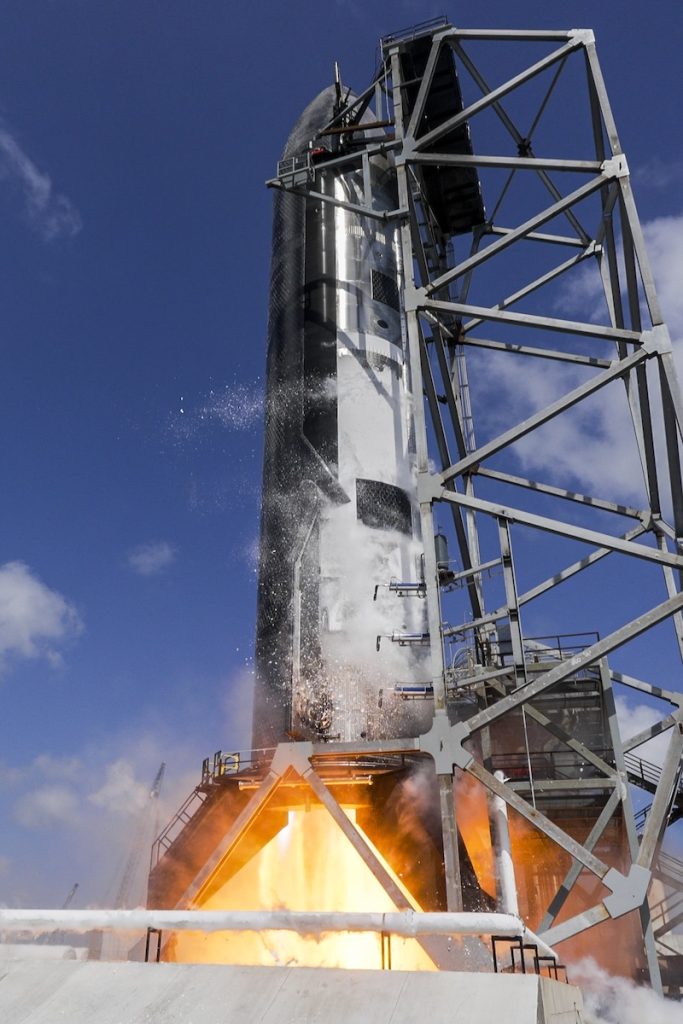
SpaceX Starship full duration static fire on April 14, 2026 from Starbase, Texas (Credit: SpaceX)
Elon Musk
SpaceX is keeping the Space Station alive again this weekend
SpaceX’s Falcon 9 launches Northrop Grumman’s Cygnus NG-24 to the ISS with 11,000 pounds of cargo Saturday.
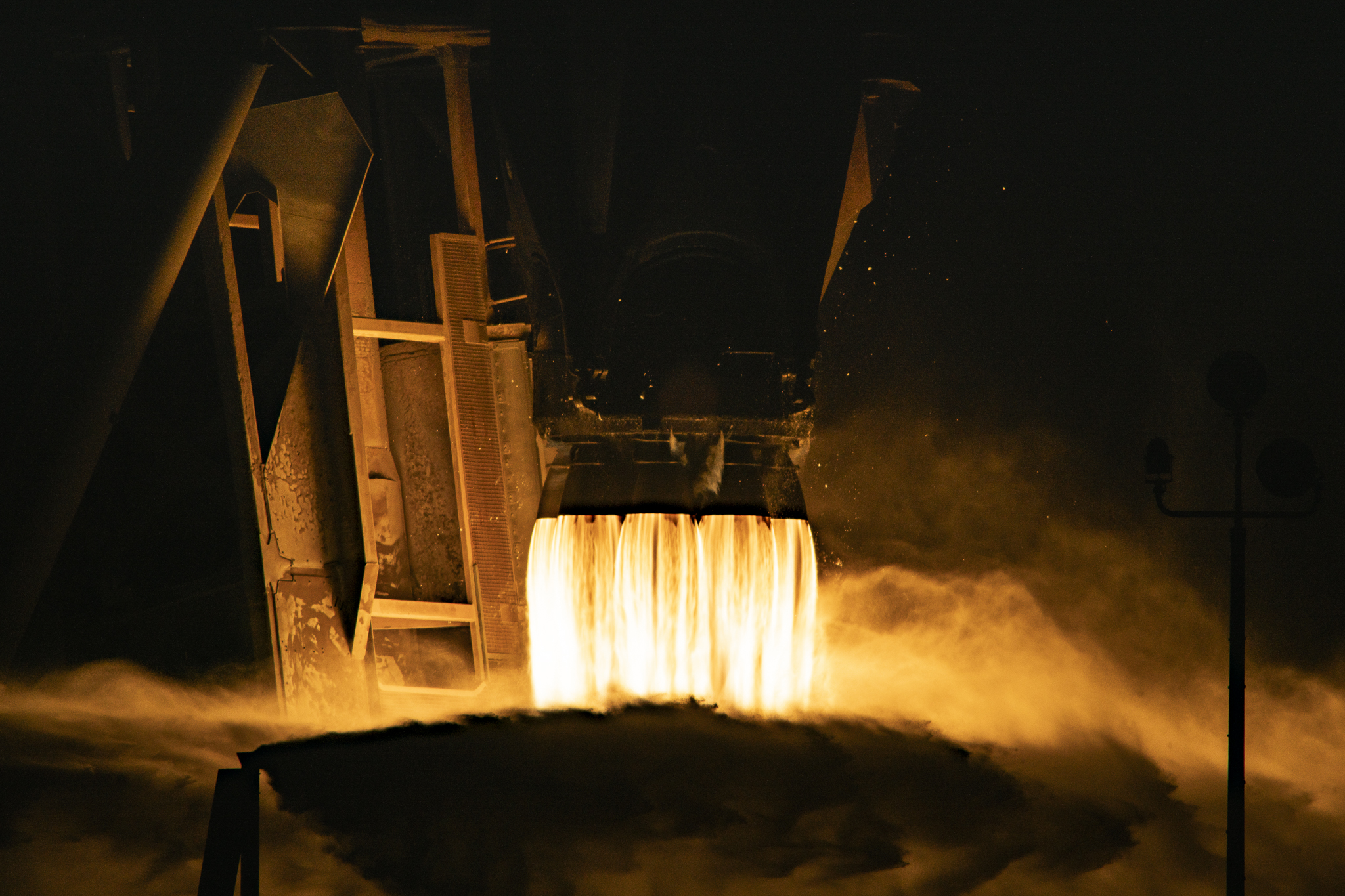
SpaceX is targeting April 11 for the launch of Northrop Grumman’s Cygnus XL cargo spacecraft to the International Space Station, carrying over 11,000 pounds of supplies, science hardware, and equipment for the Expedition 73 crew aboard. Liftoff is set for 7:41 a.m. ET from Space Launch Complex 40 at Cape Canaveral Space Force Station, with a backup window available April 12 at 7:18 a.m. ET.
The mission, officially designated NG-24 under NASA’s Commercial Resupply Services program, names its spacecraft the S.S. Steven R. Nagel in honor of the NASA astronaut who flew four Space Shuttle missions and logged over 723 hours in space before his death in 2014. Unlike SpaceX’s own Dragon capsule, which docks autonomously, Cygnus relies on NASA astronauts to capture it using a robotic arm before it is berthed to the space station’s module for unloading. When the mission wraps up around October, the Cygnus will depart loaded with station trash and burn up on reentry.
Countdown: America is going back to the Moon and SpaceX holds the key to what comes after
This is the second flight of the Cygnus XL configuration, which debuted on NG-23 in September 2025 and offers a roughly 20% increase in cargo capacity over the previous design. Northrop Grumman switched to Falcon 9 launches after its own Antares 230+ rocket was retired in 2023 following supply chain disruptions from the war in Ukraine.
The upcoming cargo includes a new module to advance quantum research, and an investigation studying blood stem cell production in microgravity with potential therapeutic applications on Earth.
The NG-24 mission is one piece of a much larger picture for SpaceX and the U.S. government. As Teslarati reported, SpaceX has become an indispensable launch provider for U.S. national security missions, picking up a $178.5 million Space Force contract in April 2026 to launch missile tracking satellites, while also holding roughly $4 billion in NASA contracts tied to the Artemis lunar program.
At a time when no other American rocket can match the Falcon 9’s combination of reliability, cost, and launch cadence, Saturday’s mission is a straightforward reminder of how much the U.S. government now depends on a single commercial provider to keep its astronauts supplied and its satellites flying.
Elon Musk
Elon Musk’s Terafab project locks up massive new partner
Terafab, first revealed by Musk in March, is a massive joint-venture semiconductor complex planned for the North Campus of Giga Texas in Austin.

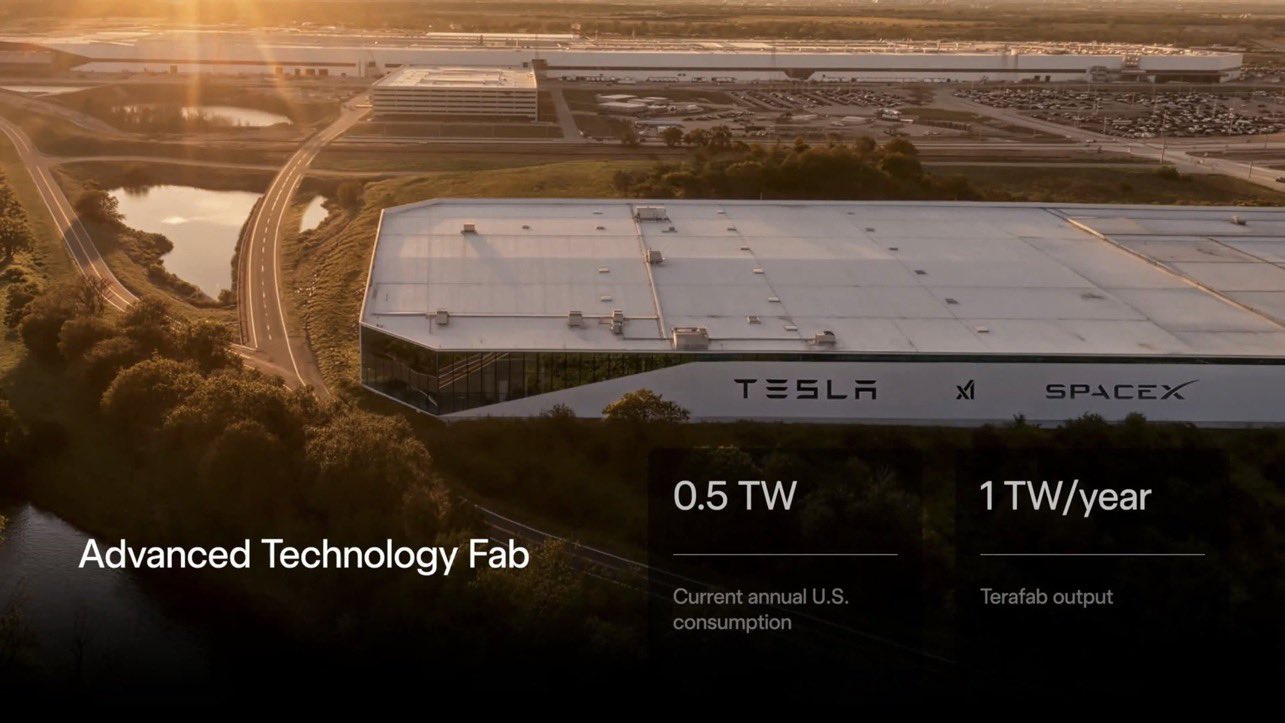
Elon Musk’s Terafab project just locked up a massive new partner, just weeks after the new project was announced by Tesla, SpaceX, and xAI, the three companies that will be direct benefactors from it.
In a landmark announcement on April 7, Intel joined Elon Musk’s Terafab project as a key partner alongside Tesla, SpaceX, and xAI. The collaboration focuses on refactoring silicon fabrication technology to deliver ultra-high-performance chips at unprecedented scale.
Intel CEO Lip-Bu Tan hosted Musk at Intel facilities the prior weekend, underscoring the partnership’s momentum with a public handshake.
Intel is proud to join the Terafab project with @SpaceX, @xAI, and @Tesla to help refactor silicon fab technology.
Our ability to design, fabricate, and package ultra-high-performance chips at scale will help accelerate Terafab’s aim to produce 1 TW/year of compute to power… pic.twitter.com/2vUmXn0YhH
— Intel (@intel) April 7, 2026
Terafab, first revealed by Musk in March, is a massive joint-venture semiconductor complex planned for the North Campus of Giga Texas in Austin. Valued at $20–25 billion, it aims to consolidate the entire chip-making pipeline, design, fabrication, memory production, and advanced packaging in a single location. It should eliminate a majority of Tesla’s dependence on third-party chip fab companies.
The facility will manufacture two primary chip types: energy-efficient edge-inference processors optimized for Tesla’s Full Self-Driving (FSD) systems, Cybercab and Robotaxi, and Optimus humanoid robots, and high-power, radiation-hardened variants for SpaceX satellites and xAI’s orbital data centers.
Elon Musk launches TERAFAB: The $25B Tesla-SpaceXAI chip factory that will rewire the AI industry
The project’s audacious goal is to produce 1 terawatt (TW) of annual compute capacity, roughly 50 times current global AI chip output.
Production is expected to begin modestly and scale rapidly, addressing Musk’s warning that chip supply could soon become the biggest constraint on Tesla, SpaceX, and xAI growth. By vertically integrating manufacturing tailored to their exact needs, Terafab eliminates supply-chain bottlenecks and accelerates iteration for AI training, inference at the edge, and space-based computing.
Intel’s participation is strategically vital. The company will contribute expertise in advanced process technology, high-volume fabrication, and packaging to help Terafab achieve its aggressive targets. For Intel, the deal strengthens its foundry business and positions it as a critical U.S. player in the AI hardware race.
For Musk’s ecosystem, it secures domestic, purpose-built silicon at a time when global capacity meets only a fraction of projected demand for hundreds of millions of robots and orbital AI infrastructure.
This is the latest chapter in Intel-Tesla ties. In November 2025, Musk publicly stated at Tesla’s shareholder meeting that partnering with Intel on AI5 chips was “worth having discussions,” amid concerns about TSMC and Samsung capacity.
Exploratory talks followed, with Intel eyeing custom-AI opportunities. The Terafab integration transforms those conversations into concrete collaboration.
The Intel-Terafab alliance carries broader implications. It bolsters U.S. semiconductor sovereignty, drives innovation in cost- and power-efficient AI silicon, and supports Musk’s vision of exponential progress in autonomy, robotics, and space.
As AI compute demand surges, this partnership could reshape the industry, delivering the silicon backbone for a new era of intelligent machines on Earth and beyond.

Tesla expands Unsupervised Robotaxi service to two new cities

Tesla is pushing Robotaxi features to owner cars with Spring Update


