News
Starship Flight 10 rescheduled as SpaceX targets Monday launch
SpaceX said it is now targeting Monday evening for Starship’s 10th flight test.

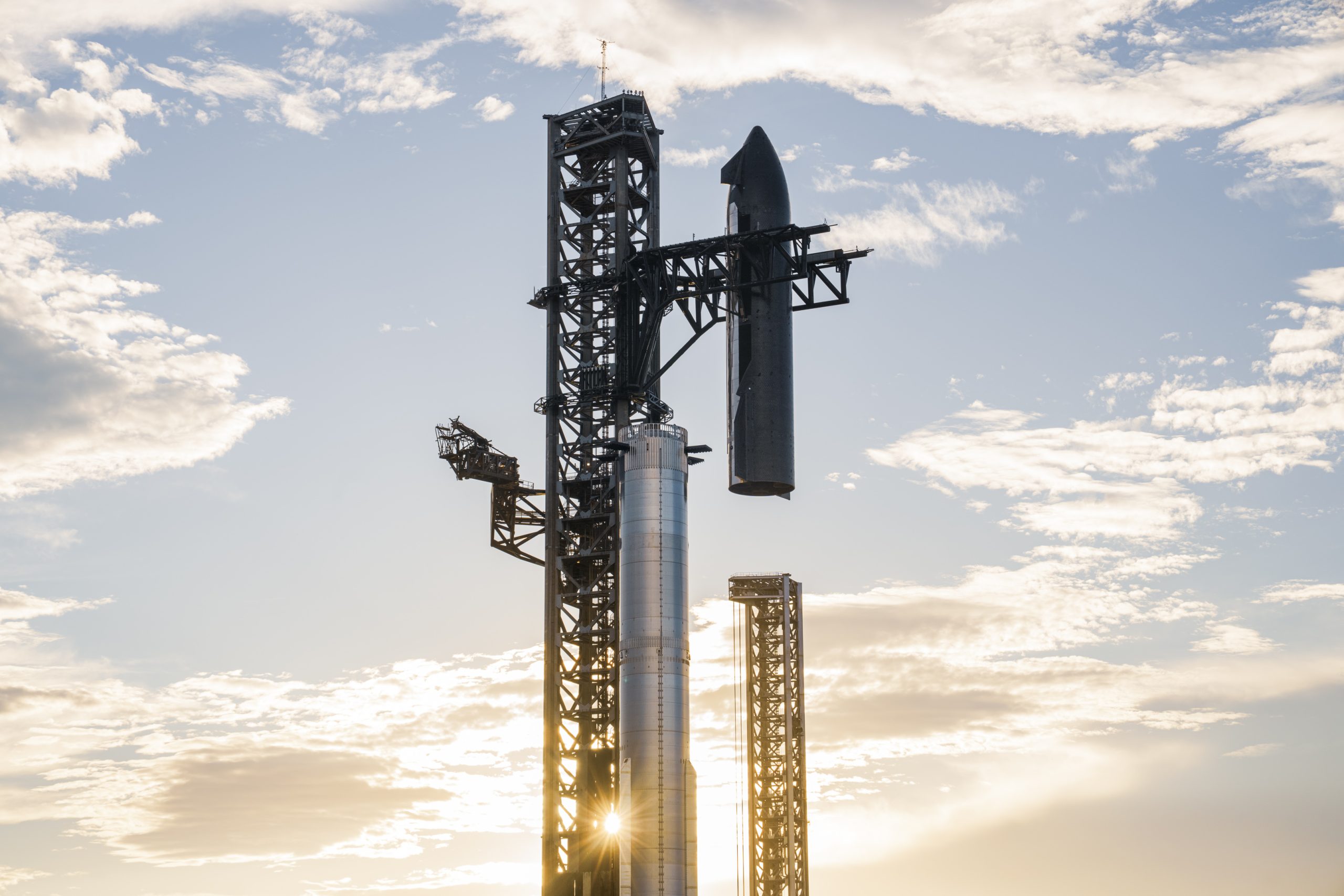
SpaceX stood down from its planned Starship Flight 10 on Sunday evening, citing an issue with ground systems.
The launch attempt was scheduled during a one-hour window that opened at 7:30 p.m. ET, but it was called off just 17 minutes before the window opened. SpaceX said it is now targeting Monday evening for Starship’s 10th flight test.
Flight 10 rescheduled
A lot of excitement was palpable during the lead up to Starship Flight 10’s first launch window. After the failures of Starship Flight 9, many were interested to see if SpaceX would be able to nail its mission objectives this time around. Starship itself seemed ready to fly, with the upper stage being loaded with propellant as scheduled. Later on, SpaceX also noted that Starship’s Super Heavy booster was also being loaded with propellant.
However, 17 before the launch window opened, SpaceX noted that it was “standing down from today’s tenth flight of Starship to allow time to troubleshoot an issue with ground systems.” Elon Musk, in a post on X, further clarified that a “ground side liquid oxygen leak needs to be fixed.” Musk did state that SpaceX will attempt Flight 10 again on Monday, August 25, 2025.
Starship and SpaceX’s development goals
The fully integrated Starship system is the tallest and most powerful rocket ever built, standing over 400 feet when stacked. Composed of the reusable Super Heavy booster and the Starship upper stage, the vehicle is central to SpaceX’s long-term ambitions of lunar and Martian missions. NASA has already selected Starship as the crewed lunar lander for Artemis, with its first astronaut landing mission tentatively set for 2027, as noted in a Space.com report.
So far, Starship has flown nine times from Starbase in Texas, with three launches this year alone. Each flight has offered critical data, though all three 2025 missions encountered notable failures. Flight 7 and Flight 8 ended in explosions less than 10 minutes after launch, while Flight 9 broke apart during reentry. Despite setbacks, SpaceX has continued refining Starship’s hardware and operations with each attempt. Needless to say, a successful Flight 10 would be a significant win for the Starship program.


News
Tesla is using a redesigned Cybertruck battery cell to mitigate Semi challenges
It is perhaps the most recent example of Tesla using unique engineering prowess and cross-pollinating vehicle elements to solve common problems, something it does better than most companies out there.

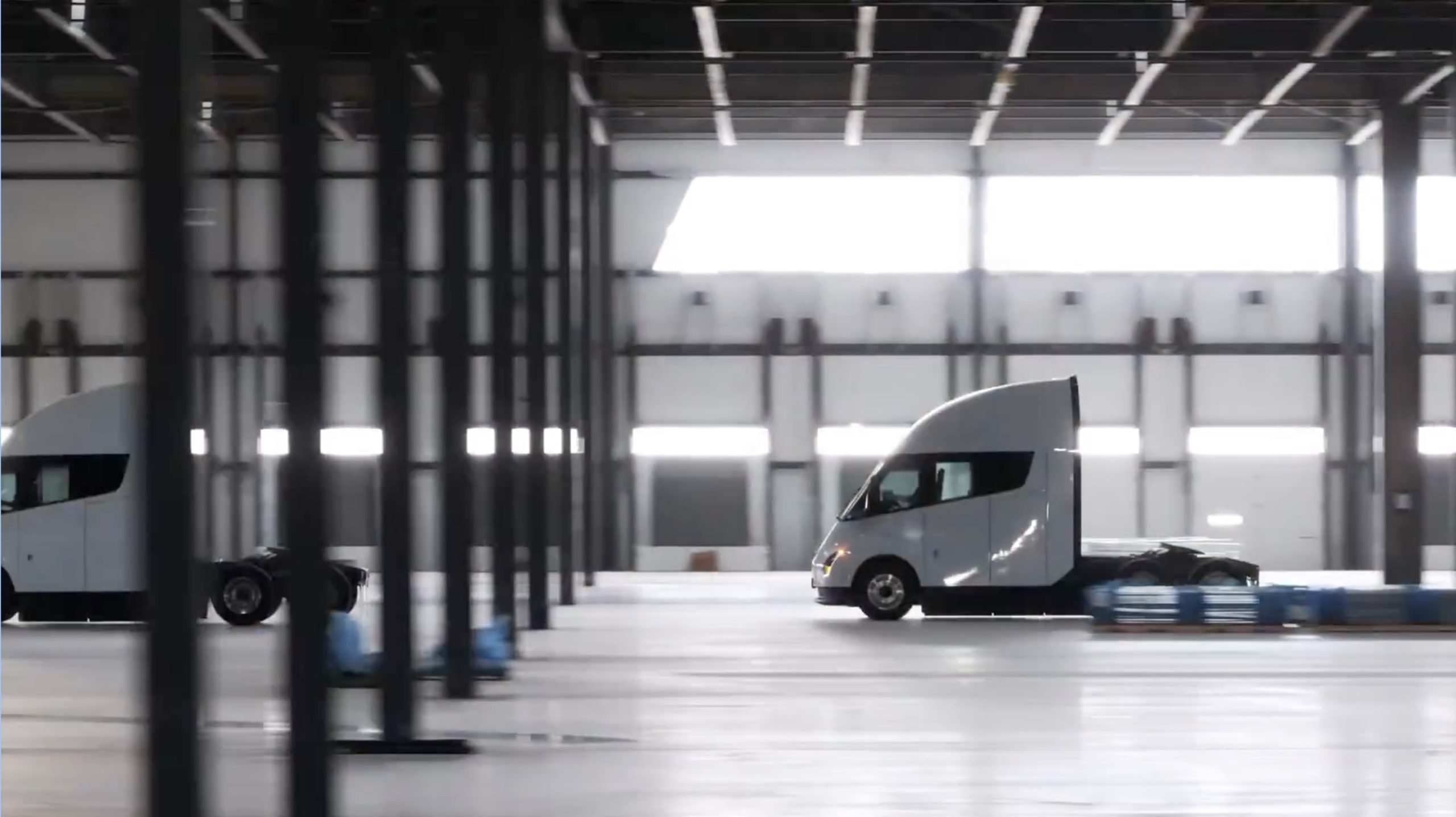
Tesla revealed that it is utilizing redesigned Cybertruck battery cells in its Long Range Semi to mitigate some pertinent challenges that come with long-haul logistics.
It is perhaps the most recent example of Tesla using unique engineering prowess and cross-pollinating vehicle elements to solve common problems, something it does better than most companies out there.
Tesla’s long-awaited Semi truck is entering production at its Nevada Gigafactory, and fresh factory footage reveals a clever evolution in its battery technology.
The Long Range variant, designed for up to 500 miles of real-world range, relies on a structural battery pack that uses the same 4680-form-factor cells found in the Cybertruck.
However, Tesla engineers have completely redesigned the pack’s architecture—shifting from the flat, pancake-style modules typical in passenger vehicles to a compact, vertical cubic layout. This change isn’t just about cramming more energy into the chassis; it’s a targeted solution to one of electric trucking’s biggest headaches: range loss in cold climates.
Dan Priestley, Head of the Tesla Semi program, said:
“We’re using essentially the same cell out of Cybertruck, but our cars packs are more like a pancake. Whereas these are more like a cube. You get a lot of energy stored in a small space. You can only do this if you design the vehicle to be electric from the ground up.”
Here, in all its glory, is the exclusive first look at the massive @Tesla Semi factory.
Our @corememory crew went to Nevada to see the line come to life, as it gets ready to pump out thousands of all-electric trucks. We saw the new cab and went on a drive too. Wunderbar! pic.twitter.com/a0S5zVEr87
— Ashlee Vance (@ashleevance) April 10, 2026
In conventional EVs, battery packs are laid out horizontally in wide, flat arrays to fit under the floor. While this works for cars and even the Cybertruck’s structural pack, it exposes a large surface area to the elements.
Heat escapes quickly, especially overnight when the truck is parked. Cold temperatures slow chemical reactions inside lithium-ion cells, reducing available energy and forcing the vehicle to expend extra power warming the battery and cabin.
Real-world tests on vehicles like the Cybertruck show winter range losses of 20-40 percent, depending on conditions. For long-haul truck drivers operating in Canada, Scandinavia, or the northern U.S., this “silent killer” means unplanned stops, reduced payloads, and higher operating costs.
From personal experience, cold weather still impacts EV batteries even with various inventions and strategies that companies have come up with. In the cold Pennsylvania winter, charging was much more frequent for me due to range loss due to temperatures.
Tesla’s cubic battery pack flips the script. By arranging the 4680 cells in tall, dense vertical stacks, the pack minimizes external surface area relative to its volume—essentially turning the battery into its own thermal blanket.
Factory video from the Semi assembly line shows these large, yellow-green structural modules mounted directly onto the chassis, forming a near-cube shape.
The reduced exposure helps the pack retain heat generated during operation, keeping cells closer to their optimal temperature even after hours in sub-zero conditions.
The design doesn’t stop there. Tesla pairs the cubic pack with an advanced heat pump system that actively recycles thermal energy from the motors, brakes, and even ambient air.
Tesla reveals various improvements to the Semi in new piece with Jay Leno
Unlike passive systems in earlier EVs, this architecture transfers waste heat back into the battery, maintaining readiness for morning departures without draining the pack.
Executives have noted that the combination, cubic geometry plus intelligent thermal management, dramatically cuts overnight cooldown and range degradation, making the Semi viable for 24/7 fleet operations in harsh winters.
Beyond cold-weather performance, the redesigned pack integrates structurally with the truck’s frame, enhancing rigidity while simplifying assembly. Production footage shows workers installing the massive modules early in the line, signaling that the Semi’s battery is now a core chassis component rather than an add-on.
Using proven 4680 cells keeps costs down and leverages Tesla’s scaled manufacturing know-how from Cybertruck and Model Y lines.
Tesla’s focus on ramping up Semi output will lean on small innovative steps like this one. Truckers are not immune to traveling in cold weather conditions, and changes like this one will help make them more effective while also increasing output by logistics operators who choose to go all-electric with the Tesla Semi.
Elon Musk
SpaceX is keeping the Space Station alive again this weekend
SpaceX’s Falcon 9 launches Northrop Grumman’s Cygnus NG-24 to the ISS with 11,000 pounds of cargo Saturday.

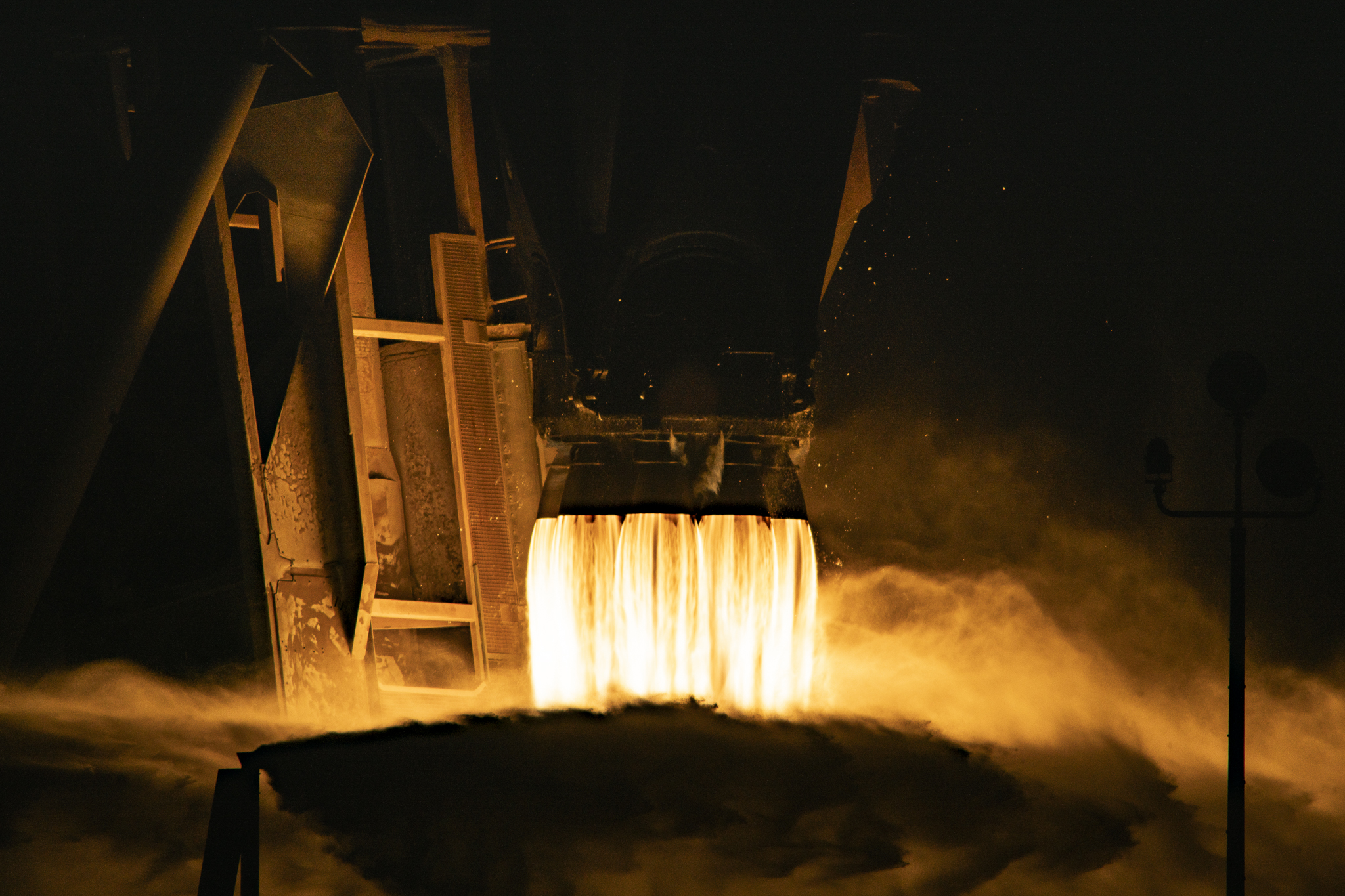
SpaceX is targeting April 11 for the launch of Northrop Grumman’s Cygnus XL cargo spacecraft to the International Space Station, carrying over 11,000 pounds of supplies, science hardware, and equipment for the Expedition 73 crew aboard. Liftoff is set for 7:41 a.m. ET from Space Launch Complex 40 at Cape Canaveral Space Force Station, with a backup window available April 12 at 7:18 a.m. ET.
The mission, officially designated NG-24 under NASA’s Commercial Resupply Services program, names its spacecraft the S.S. Steven R. Nagel in honor of the NASA astronaut who flew four Space Shuttle missions and logged over 723 hours in space before his death in 2014. Unlike SpaceX’s own Dragon capsule, which docks autonomously, Cygnus relies on NASA astronauts to capture it using a robotic arm before it is berthed to the space station’s module for unloading. When the mission wraps up around October, the Cygnus will depart loaded with station trash and burn up on reentry.
Countdown: America is going back to the Moon and SpaceX holds the key to what comes after
This is the second flight of the Cygnus XL configuration, which debuted on NG-23 in September 2025 and offers a roughly 20% increase in cargo capacity over the previous design. Northrop Grumman switched to Falcon 9 launches after its own Antares 230+ rocket was retired in 2023 following supply chain disruptions from the war in Ukraine.
The upcoming cargo includes a new module to advance quantum research, and an investigation studying blood stem cell production in microgravity with potential therapeutic applications on Earth.
The NG-24 mission is one piece of a much larger picture for SpaceX and the U.S. government. As Teslarati reported, SpaceX has become an indispensable launch provider for U.S. national security missions, picking up a $178.5 million Space Force contract in April 2026 to launch missile tracking satellites, while also holding roughly $4 billion in NASA contracts tied to the Artemis lunar program.
At a time when no other American rocket can match the Falcon 9’s combination of reliability, cost, and launch cadence, Saturday’s mission is a straightforward reminder of how much the U.S. government now depends on a single commercial provider to keep its astronauts supplied and its satellites flying.
News
Tesla hits FSD hackers with surprise move
In recent weeks, the company has begun remotely disabling FSD capabilities on affected vehicles, and in some instances, permanently revoking access even for owners who paid thousands of dollars for the feature.
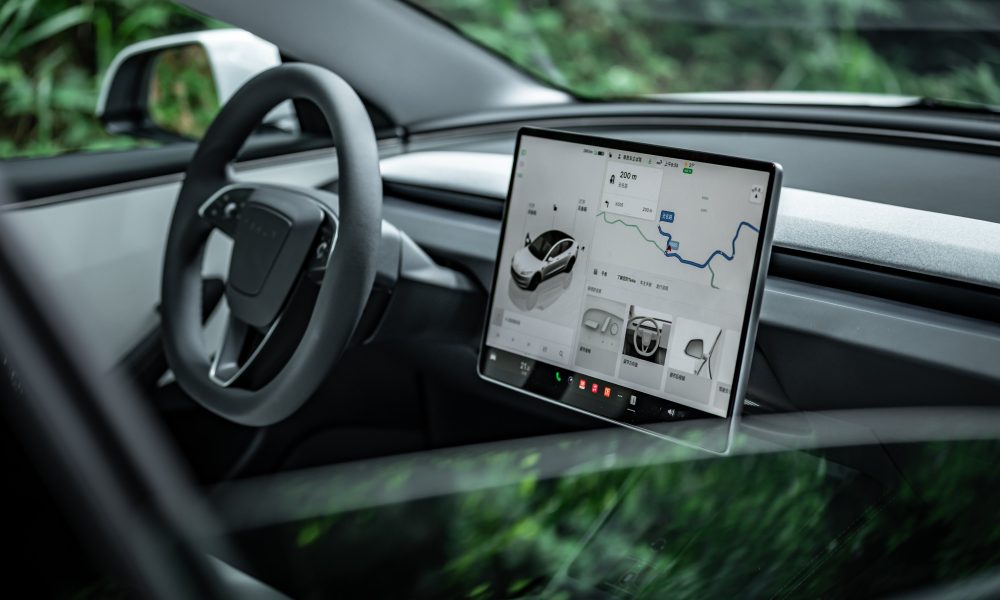
Tesla is cracking down on hackers who have figured out a way to utilize third-party programs to activate Full Self-Driving (FSD) in their vehicles — despite the suite not being approved for use in their country.
Tesla has launched a sweeping enforcement campaign against owners using third-party hardware hacks to activate FSD software in countries where the advanced driver-assistance system remains unregulated or unapproved.
In recent weeks, the company has begun remotely disabling FSD capabilities on affected vehicles, and in some instances, permanently revoking access even for owners who paid thousands of dollars for the feature.
Tesla has started remotely disabling Full Self-Driving on cars fitted with third-party CAN bus hacks in countries where the software is not yet approved.
This crackdown began after the hacks started spreading widely last month. 👇 pic.twitter.com/wL8VqZuTlK
— PiunikaWeb – helpful, and breaking tech news (@PiunikaWeb) April 9, 2026
Reports of the crackdown have surfaced across Europe, China, Japan, South Korea, and the UK, marking a significant escalation in Tesla’s efforts to enforce regional software restrictions.
FSD is Tesla’s flagship supervised autonomy package, which is available in several countries across the world. Currently limited by regulatory hurdles, it has not received full approval in most markets outside of the United States due to various things, such as safety standards, data privacy, and local traffic laws.
However, the company is working to expand its availability globally. Nevertheless, Tesla has installed the necessary hardware on vehicles globally, but locks the features based on geographic location.
Some owners have taken accessing FSD into their own hands, using jailbreak or bypass devices.
These “jailbreak” tools, typically €500 USB-style modules that plug into the vehicle’s Controller Area Network (CAN) bus, intercept signals to spoof approvals and unlock FSD, including advanced navigation, Autopark, and Summon features.
Hackers in Poland, Ukraine, and elsewhere have distributed the devices, with some claiming they work on HW3 and HW4 vehicles and can be unplugged to restore stock settings. In China alone, over 100,000 owners reportedly installed such modifications.
Tesla’s response has been swift and uncompromising. Recently, the company began sending in-car notifications and emails warning owners that unauthorized modifications violate terms of service, compromise vehicle safety systems, and expose cars to cybersecurity risks.
The email communication read:
“Your vehicle has detected an unauthorized third-party device. As a precaution, some driver assistance functions have been disabled for safety reasons. A software update will be available soon. Once you install the update, some features may be enabled again.”
Vehicles detected using the hacks have had FSD capabilities remotely disabled without refund. In some cases, owners report permanent bans, even if they had legitimately purchased the software package.
Tesla’s hardline stance underscores its commitment to regulatory compliance and safety.
Tesla has long argued that unsupervised FSD requires rigorous validation, and premature activation could endanger drivers and bystanders.
The crackdown sends a clear-cut message to those who are bypassing the FSD safeguards, but there are greater implications for Tesla if something were to go wrong. This is an understandable way to protect the company’s reputation for its FSD suite.

Tesla is using a redesigned Cybertruck battery cell to mitigate Semi challenges

SpaceX is keeping the Space Station alive again this weekend


