News
Sweden blocks Tesla FSD-style testing in Stockholm
It looks like FSD testing in Sweden would have to wait some time.

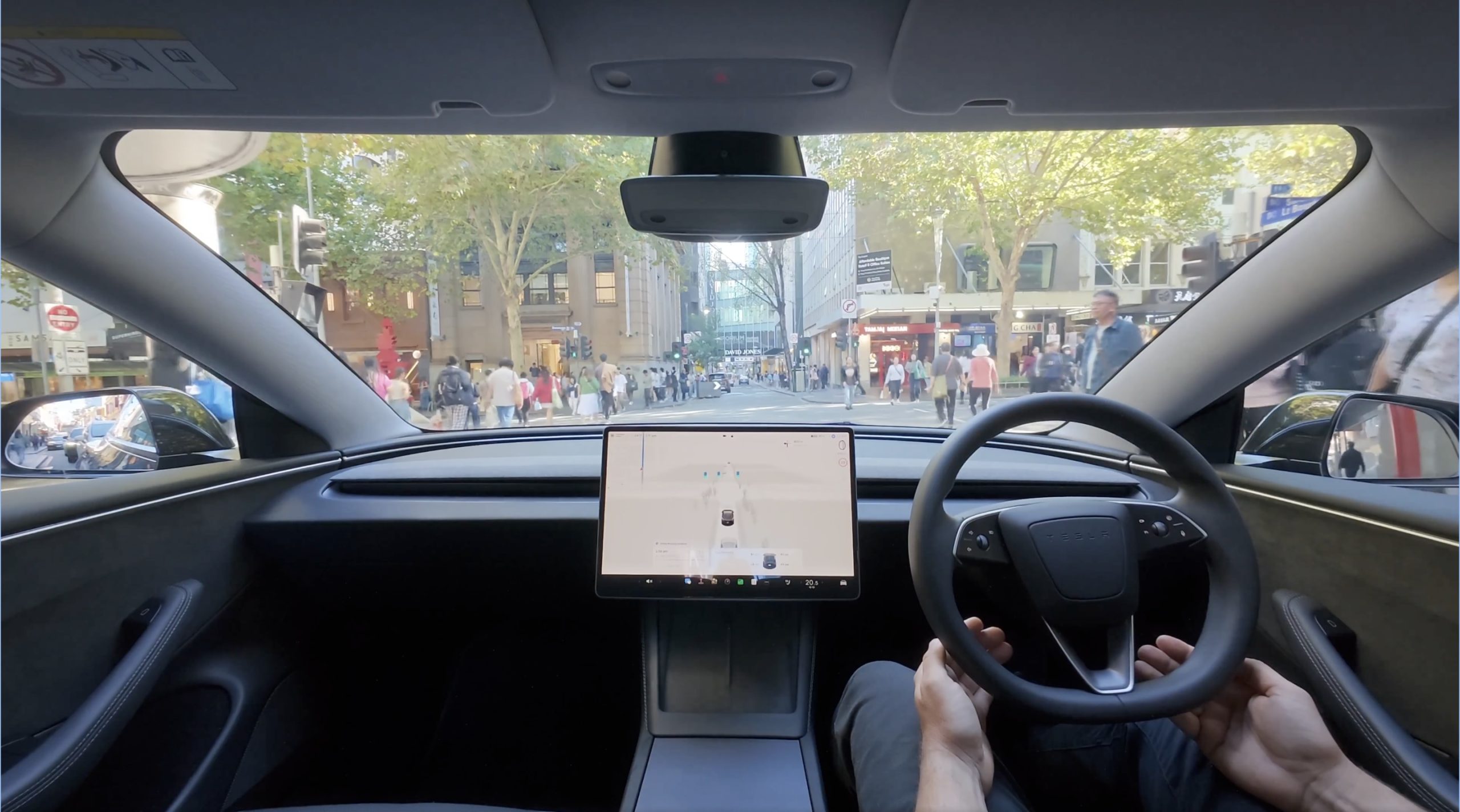
Tesla is putting a lot of effort into getting its Full Self Driving (FSD) system approved in territories outside North America. But while China seems to have embraced FSD fully, other countries like Sweden do not seem to be receiving Tesla’s automated driving system very well.
This became quite evident in a document from Stockholm City, which has started making the rounds online.
FSD Testing Rejected
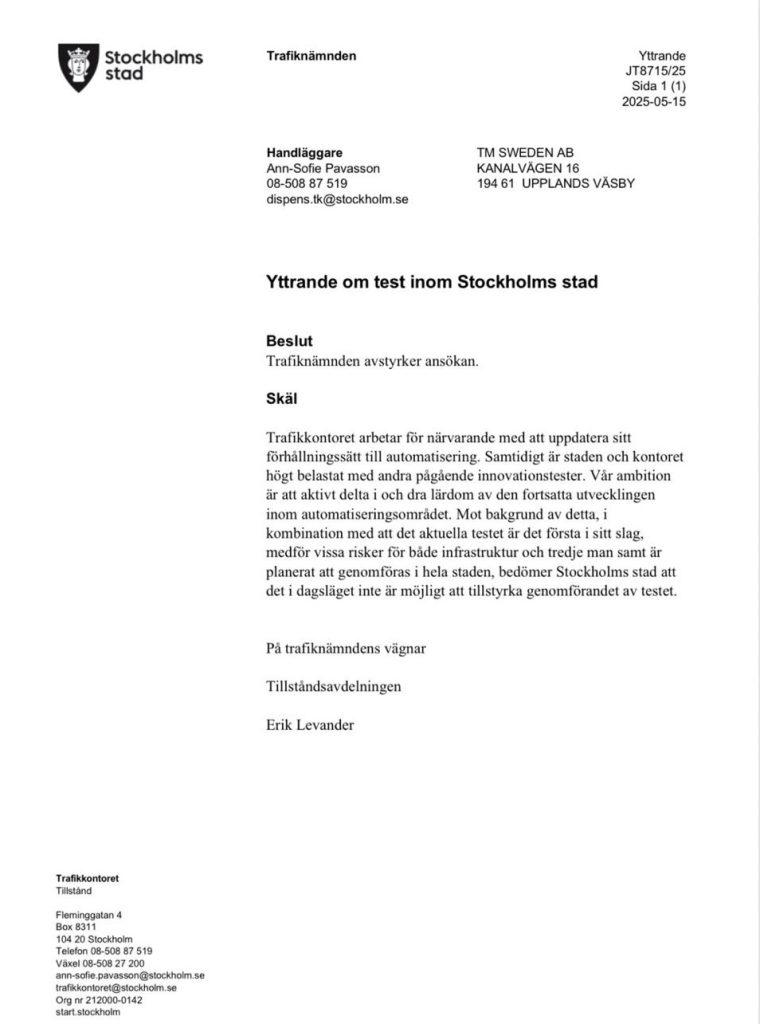
The document, which was initially shared by X user @KRoelandschap, indicated that the Swedish Traffic Department in Stockholm had rejected Tesla’s request to start FSD testing in the city’s streets. Tesla has been demonstrating FSD in several areas across Europe, so it is not surprising that the company is also attempting to test its automated driving system in Sweden.
Unfortunately for Tesla, Sweden might prove to be a tough nut to crack. As per the City of Stockholm:
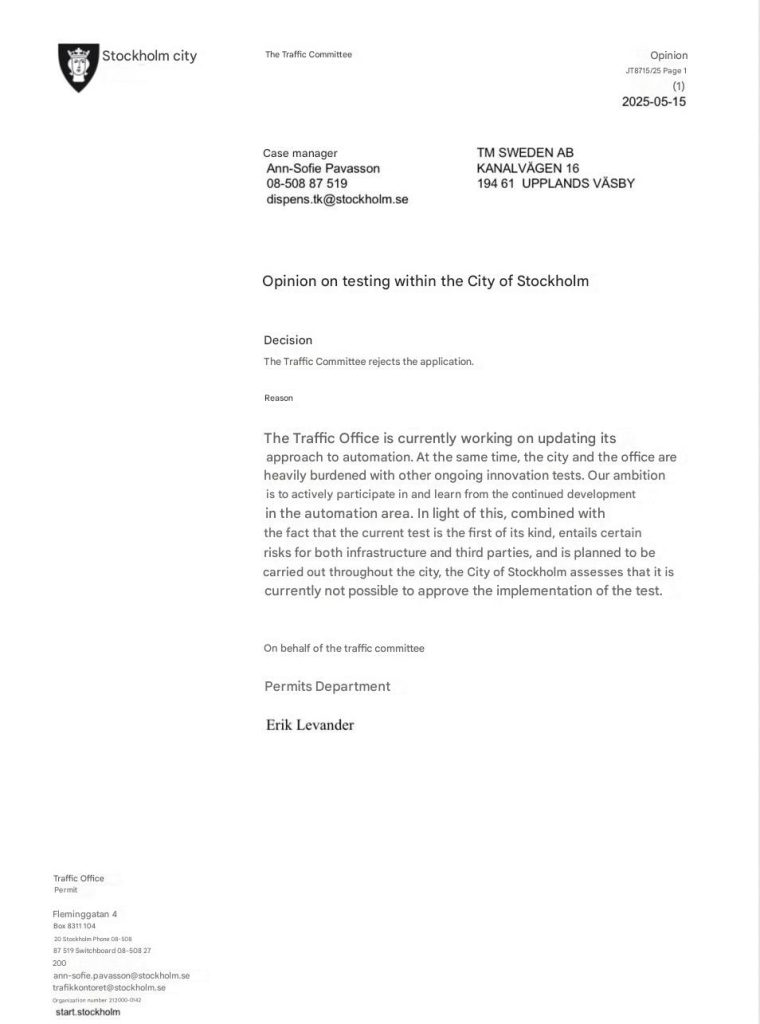
“The Traffic Office is currently working on updating its approach to automation. At the same time, the city and the office are under heavy pressure from other ongoing innovation tests. Our ambition is to actively participate in and learn from the continued development in the field of automation.
“Based on this, and in combination with the fact that the current test is the first of its kind, which entails certain risks for both infrastructure and third parties, and that it is planned to be carried out throughout the city, the City of Stockholm considers it is currently not possible to approve the implementation of the test.”
Tesla’s Other Swedish Troubles
Sweden’s FSD testing rejection is not the only roadblock facing Tesla in the country. Since October 2023, Swedish unions have been engaged in an active effort to disrupt Tesla’s operations. The unions’ efforts have been varied, with some resulting in Tesla having difficulty launching more Superchargers in Sweden. Despite this, Tesla has remained stubborn and has refused to bow to the unions’ demands.
Fortunately for Tesla, it seems like its numbers are still strong. Despite the company’s decline in several European countries, the new Model Y is starting to see strong sales figures in Sweden. In early May alone, the new Model Y became the country’s most popular electric vehicle—a notable accomplishment considering the unions’ active efforts to disrupt Tesla.


Elon Musk
Tesla’s Powercore could change how data centers get power
Tesla unveiled Powercore, a solid-state transformer that could ease one of the grid’s worst bottlenecks.

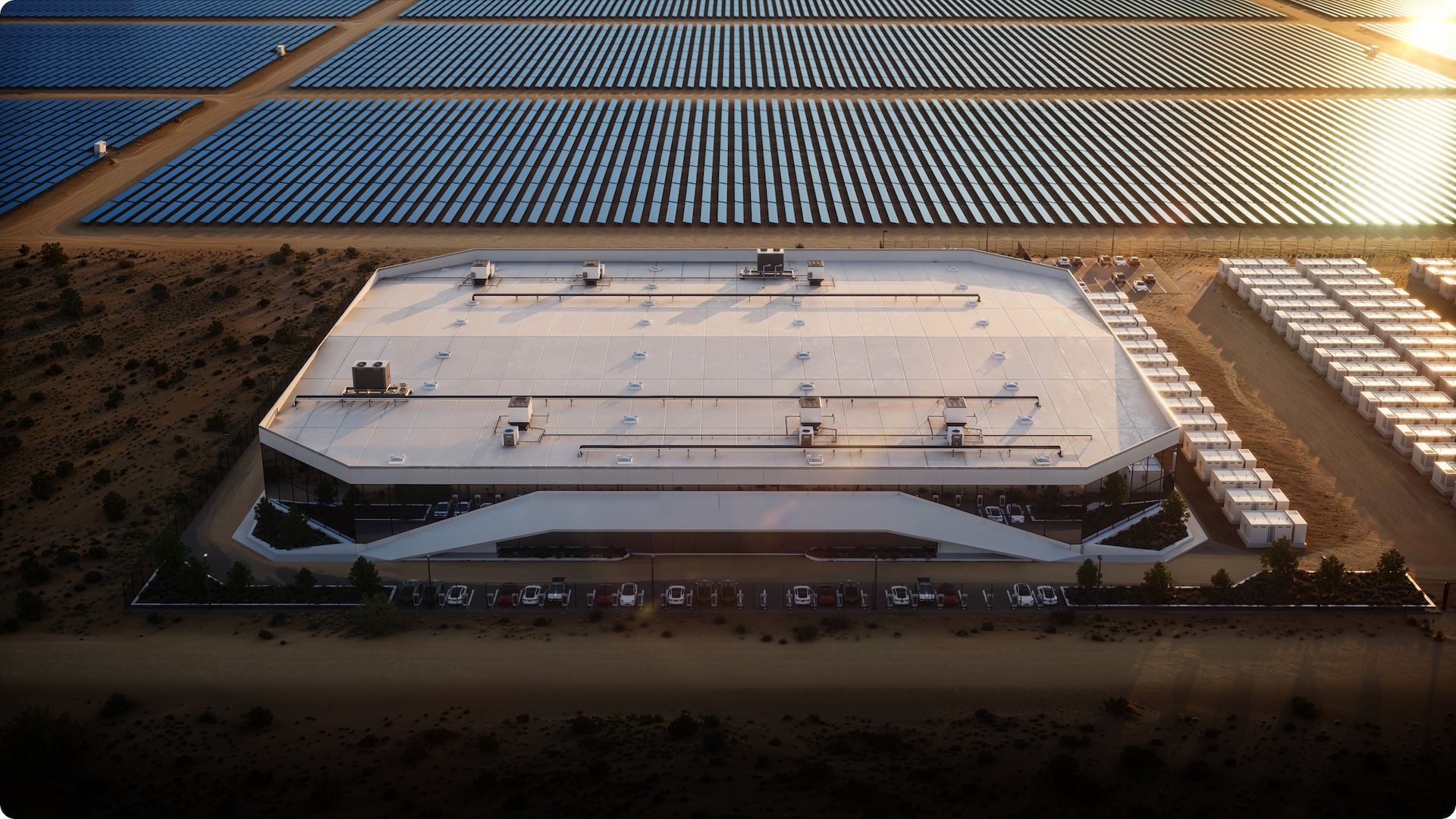
Tesla has unveiled Powercore, a solid-state medium voltage transformer that also handles the jobs of an inverter and a circuit breaker in a single unit. “Solid state medium voltage transformer, inverter and breaker – reliable, safe and secure,” the company’s Tesla Megapack account posted on X Tuesday, adding that the product is “Made in America” and will be “Operating 2027.” Elon Musk followed with his own post: “Advanced solid state transformers at scale from Tesla.”
Tesla rates Powercore at 7.4 MW, or 9 MVA, of continuous output at 34.5 kV AC, with grid-forming support for 10 MVA of peak power. Specs shared by Sawyer Merritt list a peak efficiency of 98.86 percent, a DC range of 800 to 2,000 volts and a built-in solid-state breaker that clears faults in about 100 microseconds. Tesla has not announced pricing, a factory location or a first customer.
The product fills a gap Tesla left open last year. When it introduced Megapack 3 and Megablock in September 2025, Tesla said it would build its own transformers, but shared almost nothing about them. Megablock groups four Megapack 3 units with a transformer and switchgear into a single medium voltage block, as Teslarati reported. Powercore appears to be that missing piece.
A typical battery or solar project today uses low voltage inverters to turn DC into AC, then a large oil-filled transformer to step that power up to grid voltage. A solid-state unit handles both steps with power electronics, which means less equipment, a smaller footprint and no flammable oil. Grid-forming capability lets it actively help hold voltage and frequency steady rather than simply following the grid.
Introducing Powercore Solid state medium voltage transformer, inverter and breaker – reliable, safe and secure 7.4 MW/9 MVA continuously at 34.5 kVac w/ grid-forming support for 10MVA of peak power Made in America. Operating 2027 https://t.co/sHxqnpWJrf — Tesla Megapack (@Tesla_Megapack) November 17, 2026
Timing is a big part of the pitch. Lead times for conventional transformers have stretched into years as AI data centers and renewable projects crowd utility interconnection queues. Tesla energy executive Max de Zegher pointed to the problem in a post Musk shared, noting that “transformers have barely changed since the 1890s: copper coils in a tank of oil,” while batteries, solar and compute all run on DC. Powercore, he wrote, delivers “one conversion and about half the losses.” Tesla has also said its Megapack supply for 2027 is nearly sold out.
Tesla deployed 13.7 GWh of energy storage in the third quarter, its second best quarter on record. On Tuesday, the company also said customer solar systems deployed by Tesla Energy now generate more than twice the electricity its global operations consume each year.

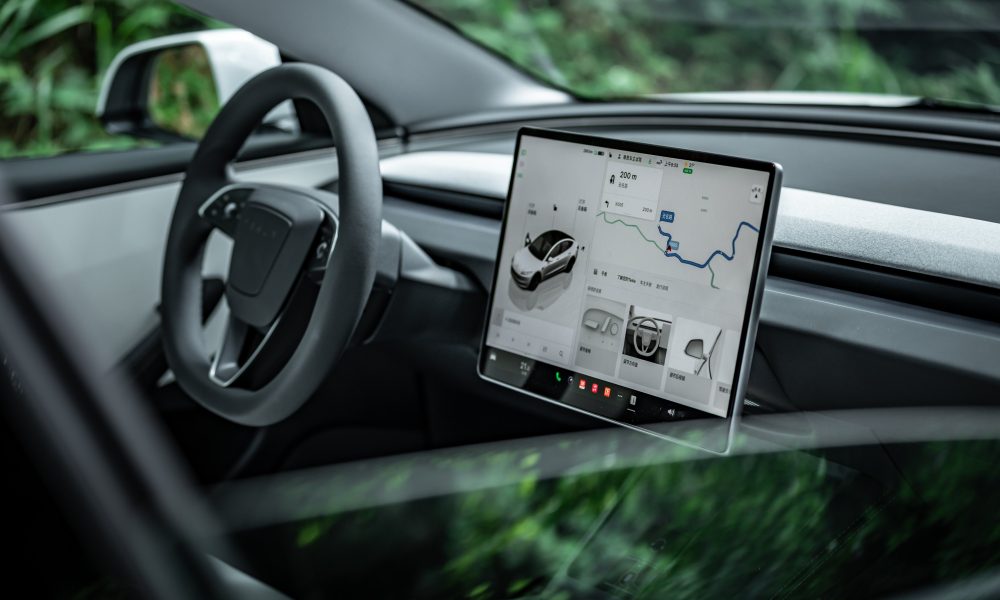
Tesla has officially changed the reference to its vehicles’ internal computers to “Super Intelligence,” or “SI,” reflecting a change that President Donald Trump made when he noted it would no longer be referred to as “Artificial Intelligence,” or “AI.”
Tesla hacker Green posted that a breakdown of Software Version 2026.44.1, noting that the in-car computer is now labeled as “SI Computer,” in system properties:
Took a peek at Tesla 2026.44.1 firmware
The huge change is that Tesla “upgraded” the “AI computer” inside to super intelligence, so it’s now referred to as “SI Computer” in car properties. 🙃
Other than this there are some minor adjustments:— green (@greentheonly) November 17, 2026
In September as he spoke at the UN’s General Assembly, President Trump said (via The Verge):
“The United States also totally rejects any attempt to construct a globalist scheme to control for the artificial intelligence being spoken of so much now. Here and after officially called “super intelligence,” changing the name, and that the use of the word artificial makes intelligence fake. It makes it sound fake, and it is not fake. It’s actually amazing. But we have to be careful. In fact, it is exactly the opposite of what it purports. From this point forward, all of the United States documents, and hopefully the world’s, will be changed to use the much more accurate term, super as opposed to artificial. So it’s super intelligence. In other words, welcome to the new world of super intelligence — SI. That’s, uh, let’s see if that does. It sounds much better. It is much better, and it’s much more accurate.”
Tesla and Musk have evidently chosen to adopt the change, as it now appears as an official reference to the company’s in-car computer.
Tesla has long used iterative software updates to refine Autopilot/FSD behavior, vehicle controls, and user interfaces. Renaming an internal identifier fits that pattern of quiet housekeeping far more closely than a sudden capability jump.
Owners on HW3 and later hardware continue to receive the same incremental FSD improvements seen in prior releases, as the property string does not alter compute allocation or model architecture.
Nevertheless, this won’t have any impact on the vehicles themselves, but it is more of an adoption of terms.
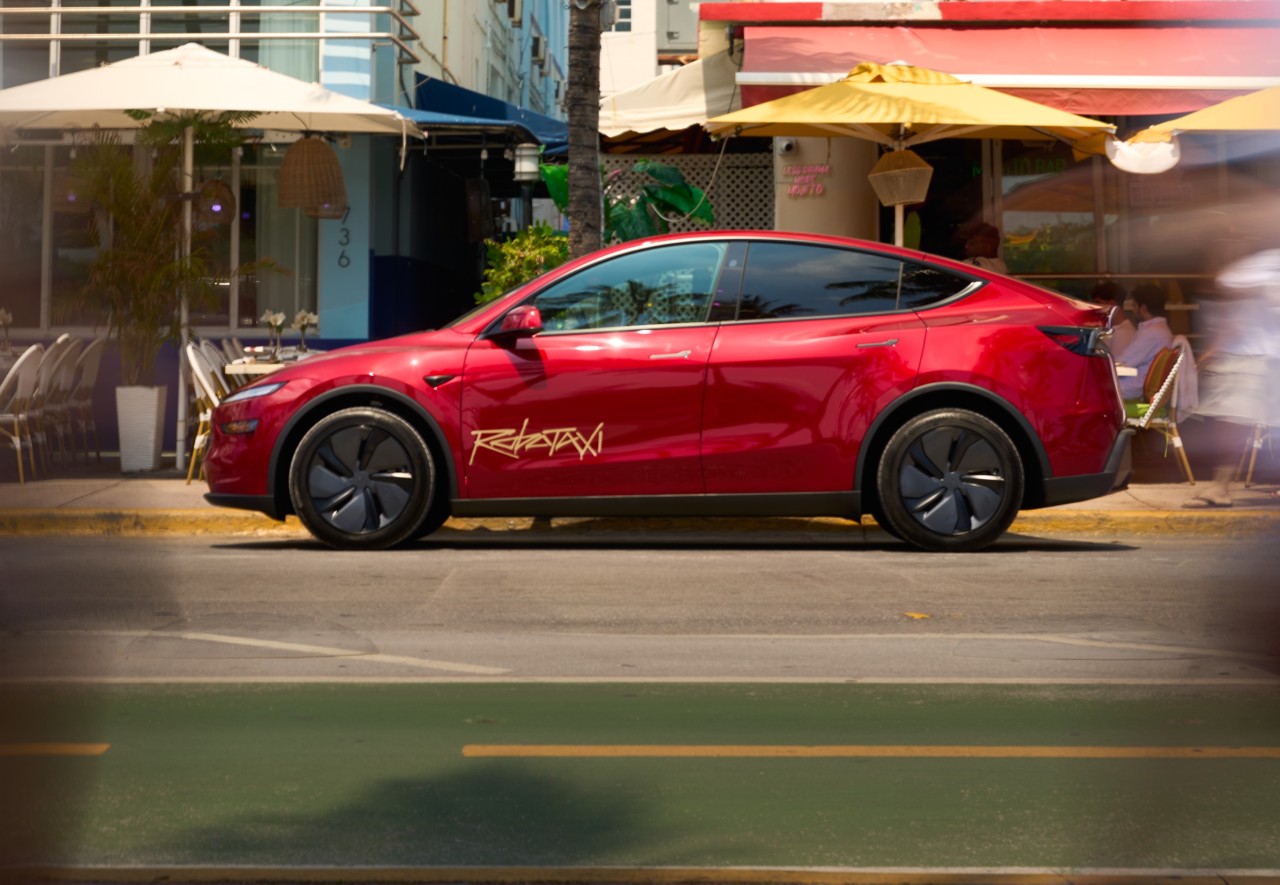
Tesla just doubled the serviceable area that its Robotaxi platform can travel in Miami, Florida.
On November 16, Tesla announced a major expansion of its Miami service area with a message stating that it would now service substantially more of the city. A new map shows the new service area, which is roughly double the initial geofence, including key urban districts into Robotaxi for the first time.
Miami’s geofence for Tesla Robotaxi has expanded considerably https://t.co/GpBqendVRN
— TESLARATI (@Teslarati) November 16, 2026
Tesla first launched unsupervised Robotaxi rides in Miami on July 3, making it the company’s initial market outside of Texas and California. The original geofence covered a very limited portion of the western Miami-Dade area, including West Miami, Doral, Sweetwater, and Miami International Airport. It was roughly 25 square miles, before a small expansion put it at about 31.
Now, Downtown Miami, the popular Brickell neighborhood, and Miami Beach, which were deliberately left outside the boundary initially, now are included in operations. Riders can now hail Model Y vehicles booked through the Tesla Robotaxi app and have run 24 hours a day since mid-November.
The map now looks to be about 59 square miles, a roughly 92 percent increase. The new eastern edge of the geofence now includes Downtown, Bickell, Wynwood, Little Havana, and the Biscayne Bay waterfront, nailing down a lot of typical tourist locations for Miami visitors. Additionally, the new geofence also extends North, reaching Hialeah, and adding coverage closer to the airport corridor.
At its widest, the zone now stretches roughly 11 miles from west to east. Miami Beach remains outside the service area, though Elon Musk previously indicated beach coverage was “coming soon” after Florida Governor Ron DeSantis publicly called for it.
Relative to Tesla’s other markets, Miami’s roughly 59-square-mile zone is now larger than Orlando (about 26 square miles) and Tampa (about 24 square miles) combined.
It remains smaller than Texas hubs such as Austin (around 443 square miles), San Antonio (about 275), Houston (about 254), and Fort Worth (about 143), but the rapid growth brings it closer to competitor Waymo’s approximately 60-square-mile Miami footprint, which already includes beach areas.
For Miami residents and visitors, the expansion makes driverless rides practical for trips into the city’s densest commercial and residential core, offering a new option amid heavy traffic and limited parking.
For Tesla, covering higher-demand downtown corridors should increase ride volume, generate more real-world autonomy data, and strengthen its competitive position as it scales the Robotaxi network toward broader profitability and eventual Cybercab deployment. The overnight growth also signals accelerating operational confidence less than five months after the city’s launch.

Tesla’s Powercore could change how data centers get power

Tesla changes vehicle computers from ‘AI’ to ‘SI,’ reflecting President Trump change


