News
Tesla battery supplier CATL execs no ICE vehicle sales by 2035 at the latest

CATL, one of Tesla’s key battery suppliers, recently shared some bold estimates on the auto industry’s adoption of electric vehicles. According to a CATL executive, there will likely be no new internal combustion-powered cars on the market by 2030 or 2035 at the latest.
The comments were made by Ni Jun, CATL’s chief manufacturing officer, at the World Economic Forum’s annual meeting in Switzerland. “The trend is already happening,” the executive said.
The CATL executive’s comments are not to be disregarded. CATL, after all, has a front-row seat in the ongoing electric vehicle transition. Its supply deal with Tesla also gives the company a good view of the latest innovations happening in the EV industry. China plays a rather large part in this, as the country is the world’s largest electric car market.
China sold 3.5 million new energy vehicles in 2021, and the industry continued to grow in Q1 2022. The CATL executive noted that while car sales fell from January to April 2022 year-over-year, the production capacity of new energy vehicles has more than doubled. And so far, the demand for good electric vehicles definitely seems to be there.
Ni noted that from first quarter sales, China’s NEV penetration rate has effectively reached 20%. This will likely grow even more as China accelerates its aggressive adoption of electric vehicles.
It’s not just China, either. The European Commission proposed legislation last July that would ban the sale of ICE cars in the EU by 2023. In response to this initiative, Volkswagen has noted that it would stop producing vehicles with combustion engines by 2035. The European Parliament’s environment committee also expressed their support for the plan.
Don’t hesitate to contact us with news tips. Just send a message to simon@teslarati.com to give us a heads up.



Tesla is gearing up Cybercab, its all-electric and fully autonomous ride-hailing vehicle, for a very public debut as it plans to start customer deliveries in December. However, the units that rolled out of Gigafactory Texas this morning seem to differ from what we have seen previously.
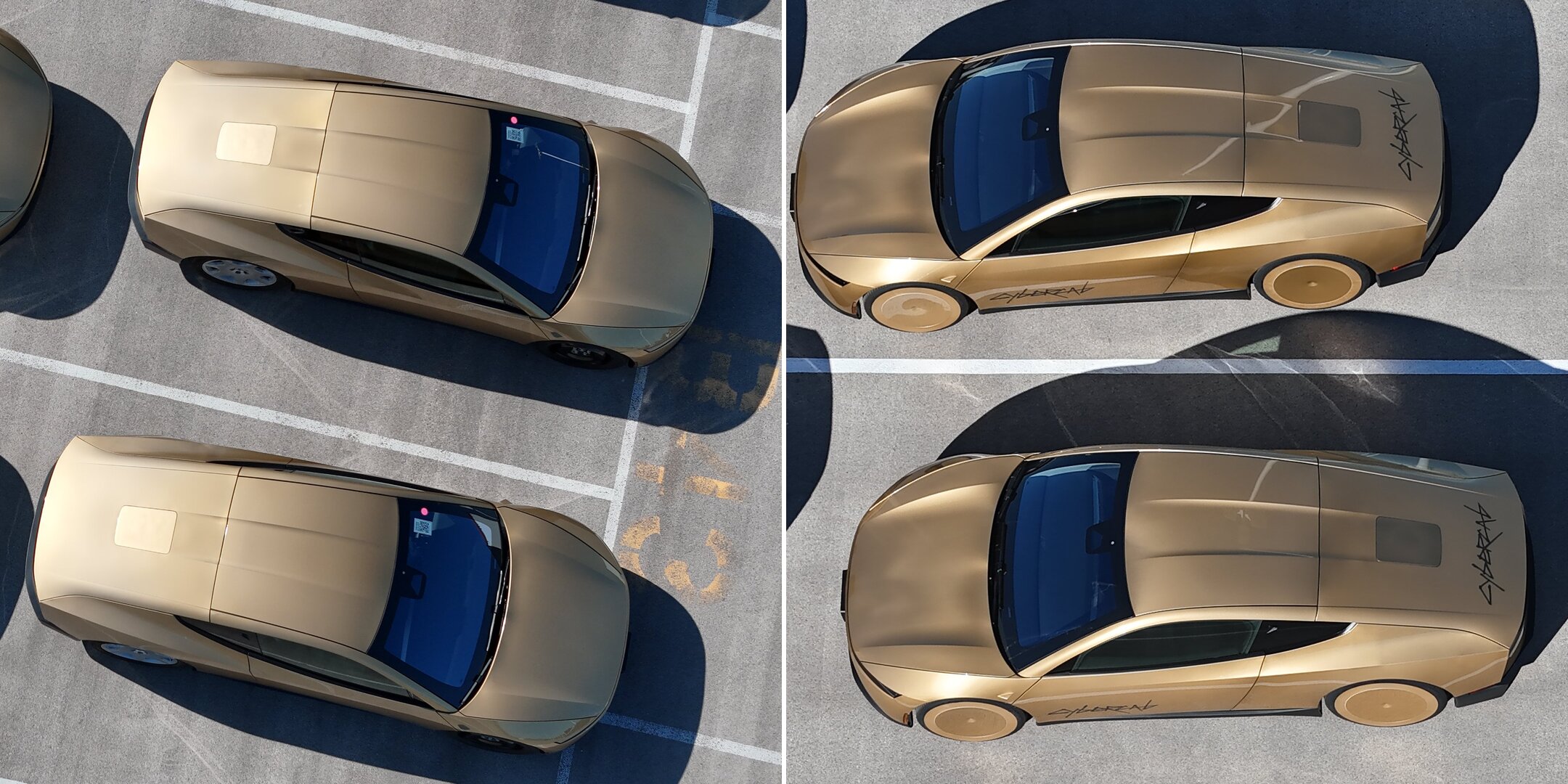
Aerial images captured by drone photographer Joe Tegtmeyer at Giga Texas on November 18 reveal a noticeable update to the appearance of Tesla’s Cybercabs equipped with Starlink. Rows of gold production vehicles sit in the outbound lot, each carrying a flush-mounted Starlink V5 terminal on the rear hatch that looks more refined than the version first shown months earlier.
When Tesla first unveiled the integration in July and displayed a physical example in August, the Starlink hardware appeared as a relatively distinct rectangular panel on the hatch. Later September footage of large numbers of Cybercabs leaving the factory still showed a lighter, more obvious rectangular cover that roughly matched the vehicle’s gold paint:
Images via Joe Tegtmeyer
The newest batch stands out for how cleanly the cover blends into the roof’s character lines. Observers and replies to Tegtmeyer’s post describe the result as tighter and more intentional, sitting flush and following the body contours rather than reading as an added panel.
All of the Cybercabs in the latest images also wear prominent “Cybercab” logos on the doors and rear hatch, confirming these are finished production units rather than early prototypes. They are staged near the factory building, end-of-line areas, and covered transport trailers, with some already lined up for shipment.
The scale and consistency of the installation point to factory tooling rather than retrofit work.
A secondary detail noted in related sightings is a darker tone to the Starlink cover compared with earlier lighter panels. Tegtmeyer himself left open whether the darker finish is deliberate. There are a variety of explanations for it: perhaps for thermal performance, signal characteristics, or simple visual identification—or simply a batch variation still being refined.
Either way, the overall effect is a more integrated, production-ready appearance. For a Robotaxi that relies on Starlink for fleet connectivity, passenger services, and backup data links in areas with weak cellular coverage, the cleaner hatch design is more than cosmetic.
It signals that Tesla is polishing the final visual and hardware details as Cybercab volumes continue to climb at Giga Texas ahead of broader Robotaxi deployment. The vehicles now look to be built with Starlink instead of it being added afterward.
Elon Musk
Tesla’s Powercore could change how data centers get power
Tesla unveiled Powercore, a solid-state transformer that could ease one of the grid’s worst bottlenecks.

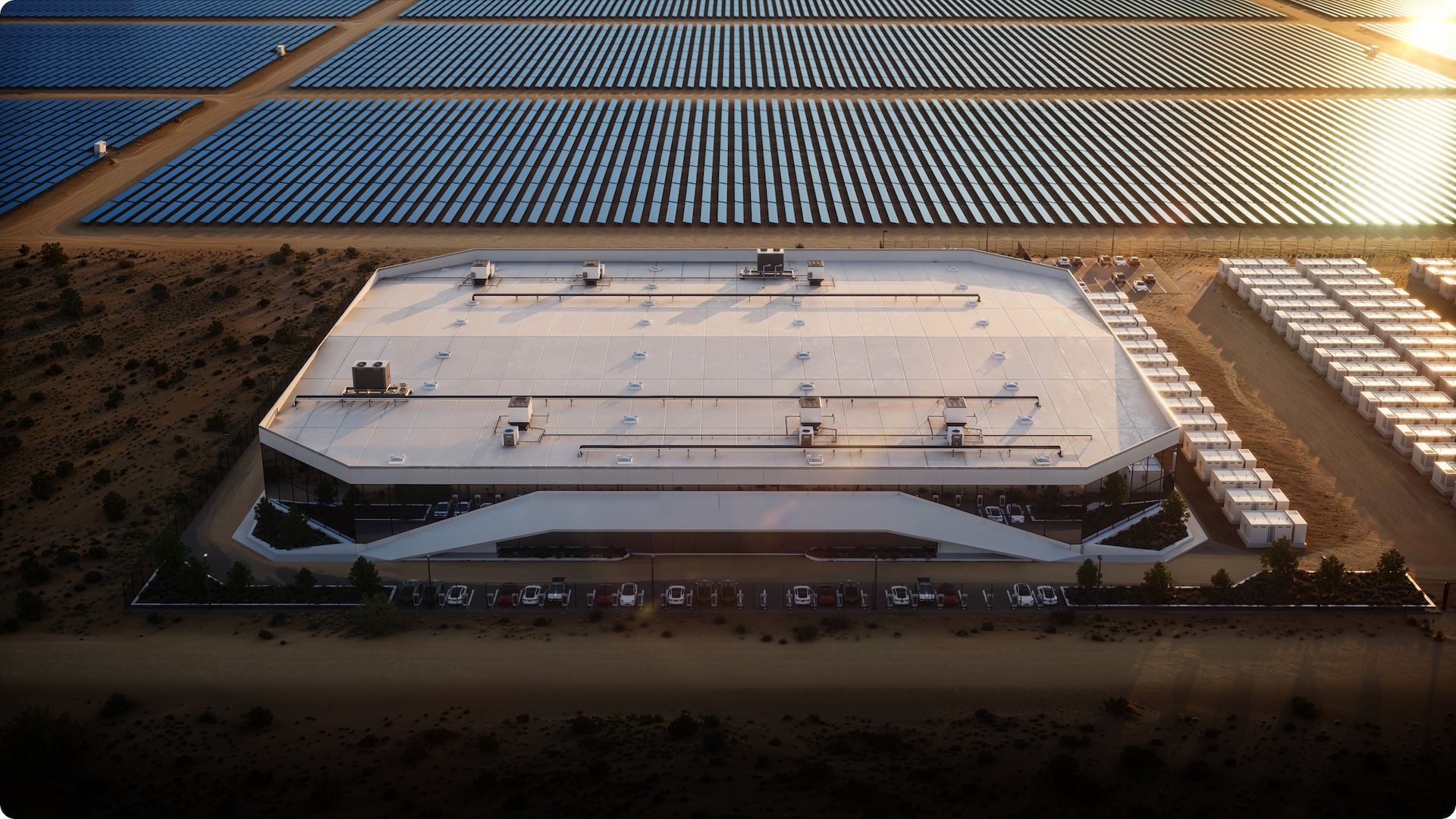
Tesla has unveiled Powercore, a solid-state medium voltage transformer that also handles the jobs of an inverter and a circuit breaker in a single unit. “Solid state medium voltage transformer, inverter and breaker – reliable, safe and secure,” the company’s Tesla Megapack account posted on X Tuesday, adding that the product is “Made in America” and will be “Operating 2027.” Elon Musk followed with his own post: “Advanced solid state transformers at scale from Tesla.”
Tesla rates Powercore at 7.4 MW, or 9 MVA, of continuous output at 34.5 kV AC, with grid-forming support for 10 MVA of peak power. Specs shared by Sawyer Merritt list a peak efficiency of 98.86 percent, a DC range of 800 to 2,000 volts and a built-in solid-state breaker that clears faults in about 100 microseconds. Tesla has not announced pricing, a factory location or a first customer.
The product fills a gap Tesla left open last year. When it introduced Megapack 3 and Megablock in September 2025, Tesla said it would build its own transformers, but shared almost nothing about them. Megablock groups four Megapack 3 units with a transformer and switchgear into a single medium voltage block, as Teslarati reported. Powercore appears to be that missing piece.
A typical battery or solar project today uses low voltage inverters to turn DC into AC, then a large oil-filled transformer to step that power up to grid voltage. A solid-state unit handles both steps with power electronics, which means less equipment, a smaller footprint and no flammable oil. Grid-forming capability lets it actively help hold voltage and frequency steady rather than simply following the grid.
Introducing Powercore Solid state medium voltage transformer, inverter and breaker – reliable, safe and secure 7.4 MW/9 MVA continuously at 34.5 kVac w/ grid-forming support for 10MVA of peak power Made in America. Operating 2027 https://t.co/sHxqnpWJrf — Tesla Megapack (@Tesla_Megapack) November 17, 2026
Timing is a big part of the pitch. Lead times for conventional transformers have stretched into years as AI data centers and renewable projects crowd utility interconnection queues. Tesla energy executive Max de Zegher pointed to the problem in a post Musk shared, noting that “transformers have barely changed since the 1890s: copper coils in a tank of oil,” while batteries, solar and compute all run on DC. Powercore, he wrote, delivers “one conversion and about half the losses.” Tesla has also said its Megapack supply for 2027 is nearly sold out.
Tesla deployed 13.7 GWh of energy storage in the third quarter, its second best quarter on record. On Tuesday, the company also said customer solar systems deployed by Tesla Energy now generate more than twice the electricity its global operations consume each year.
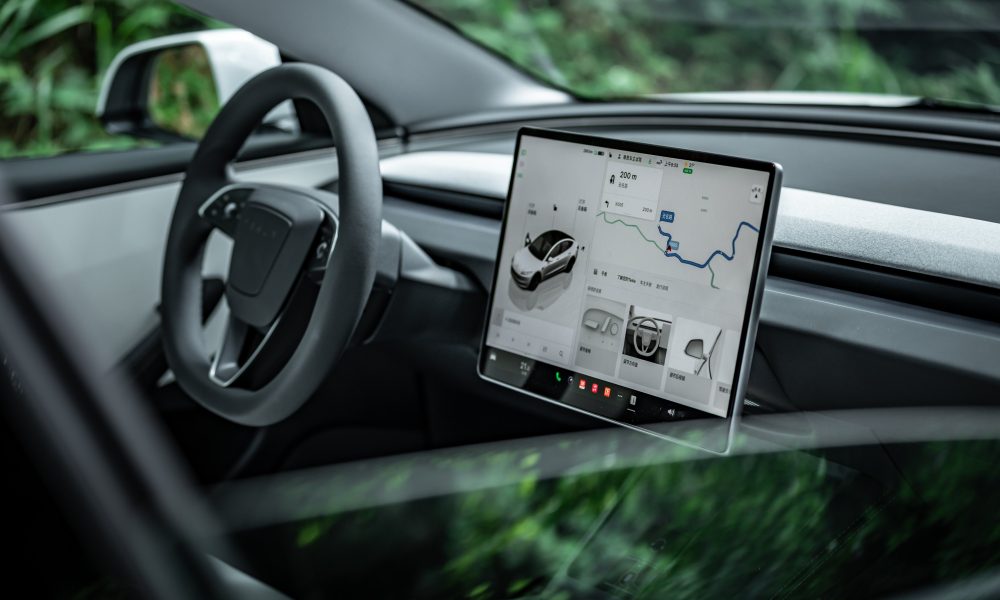
Tesla has officially changed the reference to its vehicles’ internal computers to “Super Intelligence,” or “SI,” reflecting a change that President Donald Trump made when he noted it would no longer be referred to as “Artificial Intelligence,” or “AI.”
Tesla hacker Green posted that a breakdown of Software Version 2026.44.1, noting that the in-car computer is now labeled as “SI Computer,” in system properties:
Took a peek at Tesla 2026.44.1 firmware
The huge change is that Tesla “upgraded” the “AI computer” inside to super intelligence, so it’s now referred to as “SI Computer” in car properties. 🙃
Other than this there are some minor adjustments:— green (@greentheonly) November 17, 2026
In September as he spoke at the UN’s General Assembly, President Trump said (via The Verge):
“The United States also totally rejects any attempt to construct a globalist scheme to control for the artificial intelligence being spoken of so much now. Here and after officially called “super intelligence,” changing the name, and that the use of the word artificial makes intelligence fake. It makes it sound fake, and it is not fake. It’s actually amazing. But we have to be careful. In fact, it is exactly the opposite of what it purports. From this point forward, all of the United States documents, and hopefully the world’s, will be changed to use the much more accurate term, super as opposed to artificial. So it’s super intelligence. In other words, welcome to the new world of super intelligence — SI. That’s, uh, let’s see if that does. It sounds much better. It is much better, and it’s much more accurate.”
Tesla and Musk have evidently chosen to adopt the change, as it now appears as an official reference to the company’s in-car computer.
Tesla has long used iterative software updates to refine Autopilot/FSD behavior, vehicle controls, and user interfaces. Renaming an internal identifier fits that pattern of quiet housekeeping far more closely than a sudden capability jump.
Owners on HW3 and later hardware continue to receive the same incremental FSD improvements seen in prior releases, as the property string does not alter compute allocation or model architecture.
Nevertheless, this won’t have any impact on the vehicles themselves, but it is more of an adoption of terms.

Tesla gears up Cybercab with Starlink for public debut, but with notable changes

Tesla’s Powercore could change how data centers get power


