Lifestyle
Tesla urged by local residents to build bike path near proposed Portland Store
Residents of South Waterfront in Portland, OR urge Tesla to complete a bike path adjoining its proposed Showroom and Service Center

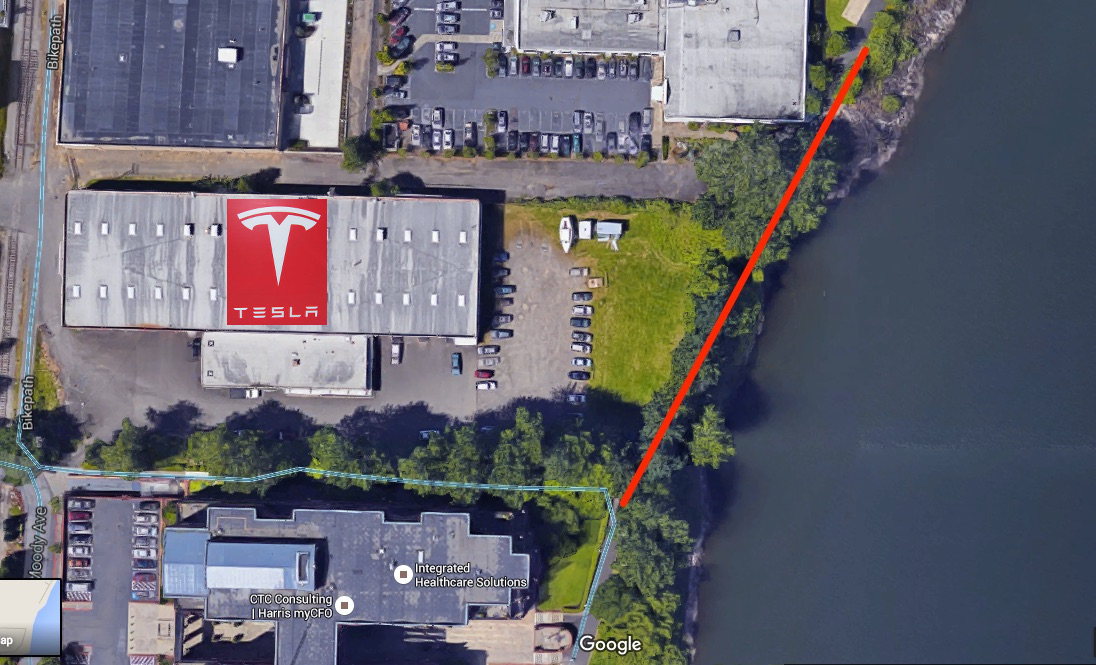
Tesla has reportedly volunteered to build a bike trail at the urge of local residents near the proposed site for its Showroom and Service Center in Portland, Oregon.
A riverfront area known as South Waterfront just 2 miles south of Downtown Portland has been the site for the city’s urban redevelopment project over the last decade. Nestled among luxury high-rise condominiums, sophisticated industrial-chic stores, and urban dining joints, is a relatively undeveloped area that was once the site for the now vacant 35,000 sqft. Benz Spring Company warehouse, a pre-WWII manufacturer of automotive leaf springs and coil springs.
According to NextPortland a site that keeps track of building developments in the city, Tesla has applied for a Design and Land Use review on its proposed Showroom and Service Center located at 4330 SW Macadam, the same location that houses the abandoned Benz Spring Co. warehouse.
![Flyer advertising the commercial lease of 4330 SW Macadam, future site of Tesla's Showroom / Service Center [Source: Canterbury Commercial LLC]](http://www.teslarati.com/wp-content/uploads/2016/06/Tesla-Store-location-4330-SW-Macadam-Portland.jpg)
Flyer advertising the commercial lease of 4330 SW Macadam, future site of Tesla’s Showroom / Service Center [Source: Canterbury Commercial LLC]
Photos from a flyer for a Canterbury Commercial real estate leasing company show the rectangular shaped building bisecting a popular riverfront walking and biking trail. Local residents of South Waterfront have urged Tesla to assist with building a bike path known as the Willamette Greenway Trail that would connect the existing path that ends directly south of the building with the area north of it. The request comes after budgetary constraints halted completion of the proposed project by the city’s Parks and Recreation division.
We’ve included a Google Street View image showing the current bike path coming to an end as it reaches the southern point of the proposed Tesla Showroom.
While Tesla’s Store seems generally welcomed based on positive comments from residents out of the South Waterfront Facebook Group, many locals have urged the company to consider completing “the gap” in the Willamette Greenway Trail or more commonly known as “the pathway to nowhere” by locals.
However, city zoning codes in South Waterfront exempt projects having to connect the Greenway Trail gap on their property unless they’re adding at least 50,000 square feet of new floor space. In essence Tesla was not required to build the bike path since their proposal for the store (see official filing here) was for a remodel of the existing warehouse which registers under 50,000 square feet.
According to BikePortland.org, South Waterfront local resident Bob Cronk took to the community’s Facebook group asking residents to write the city’s Land Use Services division and urge Tesla to “complete their share of the Willamette Greenway Trail!”
Bob writes on May 5 via Facebook’s South Waterfront – Portland Oregon group:
“Tesla is remodeling a warehouse in South Waterfront. Their plans do not include completing their portion of the river path also known as the Willamette Greenway Trail. If you would like to see this trail completed, email Jeff Mitchem at Land Use Services at jeffrey.mitchem@portlandoregon.gov (case file number LU 16-116605 DZ) by May 20th and let him know you want this gap in the trail completed! Each new project in the neighborhood needs to fill in their portion so we will someday have a continuous trail along the river.”
Well, Tesla obliged and volunteered to complete the long overdue bridging of the Greenway Trail gap. Last week, Bob took to Facebook again to announce that Tesla had agreed to complete the segment of the Greenway Trail adjoining their upcoming store.
“Good news, Tesla has agreed to pave the path on their property!”
In a city that’s stereotypically known for being green and flat-out hip, walking, biking, and soon driving a Tesla will hopefully be a common place item. We leave you with a closing comment from a happy reader of BikePortland.org. “Grandpa” writes:
“We don’t yet know why Tesla decided to build the trail …
Perhaps they did it because it is the right thing to do, and they are a company who’s business model is to do the right thing. Their product line would support that supposition. FWIW I emailed Tesla that I had a case of beer riding on their putting the trail section in. That may have been the deciding factor.”
And that’s why Portland is one of the hippest cities on earth.


Lifestyle
California hits Tesla Cybercab and Robotaxi driverless cars with new law
California just gave police power to ticket driverless cars, including Tesla’s Cybercab fleet.
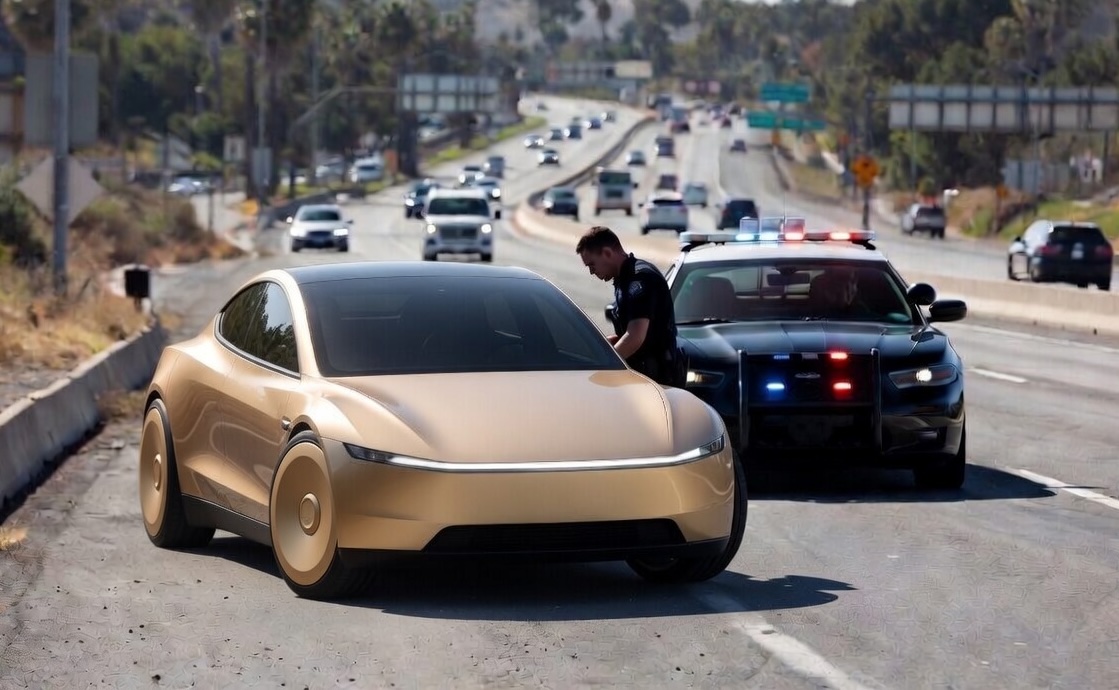
California DMV formally adopted new rules on April 29, 2026 that allow law enforcement to issue “notices of noncompliance”, or in other words ticket autonomous vehicle companies when their cars commit moving violations. The rules take effect July 1, 2026 and officially closes a regulatory gap that previously let driverless cars operate on public roads with nearly no traffic enforcement consequences.
Until now, state traffic laws only applied to human “drivers,” which meant that when no person was behind the wheel, police had no mechanism to issue a ticket. Officers were limited to citing driverless vehicles for parking violations only. A well-known example came in September 2025, when a San Bruno officer watched a Waymo robotaxi execute an illegal U-turn and could do nothing but notify the company.
Under the new framework, when an officer observes a violation, the autonomous vehicle company is effectively treated as the driver. Companies must report each incident to the DMV within 72 hours, or 24 hours if a collision is involved. Repeated violations can result in fleet size restrictions, operational suspensions, or full permit revocation. Local officials also gained new authority to geofence driverless vehicles out of active emergency zones within two minutes and require a live emergency response line answered within 30 seconds.
Tesla Cybercab ramps Robotaxi public street testing as vehicle enters mass production queue
California’s new enforcement rules arrive at a pivotal moment for Tesla. The company is ramping Cybercab production at Giga Texas toward hundreds of units per week, targeting at least 2 million units annually at full capacity, while simultaneously pushing to expand its Robotaxi service to dozens of U.S. cities by end of 2026. Unsupervised FSD for consumer vehicles is currently targeted for Q4 2026, and when it arrives, Tesla’s fleet may not have a human to absorb legal accountability, under the July 1 rules.
Tesla has confirmed plans to expand its Robotaxi service to seven new cities in the first half of 2026, including Dallas, Houston, Phoenix, Miami, Orlando, Tampa, and Las Vegas, with the service already running without safety drivers in Austin. Musk has said he expects robotaxis to cover between a quarter and half of the United States by end of year.
Elon Musk
The FCC just said ‘No’ to SpaceX for now
SpaceX is fighting the FCC for spectrum that could put satellites inside every smartphone.
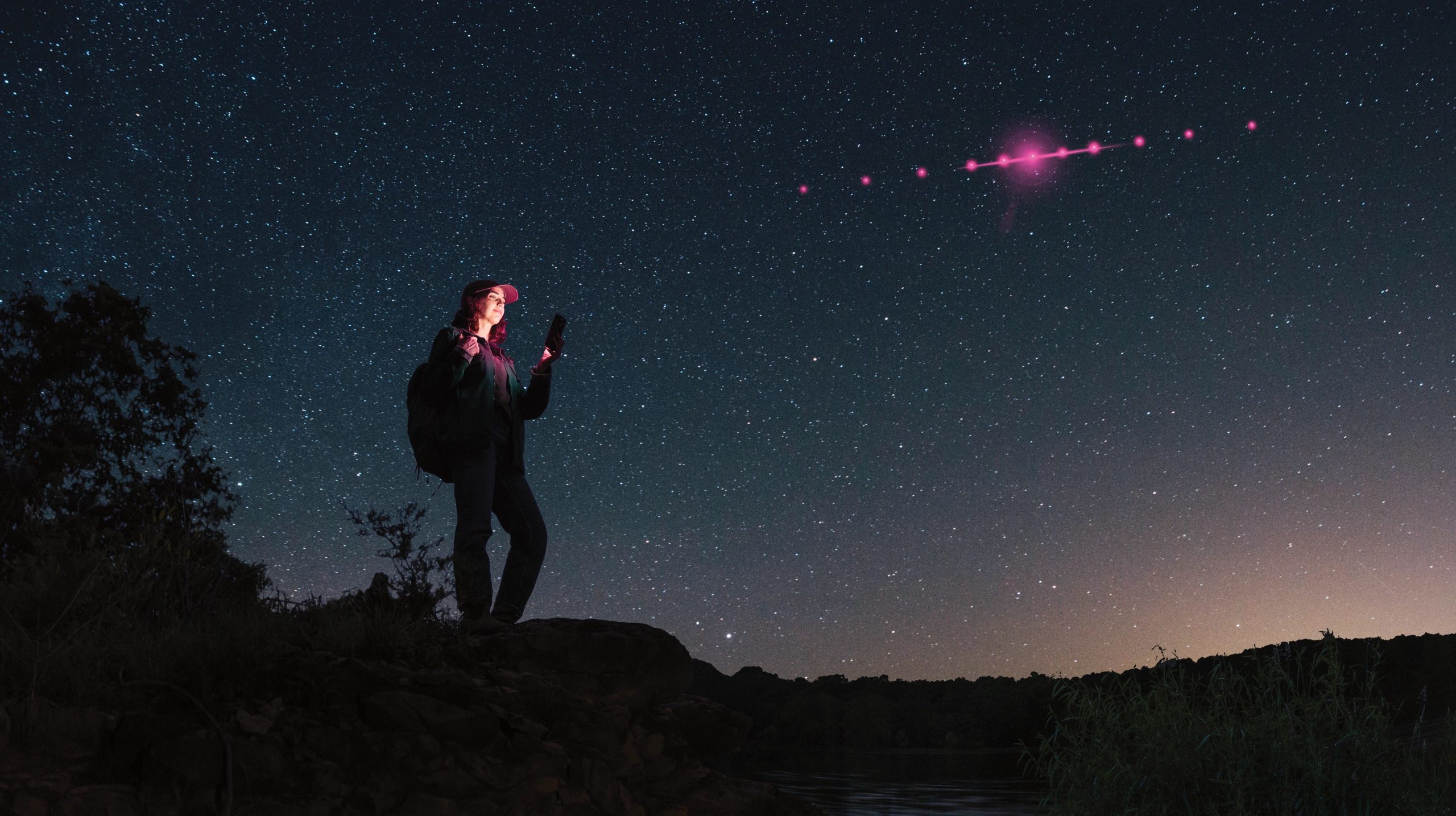
SpaceX was dealt a new setback on April 23, 2006 by the Federal Communications Commission (FCC) after the U.S. government agency dismissed the company’s petition to access a Mobile Satellite Service spectrum that would allow direct-to-device (D2D) capabilities.
The FCC regulates communications by radio, television, wire, and cable, which also includes regulating D2D technology that lets your existing smartphone connect directly to a satellite orbiting Earth, the same way it would connect to a cell tower.
Elon Musk’s SpaceX has been building toward this through its Starlink Mobile service, formerly called Direct-to-Cell, in partnership with T-Mobile. The service officially launched on July 23, 2025, starting with messaging and expanding to broadband data in October of that year.
T-Mobile Starlink Pricing Announced – Early Adopters Get Exclusive Discount
It’s worth noting that SpaceX is not alone in this race. AT&T and Verizon have their own satellite texting deals with AST SpaceMobile, while Verizon separately offers free satellite texting through Skylo on newer phones.
The regulatory foundation for all of this dates to March 14, 2024, when the FCC adopted the world’s first framework for what it called Supplemental Coverage from Space, allowing satellite operators to lease spectrum from terrestrial carriers and fill gaps in their coverage. On November 26, 2024, the FCC granted SpaceX the first-ever authorization under that framework, approving its partnership with T-Mobile to provide service in specific frequency bands. SpaceX then went further, completing a roughly $17 billion acquisition of wireless spectrum from EchoStar, which gave it the ability to negotiate with global carriers more independently.
Starlink’s EchoStar spectrum deal could bring 5G coverage anywhere
This recent ruling by the FCC blocked SpaceX from going further, protecting incumbent spectrum holders like Globalstar and Iridium. But the market momentum is already in motion. As Teslarati reported, SpaceX is targeting peak speeds of 150 Mbps per user for its next generation Direct-to-Cell service, compared to roughly 4 Mbps today, which would bring satellite connectivity close to standard carrier performance.
With a reported IPO targeting a $1.75 trillion valuation on the horizon, each spectrum fight, carrier deal, and regulatory win or loss now carries weight beyond just connectivity. SpaceX is quietly becoming the infrastructure layer underneath the phones of millions of people, and the FCC’s next move will help determine how much further that reach extends.
FCC Satellite Rule Makings can be found here.
Elon Musk
Elon Musk talks Tesla Roadster’s future
Elon Musk confirmed the Roadster as Tesla’s last manually driven car, with a debut coming soon.
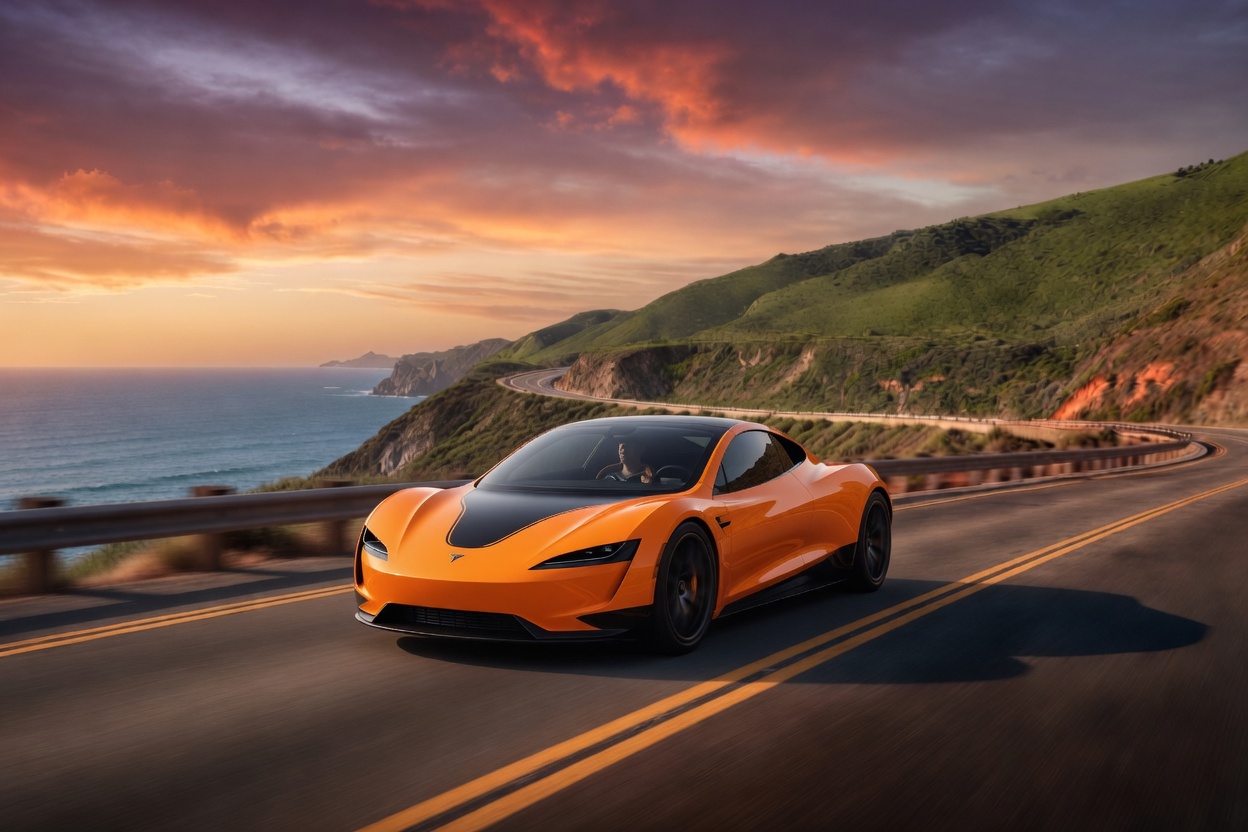
During Tesla’s Q1 2026 earnings call on April 22, Elon Musk made a brief but notable comment about the long-awaited next generation Roadster while describing Tesla’s future vehicle lineup. “Long term, the only manually driven car will be the new Tesla Roadster,” he said. “Speaking of which, we may be able to debut that in a month or so. It requires a lot of testing and validation before we can actually have a demo and not have something go wrong with the demo.”
That single statement is the entire Roadster update from yesterday’s call, and while it represents another timeline shift, it comes as no surprise with Tesla heads-down-at-work on the mass rollout of its Robotaxi service across US cities, and the industrial scale production of the humanoid Optimus.
The fact that Musk specifically framed the Roadster as the last manually driven Tesla is significant on its own. As the rest of the lineup moves toward full autonomy, the Roadster becomes something rare in the Tesla-sphere by keeping the driver in control. Driving enthusiasts who buy a $200,000 supercar are not doing so to be passengers. They want the physical connection to the road, the feel of acceleration under their own input, and the experience of controlling something with that level of performance. FSD, however capable it becomes, removes that entirely. The Roadster signals that Tesla understands this distinction and is building a car specifically for the people who consider driving itself the point.
Tesla isn’t joking about building Optimus at an industrial scale: Here we go
The specs for the Roadster Musk has teased over the years are genuinely unlike anything in production. The base model targets 0 to 60 mph in 1.9 seconds, a top speed above 250 mph, and up to 620 miles of range from a 200 kWh battery. The optional SpaceX package takes it further, rumored to add roughly ten cold gas thrusters operating at 10,000 psi, borrowed directly from Falcon 9 rocket technology. With thrusters, Musk has claimed 0 to 60 mph in as little as 1.1 seconds. In a 2021 Joe Rogan interview he went further, stating “I want it to hover. We got to figure out how to make it hover without killing people.” Tesla filed a patent for ground effect technology in August 2025, suggesting the hover concept has not been abandoned. The starting price remains $200,000, with the Founders Series requiring a $250,000 full deposit. Some reservation holders placed those deposits in 2017 and are approaching a full decade of waiting.
With production now targeted for 2027 or 2028 at the earliest, the Roadster remains Tesla’s most audacious promise and its longest-running delay. But if what Musk is testing lives up to even half of what he has described, the demo alone should be worth waiting for.
Elon Musk says the Tesla Roadster unveiling could be done “maybe in a month or so.”
He said it should be an extraordinary unveiling event. pic.twitter.com/6V9P7zmvEm
— TESLARATI (@Teslarati) April 22, 2026

California hits Tesla Cybercab and Robotaxi driverless cars with new law

Tesla Model X shocks everyone by crushing every other used car in America


