News
Tesla China breaks 8-month slump by selling 71,599 vehicles wholesale in June
Tesla China’s June numbers were released by the China Passenger Car Association (CPCA) on Tuesday.

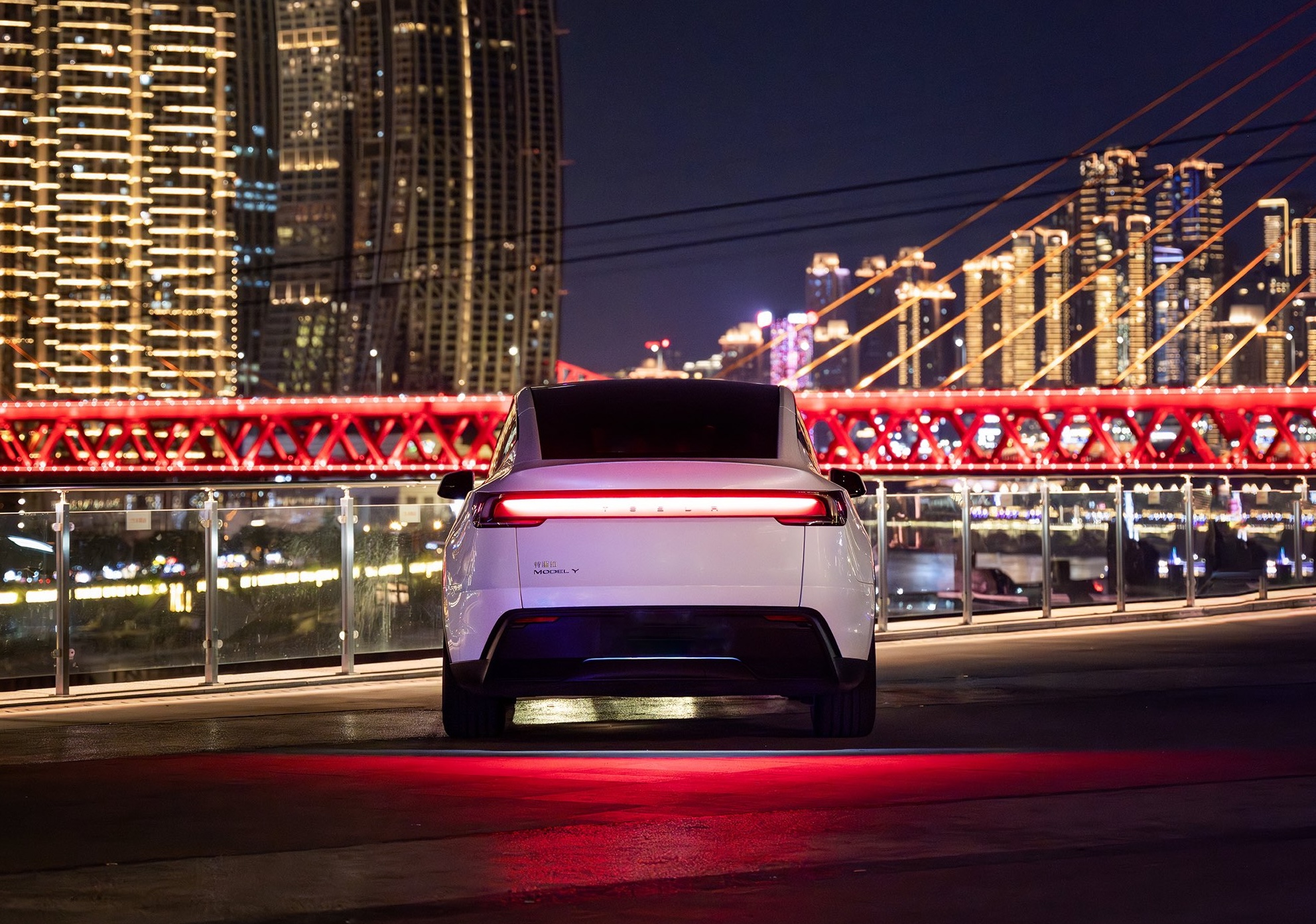
Tesla China was able to sell 71,599 vehicles wholesale in June 2025, reversing eight consecutive months of year-over-year declines. The figure marks a 0.83% increase from the 71,599 vehicles sold wholesale in June 2024 and a 16.1% jump compared to the 61,662 vehicles sold wholesale in May.
Tesla China’s June numbers were released by the China Passenger Car Association (CPCA) on Tuesday.
Tesla China’s June results in focus
Tesla produces both the Model 3 and Model Y at its Shanghai Gigafactory, which serves as the company’s primary vehicle export hub. Earlier this year, Tesla initiated a changeover for its best-selling vehicle, the Model Y, resulting in a drop in vehicle sales during the first and second quarters.
Tesla’s second-quarter China sales totaled 191,720 units including exports. While these numbers represent a 6.8% year-over-year decline for Tesla China, Q2 did show sequential improvement, rising about 11% from Q1 2025, as noted in a CNEV Post report.
For the first half of the year, Tesla sold 364,474 vehicles wholesale. This represents a 14.6% drop compared to the 426,623 units sold wholesale in the first half of 2024.
China’s competitive local EV market
Tesla’s position in China is notable, especially as the new Model Y is gaining ground in the country’s BEV segment. That being said, Tesla is also facing competition from impressive local brands such as Xiaomi, whose new YU7 electric SUV is larger and more affordable than the Model Y.
The momentum of the YU7 is impressive, as the vehicle was able to secure 200,000 firm orders within three minutes and over 240,000 locked-in orders within 18 hours. Xiaomi’s previous model, the SU7 electric sedan, which is aimed at the Tesla Model 3, also remains popular, with June deliveries surpassing 25,000 units for the ninth straight month.
While China’s EV market is getting more competitive, Tesla’s new Model Y is also ramping its production and deliveries. Needless to say, Tesla China’s results for the remaining two quarters of 2025 will be very interesting.


Elon Musk
SpaceX to launch military missile tracking satellites through new Space Force contract
SpaceX wins a $178.5M Space Force contract to launch missile tracking satellites starting in 2027.

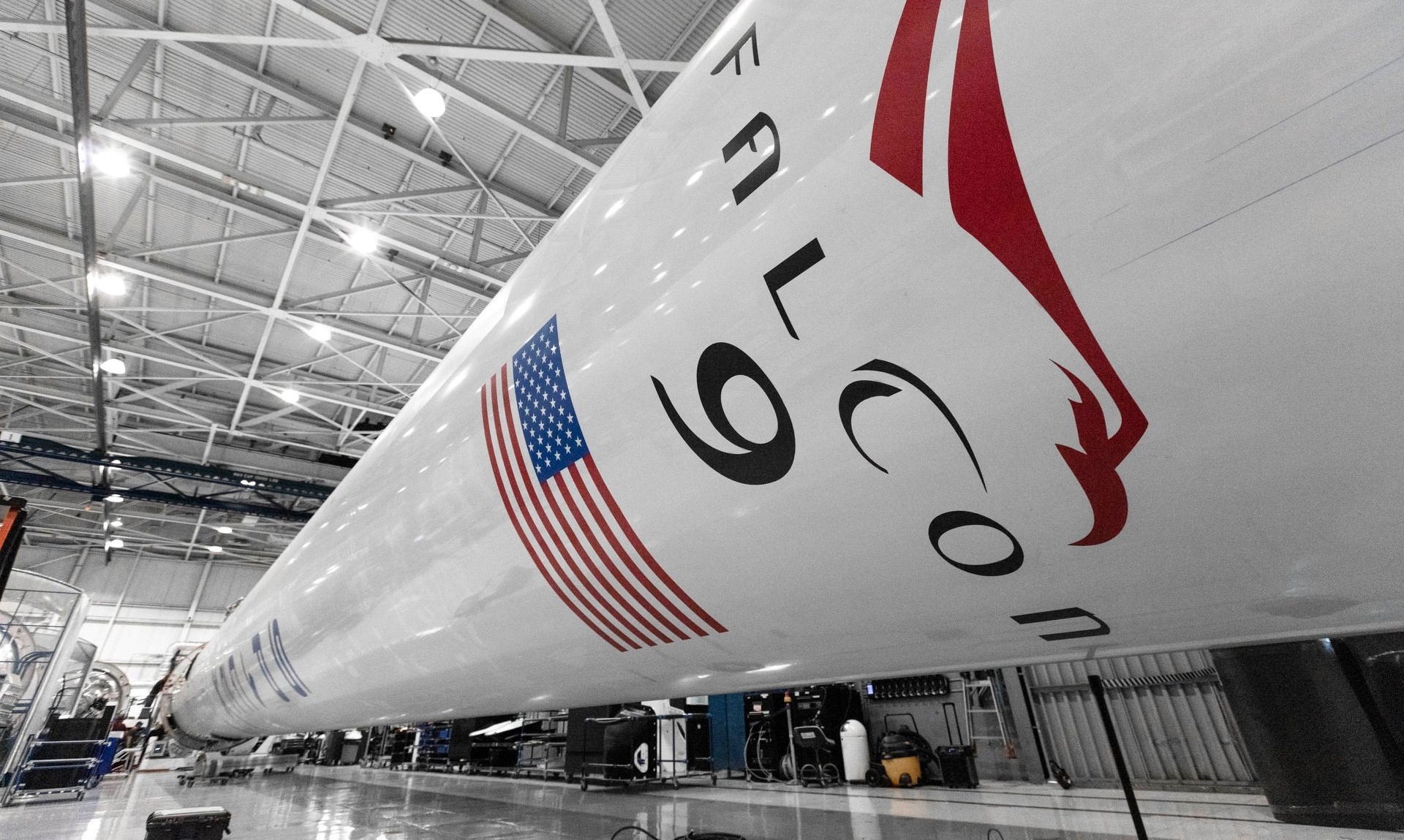
The U.S. Space Force awarded SpaceX a $178.5 million task order on April 1, 2026 to launch missile tracking satellites for the Space Development Agency. The contract, designated SDA-4, covers two Falcon 9 launches beginning in Q3 2027, one from Cape Canaveral Space Force Station in Florida and one from Vandenberg Space Force Base in California. The satellites, built by Sierra Space, are designed to bolster the nation’s ability to detect and track missile threats from orbit.
The award falls under the National Security Space Launch Phase 3 Lane 1 program, which Space Force uses to move payloads to orbit on faster timelines and at more competitive prices. “Our Lane 1 contract affords us the flexibility to deliver satellites for our customers, like SDA, more easily and faster than ever before to all the orbits our satellites need to reach,” said Col. Matt Flahive, SSC’s system program director for Launch Acquisition, in the official press release.
SpaceX is quietly becoming the U.S. Military’s only reliable rocket
The SDA-4 contract is the latest in a long string of national security wins for SpaceX. As Teslarati reported last month, the Space Force recently shifted a GPS III satellite launch from ULA’s Vulcan rocket to SpaceX’s Falcon 9 after a significant Vulcan booster anomaly grounded ULA’s military missions indefinitely. That move made it four consecutive GPS III satellites transferred to SpaceX after contracts were originally awarded to its competitor.
This didn’t come without a fight and dates back years. SpaceX originally had to sue the Air Force in 2014 for the right to compete for national security launches, at a time when United Launch Alliance held a near monopoly on the market. Since then, the company has steadily displaced ULA as the dominant provider, and last year the Space Force confirmed SpaceX would handle approximately 60 percent of all Phase 3 launches through 2032, worth close to $6 billion.
With missile defense satellites now part of its launch manifest alongside GPS, communications, and reconnaissance payloads, SpaceX is giving hungry investors something to chew on before its imminent IPO.
Elon Musk
Tesla’s Q1 delivery figures show Elon Musk was right
On the surface, the numbers reflect a mature EV market facing competition, softening demand, and the loss of certain incentives. Yet they also quietly validate a prediction Elon Musk has repeated for years: Tesla’s traditional auto business is becoming far less central to the company’s future.


Tesla reported its Q1 delivery figures on Thursday, and the figures — solid but unspectacular — show that CEO Elon Musk was right about what the company’s most important production and division would be.
We are seeing that shift occur in real time.
Tesla delivered 358,023 vehicles in the first quarter of 2026, according to the company’s official report released April 2.
The figure represents modest year-over-year growth of roughly 6 percent from Q1 2025’s 336,681 deliveries but a sharp sequential drop from Q4 2025’s 418,227. Production reached 408,386 vehicles, while energy storage deployments hit 8.8 GWh.
On the surface, the numbers reflect a mature EV market facing competition, softening demand, and the loss of certain incentives. Yet they also quietly validate a prediction Elon Musk has repeated for years: Tesla’s traditional auto business is becoming far less central to the company’s future.
Musk has long argued that vehicles alone will not define Tesla’s value.
Optimus Will Be Tesla’s Big Thing
In September 2025, Musk stated bluntly on X that “~80% of Tesla’s value will be Optimus,” the company’s humanoid robot.
He has described Optimus as potentially “more significant than the vehicle business over time.” Those comments were not abstract futurism. In January 2026, during the Q4 2025 earnings call, Musk announced the end of Model S and X production, framing it as an “honorable discharge,” he called it.
Those are the biggest factors.
~80% of Tesla’s value will be Optimus.
— Elon Musk (@elonmusk) September 1, 2025
The Fremont factory space, once dedicated to those flagship sedans, is being converted into an Optimus manufacturing line, with a long-term target of one million robots per year from that single facility alone.
The Q1 2026 numbers arrive at precisely the moment this strategic pivot is accelerating. Model 3 and Y deliveries totaled 341,893 units, while “other models” (including Cybertruck, Semi, and the final wave of S/X) added 16,130.
Growth is no longer explosive because Tesla is no longer chasing volume at all costs. Instead, the company is reallocating capital and factory floor space toward autonomy, energy storage, and robotics, businesses Musk believes will command far higher margins and enterprise value than incremental car sales.
Delivery Hits and Misses are Becoming Less Important
Wall Street’s pre-release consensus had pegged deliveries near 365,000. Coming in below that estimate might have rattled investors focused solely on automotive metrics. Yet Musk’s thesis has never been about maximizing quarterly vehicle shipments.
Tesla, he has insisted, “has never been valued strictly as a car company.”
The modest Q1 auto performance, paired with the deliberate wind-down of legacy programs and the ramp of Optimus, underscores that point. While EV demand stabilizes, Tesla is building the infrastructure for Robotaxis and humanoid robots that could dwarf today’s car business.
The future is here, and it is happening. It’s funny to think about how quickly Tesla was able to disrupt the traditional automotive business and force many car companies to show their hand. But just as fast as Tesla disrupted that, it is now moving to disrupt its own operation.
Cars, once the only recognizable and widely-known division of Tesla, is now becoming a background effort, slowly being overtaken by the company’s ambitions to dominate AI, autonomy, and robotics for years to come.
Critics may still view the shift as risky or premature. But the Q1 figures, solid but unspectacular in the auto segment, illustrate exactly what Musk has been signaling: the era when Tesla’s valuation rose and fell with every Model Y delivery is ending.
The company’s long-term bet is on AI-driven products that turn vehicles into high-margin robotaxis and factories into robot foundries. Thursday’s delivery report did not just meet the market’s tempered expectations; it proved Elon Musk was right all along.
The car business, once everything, is quietly becoming an important piece of a much larger puzzle.
Investor's Corner
Tesla reports Q1 deliveries, missing expectations slightly
The figure, however, fell short of Wall Street’s consensus estimate of 365,645 units, reflecting ongoing headwinds in the global EV market.
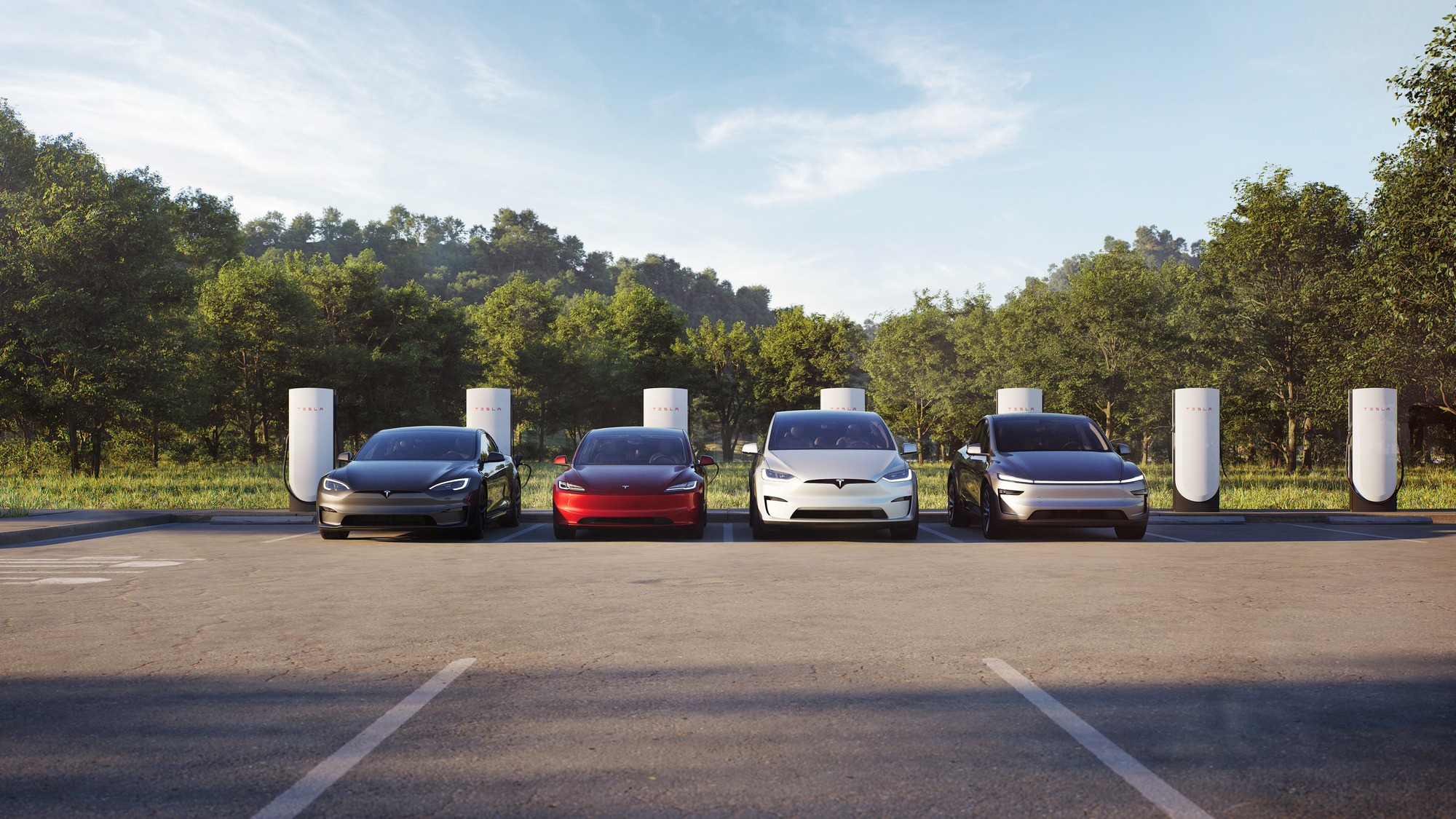
Tesla reported deliveries for the first quarter of 2026 today, missing expectations set by Wall Street analysts slightly as the company aims to have a massive year in terms of sales, along with other projects.
Tesla delivered 358,023 vehicles in the first quarter of 2026, marking a 6.3 percent increase from 336,681 vehicles in Q1 2025.
The figure, however, fell short of Wall Street’s consensus estimate of 365,645 units, reflecting ongoing headwinds in the global EV market. Production reached approximately 362,000 vehicles, with Model 3 and Model Y accounting for the vast majority. The results come as Tesla navigates softening demand, intensifying competition in China and Europe, and the expiration of key U.S. federal tax incentives.
🚨 BREAKING: Tesla delivered 358,023 vehicles in Q1 2026
Tesla also reported record energy deployments of 8.8 GWh
Wall Street had delivery consensus estimates of 365,645 pic.twitter.com/EVNAu5L3UT
— TESLARATI (@Teslarati) April 2, 2026
Energy storage deployments provided a bright spot, hitting a record 8.8 GWh in Q1. This underscores the accelerating momentum in Tesla’s energy segment, which has become a critical growth driver even as automotive volumes stabilize.
Year-over-year, the energy business continues to outpace vehicle sales, with analysts noting strong backlog demand for Megapack systems amid rising grid-scale needs for renewables and AI data centers.
Looking ahead, analysts project full-year 2026 vehicle deliveries in the range of 1.69 million units—a modest 3-5% rise from roughly 1.64 million in 2025.
Growth is expected to accelerate in the second half as production ramps and new incentives emerge in select markets. However, risks remain: persistent high interest rates, price competition from legacy automakers and Chinese EV makers, and potential margin pressure could cap upside.
Tesla has not issued official full-year guidance, but executives have signaled confidence in sequential quarterly improvements driven by cost reductions and refreshed lineups.
By the end of 2026, Tesla plans several major product launches to reignite momentum. The refreshed Model Y, including a new 7-seater variant already rolling out in select markets, is expected to boost family-oriented sales with updated styling, efficiency gains, and interior enhancements.
Autonomous ambitions remain central to Tesla’s mission, and that’s where the vast majority of the attention has been put. Volume production of the Cybercab (Robotaxi) is targeted to begin ramping in 2026, potentially unlocking new revenue streams through unsupervised Full Self-Driving (FSD) deployment.
A next-generation affordable EV platform, possibly under $30,000, is also in advanced planning stages for 2026 or 2027 introduction. On the energy front, the Megapack 3 and larger Megablock systems will drive further deployment scale.
While Q1 highlights transitional challenges in autos, Tesla’s diversified roadmap, spanning refreshed consumer vehicles, commercial trucks, Robotaxis, and explosive energy growth, positions the company for a stronger second half and beyond. Investors will watch Q2 closely for signs of sustained recovery, especially with new vehicles potentially on the horizon.

SpaceX to launch military missile tracking satellites through new Space Force contract

Tesla’s Q1 delivery figures show Elon Musk was right

Tesla reports Q1 deliveries, missing expectations slightly

Elon Musk says Tesla is developing a new vehicle: ‘Way cooler than a minivan’

Elon Musk launches TERAFAB: The $25B Tesla-SpaceXAI chip factory that will rewire the AI industry


