News
Tesla confirms Robotaxi expansion plans with new cities and aggressive timeline
Tesla plans to launch in Dallas, Houston, Phoenix, Miami, Orlando, Tampa, and Las Vegas. It lists the Bay Area as “Safety Driver,” and Austin as “Ramping Unsupervised.”

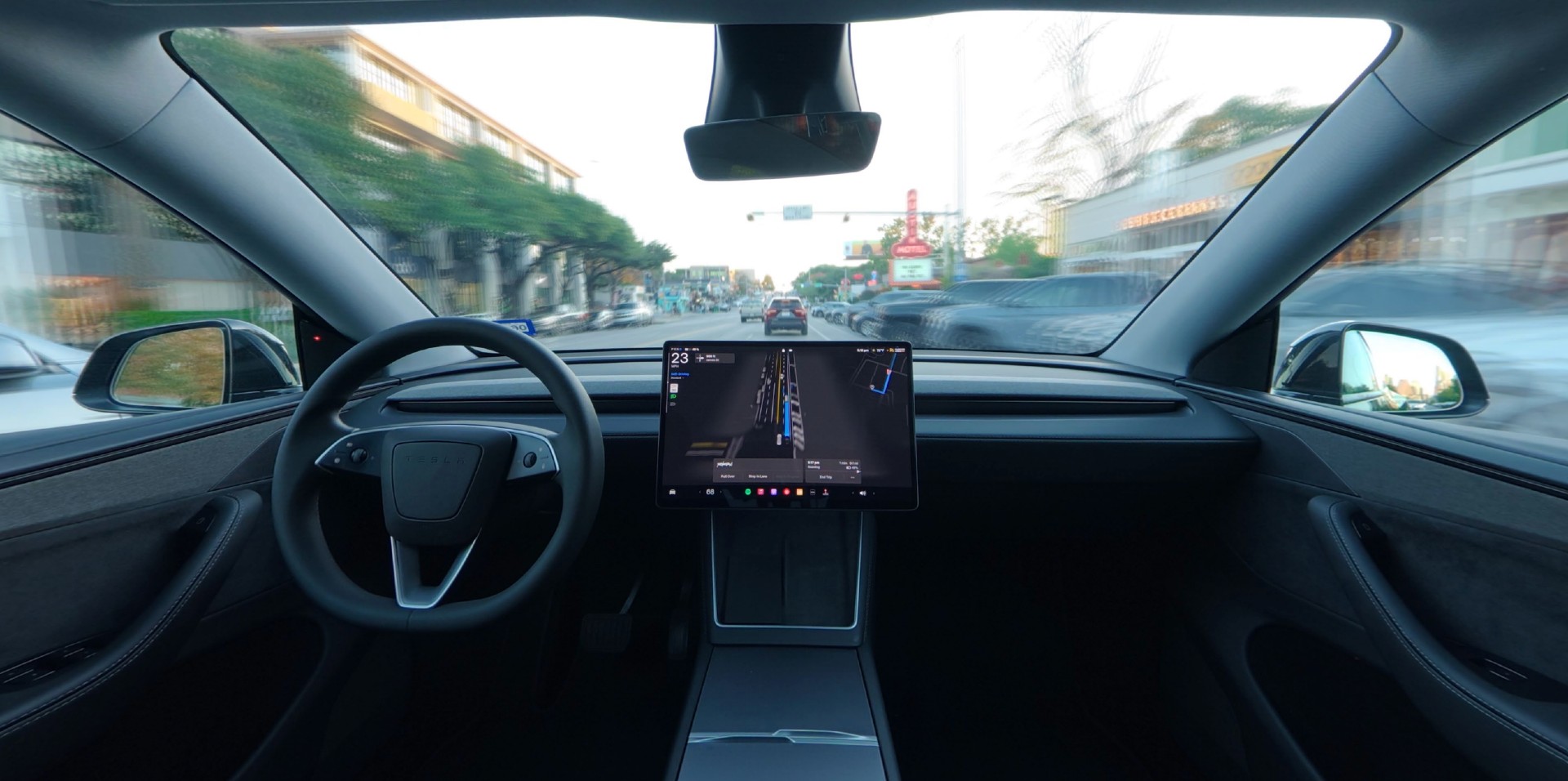
Tesla confirmed its intentions to expand the Robotaxi program in the United States with an aggressive timeline that aims to send the ride-hailing service to several large cities very soon.
The Robotaxi program is currently active in Austin, Texas, and the California Bay Area, but Tesla has received some approvals for testing in other areas of the U.S., although it has not launched in those areas quite yet.
However, the time is coming.
During Tesla’s Q4 Earnings Call last night, the company confirmed that it plans to expand the Robotaxi program aggressively, hoping to launch in seven new cities in the first half of the year.
Tesla plans to launch in Dallas, Houston, Phoenix, Miami, Orlando, Tampa, and Las Vegas. It lists the Bay Area as “Safety Driver,” and Austin as “Ramping Unsupervised.”
These details were released in the Earnings Shareholder Deck, which is published shortly before the Earnings Call:
🚨 BREAKING: Tesla plans to launch its Robotaxi service in Dallas, Houston, Phoenix, Miami, Orlando, Tampa, and Las Vegas in the first half of this year pic.twitter.com/aTnruz818v
— TESLARATI (@Teslarati) January 28, 2026
Late last year, Tesla revealed it had planned to launch Robotaxi in Las Vegas, Phoenix, Dallas, and Houston, but Tampa and Orlando were just added to the plans, signaling an even more aggressive expansion than originally planned.
Tesla feels extremely confident in its Robotaxi program, and that has been reiterated many times.
Although skeptics still remain hesitant to believe the prowess Tesla has seemingly proven in its development of an autonomous driving suite, the company has been operating a successful program in Austin and the Bay Area for months.
In fact, it announced it achieved nearly 700,000 paid Robotaxi miles since launching Robotaxi last June.
🚨 Tesla has achieved nearly 700,000 paid Robotaxi miles since launching in June of last year pic.twitter.com/E8ldSW36La
— TESLARATI (@Teslarati) January 28, 2026
With the expansion, Tesla will be able to penetrate more of the ride-sharing market, disrupting the human-operated platforms like Uber and Lyft, which are usually more expensive and are dependent on availability.
Tesla launched driverless rides in Austin last week, but they’ve been few and far between, as the company is certainly easing into the program with a very cautiously optimistic attitude, aiming to prioritize safety.


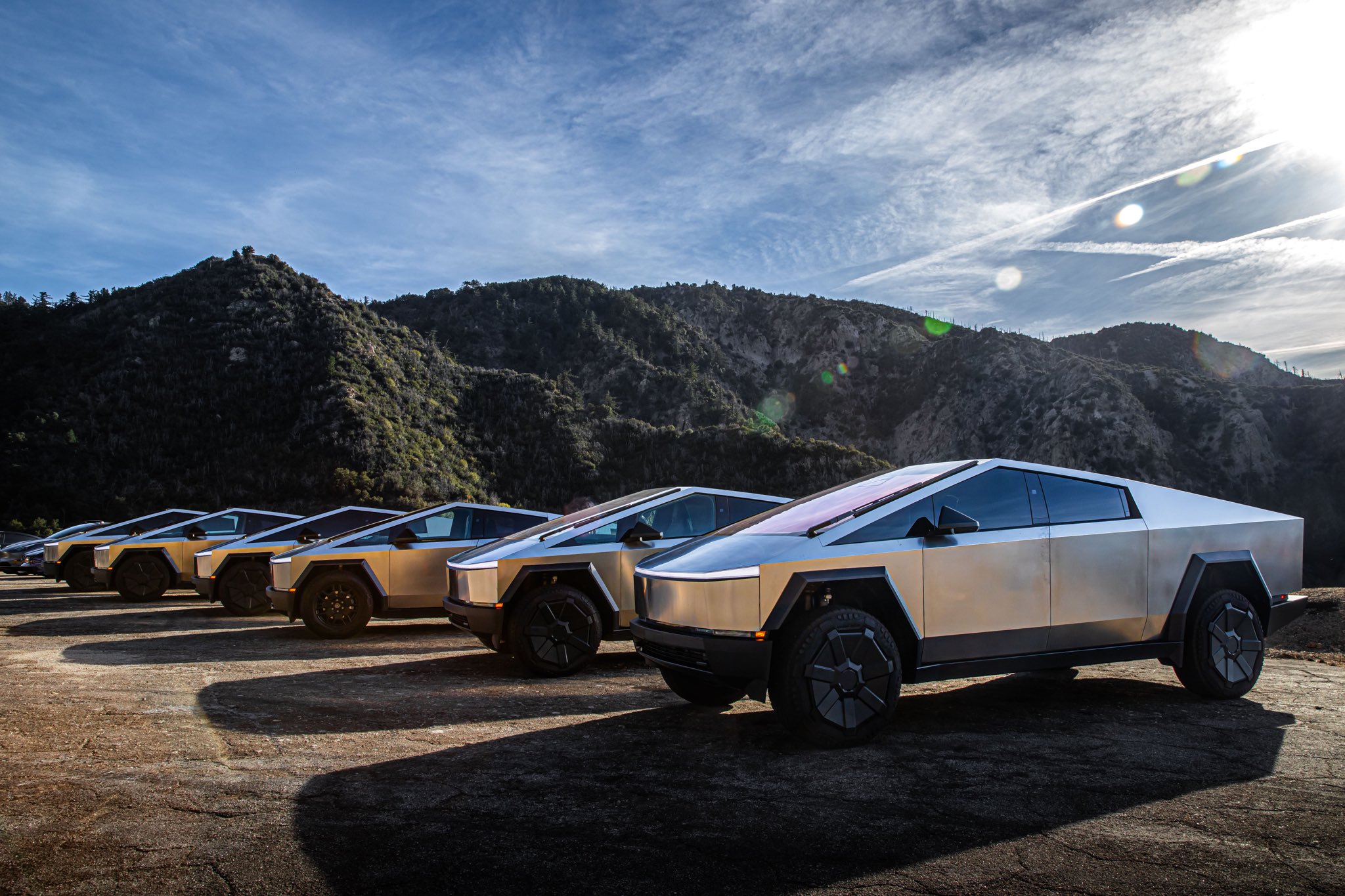
Tesla CEO Elon Musk announced that the company will extend Cybertruck production slightly to handle its extensive order backlog.
On Wednesday, Musk announced that “In order to work through more of the Cybertruck order backlog, production will be extended through the end of summer 2027.”
In order to work through more of the Cybertruck order backlog, production will be extended through the end of summer 2027
— Elon Musk (@elonmusk) November 11, 2026
Tesla has already attempted to simplify its last months of production for the Cybertruck by eliminating several trim levels and only offering the Cyberbeast, the most expensive trim that starts at $109,990. The other two trim levels, the Cybertruck All-Wheel-Drive and Premium All-Wheel-Drive have both been discontinued.
There has been plenty of backlash against Tesla’s decision to ax the Cybertruck, but the company’s forecast prioritizes Cybercab and autonomy. Factory space at Gigafactory Texas that is not necessary is now being set aside for the Cybercab as the company truly embraces its “transportation-as-a-service” model.
There is still a slim chance the Cybertruck survives. Last evening, Tesla upfitter Unplugged Performance offered to take the Cybertruck line off of Tesla’s hands and continue building it, along with a CyberSUV.
Nevertheless, Tesla seems to be ending the Cybertruck on its terms after what will be a three-and-a-half-year run. It still does not really feel quite real; I think many of us thought the Cybertruck would be around for years to come.
Musk added more detail, stating that while it was not the smartest move, “there must be some room in this world for sentimentality or what’s the point?”
This is not the smartest move from a profit-maximizing standpoint btw, but there must be some room in this world for sentimentality or what’s the point?
— Elon Musk (@elonmusk) November 11, 2026
Other EV pickups on the market have experienced a similar fate.
The Ford F-150 Lightning was axed by the Detroit company due to the continued losses the company took from sales. That truck was never profitable, and Ford is still taking a quarterly loss in its EV side. However, things are moving along as it has plans for a mass market EV pickup, which will likely gather some substantial demand if Ford can get it just right.
Perhaps another extension or even a total change of heart might come. Only Musk knows.
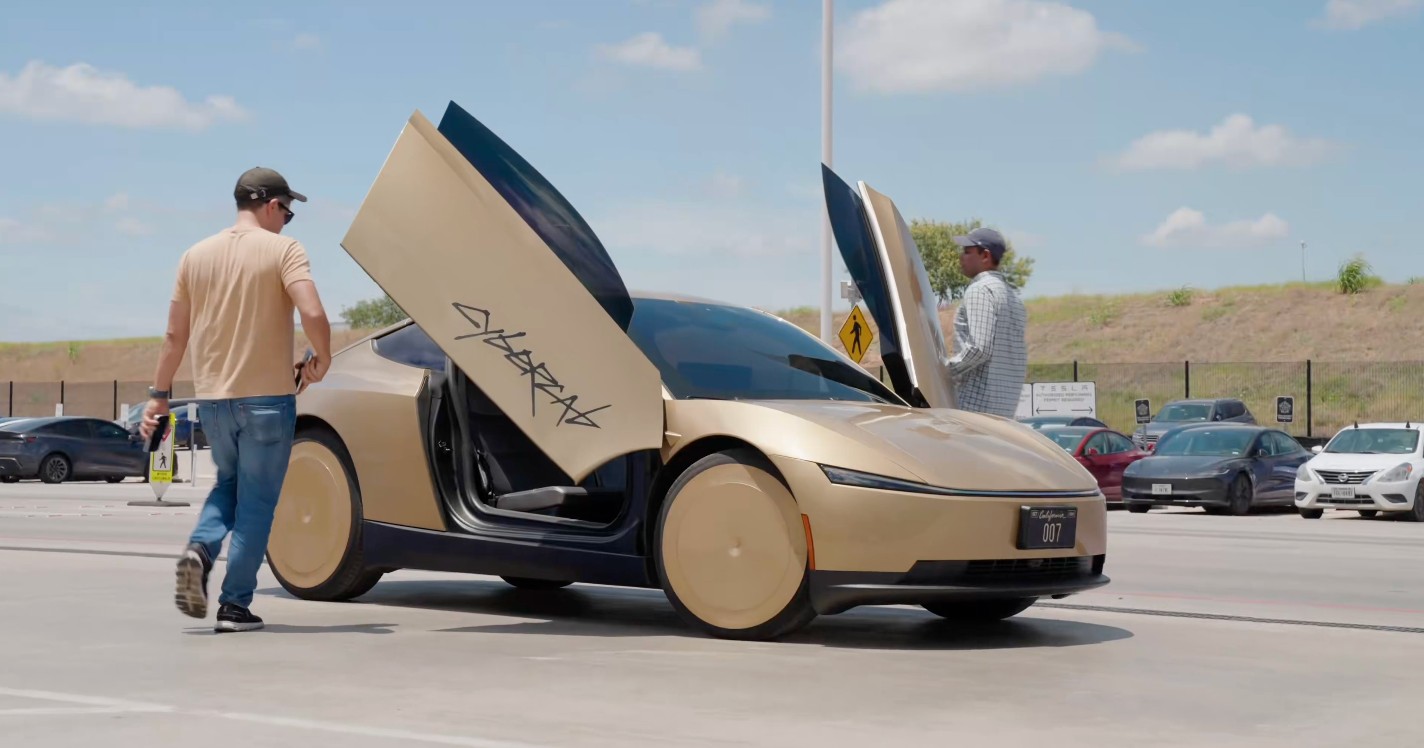
In a sudden and closely watched milestone, Tesla Robotaxi has edged past Waymo on the Texas Department of Motor Vehicles automated vehicle registry. As of November 10, Tesla lists 1,302 registered vehicles under Tesla Robotaxi, LLC, compared with Waymo’s 1,297.
The flip is narrow, but real, according to the State’s books. Tesla’s Texas fleet, following an expansion on November 10, now consists of 729 Model Ys and 573 purpose-built Cybercab vehicles. Waymo’s roster is dominated by the Jaguar I-PACE and a growing number of Zeekr-based Ojai minivans.
NEW: Tesla Robotaxi just added 20 Tesla Model Ys to its fleet. The Texas fleet now stands at 1302 vehicles.
Live tracker: https://t.co/ri0WMLRhCQ
Tracker powered by @EVject
— Texas Autonomous Vehicle Tracker (@texasavtracker) November 10, 2026
Those figures come from the same public TxDMV automated vehicle listings that independent trackers have monitored since a Texas law required operators to disclose fleet sizes.
The scale of Tesla’s climb is pretty interesting and shows how much the company has grown its autonomous ride-hailing fleet over the past months. When the registry first became public in late May 2026, Tesla listed just 42 vehicles on it. Meanwhile, Waymo had several hundred vehicles registered to it.
Tesla CEO Elon Musk shades Waymo: ‘Never really had a chance’
Since then, Tesla has multiplied its authorized Texas fleet more than thirty times, driven by repeated Model Y additions and a steady build of Cybercabs. Waymo has also expanded, but at a slower pace than Tesla.
It is also important to note that registrations are not necessarily equal to operational fleet. The TxDMV list shows the number of vehicles each company is permitted to run, but it does not report how many are actively carrying riders, which cities they serve, or trip volume. Both companies stage vehicles and run mixed fleets that can include units in testing or temporarily offline.
A lead on the registry therefore signals capacity and regulatory positioning more than immediate ride volume.
Tesla has use the growing authorized fleet to expand its unsupervised service beyond the original Austin geofence area, as now it is flowing into cities like San Antonio and Dallas. The company has highlighted plans for a broader Cybercab deployment, eventually into new states and territories.
Waymo is operating across multiple Texas markets and in other areas of the United States.
Right now, the five-vehicle margin is thin and could reverse with the next large registration from either side. For the moment, however, the public Texas record shows Tesla holding the larger authorized Robotaxi fleet in the state.
Elon Musk
SpaceX just cleared a key FCC hurdle in its fight with Verizon and AT&T
The FCC accepted SpaceX’s bid for Grain’s 800 MHz spectrum, opening review for Starlink Mobile.

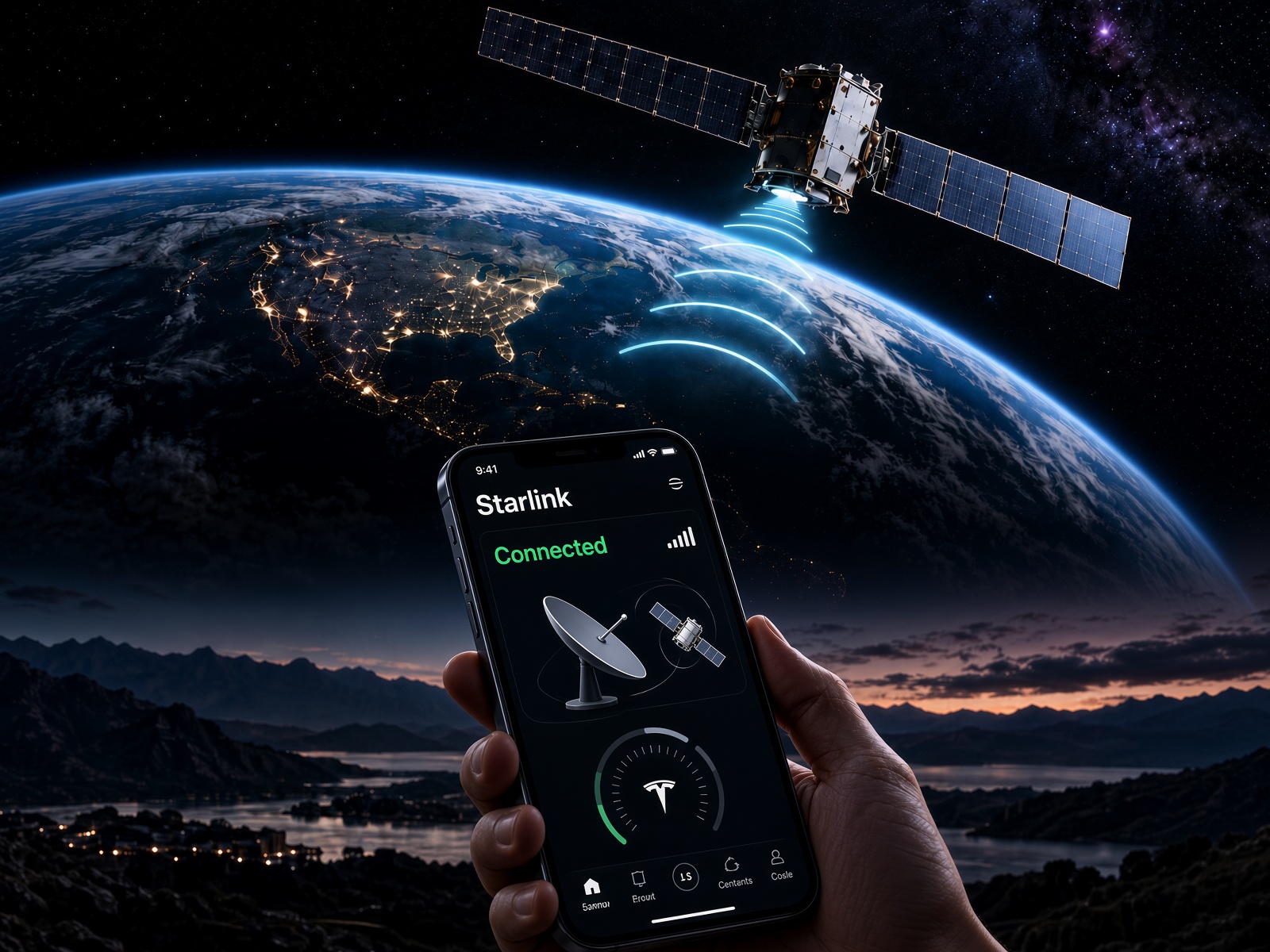
The Federal Communications Commission has formally opened its review of SpaceX’s plan to buy a nationwide block of 800 MHz spectrum from Grain Management, moving Starlink Mobile one step closer to operating as a full U.S. wireless carrier.
In a public notice issued Tuesday, the FCC’s Wireless Telecommunications Bureau said it accepted for filing the applications to transfer control of two Grain license companies, Prism License Co. 1 and Prism License Co. 2, to Starlink Spectrum Holdings, a wholly owned SpaceX subsidiary. The deal covers 546 paired licenses across 3,224 counties, reaching roughly 100% of the U.S. population in all 50 states, Washington, D.C., Puerto Rico and the U.S. Virgin Islands. The proceeding sits under WT Docket No. 26-313.
Acceptance is not approval. It means the applications cleared an initial review and the public comment window is now open. Comments and petitions to deny are due December 1, and oppositions are due December 8. The bureau also said the conditions attached to Grain’s July purchase of the licenses from T-Mobile, which require rapid buildout for terrestrial and direct to device service, would carry over to SpaceX if the transfer is approved.
SpaceX announced the agreement on October 8, saying the new airwaves would let Starlink Mobile’s signal reach phones inside buildings, something its 2 GHz spectrum from EchoStar cannot do as well. The portfolio includes up to 14 MHz of paired spectrum in the 817 to 824 MHz and 862 to 869 MHz bands, which most existing phones already support. Elon Musk called it “the last critical piece of the spectrum puzzle needed for SpaceX to provide complete phone coverage in America.”
According to the filing, SpaceX would hold up to 89 MHz of total spectrum in any given market after the deal closes, including up to 14 MHz below 1 GHz. That is far under the 385 MHz threshold the FCC uses to flag a transaction for closer competitive scrutiny, and well short of the roughly 300 MHz each of AT&T, Verizon and T-Mobile holds.
Tuesday’s notice does not decide how SpaceX can use the spectrum from orbit. A separate application SpaceX filed on October 27 seeking authority to provide supplemental coverage from space on the same frequencies, along with related waiver requests, is still pending before the commission.
The ground network is already taking shape. Last week, SpaceX picked Qualcomm to supply radios, baseband units and software for a nationwide 5G build, with deployment across tens of thousands of U.S. cell sites starting in 2027. The FCC also voted on October 29 to advance a proposal opening another 482 MHz to direct to device service, though AT&T, Verizon and T-Mobile hacritive pushed to strip nearly 300 MHz from it. SpaceX President Gwynne Shotwell has said service on SpaceX’s own airwaves is targeted for early 2028.

Tesla extends Cybertruck production as Musk concedes ‘sentimentality’

Tesla overtakes Waymo in Texas as Robotaxi fleet performs shock flip


