News
Tesla Cybercab undergoes winter testing as Elon Musk reiterates production start date
CEO Elon Musk confirmed the timeline in a recent post on X, while Tesla’s official social media accounts separately revealed that Cybercab prototypes are now undergoing winter testing in Alaska.

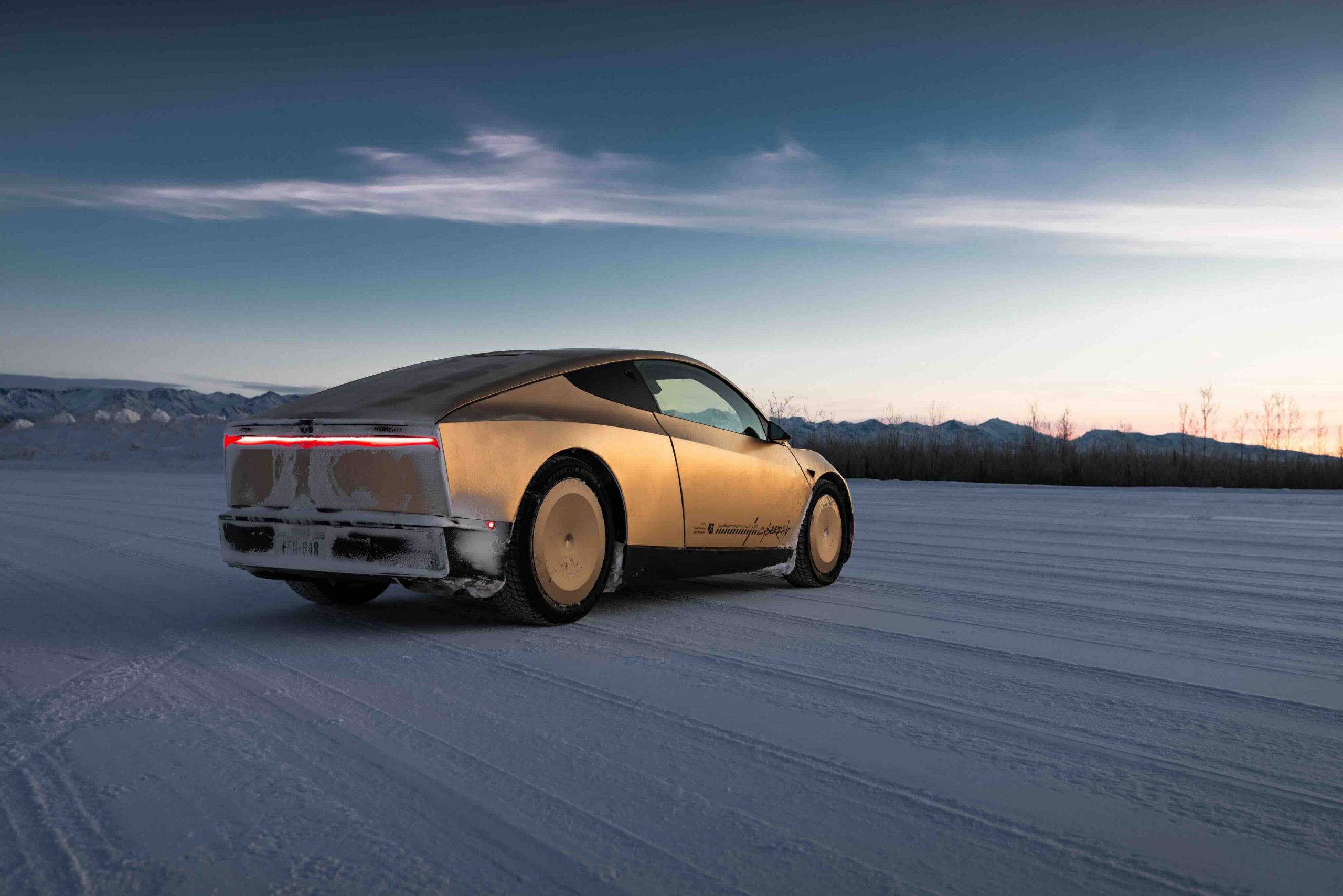
Tesla has reiterated that production of its fully autonomous Cybercab is set to begin in April, even as the company continues expanding real-world testing of the vehicle.
CEO Elon Musk confirmed the timeline in a recent post on X, while Tesla’s official social media accounts separately revealed that Cybercab prototypes are now undergoing winter testing in Alaska.
Musk confirms April Cybercab initial production
In a post on X, Musk reiterated that Cybercab production is scheduled to begin in April, reiterating his guidance about the vehicle’s manufacturing timeline. Around the same time, Tesla shared images showing the Cybercab undergoing cold-weather testing in Alaska. Interestingly enough, the Cybercab prototypes being tested in Alaska seemed to be equipped with snow tires.
Winter testing in Alaska suggests Tesla is preparing the Cybercab for deployment across a wide range of climates in the United States. Cold temperatures, snow, ice, and reduced traction present some of the most demanding scenarios for autonomous systems, making Alaska a logical proving ground for a vehicle designed to operate without a human driver.
Taken together, Musk’s production update and Tesla’s testing post indicate that while the Cybercab is nearing the start of manufacturing, validation efforts are still actively ramping to ensure reliability in real-world environments.
What early Cybercab production might look like
Musk has previously cautioned that the start of Cybercab manufacturing will be slow, reflecting the challenges of launching an all-new vehicle platform. In a recent comment, Musk said initial production typically follows an S-curve, with early output constrained by how many new parts and processes are involved.
According to Musk, both Cybercab and Optimus fall into this category, as “almost everything is new.” As a result, early production rates are expected to be very deliberate before eventually accelerating rapidly as manufacturing processes mature.
 -
-
“Initial production is always very slow and follows an S-curve. The speed of production ramp is inversely proportionate to how many new parts and steps there are. For Cybercab and Optimus, almost everything is new, so the early production rate will be agonizingly slow, but eventually end up being insanely fast,” Musk wrote in a post on X.




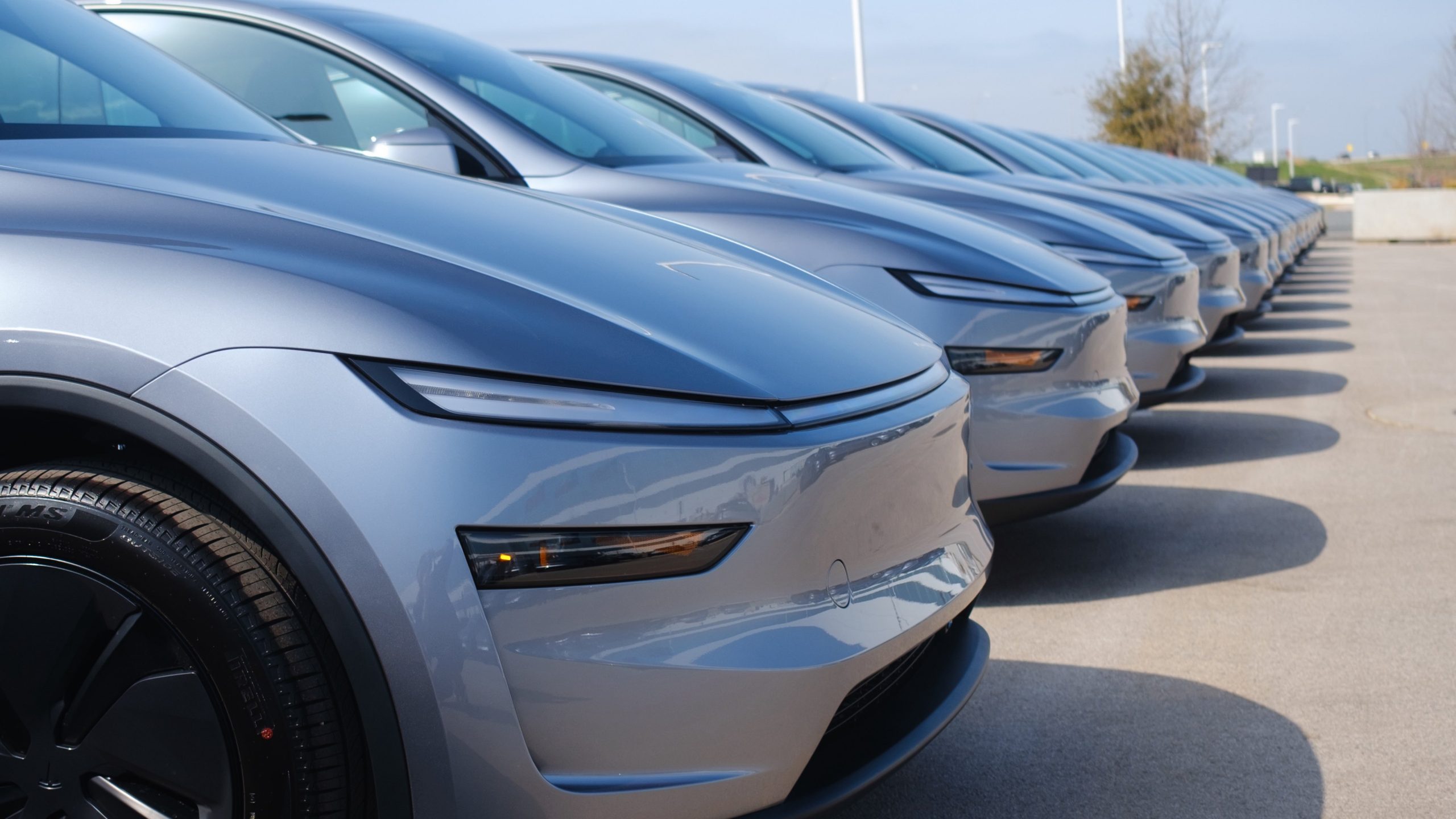
Tesla released Full Self-Driving version 14.3.6 last week, and after what was potentially one of the best FSD releases in v14.3.5, there has been a bit of a regression. While there are some bright spots, the changes made to v14.3.6 seem to have backtracked some behaviors.
Overall, it is hard to really complain about FSD in any sense; it has revolutionized how I travel literally anywhere. According to my self-driving app, the last time I went a day without using it was 59 days ago.
However, I think it’s also important to recognize when things are just plain bad with FSD. There are times it does truly mind-boggling things, and I’ll dive into those here. Additionally, I only had these issues on local roads, not on highways. Highway operation, generally, is always incredible other than the occasional complaint about speed or left lane camping.
With those things being said, my personal experience may not represent others’ experiences. A handful of people have said they have had a similar experience on v14.3.6, while others have said it is more than normal.
Turning Hesitancy, Inaccuracy
I’ve noticed more inaccuracy turning into multi-lane stretches of road than in any version I can remember. I’ve had at least three instances of FSD turning into a stretch of roadway that has two or more lanes, and not selecting a lane confidently as it has in past versions.
I think Tesla FSD v14.3.6 is a regression from previous .3 branches
This version in particular has been incredibly hesitant, jerky, and indecisive at times. There’s actually been two drives that I have decided to not used FSD for the remainder of the trip. These were local trips… pic.twitter.com/YobHDOKRS6
— TESLARATI (@Teslarati) July 26, 2026
Instead, the car will drive over one of the dashed road lines, and the steering wheel will jerk back and forth before picking the lane. It should be said that it has always picked the correct lane when choosing based on the navigation, but it is still very indecisive. The steering wheel jerking is reminiscent of some of the later versions of v13.
I admit I really hate to see the steering wheel jerking come back. However, I think when Tesla releases v14.3.7, it won’t be present. When there are occurrences of it in FSD versions, it is usually resolved by the following release.
FSD Disregards Manual Turn Signals
This is my biggest bone to pick with FSD other than Navigation issues, but this one seems like it would be such an easy fix.
If Tesla is going to put the word “Supervised” on the end of “Full Self-Driving,” then when I tell the car to do something, it should do it. If I input an increase in speed by pressing the accelerator, the car will immediately respond. It does not disregard my input because it feels it is traveling at the right speed.
FSD should never disobey and turn off turn signals that the driver inputs. Trying to direct the car into the correct lane, I had initiated the left turn signal not once, not twice, but three times, with the car turning it off all three times and continuing in a lane that would end in just one block. The only solution at this point would be to zipper merge.
This goes back to the fact that self-driving’s biggest bottleneck might be rider preference. A zipper merge might have been more than reasonable, might have saved me time that I spent sitting through an additional light cycle, and might be something many drivers would do. I was in no hurry, I traditionally do not try to zipper merge because it feels inconsiderate, and lastly, the car should have just followed my input.
This caused me to disengage and drive manually the rest of the way home. Sometimes I just do not need FSD to try to pass every car it can at intersections.
Bird Braking is a Thing of the Past
The big complaint with recent versions of Full Self-Driving has been what we’ve coined as “bird braking,” which is when the car will brake suddenly as a bird flies past.
There have been zero issues with this so far in v14.3.6, which is an excellent improvement.
FSD Might Already Be Taking Note of Driver Preferences
Another thing I have noticed over the past few days is that v14.3.6 seems to already be taking my preferences with navigation into account.
This is something that is supposed to be rolling out with the Summer Update, but I have a hunch it’s already present and might have been included in this v14.3.6 build. On Friday, FSD pulled into an entrance to a local convenience store that it had never attempted to go into before.
Typically, I manually pull into this entrance because it avoids heavy cross traffic at the main entrance. FSD has always chosen that congested main entrance.
I don’t want to get anyone excited but my Tesla running FSD v14.3.6 just:
✅ Pulled into an entrance at my local Sheetz that I routinely pull into manually but FSD never has entered
✅ Pulled into my assigned parking space at home despite many other spots being vacant https://t.co/ZUShvknTWO pic.twitter.com/83O5a2S0eh
— TESLARATI (@Teslarati) July 24, 2026
Additionally, FSD has pulled into my assigned parking spot at my townhouse community on multiple occasions with this release. This is something that used to happen ocassionally, but not consistently.
It also navigated back to the same convenience store last night, drove through crazy cars scrambling to gas pumps, navigated out of the parking lot correctly, drove me home, and, once again, parked in my assigned spot.
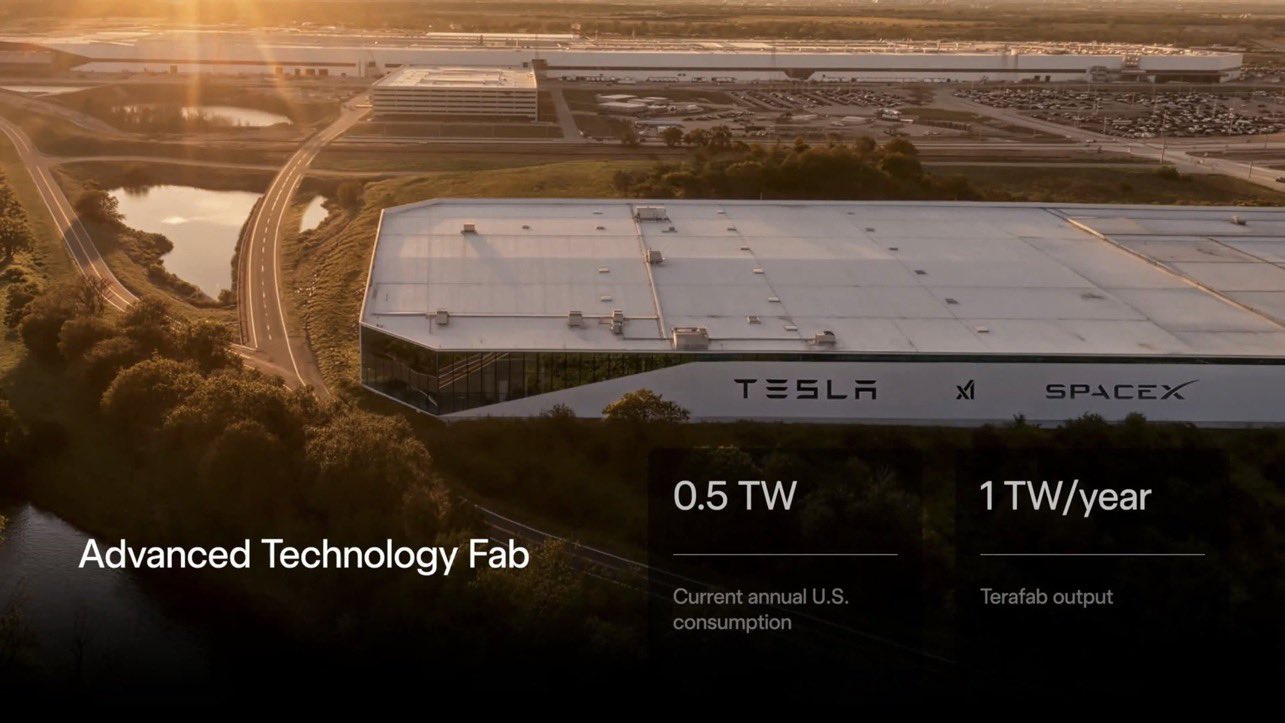
Elon Musk’s massive Terafab project, which will be the first true conglomeration between each of his major entities, is set to get its final location soon, the CEO said on Tesla’s recent earnings call.
“The Terafab, we expect to announce a location soon, and provide more details about our plans in that regard. We’ll leave that to the product, the launch announcement rather than try to squeeze it into an earnings call,” Musk said last Wednesday.
Tesla Terafab set for launch: Inside the $20B AI chip factory that will reshape the auto industry
Terafab was announced by Musk back in March and was essentially a massive, vertically integrated semiconductor manufacturing project that would provide all the chips the three companies needed for their AI initiatives without needing third-party companies.
The plant will produce over 1 terawatt of AI compute each year, and will help back up projects like Optimus, Full Self-Driving, and other AI-based projects that Musk’s companies are working on.
In April, less than a month after the project was launched, Intel announced it would join the project, contributing manufacturing expertise and consulting to Terafab as a whole. Intel is one of three chip manufacturers that produce sub-5 nanometer chips at scale. TSMC and Samsung are the other two.
However, there was no true indication of where Terafab would end up, but most believe it will likely be somewhere in Texas. Business Insider has reported that SpaceX plans to build out Terafab in Grimes County, Texas, but this is unconfirmed.
Musk confirmed recently that it would not be on Giga Texas property, as it is simply too large.
The sheer scale of TERAFAB is going to be insane.
Elon said it wouldn’t be suitable for anywhere on Giga Texas property because it’s too big:
“We couldn’t possibly fit the Terafab on the GigaTexas campus. It will be far bigger than everything else combined there.
Several… pic.twitter.com/79GbhNNuf4
— TESLARATI (@Teslarati) March 23, 2026
Terafab holds much of Musk’s grand ambitions for the future within its construct. It holds so much responsibility for the future and the biggest projects that Musk’s companies can imagine.
“I think this is a very big announcement and it deserves to have its own day in the spotlight and not be squeezed into an earnings call,” he said. “I do think Terafab is going to be an amazing initiative and a necessary one, and one without which we will be constrained in our ability to scale Optimus production, because we simply won’t have enough AI chips.”
He continued by stating that Terafab is necessary for scaling Optimus, which Musk said could be the biggest product of any kind of all time. “It’s crucial to solve that, and we’ll have to solve memory, logic, and packaging in order to scale Optimus.”
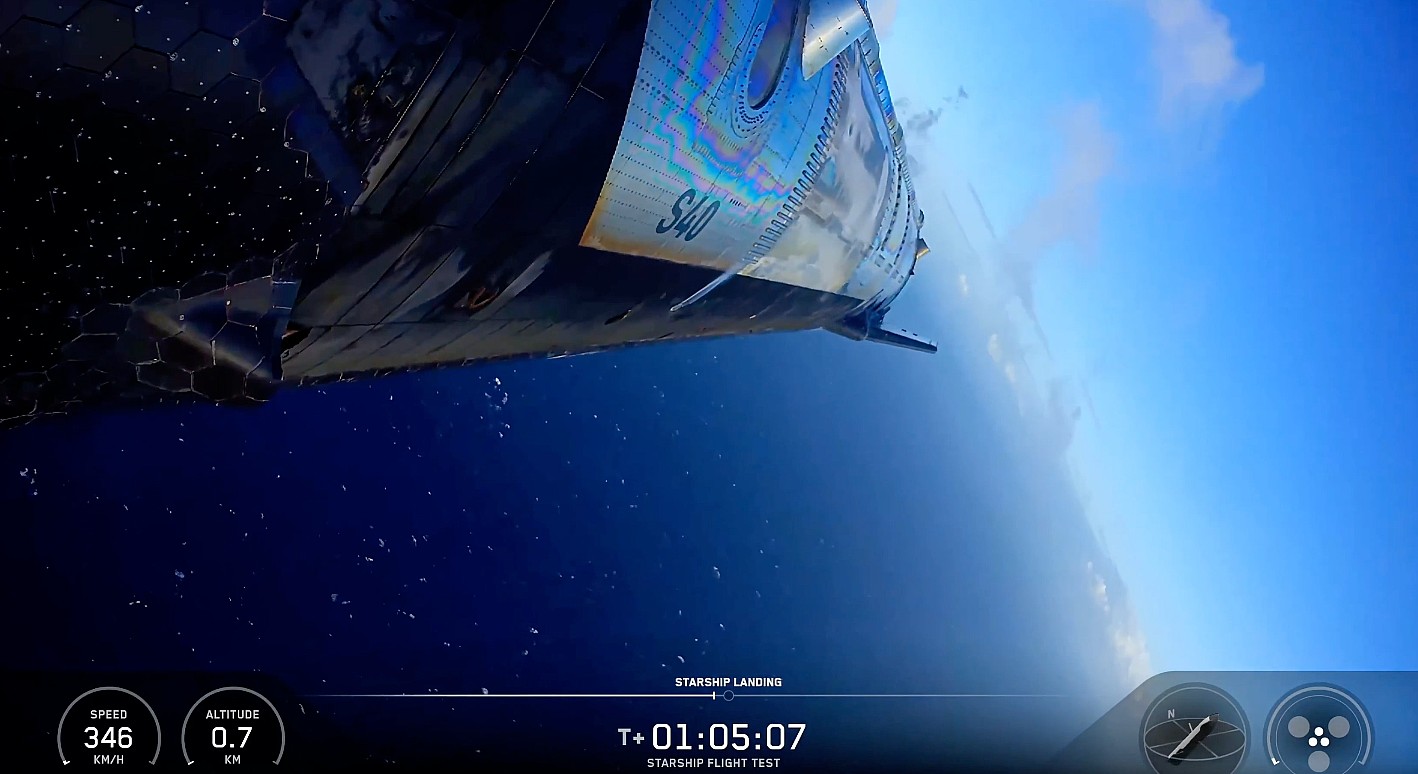
SpaceX performed a secret test on a specific portion of Starship with its recent 13th test flight last week, CEO Elon Musk revealed.
Starship’s 13th test flight took place last Friday, and in many aspects, it was one of the most overwhelmingly successful launches in the project’s history.
All of the mission objectives were met without incident, both the Super Heavy Booster and Ship managed to perform safe splashdowns in the Gulf of America and the Indian Ocean, respectively, and the deployment of Starlink satellites came and went without any complications.
— Elon Musk (@elonmusk) July 25, 2026
However, there was more on the agenda for SpaceX with Flight 13. Musk revealed an internal test of the ship’s heat shield tiles, as the space exploration company wanted to push them to the limits after previous issues.
Many noticed that Starship’s initial launch seemed to be more accelerated than normal, and that was not a mistake. Musk revealed that SpaceX decided to give Flight 13 an intentionally aggressive acceleration rate in an effort to test how well the tiles would remain attached to the ship:
This flight intentionally had much higher acceleration to test how well the heat shield tiles would remain attached at high dynamic pressure.
Test was successful.
— Elon Musk (@elonmusk) July 25, 2026
SpaceX had issues with some of the heat shield tiles remaining attached early on in the Starship program. The first six test flights presented some kind of anomaly with them, so the company’s big focus with them was to figure out a way to keep them intact through the duration of the flight.
Things truly improved as Flight 10 showed that ceramic tiles generally stayed attached to the ship far better due to refined attachment, as SpaceX utilized pins instead of adhesives. Flights 10 through 13 truly showed some clear progress with the heat shield tiles, and this latest test seems to be where some real progress was noticed, especially by Musk.
The 13th Starship launch last Friday was the second with Starship V3, SpaceX’s latest and greatest iteration of the spacecraft. Goals and ambitions are getting even grander as the project continues to progress. Musk has already hinted that SpaceX will likely try to catch Starship with Flight 14.

Tesla Full Self-Driving v14.3.6 review: a rare regression, but some bright spots

Musk’s massive Terafab project will get final location soon


