News
Tesla beefs up Cybertruck security and improves Supercharger experience in new update

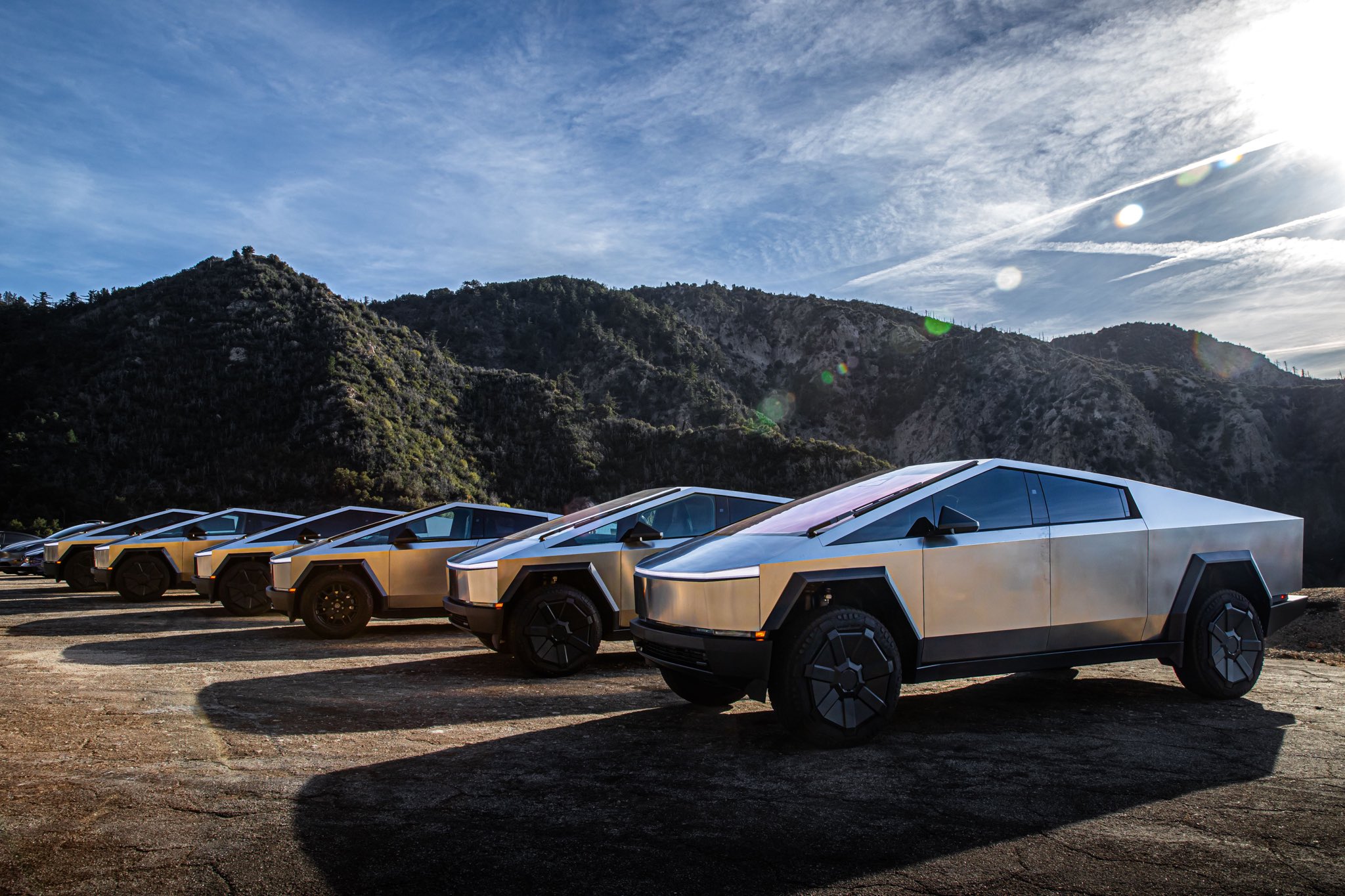
Tesla is adding new security features to the Cybertruck in a software update that will affect towing and increase awareness of what is going on during towing.
The Cybertruck is Tesla’s first pickup truck, so it is still working to build out a well-rounded suite of features that will make it the most secure and robust on the market today.
With that being said, the latest addition to the Cybertruck is set to roll out with Tesla Software Update 2024.8.4, which will equip a new Trailer Alarm Feature.
The Trailer Alarm system will equip the security system featured in the Cybertruck to the trailer by monitoring the connection status of anything that is hitched to the all-electric pickup. Essentially, this means the alarm will now activate if the trailer is disconnected or messed with in any way.
The feature was first reported by Not a Tesla App.
“Your vehicle alarm now also monitors whether your trailer is plugged in to the hitch. The trailer alarm sets and turns off along with your vehicle alarm. You can disable this security feature in your vehicle settings at Towing and Hauling > Trailer Alarm.”
Along with the improvements to the Cybertruck’s security features by including the trailer in the alarm suite, Tesla is also helping those who do tow by highlighting which Supercharger locations include trailer-friendly stalls.
This feature was discussed just days ago by Wes Morrill, Tesla’s Lead Engineer for Cybertruck, stating that the Supercharger team is going to show which stalls would enable easier access for trucks hauling trailers.
Supercharger team is always looking for opportunities to install these at new locations. Will show trailer friendly stalls on the in-vehicle UI to make it easier when road tripping with a trailer https://t.co/k4jbO0jsxh
— Wes (@wmorrill3) March 14, 2024
We knew for some time that Tesla was planning to build Superchargers with Cybertruck-specific parking spaces, as the size of the vehicle was one thing the automaker focused on for future charging stations.
Tesla first received approval for Cybertruck-specific parking spaces in 2020 after a Pasadena, California, Supercharger project was designed with the truck in mind.
Don’t hesitate to contact us with tips! Email us at tips@teslarati.com, or you can email me directly at joey@teslarati.com. I’m also on X @KlenderJoey.


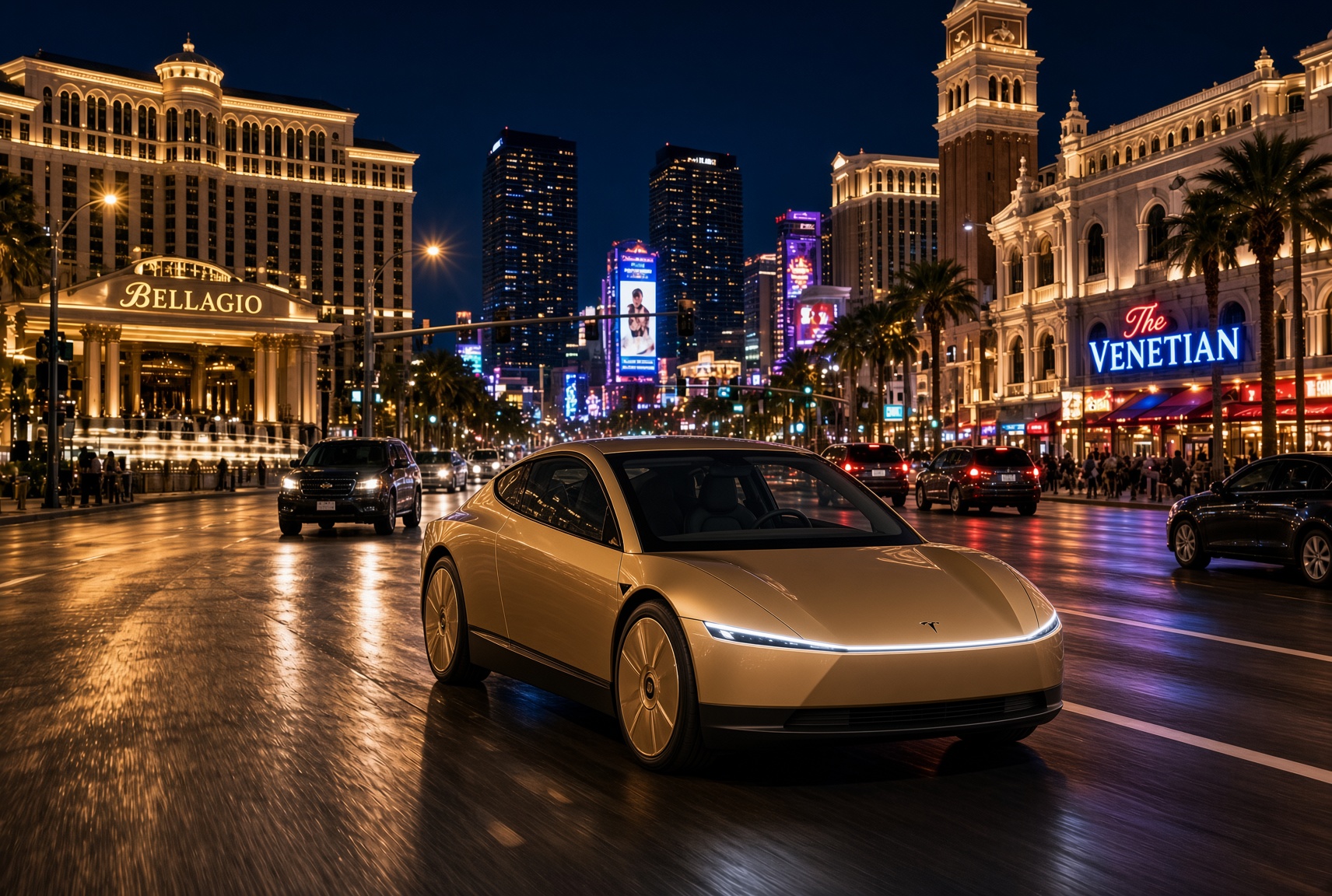
For a century, the car has asked the same thing of its owner, which is basically to pay attention. Even the best ride-hailing app like Uber or Lyft only moved the problem into someone else’s hands. You stopped driving, but you still sat in a stranger’s car, while half listening, and wondering whether to take a phone call in the car without being rude. The Cybercab has no wheel, no pedals and no driver. With Grok @bot now live inside it, it becomes something else entirely, and I think that matters more than the fleet count that everyone is tracking.
Grok @bot is an agent, not a voice assistant. A rider signs in once, and from then on can say what they need and watch it happen. Order dinner from a favorite restaurant. Fill the grocery cart. Move money, answer email, adjust a calendar, push a work project forward. Tesla engineer Yun-Ta Tsai confirmed it is enabled across every Cybercab and the rest of the Model Y fleet, and Tesla’s own pitch is that Full Self-Driving handles the commute while Grok handles the errands.
Think about what that does to a thirty minute ride. Uber sells you a trip, while Waymo sells you the same trip in a more private setting. Tesla is selling the thirty minutes themselves, returned to you with an assistant attached. Errands that used to eat a Saturday get done between pickup and drop off. The ride stops being dead time between two places and becomes a place of its own.
Tesla integrates Grok Bot into its vehicles for the ultimate personal assistant
Best of all, your Bots follow you into any Cybercab, and presumably your own Tesla, then logs you out automatically when you step out. Anyone can bolt a chatbot onto a screen, but much harder to own the vehicle, the autonomy stack and the assistant at once. It also quietly ties SpaceX’s Super Intelligence business to Tesla’s fleet, after Tesla converted its xAI stake into SpaceX equity. The relationship between those two companies is getting harder to describe as separate.
This is also where the hard questions start, because an agent that can spend your money in a vehicle other people also ride in needs some answers. How does it handle a voice it shouldn’t trust? What gets recorded, who can see it, and for how long? What happens when a rider leaves halfway through a task?
If Tesla gets those answers right, the scoreboard changes. We have been counting Cybercabs and wait times. The more telling number may be what riders accomplish per trip. That is data almost no one else will ever have, and it is the real reason to watch Grok @bot.
What do you think? Leave me a comment.
News
Why Elon Musk’s target date for buying an Optimus robot is harder than it sounds
Musk says China’s magnet export ban cost Optimus months, and robot hands remain shockingly hard.

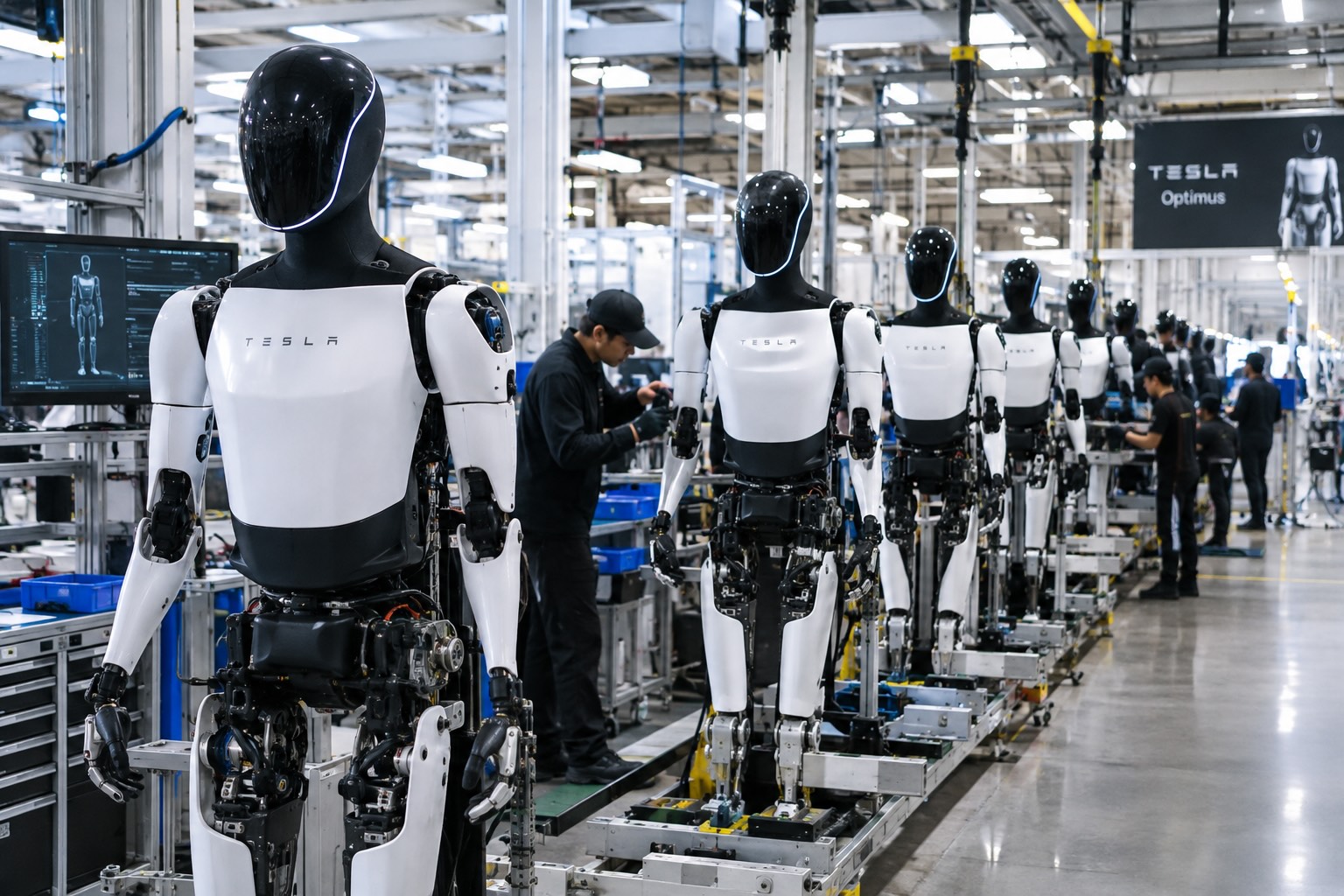
Elon Musk says China’s export curbs on magnets used in electric motors set back Tesla’s Optimus program by two to three months, and that the robot’s hands remain the hardest part of the project. He made the comments Saturday during a live interview with Tesla Owners Silicon Valley at the X Takeover event at Giga Texas, in front of roughly 2,000 attendees. The Optimus discussion begins around the 49 minute mark of the stream.
On the hands, Musk was blunt and noted that a general purpose humanoid needs fine motor skills that are “incredibly difficult to get right. Shockingly difficult,” he said in the interview. He pointed to a problem he says no one has demonstrated yet: “One of the hardest things also generally is to do precision and force at the same time,” such as driving a small self tapping screw into wood. Touch sensors add another layer, since it is “actually kind of hard to get touch sensors that elastically deform and can handle high cycle life and it won’t just break after a few thousand cycles.”
He also took aim at rival robot videos. “Any complicated looking robot demo, it’s a canned demo. It’s not real,” Musk said, adding that real AI means showing a robot something it has never seen and watching it still cope, the way FSD handles a city it has never driven.
Musk expects the Optimus ramp to be slower than a new vehicle production ramp. “The initial part of that S curve of production ramp is going to be very slow at the beginning,” Musk said, partly because “unlike cars, there’s no pre existing supply chain for robot stuff.” That echoes his July reply on X that Optimus production “will be extremely slow at first, as everything is new.”
The magnet disclosure puts a number on a problem Musk first raised in 2025. He said China “prevented the export of magnets for use in electric motors” and that it “set back the Optimus program by like two or three months.” Then he added: “We had robots with no arms.” Tesla’s fix is to bring the supply chain home. “You’ve got to be able to make all the parts domestically,” he said. Teslarati reported in April 2025 that Musk tied the issue to permanent magnets in the arm actuators, where motors have to be as small as possible.
Tesla Optimus V3 hand and arm details revealed in new patents
Production is moving regardless, with a reported internal goal of more than 1,000 a week by the end of 2026. Teslarati recently covered how Tesla is certifying supply partners in China for Optimus parts, while the company’s hand design has been the subject of new patent filings.
Musk has said he wants Optimus available to the public by late 2027, though Tesla has not confirmed that date or published updated production figures.
Investor's Corner
Elon Musk drops a Thanksgiving hint about Starship’s biggest test yet
Elon Musk says Starship Flight 15 will try to catch the ship itself, a first.
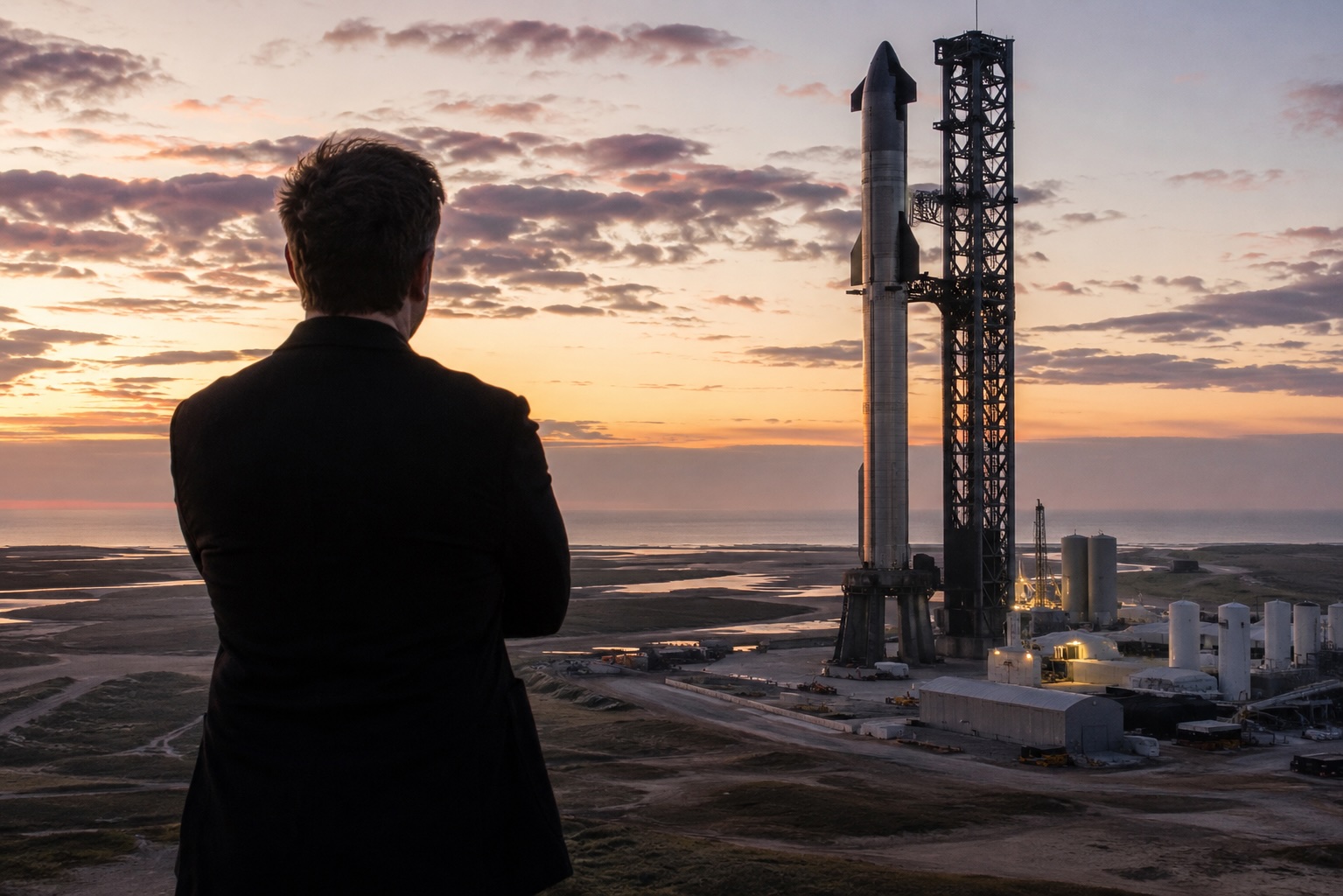
Elon Musk says SpaceX’s next Starship flight will try something nobody has done before, by catching the ship itself. Speaking to roughly 2,000 people at the X Takeover event at Giga Texas on Saturday, Musk said Flight 15 is about four to six weeks away and “probably launches a little bit before Thanksgiving, is my guess.”
That is a slip from earlier reporting, which had pointed to a launch as early as October 19. Musk explained why the date keeps moving. “We’re making a bunch of improvements to the rocket between every flight,” he said, adding that there are often hundreds, sometimes thousands, of small changes. This time the list is short, “but some of them take a fair bit of work and we’ve got to go inside the tank to make some of these changes.”
“We’re going to try to catch the ship, which is a super big deal,” Musk said. “If we do so, that’ll be the first time that there’s been full recovery of an orbital class rocket.” SpaceX has already caught the Super Heavy booster with the tower’s mechanical arms, and has talked about catching the ship since late 2025, but the upper stage has never been caught.
Musk also laid out what comes after. “The next big milestone would be to refly both the booster and the ship,” he said, describing a Flight 16 where “all parts of an orbital rocket are reflown.”
The reason SpaceX wants this comes down to cost and cadence. Every Starship ship so far has ended its flight in the ocean, and SpaceX expects most of those water landings to end in fireballs. A ship that returns to Starbase intact can be inspected and flown again. SpaceX’s IPO filing, says Starship V3 is designed to deliver 100 metric tons to orbit in a fully reusable configuration, that SpaceX aims to cut the cost to reach orbit by 99% or more versus the historical average, and that tower catches should allow “multiple launches per day.”
The payoff goes beyond cheaper launches. The next generation Starlink V3 satellites are too large for Falcon 9 and can only fly on Starship, which can carry up to 60 per flight. Flight 14 on September 28 deployed the first 26 of them after Starship reached orbit despite an early engine shutdown, as Teslarati reported. Musk blamed engine computer software, and said the heat shield “was extremely robust,” which he claimed in August had solved Starship’s biggest challenge.
NASA’s Moon plans depend on the same capability. NASA’s inspector general has described a lander mission that needs a propellant depot in low Earth orbit and more than 10 tanker flights, with SpaceX targeting one tanker launch every six days. That schedule only works if ships and boosters come back fast and fly again. Also, ship to ship propellant transfer has not been attempted yet.
One interesting hurdle yet to be explored is bringing the ship back to the launch site, with reentry over land, which will undoubtedly come with a lot of aviation safety reviews.

Tesla Cybercab and Robotaxi’s real advantage won’t be the ride service

Why Elon Musk’s target date for buying an Optimus robot is harder than it sounds

Elon Musk drops a Thanksgiving hint about Starship’s biggest test yet

The Pentagon taps Elon Musk to design the battlefield of the future

Tesla Roadster’s new patent preps white-knuckle speeds, keeping it grounded


