Energy
A Stand for Solar: How a united movement helped pause CA’s solar tax proposal — at least for now

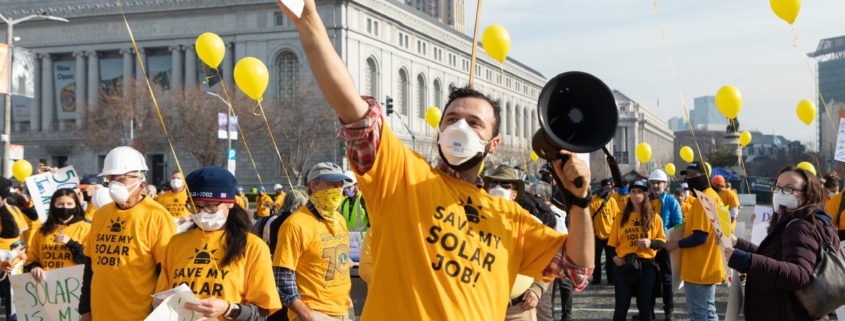
Earlier this month, a small miracle of sorts happened in California. The California Public Utilities Commission’s (CPUC) proposed new net metering rules (NEM 3.0) hit an indefinite “Pause” button. Through an email, Administrative Law Judge Kelly Hymes notified parties officially involved in its proceedings that the proposed decision on NEM 3.0 and its implementation “will not appear on the Commission’s voting meeting agenda until further notice.”
Getting to that point was nothing short of a Herculean task, and looking at the factors that may have contributed to this halt is a story worth telling. The movement that opposed the CPUC’s NEM 3.0 proposal is quite extraordinary, as it involved the combined efforts of companies such as Tesla and environmental organizations such as The Climate Center and the Environmental Working Group (EWG), to name a few. But before we get to the story of how NEM 3.0 was halted, we must look at why the proposal was controversial in the first place.
A Proposal with Heavy Backing
Initially unveiled last December, NEM 3.0 shocked climate advocates due to its proposed changes to the state’s rules on residential solar solutions. If passed, NEM 3.0 would charge solar users with a “grid participation charge” of $8/kWh of installed solar. Tesla estimated that an $8/kWh charge could add between $50-$80/month to a solar customer’s power bill. NEM 3.0 would also dramatically cut the compensation that homeowners with solar receive for the power they give back to the grid. NEM 3.0 supporters framed these proposed changes as a way for low-income families to not be burdened with the cost of maintaining the grid.
Supporters of NEM 3.0 advocated the idea that California’s existing solar rules take from the disadvantaged and give to the wealthy. Organizations such as Affordable Energy for All, whose coalition includes companies like Pacific Gas & Electric, Southern California Edison, and San Diego Gas & Electric, heavily pushed this “rich vs. poor” narrative. The CPUC’s 204-page proposal, which referenced a Lookback Study from Verdant Associates, was the same way. It argued that NEM 2.0, California’s current system, (a) negatively impacted non-participant ratepayers, (b) is not cost-effective, and (c) disproportionately harms low-income customers who are not participating in the net energy metering tariff program.
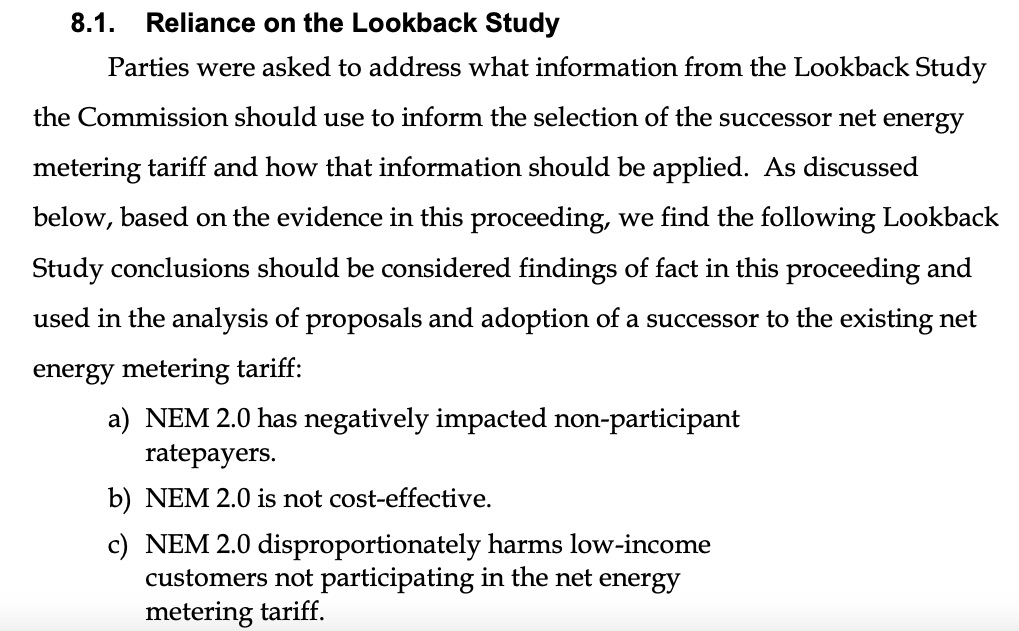
The Lookback Study had detractors from the get-go. The California Solar & Storage Association (CALSSA), the Solar Energy Industries Association (SEIA), and Vote Solar expressed their reservations about the validity and value of the study, with the groups arguing that the research does not properly evaluate the existing NEM 2.0 program. Despite these reservations, the CPUC stated in its proposal that it believes that the Lookback Study’s conclusions are sound.
“We find the Lookback Study to be a sound analysis of the NEM 2.0 tariff and that it should be used in the development of a successor tariff. CALSSA and SEIA/Vote Solar would have the Commission dismiss the study because it is ‘backward-looking.’ The evaluation of the NEM 2.0 tariff tells us whether the tariff is or is not performing as required, thus establishing a foundation for creating the successor tariff. We recognize, as SEIA/Vote Solar states, that the study does not tell the complete story. However, the Lookback Study can inform us of what not to do. Furthermore, CALSSA’s contention that the study’ assumptions are or appear flawed’ does not persuade us; CALSSA and all stakeholders have been given several opportunities to weigh in on the development and drafting of the study. A disagreement on an assumption does not equate to a flaw in the assumption,” the CPUC’s proposal read.
A Widespread Opposition
Despite the CPUC’s apparent efforts to push through with NEM 3.0, the proposal had one glaring problem: it was highly unpopular outside the initiative’s direct proponents. Electric vehicle and energy company Tesla promptly directed its Engage program on the issue, urging California residents to make their voices heard. Tesla CEO Elon Musk openly opposed the proposal on his Twitter account as well, describing it as a “bizarre, anti-environment move” by the state.
Survey results did not side with NEM 3.0, which energy research firm Wood Mackenzie believes could cut California’s solar market by half by 2024. A survey conducted by Newport Beach-based Probolsky Research revealed that California voters overwhelmingly opposed the CPUC’s proposed changes to the state’s solar rules. Among the survey’s respondents, 64% stated that they were opposed to NEM 3.0, 15% were unsure, and only 20% supported the CPUC’s proposal. Interestingly enough, every demographic group involved in the survey opposed NEM 3.0.
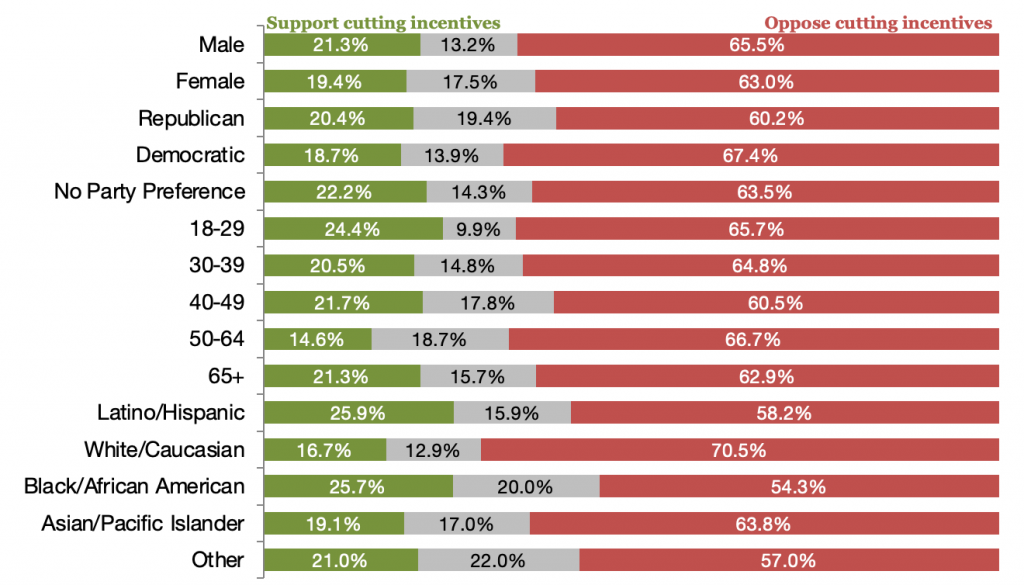
Teslarati chatted with Probolsky Research President Adam Probolsky, who explained that “while the survey did not look at its results by income level, nothing about the data suggests any difference based on respondents’ socioeconomic standing.” This hinted that the narrative being pushed by some NEM 3.0 supporters, which attempted to paint a picture of wealthy solar adopters taking advantage of the less fortunate, may not be that accurate after all.
To state that California made solar mainstream may not be an understatement, so it was no surprise that many in the state made it a point to fight against NEM 3.0. Over 120,000 public comments urging the state to save the solar industry were delivered to the CPUC in December, and high-profile figures spoke up against the proposal. These included former CA Governor Arnold Schwarzenegger, who flat-out called the proposal a “solar tax,” and Senator Dianne Feinstein, who made her opposition to NEM 3.0 evident. Even Hollywood and sports personalities used their voices to call for California’s solar industry not to be hobbled by NEM 3.0.
NEM 3.0 is so controversial that solar advocates outside the United States perceived the CPUC’s proposal with a certain level of disbelief. This was true for solar supporter and co-founder of FindTheVenue.pk Ali Rehman, who told Teslarati that NEM 3.0 — at least from the point of view of a renewable energy supporter outside the US such as himself — is nothing short of insane.
“People go solar because of high energy costs; energy costs are high due to negligence, not solar. Lobbyists and public relations firms re-wrote the facts and scripted the blame for higher prices not on bad – negligent – maintenence policies but on families who protect themselves from those higher prices, by going solar. The truth is that solar is for everyone and most beneficiaries are low-income and in disadvantaged communities,” Rehman said.
A Hard-Earned Pause
For now, NEM 3.0 has been paused. The CPUC’s new president, Alice Busching Reynolds, has requested additional time to “analyze the record and consider revisions” to the proposed initiative based on party comments. An email from one of the administrative judges on the commission also mentioned that Reynolds wishes to ensure that all five commissioners can participate in a session that covers arguments about the pros and cons of NEM 3.0.
It’s difficult to determine the exact factors that led to the vote on NEM 3.0 being suspended until further notice, but one cannot discount the collaborative efforts of multiple parties who worked together under the same goal. From companies like Tesla to climate organizations, initiatives that gathered the voices of solar supporters across the state and beyond seemed to have a positive effect. The Climate Center CEO Ellie Cohen highlighted this in a statement:
“This decision would not have happened without clean energy and justice advocates across California… This issue united climate activists, solar industry employees, working-class solar customers, and more to stand up for energy resilience, affordability, and equity. People across the state are increasingly demanding local, clean energy resources in the face of wildfires, public safety power shut-offs, and rising investor-owned utility rates. As the CPUC goes back to the drawing board, we urge them to craft a solar rate structure that benefits all Californians, not corporate utilities,” Cohen said.
However, Environmental Working Group (EWG) President and Bay Area resident Ken Cook told Teslarati that the battle for California’s residential solar industry is still ongoing.
“The moment to unleash the full potential of the clean energy revolution in California is upon us, and it is imperative regulators take every opportunity to embrace it. The coalition of more than 600 organizations that oppose the CPUC/utility plot to crush rooftop solar and exact a hefty solar tax on working-class families include numerous environmental justice and affordable housing organizations, labor unions and communities of faith, among others. These advocates are fighting to ensure the critical financial incentives remain in place so all California households regardless of income can afford to install solar,” Cook said.
A Battle That’s Yet to be Won
The EWG President’s comments may be accurate. Yes, NEM 3.0’s detractors scored a win by successfully having the vote on the controversial proposal delayed indefinitely. However, the CPUC can still initiate a vote on the issue in the near future. In its updated Engage page, Tesla warned its supporters that the CPUC can still push for a vote on NEM 3.0 as early as March 17. Granted, there’s momentum towards a more reasonable plan for California’s residential solar industry. Governor Gavin Newsom himself admitted that he personally thinks the proposal needs to change. Nevertheless, what lies ahead is likely an uphill battle.
“None of this means the solar tax proposal is dead… PG&E and the other big utilities are lobbying hard for the CPUC to approve it, and getting the five PUC Commissioners to reject or significantly modify it is still an uphill battle. The single most important action members of the public can take at this point is to voice opposition to the solar tax by speaking directly to the five CPUC Commissioners during the public comment period of next meeting on March 17,” Tesla wrote.
Teslarati reached out to the CPUC to inquire what its next steps would be considering the widespread opposition to NEM 3.0. The agency simply provided a link to its Net Energy Metering Revisit page, which provides an outline of the proposal, as well as documents and records related to it.
Considering the battle ahead, James (JD) Dillon, who serves as Chief Marketing Officer at Tigo Energy, urged those who have taken it upon themselves to defend California’s residential solar market to stay alert. In a comment to Teslarati, Dillon highlighted that it would be a mistake to ease the pressure now. If any, now is the time to double down and ensure that NEM 3.0 is really pushed back, or at least modified to a point where it is palatable and fair to California’s existing solar customers.
“Solar is inarguably the right thing for the long term and the solar advocates must keep pushing in the public and political arena. It would be a mistake to take the foot off the gas, as different versions of anti-solar legislation and administrative actions will continue to crop up. The utilities have a very powerful lobby and the hundreds of small businesses and thousands of homeowners that make up the solar coalition must remain vigilant,” Dillon advised.
Don’t hesitate to contact us with news tips. Just send a message to simon@teslarati.com to give us a heads up.


Energy
Tesla Model 3 and Model Y can now do what only Cybertruck could
Tesla Model 3 and Model Y can power your home with Powerwall 3 during outages.

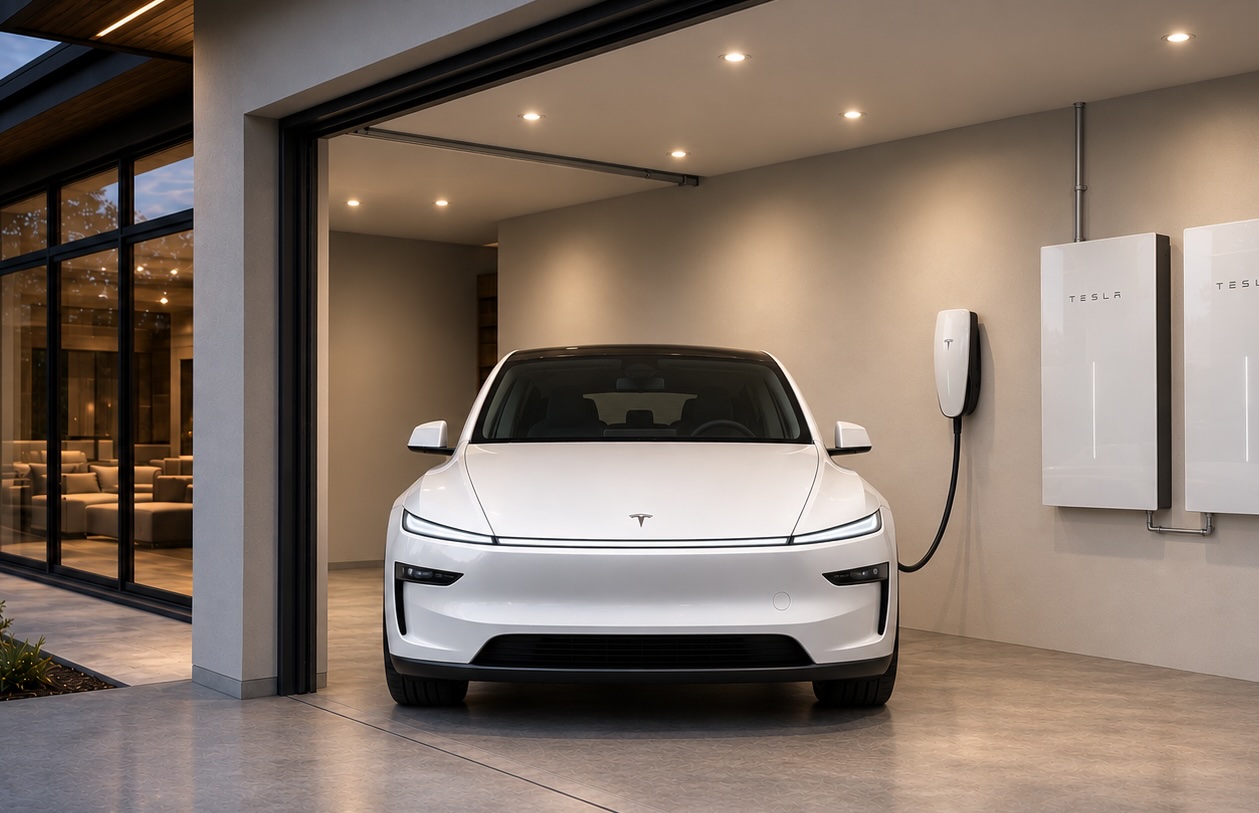
Tesla has turned its two top sellers into backup batteries for the house.
Tesla Energy announced on Tuesday that Powershare Home Backup is now available for new Model 3 and Model Y vehicles paired with a Powerwall 3, saying the car can “extend your home backup by over 2 days.” Minutes later, Tesla’s main account quoted the post with a broader pitch: “With Powerwall 3, every Tesla can now serve as your home’s backup battery.”
Until this week, the Cybertruck was the only Tesla that could send power back into a home, and that capability only began working alongside Powerwall 3 last month, after years of ambitious targets.
Tesla’s updated Powershare page says every Model 3 and Model Y ordered in the U.S. or Puerto Rico on or after October 1, 2026 can use the feature. Some, but not all, earlier cars also qualify. Owners can check on the touchscreen under Software, then Additional Vehicle Information, where a capable car shows “Powershare Support: Enabled.” As Electrek reported, bidirectional power on the two cars runs through an inverter Tesla calls PCS2 Lite, and the company has not said when that part entered production on each trim.
The home side is simpler. A house that already has a Powerwall 3 and either a Wall Connector 3 or Universal Wall Connector needs no additional equipment, and Tesla says compatibility is enabled through a software update. When the grid drops, the Powerwall and the car work together, with up to 11.52 kW of continuous power available. Tesla’s “over two days” estimate assumes a home using 30 kWh per day and a car starting at a 90 percent charge. Standard trims are rated for up to two days, while the Cybertruck adds more than three.
There are limits. Powerwall 2 and Powerwall+ support is listed as “coming soon.” Model S and Model X are not included, and Grid Support, the program that lets Cybertruck owners in Texas send power back to the grid during demand spikes for bill credits, is not available for Model 3 or Model Y.
The rollout also lines up with something Elon Musk said more than three years ago. At Tesla’s March 2023 Investor Day, Musk said, “I don’t think very many people are going to want to use bidirectional charging, unless you have a Powerwall.” Tesla has now shipped the feature for its volume cars with exactly that requirement attached.
The Powerwall pairing was the hard part on Cybertruck. Tesla told owners in December 2025 that Powershare with Powerwall had been pushed to mid 2026, and lead engineer Wes Morrill explained that two devices capable of forming a home’s grid have to negotiate which one leads during an outage, across multiple generations of hardware. With that work done for the truck, Tesla was able to extend it to the Model 3 and Model Y within a month.
Ford and GM have offered home backup from their EVs for several years, but both require a separate inverter and backup hardware. Tesla’s version leans on equipment many Powerwall 3 owners already have on the wall. Powershare for the two cars also ships as part of software update 2026.38.3, the same release that began delivering Halloween Mode on Tuesday.
Elon Musk
Google just picked SpaceX for its first step into orbital AI
Google will launch its first Project Suncatcher AI satellite on SpaceX’s Transporter-18 rideshare next week.
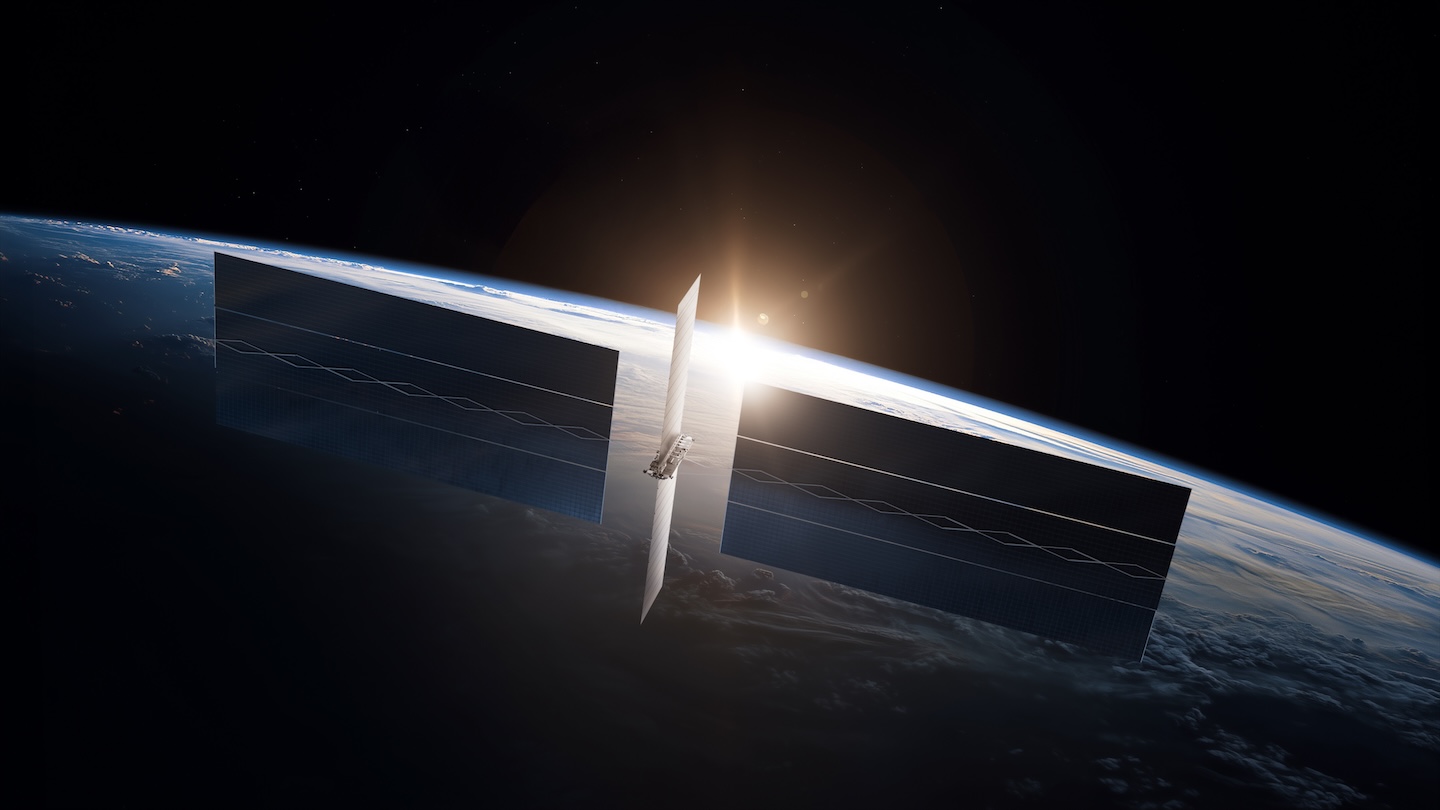
Google is about to put its own AI chips into orbit for the first time, and it is paying SpaceX to get them there.
The company said Thursday that the first in-orbit test of Project Suncatcher, its research effort to find out whether space can host large-scale AI computing, will fly next week on SpaceX’s Transporter-18 rideshare mission.
The satellite, called MVP, is about the size of a refrigerator and carries four of Google’s Tensor Processing Units, the same chips Google runs in its ground data centers. Google originally planned to launch two custom satellites in 2027, but chose to move faster by integrating its chips into a satellite.
MVP’s solar panels supply about one kilowatt of power, and Google will run Gemini models on the TPUs only in bursts of roughly 15 minutes before the chips shut down so the radiators can shed heat. In a blog post, Google said its Trillium TPUs survived vibration testing that mimicked sustained launch loads of up to 10g, with individual components seeing 50 to 100g, and handled a radiation dose greater than a five year mission would deliver.
SpaceX and Google mull massive partnership on Musk’s orbital data dream: report
Next week’s flight, slated for October 1, follows a relationship that became public in May, when Teslarati reported that Google was in talks with SpaceX for a launch deal tied to orbital data centers. Google also holds a stake of roughly 6% in SpaceX.
The two companies are chasing the same idea from very different starting points. SpaceX’s own orbital compute program is built around the AI1 satellite, a roughly 70 meter structure derived from Starlink V3 hardware that is designed for 150 kW of peak compute, about 150 times the power MVP will draw. Elon Musk has brushed off concerns about crowding orbit with those satellites, and SpaceX is building its Gigasat factory in Bastrop, Texas, to produce them, targeting an annualized rate of about 1 GW of space compute by the end of 2027.
Musk also posted on X on Thursday that “the amount of compute in space will obviously round up to 100% of all compute.”
Google has been more cautious in public. Its research estimates that launch prices need to fall below about $200 per kilogram before an orbital data center can compete with a ground facility on energy cost, a threshold the company believes could be reached around the mid 2030s. The Suncatcher team has said it expects the effort to remain a project rather than a product for years, which leaves the first real test of its hardware riding on a rocket from the company with the most aggressive timeline in the field.
Energy
Tesla Semi factory is getting a celebration nobody expected
Tesla will inaugurate its Nevada Semi factory September 24, five months after production quietly began ramping.
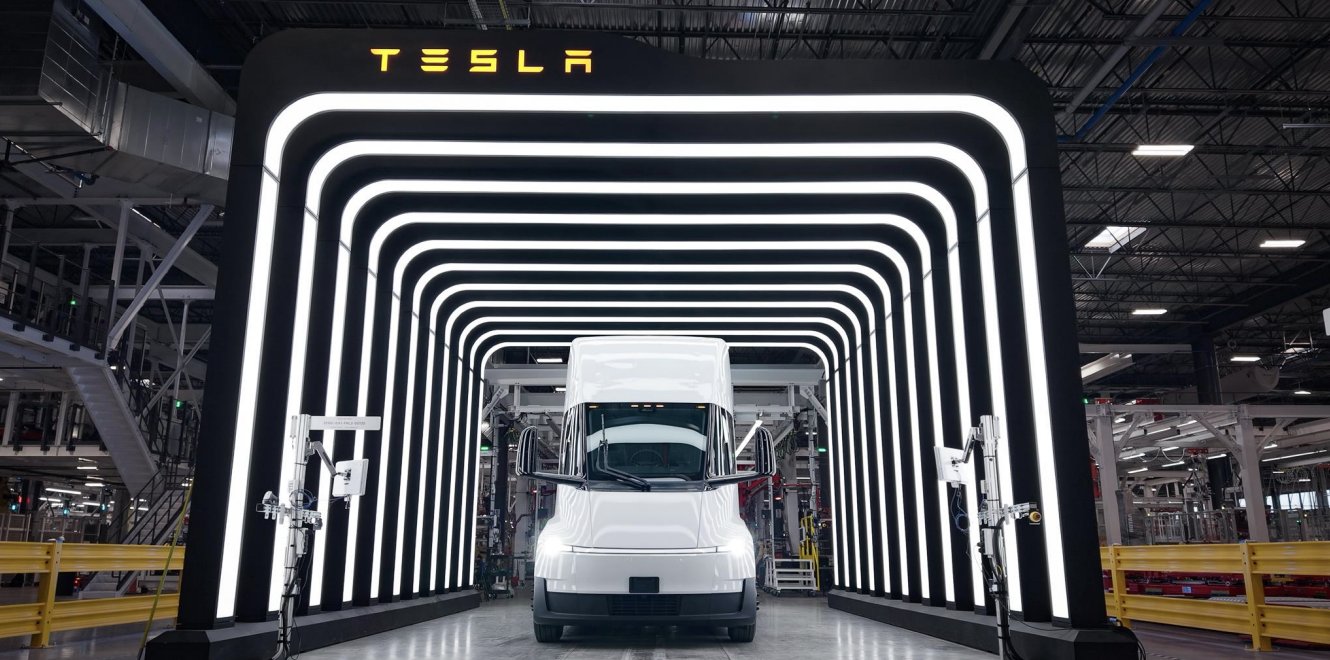
Tesla says it will officially inaugurate its new Semi factory in Nevada next month. The Tesla Semi account posted the announcement on X, sharing a graphic titled “Semi Rollout” with a date of September 24. No further details were given about the format of the event or who would attend.
While Tesla’s dedicated Semi plant in Sparks, adjacent to Gigafactory Nevada, opened back in April, with the first trucks rolling off the high volume line on April 29, the timing for the factory inauguration comes at a surprise. The ribbon cutting event five months into production is a break from how Tesla has usually handled its other factories, where the first truck or car off the line typically served as the milestone moment.
Inauguration of new Semi factory in Nevada next month pic.twitter.com/a8kAlxrOOn
— Tesla Semi (@tesla_semi) August 24, 2026
The 1.7 million square foot factory was built as part of a $3.6 billion expansion Tesla announced in early 2023, and it shares a site with the battery cell lines that feed the Semi’s structural pack, a decision meant to remove the supply bottleneck that delayed the truck for years. The plant is designed for 50,000 trucks a year at full ramp. Semi program director Dan Priestley has said production “is now ramping” rather than claiming it has reached scale.
Nine years passed between the Semi’s 2017 unveiling and this stage of production, with the truck slipping from an original 2019 target through hand built pilot units for PepsiCo and a slow build out of the Nevada plant. An inauguration event now gives Tesla a stage to talk up that ramp and reset expectations for how many trucks it can begin delivering at scale.
The September date also lines up with the Semi’s next milestone. Tesla confirmed the truck is heading to Europe with a full unveiling at the IAA Transportation trade show in Hannover, Germany, running September 15 through 20. Between the Nevada event and the Hannover reveal, Tesla has roughly a week and a half in September to make the case that the Semi is now a truck being built and sold on two continents rather than tested in a handful of fleets.

Elon Musk roasts India’s billionaire Mukesh Ambani as Starlink fight heats up

Elon Musk’s surprise addition to the X Takeover lineup has fans talking

It’s official: SpaceX takes aim at Verizon, AT&T, and T-Mobile

The Pentagon taps Elon Musk to design the battlefield of the future

Tesla Roadster’s new patent preps white-knuckle speeds, keeping it grounded


