News
Tesla factory worker sues company over alleged race and sexual harassment

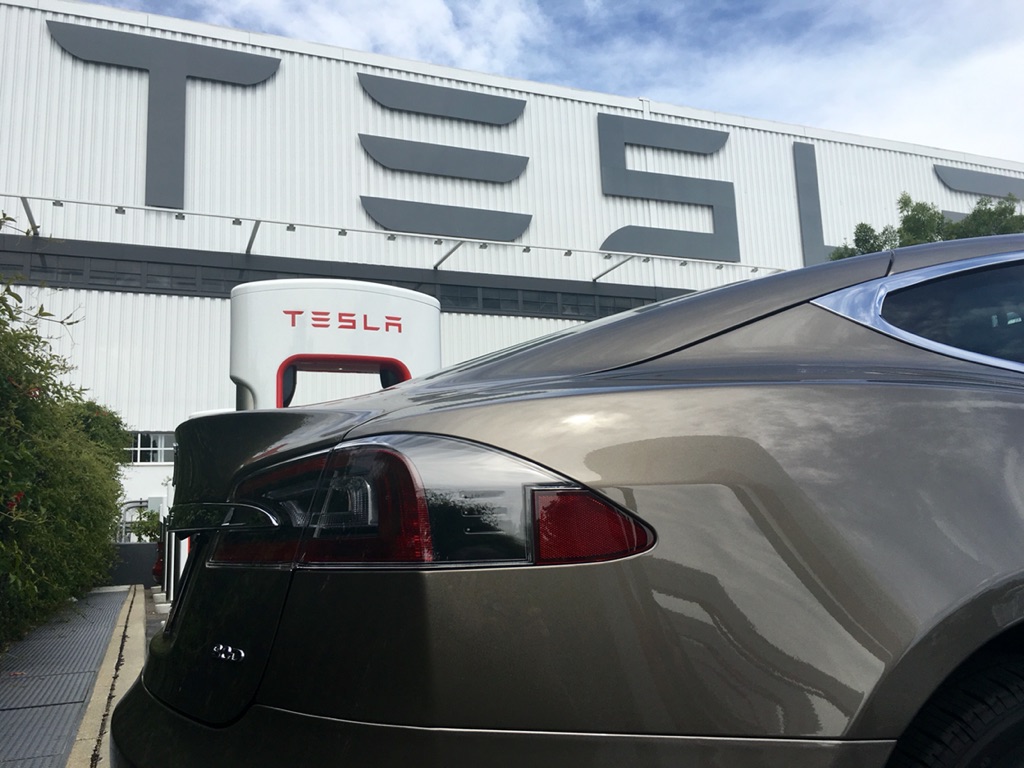
A new lawsuit filed by a former Tesla employee alleges that the company did not take action after what they claim was overwhelming evidence of a hostile workplace at the company’s Fremont, California factory.
Dewitt Lambert is being represented by the California Civil Rights Law Group who filed the suit this week which details charges including Race Harassment, Race Discrimination, Sexual Harassment, Retaliation, Failure to Prevent Harassment, Discrimination and Retaliation, Threats of Violence in Violation of the Ralph Act, Violation of the Bane Act, Failure to Accommodate, Failure to Engage in the Interactive Process, and Assault and Battery.
The suit and accompanying cellphone video which was taken in 2015, during the timeframe of the alleged harassment, show a tirade of racial slurs and strong language taking place inside a partially assembled Tesla Model S in the Fremont factory.
“The complaint alleges that Tesla failed, under California law, to take immediate and appropriate corrective action on Mr. Lambert’s behalf,” said Organ. “Because of this inaction my client is claiming psychological harm and medical problems. Tesla is liable for Mr. Lambert’s damages because it failed to adequately investigate and prevent damaging abuse from taking place in the workplace.”
The California Civil Rights Law Group sent Teslarati the video above and accompanying press release that includes a 10-month of the alleged discrimination, complaints and promotions of offending employees. It is not clear if the promotions are related to the allegations but it could certainly be seen as a motivating factor for the suit. It seems to indicate that Lambert was not able to get promoted while being subjected to the alleged workplace abuse while his supervisors were rewarded in light of the behavior.
A representative from Tesla provides Teslarati with the following statement in response to Lambert’s suit.
We believe strongly in having a good working environment and that people should look forward to coming to work every day. That means Tesla must always aspire to be transparent, respectful, fair and just. When we hear complaints or concerns raised by our employees, we take them very seriously.
A video recently came to light showing behavior by a group of employees at our factory acting in a way that we found disappointing and contrary to our values. It appears that a lawsuit is now being filed against Tesla in connection with this video. In the interest of transparency, we want to share what we know:
- Based on interviews we have done, in April 2016, an employee named Dewitt Lambert got into an argument with a coworker and threatened him with violence. Dewitt, this coworker, and other employees had been part of a group of friends who worked together at the factory and also socialized together outside of work. The other employee filmed Dewitt making the threat and Dewitt mistakenly believed that some of these other employees had provided the video to HR in order to get him in trouble. (In actuality, the video wasn’t provided to HR).
- Later that day, in an apparent attempt to turn the tables on the complaint that he thought had been made against him, Dewitt filed a complaint with HR about these other employees, claiming it was they who had mistreated him, including by using racially insensitive language.
- HR personnel investigated, interviewing all of the employees who were reportedly involved. That investigation turned up conflicting accounts of what happened, with other employees saying that Dewitt had the “dirtiest mouth” they had “ever heard,” including using the same racially insensitive language that he had complained about. In the end, there was no objective evidence that anything inappropriate occurred toward Dewitt. As a result, our HR team coached this group of employees on the importance of behaving professionally and the investigation was closed.
- Dewitt thereafter was transferred to another work area where he would have no further contact with those he complained about. There are no records of him complaining about new events for about a year after this. It seems that the transfer had its intended effect.
- On July 6, 2016, during an unrelated conversation with HR in which Dewitt was receiving a final written warning for posting proprietary photos of Tesla equipment on social media against company policy, Dewitt showed HR an old video (taken in late 2015) containing the kind of language that he had previously complained about. This was the first time any video was mentioned or shown. The investigation was reopened.
- The HR representative who had led the prior investigation left the company two days later on July 8, 2016 and didn’t hand off the investigation to anyone else.
- Although Dewitt continued to have regular interaction with HR on a host of topics, for which he thanked them for their support, we have no evidence indicating that he came to HR with any further complaints of this nature. Then, through an attorney, Dewitt submitted a letter six months later demanding a very large payment or he would file a lawsuit.
- Once again, we looked into his claims and found that the co-workers Dewitt complained about described the situation very differently. They claimed once again they had all been friends and socialized outside of work, and that all of them (including Dewitt) used similar insensitive language with each other on a regular, ongoing basis, including in social contexts outside of the workplace.
- Confirming this, one of the employees Dewitt accused shared personal instant messages (attached) which showed Dewitt using the same language when describing other colleagues involved in the argument from April 2016. One of those messages indicated why he apparently decided to make these accusations – he was upset because of his belief that these colleagues had turned a video into HR showing Dewitt threatening one of them. The employee stated this was what led Dewitt to conjure up false claims about these other individuals.
- Dewitt alleges that he was not promoted as retaliation for having made complaints. This is false. Dewitt was promoted 12 months ago, and the reason he wasn’t given a second promotion within 12 months is that, among other things, he had been given a final written warning for posting pictures of confidential Tesla technology on Facebook in clear violation of company policy.
That brings us to today. We have been told by Dewitt’s attorney that they will be following up on their previous demand for a large payment by filing a lawsuit. The lawsuit has been timed to coincide with a carefully planned media blitz in an attempt to create a disingenuous narrative that is at odds with the facts.
It’s clear that our investigation should have continued uninterrupted until all the facts were known. We have terminated several employees based on what we’ve learned and have suspended Dewitt with pay so that we can finish investigating the circumstances of the instant messages that were just provided to us about his threats of violence against coworkers. We will continue to take action as necessary, including parting ways with anyone whose behavior prevents Tesla from being a great place to work. However, it’s also clear that Dewitt’s version of events is not supported by the facts. It would never be right to take action based on an accusation alone — there must be objective evidence or credible witnesses to ensure that an innocent person is not treated unfairly.
It is night and day to work at a company with strong purpose and great team spirit, where people look forward to coming to work. Monday either feels like jail or joy, and the people you work with make all the difference in the world.

The full lawsuit can be seen here:
https://www.teslarati.com/wp-content/uploads/2017/03/Tesla-Complaint-Filed-2017.03.27.pdf


Cybertruck
Tesla drops latest hint that new Cybertruck trim is selling like hotcakes
According to Tesla’s Online Design Studio, the new All-Wheel-Drive Cybertruck will now be delivered in April 2027. Earlier orders are still slated for early this Summer, but orders from here on forward are now officially pushed into next year:

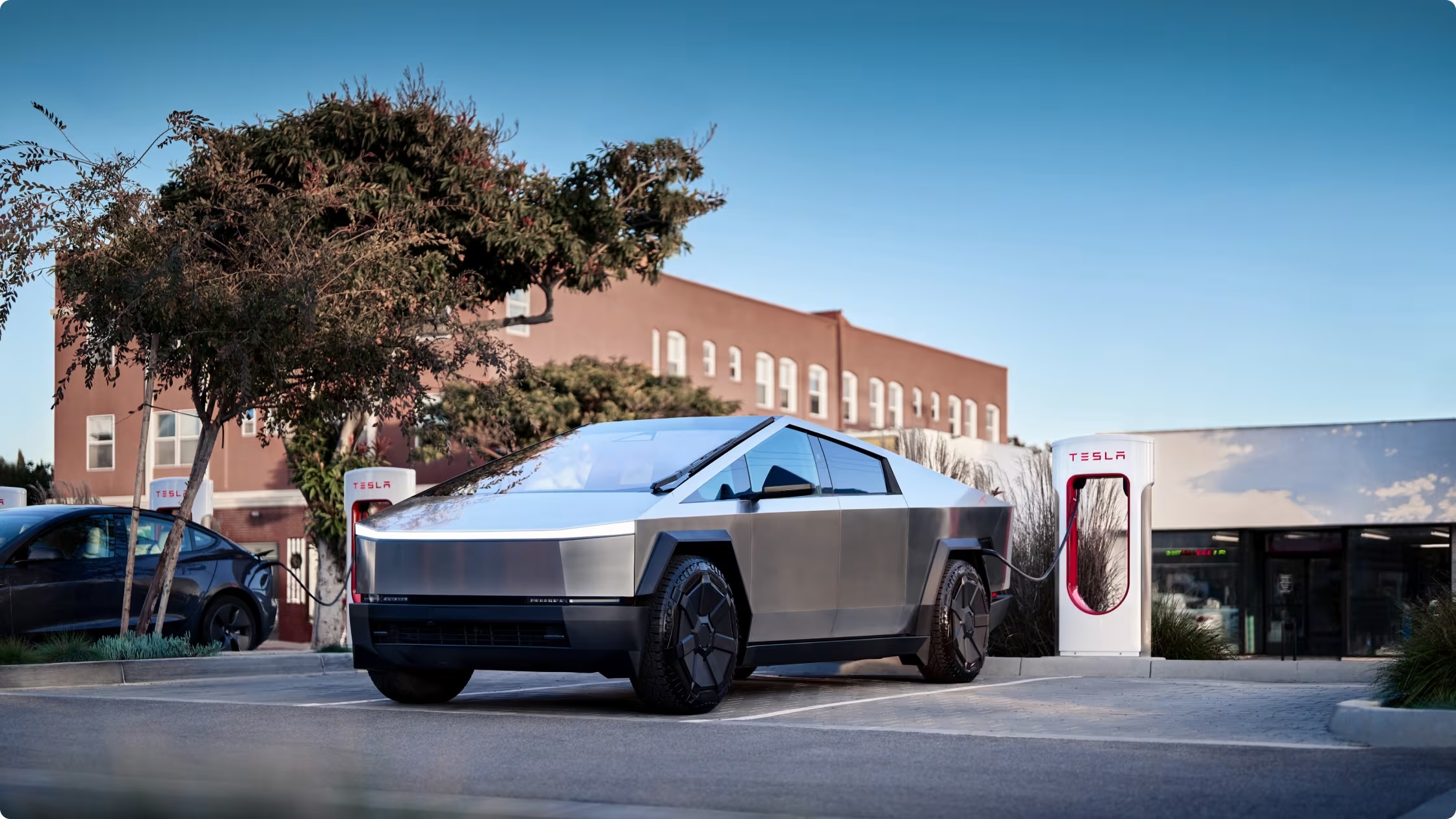
Tesla’s new Cybertruck offering has had its delivery date pushed back once again. This is now the second time, and deliveries for the newest orders are now pushed well into 2027.
According to Tesla’s Online Design Studio, the new All-Wheel-Drive Cybertruck will now be delivered in April 2027. Earlier orders are still slated for early this Summer, but orders from here on forward are now officially pushed into next year:
🚨 Tesla has updated the $59,990 Cybertruck Dual Motor AWD’s estimated delivery date to April 2027.
First deliveries are still slated for June, but if you order it now, you’ll be waiting over a year.
Demand appears to be off the charts for the new Cybertruck and consumers are… pic.twitter.com/raDCCeC0zP
— TESLARATI (@Teslarati) February 26, 2026
Just three days ago, the initial delivery date of June 2026 was pushed back to early Fall, and now, that date has officially moved to April 2027.
The fact that Tesla has had to push back deliveries once again proves one of two things: either Tesla has slow production plans for the new Cybertruck trim, or demand is off the charts.
Judging by how Tesla is already planning to raise the price based on demand in just a few days, it seems like the company knows it is giving a tremendous deal on this spec of Cybertruck, and units are moving quickly.
That points more toward demand and not necessarily to slower production plans, but it is not confirmed.
Tesla Cybertruck’s newest trim will undergo massive change in ten days, Musk says
Tesla is set to hike the price on March 1, so tomorrow will be the final day to grab the new Cybertruck trim for just $59,990.
It features:
- Dual Motor AWD w/ est. 325 mi of range
- Powered tonneau cover
- Bed outlets (2x 120V + 1x 240V) & Powershare capability
- Coil springs w/ adaptive damping
- Heated first-row seats w/ textile material that is easy to clean
- Steer-by-wire & Four Wheel Steering
- 6’ x 4’ composite bed
- Towing capacity of up to 7,500 lbs
- Powered frunk
Interestingly, the price offering is fairly close to what Tesla unveiled back in late 2019.
Elon Musk
Elon Musk outlines plan for first Starship tower catch attempt
Musk confirmed that Starship V3 Ship 1 (SN1) is headed for ground tests and expressed strong confidence in the updated vehicle design.

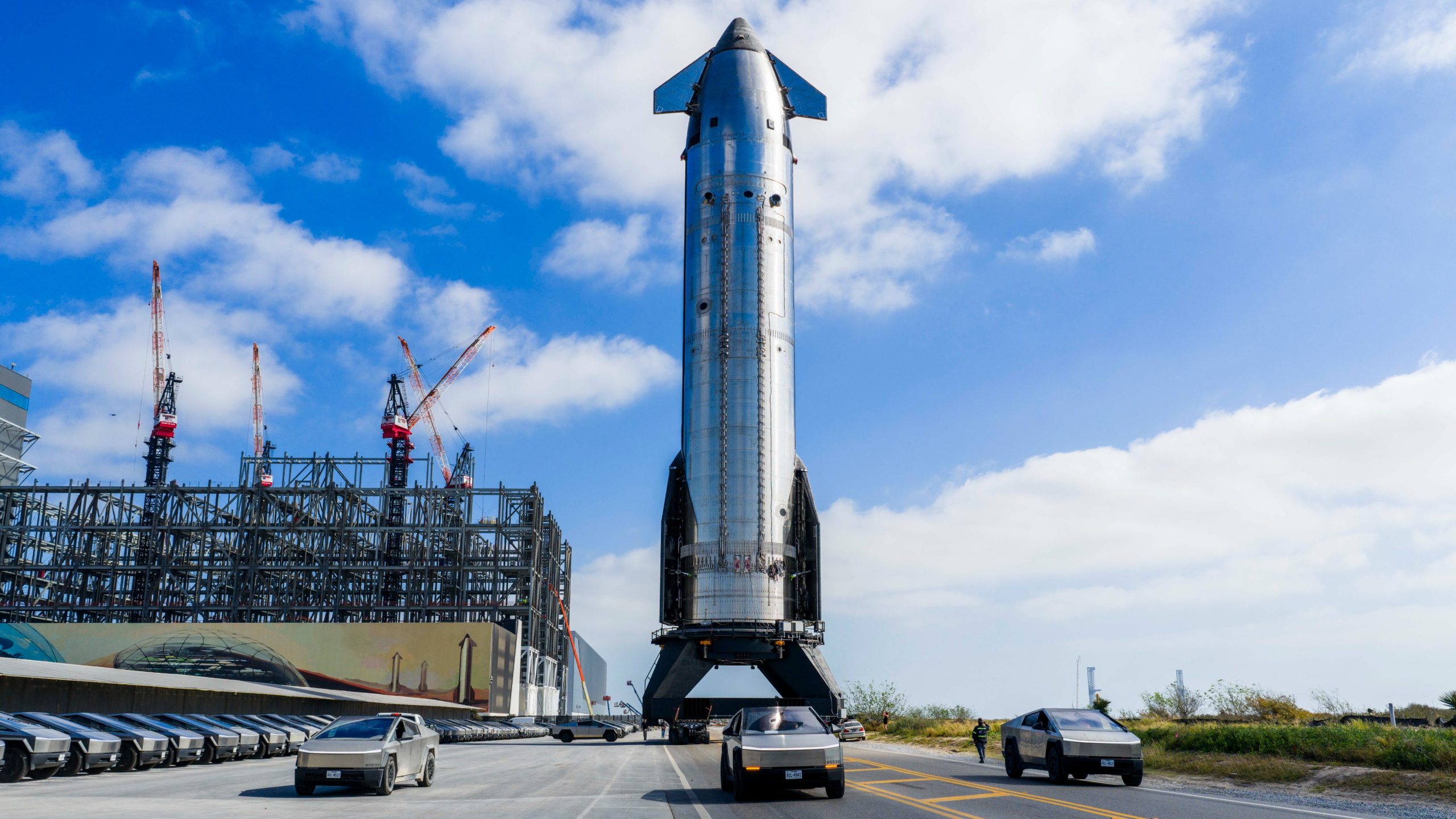
Elon Musk has clarified when SpaceX will first attempt to catch Starship’s upper stage with its launch tower. The CEO’s update provides the clearest teaser yet for the spacecraft’s recovery roadmap.
Musk shared the details in recent posts on X. In his initial post, Musk confirmed that Starship V3 Ship 1 (SN1) is headed for ground tests and expressed strong confidence in the updated vehicle design.
“Starship V3 SN1 headed for ground tests. I am highly confident that the V3 design will achieve full reusability,” Musk wrote.
In a follow-up post, Musk addressed when SpaceX would attempt to catch the upper stage using the launch tower’s robotic arms.
“Should note that SpaceX will only try to catch the ship with the tower after two perfect soft landings in the ocean. The risk of the ship breaking up over land needs to be very low,” Musk clarified.
His remarks suggest that SpaceX is deliberately reducing risk before attempting a tower catch of Starship’s upper stage. Such a milestone would mark a major step towards the full reuse of the Starship system.
SpaceX is currently targeting the first Starship V3 flight of 2026 this coming March. The spacecraft’s V3 iteration is widely viewed as a key milestone in SpaceX’s long-term strategy to make Starship fully reusable.
Starship V3 features a number of key upgrades over its previous iterations. The vehicle is equipped with SpaceX’s Raptor V3 engines, which are designed to deliver significantly higher thrust than earlier versions while reducing cost and weight.
The V3 design is also expected to be optimized for manufacturability, a critical step if SpaceX intends to scale the spacecraft’s production toward frequent launches for Starlink, lunar missions, and eventually Mars.
News
Tesla FSD (Supervised) could be approved in the Netherlands next month: Musk
Musk shared the update during a recent interview at Giga Berlin.

Tesla CEO Elon Musk shared that Full Self-Driving (FSD) could receive regulatory approval in the Netherlands as soon as March 20, potentially marking a major step forward for Tesla’s advanced driver-assistance rollout in Europe.
Musk shared the update during a recent interview at Giga Berlin, noting that the date was provided by local authorities.
“Tesla has the most advanced real-world AI, and hopefully, it will be approved soon in Europe. We’re told by the authorities that March 20th, it’ll be approved in the Netherlands,’ what I was told,” Musk stated.
“Hopefully, that date remains the same. But I think people in Europe are going to be pretty blown away by how good the Tesla car AI is in being able to drive.”
Tesla’s FSD system relies on vision-based neural networks trained on real-world driving data, allowing vehicles to navigate using cameras and AI rather than traditional sensor-heavy solutions.
The performance of FSD Supervised has so far been impressive. As per Tesla’s safety report, Full Self-Driving Supervised has already traveled 8.3 billion miles. So far, vehicles operating with FSD Supervised engaged recorded one major collision every 5,300,676 miles.
In comparison, Teslas driven manually with Active Safety systems recorded one major collision every 2,175,763 miles, while Teslas driven manually without Active Safety recorded one major collision every 855,132 miles. The U.S. average during the same period was one major collision every 660,164 miles.
If approval is granted on March 20, the Netherlands could become the first European market to greenlight Tesla’s latest supervised FSD (Supervised) software under updated regulatory frameworks. Tesla has been working to secure expanded FSD access across Europe, where regulatory standards differ significantly from those in the United States. Approval in the Netherlands would likely serve as a foundation for broader EU adoption, though additional country-level clearances may still be required.

Tesla drops latest hint that new Cybertruck trim is selling like hotcakes

Elon Musk outlines plan for first Starship tower catch attempt


