News
Tesla owners share first glimpse of Full Self-Driving Beta in action, release notes, Autopilot settings

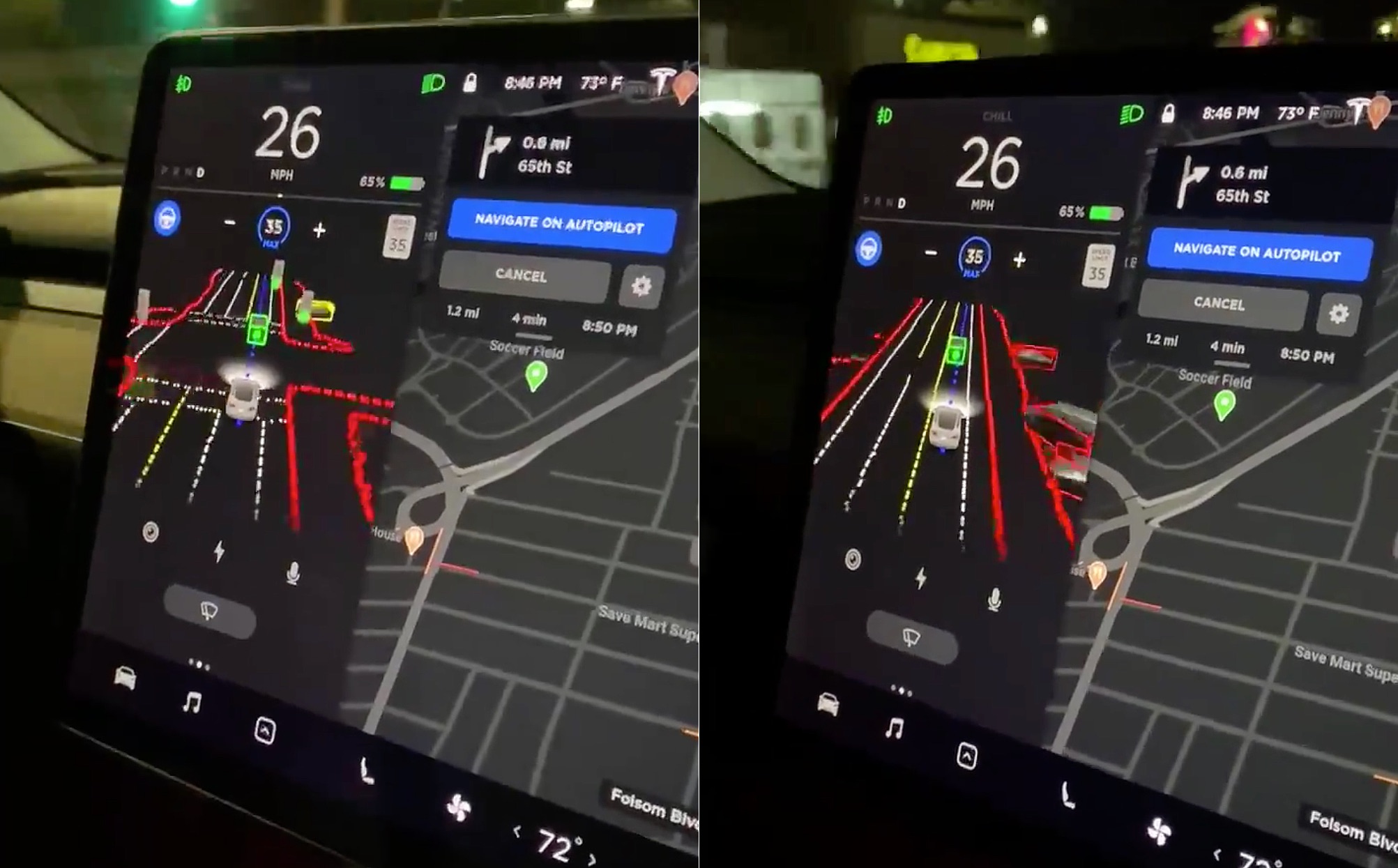
Tesla owners who are part of the limited Full Self-Driving rollout have started sharing some images and videos of the advanced driver-assist features in action. Based on videos and the Release Notes of the limited beta, it appears that Tesla is heavily emphasizing safety.
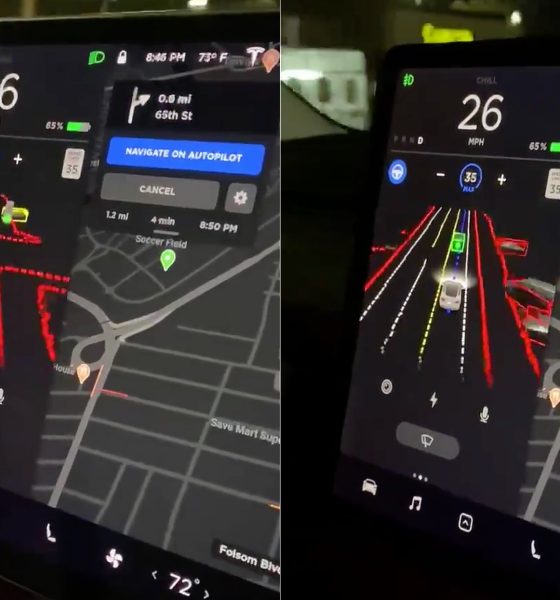
Among the lucky Tesla owners who received the update were @brandonee916 and the @teslaownerssv group, both of whom shared a images and short clips of the limited Full Self-driving beta in action.
Overall, the UI of the limited beta seems to be quite rough in its current state. With this in mind, there seems to be a good chance that the visuals of FSD will be more refined by the time it gets a wider release.
The Tesla Owners Club Silicon Valley group also shared the Release Notes for the recent limited FSD beta rollout, which Tesla labeled “New Early Access Software Update.” Tesla’s focus on safety was immediately evident.
“Full Self-Driving is in early limited access Beta and must be used with additional caution. It may do the wrong thing at the worst time, so you must always keep your hands on the wheel and play extra attention to the road. Do not become complacent,” the company wrote.
The first paragraph of the FSD update carries the same cautious tone as the Elon Musk’s recent statements when he posted about the limited access FSD beta on Twitter. Musk emphasized that the rollout of the limited FSD beta “will be extremely slow & cautious, as it should” in his tweets yesterday.
Similar to the company’s rollout of its more advanced Autopilot features, Tesla also advised the participants of its limited FSD beta to always keep their hands at the steering wheel. This is something that Elon Musk has mentioned in the past, with the CEO stating that driver attention would be required even after FSD is in its feature-complete state.
“When Full Self-Driving is enabled your vehicle will make lane changes off highway, select forks to follow your navigation route, navigate around other vehicles and objects, and make left and right turns. Use Full Self-Driving in limited Beta only if you will pay constant attention to the road, and will be prepared to act immediately, especially around blind corners, crossing intersections, and narrow driving situations,” Tesla wrote.
The limited FSD beta embodies the results of Tesla’s highly-anticipated Autopilot rewrite, which Elon Musk has hinted at multiple times in the past. During the third-quarter earnings call, Musk shared some insights about the limited beta’s release.
“Regarding the Full Self-Driving beta release. The Autopilot team, again, just a really all-star team. I spent a lot of time with the Autopilot team. And there’s a lot of really talented people in that team who’ve worked incredibly hard to make the — to get the beta release out. So I’d just really like to thank them for their hard work. And it’s just a very smart group of people.
“So I think we’re starting very slow and very cautiously because the world is a complex and messy place. And so, we put it out there last night, and then we’ll see how it goes and then probably release it to more people this weekend or early next week. And then just gradually step it up until we have, hopefully, a wide release by the end of this year,” Musk said.


News
Tesla unveils mysterious prototype at Giga Texas: Is the Model Y L coming to America?
The Model Y L has been available in China for some time, but Americans are wondering when it will potentially come to the United States, offering a larger version of the best-selling vehicle in the world, as the Model X is officially phased out.

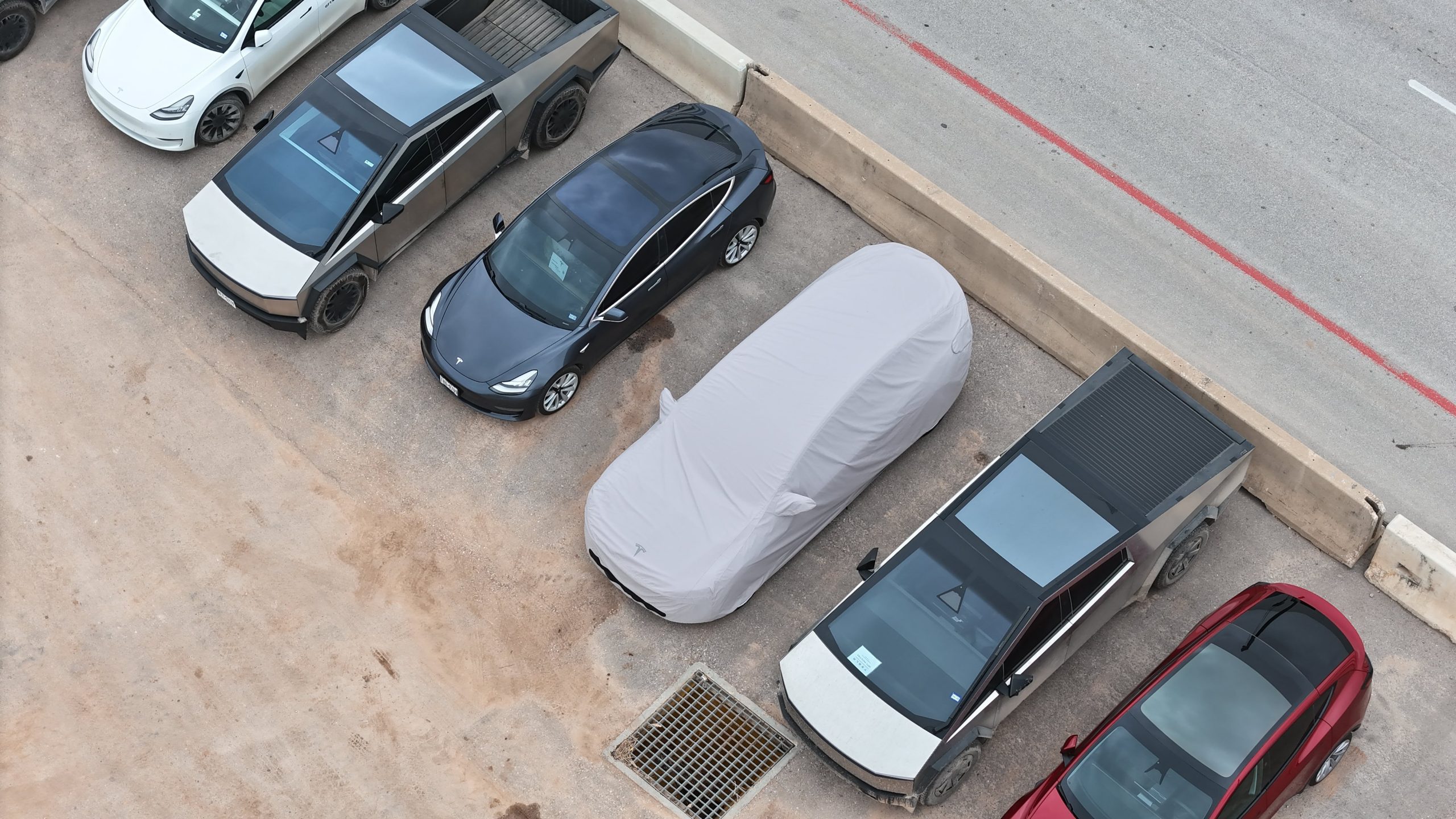
Tesla unveiled a mysterious prototype, covered up between a Model Y and a Cybertruck at Gigafactory Texas, perhaps giving yet another hint that the Model Y L is coming to America.
The Model Y L has been available in China for some time, but Americans are wondering when it will potentially come to the United States, offering a larger version of the best-selling vehicle in the world, as the Model X is officially phased out.
Giga Texas observer and drone operator Joe Tegtmeyer captured an image of the vehicle on May 6, showing a fully-covered prototype parked alongside a standard Model Y and a Cybertruck.
This mystery Tesla is covered at Gigafactory Texas
What do you think it is? https://t.co/l5WVKLi9yM pic.twitter.com/CcOybDkCkn
— TESLARATI (@Teslarati) May 6, 2026
From top-down and angled views, the prototype appears nearly identical in scale to the Model Y but reveals noticeably distinct rear proportions—an elongated rear door that stretches farther over the wheel arch and rear glass that flows uninterrupted to the spoiler lip.
The side-by-side placement provides an immediate size reference. The mystery vehicle sits comfortably between the compact Model Y and the massive Cybertruck, suggesting it occupies a practical middle ground for families seeking more interior room without jumping to a full-size pickup.
Enthusiasts quickly took to social media with guesses ranging from an extended-wheelbase Model Y to a potential station-wagon variant.
The sight of this prototype follows an earlier look at another shrouded body-in-white resting in a wooden shipping crate at the Giga Texas plant in late March.
That prototype appeared to display an elongated silhouette. Some analysis seems to show nearly exact dimensions as to what is reported for the Model Y L in the Chinese market, approximately 4.98 meters long with a 3.04-meter wheelbase, roughly seven inches longer overall than the U.S.-spec Model Y. The rear-door extension and glass-to-spoiler design were identical to the current sighting:
The Model Y L has already proven popular in China, where it launched in six- and seven-seat configurations and quickly ranked among the top-selling mid-to-large SUVs. Owners enjoy roughly 10 percent more cargo space and enhanced family versatility.
Tesla has remained silent on U.S. plans other than CEO Elon Musk saying it could come in late 2026, but localizing production at Giga Texas would make strategic sense.
With the Model X phase-out and steady Model Y output already humming along expanded lines, a longer-wheelbase variant could add tens of thousands of annual deliveries without major retooling.
The latest sighting arrives amid Tesla’s broader push to refresh its lineup. Whether this prototype represents the long-rumored Model Y L, a subtle Juniper-style update, or something entirely new remains unconfirmed.
Yet the consistent visual cues—precise dimensional match, distinctive rear styling, and strategic placement at Giga Texas—point strongly toward an extended Model Y designed for American families who want extra space without sacrificing the Model Y’s efficiency and affordability.Tesla watchers will be monitoring future drone flights closely.
If the prototype is indeed the Model Y L, it could mark a significant expansion of the company’s best-selling vehicle and deliver the extra room many U.S. buyers have been requesting for years. For now, the blue tarp keeps its secrets—but the clues are getting harder to hide.
News
Tesla Roadster gets an update, but not the one fans were looking for
Tesla has quietly filed a new trademark application for its next-generation Roadster, giving enthusiasts their first official glimpse of fresh branding for the long-teased electric supercar.
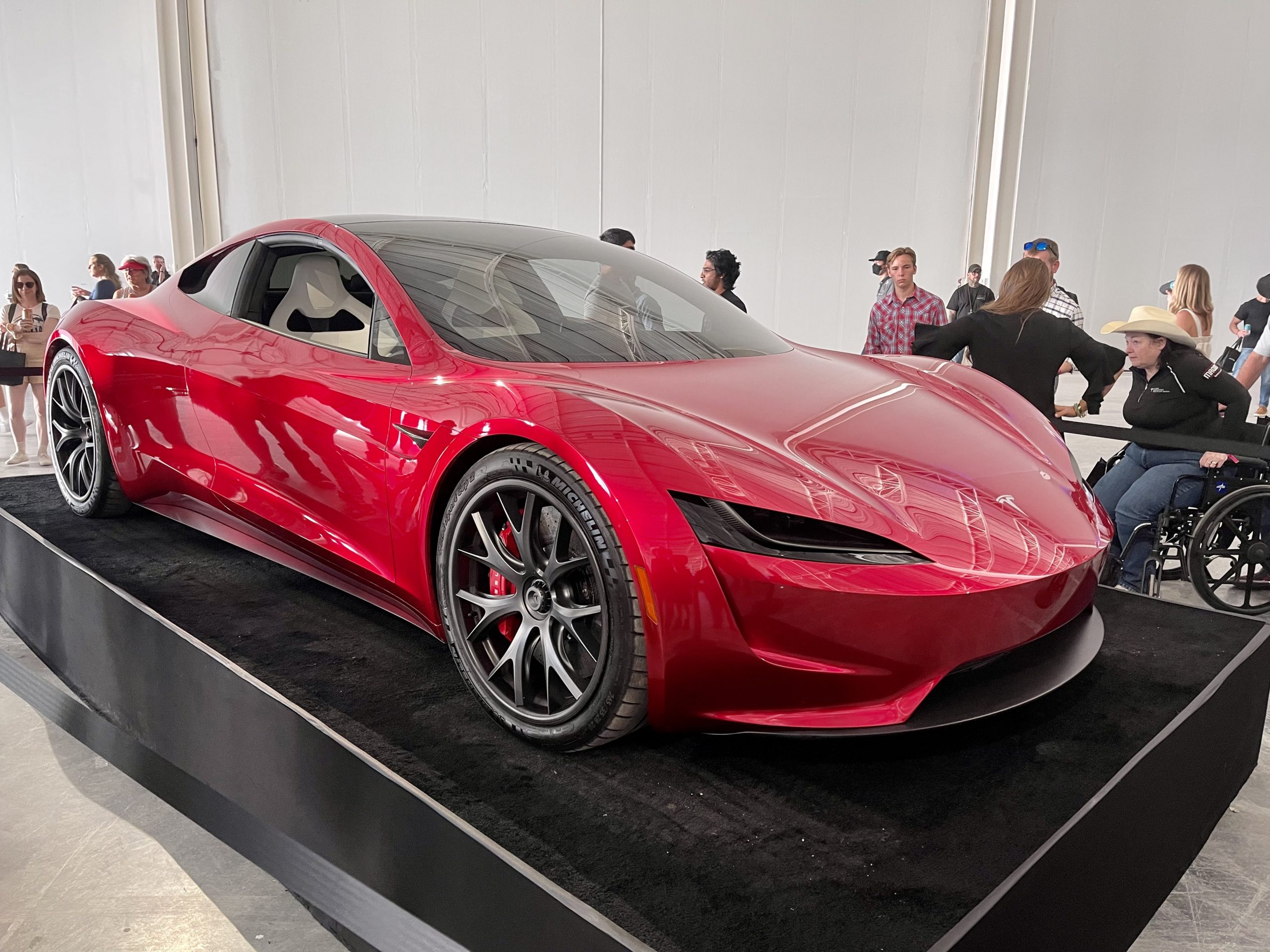
Tesla has been slow to show its hand regarding the massive project that is the Roadster, but it is now coming forth with a new update.
However, it is probably not the one fans were looking for.
Tesla has quietly filed a new trademark application for its next-generation Roadster, giving enthusiasts their first official glimpse of fresh branding for the long-teased electric supercar.
The February 3 filing includes an inverted triangular badge with the word “ROADSTER” centered above four vertical lines that, according to the application, represent “speed, propulsion, heat, or wind.”
A sleek, angular wordmark and a minimalist curved-line silhouette hinting at the car’s aerodynamic shape round out the trio of marks.
I found something cool. Tesla has filed a new trademark application for its next-generation Roadster. It could be the new Roadster logo/badge.
The filing says the lines depict speed, propulsion, heat or wind.
(I took the liberty of making the logo red. Trademark filings are… pic.twitter.com/W9JSDwTRL7
— Sawyer Merritt (@SawyerMerritt) May 6, 2026
For a program that began with Elon Musk’s 2017 reveal, this is tangible forward motion. The original Roadster proved EVs could be thrilling; the next generation aims higher, with promises of sub-two-second 0-60 mph acceleration and, in its most extreme configuration, optional SpaceX cold-gas thrusters for rocket-like thrust.
The new trademarks suggest Tesla is now locking down the visual identity that will accompany those headline specs, as well as a small hint that maybe we’re finally getting close. However, the company has not revealed any progress on the vehicle itself or its specs to the public.
It continues to tease with developments like this one.
That said, the update lands with a familiar bittersweet note. Fans have waited nearly a decade since the initial unveiling. Production was once eyed for 2020, then 2021, then later still. In the intervening years, Tesla has delivered the Model Y, Cybertruck, Semi, and major autonomy advances while scaling its energy business.
The Roadster has taken a back seat, and the delays have been genuinely disappointing. Many longtime supporters have grown frustrated watching renderings and hearsay while other marques roll out ever-faster electric sports cars.
Yet, the Roadster program itself still sparks genuine excitement. It represents the purest expression of Tesla’s “accelerate the world’s transition to sustainable energy” mission—pushing performance boundaries to prove EVs can outperform anything with an engine.
The new branding, modest as it is, keeps that promise alive. It tells owners and prospective buyers that Tesla hasn’t forgotten the car that started it all.
No one would blame fans for wanting more than a logo right now. But in an industry where many concepts never leave the drawing board, the fact that Tesla continues to invest in and protect the Roadster’s identity is reason for measured optimism.
The wait has tested patience, but when the next-generation Roadster finally arrives, the new badge may well adorn one of the most exciting cars ever built. For those who have followed the journey this far, that payoff still feels worth it.
News
Tesla gets a massive order for the Semi: 370 units and $100M
WattEV, a leading provider of electric freight operations and charging infrastructure in the United States, has announced one of the largest deployments of electric Class 8 trucks in California history: an order for 370 Tesla Semi vehicles.
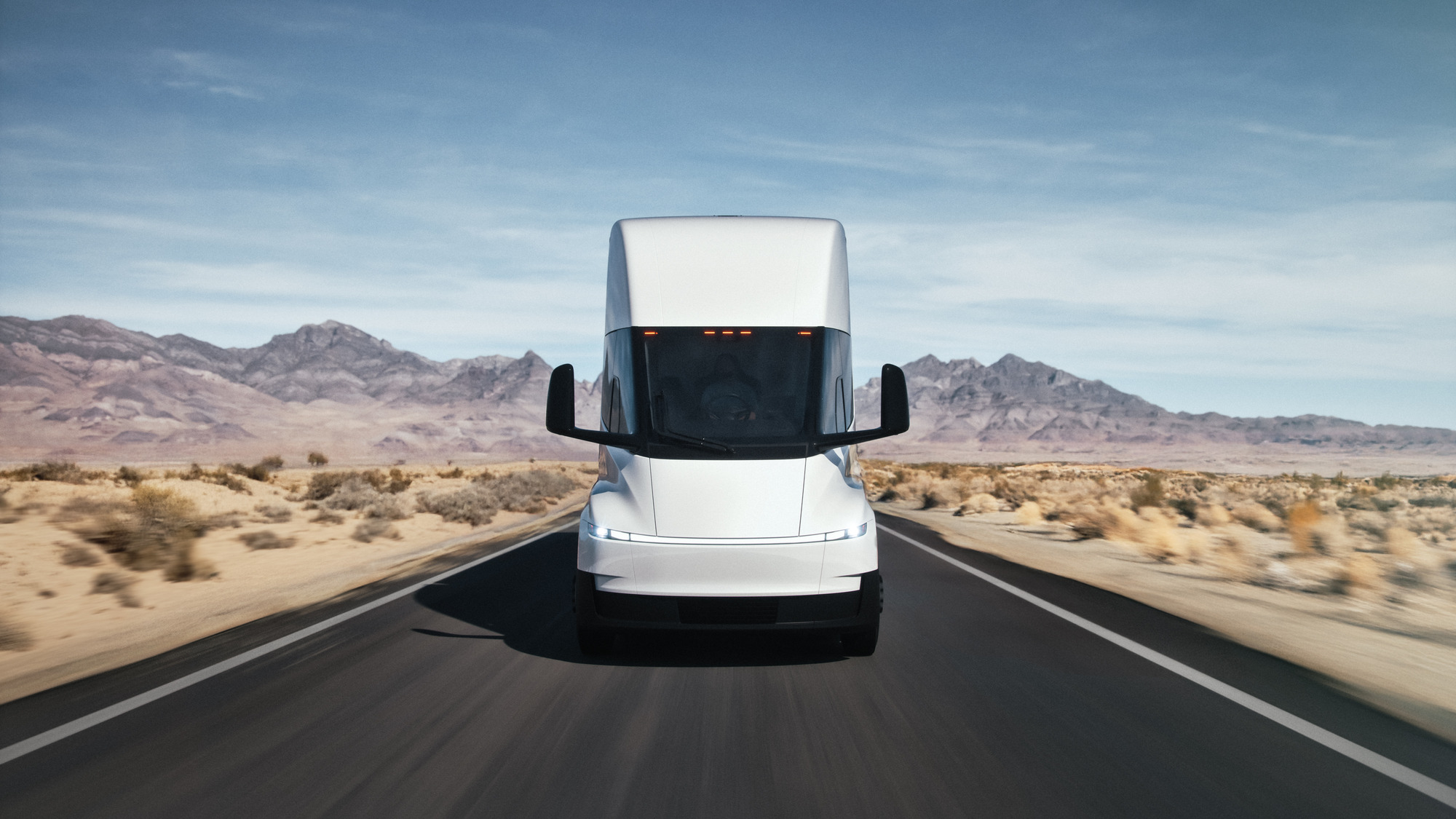
Tesla just got a massive order for the Semi, and it is its largest by a long shot.
WattEV, a leading provider of electric freight operations and charging infrastructure in the United States, has announced one of the largest deployments of electric Class 8 trucks in California history: an order for 370 Tesla Semis.
Valued at approximately $100 million, this marks the state’s biggest single electric truck order to date and signals accelerating momentum for zero-emission long-haul freight.
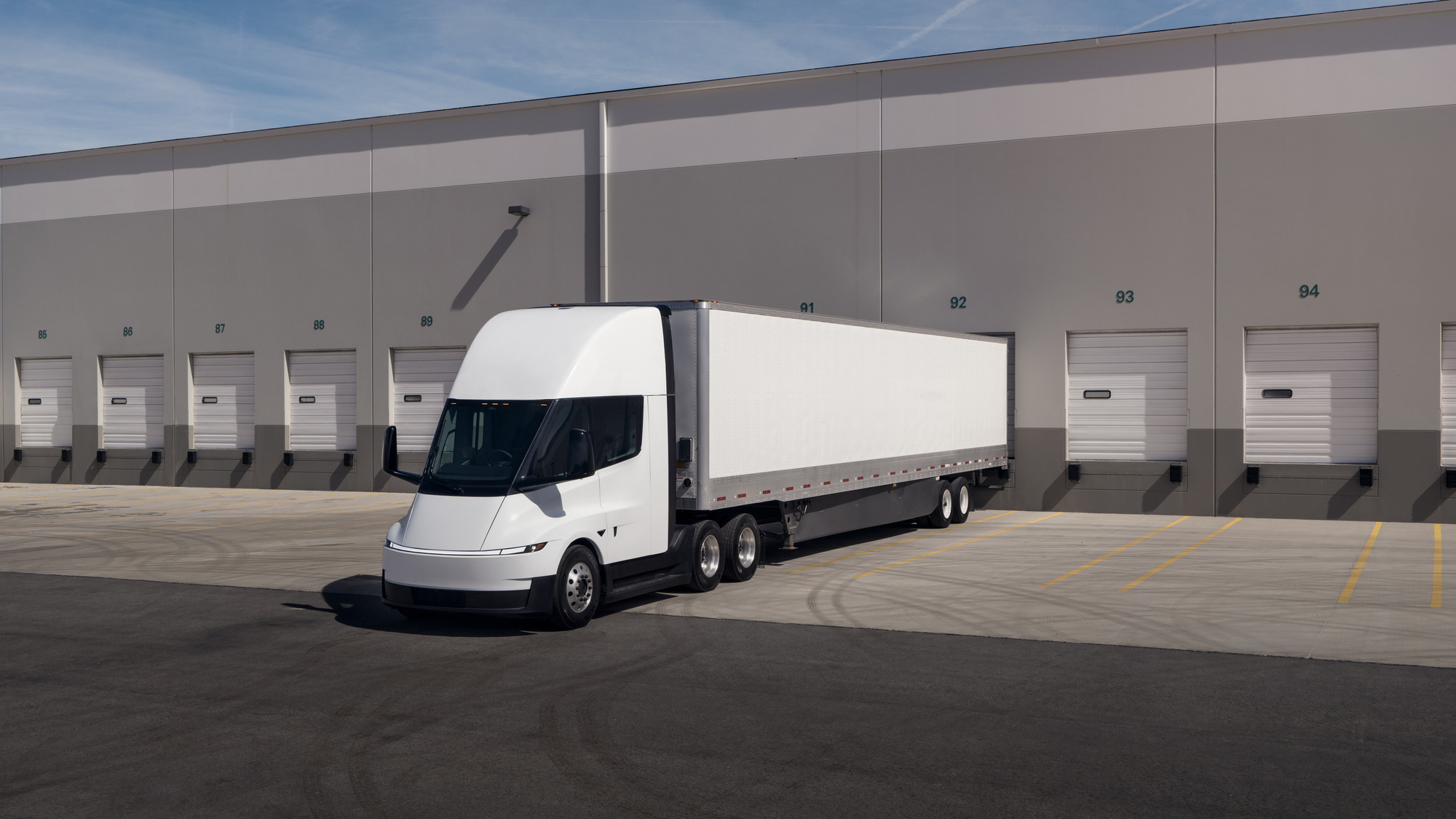
Credit: Tesla
Deliveries are set to begin with the first 50 Tesla Semis in 2026, with the full fleet operational by the end of 2027. More than 300 of these trucks will support a joint program with the Port of Oakland, helping electrify drayage and regional freight routes. The initiative aligns with California’s ambitious goals to transition to carbon-neutral freight operations.
Salim Youssefzadeh, CEO of WattEV, said at the annual ACT Expo industry event that the Semi was the easiest choice:
“We selected the Tesla Semi based on cost, performance, and availability after issuing a public request for proposals…With the Tesla Semi now entering mass production and drawing strong reviews from fleet operators nationwide, WattEV’s vertically integrated model – combining vehicle deployment, megawatt-class charging infrastructure, and full-service leasing – offers a turn-key path for carriers without any capital risk.”
Critical to the rollout are new Megawatt Charging System (MCS) hubs in Oakland, Fresno, Stockton, and Sacramento. These stations will deliver up to 300 miles of range in roughly 30 minutes—comparable to a traditional diesel fill-up. The Oakland depot, where WattEV recently broke ground, will serve as a cornerstone for northern and central California corridors, connecting ports to inland hubs and beyond.
This deployment builds on WattEV’s existing experience. The company has already logged millions of electric miles in Southern California, including early Tesla Semi deployments at the Ports of Long Beach and Los Angeles. By combining high-efficiency electric trucks with strategically placed fast-charging depots, WattEV aims to prove that battery-electric long-haul trucking can match—or exceed—diesel economics while slashing emissions.
The order arrives as Tesla ramps up Semi production at its Nevada factory, targeting higher volumes in 2026. Fleet operators nationwide have praised the Semi’s real-world performance, including strong torque, low operating costs, and advanced safety features. For California, the project supports air quality improvements around ports and highways while demonstrating scalable infrastructure for heavy-duty electrification.
Industry observers see this as a pivotal step toward broader adoption. With diesel trucks facing rising fuel and regulatory costs, turnkey electric solutions like WattEV’s could accelerate the shift. As the first 50 Semis hit the road in 2026, they will not only move freight but also help build the charging network that paves the way for even larger fleets.
This landmark order underscores Tesla’s growing footprint in commercial trucking and California’s leadership in sustainable transportation. For WattEV and its partners, it’s more than a vehicle purchase—it’s the foundation of a zero-emission freight network connecting Northern and Central California.

Tesla unveils mysterious prototype at Giga Texas: Is the Model Y L coming to America?

Tesla Roadster gets an update, but not the one fans were looking for


