Investor's Corner
Tesla investors’ letters not being read by DE Judge who rescinded Musk pay package: report

Delaware Chancery Court Chief Judge Kathaleen St. J. McCormick has reportedly admitted that she has received “many communications” from Tesla investors about her decision to rescind CEO Elon Musk’s 2018 pay package and the request of the lawyers who won the case to be paid over $5 billion in TSLA stock. The Judge, however, has reportedly noted that she is not reading any of the shareholders’ letters.
In late January, Judge McCormick ruled in favor of thrash metal drummer and car enthusiast Richard Tornetta, who sued Tesla over Elon Musk’s 2018 pay package. When he filed his legal complaint, Tornetta held nine shares. In a brief following Judge McCormick’s judgement, Tornetta’s lawyers from Bernstein Litowitz Berger & Grossmann argued that they should be compensated with 29 million TSLA shares for winning the case. Such an amount of shares would be worth over $5 billion as of Tuesday’s close.
Tesla retail shareholders have initiated an effort to explain to Judge McCormick that awarding 29 million TSLA shares to Tornetta’s lawyers would harm investors in the electric vehicle maker. The movement, which was led by Tesla retail shareholder Alexandra Merz, also involved thousands of investors explaining that they fully supported Musk’s 2018 pay package. Unfortunately for the TSLA shareholders, it would appear that they efforts are falling on deaf ears, at least for now.
As noted in a report from Bloomberg News, Judge McCormick noted that she is not reading the letters from the TSLA investors. She reportedly noted that the state’s judiciary code “prohibits me from considering” the letters from non-parties in the litigation “who claim to hold stock in Tesla.” Judge McCormick has reportedly asked Tesla and Tornetta’s legal teams to recommend a process for handling the correspondence from the TSLA investors.
Is this a possibility, @MartinViecha and @rohanspatel ?— Ale?andra Merz (@TeslaBoomerMama) March 13, 2024
Judge McCormick’s comments have been received with some raised eyebrows from TSLA shareholders on social media. Some noted that her comment about “non-parties” in the litigation are particularly interesting. After all, her decision to rescind Elon Musk’s 2018 pay package was reportedly done to protect the interest of TSLA shareholders. It is then quite strange to see Judge McCormick opting not to read letters from the company’s actual shareholders.
In response to Judge McCormick’s apparent refusal to read the letters that have been sent to her by TSLA shareholders, Tesla investors are considering other avenues to make their voices heard. Some have wondered if it would be a good idea for TSLA retail investors to resend their letters to the electric vehicle maker through the Tesla-verified shareholder portal. This way, Tesla or its legal team could forward the correspondence to Judge McCormick as verified shareholder letters.
Don’t hesitate to contact us with news tips. Just send a message to simon@teslarati.com to give us a heads up.


Elon Musk
Elon Musk just upped his Tesla stake further fueling SpaceX merger conversation
Elon Musk just collected a $116 billion Tesla payday and the timing is eye-opening

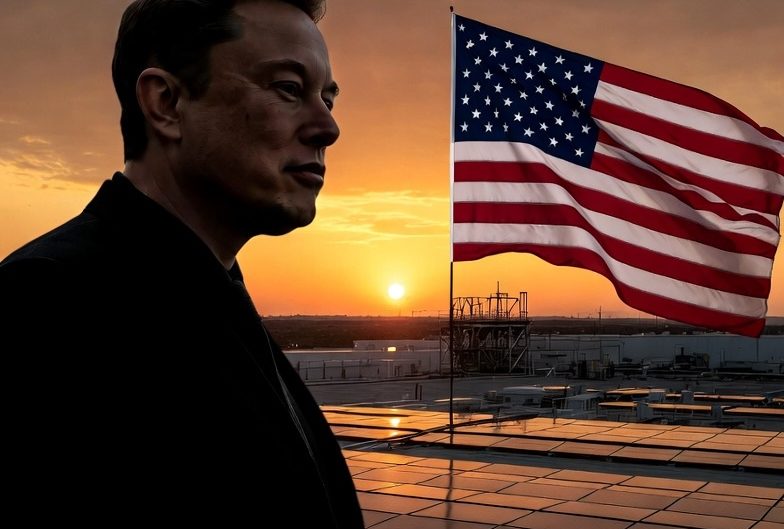
Elon Musk quietly collected one of the largest single-transaction paydays in corporate history on Monday. A Form 4 filed with the SEC on June 17, 2026 disclosed that Musk exercised 303,960,630 Tesla stock options from his 2018 compensation package, with the transaction dated June 16. No shares were sold on the open market.
The numbers are straightforward but striking. Musk exercised the options at a split-adjusted strike price of $23.34, with Tesla closing at $404.66 that day, putting the spread at $381.32 per share and generating roughly $115.9 billion in paper gains in a single transaction. To cover the exercise cost, Tesla withheld 17,531,857 shares through a net share settlement, meaning Musk paid nothing out of pocket.
For perspective, in 2018, Elon Musk’s award was originally approved by Tesla shareholders on March 21, 2018, and structured entirely around performance milestones that many analysts at the time called unreachable. Every tranche eventually vested. The original grant covered 20,264,042 shares at $350.02, which after Tesla’s 5-for-1 split in 2020 and 3-for-1 split in 2022 adjusted to 303,960,630 shares at $23.34. A Delaware court rescinded the award in January 2024, ruling the board was conflicted. As Teslarati reported, Tesla shareholders voted to ratify the package anyway in June 2024 by a wide margin. The Delaware Supreme Court reversed the decision in December 2025, finding full cancellation too extreme, and Tesla’s board signed an Implementation Agreement on April 21, 2026 to formally deliver the shares.
The Tesla and SpaceX merger everyone is talking about is quietly building
The timing and structure of the Form 4 filing carries more weight than a routine stock option exercise typically would. Musk exercised his 2018 Tesla award on June 16, a week into SpaceX completing its IPO and trading publicly, and giving SpaceX a public market valuation and share currency for the first time in the company’s history. A stock-for-stock merger between two companies requires the acquiring entity to have tradeable shares it can offer to the target’s shareholders, and SpaceX now has exactly that. At the same time, Musk just increased his direct Tesla voting power to approximately 20%, giving him greater influence over any shareholder vote that a merger would require. The restricted shares he received cannot be sold until 2033, which removes any near-term incentive to cash out and instead positions this stake as long-term structural collateral in a deal. Additionally, Musk’s two companies are already deeply intertwined through shared semiconductor fabrication at their joint TERAFAB facility in Austin, cross-company supply chain transactions, and Tesla’s $2 billion investment in xAI prior to the SpaceX-xAI merger.
Wedbush analyst Dan Ives has publicly placed the odds of a Tesla and SpaceX combination at 80% to 90% by early 2027. The Implementation Agreement that made Monday’s exercise possible was signed on April 21, 2026, roughly two months before the SpaceX IPO closed. That sequencing, building Musk’s Tesla ownership to its highest point ever immediately before SpaceX gains the public currency needed to acquire it, is either an extraordinary coincidence or a carefully staged foundation for the largest corporate merger in history.

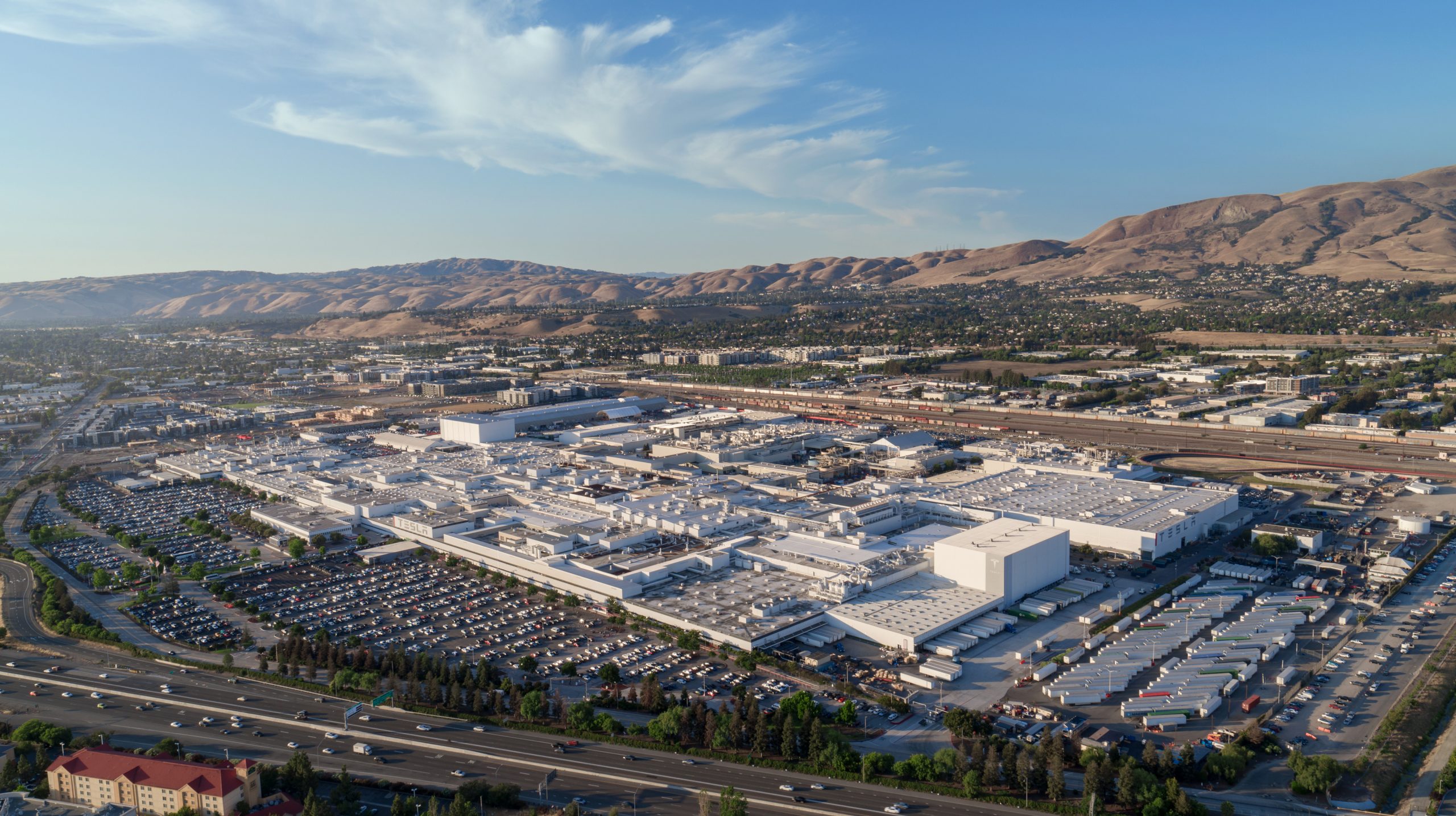
Tesla deliveries got a big boost in expectations from Wall Street firm Goldman Sachs, who believes the company will report some stronger-than-expected numbers when the second quarter comes to an end in the coming weeks.
Goldman Sachs has raised its vehicle delivery forecast for Tesla (NASDAQ: TSLA) in the second quarter of 2026, signaling growing confidence in the electric vehicle leader’s near-term momentum despite mixed market signals. Analyst Mark Delaney lifted the bank’s Q2 estimate to 420,000 units from a previous 405,000, surpassing the Visible Alpha consensus estimate of 400,000.
The upward revision stems from stronger-than-expected sales data across key regions. Europe stands out with projected year-over-year growth of 85-90 percent, driven by robust demand for Tesla’s Model Y and refreshed offerings. China posted high single-digit gains, while markets like South Korea and Australia also contributed positive momentum. These gains help offset mid-teens declines in U.S. deliveries through May, where broader EV market headwinds and competition persist.
Goldman extended its optimism to the full year, increasing its 2026 delivery projection to 1.73 million vehicles from 1.72 million. Longer-term forecasts remain unchanged, with 1.88 million units expected in 2027 and 1.96 million in 2028. The bank also nudged its 2026 earnings-per-share estimate higher to $1.35 from $1.30, reflecting anticipated margin benefits from higher volumes and operational efficiencies.
Despite these positive adjustments, Goldman maintained its Neutral rating and $375 price target on Tesla shares. At current trading levels near $411, the stock sits about 8-9 percent above the target, highlighting ongoing valuation concerns even as delivery momentum builds. Tesla’s Q1 2026 deliveries totaled 358,023 units, setting a baseline for recovery expectations in the current period.
This update arrives as Tesla prepares to report official Q2 figures shortly after June 30. Investors and analysts will closely watch not only headline delivery numbers but also regional breakdowns, average selling prices, and progress on energy storage deployments and autonomous technology initiatives.
The move by Goldman Sachs underscores a broader narrative for Tesla: while legacy auto markets face softening demand and tariff uncertainties, Tesla’s global footprint and product pipeline provide resilience. Europe’s surge reflects pent-up demand and policy support for EVs, while China’s steady growth highlights Tesla’s competitive positioning against local rivals.
Tesla still has its work cut out for it, including U.S. price sensitivity and intensifying competition. Yet Goldman’s revision adds to a series of analyst notes suggesting Q2 could mark a turning point. As Tesla pushes toward higher production rates at facilities in Fremont, Shanghai, and Berlin, sustained execution will be key to validating these higher forecasts.
We have said numerous times that deliveries are becoming a less important metric in the grand scheme of things, as AI truly takes precedence in the company’s thesis.
For Tesla bulls, the Goldman note reinforces faith in underlying demand trends. For skeptics, the unchanged rating serves as a reminder that delivery beats alone may not immediately resolve valuation debates in a high-interest-rate environment. Tesla’s stock reaction will likely hinge on the official numbers and management commentary in the coming weeks.
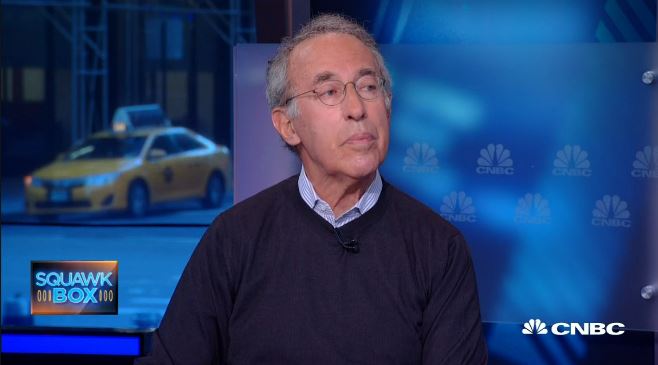
Renowned investor Ron Baron, founder and CEO of Baron Capital, has once again demonstrated his unwavering faith in Elon Musk’s ventures.
Just after SpaceX’s record-breaking IPO, Baron announced he purchased an additional $1 billion in SpaceX (NASDAQ: SPCX) shares. This move pushes Baron Capital’s total holdings in the company to a staggering $25 billion in market value, underscoring one of the most successful private-to-public investment stories in recent history.
Baron’s relationship with SpaceX dates back to 2017, when his firm began investing approximately $1.75–2 billion through secondary markets and employee tender offers at valuations around $20–22 billion.
By the time of the IPO, which valued SpaceX at over $2 trillion with shares closing near $161, those early stakes had generated more than $13 billion in unrealized gains. Post-IPO, Baron’s position ballooned further, reflecting the company’s meteoric rise driven by reusable rocketry, Starlink’s global satellite internet constellation, Starshield defense applications, and ambitious plans for orbital infrastructure.
In a recent interview, Baron articulated his bullish outlook with characteristic enthusiasm.
Ron Baron said today that he bought $1 billion of @SpaceX IPO shares last Friday, and said that all of Baron Capital’s $SPCX holdings are now worth $25 billion.
“I think we’re going to make hundreds of billions of dollars; If you read the prospectus, you realize what they… pic.twitter.com/U8F471KtJS
— Sawyer Merritt (@SawyerMerritt) June 15, 2026
“I think we’re going to make hundreds of billions of dollars,” he stated, emphasizing that SpaceX’s achievements in rocketry and satellite technology are “not possible for anyone else to accomplish.” He envisions the company as a cornerstone of humanity’s multi-planetary future, potentially reaching valuations of $10–30 trillion within 10–15 years.
Baron has repeatedly affirmed he has no plans to sell, viewing SpaceX as a “lifetime investment” alongside Tesla.
Tesla bull Ron Baron reveals $100M SpaceX investment, sees 3-5x return on TSLA
This conviction stems from SpaceX’s unparalleled execution. The company has revolutionized access to space with Falcon 9 reusability, deployed thousands of Starlink satellites, and is advancing Starship for Mars missions and point-to-point Earth transport.
Baron highlights emerging opportunities like space-based AI data centers and direct-to-cell satellite connectivity, positioning SpaceX at the forefront of a new space economy projected to generate trillions in value.
Critics may question the lofty projections amid high valuations and execution risks, but Baron’s track record speaks volumes. His Tesla holdings, initiated in the mid-2010s, have also delivered outsized returns. As one of the largest institutional holders of SpaceX pre-IPO, Baron Capital’s funds, such as Baron Partners, benefited immensely from valuation markups.
Baron’s $1 billion IPO purchase signals deep confidence in SpaceX’s post-IPO trajectory. In an era of short-term market noise, his strategy exemplifies patient capital: backing visionary leadership and transformative technology.
For investors watching the space sector, it serves as a powerful endorsement that the final frontier may indeed yield the next great wealth-creation engine. As Baron puts it, SpaceX isn’t just building rockets—it’s trying to “save humanity” by expanding our horizons beyond Earth.

Tesla Semi spotted with ground truth validation equipment as launch looms

President Trump touts new Air Force One with Musk technology


