News
Tesla lands regulatory green light for Robotaxi testing in new state
This will be the third state in total where Tesla is operating Robotaxi, following Austin and California.

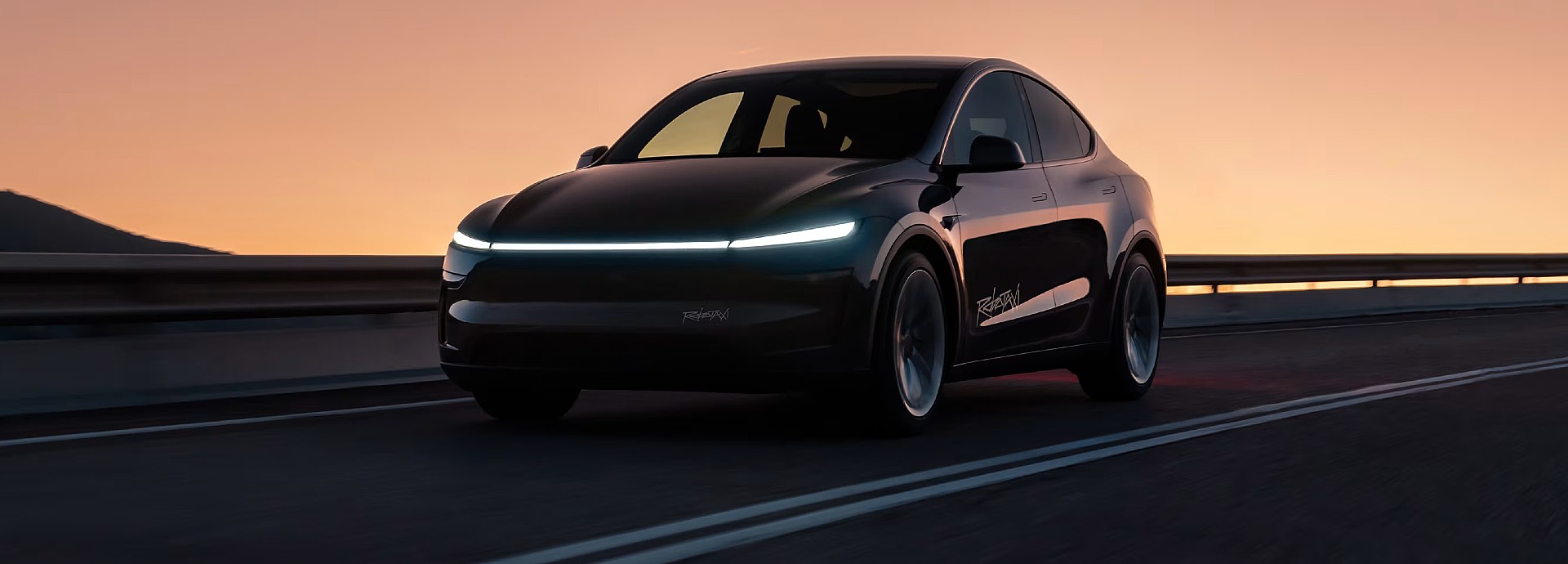
Tesla has landed a regulatory green light to test its Robotaxi platform in a new state, less than three months after the ride-hailing service launched in Texas.
Tesla first launched its driverless Robotaxi suite in Austin, Texas, back on June 22. Initially offering rides to a small group of people, Tesla kept things limited, but this was not to be the mentality for very long.
It continued to expand the rider population, the service area, and the vehicle fleet in Austin.
The company also launched rides in the Bay Area, but it does use a person in the driver’s seat to maintain safety. In Austin, the “Safety Monitor” is present in the passenger’s seat during local rides, and in the driver’s seat for routes that involve highway driving.
Tesla is currently testing the Robotaxi platform in other states. We reported that it was testing in Tempe, Arizona, as validation vehicles are traveling around the city in preparation for Robotaxi.
Tesla looks to make a big splash with Robotaxi in a new market
Tesla is also hoping to launch in Florida and New York, as job postings have shown the company’s intention to operate there.
However, it appears it will launch in Nevada before those states, as the company submitted its application to obtain a Testing Registry certification on September 3. It was processed by the state’s Department of Motor Vehicles Office of Business Licensing on September 10.
NEWS: Tesla has officially received approval from the Nevada DMV to start testing autonomous vehicles (robotaxis) on public roads.
Today, I confirmed directly with the Nevada DMV that @Tesla‘s application to obtain a Testing Registry certification was approved by the DMV Office… pic.twitter.com/hx5JhHBFiD
— Sawyer Merritt (@SawyerMerritt) September 11, 2025
It will then need to self-certify for operations, essentially meaning they will need to comply with various state requirements.
This will be the third state in total where Tesla is operating Robotaxi, following Austin and California.
CEO Elon Musk has stated that he believes Robotaxi will be available to at least half of the U.S. population by the end of the year. Geographically, Tesla will need to make incredible strides over the final four months of the year to achieve this.


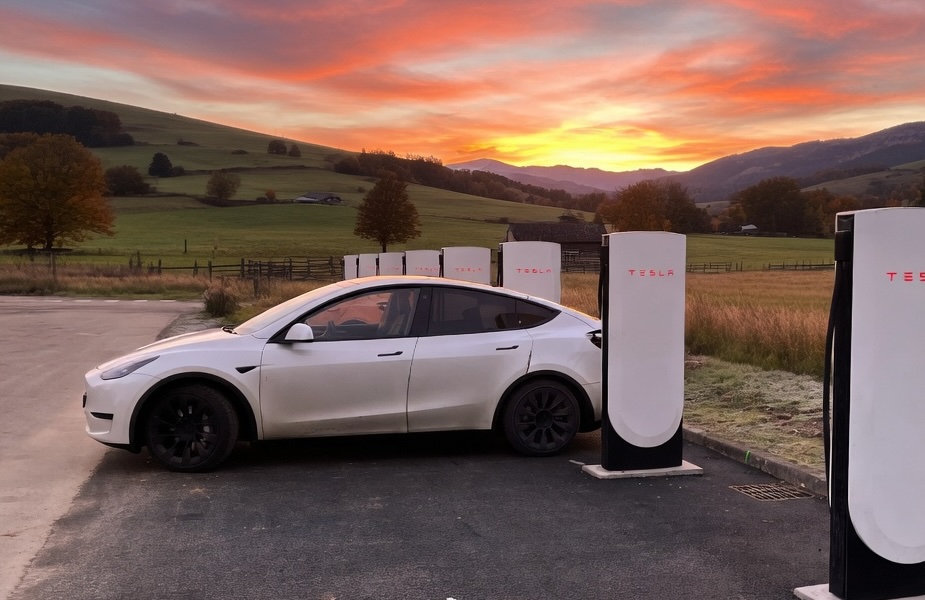
Earlier this week, we wrote a story on how Tesla is launching a new Supercharging Queue system to mitigate problems between drivers when there is a wait to charge.
Rather than potentially having people end up in a physical conflict, Tesla’s approach is to determine who is next to charge based on geographic data.
Tesla launches solution to end Supercharger fights once and for all
But some companies, notably Tesla’s biggest rival in China, BYD, are taking a different approach, focusing on charging speeds rather than how they will manage delays.
BYD’s approach, especially with its tests of ultra-fast “Flash Charging” technology, is to eliminate the length of a charging session. At the heart of this strategy is BYD’s second-generation Blade Battery paired with 1,500-kW Flash Chargers.
Real-world FLASH Charging in action.
⚡ 10% → 70% in 5 minutes
⚡ 10% → 97% in 9 minutesIntroducing BYD’s 2nd Generation Blade Battery + FLASH Charging Technology.
20,000 stations will bring faster, safer, and smarter EV charging across China by the end of 2026. pic.twitter.com/uzQC8q1xGf
— BYD (@BYDCompany) March 9, 2026
Unveiled earlier this year, the system charges compatible vehicles from 10 percent to 70 percent state of charge in just five minutes and from 10 percent to 97 percent in nine minutes.
Real-world demonstrations on models like the Yangwang U7 and Denza Z9 GT have shown the tech delivering roughly 250 miles (400 kilometers) of range in just five minutes. This would essentially match or beat the time it takes to fill a gas tank.
Sometimes, gas pumps get congested, and there are lines. You rarely see conflicts at pumps because filling up a tank rarely takes more than five minutes.
Tesla’s fastest Supercharger build currently is the v4, which can deliver up to 325 kW for Cybertruck and 250 kW for other models, but there are “true” sites that are capable of up to 500 kW. This enables speeds of up to 1,000 miles per hour, or 1,400 miles for 350 kW-capable vehicles.
The breakthrough stems from BYD’s vertically integrated ecosystem: a new 1,000-volt architecture, 10C charging rates, and proprietary silicon-carbide chips that minimize internal resistance while protecting battery health.
The company plans to install 20,000 Flash Charging stations across China by the end of 2026, with thousands already operational and global expansion eyed for Europe and beyond later this year.
Early rollout targets popular models, including upgrades to high-volume sellers like the Seal and Sealion series, bringing five-minute charging to mainstream prices around 100,000 yuan (about $14,000).
This approach contrasts sharply with Tesla’s software solution. Tesla’s Virtual Queue uses geofencing and the app to assign turns at crowded sites, addressing driver disputes and idle time. It’s a clever fix for today’s network realities.
Yet, BYD’s philosophy is simpler: make charging so fast that waits barely exist. A five-minute stop becomes as convenient as a gas-station visit, reducing station dwell time, easing grid strain, and lowering range anxiety for long trips.
For consumers, the difference is potentially tangible. They’ll spend more time driving and less time parked. It is just another way Tesla and BYD are pushing one another to improve the overall experience of EV ownership.
News
Tesla wins big as NHTSA drops three-year, 120k unit probe against Model Y
In all, 120,089 Model Ys were impacted, but in two cases, drivers reported the complete detachment of the steering wheel from the steering column while the vehicle was in motion. NHTSA’s initial review revealed that the vehicles had been delivered without the critical retaining bolt that secures the steering wheel to the splined steering column.
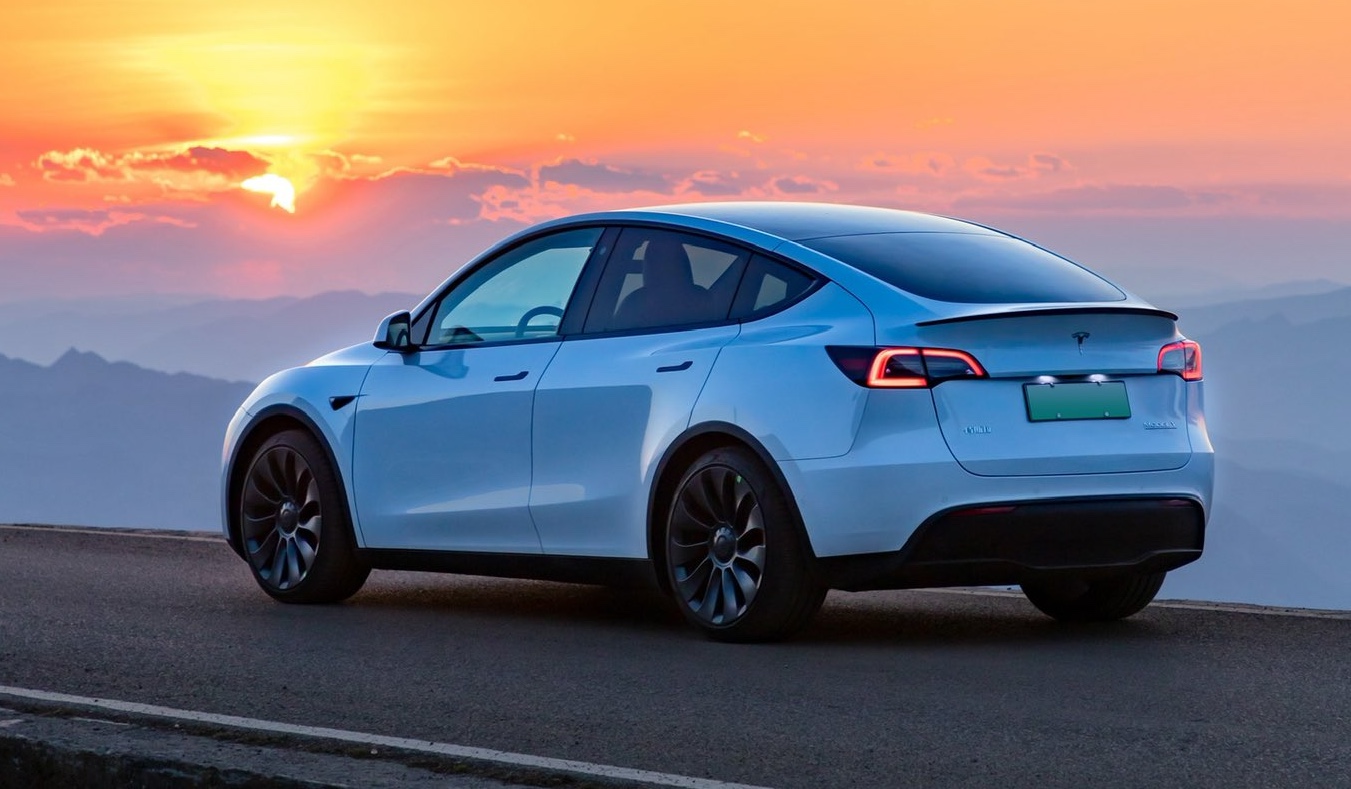
A probe into over 120,000 2023 Tesla Model Y units has been closed by the National Highway Traffic Safety Administration (NHTSA). The probe ends without the agency requiring any action from Tesla.
The probe, designated PE23-003, opened in March 2023 and stemmed from just two consumer complaints involving low-mileage Model Y SUVs.
In all, 120,089 Model Ys were impacted, but in two cases, drivers reported the complete detachment of the steering wheel from the steering column while the vehicle was in motion. NHTSA’s initial review revealed that the vehicles had been delivered without the critical retaining bolt that secures the steering wheel to the splined steering column.
NHTSA has ended a probe into over 120,000 Tesla Model Y vehicles after claims that the steering wheel could detach from the steering column due to a missing retaining bolt
There is no action needed by Tesla pic.twitter.com/YpAO3bKugA
— TESLARATI (@Teslarati) April 28, 2026
Factory records showed each car had undergone an “end-of-line” repair at Tesla’s facility, during which the steering wheel was removed and reinstalled. The bolt was apparently omitted after the repair, leaving only a friction fit between the wheel and column to hold it in place temporarily.
According to NHTSA documents, this friction fit maintained the connection during initial low-mileage driving until forces during normal operation caused the wheel to detach. Both vehicles that were impacted were repaired under warranty with no injuries reported, and no additional incidents surfaced during the agency’s three-year review.
After analyzing manufacturing processes, complaint data, and field reports, NHTSA concluded the issue was isolated to those two post-repair vehicles rather than indicative of a systemic defect in Tesla’s production or quality control.
The closure means the agency has determined no recall or further enforcement is warranted for this specific missing-bolt condition.
This outcome marks the second NHTSA investigation into Tesla closed without action this month, as a recent probe into the company’s “Actually Smart Summon” feature was also resolved in April.
The two resolutions provide some relief for Tesla amid the continuous and somewhat unfair regulatory scrutiny of its vehicles, including open inquiries into driver assistance systems.
Importantly, the closed probe does not involve or affect Tesla’s separate May 2023 voluntary recall of certain 2022-2023 Model Y vehicles. That recall addressed a different issue—steering-wheel fasteners that were installed but not torqued to specification—prompted by a service technician’s observation of a loose wheel during unrelated repairs.
Tesla identified a small number of related warranty claims and proactively addressed the matter without NHTSA mandate.
The Model Y remains one of the world’s best-selling vehicles, and Tesla continues to refine its lineup, including the recent “Juniper” refresh. While federal oversight of the electric vehicle pioneer remains intense, this decision underscores that isolated manufacturing anomalies do not always translate into broader safety defects requiring recalls.
News
Tesla Model Y L gets biggest hint yet that it’s coming to the U.S.
Over the past week, a noticeable wave of American Tesla influencers descended on China and Australia, each posting in-depth YouTube reviews of the Model Y L within days of one another.
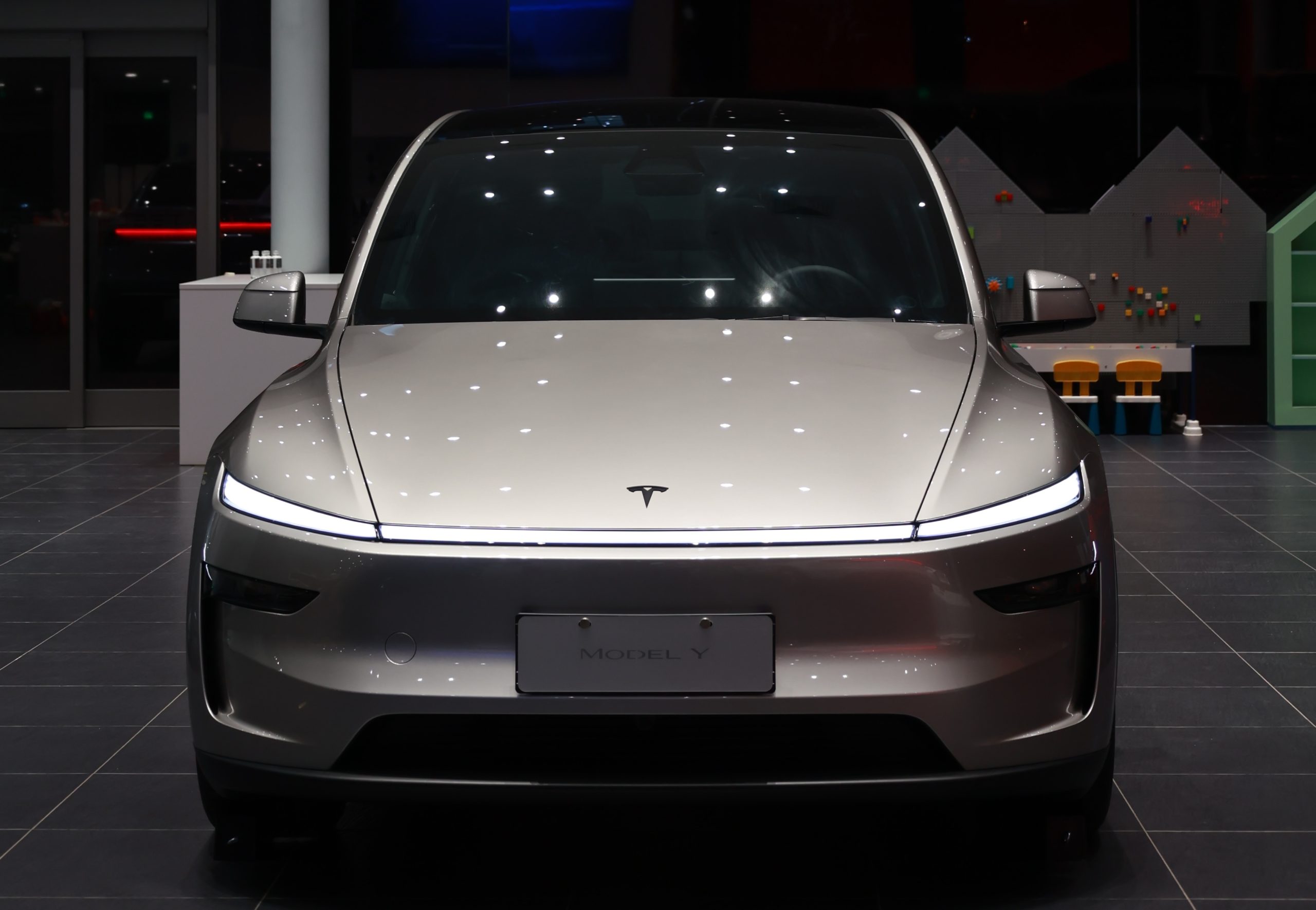
The Tesla Model Y L is perhaps the most wanted vehicle in the company’s lineup in the United States, especially now that it is void of a true family vehicle with the removal of the Model X.
In China, Tesla currently offers a longer, more family-friendly version of the Model Y, known as the Model Y L, which is longer in terms of its wheelbase and larger in terms of interior space, making it the perfect option for those with a need for a tad more room than what the all-electric crossover offers in its Standard, Premium, and Performance trims.
However, there seems to be a hint that the Model Y L could be on its way to the United States. Over the past week, a noticeable wave of American Tesla influencers descended on China and Australia, each posting in-depth YouTube reviews of the Model Y L within days of one another:
Not saying that this means anything more than Tesla China simply inviting a handful of American influencers to see this car….
….but this seems like a good strategy for an eventual offering in the U.S. https://t.co/XS3PyBdnNd
— TESLARATI (@Teslarati) April 27, 2026
The timing has sparked some intense speculation as to whether Tesla is quietly preparing to bring the long-wheelbase, three-row family SUV to North America after months of requests from fans.
The Model Y L stretches the wheelbase by about five inches compared to the standard Model Y.
This delivers dramatically more rear legroom, optional captain’s chairs in the second row, and a true six- or seven-seat configuration ideal for growing families. Reviewers praise its refined ride, upgraded interior features like a rear touchscreen and premium audio, and competitive range—up to roughly 466 miles in some configurations.
Many observers see the coordinated influencer trip as more than a coincidence. Tesla China appears to have hosted the group, possibly tied to the Beijing Auto Show, giving U.S.-focused creators early access to hands-on footage aimed squarely at North American audiences.
Tesla Model Y lineup expansion signals an uncomfortable reality for consumers
Tesla watchers are quick to point out this isn’t the first time such a pattern has emerged.
Just months earlier, American influencers were similarly invited to China to test-drive the refreshed Model Y Performance. Those videos dropped in the lead-up to the variant’s U.S. rollout, generating exactly the kind of pre-launch hype that helped smooth its September arrival in American showrooms.
The parallel is obviously hard to ignore, as Tesla has used overseas influencer trips before as a low-key way to build anticipation without formal announcements. With the Model Y L potentially hitting the U.S. market late this year, according to CEO Elon Musk, the timing would make sense.
Tesla Model Y L might not come to the U.S., and it’s a missed opportunity
Of course, it could still be coincidental. Tesla regularly invites creators to its Shanghai factory and events for broader promotional purposes, and the Model Y L has been on sale in China for some time. No official word has come from Tesla or Elon Musk about U.S. availability, pricing, or timing.
Import tariffs, regulatory hurdles, and production priorities at Fremont or the new Mexican Gigafactory could still delay or alter any stateside plans.
Even so, the buzz is real. U.S. families have long asked for a more spacious, three-row Tesla SUV that doesn’t require stepping up to the larger Model X.
If the influencer campaign is any indication, the Model Y L—or a close North American cousin—could finally answer that call. For now, American Tesla fans are watching closely and wondering whether this latest China trip is just good content… or the opening act for something much bigger stateside.

Tesla’s biggest rivals fights charging wait times with a modern approach

Tesla wins big as NHTSA drops three-year, 120k unit probe against Model Y


