News
Tesla Model 3 to be among the UK’s best company cars amid EV-friendly policy update

In what could only be described as a “milestone moment,” the UK Treasury has confirmed that employees who drive zero-emission company cars will pay no benefit-in-kind (BIK) tax for the year. This decision heavily incentivizes businesses to purchase electric vehicles for their fleets, which contribute to nearly six out of ten new car registrations in the UK today.
Under the updated rules from the government, those who choose zero-emission vehicles will pay no company car tax for the year from April 2020, followed by a measly 1% tax from April 2021 and 2% BIK from April 2022. This is in stark contrast to the BIK taxes placed on vehicles equipped with the internal combustion engine. A BMW 3-Series with a 2.0-liter diesel engine, for example, is priced at £32,000 (~$40,200). But due to its CO2 emissions of 110 and 115g/km, the vehicle will be subject to a 31% BIK rate from April 2020.
Considering that the UK’s personal income tax rates can hit 40% for taxpayers earning £50,001 (~$62,000) to £150,000 (~$188,500) per year, those under the income bracket would pay £4,000 (~$5,000) in BIK just for using the diesel-powered BMW 3-Series from April 2020 and March 2021. Taxpayers in the same income bracket that drive a Tesla Model 3, on the other hand, would pay no BIK for the same period. The 1% tax and 2% BIK that follows in the next two years are also marginal.
In a statement, the government noted that the regulations are expected to encourage businesses to make informed decisions about their purchase of fleet vehicles. “By providing clarity of future the appropriate percentages, businesses will have the ability to make more informed decisions about how they make the transition to zero-emission fleets. Appropriate percentages beyond 2022-23 remain under review and will be announced at future fiscal events,” the government stated.
It’s not just all-electric vehicles like the Tesla Model 3 that will benefit significantly from the UK’s updated policies. Plug-in hybrids could also take advantage of the government’s zero company car tax rate, provided that the PHEVs are capable of operating at least 130 miles as a pure electric car. Unfortunately, there are no PHEVs in the market today that meets this metric. This is quite ironic since BMW director of development Klaus Frölich recently stated that the carmaker is focusing its efforts in developing PHEVs with only 80 km (49 miles) of pure electric range. “PHEV gives them full freedom and 80 km of EV range,” he said.
Plug-in hybrids with short electric ranges, such as those mentioned by the BMW executive, will still see tax breaks, though they are notably less generous than those granted to all-electric cars. PHEVs that have less than 30 miles of electric range, such as the BMW 225xe Active Tourer, will be subject to a 12% BIK tax from April next year.
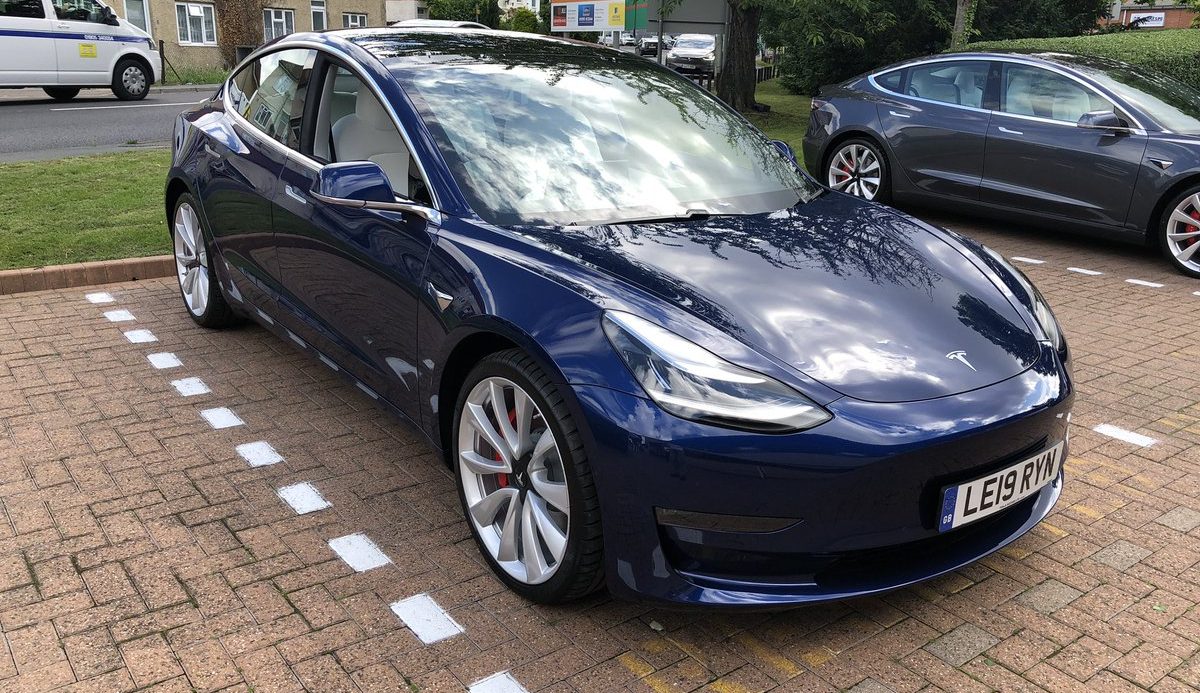
With these new regulations in place, the Tesla Model 3 has the potential to become one of the most competitive company vehicles in the UK. The car, after all, boasts 240 miles of range even at its Standard Plus variant, and it comes from a company that competes in the premium segment. Considering that company cars used by middle-level to upper-level employees are usually premium vehicles, Tesla’s midsize sedan might prove to be a perfect fit.
The turnover rates for company vehicles in the UK is quite quick, with approximately 300k-500k company cars coming off lease every year. If Tesla could tap into this market with the Model 3, the company could have a steady stream of EV buyers that will likely keep the demand for the vehicle thriving in the region for a considerable length of time. The UK’s company car market is now ripe for the picking for EV makers, and if Tesla plays its cards right, it could very well be on the lead to take the first bite.


Elon Musk
Google just picked SpaceX for its first step into orbital AI
Google will launch its first Project Suncatcher AI satellite on SpaceX’s Transporter-18 rideshare next week.

Google is about to put its own AI chips into orbit for the first time, and it is paying SpaceX to get them there.
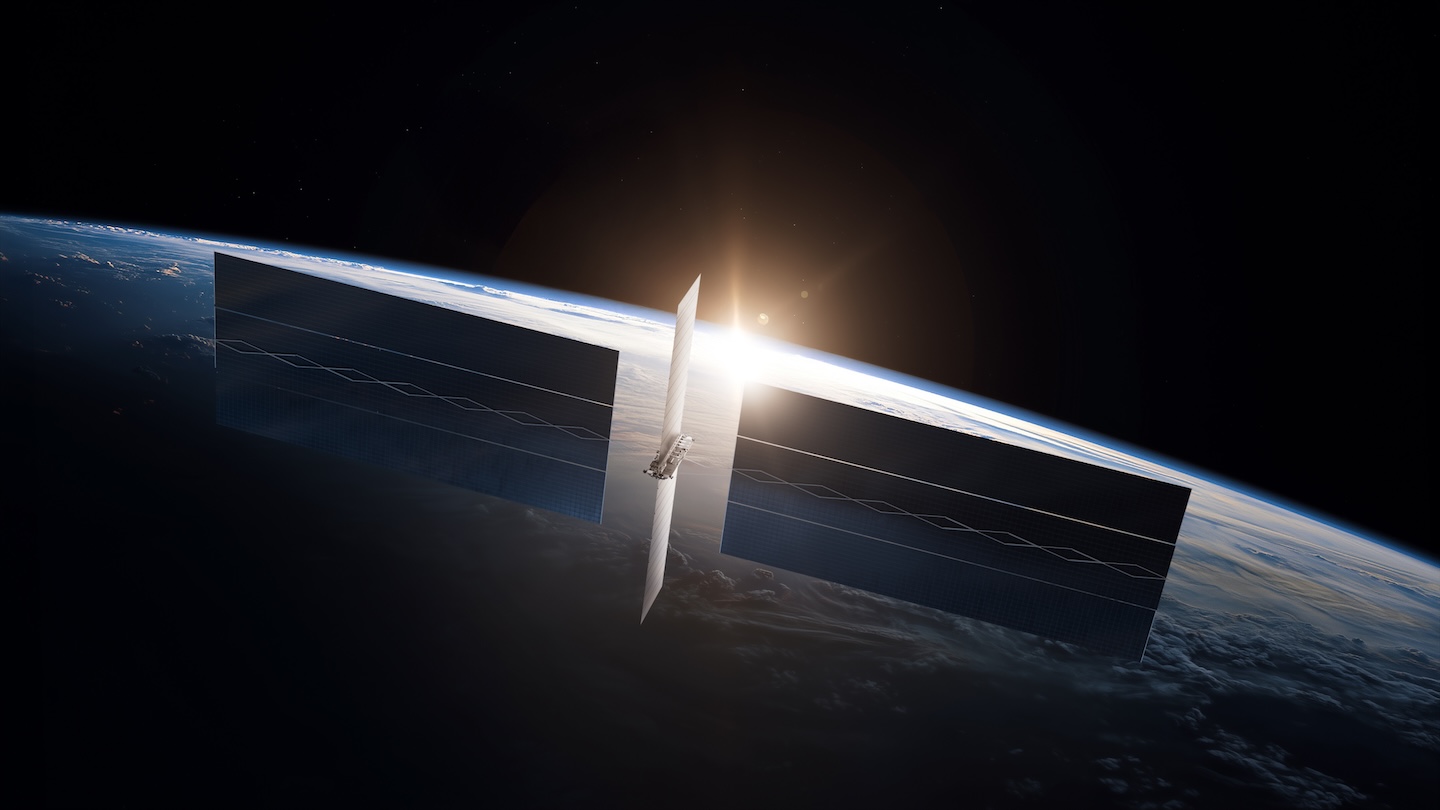
The company said Thursday that the first in-orbit test of Project Suncatcher, its research effort to find out whether space can host large-scale AI computing, will fly next week on SpaceX’s Transporter-18 rideshare mission.
The satellite, called MVP, is about the size of a refrigerator and carries four of Google’s Tensor Processing Units, the same chips Google runs in its ground data centers. Google originally planned to launch two custom satellites in 2027, but chose to move faster by integrating its chips into a satellite.
MVP’s solar panels supply about one kilowatt of power, and Google will run Gemini models on the TPUs only in bursts of roughly 15 minutes before the chips shut down so the radiators can shed heat. In a blog post, Google said its Trillium TPUs survived vibration testing that mimicked sustained launch loads of up to 10g, with individual components seeing 50 to 100g, and handled a radiation dose greater than a five year mission would deliver.
SpaceX and Google mull massive partnership on Musk’s orbital data dream: report
Next week’s flight, slated for October 1, follows a relationship that became public in May, when Teslarati reported that Google was in talks with SpaceX for a launch deal tied to orbital data centers. Google also holds a stake of roughly 6% in SpaceX.
The two companies are chasing the same idea from very different starting points. SpaceX’s own orbital compute program is built around the AI1 satellite, a roughly 70 meter structure derived from Starlink V3 hardware that is designed for 150 kW of peak compute, about 150 times the power MVP will draw. Elon Musk has brushed off concerns about crowding orbit with those satellites, and SpaceX is building its Gigasat factory in Bastrop, Texas, to produce them, targeting an annualized rate of about 1 GW of space compute by the end of 2027.
Musk also posted on X on Thursday that “the amount of compute in space will obviously round up to 100% of all compute.”
Google has been more cautious in public. Its research estimates that launch prices need to fall below about $200 per kilogram before an orbital data center can compete with a ground facility on energy cost, a threshold the company believes could be reached around the mid 2030s. The Suncatcher team has said it expects the effort to remain a project rather than a product for years, which leaves the first real test of its hardware riding on a rocket from the company with the most aggressive timeline in the field.

Tesla has taken another concrete step toward owning its battery supply chain, and it’s doing so with what is perhaps the most important vehicle in its short-but-storied history.
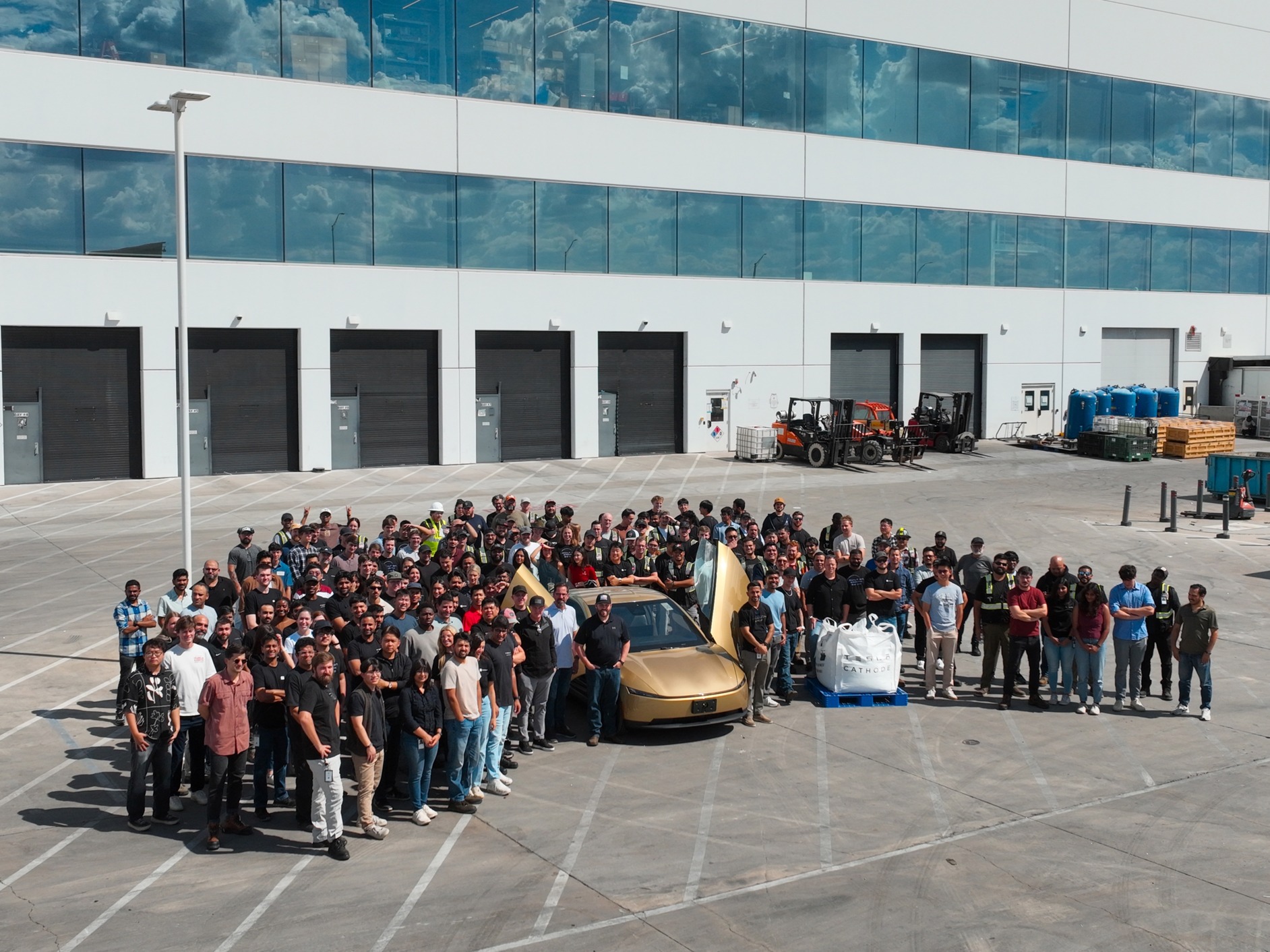
On September 23, Tesla announced that it has officially built the first Cybercab with cathode material produced in-house at the company’s first cathode plant in the U.S., and the first in the U.S. overall.
First Cybercab made using our in-house cathode material – from the first cathode plant in the Americas pic.twitter.com/X95aVXsT9H
— Robotaxi (@robotaxi) September 23, 2026
Active cathode material is the most expensive piece of a lithium-ion battery cell, and it often accounts for more than a third of cell cost. For years, the industry sourced a majority of it from Asia, but Tesla’s decision to make it in the United States bodes well for the Cybercab project. This is the latest chapter in Tesla’s vertical integration strategy, which began in public at Battery Day in 2020.
At the Battery Day Event, Elon Musk said the company would build a North American cathode plant and overhaul the process to cut costs and waste, while also making some of the most powerful and long-lasting cells in the industry.
The Austin facility took years to appear. Tesla filed permits for “Project Cathode” in 2022 on land near Giga Texas. By mid-2022, the building frame was up and Tesla later invested hundreds of millions of dollars as part of a larger expansion of the Giga Texas plant. The company stated it was operating the first large-scale cathode production facility in North America to supplement 4680 cell production.
One month later, that material reached a finished Cybercab.
Made with nickel cathode manufactured locally at Gigafactory Texas! https://t.co/DqMm5fZV3n
— Elon Musk (@elonmusk) September 24, 2026
The timing of this breakthrough is monumental for the Cybercab program. As Tesla officially launched the first Cybercab rides to the public earlier this month, production of the ride-hailing-geared vehicle is moving forward on the planned S-curve that CEO Elon Musk told everyone to expect.
Nevertheless, packs of Cybercab units have been spotted throughout the United States, in an effort to potentially activate the fleet as soon as the company gains regulatory approval in various geographic areas.
On top of that, Tesla owning the cathode step and pairing it with its own in-house lithium from the Gulf Coast refinery shortens the supply chain that once stretched thousands of miles and subjects every pack to fewer external price shocks and geopolitical risks.
Tesla is not yet independent of all of its foreign suppliers, as some precursor metals come from mines and chemical plants. But the first in-house cathode Cybercab shows the company is closing the most expensive and most concentrated gap in its battery production efforts. For a vehicle like Cybercab to operate at a high utilization within the Robotaxi network, that control over cost is so crucial.
It is arguably as important as the software that drives it.
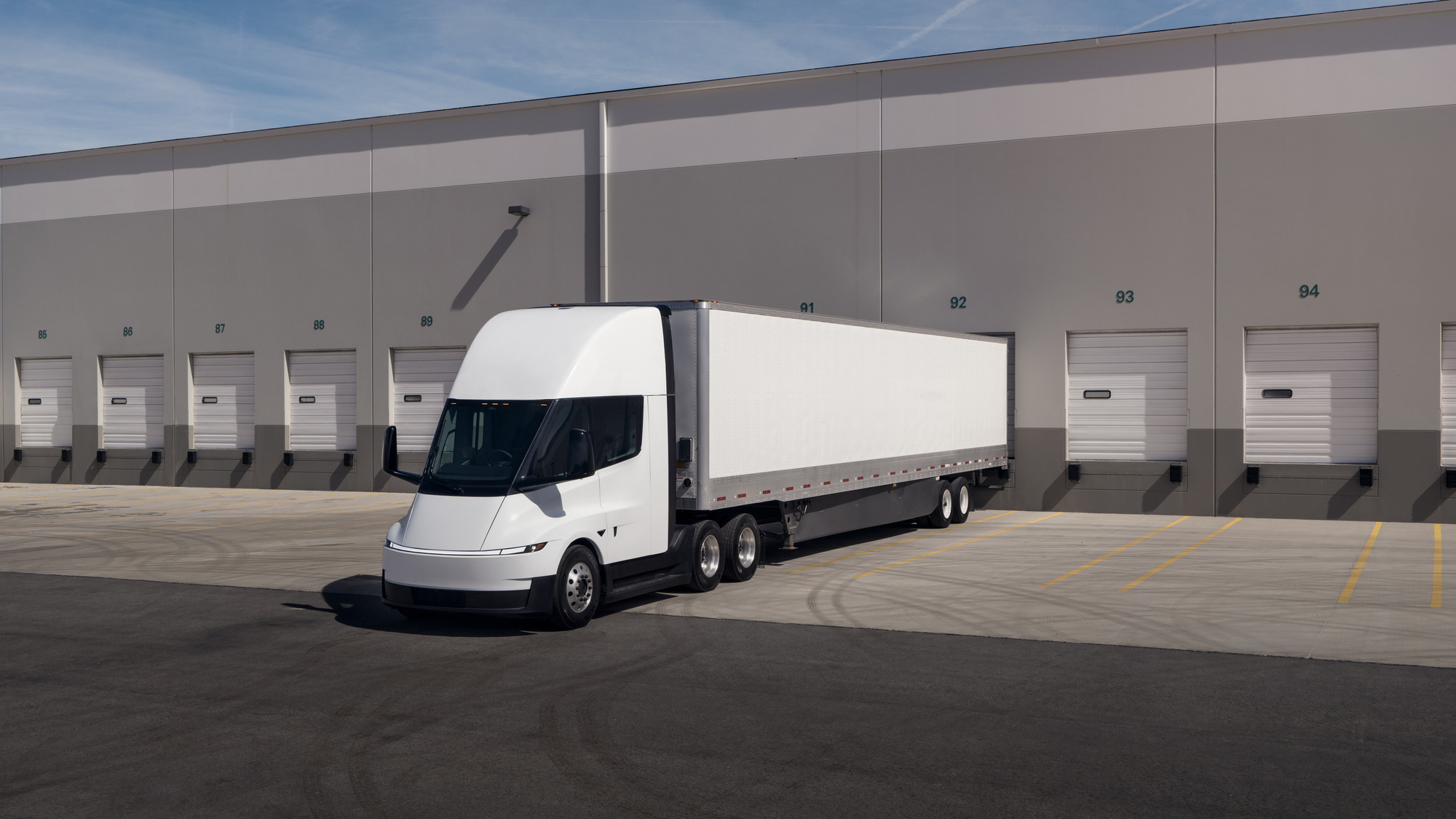
Tesla is set to inaugurate its dedicated Semi factory in Sparks, Nevada, this evening, but drone footage has already started to show who is expected on the handover stage.
Zanegler, a drone operator who regularly documents Tesla Semi operations in Nevada, filmed a row of new-generation Semi units parked outside of the plant with customer branding applied. The liveries visible in the video include companies like PepsiCo, U.S. Foods, Einride, DHL, WattEV, and others that have committed to utilizing Tesla’s Class 8 electric truck in their fleets.
Tesla Semi Pre-Reveal Revealed!
Excited to share this segment of the drone flight one day prior to the Tesla Semi Reveal event.
They have added branding to several Tesla new generation semis.
Including:
Pepsico
US Foods
Einride
LTS
Nevoya
OK Produce
ABF Freight
DHL
WattEV… pic.twitter.com/KoFOg2FouR— Zanegler (@HinrichsZane) September 24, 2026
Several of those company names already sit within Tesla’s public ordering book, including PepsiCo, which has been the program’s primary anchor customer since the first Semi deliveries in December 2022. PepsiCo now runs dozens of Tesla Semi units in daily service, with drivers completing regional routes.
Einride placed a 500-unit order in August, which was, at the time, the largest single Semi commitment. First deployments of their Semi units are planned for this month and will eventually span across California, Texas, New Jersey, Illinois, and Georgia. Meanwhile, IMC Logistics announced a 50-truck California order this week.
Tesla Semi lands the biggest electric truck deal in U.S. history
Other names, like LTS, OK Produce, and HMD, have not been widely confirmed as firm buyers, but their presence on the lot is perhaps the clearest signal that Tesla intends to expand on that list this evening at the event.
Tesla first unveiled the Semi back in 2017 with a 2019 production target.
Limited pilot builds reached PepsiCo in late 2022, and high-volume production began at the new 1.7-million-square-foot plant that sits logically positioned next to Tesla’s Gigafactory Nevada. Tesla Semi program director Dan Priestley has said that Tesla expects to build “many thousands” of Semi units this year, but as with every Tesla release, there have been set expectations of an S-curve ramp.
Outside estimates still put 2026 deliveries in the 5,000-to-15,000 range, but it will ultimately depend on Tesla’s readiness to put those units out, as well as how smoothly production is moving internally.
Tesla’s Semi Rollout event is set to start tonight at the Sparks factory, and it will be livestreamed on X starting at 6 p.m. PDT / 9 p.m. ET.

Google just picked SpaceX for its first step into orbital AI

Tesla Cybercab gets initial tie-in to localized, in-house cathode plant


