News
Tesla Model S Drops 40kWh Battery Option

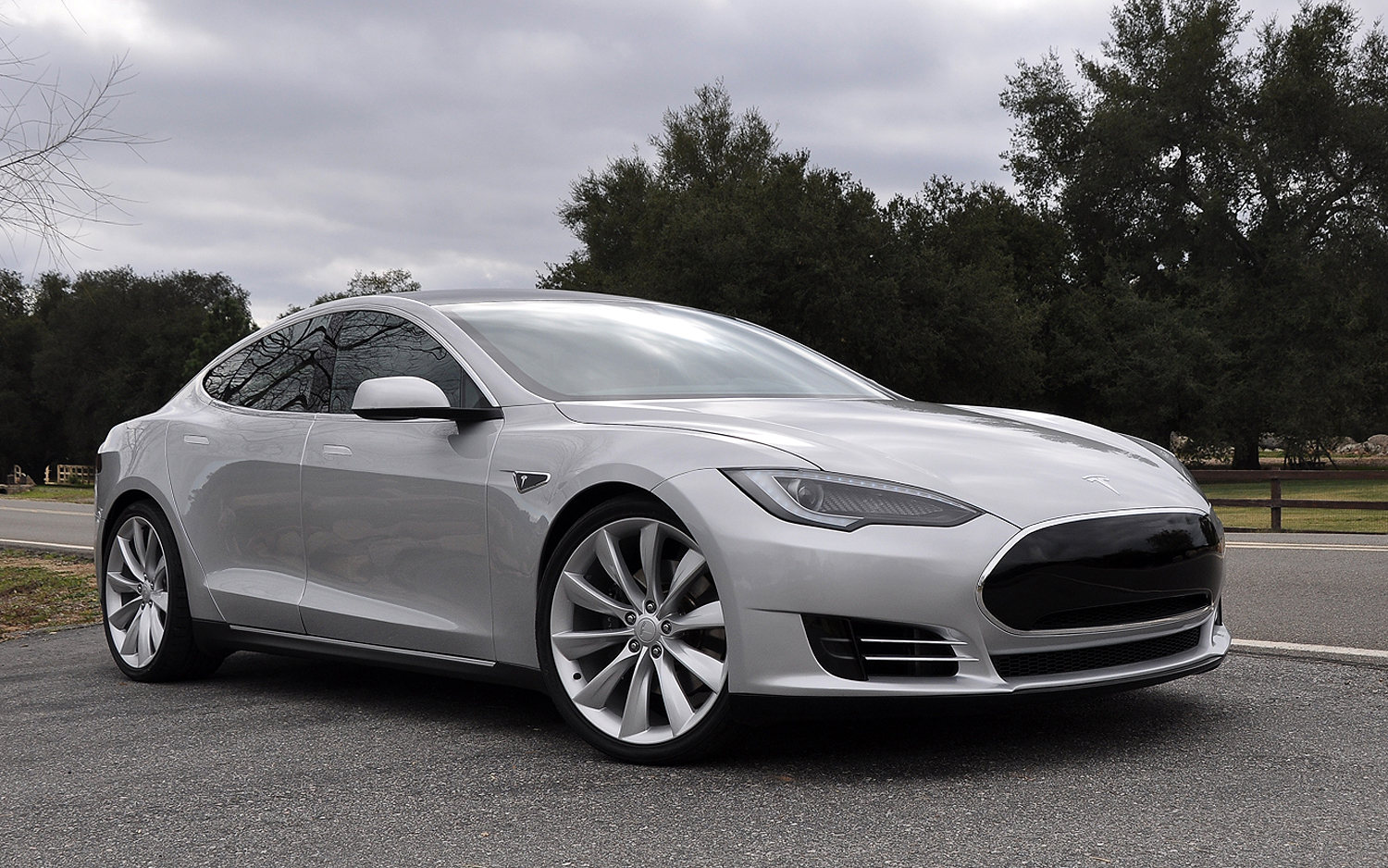
In a surprise announcement late Sunday, Tesla Motors says it turned a profit for the first quarter of 2013, delivering more than 4,750 all-electric sedans and beating its own forecasts. It’s a major milestone for the start-up automaker, which also revealed a few last-minute Easter eggs for those waiting for their cars to be delivered — and a play to improve the value of its cars when those owners decide to sell.
Tesla had said it expected to break even on a cash basis this quarter during the ramp-up of Model S output at the factory in Fremont, Calif., with a goal of delivering 4,500 cars to owners. Since Tesladoesn’t sell its cars through dealers and puts the key fob of the Model S directly in an owner’s hand, it can’t count the money from sold vehicles until that swap; traditional automakers mark a car as sold for accounting purposes when it leaves the factory.
“Tesla is here to stay and keep fighting for the electric car revolution,” said Elon Musk, Tesla Motors co-founder and CEO in a statement. “I would also like to thank our customers for their passionate support of the company and the car. Without them, we would not be here.”
Given the history of fledgling automakers — none of which have survived in the United States since the early 20th century — and the carnage among electric vehicle makers such as Fisker Motors, many investors have bet against Tesla, with some $1.2 billion in its shares held by short sellers anticipating its decline. Musk has aggressively fought any perceived attack on the company’s image, notably launching a media war with The New York Times after one of its writers was left stranded by a Model S that ran out of charge.
That writer was testing one of Tesla’s other projects, what it calls the Supercharger network of free quick-recharging stations meant to make the Model S a long-range cruiser. Using the stations requires a Tesla-specific high-voltage connector that was standard on the $72,400 Model S with an 85 kWh battery, but a $2,000 option on the shorter-range 60 kWh version. Tesla revealed tonight that buyers of the 60 kWh Model S would get the Supercharger connector for free, which it called a bet that the Superchargers will lure more customers to the company’s cars.
But Tesla also revealed it was eliminating the lowest-cost planned variant of the Model S, the 40-kWh edition that had been slated to cost $52,400, or $10,000 less than the 60 kWh model. Tesla says only 4 percent of its customers had placed reservations for the 40 kWh car, which had an advertised range of 160 miles. Those customers who signed up for a 40 kWh car will get a 60 kWh car instead — but one whose software will only allow the car to access 40 kWh of energy.
Future owners — including those who buy such a capped Model S second-hand — can pay Tesla that $10,000 difference to have the software reset to use all 60 kWh of battery energy. Musk may still rank as a neophyte automaker, and Tesla’s first profitable quarter doesn’t solve all of its challenges, but discovering an income stream from people who buy its vehicles used will make the suits in Detroit, Tokyo and Stuttgart just a wee bit jealous.


Elon Musk
SpaceX (SPCX) IPO is live today at $135: Here’s exactly what you need to know
SpaceX priced its historic IPO at $135 per share today, raising a record $75 billion.

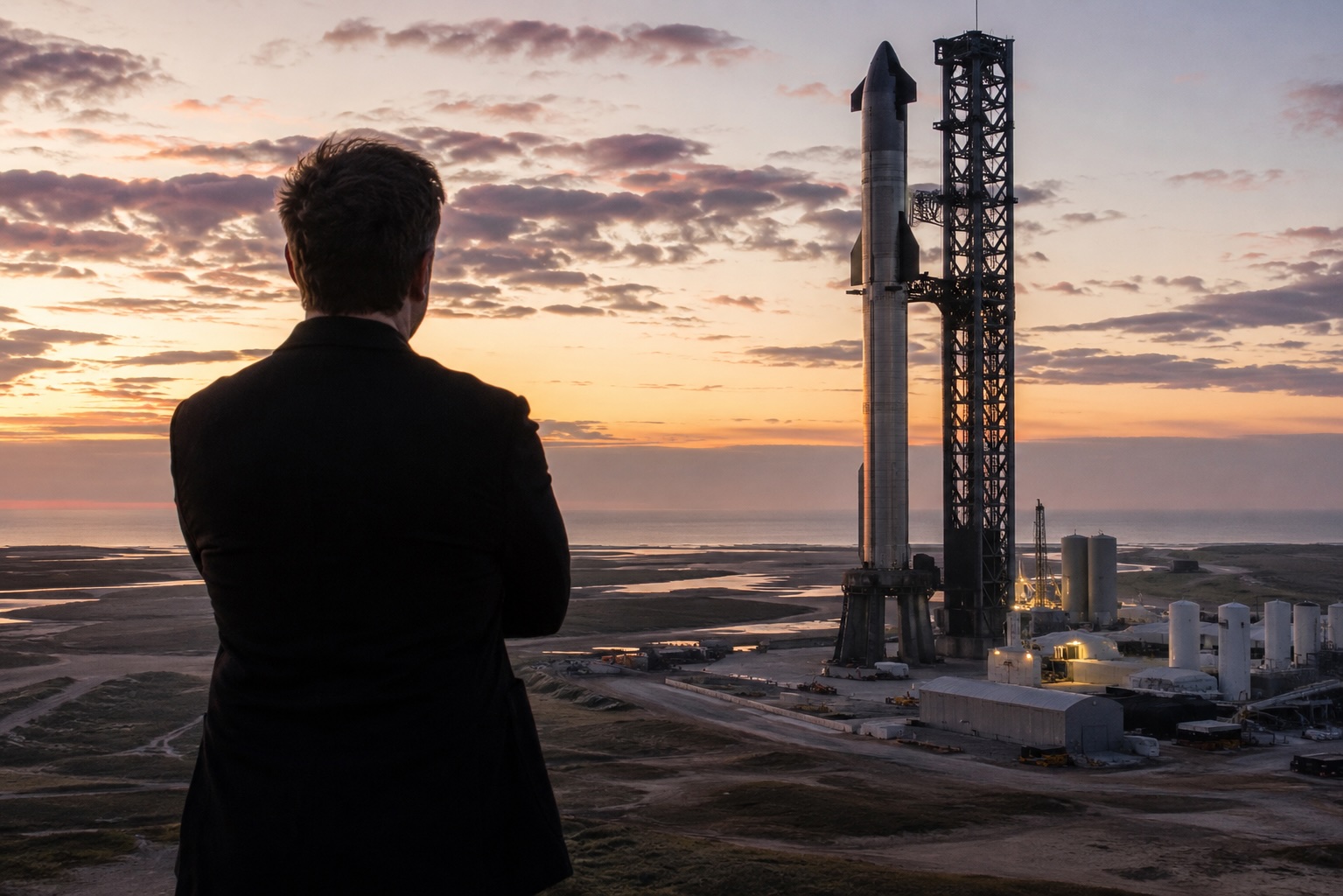
SpaceX officially priced its initial public offering at $135 per share, offering 555,555,555 shares of Class A common stock and raising $75 billion in what is the largest IPO in stock market history. Shares are set to begin trading on the Nasdaq Global Select Market on Friday, June 12, under the ticker symbol SPCX. The previous record holder was Saudi Aramco’s 2019 offering at $29 billion, followed by Alibaba’s $22 billion offering in 2014.
At $135 per share and roughly 555.6 million shares, the implied valuation sits near $1.75 trillion, which would make SpaceX roughly the seventh largest company in the United States, just above Tesla’s current market cap. Regular investors can request shares at the IPO price through Robinhood, Fidelity, Charles Schwab, SoFi, and E*TRADE, though the deal is heavily oversubscribed and most retail allocations will be partial or unfilled. Once trading opens June 12, anyone with a brokerage account can buy SPCX on the open market.
SpaceX’s amended S-1 is sparking a major Tesla merger conversation
The valuation is anchored primarily by Starlink. Starlink crossed 10 million subscribers as of February 2026 and is adding 750,000 to 1.5 million new users per month, with the connectivity segment already posting a $1.19 billion profit last quarter. The offering also bundles in xAI following SpaceX’s all-stock merger earlier this year, adding Grok and the Colossus supercomputer to the investment thesis. As Teslarati reported, Starlink ended 2025 with $10 billion in revenue, a figure analysts project could reach $24 billion by end of 2026.
Wedbush analyst Dan Ives has been vocal in his support. “I think the time is right,” Ives said, adding that the offering expands the Elon Musk ecosystem rather than competing with Tesla. An average 12-month price target of $165 per share represents roughly 22% upside from the IPO price. Not everyone agrees – Motley Fool noted xAI is spending $1 billion per month playing catch-up to OpenAI and Anthropic.
Musk founded SpaceX in 2002 with a single stated purpose. “Elon founded SpaceX with a goal to change humanity, to make us a multi-planet species,” CFO Bret Johnsen said in the company’s retail roadshow video this week. Musk himself has been more direct: “We are building the systems and technologies necessary to provide global connectivity on Earth and beyond, to understand the true nature of the universe, and to extend the light of consciousness to the stars.”
Investor's Corner
Tesla unfolded its first European “folding Supercharger”
Tesla’s folding Supercharger just arrived in Europe and it changes how fast charging expands.
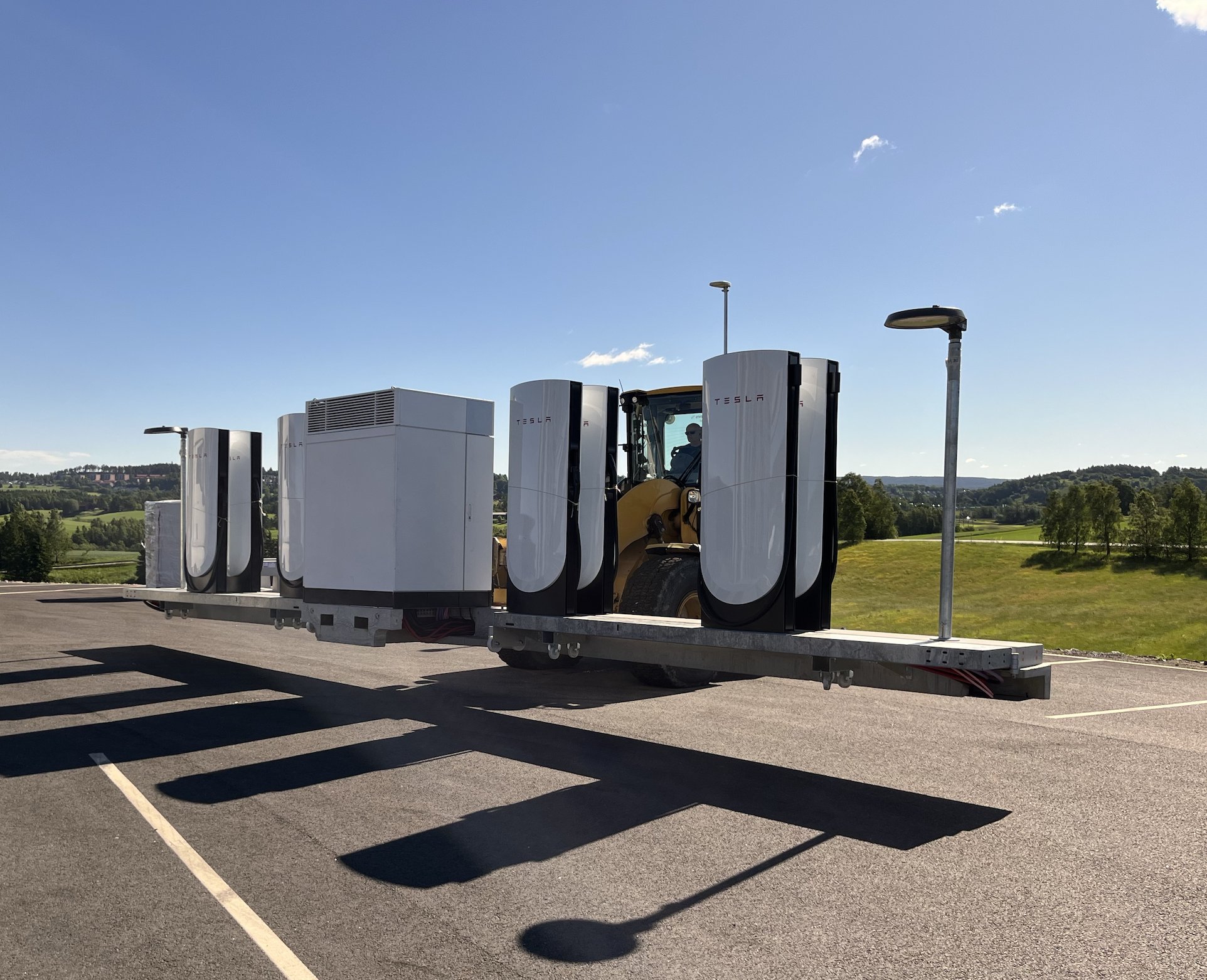
Tesla’s Folding Unit Supercharger has officially landed in Europe, with the company teasing a new installation in its effort for a broader rollout targeting major motorway rest stops across the European continent in Q3 2026. The arrival marks a notable shift in how Tesla is thinking about network expansion, moving from hardware performance alone to engineering the logistics chain itself.
While Tesla did not reveal the exact location for the new folding Supercharger in Europe, the photo shared on X heavily suggests that this maybe somewhere in Norway. Historically, whenever Tesla rolls out an entirely new infrastructure architecture in Europe, whether it was the original Supercharger stalls years ago or these brand-new modular V4 “Folding Units”, Norway is almost always the designated launch pad because of its unmatched EV adoption rate and supportive infrastructure
The Folding Unit, introduced in March 2026, is a factory pre-assembled V4 charging station built on an industrial hinge system mounted to a heavy-duty concrete base. The entire assembly arrives on site ready to unfold and connect. Tesla confirmed the units feature telescopic light poles specifically designed for easy transportation and fast on-site deployment, a detail that signals how carefully the logistics chain has been engineered alongside the hardware itself. The design allows 33% more stalls per delivery truck, cuts installation time roughly in half, and reduces overall deployment costs by more than 20% compared to traditional installations.
Tesla’s newest “Folding V4 Superchargers” are key to its most aggressive expansion yet
Tesla also noted telescopic light poles which provide benefits over traditional Supercharger installations that require fixed-height poles that are awkward to ship, slow to position on site, and often require separate crews and equipment to erect before charging hardware can even be staged. By engineering poles that compress for transit and extend on arrival, Tesla has removed one of the quieter bottlenecks in the physical deployment process. Every hour saved on a light pole installation is an hour redirected toward getting stalls energized. At scale, across dozens of new sites per quarter, those hours add up to a meaningful acceleration in how quickly a location goes from approved permit to serving its first customer.
Each Folding Unit pairs a single V4 power cabinet with eight charging posts. The V4 cabinet delivers up to 500 kW per stall for passenger vehicles and up to 1.2 MW for the Tesla Semi, supporting twice the stalls per cabinet at three times the power density of its predecessor. Longer cables make every new station immediately usable by non-Tesla vehicles, a priority as Tesla continues opening its network to Ford, GM, Rivian, Hyundai, Stellantis, and others.
As Teslarati reported when the Folding Unit was first unveiled, Tesla’s Gigafactory New York produced its final V3 Supercharger cabinet in March 2026 after more than seven years and 15,000 units, completing a full pivot to V4 production. The European arrival of the folding design is the next chapter in that transition.
Faster and cheaper deployment means Tesla can justify building in markets and corridors that were previously too expensive to serve, filling the coverage gaps that have slowed EV adoption outside major urban centers.
First Folding Unit Superchargers in Europe 🇪🇺 https://t.co/KNfYWJukkL pic.twitter.com/YR1udIpH1i
— Tesla Charging (@TeslaCharging) June 10, 2026

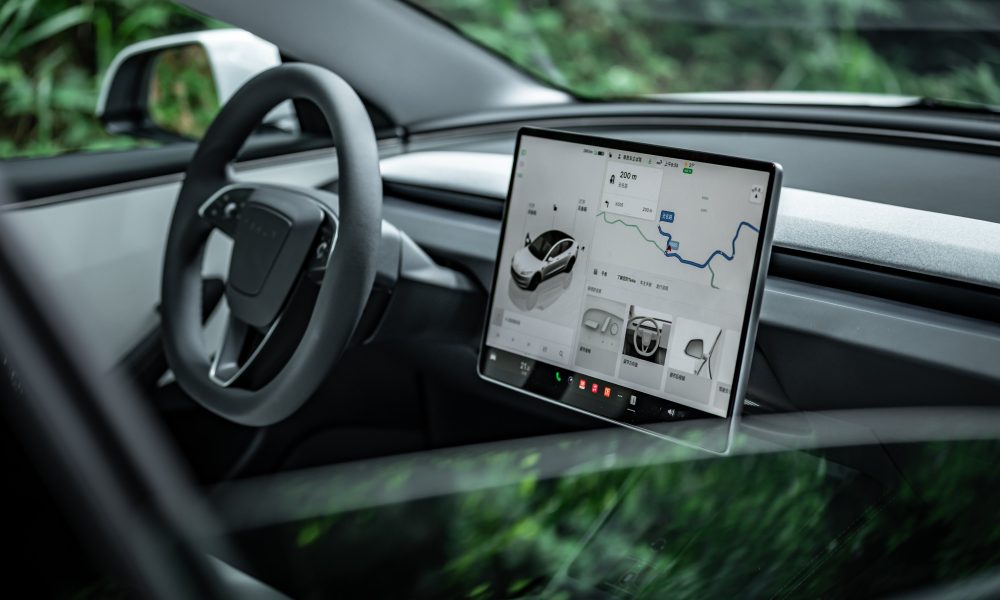
Tesla has stunned by gaining yet another approval for its Full Self-Driving suite in Europe, its second in two days and its fifth overall.
Belgium will be the latest country to allow Tesla owners to utilize FSD on public roads in Europe, joining a quickly growing list that started with the Netherlands, Lithuania, and Estonia.
On Tuesday, Denmark announced its approval of the FSD suite, which has now been followed by Belgium just one day later.
The country’s Minister of Mobility, Annick De Ridder, announced the approval on her X account, stating that she had just signed the approval of Tesla FSD. It now goes to the country’s homologation department for the last step of the approval process.
De @Tesla community houdt hier al geruime tijd de vinger aan de pols over de toelating voor de FSD-technologie op onze Vlaamse en Belgische wegen.
Uit waardering voor jullie niet-aflatende interesse (en aanmoediging 😉), krijgen jullie hierbij de primeur: ik heb net de toelating… pic.twitter.com/Yrps4OHTj8— Annick De Ridder (@AnnickDeRidder) June 10, 2026
The Belgian approval is one of mighty importance because it truly shows how quickly countries in Europe could greenlight the FSD suite consecutively. Approvals are already coming in relatively quickly, which is a great sign.
Perhaps the next big development that could come from FSD approvals in Europe is an approval from a country like England, Italy, France, Spain, or Germany. It would be something to see how FSD would perform in a major European metro, such as London, Barcelona, Madrid, Paris, Rome, or Berlin.
Getting Full Self-Driving in Spain and England will be such huge milestones for Tesla. I am so excited to see how FSD performs in Madrid, Barcelona, and London, specifically.
The ultimate test will always be Mumbai or New Delhi. Excited for India’s eventual approval! https://t.co/paw9Ch1qmL pic.twitter.com/9RdDERVSSJ
— TESLARATI (@Teslarati) June 9, 2026
Full Self-Driving does an excellent job of roaming around major U.S. cities like New York and Los Angeles, but other high-profile international cities of significance would truly mark a line in the sand for Tesla, which can simply enable any vehicle in its customer-owned fleet to run FSD with the correct approvals.

SpaceX (SPCX) IPO is live today at $135: Here’s exactly what you need to know

Tesla unfolded its first European “folding Supercharger”


