Lifestyle
Review: Tesla Model S J1772 Charger Lock

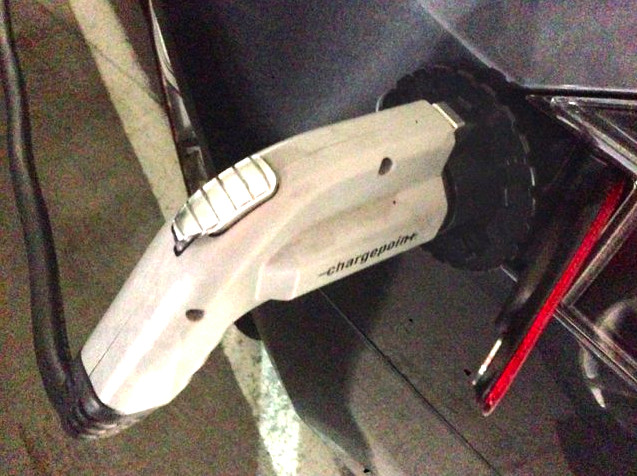
Driving a Model S is a terrific experience but it does come with new territory from time to time. Things that you never had to deal with as a gas car owner. Charging for example. An overwhelming majority of the time I charge my Model S inside my own garage with a 240v 40amp outlet. But there are times when I need to charge away from home and don’t have access to a Supercharger oasis from Tesla. It also means that there are extended periods of time where I’m away from my car while a charging cable is attached to it. You never leave your gas car with a running fuel pump inserted in the tank intake.
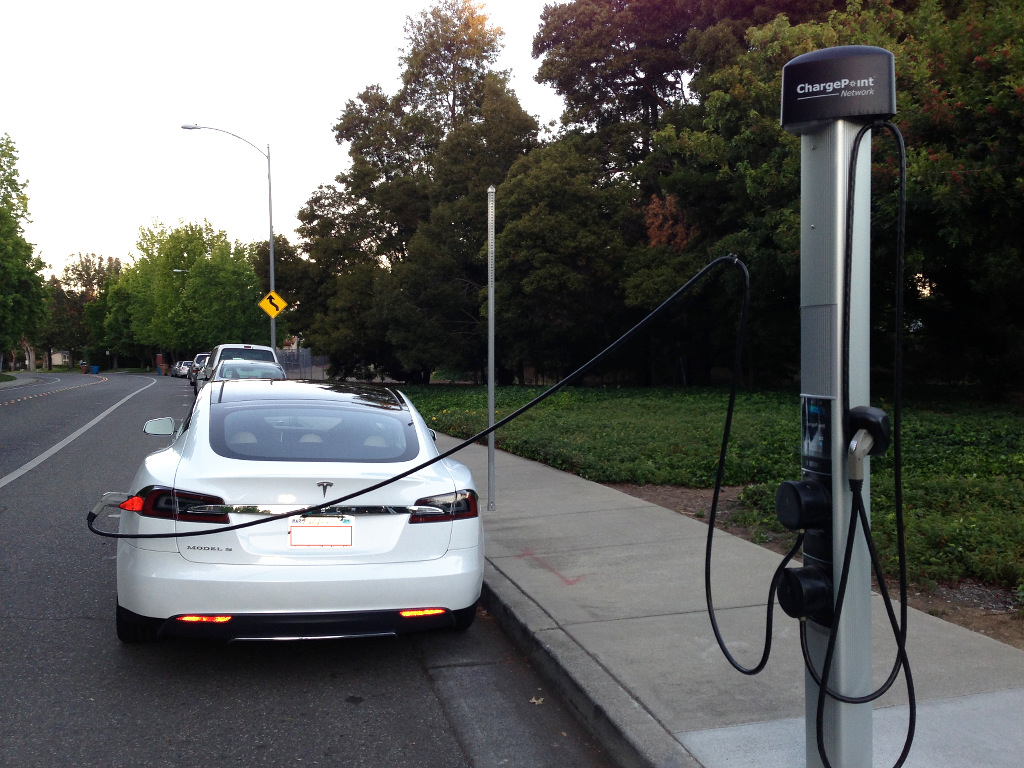
Image source: wikimedia.org
Here in the Chicagoland area we have a pretty healthy number of ChargePoint stations. A couple of years ago you would see most of these spaces empty, but now it’s unusual to see one not in use. On occasion I work in our downtown office and although I could take the train, I prefer to drive. Yeah, you know why. Parking garages in Chicago are very expensive but are also abundant, and so savvy owners have installed free ChargePoint stations and reserved spaces for EV’s. Sweet.
Also see: Using public EV charging stations with your Tesla Model S
Are you comfortable leaving your car parked in a public lot all day with a charge cable attached to it? Well, Power 12 has developed a simple product, the CapturePro CP1, designed to provide a greater peace of mind while you’re away from your charging Model S. It’s a hard plastic ring designed to sit between your Model S J1772 adapter and the charge handle. It’s singular purpose is to help protect from unwanted charging disconnections.
CapturePro CP1
I tested one yesterday. I drove into the city and wheeled into a rock star EV reserved spot in a Chicago River North parking garage. The CapturePro was easy to use. I simply slipped it onto my Tesla Model S J1772 adapter and connected the ChargePoint handle to the adapter.
The handle snaps onto the adapter to make a solid connection. But anyone can remove it. Here is where the CapturePro CP1 comes in. It slides over the connection, preventing purposeful or accidental disconnection.
Functionality
The ring has six different size notches so you can find just the right one to secure the handle to the adapter. Once you return to your Model S you simply disconnect the adapter from your charge port and slide off the ring. Once in place I applied some pretty serious pressure to try and dislodge it. I could not do so.
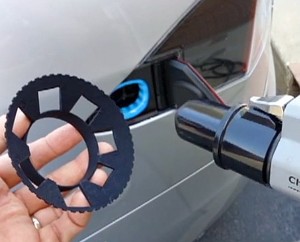 It would likely require significant force or a cutting tool to completely compromise the structure.
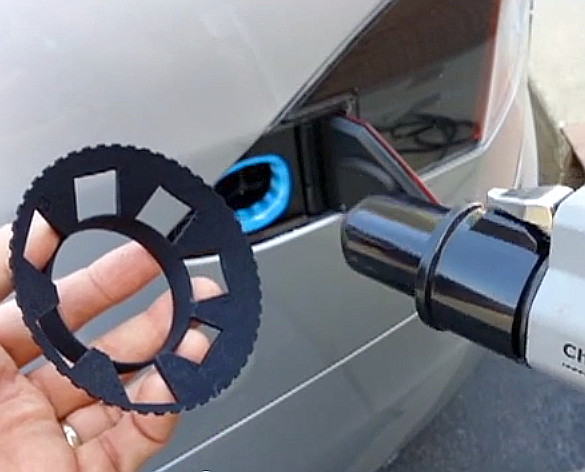
In other words someone would have to have strong purpose to break the connection. The CP1 requires no assembly and has a label for recording contact information, like a cell phone number, you can attach to the ring.
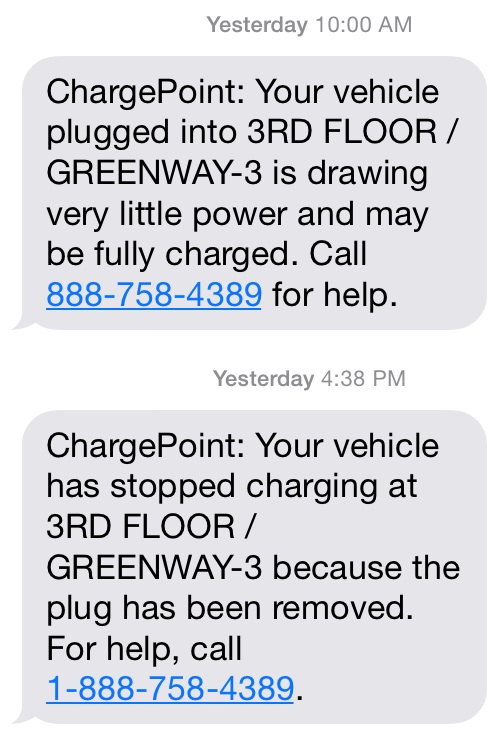 I plugged into ChargePoint at 8:00 and at 10:00 am my Model S was fully charged. I knew because ChargePoint has an excellent alert system that texted me when it was charged.
They also text you when the plug has been removed. Had removal occurred during the day I would have simply walked the two blocks to my car and assessed the situation. My Tesla iPhone app would tell me that my car is still parked, locked and in the same place I parked it.
 -
-
Conclusion
Should you have one in your Model S at all times? That depends entirely on your level of risk acceptance. Do you buy insurance or extended warranties for your electronics? Do these types of things reduce stress? If so, then the CapturePro might be for you.
At $39.99 it’s not an impulse buy. It worked exactly as advertised, but in my opinion if you’re going to do this I think it should be made out of something significantly stronger. I know it adds to the cost, but it also increases security. Do you opt for the cheap bicycle helmet that will shatter or is your brain worth top shelf protection?
RELATED: Tesla Charging Etiquette: SuperchargerQR App, Paper Note and Google Voice



Firmware
Tesla unlocks in-car web conferencing to extend Google Meet, Teams and beyond
Tesla’s Summer Update lets owners join Google Meet, Teams, and Discord calls via cabin camera.

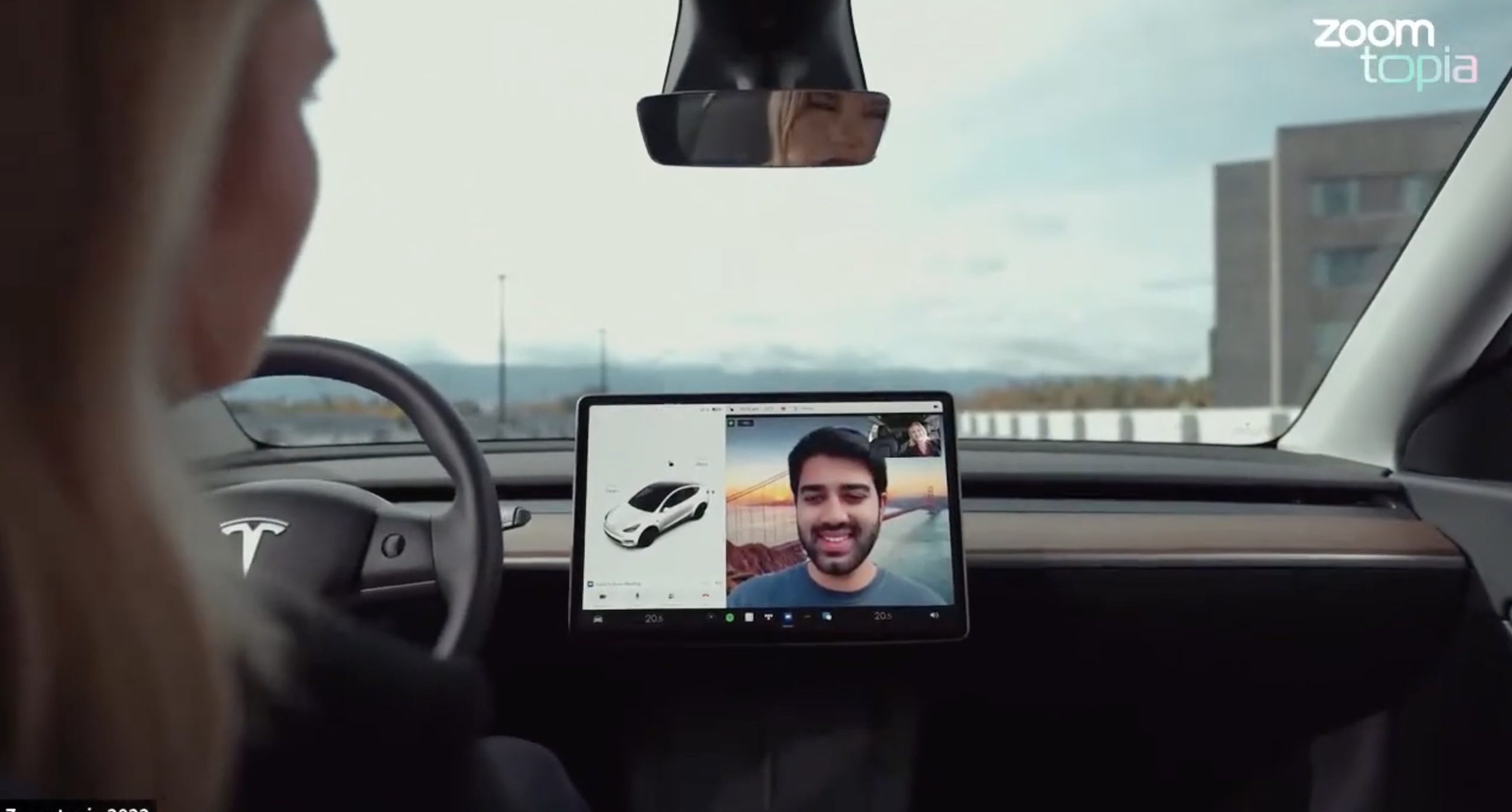
Tesla’s 2026 Summer Update, which just began rolling out to customer vehicles, now links the built-in web browser with the in-cabin camera feed and microphone input, thereby letting owners join video calls on nearly any browser-based service instead of just Zoom.
The change appears in Tesla’s own release notes for software version 2026.26 under “Web Browser,” which states that the vehicle can now use its interior camera and cabin microphone when a website requests access, with permission granted the same way a desktop browser handles it. As NotATeslaApp notes, this feature opens the door to Google Meet, Microsoft Teams, Discord, and other webcam-enabled sites to activate the in-car cabin-facing camera. The feed automatically crops and zooms to center the driver in frame.
Tesla has offered in-car video calling before, but only through a dedicated Zoom app that launched at the end of 2022, a stripped-down browser preloaded with Zoom’s own web client and gated behind Premium Connectivity. Opening the full browser to any camera-requesting site removes that walled garden. Elon Musk first called video conferencing “definitely a future feature” back in 2020, when the pandemic pushed remote meetings into daily life, so this update effectively finishes something Tesla has been promising for six years.
Tesla Summer Update begins rolling out: a look at the new features
The feature keeps the same restrictions that applied to Zoom on Tesla vehicles. It only works while the car is parked; shifting into Drive disables the camera feed, according to the release notes. It is also limited to vehicles running Tesla’s AMD Ryzen infotainment hardware, meaning older Intel-based Model S and Model X units, along with early Model 3 and Model Y builds, don’t get it.
Turning the browser into a general entry point for the in-cabin camera, rather than routing everything through one local app, widens the number of third-party sites that can ask for access, even though Tesla’s permission prompt.
With the Summer update only days into its rollout, be sure to stay with us on TikTok and X to see the latest video demonstrations.
-
Elon Musk escalated his monthslong feud with Christopher Nolan’s The Odyssey this week, pledging that his own AI video tool will produce a competing version before the year is out. Responding to a fan-made, AI-generated clip of the ancient epic, Musk wrote on X, “Before this year ends, Grok Imagine will make a full-length movie of The Odyssey that is historically accurate and true to the art of Homer.”
In June, Musk quoted an xAI-shared trailer built entirely with Grok Imagine Video 1.5, a two-minute-plus reimagining of The Odyssey styled after a 1970s classical Hollywood epic, and predicted “full movies by the end of the year,” as Teslarati reported at the time. That trailer, built from 36 consistent shots by a single creator, was Musk’s proof of concept. This week’s pledge turns that prediction into a specific commitment, tied directly to Homer’s text rather than a generic demo.
Before this year ends, Grok Imagine will make a full-length movie of The Odyssey that is historically accurate and true to the art of Homer https://t.co/bVHzUmY9WN
— Elon Musk (@elonmusk) July 22, 2026
When a fan separately proposed that Musk fund a live-action alternative, to “give Mel Gibson $100 million to film an Odyssey adaptation with painstakingly historically accurate ships, armour, weapons, and casting, with all dialogue taken straight from the original poem and delivered in Homeric Greek,” Musk replied with two words: “I’m down.”
The Grok Imagine pledge lands as the tool’s underlying infrastructure has changed hands. Grok is no longer a standalone product, it folded into SpaceXAI after SpaceX’s acquisition of xAI closed in February, meaning the compute behind any Odyssey production traces back to the same Colossus supercomputers now bundled into SpaceX’s pitch to investors. Musk has separately said SpaceX’s own engineering data is being fed into the next major Grok training run, a two trillion parameter model he’s called the “2T run.”
Whether Grok Imagine can sustain a feature length narrative, rather than a series of impressive individual shots, remains the open question.
-
Cybertruck
Tesla Mobile App gets a new feature that wrap fans are going to love
Tesla’s Summer Update removes the USB drive step from customizing your car’s digital wrap design.
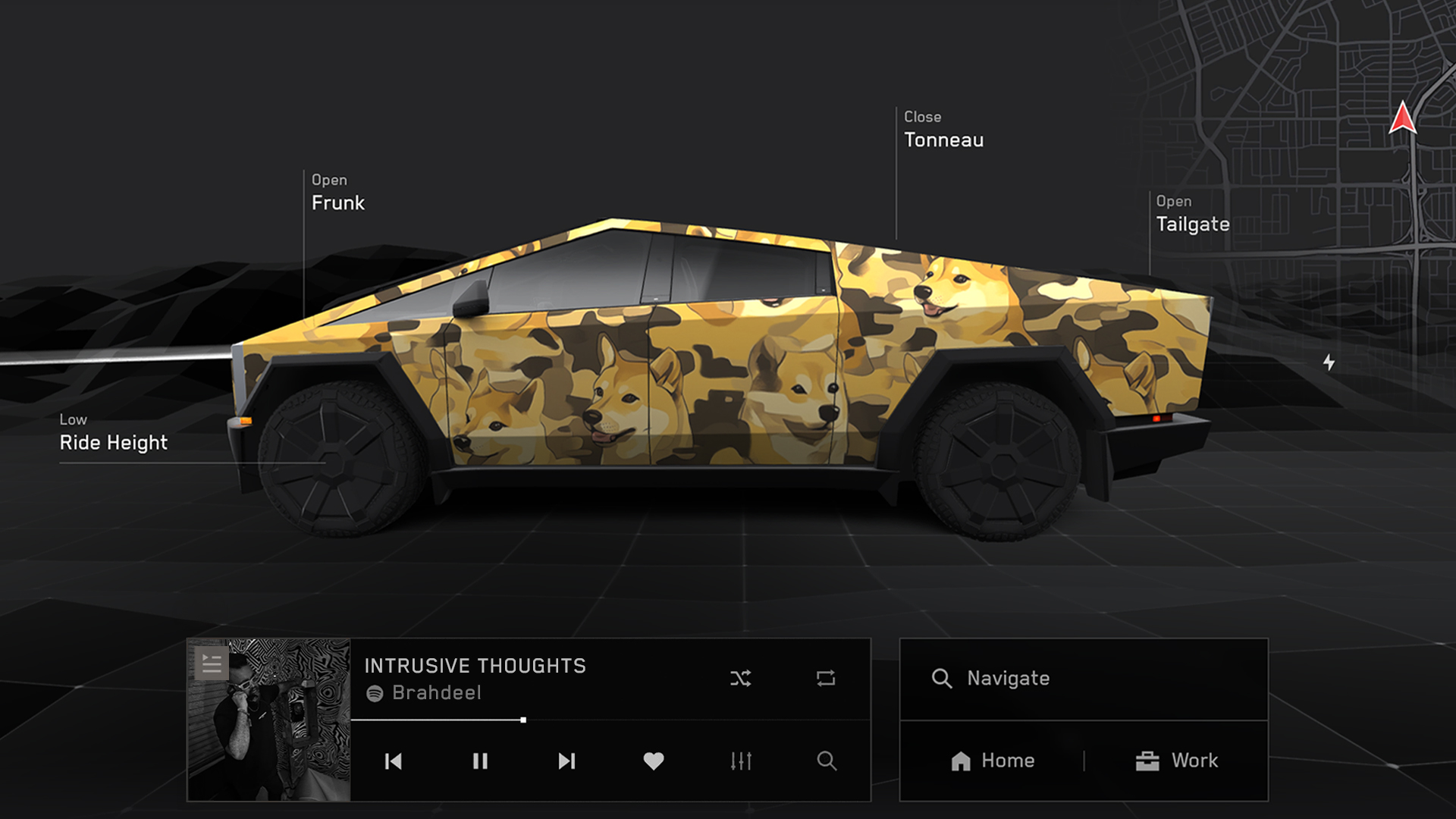
Tesla’s latest 2026 Summer Update quietly closes out one of the more tedious steps in personalizing a Tesla’s digital appearance. Uploading a custom wrap design used to require a USB drive. Now it doesn’t.
The feature is listed in Tesla’s release notes as “Send Custom Wraps from Mobile App.” The company described it plainly: “Skip the USB drive and upload a custom wrap of your car from the mobile app. Instructions for creating a custom wrap here: github.com/teslamotors/custom-wraps.”
The digital wrap tool has been around since Tesla’s 2024 Holiday Update, when it launched for Cybertruck owners first, as Teslarati reported at the time. Getting a design onto the car meant formatting a USB drive, creating a folder named exactly “Wraps,” dropping in PNG files sized between 512×512 and 1024×1024 pixels and under 1 MB each, then plugging the drive in and applying the wrap through Toybox. Tesla expanded the tool to other models and renamed it from “Colorizer” to “Paint Shop” with the 2025 Holiday Update, while also adding license plate and window tint customization alongside the wraps.
Custom wraps via mobile app https://t.co/5OydZ26g9p pic.twitter.com/uexU0ZePxu
— Tesla (@Tesla) July 22, 2026
The latest Summer Update removes the USB step from that process. Owners will be able to pull a design from wherever they saved it, whether that’s a download from social media or something built from Tesla’s own GitHub templates, and push it to the car directly through the app.
Tesla reveals 2026 Summer Update with crazy fixes to Nav and more
-
It’s a small fix relative to the rest of this latest release, which also included expanded Grok voice commands, automatic navigation that learns regular routes, and self-driving stats inside the mobile app, all detailed in our rundown of the full Summer Update. The USB requirement was one of the more common complaints about Paint Shop since it launched. Tesla did not say when the wrap upload change would reach individual vehicles, only that the broader update is rolling out now in waves.

Tesla Full Self-Driving insurance program with heavy discount expands

Tesla quietly made the Cybertruck even stronger


