Lifestyle
Comic book artist reimagines Tesla’s Model X as a Transformers robot

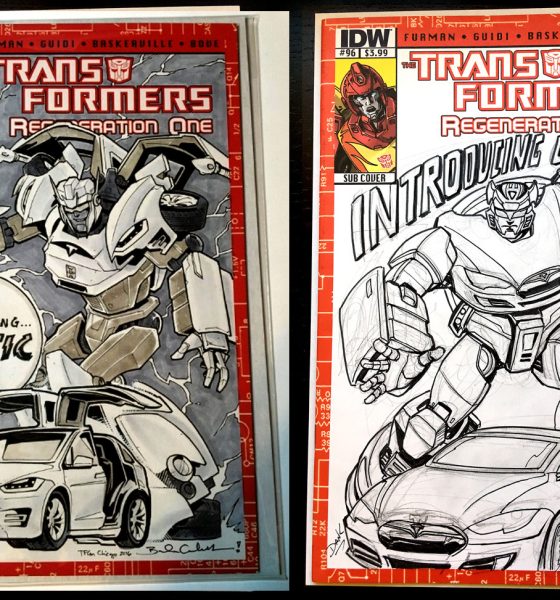
Die hard Transformers fan and c0host to the TransMissions podcast, Youseph Tanha, surely has the most unique one-of-a-kind Tesla Model X on the planet. Equipped with its own Falcon Wing missiles – that’s right, missiles – and the ability to transform into a two story tall robot, Tanha’s Model X which goes by the name ‘Voltic’ is undoubtedly more than meets the eye. At least in comic book form.
We caught up with Tanha, who goes by the name Yoshi, to learn more about his unique project that would immortalize Tesla’s Model X and Model S as a generation one Transformer.
How did this project come about?
I’m an old school G1 Transformers fan. (G1 is how a person refers to the original Transformers toys, cartoon, animated movie, and comic books of the 80s.) I believe it was in 2002 that comic book companies started to experiment with releasing comic books with blank covers, (also known as sketch covers). The idea being that comic book fans would buy these blank comics and take them to comic convention where comic artists would do up a sketch for them for a fee.
In recent years these blank covers have become more popular. I don’t believe we’ve come close to the apex of their potential yet. I put together a short video talking about this on my blog.
The original Marvel Comics Transformers run ended in in 1991 after 80 issues. The ending of this series was rushed due to lack luster sales at the time. In 2012, After acquiring the comic rights, IDW Publishing gathered one of the original writers and several of the original artist of the Marvel Transformers comic together for 21 issues and give them a chance to give the comic book a proper closing. That comic book series was called Transformers: Regeneration One and ended in 2014.
From these 21 issues, 4 were blank sketch covers. The one used for the ‘Voltic’ project is issue 96.
I’ve wanted to commission a Transformers comic book artist for the ‘Voltic’ project for nearly a year. For me it was just finding the right Transformers artist and time.
Later this month, I’ll be attending a Transformers Convention (TFCon) in Chicago. This year’s TFCon has round up an impressive number of Transformers comic book artist, including Brendan Cahill. When I found out Mr. Cahill would be attending TFCon, I contacted him to request a comic sketch cover art commission that I could pick up at the convention. This way I not only get a commission piece I want, but I also get to shake hands with the person who created it.
In my original e-mail to Mr. Cahill, I pitched two ideas to him for the commission. He chose the Tesla idea. Here is the pitch.
“Custom G1 Transformer. Modeled after the TESLA Model X car. In both car and bot mode. I have an OptimusPrime photo attached to this e-mail to show you what I’m going for as far as showing both modes at the same time. On the cover I would like written, “Introducing Voltic”. I want to make sure that the drawing shows the TESLA and Autobot Logos in appropriate places. I’m Also attaching a couple of TESLA Model X images for reference. I would like the vehicle mode to show off one, if not both, gull wing doors.”
That was it. The correspondence afterword dealt with the cost of the work and where to mail the blank comic book too. Didn’t really give him any other impute on the design. He just uses my references as a guide and it turned out the way I wanted it to.
The name, ‘Voltic’ comes form the video game, Grand Theft Auto 5 of which I’m a big fan of. The game has a parody of TESLA called ‘COIL’ and their car model is the Voltic.
I also want to add that earlier in the year I had commissioned a different artist to make a Model S Transformers.
A sketch of @TeslaMotors Model S. @elonmusk https://t.co/9D2yfh4j42 pic.twitter.com/PmMluAL4lw
— Yoshi (@YousephTanha) June 29, 2016
Is this officially recognized by IDW and will it make it into print?
Nope. Not at all. But wouldn’t it be cool if it was?
The character is original to myself and Mr. Cahill. As far as I know, IDW Publishing has no plans to make a Transformer character model after a Tesla vehicle. I imagine if they wanted to do this they would be requires to pay Tesla for the rights to use their vehicle’s likeness. I also don’t think it fits with the current direction that IDW has taken characters and story in their current on going transformers comics.
What are some of the attack and defense mechanisms that ‘Voltic’ has over other Transformers?
I have put zero thought into this. Originally, the transformers story takes place in the 80s. The Transformers crash landed on earth and their alt modes (Vehicle modes) where based on the technology of the time. Optimus Prime is a flat nosed MACK Truck. Bumble Bee is a VW Beatle. Star Scream is a F-22 Raptor, and so on. Its fun to think if the story took place in 2016 that one of those Transformers would have been a Tesla. it’s almost silly to think that wouldn’t happen today.
Mr. Cahill clearly had fun with this project and added some missiles to the falcon wing doors. But I’ve put zero thought into Voltic’s unique abilities. Mostly because I probably would end up writing 5 pages about it if i started. I can tell you, like all Transformers, he would have an internal repair system in place and advanced communications abilities.


Lifestyle
Tesla app update makes Robotaxi ownership make a lot more sense
Tesla’s app now shows a live indicator when your car is actively driving itself.
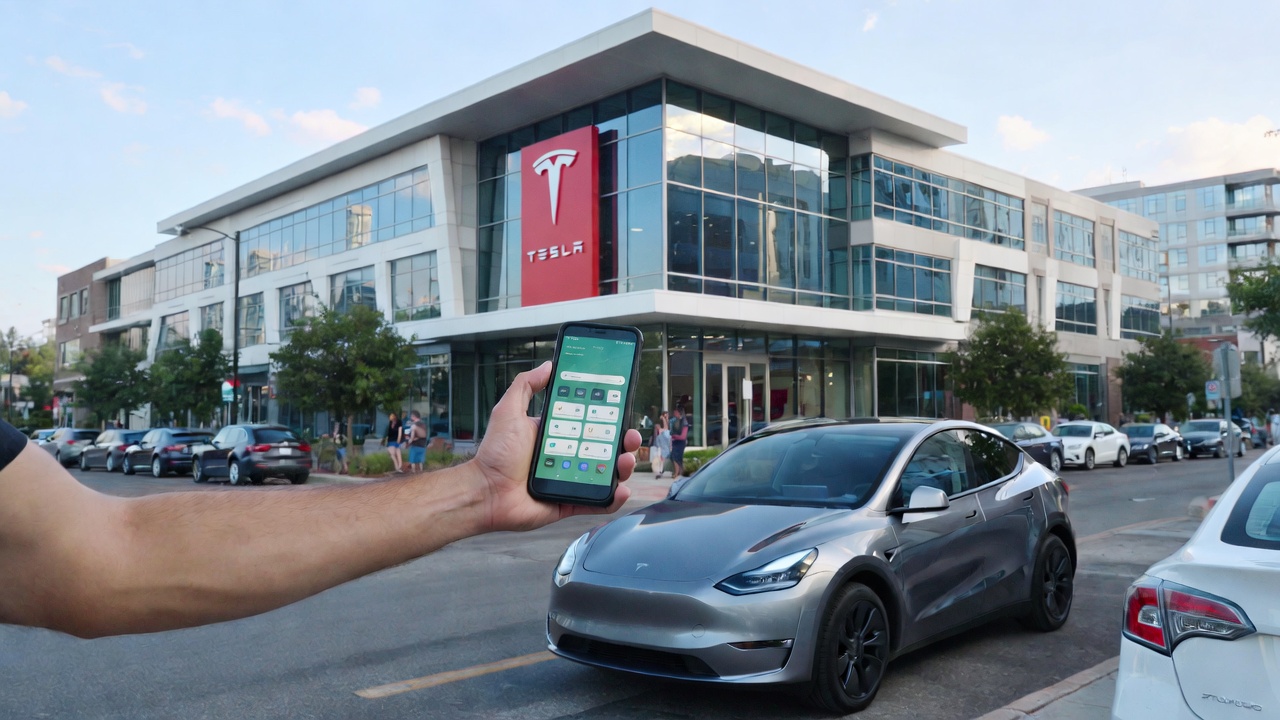
A recent Tesla app update, released last week (4.58.5), gives visibility on whether a vehicle is navigating in its semi-autonomous mode or being drive by a human driver. The updated app now displays a live “Self-Driving” indicator in bright blue text directly beneath the vehicle’s speed readout whenever Full Self-Driving is actively engaged, along with the signature glowing blue navigation path that FSD users see on the main touchscreen. It is a small visual update with meaningful implications for how Tesla owners monitor their vehicles remotely.
The feature was first spotted in the wild by X user Jordan Camina, who shared video of a Hardware 3 Model S displaying the new animation through the app while driving. That detail is significant because it confirms the update is not limited to newer HW4 vehicles. It works across hardware generations, and Tesla confirmed it will eventually support all vehicles regardless of chip platform once both the app and vehicle software are updated. The vehicle side requires software version 2026.20.6.1, which has reached nearly 40% of the fleet so far, as monitored by NotaTeslaApp.
The feature makes the most practical sense when viewed through the lens of Tesla’s expanding robotaxi operation. In a robotaxi context, the owner of a vehicle generating ride revenue has a direct financial and safety interest in knowing whether their car is operating under autonomous control at any given moment. The app’s new FSD indicator gives fleet owners exactly that visibility, the same way a logistics company monitors whether a delivery driver is following the planned route. It also carries implications for Tesla’s insurance model. Tesla’s own insurance product prices premiums in part based on FSD engagement rates, and real-time visibility into when FSD is active creates a feedback loop that could eventually tie directly into policy pricing. For individual owners who have opted their personal vehicles into the robotaxi network, the update effectively turns the Tesla app into a fleet management dashboard, one that tells you whether your car is earning money, whether it is driving itself to do it, and whether everything is operating the way it should from wherever you happen to be.
Tesla expands Robotaxi to Florida, marking its third state for autonomy
As Teslarati has reported, Tesla launched unsupervised robotaxi rides in Miami this summer, a milestone that makes a remote FSD status indicator significantly more practical than a cosmetic feature. When a vehicle is operating as a robotaxi without a driver present, the owner or fleet operator needs a reliable way to confirm autonomy is engaged. The app now provides exactly that.
As noted by NotATeslaApp, The update also arrived alongside a hint buried in the same app version that Tesla plans to use the cabin camera to verify driver identity before FSD can be activated. Pairing identity verification with a live autonomy status indicator points toward the infrastructure Tesla is building for a fleet of driverless vehicles that owners can monitor the way you would track a package delivery.
Elon Musk
The Boring Company just doubled its tunneling power in Nashville
The Boring Company’s Prufrock MB2 is commissioned and ready to mine beneath Nashville’s streets.
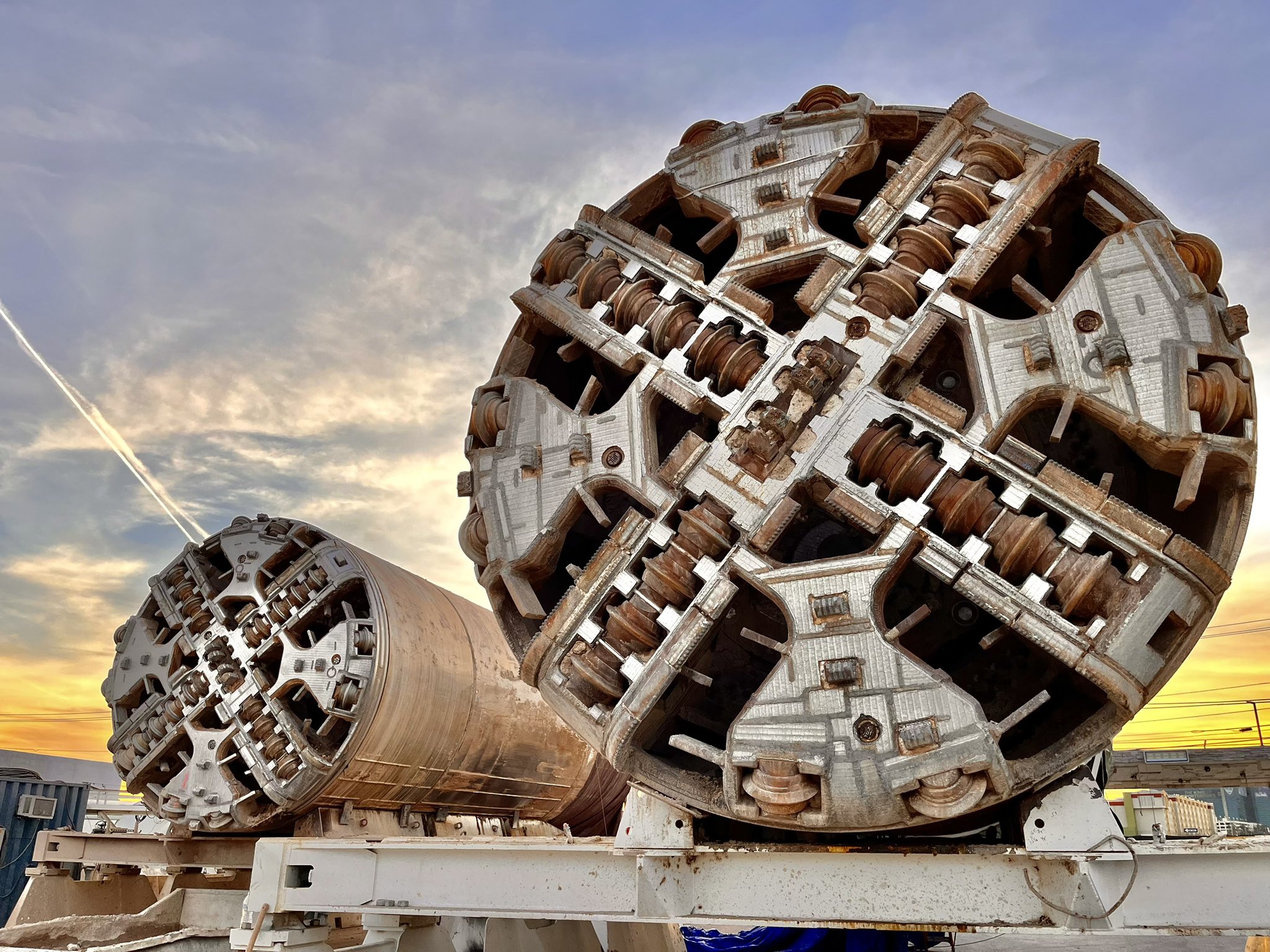
The Boring Company’s second tunnel boring machine, Prufrock MB2, is officially ready to dig in Nashville. The company confirmed the news on X, posting: “Prufrock-MB2 is ready to mine in Nashville! MB2 commissioning is complete, including the brief 11 rpm rotation shown here. Will MB2 catch up to MB1, who had quite the head start? And Prufrock-MB3 ships in August!”
MB2 arrives with meaningful improvements over its predecessor. Lessons learned from the launch and operation of MB1 have already been applied to MB2 to improve efficiency and prepare the machine for launch.
Traditional tunnel boring machines operate in a stop-and-go cycle, digging roughly five feet, halt, erect precast concrete segments to line the tunnel wall, then resume. That repeated interruption is one of the main reasons conventional tunneling is slow and expensive. Prufrock is designed to install the tunnel liner simultaneously with mining, eliminating the need to stop every five feet. The machine also skips the need for excavated launch pits. Prufrock arrives on a truck, tilts down, and launches into the ground within 24 hours. And when the tunnel is complete, it emerges from the ground and drives to its next launch site on a trailer, eliminating the need for expensive cranes or pit excavation. The machine is also fully electric and runs with zero people in the tunnel during normal operations, controlled remotely from a surface operations center.
Prufrock-MB2 is ready to mine in Nashville! MB2 commissioning is complete, including the brief 11 rpm rotation shown here.
Will MB2 catch up to MB1, who had quite the head start?
And Prufrock-MB3 ships in August! pic.twitter.com/TTrMql2aRg
— The Boring Company (@boringcompany) June 17, 2026
It won’t be long before we hear of another major update on The Boring Company’s Music City Loop project – a planned underground transit network beneath Nashville that would move passengers in electric vehicles through a series of tunnels at highway speeds, and bypassing surface traffic entirely. Nashville was selected in part because of its strong rock conditions that suits the Prufrock machines well, and relatively less regulatory hurdles.
Progress has been steady on multiple fronts. All 37 permits and approvals required ahead of tunneling have been obtained, out of 45 total. Key wins include a fully executed TDOT tunnel permit authorizing 25 miles of tunnel, unanimous airport authority approval for a Nashville International Airport station, and the city’s first residential station agreement serving downtown tower residents.
With MB1 already tunneling, MB2 now commissioned, and MB3 shipping in August, Nashville is becoming something of a live proving ground for scaled tunnel boring. The broader ambition is not limited to one city. The Boring Company’s stated goal is to make underground transportation a practical alternative to surface roads across major metro areas. Nashville is one of many cities, including a successful Las Vegas tunnel system, where that idea is being put to the test at real speed.
Investor's Corner
Tesla unfolded its first European “folding Supercharger”
Tesla’s folding Supercharger just arrived in Europe and it changes how fast charging expands.
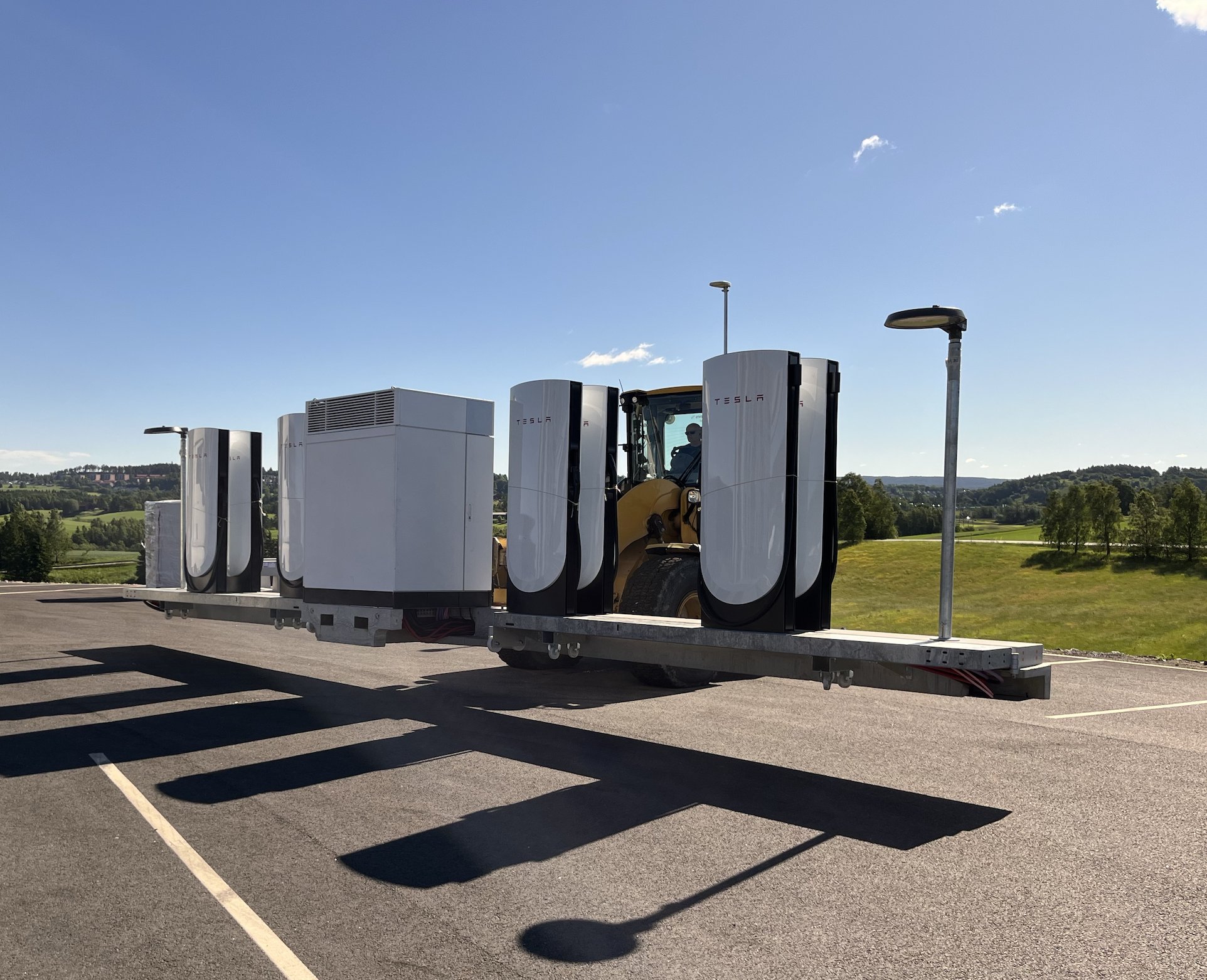
Tesla’s Folding Unit Supercharger has officially landed in Europe, with the company teasing a new installation in its effort for a broader rollout targeting major motorway rest stops across the European continent in Q3 2026. The arrival marks a notable shift in how Tesla is thinking about network expansion, moving from hardware performance alone to engineering the logistics chain itself.
While Tesla did not reveal the exact location for the new folding Supercharger in Europe, the photo shared on X heavily suggests that this maybe somewhere in Norway. Historically, whenever Tesla rolls out an entirely new infrastructure architecture in Europe, whether it was the original Supercharger stalls years ago or these brand-new modular V4 “Folding Units”, Norway is almost always the designated launch pad because of its unmatched EV adoption rate and supportive infrastructure
The Folding Unit, introduced in March 2026, is a factory pre-assembled V4 charging station built on an industrial hinge system mounted to a heavy-duty concrete base. The entire assembly arrives on site ready to unfold and connect. Tesla confirmed the units feature telescopic light poles specifically designed for easy transportation and fast on-site deployment, a detail that signals how carefully the logistics chain has been engineered alongside the hardware itself. The design allows 33% more stalls per delivery truck, cuts installation time roughly in half, and reduces overall deployment costs by more than 20% compared to traditional installations.
Tesla’s newest “Folding V4 Superchargers” are key to its most aggressive expansion yet
Tesla also noted telescopic light poles which provide benefits over traditional Supercharger installations that require fixed-height poles that are awkward to ship, slow to position on site, and often require separate crews and equipment to erect before charging hardware can even be staged. By engineering poles that compress for transit and extend on arrival, Tesla has removed one of the quieter bottlenecks in the physical deployment process. Every hour saved on a light pole installation is an hour redirected toward getting stalls energized. At scale, across dozens of new sites per quarter, those hours add up to a meaningful acceleration in how quickly a location goes from approved permit to serving its first customer.
Each Folding Unit pairs a single V4 power cabinet with eight charging posts. The V4 cabinet delivers up to 500 kW per stall for passenger vehicles and up to 1.2 MW for the Tesla Semi, supporting twice the stalls per cabinet at three times the power density of its predecessor. Longer cables make every new station immediately usable by non-Tesla vehicles, a priority as Tesla continues opening its network to Ford, GM, Rivian, Hyundai, Stellantis, and others.
As Teslarati reported when the Folding Unit was first unveiled, Tesla’s Gigafactory New York produced its final V3 Supercharger cabinet in March 2026 after more than seven years and 15,000 units, completing a full pivot to V4 production. The European arrival of the folding design is the next chapter in that transition.
Faster and cheaper deployment means Tesla can justify building in markets and corridors that were previously too expensive to serve, filling the coverage gaps that have slowed EV adoption outside major urban centers.
First Folding Unit Superchargers in Europe 🇪🇺 https://t.co/KNfYWJukkL pic.twitter.com/YR1udIpH1i
— Tesla Charging (@TeslaCharging) June 10, 2026

Tesla app update makes Robotaxi ownership make a lot more sense

California snubs Tesla in its newly passed EV incentive that favors Rivian and Lucid


