News
Tesla driver suspected of driving off cliff pinned by wife’s statement, witnesses, and videos

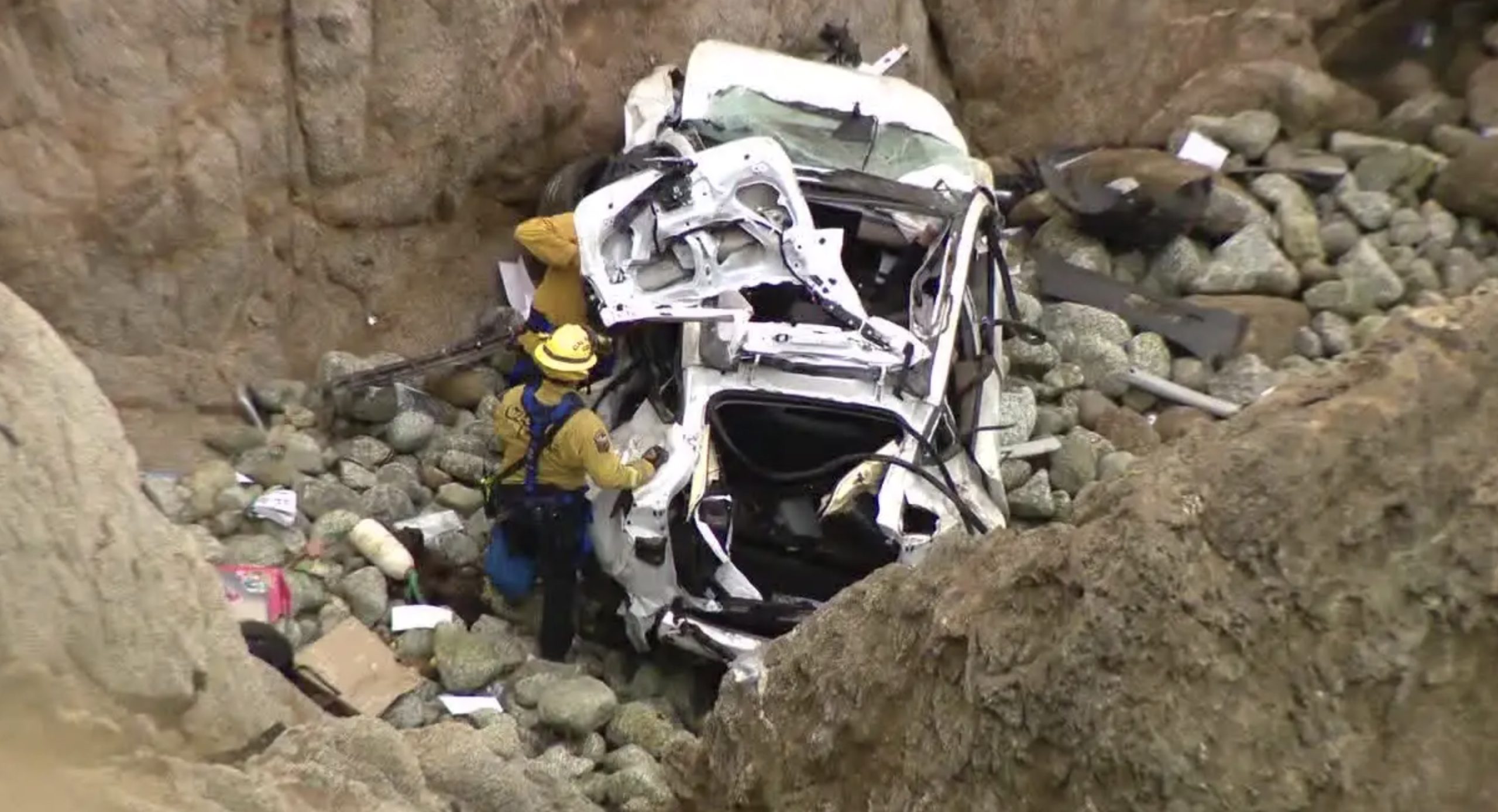
While investigators have noted that the Tesla involved in the harrowing but miraculous crash at Devil’s Slide earlier this month is being probed for potential issues that may have caused the accident, a statement from one of the survivors, comments from motorists in the area, and footage from a nearby tunnel have pinned the incident on the vehicle’s driver.
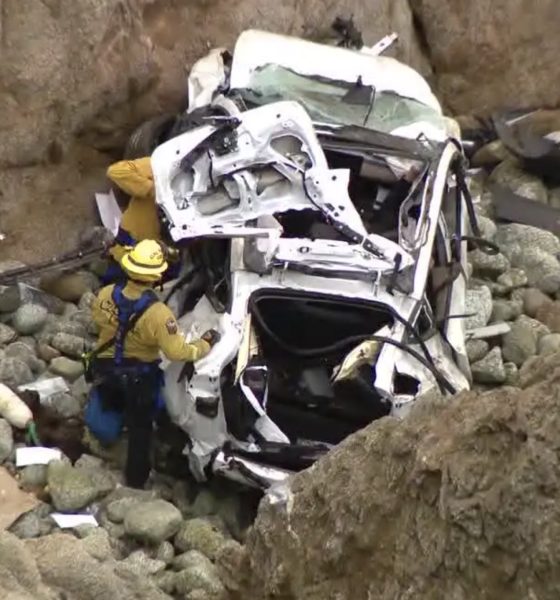
During the incident, a Tesla Model Y with a family of four — Radiologist Dharmesh Patel, his wife, Neha, and their two children — drove off Devil’s Slide in California. The all-electric vehicle dropped 250 feet before landing on its wheels on a dry portion of the beach. Rescuers who responded to the incident dubbed the survival of all the vehicle’s occupants a “miracle” since other motorists who fell in the same area were not as lucky to escape with their lives.
As noted in a San Francisco Chronicle report, statements from the Model Y driver’s wife, comments from motorists driving in the area where the incident happened, and videos from the Tom Lantos Tunnel nearby have suggested that the incident was intentional. San Mateo County District Attorney Steve Wagstaffe noted that three counts of attempted murder charges had been filed against Patel. Charging documents included enhancements for domestic violence and actions that caused great bodily injuries.
“We do believe the evidence establishes the necessary intent to kill,” Wagstaffe said.
The District Attorney noted that after Neha was hoisted by helicopter from the site of the crash, she talked with paramedics and provided incriminating statements about her husband. Motorists who were in the area when the incident happened also informed investigators that they observed no brake lights on the Tesla when it made a hard right and plunged off the cliff.
Wagstaffe, for his part, stated that his office is currently investigating the potential reasons behind the radiologist’s actions. “We’re looking into what led up to this. Was there depression or anything else? It wasn’t just that he was trying to kill them. He was trying to kill himself too,” the District Attorney said.
While the investigation into the incident is ongoing, Wagstaffe noted that the Tesla Model Y was not in self-driving mode at the time of the incident. No videos, however, have been recovered from the vehicle. All four occupants were also belted in when the Tesla drove off the cliff.
Dharmesh Patel appeared in court on Monday afternoon, and his attorney, Josh Bentley, asked for a delay until February 9. Judge Jeffrey Finigan granted Patel’s request, but he also granted the prosecution’s request that the Model Y driver not be offered bail to avoid “potential danger to family members.”
Don’t hesitate to contact us with news tips. Just send a message to simon@teslarati.com to give us a heads up.


Elon Musk
Starlink passes 9 million active customers just weeks after hitting 8 million
The milestone highlights the accelerating growth of Starlink, which has now been adding over 20,000 new users per day.
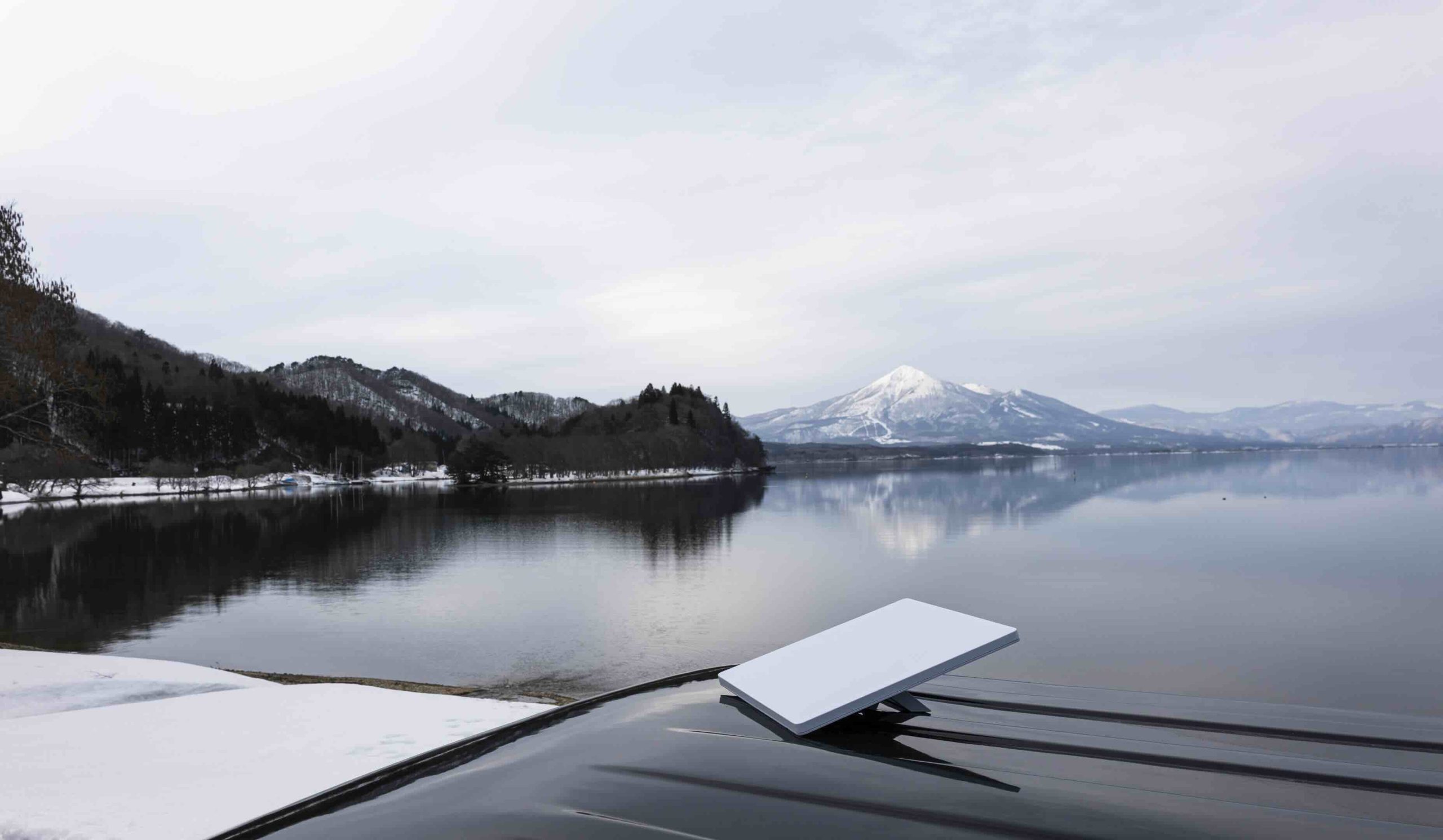
SpaceX’s Starlink satellite internet service has continued its rapid global expansion, surpassing 9 million active customers just weeks after crossing the 8 million mark.
The milestone highlights the accelerating growth of Starlink, which has now been adding over 20,000 new users per day.
9 million customers
In a post on X, SpaceX stated that Starlink now serves over 9 million active users across 155 countries, territories, and markets. The company reached 8 million customers in early November, meaning it added roughly 1 million subscribers in under seven weeks, or about 21,275 new users on average per day.
“Starlink is connecting more than 9M active customers with high-speed internet across 155 countries, territories, and many other markets,” Starlink wrote in a post on its official X account. SpaceX President Gwynne Shotwell also celebrated the milestone on X. “A huge thank you to all of our customers and congrats to the Starlink team for such an incredible product,” she wrote.
That growth rate reflects both rising demand for broadband in underserved regions and Starlink’s expanding satellite constellation, which now includes more than 9,000 low-Earth-orbit satellites designed to deliver high-speed, low-latency internet worldwide.
Starlink’s momentum
Starlink’s momentum has been building up. SpaceX reported 4.6 million Starlink customers in December 2024, followed by 7 million by August 2025, and 8 million customers in November. Independent data also suggests Starlink usage is rising sharply, with Cloudflare reporting that global web traffic from Starlink users more than doubled in 2025, as noted in an Insider report.
Starlink’s momentum is increasingly tied to SpaceX’s broader financial outlook. Elon Musk has said the satellite network is “by far” the company’s largest revenue driver, and reports suggest SpaceX may be positioning itself for an initial public offering as soon as next year, with valuations estimated as high as $1.5 trillion. Musk has also suggested in the past that Starlink could have its own IPO in the future.
News
NVIDIA Director of Robotics: Tesla FSD v14 is the first AI to pass the “Physical Turing Test”
After testing FSD v14, Fan stated that his experience with FSD felt magical at first, but it soon started to feel like a routine.
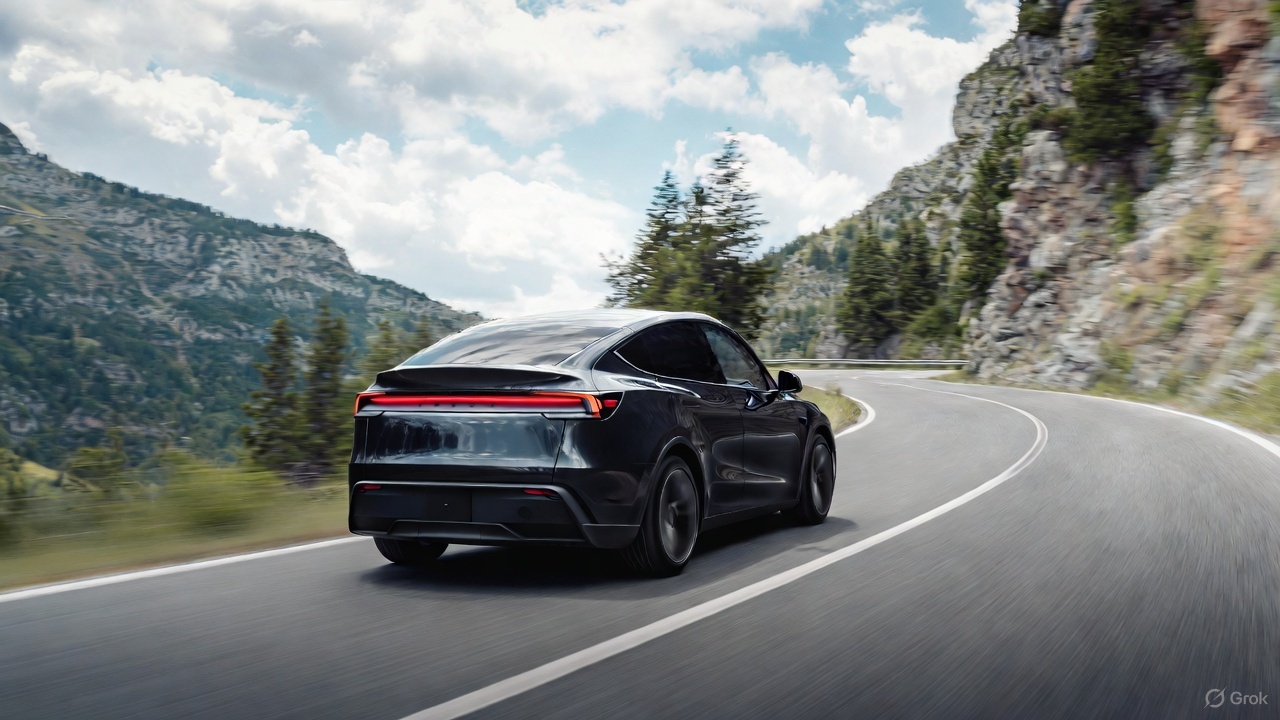
NVIDIA Director of Robotics Jim Fan has praised Tesla’s Full Self-Driving (Supervised) v14 as the first AI to pass what he described as a “Physical Turing Test.”
After testing FSD v14, Fan stated that his experience with FSD felt magical at first, but it soon started to feel like a routine. And just like smartphones today, removing it now would “actively hurt.”
Jim Fan’s hands-on FSD v14 impressions
Fan, a leading researcher in embodied AI who is currently solving Physical AI at NVIDIA and spearheading the company’s Project GR00T initiative, noted that he actually was late to the Tesla game. He was, however, one of the first to try out FSD v14.
“I was very late to own a Tesla but among the earliest to try out FSD v14. It’s perhaps the first time I experience an AI that passes the Physical Turing Test: after a long day at work, you press a button, lay back, and couldn’t tell if a neural net or a human drove you home,” Fan wrote in a post on X.
Fan added: “Despite knowing exactly how robot learning works, I still find it magical watching the steering wheel turn by itself. First it feels surreal, next it becomes routine. Then, like the smartphone, taking it away actively hurts. This is how humanity gets rewired and glued to god-like technologies.”
The Physical Turing Test
The original Turing Test was conceived by Alan Turing in 1950, and it was aimed at determining if a machine could exhibit behavior that is equivalent to or indistinguishable from a human. By focusing on text-based conversations, the original Turing Test set a high bar for natural language processing and machine learning.
This test has been passed by today’s large language models. However, the capability to converse in a humanlike manner is a completely different challenge from performing real-world problem-solving or physical interactions. Thus, Fan introduced the Physical Turing Test, which challenges AI systems to demonstrate intelligence through physical actions.
Based on Fan’s comments, Tesla has demonstrated these intelligent physical actions with FSD v14. Elon Musk agreed with the NVIDIA executive, stating in a post on X that with FSD v14, “you can sense the sentience maturing.” Musk also praised Tesla AI, calling it the best “real-world AI” today.
News
Tesla AI team burns the Christmas midnight oil by releasing FSD v14.2.2.1
The update was released just a day after FSD v14.2.2 started rolling out to customers.
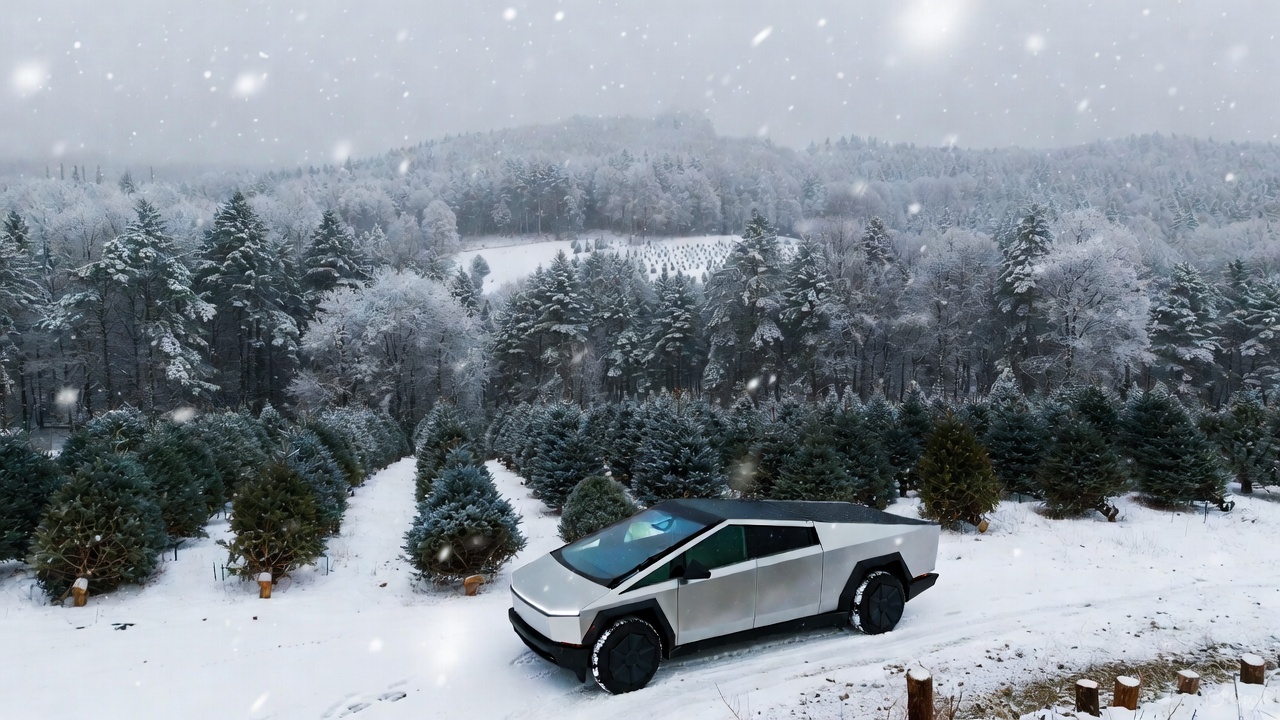
Tesla is burning the midnight oil this Christmas, with the Tesla AI team quietly rolling out Full Self-Driving (Supervised) v14.2.2.1 just a day after FSD v14.2.2 started rolling out to customers.
Tesla owner shares insights on FSD v14.2.2.1
Longtime Tesla owner and FSD tester @BLKMDL3 shared some insights following several drives with FSD v14.2.2.1 in rainy Los Angeles conditions with standing water and faded lane lines. He reported zero steering hesitation or stutter, confident lane changes, and maneuvers executed with precision that evoked the performance of Tesla’s driverless Robotaxis in Austin.
Parking performance impressed, with most spots nailed perfectly, including tight, sharp turns, in single attempts without shaky steering. One minor offset happened only due to another vehicle that was parked over the line, which FSD accommodated by a few extra inches. In rain that typically erases road markings, FSD visualized lanes and turn lines better than humans, positioning itself flawlessly when entering new streets as well.
“Took it up a dark, wet, and twisty canyon road up and down the hill tonight and it went very well as to be expected. Stayed centered in the lane, kept speed well and gives a confidence inspiring steering feel where it handles these curvy roads better than the majority of human drivers,” the Tesla owner wrote in a post on X.
Tesla’s FSD v14.2.2 update
Just a day before FSD v14.2.2.1’s release, Tesla rolled out FSD v14.2.2, which was focused on smoother real-world performance, better obstacle awareness, and precise end-of-trip routing. According to the update’s release notes, FSD v14.2.2 upgrades the vision encoder neural network with higher resolution features, enhancing detection of emergency vehicles, road obstacles, and human gestures.
New Arrival Options also allowed users to select preferred drop-off styles, such as Parking Lot, Street, Driveway, Parking Garage, or Curbside, with the navigation pin automatically adjusting to the ideal spot. Other refinements include pulling over for emergency vehicles, real-time vision-based detours for blocked roads, improved gate and debris handling, and Speed Profiles for customized driving styles.

Starlink passes 9 million active customers just weeks after hitting 8 million

NVIDIA Director of Robotics: Tesla FSD v14 is the first AI to pass the “Physical Turing Test”


