News
Tesla Model Y L reportedly entered mass production in Giga Shanghai
The vehicle is expected to be a larger version of the best-selling Model Y crossover.

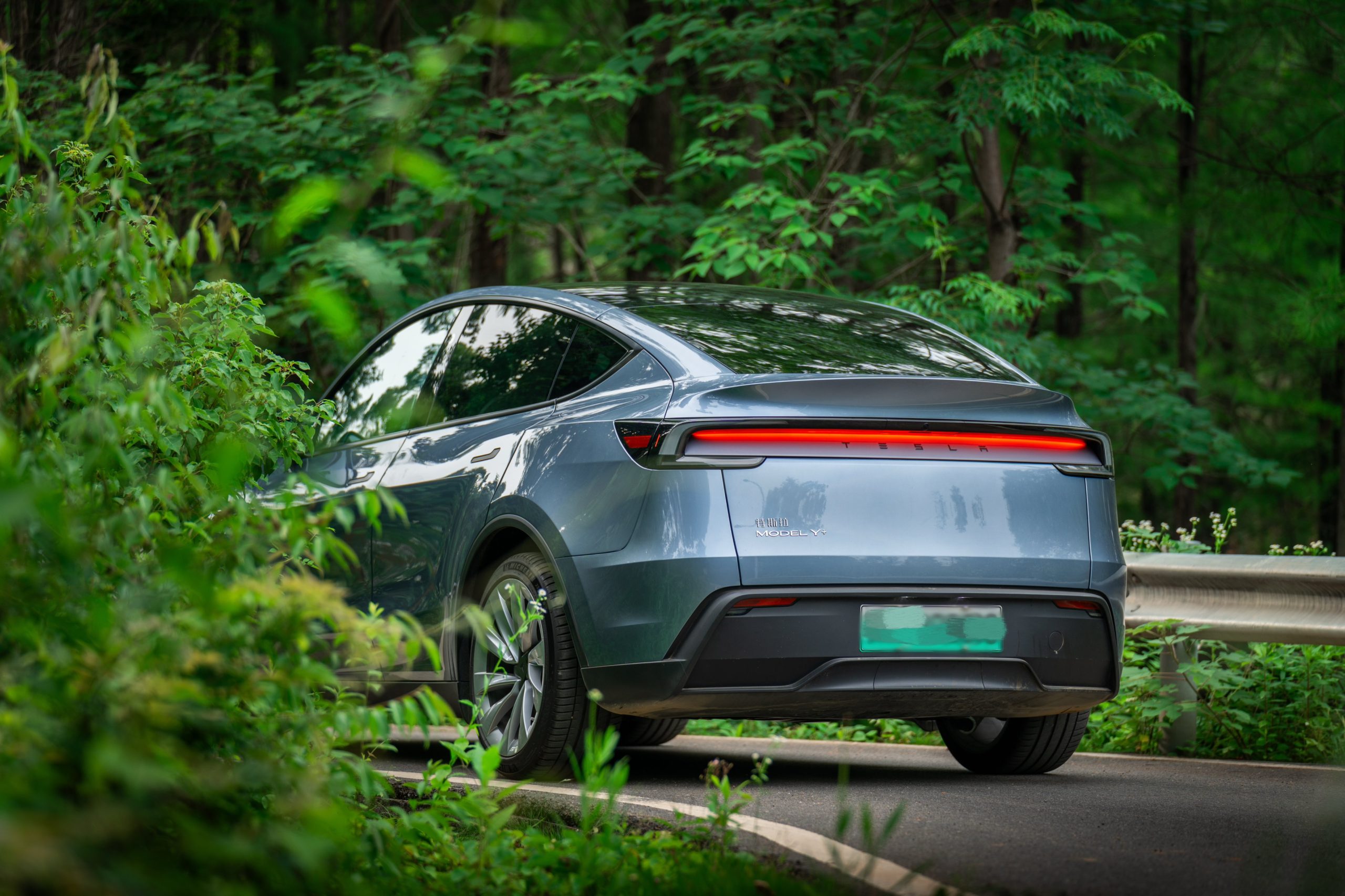
Reports from industry watchers in China have suggested that the Tesla Model Y L has started mass production at Gigafactory Shanghai. The vehicle is expected to be a larger version of the best-selling Model Y crossover, offering three rows and six seats thanks to a longer wheelbase.
Tesla Model Y L Production Rumors
Reports about the new Model Y variant’s alleged milestone were initially shared on Weibo, with some industry watchers stating that the vehicle has already started mass production. Tesla China is reportedly surveying which of its domestic stores would have the first display units of the six-seat Model Y.
The Model Y L’s steady march towards production was evident this past week, with recent reports indicating that the vehicle’s key specs have already been listed in the China Ministry of Industry and Information Technology’s (MIIT) latest batch of new energy vehicle models that are eligible for vehicle purchase tax exemptions.
As per the MIIT’s list, the Model Y L will be a dual motor vehicle that is equipped with an 82.0-kWh lithium-ion battery from LG Energy Solution. The vehicle will feature six seats with two captain seats on the second row, as well as a CLTC range of 751 km.
Tesla Model Y L Potential
The potential of the Model Y L is vast, considering that it is produced in the existing Model Y lines of Tesla’s factories. This should slash new vehicle tooling costs and potential ramp-up issues. Three-row SUVs also command a pretty notable market that has mostly only been accessed by the more expensive Model X. With the Model Y L’s lower price, Tesla could become more competitive in the three-row SUV segment.
As noted by longtime Tesla owner and investor @_SFTahoe, the Model Y L could also become a more premium option for the company’s Robotaxi business, thanks to its second row captain seats and spacious interior. The expansion of Model Y L Robotaxis should also be impressive considering Tesla’s mastery of mass manufacturing techniques.


News
Tesla hits FSD hackers with surprise move
In recent weeks, the company has begun remotely disabling FSD capabilities on affected vehicles, and in some instances, permanently revoking access even for owners who paid thousands of dollars for the feature.

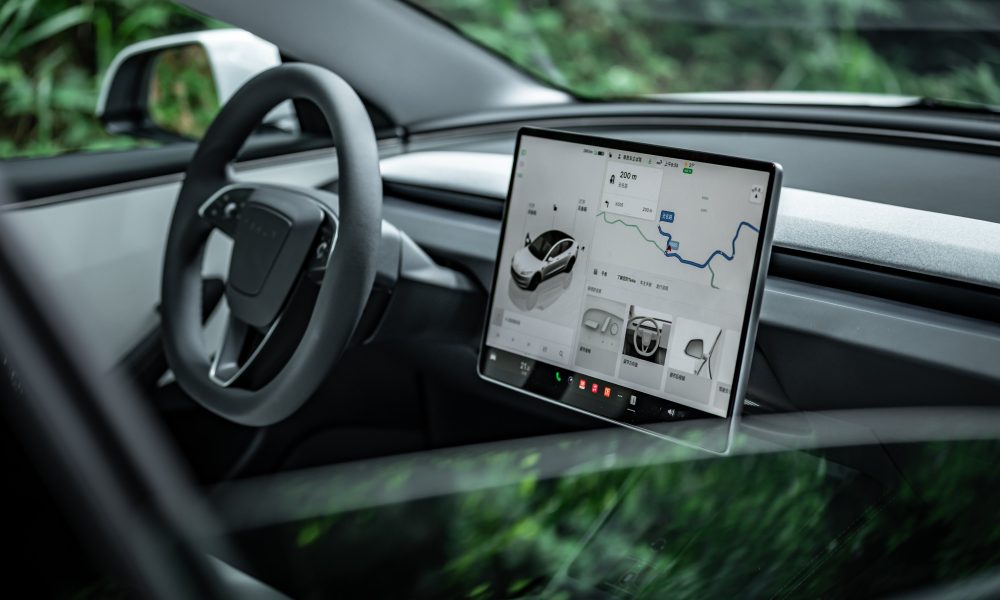
Tesla is cracking down on hackers who have figured out a way to utilize third-party programs to activate Full Self-Driving (FSD) in their vehicles — despite the suite not being approved for use in their country.
Tesla has launched a sweeping enforcement campaign against owners using third-party hardware hacks to activate FSD software in countries where the advanced driver-assistance system remains unregulated or unapproved.
In recent weeks, the company has begun remotely disabling FSD capabilities on affected vehicles, and in some instances, permanently revoking access even for owners who paid thousands of dollars for the feature.
Tesla has started remotely disabling Full Self-Driving on cars fitted with third-party CAN bus hacks in countries where the software is not yet approved.
This crackdown began after the hacks started spreading widely last month. 👇 pic.twitter.com/wL8VqZuTlK
— PiunikaWeb – helpful, and breaking tech news (@PiunikaWeb) April 9, 2026
Reports of the crackdown have surfaced across Europe, China, Japan, South Korea, and the UK, marking a significant escalation in Tesla’s efforts to enforce regional software restrictions.
FSD is Tesla’s flagship supervised autonomy package, which is available in several countries across the world. Currently limited by regulatory hurdles, it has not received full approval in most markets outside of the United States due to various things, such as safety standards, data privacy, and local traffic laws.
However, the company is working to expand its availability globally. Nevertheless, Tesla has installed the necessary hardware on vehicles globally, but locks the features based on geographic location.
Some owners have taken accessing FSD into their own hands, using jailbreak or bypass devices.
These “jailbreak” tools, typically €500 USB-style modules that plug into the vehicle’s Controller Area Network (CAN) bus, intercept signals to spoof approvals and unlock FSD, including advanced navigation, Autopark, and Summon features.
Hackers in Poland, Ukraine, and elsewhere have distributed the devices, with some claiming they work on HW3 and HW4 vehicles and can be unplugged to restore stock settings. In China alone, over 100,000 owners reportedly installed such modifications.
Tesla’s response has been swift and uncompromising. Recently, the company began sending in-car notifications and emails warning owners that unauthorized modifications violate terms of service, compromise vehicle safety systems, and expose cars to cybersecurity risks.
The email communication read:
“Your vehicle has detected an unauthorized third-party device. As a precaution, some driver assistance functions have been disabled for safety reasons. A software update will be available soon. Once you install the update, some features may be enabled again.”
Vehicles detected using the hacks have had FSD capabilities remotely disabled without refund. In some cases, owners report permanent bans, even if they had legitimately purchased the software package.
Tesla’s hardline stance underscores its commitment to regulatory compliance and safety.
Tesla has long argued that unsupervised FSD requires rigorous validation, and premature activation could endanger drivers and bystanders.
The crackdown sends a clear-cut message to those who are bypassing the FSD safeguards, but there are greater implications for Tesla if something were to go wrong. This is an understandable way to protect the company’s reputation for its FSD suite.
News
Tesla developing small, affordable SUV, report claims
This latest rumor deserves heavy scrutiny. Tesla has already walked away from a mass-market $25,000 EV once before.
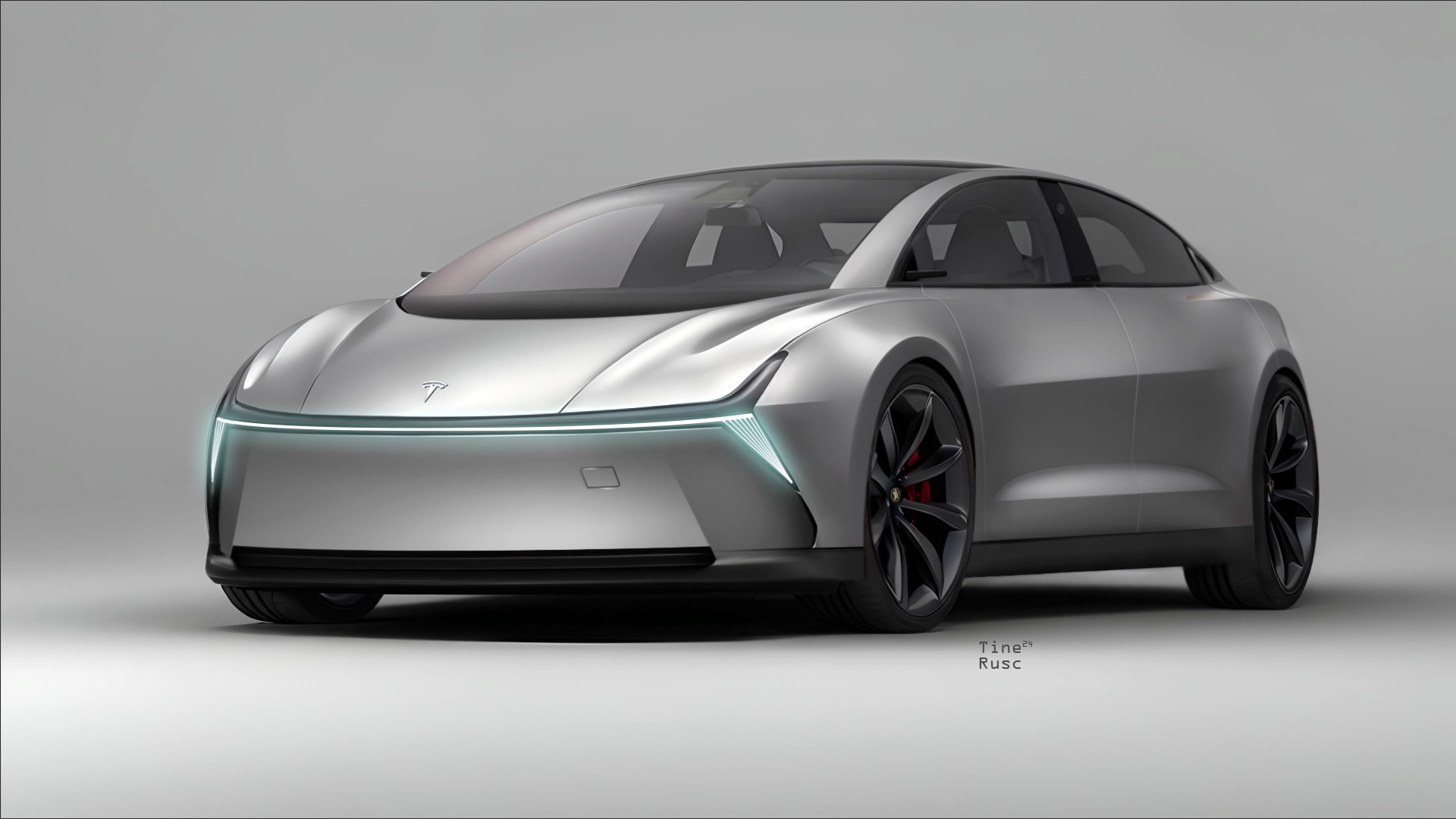
Tesla is developing a small, affordable SUV, a new report claims, speculating that the automaker is planning to add yet another vehicle to its lineup at a price point similar to the Model 3 and Model Y, but smaller and more compact.
But it does not make a whole lot of sense, especially considering a handful of things CEO Elon Musk said and the overall plan for Tesla’s future.
Reuters reported that Tesla is in the early stages of developing an all-new, smaller, cheaper electric SUV. Citing four sources familiar with the matter, the story claims the vehicle would be shorter than the Model Y, built in China, and represent a fresh platform rather than a variant of the Model 3 or Y.
Suppliers have reportedly been contacted to discuss details, though Tesla has not commented. The move appears aimed at broadening affordability amid slowing EV demand and intensifying competition, particularly from Chinese rivals.
This latest rumor deserves heavy scrutiny. Tesla has already walked away from a mass-market $25,000 EV once before.
In 2024, the company scrapped its long-teased “Redwood” project for a budget-friendly car. Elon Musk explained the decision bluntly during an earnings call: a conventional low-cost model would be “pointless” and “completely at odds with what we believe.”
It’s sort of hard to believe this report: 3/Y are already relatively affordable, Elon said a $25k wouldn’t make sense, consumers want something larger than the Y with X going away, and Musk said what’s coming is “cooler than a minivan.”
Have to think the car is at least an SUV. https://t.co/4CQUV9ZNA5
— TESLARATI (@Teslarati) April 9, 2026
In other words, chasing a bare-bones cheap EV runs counter to Tesla’s core mission of accelerating sustainable energy through cutting-edge technology and autonomy rather than volume-driven price wars.
Musk’s own recent statements reinforce skepticism about a compact SUV pivot. Just two weeks ago, on March 25, he responded to fan requests for a minivan by posting on X: “Something way cooler than a minivan is coming.”
Elon Musk says Tesla is developing a new vehicle: ‘Way cooler than a minivan’
The remark came in the context of family-hauling needs, with Musk highlighting the Cybertruck’s ability to seat multiple child seats. It signals Tesla’s focus is shifting toward more spacious, innovative people-movers—not shrinking its lineup.
U.S. demand data echoes this logic.
The long-wheelbase Model Y L—a six-seat, stretched variant offering extra room for families—has generated massive interest wherever offered. Fans in the U.S. have basically begged for the Model Y L to make its way to the States, or for the company to develop a full-size SUV.
The Model Y L is selling well in China, where it is manufactured.
Delivery wait times for the Model Y L stretched into February 2026 as orders poured in. Tesla recently expanded the trim to eight new Asian markets, yet it remains unavailable in the United States, where consumer appetite for a larger, more practical SUV is reportedly strong.
American buyers have consistently favored bigger vehicles; the Model Y already outsells most competitors precisely because it delivers crossover utility without compromise. A compact model shorter than today’s bestseller would likely miss this mark entirely.
Tesla’s product strategy has long emphasized differentiation through autonomy, range, and desirability rather than racing to the bottom on price. Stripped-down variants of the Model 3 and Y have already struggled to ignite broad demand.
A new compact SUV built in China might sound logical on paper for cost-sensitive buyers, but it risks repeating past missteps—diluting brand cachet while ignoring clear signals from Musk and the market.
History suggests Tesla talks about affordable cars more often than it delivers them. Whether this Reuters scoop evolves into metal or joins the $25k project on the scrap heap remains to be seen.
For now, the smart money is on Tesla doubling down on “way cooler” vehicles that actually fit American families—and Tesla’s ambitious vision—rather than a smaller SUV that feels like yesterday’s news.
News
Tesla CEO Elon Musk says next FSD release is the one we’ve been waiting for
On Thursday, Musk teased the capabilities and next steps for Tesla’s Full Self-Driving software, focusing squarely on the incremental improvements of the current v14.3 suite, as well as the looming arrival of v15.
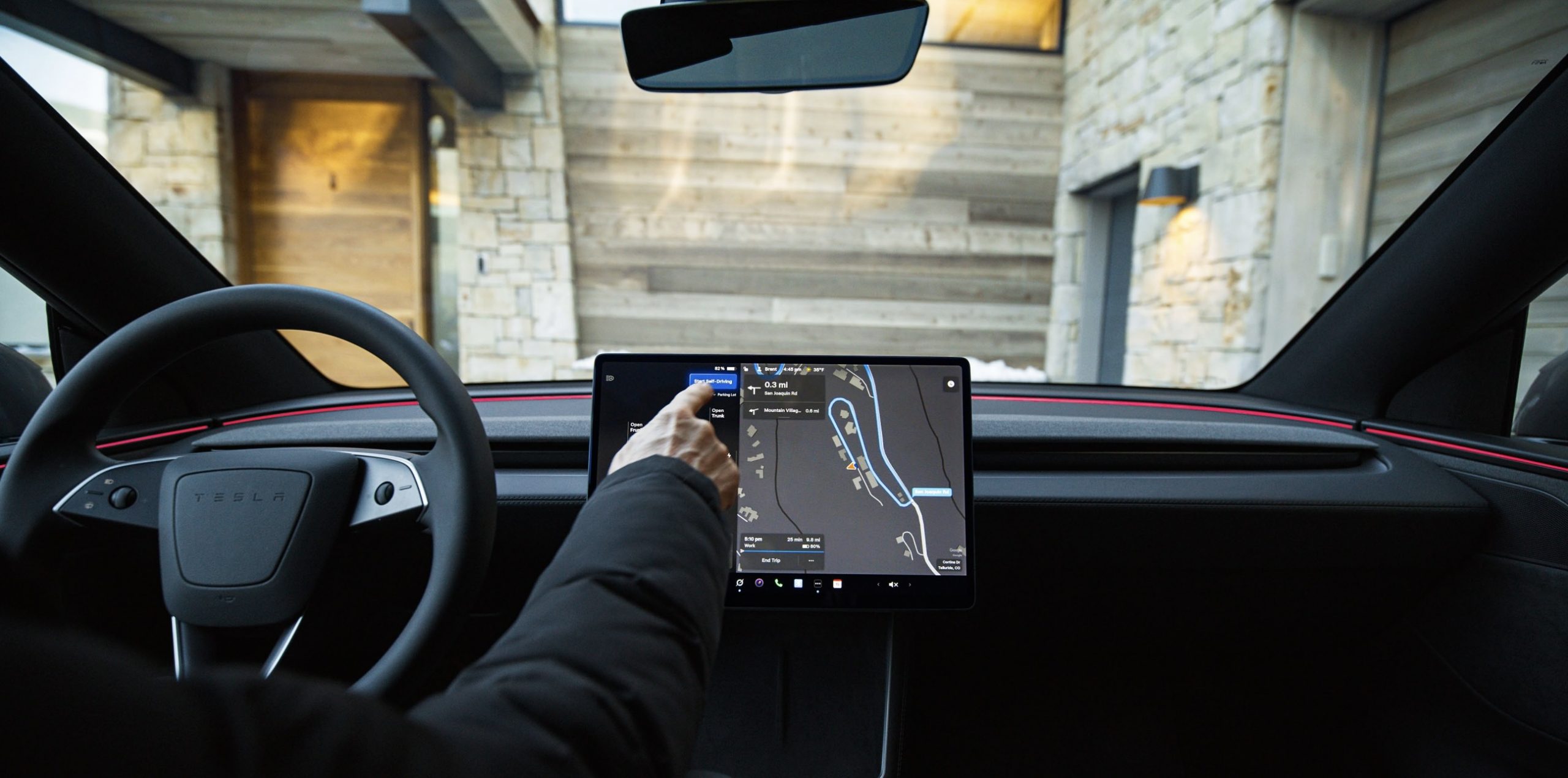
Tesla CEO Elon Musk teased the capabilities of a future Full Self-Driving release, but it seems like we are getting what Yogi Berra once called “Déjà vu all over again.”
On Thursday, Musk teased the capabilities and next steps for Tesla’s Full Self-Driving software, focusing squarely on the incremental improvements of the current v14.3 suite, as well as the looming arrival of v15.
He confirmed that upcoming point releases of v14.3 will deliver additional polish to the current build, smoothing out remaining edges in an already capable system. These iterative updates, Musk noted, are designed to refine performance without requiring a full version overhaul.
Yet the real headline was Musk’s forecast for v15.
“V15 will far exceed human levels of safety, even in completely unsupervised and complex situations,” he wrote.
Tesla V14.3 self-driving review. The point releases will bring polish.
V15 will far exceed human levels of safety, even in completely unsupervised and complex situations. https://t.co/s4UK9RWw9f— Elon Musk (@elonmusk) April 9, 2026
He clarified that v15 will be powered by Tesla’s long-awaited large model, an AI architecture with roughly 10x the parameters of the smaller model currently in widespread use. The leap, Musk explained, stems from the unusually rapid progress of the compact model, which has advanced so quickly that the larger counterpart has yet to catch up in real-world deployment.
However, it is becoming a pattern that is, by now, familiar to anyone following Tesla’s autonomous driving roadmap.
There’s no debating you on that 🤷
— TESLARATI (@Teslarati) April 9, 2026
Musk has consistently and repeatedly framed each successive major release as the one poised to deliver game-changing autonomy. Earlier versions were similarly positioned as a movement toward the final piece of the puzzle, only for attention to pivot to the next milestone once they arrived.
The refrain has become a recurring feature of FSD communication: current software is impressive, the point releases will sharpen it further, but the true breakthrough lies one major iteration ahead.
Musk’s latest comments fit squarely into that cadence. While v14.3 point releases are expected to tighten supervised driving behaviors in the coming weeks, v15 is cast as the version that finally crosses the threshold into unsupervised operation at human-or-better safety levels across demanding scenarios.
Our rate of advancement with the small model has been so fast that the large model has not yet caught up.
V15 will be the large model.— Elon Musk (@elonmusk) April 9, 2026
The 10x parameter scale of the underlying large model is presented as the key technical enabler, promising richer reasoning and more robust decision-making than anything deployed to date.
Whether v15 ultimately fulfills that promise remains to be seen. Tesla’s history shows that each new target generates fresh excitement—and occasional skepticism—about timelines.
Fans realize Musk’s timelines for FSD are exciting, but rarely met:
You can see a rift happening in the Tesla bull community between a large group of reasonable people who aren’t afraid to acknowledge the elephants in the room, and those who are essentially bull bots whose entire identities are destroyed if they have to acknowledge any bump in…
— Mike P (@mikepat711) April 9, 2026
For now, Musk’s message is familiar: the immediate focus is polishing v14.3 through targeted point releases, while the 10x-parameter large model in v15 represents the next decisive step toward fully unsupervised, superhuman safety.
Hopefully, Tesla can come through, but we can only believe that once v15 gets here, v16 will be the next big step toward autonomy.
Drivers can expect continued refinement in the short term and a significantly more ambitious leap once the large model is ready. The cycle continues, but the stakes, Musk insists, keep rising.

Tesla hits FSD hackers with surprise move

Tesla developing small, affordable SUV, report claims


