News
Tesla MultiPass in Europe expands, allowing ease of access to non-Tesla chargers

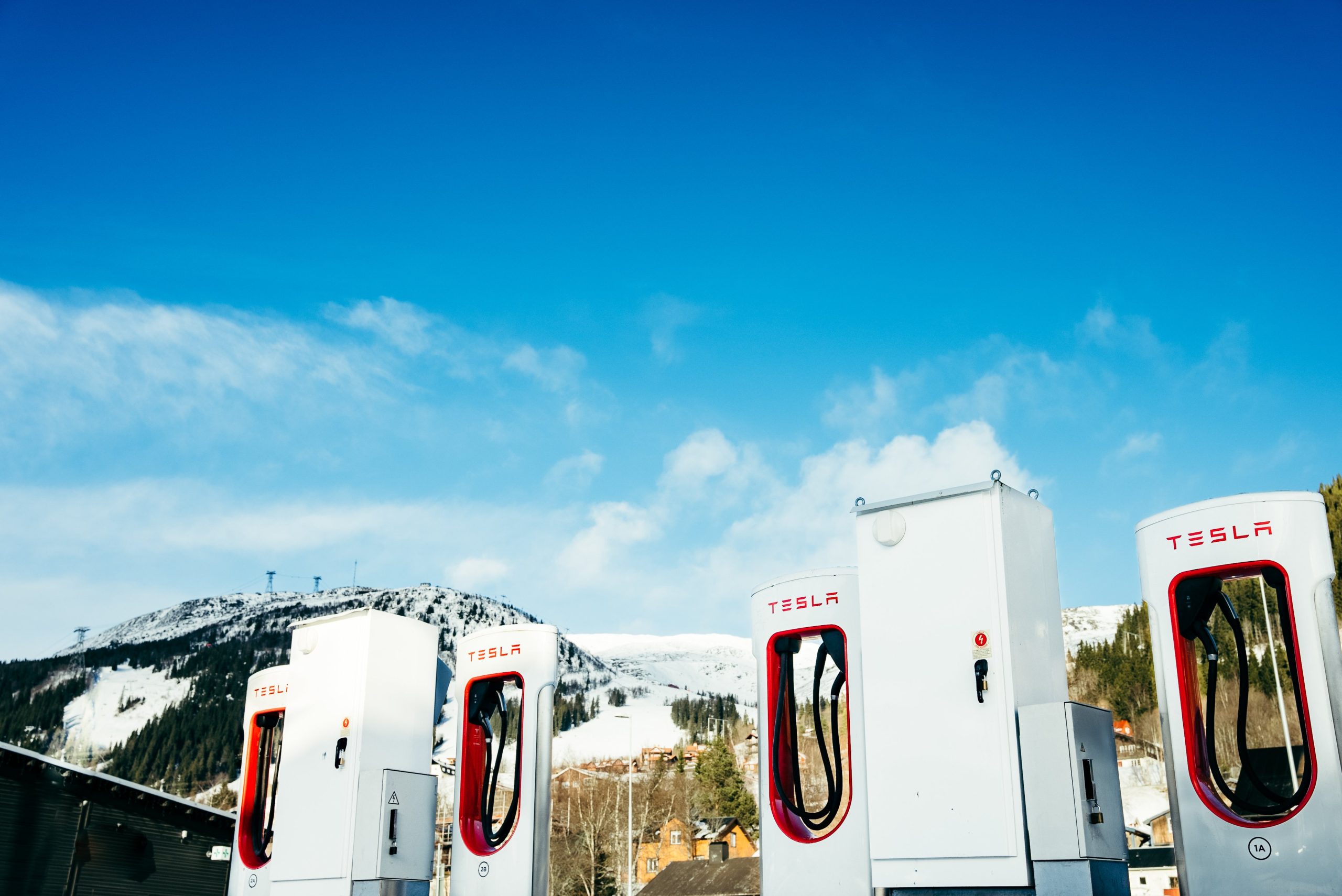
The Tesla MultiPass program in Europe is expanding to new countries. The program was launched earlier this year to assist Tesla owners in having an easier charging experience at non-Tesla EV chargers.
In September, Tesla launched the MultiPass program to owners in the Netherlands, which aimed to enable charging for Tesla owners at third-party stations using the app or keycard. It was developed to avoid having to use multiple apps for each charging manufacturer.
Tesla launches MultiPass to simplify charging at non-Tesla stations
Both access and payment would be performed through the Tesla app, streamlining the entire process.
Today, Tesla expanded the program to Sweden, Germany, the United Kingdom, France, and Belgium, building on its initial rollout and partnering with companies like Fastned to improve EV roaming coverage across the continent.
MultiPass is expanding in Europe. Your Tesla App and your Tesla keycard can start charging at third-party chargers in these countries.
We’re grateful to customers flagging any issues in the Tesla App. Payment success rate and coverage will continuously improve. https://t.co/1sr0OgdwLI
— Max (@MdeZegher) November 5, 2025
The program is still in its early stages, and it appears to have some issues, which were highlighted by owners.
Some state that the different designs between chargers can create a bit of a hassle, especially as some do not properly display charging rates and inconsistent pricing displays.
Additionally, Tesla’s Trip Planner and other route planner integrations are not as descriptive as they should be, so some owners suggested reliability and visibility improvements.
Tesla partnered with Electrify America, Rivian’s Adventure Network, and other networks to expand charging availability and make options more readily available.
Tesla’s Supercharger presence in Europe has expanded quite a bit over the past few years, but EVs are much more prevalent there than they are here in the U.S. The company has done a great job of growing the Supercharger presence this year, and there are currently over 11,000 stalls on the continent.
This year, Tesla added 200 total stations and roughly 1,250 total stalls, a 16 percent increase from last year. Europe also has a high concentration of V4 Superchargers, as nearly 42 percent of the stalls on the continent are V4, giving higher charging rates of up to 500 kW.


Elon Musk
NASA sends humans to the Moon for the first time since 1972 – Here’s what’s next
NASA’s Artemis II launched four astronauts toward the Moon on the first crewed lunar mission since 1972.

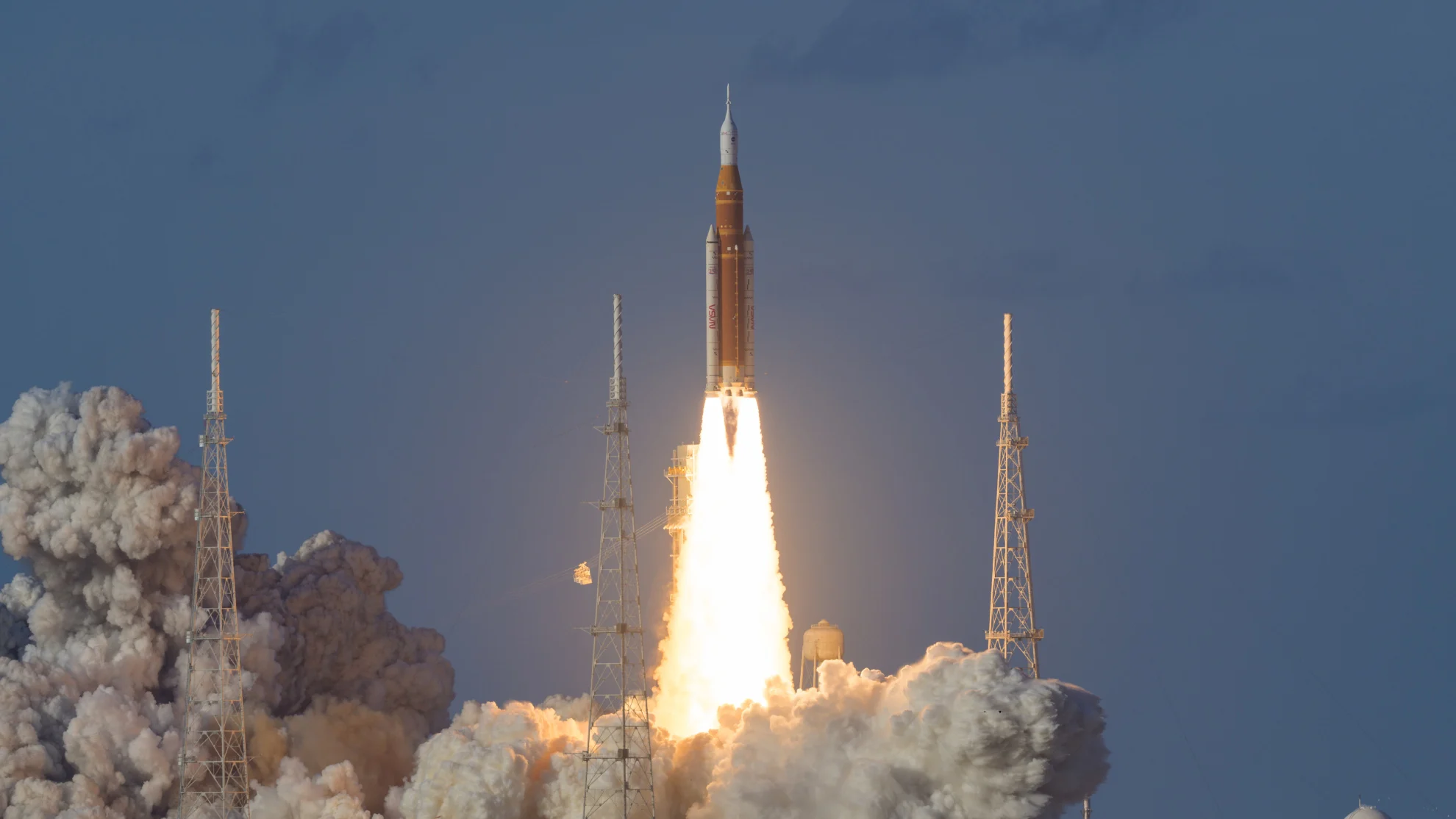
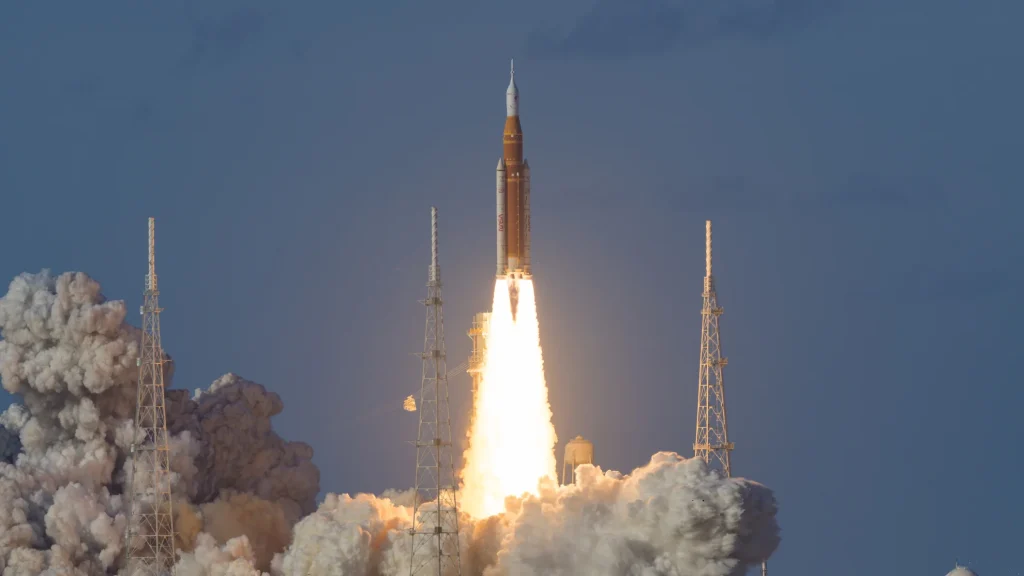
NASA’s Space Launch System rocket launches carrying the Orion spacecraft with NASA astronauts Reid Wiseman, commander; Victor Glover, pilot; Christina Koch, mission specialist; and CSA (Canadian Space Agency) astronaut Jeremy Hansen, mission specialist on NASA’s Artemis II mission, Wednesday, April 1, 2026, from Operations and Support Building II at NASA’s Kennedy Space Center in Florida. NASA’s Artemis II mission will take Wiseman, Glover, Koch, and Hansen on a 10-day journey around the Moon and back aboard SLS rocket and Orion spacecraft launched at 6:35pm EDT from Launch Complex 39B. (NASA/Bill Ingalls)
NASA launched four astronauts toward the Moon on April 1, 2026, marking the first crewed lunar mission since Apollo 17 in December 1972. The Artemis II mission lifted off from Kennedy Space Center aboard the Space Launch System rocket at 6:35 p.m. EDT, sending commander Reid Wiseman, pilot Victor Glover, mission specialist Christina Koch, and Canadian astronaut Jeremy Hansen on a 10-day journey around the far side of the Moon and back.
The mission does not include a lunar landing. It is a test flight designed to validate the Orion spacecraft’s life support systems, navigation, and communications in deep space with a crew aboard for the first time. If the crew reaches the planned distance of 252,000 miles from Earth, they will set a new record for the farthest any human has ever traveled, surpassing even the Apollo 13 distance record.
As Teslarati reported, SpaceX holds a central role in what comes next. The Starship Human Landing System is under contract to carry astronauts to the lunar surface for Artemis IV, now targeting 2028, after NASA restructured its mission sequence due to delays in Starship’s orbital refueling demonstration. Before any Moon landing happens, SpaceX must prove it can transfer propellant between two Starships in orbit, something no rocket program has done at this scale.
The last time humans left Earth’s orbit was 53 years ago. Gene Cernan and Harrison Schmitt of Apollo 17 were the final people to walk on the Moon, a record that stands to this day. Elon Musk has long argued that returning is not optional. “It’s been now almost half a century since humans were last on the Moon,” Musk said. “That’s too long, we need to get back there and have a permanent base on the Moon.”
The Artemis program involves 60 countries signed onto the Artemis Accords, and this mission sets several firsts beyond distance. Glover becomes the first person of color to travel beyond low Earth orbit, Koch the first woman, and Hansen the first non-American astronaut to reach the Moon’s vicinity. According to NASA’s live mission updates, the spacecraft’s solar arrays deployed successfully after liftoff and the crew completed a proximity operations demonstration within the first hours of flight.
Artemis II is step one. The Moon landing and the permanent lunar base come later. But after more than five decades, humans are heading back.
News
Tesla removes Model S and X custom orders as sunset officially begins
In a significant development that marks the beginning of the end for two of its longest-running models, Tesla has removed the custom order configurator for the Model S sedan and Model X SUV from its website.
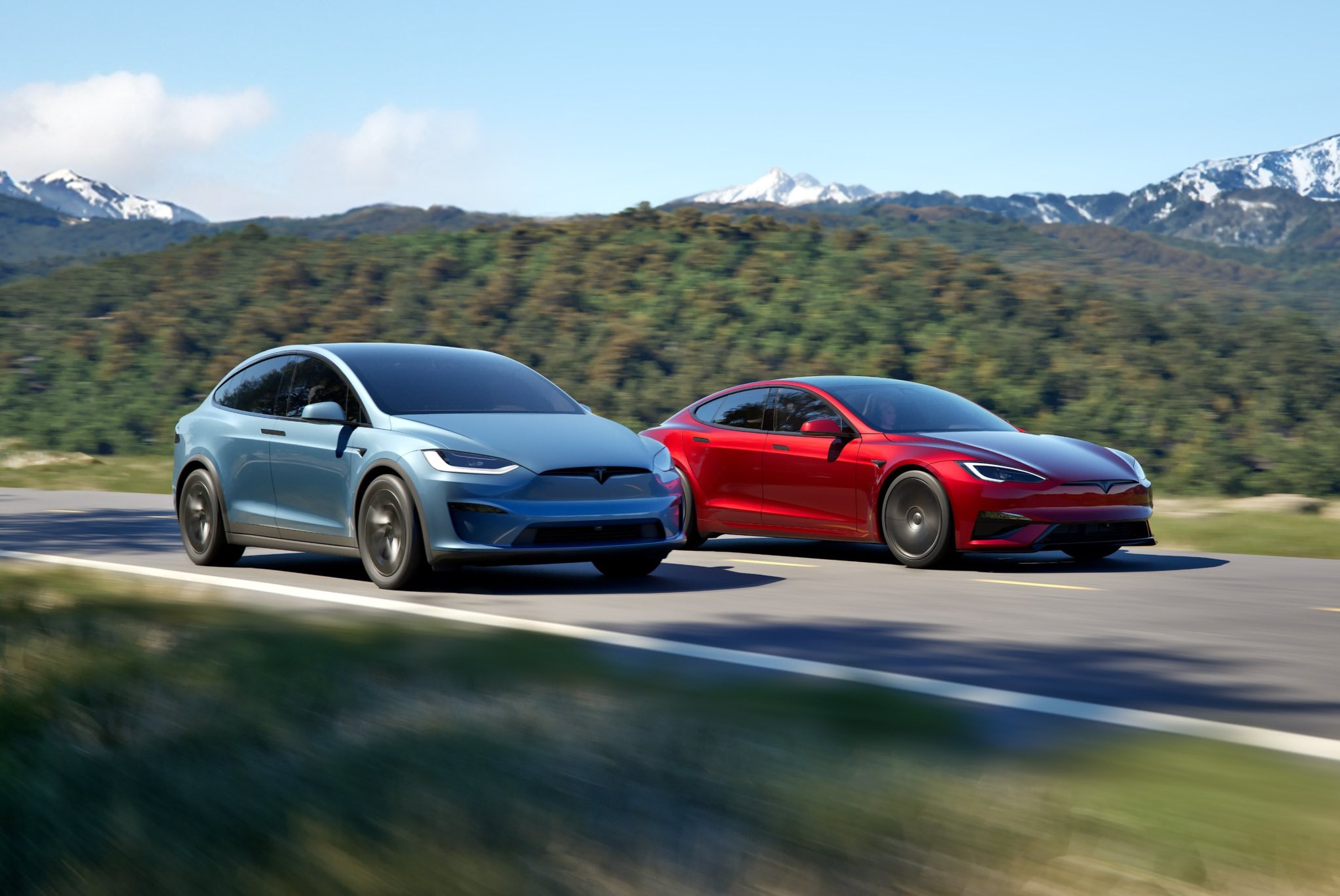
Tesla has officially started the “honorable discharge” of the Model S and Model X with a massive move, removing the two vehicles from Custom Orders and only offering inventory options.
It is the latest move Tesla has made to pull the Model S and Model X from its lineup, a decision CEO Elon Musk announced during its last quarterly earnings call.
Tesla brings closure to flagship ‘sentimental’ models, Musk confirms
In a significant development that marks the beginning of the end for two of its longest-running models, Tesla has removed the custom order configurator for the Model S sedan and Model X SUV from its website.
As of April 1, visitors to tesla.com/model-s and tesla.com/modelx are now redirected exclusively to limited inventory listings rather than a design studio, allowing buyers to select paint, wheels, interior options, or performance upgrades. Only pre-built vehicles currently in stock are available for purchase or lease.
Tesla CEO Elon Musk confirmed the change directly on X, posting: “Custom orders of the Tesla Model S & X have come to an end. All that’s left are some in inventory.”
Custom orders of the Tesla Model S & X have come to an end. All that’s left are some in inventory.
We will have an official ceremony to mark the ending of an era. I love those cars.
This was me at production launch 14 years ago: pic.twitter.com/6kvCf9HTHc
— Elon Musk (@elonmusk) April 1, 2026
We will have an official ceremony to mark the end of an era.” Accompanying the statement was a throwback photo from the Model S production launch in 2012, underscoring the emotional weight of the decision.
Musk had first signaled the phase-out during the company’s Q4 2025 earnings call in January, describing it as time for an “honorable discharge” of the programs to free up resources at the Fremont factory for Optimus humanoid robot production and autonomous vehicle initiatives.
The Model S, introduced in 2012, and the Model X, which followed in 2015, were instrumental in establishing Tesla as a premium electric vehicle leader.
The sedan offered class-leading range and acceleration, while the SUV’s signature falcon-wing doors became an iconic feature. Together, they proved EVs could compete in the luxury segment. Yet sales volumes have dwindled in recent years as Tesla prioritized higher-volume Model 3 and Model Y vehicles.
The flagships now represent a tiny fraction of overall deliveries, making continued custom production inefficient as the company accelerates toward robotaxis and next-generation platforms.
Prospective buyers are urged to act quickly. Remaining U.S. inventory vehicles—some nearly new—may include incentives such as lifetime free Supercharging, Full Self-Driving (Supervised) capability, and premium connectivity, depending on configuration.
Leasing options start around $1,699 per month for select Model X units, though exact pricing and availability fluctuate. International markets, including Europe and China, have already seen similar restrictions in recent months.
The move aligns with Tesla’s broader strategy to streamline its lineup and redirect manufacturing capacity toward autonomy and AI-driven products. While some enthusiasts lament the loss of personalization, the company views the transition as necessary progress.
Tesla has indicated that once the current inventory sells out, new Model S and Model X vehicles will no longer be offered.
For loyal owners and fans, the promised “official ceremony” may provide a fitting send-off. In the meantime, the website change serves as a clear signal: the era of bespoke flagship Teslas has quietly concluded, and the focus has fully shifted to the future.
Elon Musk
SpaceX files confidentially for IPO that will rewrite the record books
SpaceX files confidentially for a record-breaking IPO targeting a $1.75T valuation and $80B raise, driven by Starlink growth and its xAI merger.
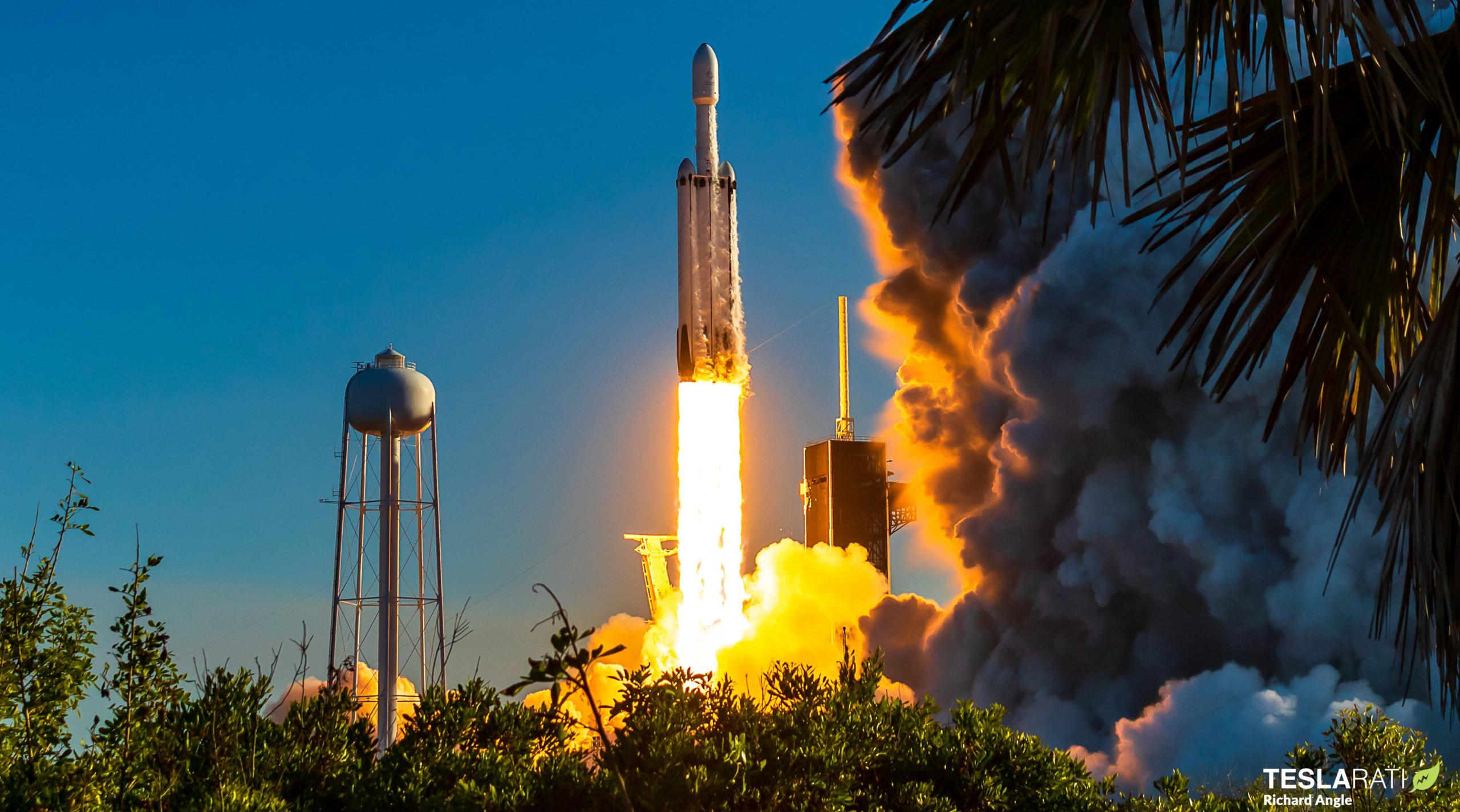
Elon Musk’s rocket and satellite company submitted its draft registration to the U.S. Securities and Exchange Commission today for an initial public offering, targeting June at a $1.75 trillion valuation. This would be the largest in history.
SpaceX has filed confidentially with the SEC, first reported by Bloomberg. SpaceX would be valued above every S&P 500 company except Nvidia, Apple, Alphabet, Microsoft, and Amazon.
The filing uses a confidential process that allows companies to work through SEC disclosures privately before initiating a public roadshow. With a June target, official details through a formal prospectus is expected to go public in April or early May, after which SpaceX must wait at least 15 days before beginning investor marketing.
While SpaceX is best known for its Falcon 9 and Starship rockets, the $1.75 trillion valuation is anchored by Starlink, its satellite internet service. Starlink ended 2025 with 9.2 million subscribers and over $10 billion in revenue, which is a figure analysts project could reach a staggering $24 billion by the end of 2026. A February all-stock merger with xAI, Musk’s artificial intelligence venture, further boosted the valuation.
SpaceX officially acquires xAI, merging rockets with AI expertise
Bank of America, Goldman Sachs, JPMorgan Chase, and Morgan Stanley are lined up as senior underwriters. SpaceX is also considering a dual-class share structure to preserve insider voting control, and plans to allocate up to 30% of shares to retail investors, which is roughly three times the typical norm.

NASA sends humans to the Moon for the first time since 1972 – Here’s what’s next

Tesla removes Model S and X custom orders as sunset officially begins

SpaceX files confidentially for IPO that will rewrite the record books

Elon Musk says Tesla is developing a new vehicle: ‘Way cooler than a minivan’

Elon Musk launches TERAFAB: The $25B Tesla-SpaceXAI chip factory that will rewire the AI industry


