Elon Musk
Tesla owners across the globe prepare for Robotaxi launch with this neat customization
Tesla will eventually have Robotaxis worldwide. Some owners are already preparing.

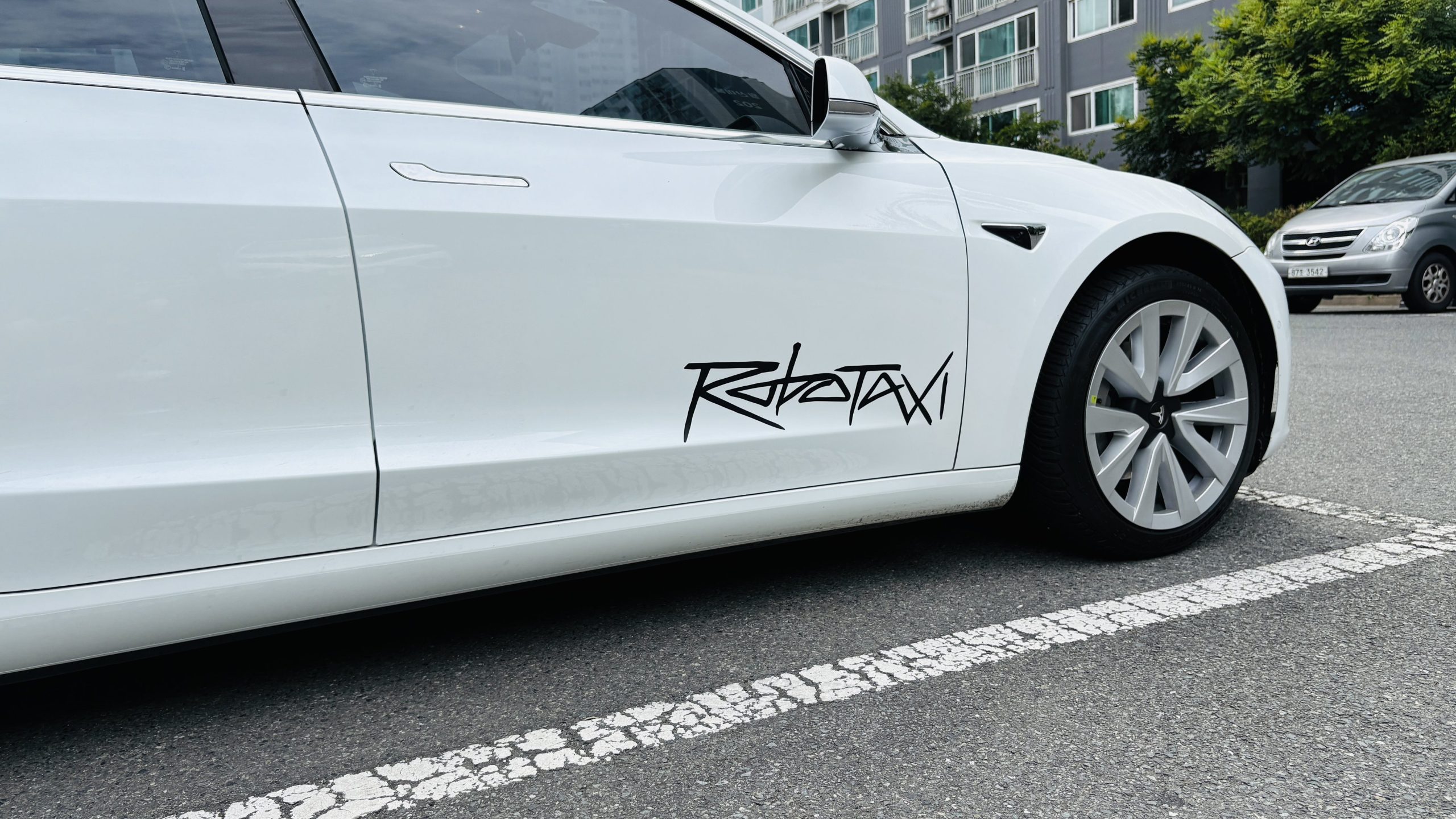
Tesla owners are already preparing for the company’s launch of the Robotaxi platform with a new, neat customization that is appearing around the world.
On Tuesday, the first Tesla Robotaxi test mule was spotted in Austin, where the company will launch the first driverless rides of this ride-hailing service. At first, it will be a limited rollout, reserved for a select few. CEO Elon Musk said public rides could occur as soon as June 22.
First Tesla driverless robotaxi spotted in the wild in Austin, TX
However, the Tesla Robotaxi platform is not one that will be confined to cities and geofenced to certain areas.
Eventually, Tesla will gain enough confidence to roll the Full Self-Driving software straight to every car in the customer fleet that paid for it. Owners will be able to generate income for themselves while they sleep, as the cars will operate as ride-hailing vehicles for people to use for transportation.
In an effort to prepare for the launch of Robotaxi, Tesla owners across the globe are installing Tesla’s ‘Robotaxi’ word art on their cars.
Here’s one in South Korea:
🚨ROBOTAXIS SPOTTED IN 🇰🇷SOUTH KOREA TOO! $TSLA
It’s not official, just vinyl wraps, but you should sell these!pic.twitter.com/mViKuIV96P pic.twitter.com/fuYpvuOjic
— Tesla Archive (@tesla_archive) June 12, 2025
Here’s another in the U.S.:
🚀 Transform your ride into a vision of the future with our Robotaxi sticker set. 🌟
Your Tesla isn’t just a car—it’s a symbol of innovation and style. Be the trendsetter you were born to be and let your vehicle spark inspiring conversations wherever you go. ✨😎
Grab yours… pic.twitter.com/wTJPmnsO1X
— TESBROS (@teslabros) June 12, 2025
Obviously, this is more of a symbol of support for the Robotaxi launch, but many owners are recognizing that Tesla’s Full Self-Driving software will extend to them the ability to use their personal cars as ride-hailing vehicles, becoming a part of the global fleet of self-driving chauffeurs.
These are unmodified Tesla cars coming straight from the factory, meaning that every Tesla coming out of our factories is capable of unsupervised self-driving! https://t.co/n94ln0Uas6
— Elon Musk (@elonmusk) June 10, 2025


Elon Musk
SpaceX to launch military missile tracking satellites through new Space Force contract
SpaceX wins a $178.5M Space Force contract to launch missile tracking satellites starting in 2027.

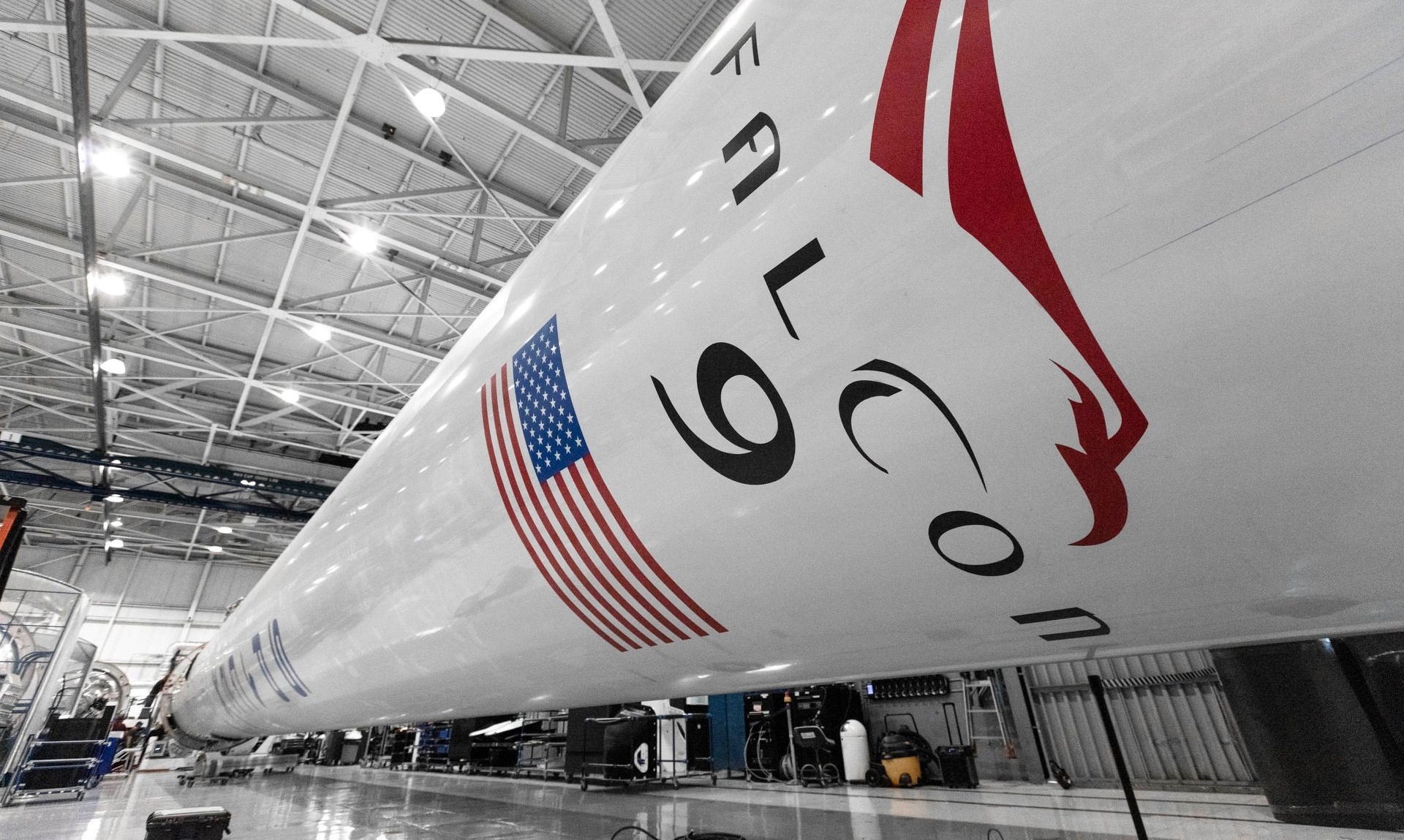
The U.S. Space Force awarded SpaceX a $178.5 million task order on April 1, 2026 to launch missile tracking satellites for the Space Development Agency. The contract, designated SDA-4, covers two Falcon 9 launches beginning in Q3 2027, one from Cape Canaveral Space Force Station in Florida and one from Vandenberg Space Force Base in California. The satellites, built by Sierra Space, are designed to bolster the nation’s ability to detect and track missile threats from orbit.
The award falls under the National Security Space Launch Phase 3 Lane 1 program, which Space Force uses to move payloads to orbit on faster timelines and at more competitive prices. “Our Lane 1 contract affords us the flexibility to deliver satellites for our customers, like SDA, more easily and faster than ever before to all the orbits our satellites need to reach,” said Col. Matt Flahive, SSC’s system program director for Launch Acquisition, in the official press release.
SpaceX is quietly becoming the U.S. Military’s only reliable rocket
The SDA-4 contract is the latest in a long string of national security wins for SpaceX. As Teslarati reported last month, the Space Force recently shifted a GPS III satellite launch from ULA’s Vulcan rocket to SpaceX’s Falcon 9 after a significant Vulcan booster anomaly grounded ULA’s military missions indefinitely. That move made it four consecutive GPS III satellites transferred to SpaceX after contracts were originally awarded to its competitor.
This didn’t come without a fight and dates back years. SpaceX originally had to sue the Air Force in 2014 for the right to compete for national security launches, at a time when United Launch Alliance held a near monopoly on the market. Since then, the company has steadily displaced ULA as the dominant provider, and last year the Space Force confirmed SpaceX would handle approximately 60 percent of all Phase 3 launches through 2032, worth close to $6 billion.
With missile defense satellites now part of its launch manifest alongside GPS, communications, and reconnaissance payloads, SpaceX is giving hungry investors something to chew on before its imminent IPO.
Elon Musk
Tesla’s Q1 delivery figures show Elon Musk was right
On the surface, the numbers reflect a mature EV market facing competition, softening demand, and the loss of certain incentives. Yet they also quietly validate a prediction Elon Musk has repeated for years: Tesla’s traditional auto business is becoming far less central to the company’s future.
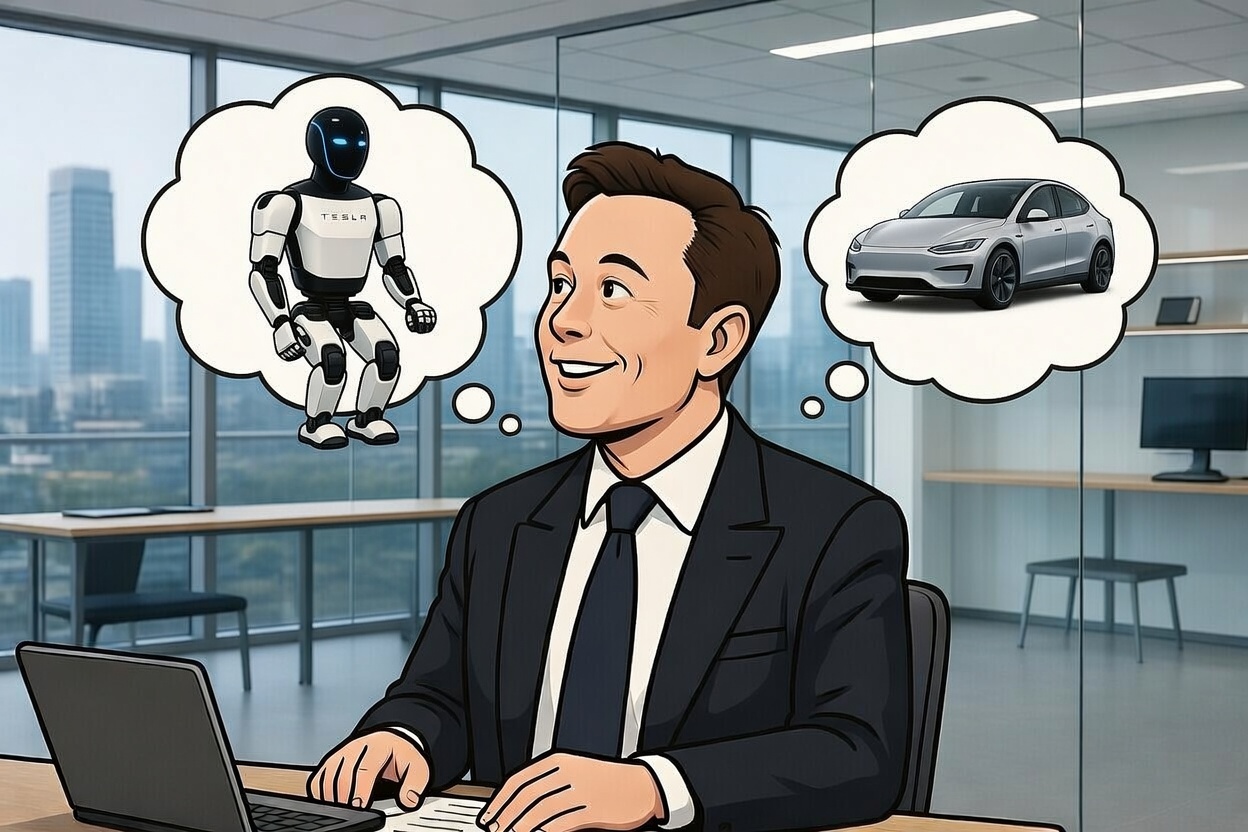
Tesla reported its Q1 delivery figures on Thursday, and the figures — solid but unspectacular — show that CEO Elon Musk was right about what the company’s most important production and division would be.
We are seeing that shift occur in real time.
Tesla delivered 358,023 vehicles in the first quarter of 2026, according to the company’s official report released April 2.
The figure represents modest year-over-year growth of roughly 6 percent from Q1 2025’s 336,681 deliveries but a sharp sequential drop from Q4 2025’s 418,227. Production reached 408,386 vehicles, while energy storage deployments hit 8.8 GWh.
On the surface, the numbers reflect a mature EV market facing competition, softening demand, and the loss of certain incentives. Yet they also quietly validate a prediction Elon Musk has repeated for years: Tesla’s traditional auto business is becoming far less central to the company’s future.
Musk has long argued that vehicles alone will not define Tesla’s value.
Optimus Will Be Tesla’s Big Thing
In September 2025, Musk stated bluntly on X that “~80% of Tesla’s value will be Optimus,” the company’s humanoid robot.
He has described Optimus as potentially “more significant than the vehicle business over time.” Those comments were not abstract futurism. In January 2026, during the Q4 2025 earnings call, Musk announced the end of Model S and X production, framing it as an “honorable discharge,” he called it.
Those are the biggest factors.
~80% of Tesla’s value will be Optimus.
— Elon Musk (@elonmusk) September 1, 2025
The Fremont factory space, once dedicated to those flagship sedans, is being converted into an Optimus manufacturing line, with a long-term target of one million robots per year from that single facility alone.
The Q1 2026 numbers arrive at precisely the moment this strategic pivot is accelerating. Model 3 and Y deliveries totaled 341,893 units, while “other models” (including Cybertruck, Semi, and the final wave of S/X) added 16,130.
Growth is no longer explosive because Tesla is no longer chasing volume at all costs. Instead, the company is reallocating capital and factory floor space toward autonomy, energy storage, and robotics, businesses Musk believes will command far higher margins and enterprise value than incremental car sales.
Delivery Hits and Misses are Becoming Less Important
Wall Street’s pre-release consensus had pegged deliveries near 365,000. Coming in below that estimate might have rattled investors focused solely on automotive metrics. Yet Musk’s thesis has never been about maximizing quarterly vehicle shipments.
Tesla, he has insisted, “has never been valued strictly as a car company.”
The modest Q1 auto performance, paired with the deliberate wind-down of legacy programs and the ramp of Optimus, underscores that point. While EV demand stabilizes, Tesla is building the infrastructure for Robotaxis and humanoid robots that could dwarf today’s car business.
The future is here, and it is happening. It’s funny to think about how quickly Tesla was able to disrupt the traditional automotive business and force many car companies to show their hand. But just as fast as Tesla disrupted that, it is now moving to disrupt its own operation.
Cars, once the only recognizable and widely-known division of Tesla, is now becoming a background effort, slowly being overtaken by the company’s ambitions to dominate AI, autonomy, and robotics for years to come.
Critics may still view the shift as risky or premature. But the Q1 figures, solid but unspectacular in the auto segment, illustrate exactly what Musk has been signaling: the era when Tesla’s valuation rose and fell with every Model Y delivery is ending.
The company’s long-term bet is on AI-driven products that turn vehicles into high-margin robotaxis and factories into robot foundries. Thursday’s delivery report did not just meet the market’s tempered expectations; it proved Elon Musk was right all along.
The car business, once everything, is quietly becoming an important piece of a much larger puzzle.
Elon Musk
NASA sends humans to the Moon for the first time since 1972 – Here’s what’s next
NASA’s Artemis II launched four astronauts toward the Moon on the first crewed lunar mission since 1972.
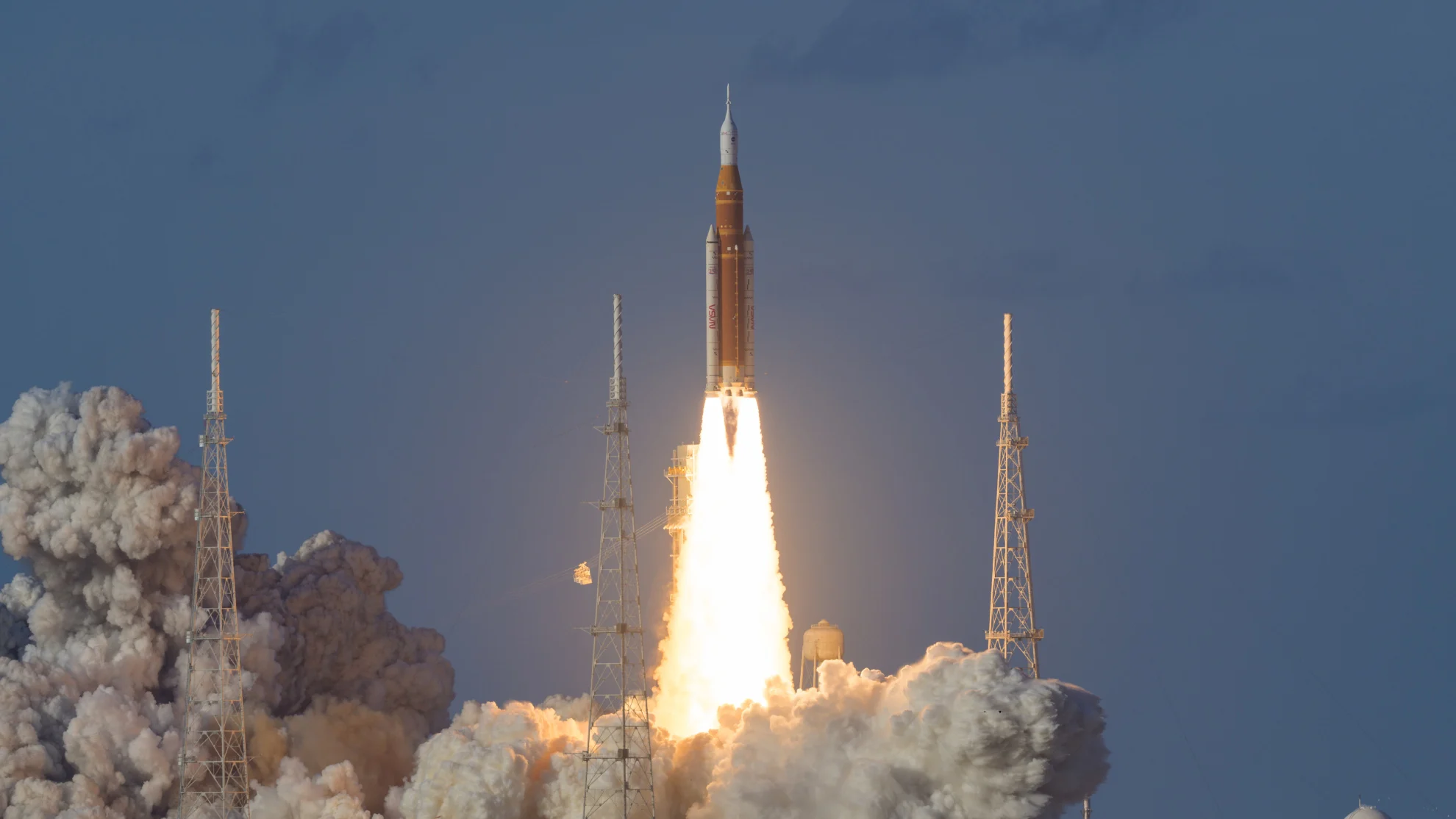
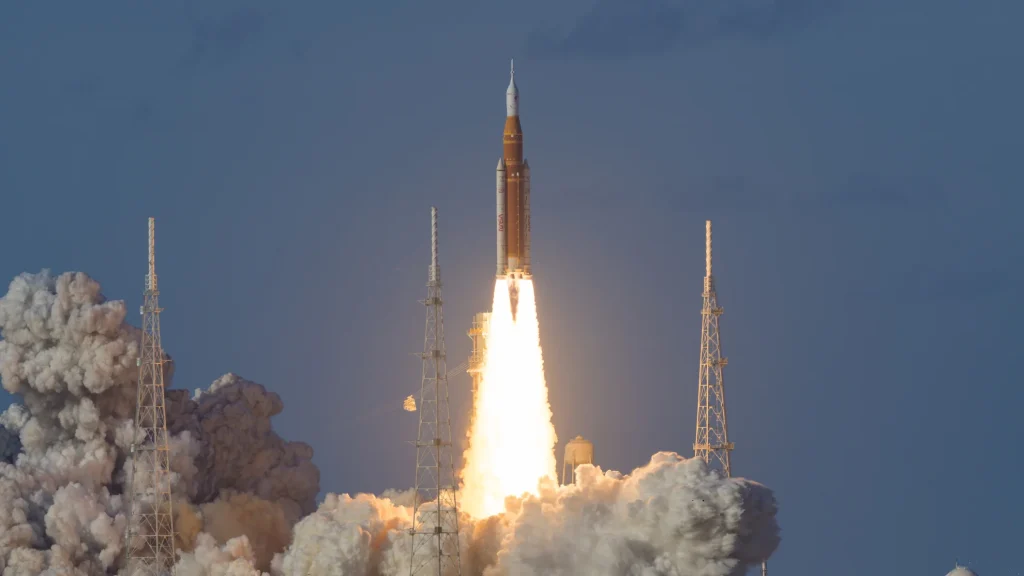
NASA’s Space Launch System rocket launches carrying the Orion spacecraft with NASA astronauts Reid Wiseman, commander; Victor Glover, pilot; Christina Koch, mission specialist; and CSA (Canadian Space Agency) astronaut Jeremy Hansen, mission specialist on NASA’s Artemis II mission, Wednesday, April 1, 2026, from Operations and Support Building II at NASA’s Kennedy Space Center in Florida. NASA’s Artemis II mission will take Wiseman, Glover, Koch, and Hansen on a 10-day journey around the Moon and back aboard SLS rocket and Orion spacecraft launched at 6:35pm EDT from Launch Complex 39B. (NASA/Bill Ingalls)
NASA launched four astronauts toward the Moon on April 1, 2026, marking the first crewed lunar mission since Apollo 17 in December 1972. The Artemis II mission lifted off from Kennedy Space Center aboard the Space Launch System rocket at 6:35 p.m. EDT, sending commander Reid Wiseman, pilot Victor Glover, mission specialist Christina Koch, and Canadian astronaut Jeremy Hansen on a 10-day journey around the far side of the Moon and back.
The mission does not include a lunar landing. It is a test flight designed to validate the Orion spacecraft’s life support systems, navigation, and communications in deep space with a crew aboard for the first time. If the crew reaches the planned distance of 252,000 miles from Earth, they will set a new record for the farthest any human has ever traveled, surpassing even the Apollo 13 distance record.
As Teslarati reported, SpaceX holds a central role in what comes next. The Starship Human Landing System is under contract to carry astronauts to the lunar surface for Artemis IV, now targeting 2028, after NASA restructured its mission sequence due to delays in Starship’s orbital refueling demonstration. Before any Moon landing happens, SpaceX must prove it can transfer propellant between two Starships in orbit, something no rocket program has done at this scale.
The last time humans left Earth’s orbit was 53 years ago. Gene Cernan and Harrison Schmitt of Apollo 17 were the final people to walk on the Moon, a record that stands to this day. Elon Musk has long argued that returning is not optional. “It’s been now almost half a century since humans were last on the Moon,” Musk said. “That’s too long, we need to get back there and have a permanent base on the Moon.”
The Artemis program involves 60 countries signed onto the Artemis Accords, and this mission sets several firsts beyond distance. Glover becomes the first person of color to travel beyond low Earth orbit, Koch the first woman, and Hansen the first non-American astronaut to reach the Moon’s vicinity. According to NASA’s live mission updates, the spacecraft’s solar arrays deployed successfully after liftoff and the crew completed a proximity operations demonstration within the first hours of flight.
Artemis II is step one. The Moon landing and the permanent lunar base come later. But after more than five decades, humans are heading back.

SpaceX to launch military missile tracking satellites through new Space Force contract

Tesla’s Q1 delivery figures show Elon Musk was right

Tesla reports Q1 deliveries, missing expectations slightly

Elon Musk says Tesla is developing a new vehicle: ‘Way cooler than a minivan’

Elon Musk launches TERAFAB: The $25B Tesla-SpaceXAI chip factory that will rewire the AI industry


