News
Tesla owners have highest average credit rating among car buyers, says study

A recent study has found that Tesla owners are likely to have the highest average credit scores among customers looking to purchase a vehicle. The study, which was published this week by online lending firm LendingTree, noted that Tesla buyers on average have a credit score of 740, putting them on top of the research’s rankings.
LendingTree’s study analyzed more than 35,000 auto loans that were made on its platform. Closely behind Tesla was Porsche, whose owners had an average credit score of 727. Japanese luxury carmaker Lexus came in third, with its vehicles’ buyers having an average credit score of 699.
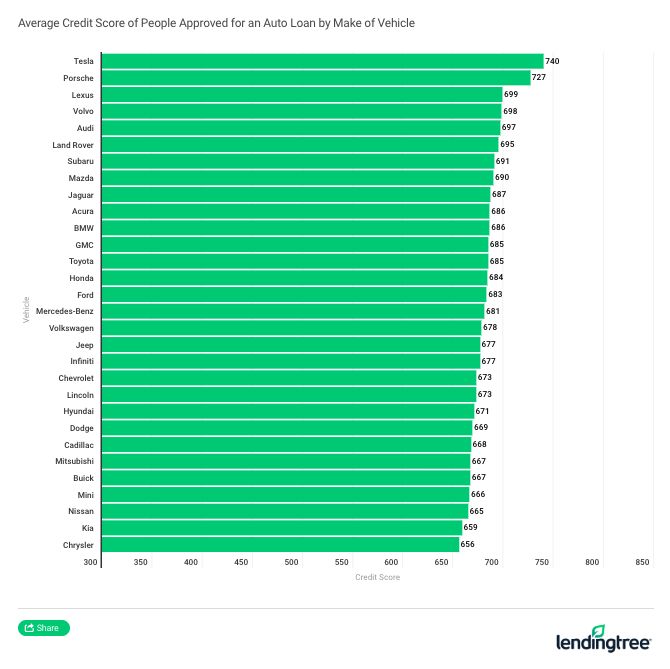
At the bottom of LendingTree’s list is Chrysler, whose buyers’ average credit score is a conservative 656. Traditionally budget-friendly brands from Asia such as Kia and Nissan were ranked just a bit above Chrysler, with their customers’ average credit scores listed at 659 and 665, respectively.
Tesla’s electric cars compete in the premium segment; hence, the auto loans that customers take out for the vehicles generally require a high credit score. The high monthly premiums that Teslas attract from insurance providers also drive up the cost of owning the company’s electric cars. Some of these costs are set to be addressed by Tesla in the near future, as it rolls out its own insurance solution, a service announced by Elon Musk during the first-quarter earnings call.
Beyond their premium upfront cost, Tesla’s electric cars are actually among the most practical and cost-effective vehicles on the road today. Thanks to their all-electric construction, Teslas don’t require as much maintenance as comparable internal combustion vehicles. Parts such as brake pads also last longer, due to features like regenerative braking.
Perhaps one of the usually-neglected advantages of Tesla’s electric cars is their capability to charge their batteries from their owners’ home. The costs of recharging an electric vehicle are generally more affordable than the cost of refueling the tank of a gas or diesel-powered car. EV owners that charge their vehicles from home also enjoy the advantage of leaving their garages every day with a “full tank.”
Tesla has already started dipping its feet into the mass market with the Model 3’s affordable variants like the Standard Plus version, which allows the company to tap into a broader demographic of car buyers. With Tesla’s constant state of optimization, there is a good chance that the company could improve and potentially lower its vehicles’ costs further in the near future.


Featured
Tesla Roadster: Three configs, one can fly, 0-60 in 0.8 seconds
Tesla’s Roadster comes in Performance, Thrust and Rocket versions, with a claimed 0-60 under 0.59 seconds.

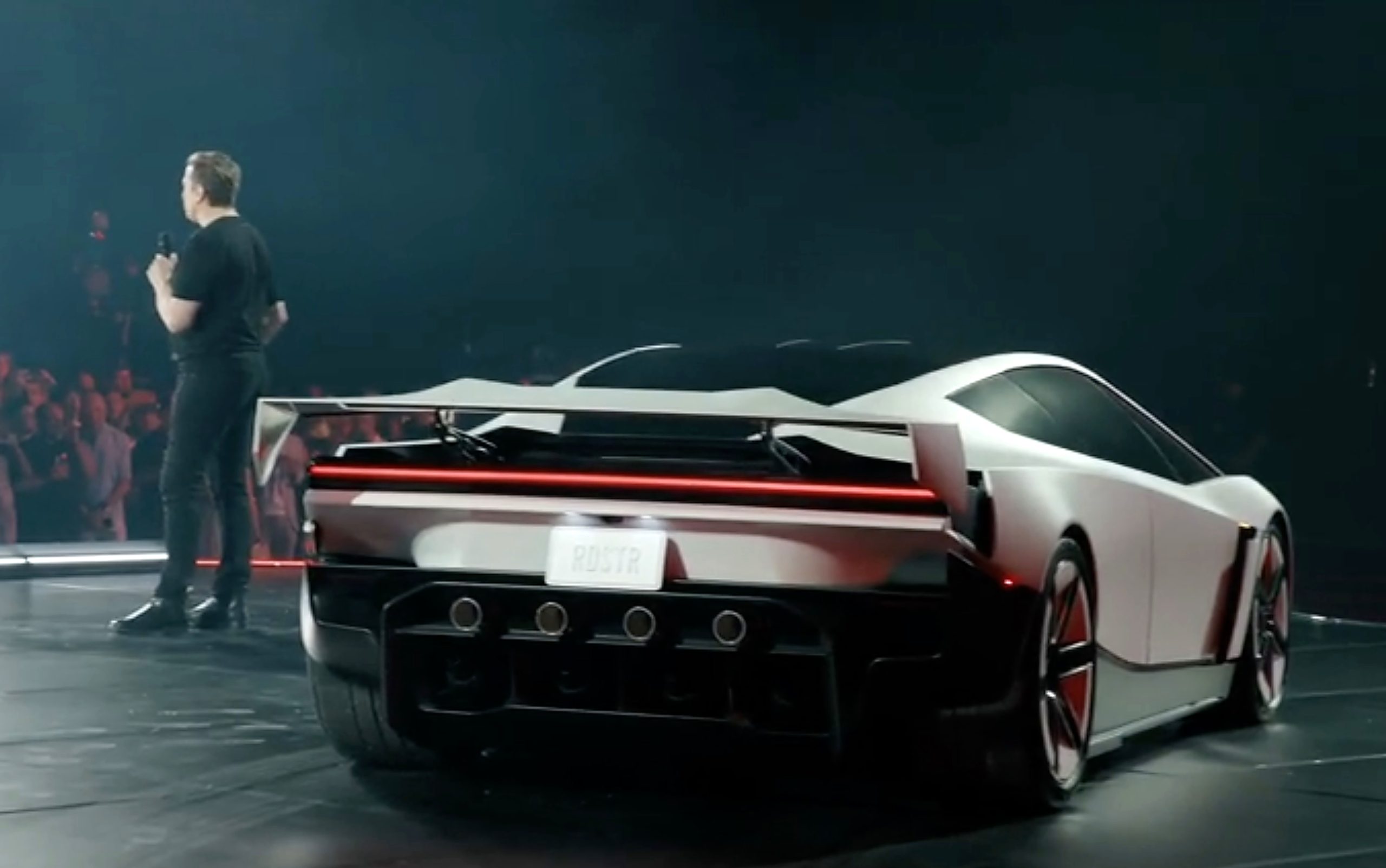
Tesla finally showed the next generation Roadster on Thursday night, and the demo had more in common with a SpaceX test than a track lap. At an event outside Waco, Texas, near SpaceX’s McGregor site, the car used a mix of fans and cold gas thrusters to drive up a curved ramp until it was upside down, then flew off, flipped and landed on the pavement. “Well, it worked,” Elon Musk said. “Flying cars are real.”
The Roadster also hovered itself over a Cybercab, Cybertruck, Tesla Semi, Model Y and Model 3 while moving, and that Tesla showed it going 0 to 60 mph in one second. Musk said “this will be the actual car that’s on the roads” and that it “literally is just going to puff itself up” to perform the maneuvers whenever an owner wants. He called the result a collaboration between Tesla and SpaceX engineers that is “better than any James Bond car,” with Franz von Holzhausen and Lars Moravy on site.
Tesla published new mind-blowing stats for the car that replace the previous targets. The Performance version is road ready and seats two, with active aerodynamics and a multi-mode suction system, and Tesla lists 0 to 60 mph in under 1.6 seconds. The Thrust version is race ready, also seats two, and adds rear-mounted cold gas thrusters for a 0 to 60 time of under 0.9 seconds. The Rocket version is described as air ready, seats one, and uses perimeter-mounted thrusters for forward and upward acceleration plus lateral rotational movement.
| Configuration | Seats | 0 to 60 mph |
|---|---|---|
| Performance | 2 | under 1.6 s |
| Thrust | 2 | under 0.9 s |
| Rocket | 1 | under 0.59 s |
Tesla’s own description: “So…yes, it can fly.” It lists a 0 to 60 time of under 0.59 seconds for Rocket, a top speed of up to more than 230 mph, and range of more than 300 miles. Tesla has not yet given pricing in the information we have seen, but has reopened $50,000 reservations in the newly updated Tesla Roadster configurator. Production is planned for Giga Texas in 2027 or 2028, and Musk has said it would follow the demo by 12 to 18 months.
Every car on the road today is limited by one thing: tire grip
Roadster’s thruster system generates 4–5x the force the tires can.
More force on the same mass means significantly better acceleration – physics does the rest https://t.co/zdPRT2aKwZ
— Tesla (@Tesla) October 16, 2026
Tesla’s Roadster page adds more on how the car works. A multi-mode fan and ground sealing system pulls air from under the car, producing enough suction to hold it upside down even when stationary. Active wings, steer-by-wire with a yoke, and a Track Mode that lowers the car round out the driving setup. The cold gas thrusters use all-electric actuators for micro adjustments to stabilize the car in flight. Tesla says it cut weight with magnesium, titanium and carbon fiber, manual controls and a fixed seat position, and the exterior has hidden headlights, a full-length taillight and Ano White paint inspired by aerospace coatings. Inside are an Ultrawhite interior with gray microsuede, a center touchscreen and two smaller forward displays, and gold tinted glass modeled on spacesuit visors. Availability is tiered: Performance is by reservation, Thrust is a limited release, and Rocket is invite only. Tesla notes the car is not approved for public road use, and that Rocket is not available in all regions.
Tesla Roadster Highlights
- Aero and suction: a multi-mode fan and ground sealing system pulls air from under the car and can hold it upside down even when stationary. There are also active wings and a Track Mode that lowers the car.
- Controls and thrusters: steer-by-wire with a yoke. The cold gas thrusters use all-electric actuators for micro adjustments that stabilize the car in flight.
- Weight: magnesium, titanium and carbon fiber, manual controls and a fixed seat position.
- Design: hidden headlights, a full-length taillight, Ano White paint inspired by aerospace coatings, and gold tinted glass modeled on spacesuit visors.
- Interior: an Ultrawhite interior with gray microsuede, a center touchscreen and two smaller forward displays.
- Availability: Performance is by reservation, Thrust is a limited release, and Rocket is invite only.
- Road use: Tesla notes the car is not approved for public road use, and that Rocket isn’t available in all regions.
Musk has described the Roadster as “the best of the last of the human-driven cars,” and he has been open that it is a halo product. He said he is “not sure it moves the needle massively from a revenue standpoint,” and has warned that anyone whose top priority is safety should not buy it. Tesla reports third quarter earnings on October 21.
Roadster is a true pilot’s car: active aerodynamics, a multi-mode suction system & cold-gas thrusters
Exterior
– Concealed headlights, full-length taillight & flush-mounted surfaces for a minimalist, highly technical form– Super light wheels w/ thin spokes that reinforce structural strength when earthbound
– Ano White paint brings an aerospace-derived finish w/ UV & cryogenic protection, electrostatic dissipation & corrosion resistance
– Gold Glazed tinted glass mimicking the copper coating of spacesuit visors, w/ subtle titanium accents
— Tesla (@Tesla) October 16, 2026
Elon Musk
Amazon shuts out Elon Musk’s Grok Bot so he may just build his own rival store
Musk promises SpaceX will cover Grok Bot purchase errors, tells users to shop beyond Amazon.
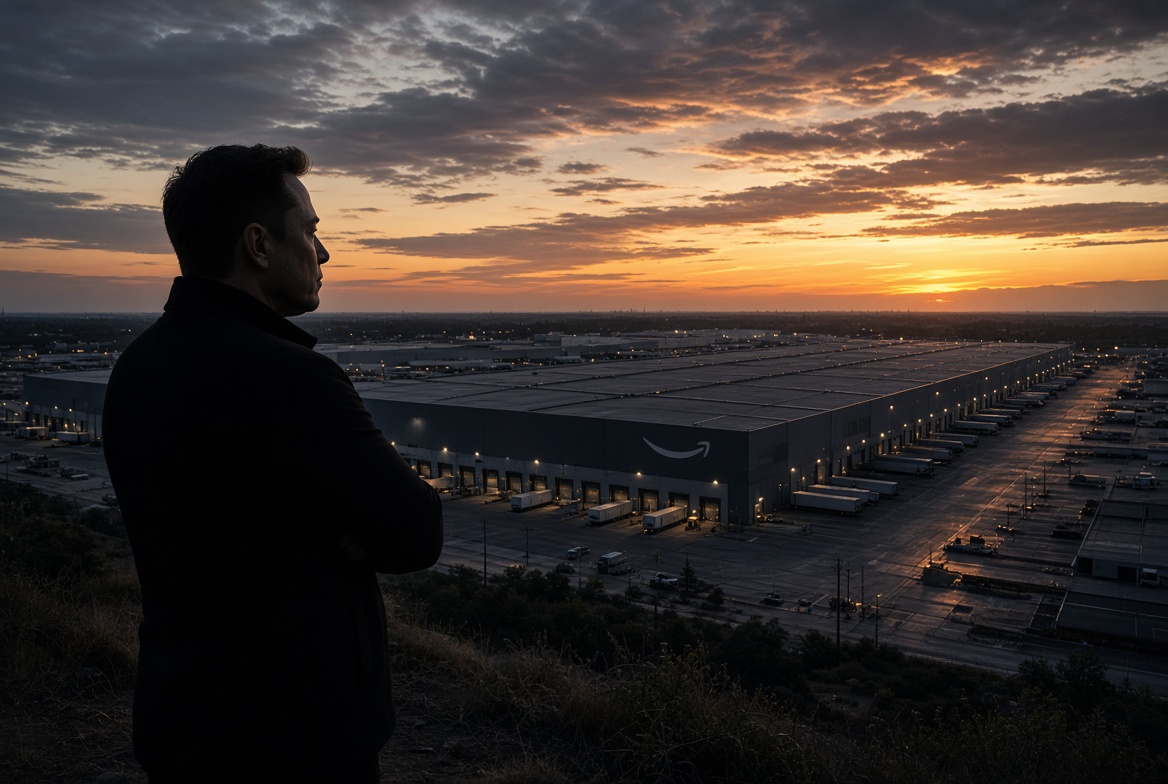
Elon Musk said SpaceX will reimburse users if Grok Bot botches a purchase or leaks their card details. A few hours later he was telling users to take their shopping elsewhere after Amazon shut the agent out.
The first post was a reply to an X user who said Grok Bot booked him a flight after he sent a photo of his credit card. “This works well,” Musk wrote. “If Grok @Bot makes a mistake with a purchase or leaks your card (never happened yet), SpaceX will make you whole,” said Musk.
The second came after another user posted the error his Grok Bot hit on Amazon: “Continued access by an unauthorized AI agent violates Amazon’s Conditions of Use, to which our customers have agreed.” The user said his bots can no longer order from the site. Musk answered, “Just ask Grok @Bot to buy what you want someplace else and get a better deal. There are far more purchasing websites than just Amazon!” He later added, “Maybe we should start a competitor to Amazon,” a possible hint at an X shopping service.
Just ask Grok @Bot to buy what you want someplace else and get a better deal.
There are far more purchasing websites than just Amazon!
— Elon Musk (@elonmusk) October 15, 2026
The Amazon block did not start Thursday. A reply to Musk on October 10 said Amazon was blocking the bot, and Musk responded that Grok would find another way, then showed an order it placed on Lego’s website.
The latest reimbursement promise builds on late August when Musk told a Tesla investor weighing whether to give Grok Bot access to his bank accounts, “If Grok Bot messes up, we will make you whole,” as Teslarati covered when SpaceXAI added its Finance integration. That promise goes further than the company’s consumer terms, which make users responsible for what their agents do and generally cap liability at the greater of fees paid or $100. Neither Thursday post says those terms have changed, so for now it remains a statement on X rather than a published policy.
The two posts matter to Tesla owners because Grok Bot is no longer limited to a phone. Tesla brought it into its vehicles on September 22, and it is now enabled across every Cybercab and the rest of the Model Y Robotaxi fleet, as noted when Teslarati looked at why Grok Bot may be the Cybercab’s real advantage. A rider who asks for groceries or a coffee order is relying on retailers that let the agent in. Amazon has now said it will not, and Musk’s answer is to route around it.
Amazon has not commented publicly on the block in the posts Teslarati reviewed, and it is unclear whether Musk will follow through on a rival store.
So, how many of you do the vast majority of shopping on Amazon and hate that you do? Comment and let us know your thoughts!
Elon Musk
Elon Musk says Tesla’s Roadster demo could be a bang, quite literally
Musk says tonight’s Roadster demo will be a banger, maybe literally. The clues add up.
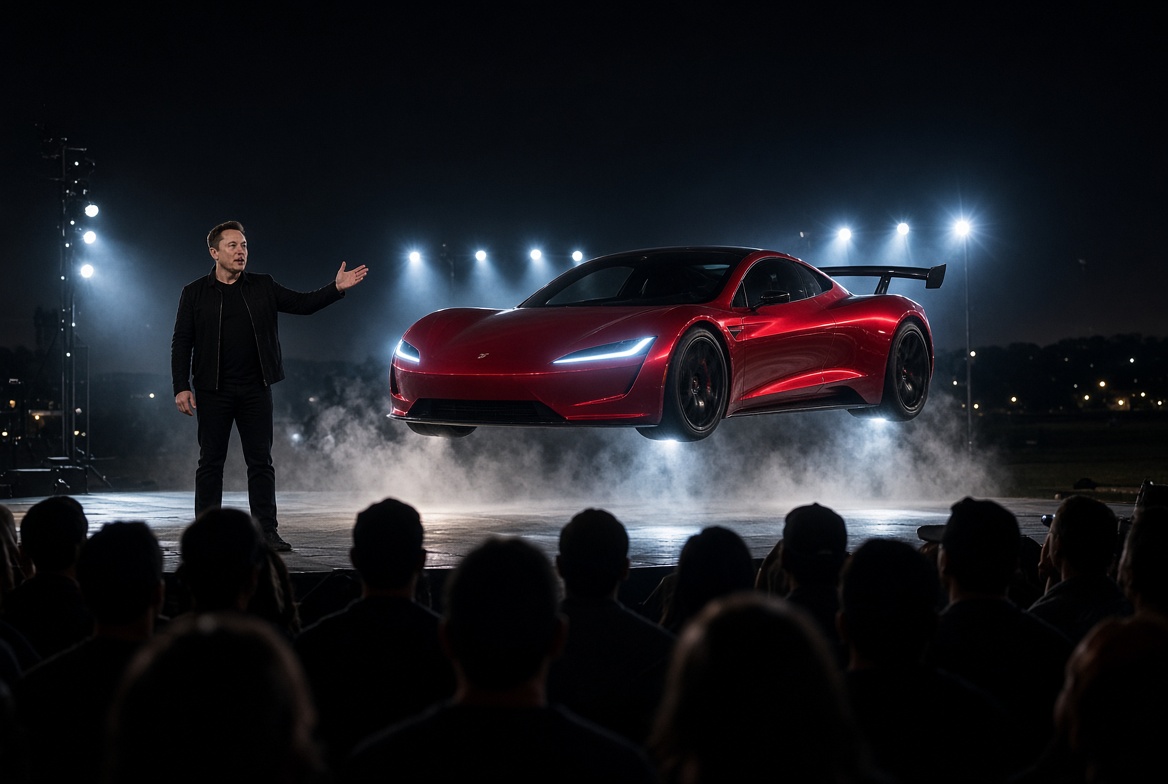
Elon Musk spent Wednesday and Thursday stacking teases on top of Tesla’s Roadster event, and the wording is getting harder to read as routine hype. Tesla streams the unveil tonight at 7:55 p.m. Central on X. Musk has called it “a candidate for greatest product demo of all time,” then added that “this demo will be a BANGER, probably metaphorically, though some chance literally.”
New Roadster is
beyond movies,
beyond imagination,
beyond human,
yet still made
by humans
on Earth— Elon Musk (@elonmusk) October 15, 2026
The “some chance literally” part is the line to watch. The Roadster has been tied to a SpaceX option package since 2018, and as we reported when the date was announced, the system is reportedly codenamed A71 and uses cold gas thrusters fed by a composite overwrapped pressure vessel, the same tank design SpaceX uses on Falcon 9. Musk has said a thruster equipped car could reach 60 mph in about 1.1 seconds. Cold gas thrusters firing at full output are loud, and reports ahead of the event say the car will be unmanned with spectators kept several hundred yards back. A literal bang could simply mean a demonstration that sounds like one, though it is also an admission that something could go wrong on stage.
Then there is “Timing is everything,” which Musk posted a day earlier. Stocktwits noted that 7:55 p.m. is 19:55 on a 24 hour clock, which echoes 1955, the year Marty McFly travels to in Back to the Future. Musk has made that connection before. In 2019 he replied to an animation of a flying DeLorean by saying the new Roadster “will actually do something like this.” Nothing from Tesla confirms the movie reference, but the stream time was chosen by someone, and Tesla has not been shy about this kind of wink.
Also, Tesla said it moved the event because it “can only be held outdoors,” and Musk then wrote that the demo was postponed “due to high winds,” as Teslarati covered at the time. A car running a standing start in front of a crowd shrugs off wind. A car that leaves the ground does not. The venue near SpaceX’s McGregor test site and the FAA airspace closures reported around the original date point the same way, though we also noted the delay could be a plain safety precaution. Musk has also described the new Roadster as “beyond movies, beyond imagination, beyond human, yet still made by humans on Earth.”
The only official figures remain the 2017 ones: 620 miles of range, a top speed above 250 mph, a 1.9 second 0 to 60 time, and prices of $200,000 for the base car and $250,000 for the Founders Series. Production is expected at Giga Texas in 2027 or 2028. Tesla has said the event will cover pricing, specifications and production targets, and its livestream preview has the full rundown. Tesla reports third quarter earnings on October 21, so whatever lands tonight will be fresh going into that call. We will have live coverage as soon as the stream starts.

Tesla Roadster: Three configs, one can fly, 0-60 in 0.8 seconds

Amazon shuts out Elon Musk’s Grok Bot so he may just build his own rival store

Elon Musk says Tesla’s Roadster demo could be a bang, quite literally

The Pentagon taps Elon Musk to design the battlefield of the future

SpaceX reveals how its 1 Million AI satellite network will work and prevent space collisions


