

Tesla’s (NASDAQ:TSLA) first-quarter earnings call comes at a pivotal point for the electric car maker. Following a record-setting Q4 2018 that saw new highs for production and deliveries, Q1 2018 saw a drop in the company’s vehicle production and deliveries. Since then, the stock has been weighed down as reservations emerged about the company’s capability to sustain its profitability, which it attained in the third and fourth quarter of 2018.
Tesla announced a net loss of $702 million for the first quarter, translating to a loss of $4.10 per share. The company also listed $4.5 billion in revenue, which is below Wall Street expectations.
For today’s earnings call, Elon Musk and Tesla’s executives are expected to address questions surrounding the company’s financial standing and its capability to pursue its ongoing projects such as Gigafactory 3 in China and the Tesla Pickup Truck, among others. Questions from retail investors aggregated by investor communication firm Say are also expected to be included in the Q&A session.
The following are live updates from Tesla’s Q1 2019 earnings call. Fellow Teslarati reporter Dacia Ferris and I will be updating this article in real-time, so please keep refreshing the page to view the latest updates on this story.
Simon 15:35 PT: And that’s a wrap. Thanks for joining us on this Live Blog of Tesla’s Q1 2019 earnings call, everyone! Check out our coverage of Tesla’s Q1 2019 Update Letter here too, for more details on the electric car maker’s performance in the first quarter.
Dacia 15:32 PT: Thanks everyone! Let’s decide on a new soundtrack to rev up while waiting for next earnings call, shall we? I went down the 90s rock YouTube hole today. Open for better ideas. #justsaying
Simon 15:30 PT: Gigafactory 3 will likely be a huge piece in the Tesla puzzle. Elon Musk notes that by the end of the year, Tesla is aiming for a production rate of around 1,000 Model 3 per week, or maybe even 2,000 per week. “We expect multiple battery suppliers for Shanghai Giga,” Musk said, responding to a question about battery partners for the upcoming facility.
Dacia 15:30 PT: Elon says he gets daily photos of the Gigafactory 3 progress in Shanghai. “It looks like we’ll reach volume production by the end of this year…that’s what it looks like right now. If it’s not then, it will be shortly thereafter.”
Dacia 15:29 PT: “Our goal is the make our cars as affordable as possible,” Elon responds to a question about the logic of the pricing changes during the quarter. “The $39,500 Model 3 just really hit the sweet spot,” he says, referring to sales of the $35,000 Model 3.
Dacia 15:26 PT: “The upgraded powertrain for the S,X was at a significant cost down,” Elon says about the recent refresh. They took parts from the Model 3 that were highly efficient.
Dacia 15:25 PT: A Battery Investor Day in the future? “I think we’ll have another autonomy day later this year to go over cell and battery development in greater detail,” Elon says in response to a question on future chemistry and form factor changes in batteries.
Dacia 15:24 PT: Adding on Tesla Model Y reservations. “People read too much into this…we aren’t playing up the Model Y because it isn’t in production. You can’t read too much into it,” Elon notes as he responds to longtime TSLA bear David Tamberrino from Goldman Sachs.
Simon 15:24 PT: On Model Y reservations. “We’re not playing up Model Y because it is not in production,” Elon Musk says. “We don’t comment on future price changes,” he adds.
Dacia 15:22 PT: “Sales to a country overseas are affected by when the ship arrives,” Elon explains, citing that delays make it seem like something is wrong, when its just the ship schedule. GDP fluctuations resulting from ship deliveries are not accurate measures, he reiterates.
Dacia 15:20 PT: “We will continue to ADD stores in locations that are no brainers and close them…where the foot traffic doesn’t fall below the cost of having the store,” Elon admits and explains. People misunderstood “all sales online” to mean “all stores are closing.” I’ll admit, I thought that, too at first.
Simon 15:19 PT: On Tesla store closures. “I think Tesla is specifically didn’t handle the messaging of that well. We certainly will continue to have stores, and we will continue to add stores, provided that they are in locations with high foot traffic, and in areas with people with our target market. We will close stores where they are incredibly hard to find, and where foot traffic of potential customers is low. I think it’s just common sense,” Musk said.
Dacia 16:15 PT: “Tesla today is a far more efficiently operating organization than we were a year ago,” Elon doubles down on not needing additional capital. He says technically they did raise some capital for Gigafactory 3 in Shanghai.
Dacia 15:14 PT: “I don’t think raising capital should be a substitute for making the company work more effectively…we should be frugal with capital…. We need to be on a Spartan diet… It’s not the right time to raise capital,” Elon says on whether Tesla would be better served by better cash flow with raised capital. “I don’t think capital has been a constraint on our growth so far…I would have raised capital if I thought so,” he adds.
Dacia 15:10 PT: “There really do seem to be different market segments,” Elon says in response to a question about Model 3 cannibalizing Model S and X. Owners really just want to replace the car they have, not buy M3 over Model S,X, he concludes.
Dacia 15:08 PT: “I would prefer we were private,” Elon admits. He cites Warren Buffett, saying having a public company is like having someone stand outside your home and shout its price/value every day. He nonetheless admits that he does not have a solution for the issues that come from public company pressures.
Dacia 15:05 PT: On Full Self-Driving safety, Tesla will keep reporting their findings and numbers at “a broad brushstroke level”…”We do give some information to insurance companies to reduce rates,” Elon says, meaning FSD safety data to lower auto insurance rates for Tesla owners.
Dacia 15:03 PT: “We think it is important to unwind this wave [of deliveries] because it ends up being optimizing for one quarter but adding a lot of difficulty and not a great experience for customers,” Elon says. “We did adjust our pricing in Q1 which puts pressure on our margin,” Kirkhorn adds. Once all the unwinding is done, they feel confident profitability will return in Q3.
Simon 15:03 PT: Tesla appears to have absorbed the blows in the first quarter to ensure that the following quarters will be smoother. A return to 100k/year for Model S and Model X appears to be in the future.
Dacia 15:01 PT: On questions about weak demand in US — Elon sees demand returning to normal in the near future. “I don’t have a crystal ball…my impression is demand is quite solid,” he says. Retooling decreased production in Q1…ramping back up in Q2. “We will exit Q2 in higher production than Q1 on the S,X,” Kirkhorn chimes in.
Dacia 14:58 PT: “I’m a fan of tents, like real, hardcore tents. Not Boy Scout tents (which are fine),” Elon says, referring to adding space for Model Y production at Fremont. He’s confident they’ll find the space for it (not necessarily confirming it will made in tents).
Dacia 15:56 PT: “The SR+ Model 3… is just an incredibly compelling vehicle,” Elon touts. The upgraded S,X — it’s kind of a game changer. We are out of the Q1 winter hangup for new car sales (people don’t like buying cars in winter), all positive factors for the future, he says. “Overall, I feel pretty good about where things are headed.”
Dacia 15:54 PT: On Model Y production: Model Y production location being decided soon, per Elon. Close call between Nevada or Fremont. Decision in next few weeks.
Simon 14:54 PT: On the Tesla Semi, Elon Musk and Jerome Guillen note that the prototypes of the all-electric long-hauler are performing great. Production will likely be on Reno, NV. “The prototypes are working amazingly well,” says Elon.
Dacia 15:53 PT: How soon will owners get the new FSD upgrade? Elon said there’s no need for it for 2-3 months. Features will then be released that will have use for the FSD.
Simon 14:51 PT: Some questions from retail shareholders are addressed. The company notes that it is just waiting for the necessary approvals from the SEC with its Maxwell acquisition. On Tesla’s own insurance program, Elon says yes, the company will be rolling out one, hopefully in a month. “It will be much more compelling than anything out there,” Elon Musk said.
Dacia 15:45 PT: Model 3 growth margin declined slightly – pricing adjustment and product offering mixup both part of that decline, per Kirkhorn. Our product lineup has a good deal of excitement.
Simon 14:44 PT: The CFO notes that in spite of the launch of the Standard Range Model 3, a significant portion of Model 3 orders in the United States still correspond to the Long Range versions of the vehicle.
Dacia 15:43 PT: “The global expansion of Model 3 was a huge theme within the quarter,” Zachary Kirkhorn, Tesla’s new CFO begins his comments. Two key themes he cites: On the cash front $2.2 billion ending balance, reduction from payment of convertible note which was investment into service and systems; Q1 challenges aren’t expected to continue, and cash balance will increase.
Simon 14:41 PT: Zachary Kirkhorn, Tesla’s new CFO takes the floor. He describes how the first quarter of 2019 was a complex time for Tesla’s finances. Tesla is tracking in April the largest amount of deliveries in the company’s history.
Dacia 15:40 PT: – Elon now touts the Model S, X upgrades that were just released last night, highlights the free Ludicrous Mode upgrade for loyal customers. Motor Trend test drove the enhanced Model S from SF to LA on one charge – Elon compares it to a gas powered car, citing Model S’s superiority.
Simon 14:38 PT: Elon emphasizes that Model 3 international ramp is only beginning. He also mentions the improvements for the Model S and X, which include adaptive suspension, better range, and better charging speeds.
Dacia 15:38 PT: “We believe over time, we will be the best selling premium car in the world…In March we set a record for the highest car sales, period,” Elon says. He sounds positive, despite the report. Cites people paying more for a Model 3 than they’ve ever paid for another car because they **want** one.
Dacia 14:33 PT: “We believe we’ll have the most profitable autonomous taxi on the market,” Elon Musk says. Half of all deliveries occurred during the final 10 days of Q1, “which was an insane undertaking, basically,” he adds.
Simon 14:34 PT: Elon Musk takes the floor. Elon discusses Tesla’s Autonomy Day and reviews the points outlined during the event. Elon also discussed “good challenges” in Q1, particularly in terms of Model 3 deliveries in Europe and China. Highlights that half of Q1’s deliveries happened in the final 10 days of Q1 2019.
Simon 14:31 PT: And we are starting. No Elon Time today. Tesla Senior Director, Investor Relations Mr. Martin Viecha takes the floor.
Simon 14:30 PT: Welcome to our live blog for Tesla’s Q1 2019 earnings call. The electric car maker posted a loss of $702 million in Q1, which missed Wall Street estimates. It will be interesting to see how Elon Musk and Tesla’s other executives address these updates in the upcoming Q&A session.
Dacia 14:30 PT: Well, it’s said in some circles that when Tesla releases an earnings report late…it’s not gonna be happy news. Theory holds up today, but profitability is expected in Q3. We’ll see what Elon decides come then.






Investor's Corner
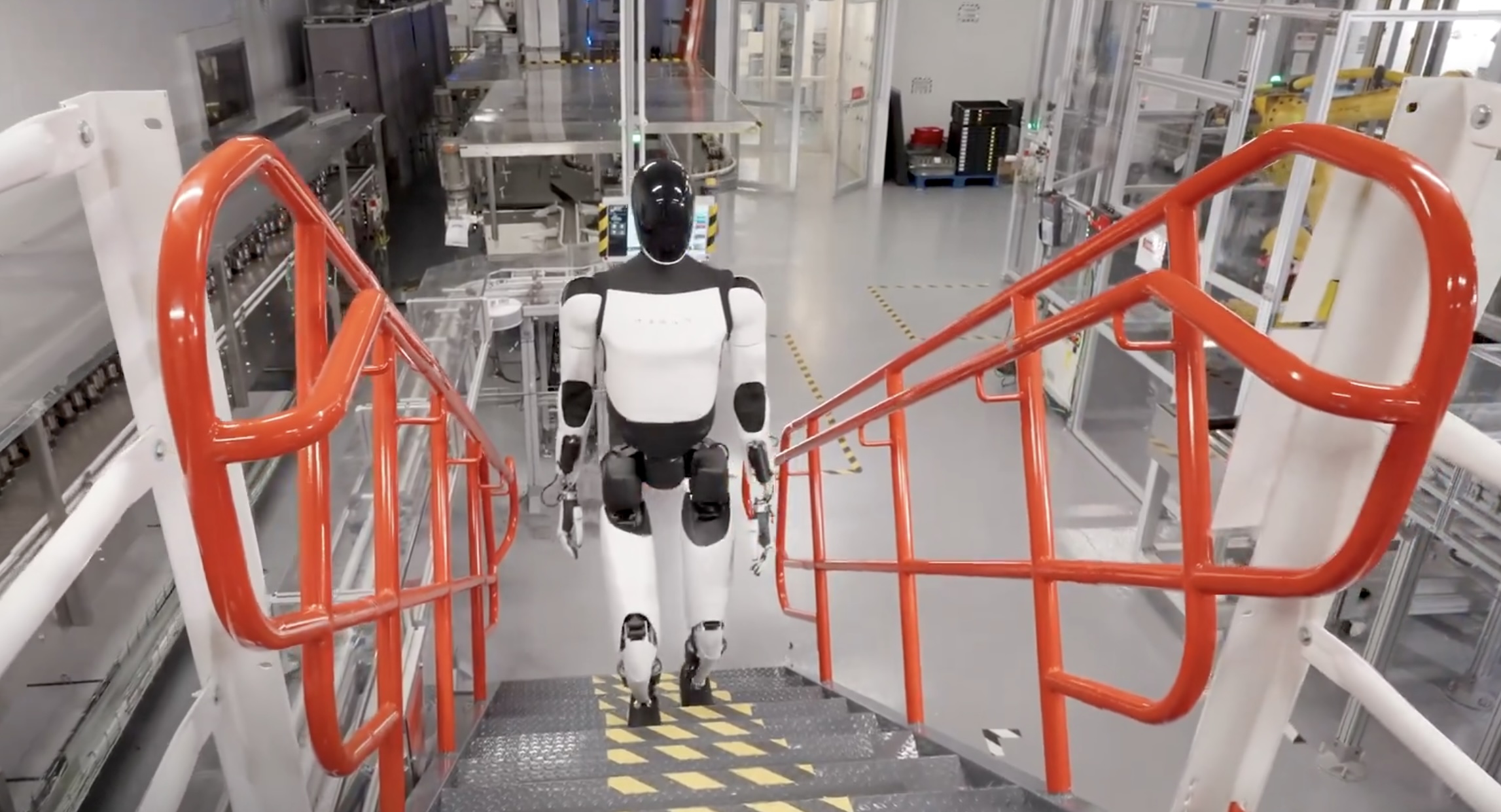
Tesla could save $2.5B by replacing 10% of staff with Optimus: Morgan Stanley
Jonas assigned each robot a net present value (NPV) of $200,000.
Tesla’s (NASDAQ:TSLA) near-term outlook may be clouded by political controversies and regulatory headwinds, but Morgan Stanley analyst Adam Jonas sees a glimmer of opportunity for the electric vehicle maker.
In a new note, the Morgan Stanley analyst estimated that Tesla could save $2.5 billion by replacing just 10% of its workforce with its Optimus robots, assigning each robot a net present value (NPV) of $200,000.
Morgan Stanley highlights Optimus’ savings potential
Jonas highlighted the potential savings on Tesla’s workforce of 125,665 employees in his note, suggesting that the utilization of Optimus robots could significantly reduce labor costs. The analyst’s note arrived shortly after Tesla reported Q2 2025 deliveries of 384,122 vehicles, which came close to Morgan Stanley’s estimate and slightly under the consensus of 385,086.
“Tesla has 125,665 employees worldwide (year-end 2024). On our calculations, a 10% substitution to humanoid at approximately ($200k NPV/humanoid) could be worth approximately $2.5bn,” Jonas wrote, as noted by Street Insider.
Jonas also issued some caution on Tesla Energy, whose battery storage deployments were flat year over year at 9.6 GWh. Morgan Stanley had expected Tesla Energy to post battery storage deployments of 14 GWh in the second quarter.
Musk’s political ambitions
The backdrop to Jonas’ note included Elon Musk’s involvement in U.S. politics. The Tesla CEO recently floated the idea of launching a new political party, following a poll on X that showed support for the idea. Though a widely circulated FEC filing was labeled false by Musk, the CEO does seem intent on establishing a third political party in the United States.
Jonas cautioned that Musk’s political efforts could divert attention and resources from Tesla’s core operations, adding near-term pressure on TSLA stock. “We believe investors should be prepared for further devotion of resources (financial, time/attention) in the direction of Mr. Musk’s political priorities which may add further near-term pressure to TSLA shares,” Jonas stated.
Investor's Corner
Two Tesla bulls share differing insights on Elon Musk, the Board, and politics
Two noted Tesla bulls have shared differing views on the recent activities of CEO Elon Musk and the company’s leadership.
Two noted Tesla (NASDAQ:TSLA) bulls have shared differing views on the recent activities of CEO Elon Musk and the company’s leadership.
While Wedbush analyst Dan Ives called on Tesla’s board to take concrete steps to ensure Musk remains focused on the EV maker, longtime Tesla supporter Cathie Wood of Ark Invest reaffirmed her confidence in the CEO and the company’s leadership.
Ives warns of distraction risk amid crucial growth phase
In a recent note, Ives stated that Tesla is at a critical point in its history, as the company is transitioning from an EV maker towards an entity that is more focused on autonomous driving and robotics. He then noted that the Board of Directors should “act now” and establish formal boundaries around Musk’s political activities, which could be a headwind on TSLA stock.
Ives laid out a three-point plan that he believes could ensure that the electric vehicle maker is led with proper leadership until the end of the decade. First off, the analyst noted that a new “incentive-driven pay package for Musk as CEO that increases his ownership of Tesla up to ~25% voting power” is necessary. He also stated that the Board should establish clear guidelines for how much time Musk must devote to Tesla operations in order to receive his compensation, and a dedicated oversight committee must be formed to monitor the CEO’s political activities.
Ives, however, highlighted that Tesla should move forward with Musk at its helm. “We urge the Board to act now and move the Tesla story forward with Musk as CEO,” he wrote, reiterating its Outperform rating on Tesla stock and $500 per share price target.
Tesla CEO Elon Musk has responded to Ives’ suggestions with a brief comment on X. “Shut up, Dan,” Musk wrote.
Cathie Wood reiterates trust in Musk and Tesla board
Meanwhile, Ark Investment Management founder Cathie Wood expressed little concern over Musk’s latest controversies. In an interview with Bloomberg Television, Wood said, “We do trust the board and the board’s instincts here and we stay out of politics.” She also noted that Ark has navigated Musk-related headlines since it first invested in Tesla.
Wood also pointed to Musk’s recent move to oversee Tesla’s sales operations in the U.S. and Europe as evidence of his renewed focus in the electric vehicle maker. “When he puts his mind on something, he usually gets the job done,” she said. “So I think he’s much less distracted now than he was, let’s say, in the White House 24/7,” she said.
TSLA stock is down roughly 25% year-to-date but has gained about 19% over the past 12 months, as noted in a StocksTwits report.
Investor's Corner
Cantor Fitzgerald maintains Tesla (TSLA) ‘Overweight’ rating amid Q2 2025 deliveries
Cantor Fitzgerald is holding firm on its bullish stance for the electric vehicle maker.
Cantor Fitzgerald is holding firm on its bullish stance for Tesla (NASDAQ: TSLA), reiterating its “Overweight” rating and $355 price target amidst the company’s release of its Q2 2025 vehicle delivery and production report.
Tesla delivered 384,122 vehicles in Q2 2025, falling below last year’s Q2 figure of 443,956 units. Despite softer demand in some countries in Europe and ongoing controversies surrounding CEO Elon Musk, the firm maintained its view that Tesla is a long-term growth story in the EV sector.
Tesla’s Q2 results
Among the 384,122 vehicles that Tesla delivered in the second quarter, 373,728 were Model 3 and Model Y. The remaining 10,394 units were attributed to the Model S, Model X, and Cybertruck. Production was largely flat year-over-year at 410,244 units.
In the energy division, Tesla deployed 9.6 GWh of energy storage in Q2, which was above last year’s 9.4 GWh. Overall, Tesla continues to hold a strong position with $95.7 billion in trailing twelve-month revenue and a 17.7% gross margin, as noted in a report from Investing.com.
Tesla’s stock is still volatile
Tesla’s market cap fell to $941 billion on Monday amid volatility that was likely caused in no small part by CEO Elon Musk’s political posts on X over the weekend. Musk has announced that he is forming the America Party to serve as a third option for voters in the United States, a decision that has earned the ire of U.S. President Donald Trump.
Despite Musk’s controversial nature, some analysts remain bullish on TSLA stock. Apart from Cantor Fitzgerald, Canaccord Genuity also reiterated its “Buy” rating on Tesla shares, with the firm highlighting the company’s positive Q2 vehicle deliveries, which exceeded its expectations by 24,000 units. Cannacord also noted that Tesla remains strong in several markets despite its year-over-year decline in deliveries.

SpaceX’s Crew-11 mission targets July 31 launch amid tight ISS schedule

EV fans urge Tesla to acquire Unplugged Performance for edge in fleet and security industry

Tesla debuts hands-free Grok AI with update 2025.26: What you need to know


-
 Elon Musk2 weeks ago
Tesla investors will be shocked by Jim Cramer’s latest assessment
-
 Elon Musk3 days ago
xAI launches Grok 4 with new $300/month SuperGrok Heavy subscription
-
 Elon Musk5 days ago
Elon Musk confirms Grok 4 launch on July 9 with livestream event
-
 News1 week ago
Tesla Model 3 ranks as the safest new car in Europe for 2025, per Euro NCAP tests
-
 Elon Musk1 week ago
xAI’s Memphis data center receives air permit despite community criticism
-
 News2 weeks ago
Xiaomi CEO congratulates Tesla on first FSD delivery: “We have to continue learning!”
-
 Elon Musk2 weeks ago
Tesla scrambles after Musk sidekick exit, CEO takes over sales
-
 News2 weeks ago
Tesla sees explosive sales growth in UK, Spain, and Netherlands in June