Investor's Corner
Tesla favored by Wall St. for its tech over GM, Toyota as automaker to emerge from coronavirus

Tesla (NASDAQ: TSLA) has captured the attention of Wall Street as the automaker with the most potential to emerge out of the coronavirus pandemic with the most momentum.
The results from a Morgan Stanley survey shows that Tesla was picked by analysts over GM and Toyota for its leadership in technological advancements within its vehicle infrastructure, making it the prime candidate to head out of the pandemic with full steam. Additionally, 56% of the surveyed investors believe its either “extremely unlikely” or “somewhat unlikely” that legacy automakers will be able to “earn its cost of capital” in manufacturing electric or autonomous vehicles, CNBC reports.
Morgan Stanley asked 25 investors a hypothetical question: Assuming a $10 billion investment fund comprised of Toyota, General Motors, and Tesla were given to them for five years, who would they choose to invest in. 20% chose GM, 24% picked Toyota, and the remaining 56% chose Tesla.
Despite Morgan Stanley’s positive stance on Tesla, Bank of America questionably downgraded its rating of the electric automaker from neutral to underperform. Bank of America states Tesla has several hurdles to jump over to regain a positive outlook. These include ongoing and future production challenges and continued losses and cash burn from low production and deliveries, MarketWatch said.
Interestingly enough, Tesla’s 2019 Q4 earnings call showed a $930 million increase in cash and cash equivalents to $6.3 billion, and $1 billion operating free cash flow in the final quarter of the year. Additionally, Tesla’s delivery numbers for Q1 2020 showed the company beat Wall Street’s 75,000-80,000 estimate by giving cars to 88,400 people within the first three months of the year.
Tesla has also confronted production issues by planning the construction of an additional Model Y production line at its Fremont plant in California, and a revamp of the facility’s paint shop.
Tesla’s shares are up 67% in 2020 and closed at $732.11 when trading ended on April 22. Meanwhile, GM has fallen 42% to $21.30, and Toyota is down 14% to $121.43 since the turn of the new decade.
 -
-
Morgan Stanley does expect Tesla to burn $1 billion or more of cash flow in 2020 due to production shutdowns, but the firm also predicts a volume growth of between 5 and 10 percent. The average automaker, however, is forecasted to lose between 20 and 25 percent of free cash flow, and anywhere between 10 and 30 percent of its market cap, Morgan Stanley said.
Tesla’s Q1 2020 earnings call is scheduled for Wednesday, April 29.
Disclosure: I have no ownership in shares of TSLA and have no plans to initiate any positions within 72 hours.


 -
-
Cybertruck
Tesla Cybertruck production snaps back after ugly supplier fight
Cybertrucks are piling up again at Giga Texas after Tesla’s court win against a parts supplier.

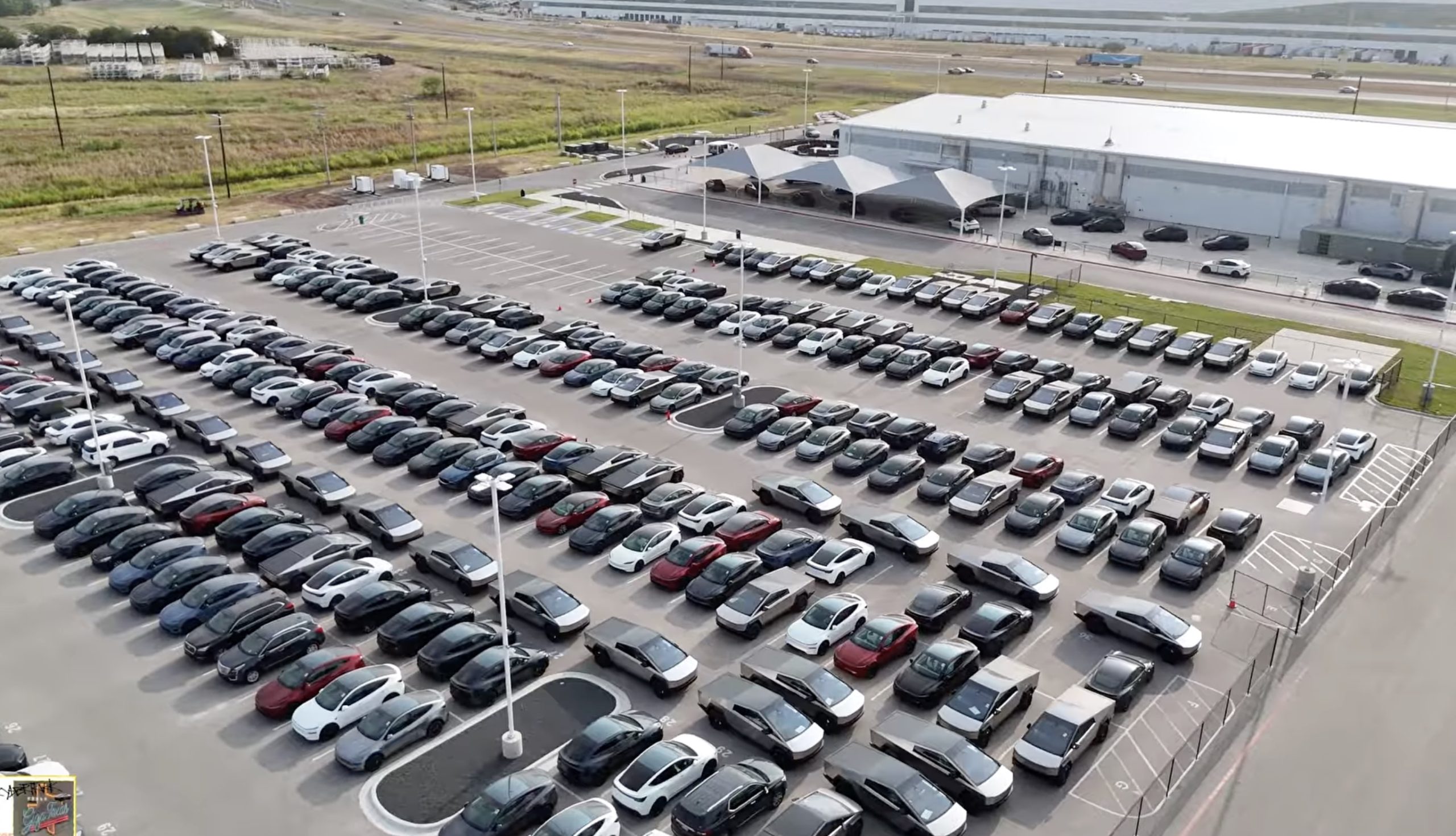
Cybertruck production at Giga Texas is showing its first visible recovery since Tesla sued a supplier last month over withheld manufacturing tooling.
Aerial observer Joe Tegtmeyer flew over the Austin factory Wednesday morning and counted roughly 100 or more Cybertrucks filling the outbound lot, a sharp jump from the thin numbers seen in recent weeks. The flyover came a day after a judge granted Tesla a temporary restraining order against Angstrom Automotive Group, the parts supplier at the center of the dispute.
Tesla filed an emergency lawsuit in late July after Angstrom told the automaker it planned to close the Troy, Texas facility where Tesla’s die-cast tools, trim dies and other Cybertruck stamping equipment were housed. According to Tesla’s complaint, a shipment of 700 finished parts never left the building, and when Tesla sent representatives to retrieve its equipment, accompanied by law enforcement, they were turned away. Angstrom allegedly then asked for an extra $250,000 a week to keep operating, which Tesla’s filing described as holding its own property for ransom.
TESLA: U.S. District Judge Christopher R. Wolfe of the U.S. District Court for the Western District of Texas, Waco Division granted Tesla a Temporary Restraining Order and Writ of Replevin in its dispute with Angstrom Automotive (Case No. 6:26-cv-00477).
The order authorizes… https://t.co/E1DKcQSxMn pic.twitter.com/LR8aAiV2Og
— S.E. Robinson, Jr. (@SERobinsonJr) August 5, 2026
-
The restraining order gives Tesla immediate right of entry to Angstrom’s facility to recover the tooling. It is temporary, with a fuller hearing still to come, but the speed of Wednesday’s rebound suggests the Angstrom shortage was indeed the main bottleneck limiting Cybertruck output. Outbound lot counts are an imperfect measure of actual production, since finished trucks can sit for days before shipping, but a lot that full after a lean stretch is a meaningful signal.
Cybertruck output at Giga Texas has fluctuated all year as Tesla worked through supply issues and introduced new trims, including a cheaper Dual Motor AWD version that drew strong early demand.
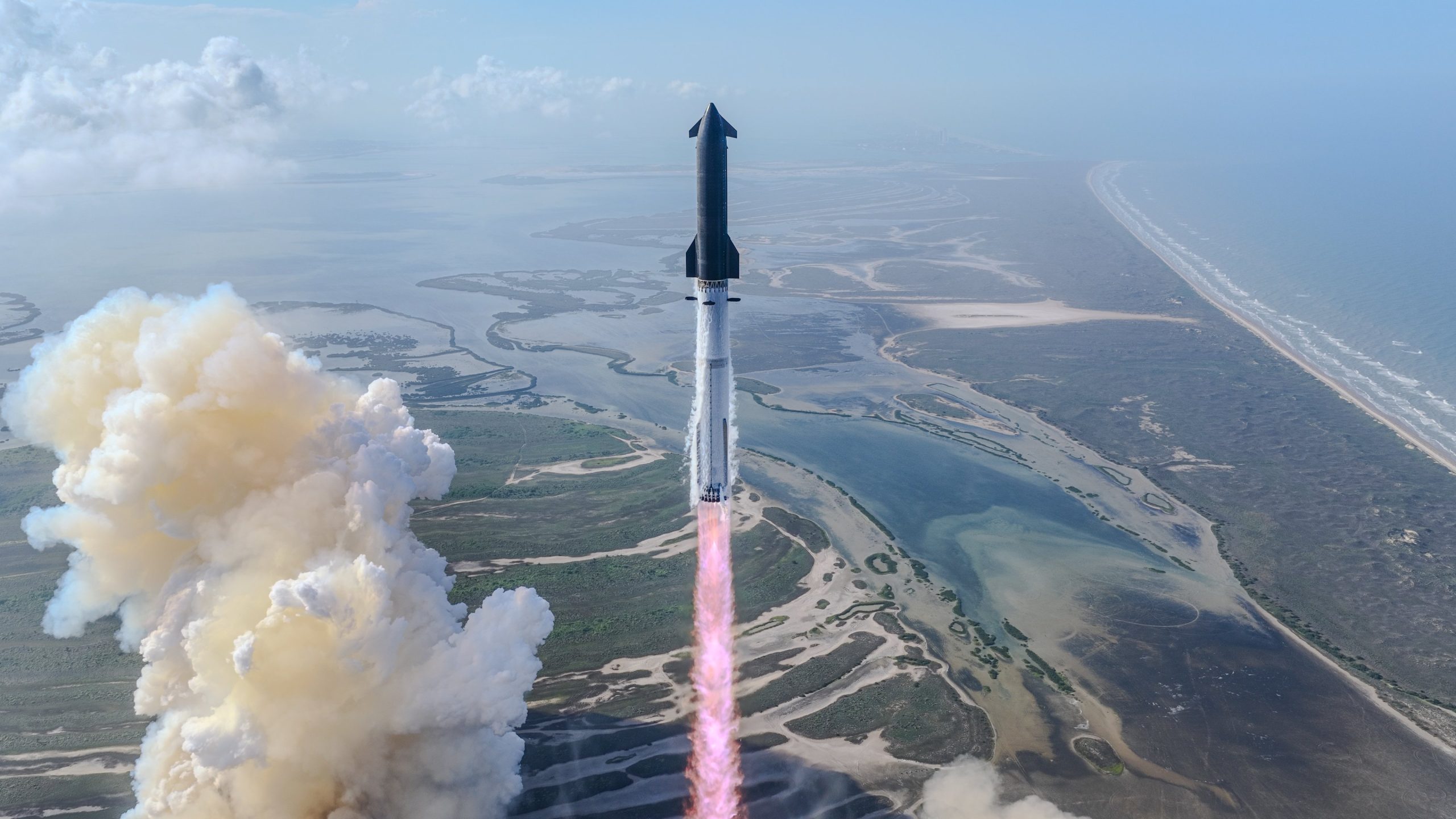
Venture capitalist Chamath Palihapitiya has cautioned investors shorting SpaceX shares, drawing a direct parallel to the intense short-selling pressure Tesla faced in its early public years.
Responding to reports of elevated short interest in the newly public rocket, satellite, and AI company, Palihapitiya noted that similar dynamics played out with Tesla, where aggressive short sellers ultimately “went broke.”
SpaceX (NASDAQ: SPCX) went public on June 12, 2026, in the largest IPO on record, pricing at $135 per share. Shares quickly surged to an all-time high of $225.64 just days later, briefly implying a valuation exceeding $2 trillion. The stock has since retreated sharply amid valuation concerns, lockup expiration fears, and broader market dynamics.
By early August, it traded near $108–$125, representing a roughly 50 percent decline from the peak and bringing the market capitalization closer to the $1.5–1.7 trillion range. On August 4, shares closed up more than 9 percent at $125.33 ahead of earnings before facing pressure in after-hours and premarket trading.
Short interest has climbed dramatically. According to S3 Partners data widely cited in market reports, short positions reached approximately 219.3 million shares by late July, about 34 percent of the limited public float of roughly 640 million shares, and represented a notional value of around $24.6 billion.
Utilization of shares available to borrow hit 95 percent, with borrow fees rising. This level of shorting exceeded the dollar value of short bets against Tesla at the time and built rapidly ahead of two catalysts: the company’s first post-IPO earnings and an August 6 lockup expiration that could free up to 911.5 million additional shares.
-
CEO Elon Musk has issued warnings of his own. In mid-July, as short interest approached one-third of the float, he posted that “the survival probability of firms who maintain a significant short position in SpaceX over time is very low,” reiterating his view that the company could ultimately be worth more than Earth if it achieves its goals.
On August 4, just before earnings, Musk responded to the latest short-interest data by saying, “I try to warn them, but they just double down.”
SpaceX delivered its first quarterly results as a public company after the close on August 4. Second-quarter revenue rose 92 percent year-over-year to $7.8 billion, beating consensus estimates near $6.8–6.9 billion.
The net loss narrowed to $541 million, or 9 cents per share, better than the roughly 23–24 cent loss expected. Starlink/connectivity contributed about $4.3 billion (up 66 percent), while the AI business generated $2.6 billion (up roughly 250 percent). Capital expenditures were heavy at $18.4 billion, largely tied to AI infrastructure. Management projected a $100 billion annualized revenue run rate by year-end 2026 and outlined a path toward $1 trillion in annual revenue by 2030.
The combination of Chamath’s historical reminder, Musk’s repeated alerts, and the company’s ambitious growth targets underscores the high-stakes debate surrounding SPCX. Short sellers are positioned for near-term supply pressure from the lockup, while long-term bulls point to Starlink scale, Starship progress, and AI compute expansion as reasons the bears may ultimately face the same fate as many early Tesla skeptics.
Investor's Corner
SpaceX and Nvidia team up on Musk’s orbital AI bet
SpaceX revealed a new Nvidia satellite partnership, then Musk pledged an exclusive Nvidia hardware commitment.
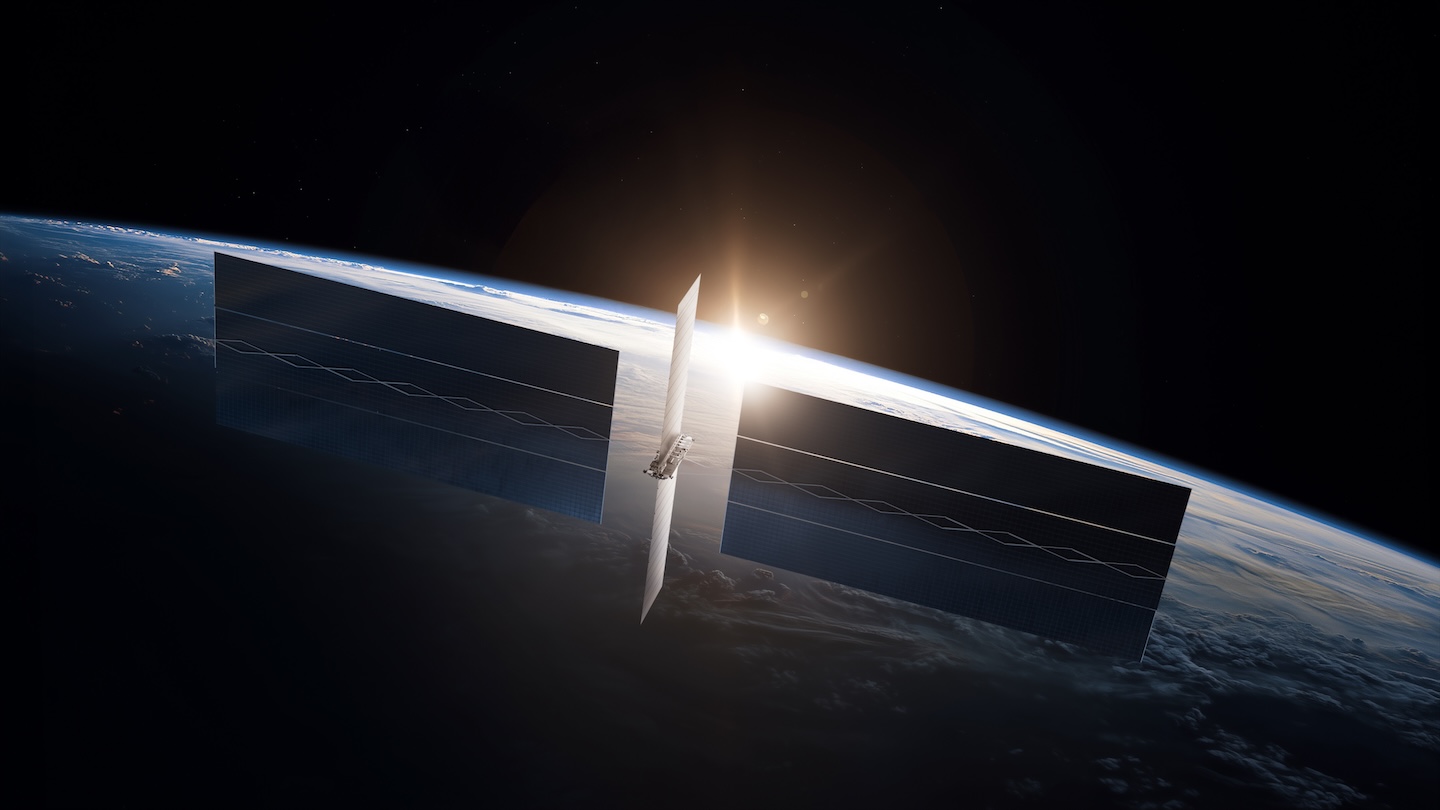
SpaceX and Nvidia are now working together on the hardware that will power Musk’s orbital data center ambitions. SpaceX announced on X on Tuesday that it is partnering with Nvidia to design the compute payload for Starmind AI1, the first satellite in a planned constellation built to run AI workloads directly in orbit. Each Starmind satellite will carry Nvidia’s Rubin GPUs and Vera CPUs, according to the post, which included renderings of the payload design.
The announcement landed hours before SpaceX’s first earnings call as a public company, where Musk went further, saying the company has committed to building its AI infrastructure exclusively on Nvidia hardware. “We think the Vera Rubin architecture is the best architecture. We think it’s the best AI computer, and we greatly value our close cooperation and partnership on many levels with Nvidia,” Musk told investors on the call,. “So we’re exclusive to Nvidia.”
Musk said SpaceX plans to deploy Nvidia’s Vera Rubin NVL72 rackscale system, codenamed Kyber, both on the ground and in space. He set a target of 2 gigawatts of compute capacity online by the end of this year, scaling to roughly 10 gigawatts by the end of 2027.
SpaceX’s newest Starmind will make earth data centers obsolete
Starmind has been in development since Musk confirmed the name in June, following an xAI trademark filing that tipped off the project before SpaceX made it official. The idea is massive in scope and instead of moving data down to ground based servers, satellites equipped with onboard processors and large solar arrays would compute AI workloads in orbit and beam results back to Earth. SpaceX has already filed with the FCC for a constellation of up to one million satellites to support the effort, citing constant solar power and the absence of zoning restrictions as advantages over terrestrial data centers.
The Nvidia exclusivity marks a shift in tone from just two weeks ago, when Musk was busy knocking down a report that SpaceX had ordered $52 billion worth of Nvidia GPUs through Foxconn, calling it fake news at the time. The dollar figure in that rumor may have been wrong, but the underlying direction seems correct. SpaceX’s AI division already leases Colossus compute capacity to Anthropic and Google, and Tuesday’s earnings report showed AI revenue climbing sharply as those deals ramp up.
Nvidia shares rose roughly 3% in Tuesday trading on the news, while SpaceX stock climbed nearly 9% during the day before giving back gains after hours as investors digested the earnings report’s capital spending figures.
-

Tesla Cybertruck production snaps back after ugly supplier fight

Space finally faced the people living next to its next Terafab mega-project


