
Investor's Corner
Tesla faces ‘excessive’ negativity, but analysts see silver lining for Model 3 deliveries

Tesla (NASDAQ:TSLA) might be facing a lot of negativity from its skeptics recently over concerns about the Model 3’s demand this quarter, but some TSLA bulls are seeing a silver lining. In a note published on Thursday, Baird analysts stated that the overly negative sentiments against the company today could play in the electric car maker’s favor when it releases its Q1 2019 vehicle delivery and production report.
The Baird analysts noted that even if Tesla’s deliveries fall below expectations for the first quarter, the bearish news is already priced in on TSLA’s current stock price. This could work as a “de-risking event” for the electric car maker’s shares, which could result in TSLA stock being driven higher following the company’s announcement.
“We are buyers into the release as we believe weak deliveries are priced into the stock and think the report could be a de-risking event. Management could provide an update on demand/backlog, which we believe would be positive for the stock. We think overly negative sentiment on demand could improve following the announcement, which should drive shares higher,” the analyst wrote.
Baird has a conservative estimate for Model 3 deliveries for the first quarter. The analysts expect Tesla to deliver 50,000 Model 3 in Q1, slightly below market expectations. Analysts polled by FactSet are estimating that Tesla will deliver a total of 77,000 vehicles in the first quarter, 55,000 of which are Model 3.
The observations of the Baird analysts mirror those of Jefferies analyst Philippe Houchois, who observed in a note on Wednesday that there seems to be an “excessive” amount of negative media coverage against Tesla lately. In his note, Houchois stated that he expects a “modest” $50 million loss before interest, taxes, depreciation, and amortization in Q1, and that he sees a “high probability that Tesla can remain self-funded in the course of 2019.” The Jefferies analyst added that Tesla’s shares had gotten back to support levels that were last tested over the course of 2018, before the company started demonstrating its capability to turn a profit and exhibit a positive free cash flow.
The big question that will likely determine the performance of Tesla stock over the next few weeks is the number of Model 3 deliveries that the company has achieved this first quarter, which represents the first time that the electric sedan was delivered to foreign territories. While it is expected that deliveries in the United States will likely be down due to the Model 3’s international push, the numbers from Europe and China will determine if Tesla’s strategy is working or not.
As of writing, Tesla shares are trading +0.71% at $276.78.
Disclosure: I have no ownership in shares of TSLA and have no plans to initiate any positions within 72 hours.










Investor's Corner
Tesla could save $2.5B by replacing 10% of staff with Optimus: Morgan Stanley
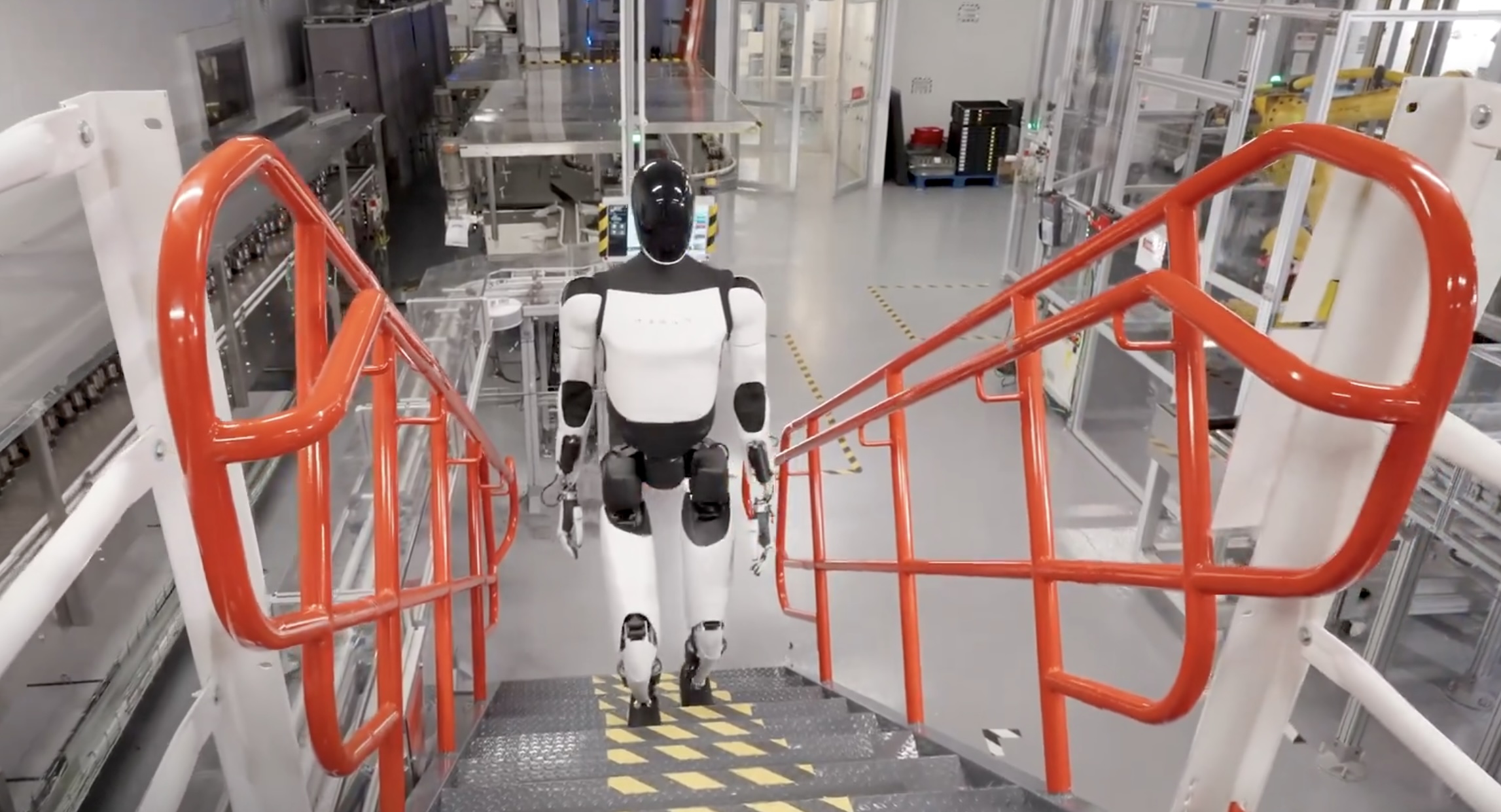
Jonas assigned each robot a net present value (NPV) of $200,000.
Tesla’s (NASDAQ:TSLA) near-term outlook may be clouded by political controversies and regulatory headwinds, but Morgan Stanley analyst Adam Jonas sees a glimmer of opportunity for the electric vehicle maker.
In a new note, the Morgan Stanley analyst estimated that Tesla could save $2.5 billion by replacing just 10% of its workforce with its Optimus robots, assigning each robot a net present value (NPV) of $200,000.
Morgan Stanley highlights Optimus’ savings potential
Jonas highlighted the potential savings on Tesla’s workforce of 125,665 employees in his note, suggesting that the utilization of Optimus robots could significantly reduce labor costs. The analyst’s note arrived shortly after Tesla reported Q2 2025 deliveries of 384,122 vehicles, which came close to Morgan Stanley’s estimate and slightly under the consensus of 385,086.
“Tesla has 125,665 employees worldwide (year-end 2024). On our calculations, a 10% substitution to humanoid at approximately ($200k NPV/humanoid) could be worth approximately $2.5bn,” Jonas wrote, as noted by Street Insider.
Jonas also issued some caution on Tesla Energy, whose battery storage deployments were flat year over year at 9.6 GWh. Morgan Stanley had expected Tesla Energy to post battery storage deployments of 14 GWh in the second quarter.
Musk’s political ambitions
The backdrop to Jonas’ note included Elon Musk’s involvement in U.S. politics. The Tesla CEO recently floated the idea of launching a new political party, following a poll on X that showed support for the idea. Though a widely circulated FEC filing was labeled false by Musk, the CEO does seem intent on establishing a third political party in the United States.
Jonas cautioned that Musk’s political efforts could divert attention and resources from Tesla’s core operations, adding near-term pressure on TSLA stock. “We believe investors should be prepared for further devotion of resources (financial, time/attention) in the direction of Mr. Musk’s political priorities which may add further near-term pressure to TSLA shares,” Jonas stated.
Investor's Corner
Two Tesla bulls share differing insights on Elon Musk, the Board, and politics
Two noted Tesla bulls have shared differing views on the recent activities of CEO Elon Musk and the company’s leadership.

Two noted Tesla (NASDAQ:TSLA) bulls have shared differing views on the recent activities of CEO Elon Musk and the company’s leadership.
While Wedbush analyst Dan Ives called on Tesla’s board to take concrete steps to ensure Musk remains focused on the EV maker, longtime Tesla supporter Cathie Wood of Ark Invest reaffirmed her confidence in the CEO and the company’s leadership.
Ives warns of distraction risk amid crucial growth phase
In a recent note, Ives stated that Tesla is at a critical point in its history, as the company is transitioning from an EV maker towards an entity that is more focused on autonomous driving and robotics. He then noted that the Board of Directors should “act now” and establish formal boundaries around Musk’s political activities, which could be a headwind on TSLA stock.
Ives laid out a three-point plan that he believes could ensure that the electric vehicle maker is led with proper leadership until the end of the decade. First off, the analyst noted that a new “incentive-driven pay package for Musk as CEO that increases his ownership of Tesla up to ~25% voting power” is necessary. He also stated that the Board should establish clear guidelines for how much time Musk must devote to Tesla operations in order to receive his compensation, and a dedicated oversight committee must be formed to monitor the CEO’s political activities.
Ives, however, highlighted that Tesla should move forward with Musk at its helm. “We urge the Board to act now and move the Tesla story forward with Musk as CEO,” he wrote, reiterating its Outperform rating on Tesla stock and $500 per share price target.
Tesla CEO Elon Musk has responded to Ives’ suggestions with a brief comment on X. “Shut up, Dan,” Musk wrote.
Cathie Wood reiterates trust in Musk and Tesla board
Meanwhile, Ark Investment Management founder Cathie Wood expressed little concern over Musk’s latest controversies. In an interview with Bloomberg Television, Wood said, “We do trust the board and the board’s instincts here and we stay out of politics.” She also noted that Ark has navigated Musk-related headlines since it first invested in Tesla.
Wood also pointed to Musk’s recent move to oversee Tesla’s sales operations in the U.S. and Europe as evidence of his renewed focus in the electric vehicle maker. “When he puts his mind on something, he usually gets the job done,” she said. “So I think he’s much less distracted now than he was, let’s say, in the White House 24/7,” she said.
TSLA stock is down roughly 25% year-to-date but has gained about 19% over the past 12 months, as noted in a StocksTwits report.
Investor's Corner
Cantor Fitzgerald maintains Tesla (TSLA) ‘Overweight’ rating amid Q2 2025 deliveries
Cantor Fitzgerald is holding firm on its bullish stance for the electric vehicle maker.
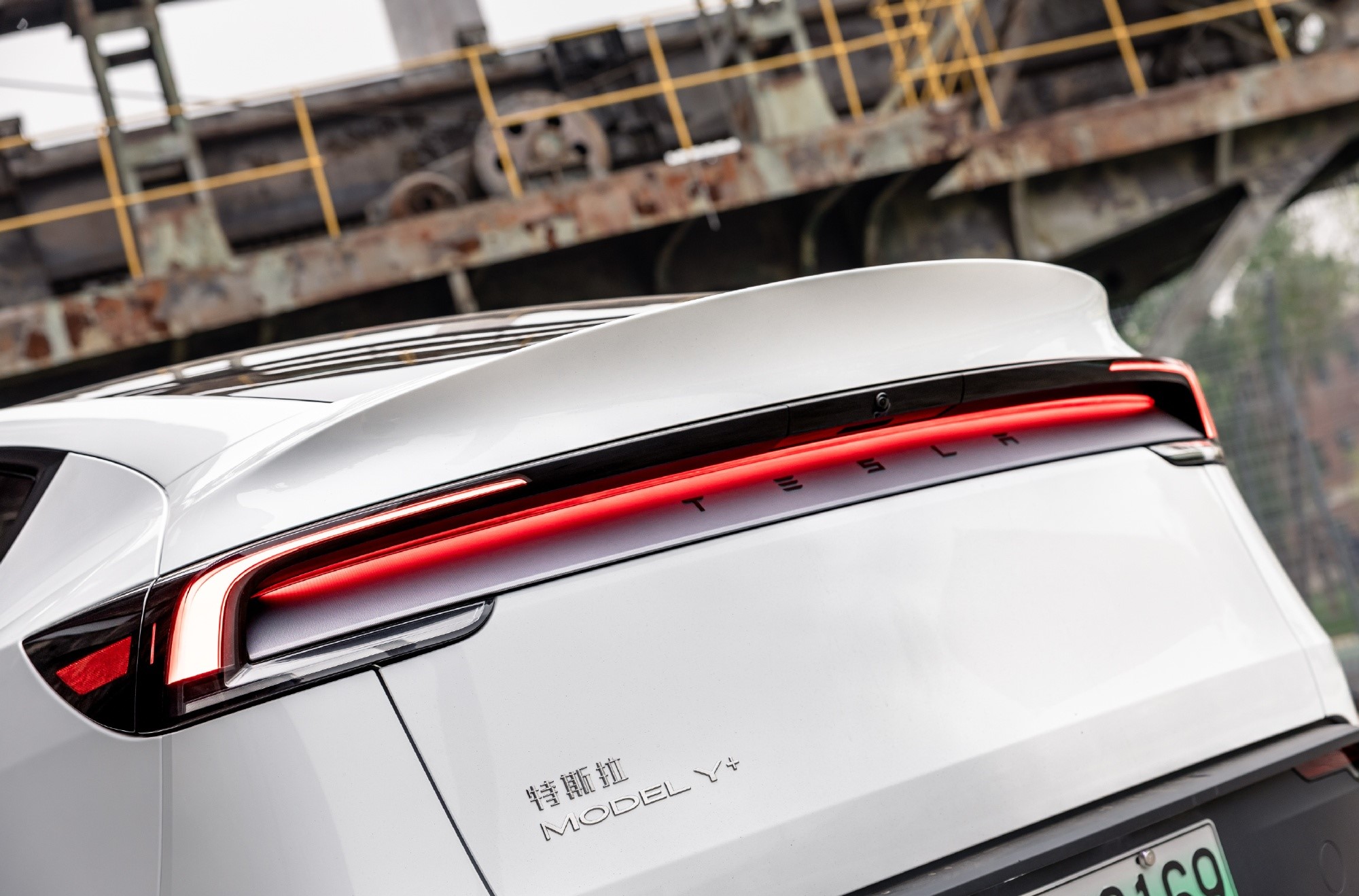
Cantor Fitzgerald is holding firm on its bullish stance for Tesla (NASDAQ: TSLA), reiterating its “Overweight” rating and $355 price target amidst the company’s release of its Q2 2025 vehicle delivery and production report.
Tesla delivered 384,122 vehicles in Q2 2025, falling below last year’s Q2 figure of 443,956 units. Despite softer demand in some countries in Europe and ongoing controversies surrounding CEO Elon Musk, the firm maintained its view that Tesla is a long-term growth story in the EV sector.
Tesla’s Q2 results
Among the 384,122 vehicles that Tesla delivered in the second quarter, 373,728 were Model 3 and Model Y. The remaining 10,394 units were attributed to the Model S, Model X, and Cybertruck. Production was largely flat year-over-year at 410,244 units.
In the energy division, Tesla deployed 9.6 GWh of energy storage in Q2, which was above last year’s 9.4 GWh. Overall, Tesla continues to hold a strong position with $95.7 billion in trailing twelve-month revenue and a 17.7% gross margin, as noted in a report from Investing.com.
Tesla’s stock is still volatile
Tesla’s market cap fell to $941 billion on Monday amid volatility that was likely caused in no small part by CEO Elon Musk’s political posts on X over the weekend. Musk has announced that he is forming the America Party to serve as a third option for voters in the United States, a decision that has earned the ire of U.S. President Donald Trump.
Despite Musk’s controversial nature, some analysts remain bullish on TSLA stock. Apart from Cantor Fitzgerald, Canaccord Genuity also reiterated its “Buy” rating on Tesla shares, with the firm highlighting the company’s positive Q2 vehicle deliveries, which exceeded its expectations by 24,000 units. Cannacord also noted that Tesla remains strong in several markets despite its year-over-year decline in deliveries.

SpaceX’s Crew-11 mission targets July 31 launch amid tight ISS schedule

EV fans urge Tesla to acquire Unplugged Performance for edge in fleet and security industry

Tesla debuts hands-free Grok AI with update 2025.26: What you need to know


-
 Elon Musk2 weeks ago
Tesla investors will be shocked by Jim Cramer’s latest assessment
-
 Elon Musk2 days ago
xAI launches Grok 4 with new $300/month SuperGrok Heavy subscription
-

 Elon Musk5 days ago
Elon Musk confirms Grok 4 launch on July 9 with livestream event
-

 News1 week ago
Tesla Model 3 ranks as the safest new car in Europe for 2025, per Euro NCAP tests
-

 Elon Musk1 week ago
xAI’s Memphis data center receives air permit despite community criticism
-
 News2 weeks ago
Xiaomi CEO congratulates Tesla on first FSD delivery: “We have to continue learning!”
-
 Elon Musk2 weeks ago
Tesla scrambles after Musk sidekick exit, CEO takes over sales
-

 News2 weeks ago
Tesla sees explosive sales growth in UK, Spain, and Netherlands in June