
Tesla’s (NASDAQ:TSLA) third-quarter 2022 earnings call comes on the heels of the company’s Q3 2022 Update Letter. Tesla’s Q3 numbers were quite impressive, with the company posting record revenue, operating profit, and free cash flow (FCF).
Tesla’s FCF also exceeded $8.9 billion in the last 12 months, and operating margins reached 17.2% in the third quarter. Similar to previous quarters, Tesla’s war chest grew by $2.2 billion in the third quarter, providing the company with cash and marketable securities of $21.1 billion.
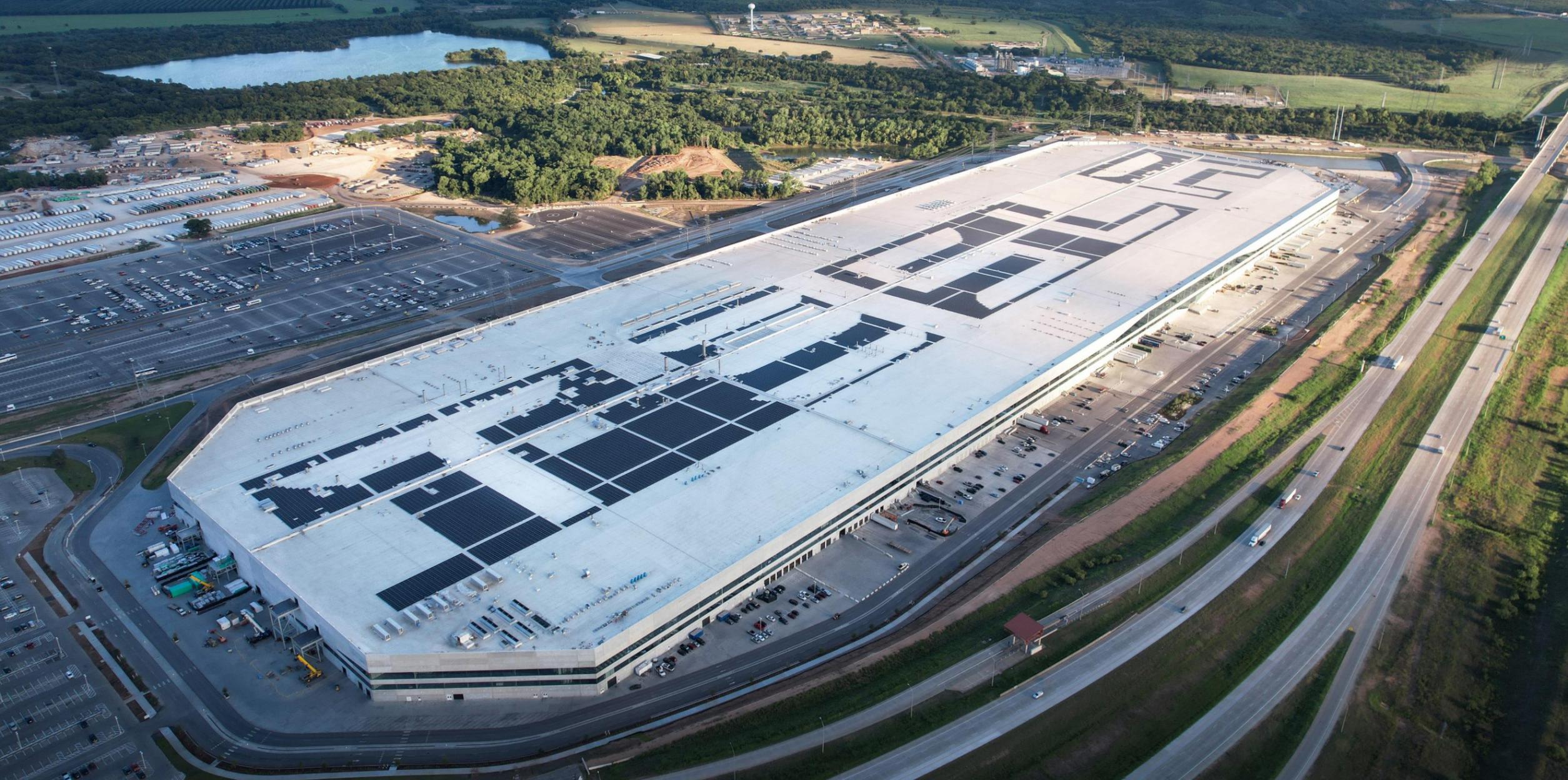
Impressively enough, Tesla posted some key updates on its vehicle projects in the Q3 2022 Update Letter. The Tesla Cybertruck, for example, is already listed as a vehicle under “Tooling” in Gigafactory Texas, while the Tesla Semi has been listed as a vehicle under “Early Production” in Nevada. Tesla’s Optimus is not yet listed in the Q3 2022 Update Letter, though it won’t be surprising if the humanoid robot gets included in the document in the near future.
The following are live updates from Tesla’s Q3 2022 Earnings Call. I will be updating this article in real time, so please keep refreshing the page to view the latest updates on this story. The first entry starts at the bottom of the page.
17:33 CDT – And that wraps up Tesla’s Q3 2022 earnings call. Elon was grounded the entire time, and he did not go off tangent at all. Looks like the fourth quarter will be an exciting time for Tesla, though, so it would be pretty cool to see everything unfold.
We’ll see you in the next Live Blog, everyone! Cheers!
17:30 CDT – William Stein from Truist asked a question about FSD and Optimus. Elon reiterated his belief that Tesla can achieve full self-driving 100%. Elon noted that FSD is almost there, so Tesla just has to show regulators what the system can really do.
As for Dojo, Tesla would need to show that it’s better than today’s top tech companies like NVIDIA. “The jury’s still out on Dojo,” Musk said, though he also stated that Tesla believes the architecture of Dojo is the right architecture to win.
The CEO also noted that Optimus’ probability of success is “extremely high.”
17:28 CDT – Toni Sacchogani of Bernstein asked where Tesla’s 4680 cells being deployed today. Are they in the Semi, Model Y, and will it restrain Cybertruck? Elon noted that the Semi does not use 4680 cells right now. Tesla is making Model Ys from Giga Texas with 4680 cells, however.
That being said, Elon noted that Tesla does not expect the 4680 cells to be a gating factor in the Cybertruck’s ramp.
17:25 CDT – Pierre Ferragu from News Street Research asked about Tesla’s products and its efforts to scale. Executives noted that Tesla is viewing its growth target in years. It takes time, but Tesla is working hard on specifics like costs. Tesla’s 4680 cells are a good example of this as its timeline is all the way to 2026. Tesla is considering all the steps from costs to productions, from mine to cell.
On the 4680 ramp, “No ramp is ever easy. It’s still very challenging to get to the end,” Tesla executives said.
17:21 CDT – Kirkhorn noted that while commodity increases peaked the most in Q3, Tesla sees a small amount of reduction in commodity prices for production. Elon also noted that he expects to see reductions in 2023.
When asked about Twitter and a potential umbrella company, Musk noted that he is more of a technologist or engineer than he is an investor. “I’m excited about the Twitter situation,” Musk said, adding that the social media company’s value could be an order of magnitude than its current valuation today.
17:18 CDT – Canaccord Genuity analyst George Gianarikas asked about Tesla’s prices. Elon notes that things like battery components like lithium are increasing even as some costs such as shipping are decreasing. Musk highlighted that there are varying commodities with different price trends to consider.
17:14 CDT – Colin Rusch from Oppenheimer asks about Tesla’s operating expenses and where Tesla can invest. Kirkhorn noted that Tesla’s operating leverage suggests that the company can optimize its operations even more. It’s hard to keep it flat since Tesla is growing so fast, but it should normalize. “Operating leverage has improved quite a bit. It’s the lowest this quarter,” Kirkhorn said.
“We’re investing in everything we can think of to possibly invest in, and we’re still generating cash,” Musk said. Tesla executives also noted that Optimus would definitely change things.
17:11 CDT – Colin Langan from Wells Fargo asked about any updates on FSD. Musk noted that Tesla intends to bring FSD Beta to FSD customers by the end of the year. The CEO reiterated that FSD should be able to provide customers with a generally hands-free solution for driving. Musk also noted that customers would probably have to intervene or stop FSD very little.
17:07 CDT – Analyst questions begin. Adam Jonas of Morgan Stanley asks if Tesla will be going into mining. Elon explains that Tesla can, but if the company could find a reliable supplier, the company will make a deal instead. “We’ll do whatever we have to… but if we have to mine, we will mine,” Musk said.
The CEO also spoke on government permits or requirements for mining. He highlighted that some materials
17:05 CDT – A question about Tesla’s third platform is asked. Musk responded that while Tesla does not talk exact dates, the primary focus of the company’s vehicle development team is this next generation of cars. Musk estimates that it will be half the cost of the Model 3 and Model X, and its production will probably be higher than all of the company’s current products combined.
Think Tesla producing two cars for the same amount of effort and time to produce one Model 3. That will be a game-changer.
Musk also noted that when he earlier said that he believes Tesla could be bigger than Apple and Saudi Aramco combined, he was not talking about Optimus at all.
17:02 CDT – A question about how Tesla can adjust to a potential prolonged recession was asked. “To be frank, we’re very pedal to the metal, rain or shine,” Musk said, explaining that Tesla is not reducing production recession or no recession. After all, electric cars are now inevitable.
“I wouldn’t say it’s recession-proof but it’s certainly recession-resilient,” Musk said. He also stated that Tesla sees its Energy business growing faster than the company’s electric vehicle business.
“We can withstand a lot of down trends,” Kirkhorn said.
16:57 CDT – A question about the progress of the 4680 battery cell production ramp was asked. Tesla executives noted that the battery ramp is actually going well. The focus now is cost and further expanding production in North America. “It’s looking good,” Musk said.
“Our goal is to reach 1000 GW a year in North America,” the CEO added.
16:56 CDT – A question about Germany’s energy crisis and potential delays to Giga Berlin was asked. Kirkhorn answered that Tesla does not believe that such a crisis will be affecting Giga Berlin. “We’ll see how this plays out,” Kirkhorn said.
A question on the Cybertruck’s pricing and final design was also asked. Elon jokingly also asked when he could get his Cybertruck Beta unit, though Tesla executives noted that the preparations are ongoing at Giga Texas. “There are preparations here at Giga Texas for Cybertruck,” Tesla execs noted.
Tesla Semi deliveries could also happen around December 1st, Elon noted. Also, to the naysayers, the Semi will not sacrifice any cargo-carrying capacity. It will have 500 miles of range with cargo. Tesla is aiming for 50,000 units of the Semi to be built in North America.
And of course, Elon made a hydrogen joke. “You obviously don’t need hydrogen for heavy trucking,” the CEO joked.
16:52 CDT – A question was asked about Tesla’s 50% annualized growth was asked. Musk answered that ”To the best of our knowledge that Tesla will continue to grow,” Musk said. When asked about future products, Musk flatly joked that nope, he won’t talk about them. He technically can, but he won’t.
“At Tesla, we’re always committed to continuous improvement,” Musk said.
16:49 CDT – A question about China’s backlog and recent order intake trends is asked. Elon notes that Tesla is confident of a strong Q4, with the company growing in production every year by 50%, but not delivery because there aren not enough transportation vehicles to move the cars. There’s quite a bit of logistics to think about, after all.
16:47 CDT – Shareholder questions begin with a question about the Inflation Reduction Act. Elon notes that Tesla believes that it can meet the requirements of the IRA, both on its vehicles and energy products. “We do expect to meet IRS requirements,” Musk said.
16:45 CDT – Zach Kirkhorn takes the floor, noting that Tesla’s margins were weighed down a bit due to the costs of Giga Berlin and Texas. He also highlighted that every car built in Giga Berlin and Texas contributes greatly to Tesla’s numbers.
Tesla Energy also achieved its best gross profit yet, driven largely by the Megapack. With this in mind, and despite supply chain risks, Tesla is still looking to achieve 50% growth this year.
16:41 CDT – Elon noted that it is possible for Tesla to do a buyback in the range of about $5-$10 billion. “It is certainly possible to do a buyback in the order of $5-$10 million. It’s likely that we’ll do some meaningful buyback,” Musk said.
Musk, however, highlighted that it’s important to look at Tesla’s long-term trend. This makes sense. Even if the company encounters short-term headwinds, the company’s long-term prospects are extremely bright. Elon noted that he believes Tesla can far exceed Apple’s current market cap.
Musk even hinted that he sees a path where Tesla can become larger than Apple. “Now throughout the opinion we can far exceed Apple’s current market cap. I can see a path that Tesla can be worth more than Apple and Saudi Aramco combined.”
“It’s an incredibly exciting future, an unprecedented future,” Musk said, adding that credit for Tesla’s success is due to the company’s team. “You guys rock. You’re the one making everything possible.”
16:38 CDT – Elon reiterates Tesla’s target of achieving a wide release of FSD Beta by the end of the year. “At this quarter, we expect to go to a wide-release of FSD in North America,” Musk noted, stating that FSD’s wide release is scheduled about a month from now. He also highlighted that safety with FSD is a lot better compared to when it is not on, according to Tesla’s data.
Musk also reiterates that Tesla has huge demand, debunking concerns that the company is seeing a demand problem of sorts. According to Musk, Tesla is delivering every vehicle its makes and keeping operation margins strong.
16:36 CDT – Elon notes that the Fremont team achieved record production in Q3, and it will continue to improve. This is pretty cool since the Fremont Factory is already one of the most productive car plants in the United States.
Looks like AI Day 2022 was successful. AI day was a recruiting event, and it did its job. “We’ve seen a massive influx of world-class resumes,” Elon said.
16:35 CDT – Elon takes the floor. Q3 was another record quarter for Tesla. He reviews the company’s numbers in Q3. Elon also noted that Tesla is looking forward to a record-breaking Q4. “Knock on wood, it looks like we’ll have an epic end of year,” he said.
Tesla is finally growing some traction in its 4680 battery production as well. Structural packs, here we go.
16:32 CDT – Martin Viecha formally starts the Q3 2022 earnings call. Elon, Zach Kirkhorn, and other execs are present.
16:30 CDT – Any minute now. For the last few earnings calls, Tesla has actually started on time. Let’s see if this is the case today as well.
16:25 CDT – Last five minutes, everyone. Unless Elon time of course.
16:15 CDT – Hi everyone, and welcome to another Tesla earnings call live blog! Tesla’s third-quarter results were quite impressive. This was despite Tesla missing analyst expectations on some metrics, such as revenue. This has caused Tesla stock to feel some pressure on Wednesday’s after hours. Longtime Tesla bull Gene Munster, managing partner of Loup Ventures, noted that the market’s reaction might be due to the fact that Tesla typically beats expectations.
“Tesla is a company that typically has been beating numbers. The reaction you’re seeing is that people are a bit taken aback by the fact that they missed,” Munster said.
Not gonna lie. Gene Munster has a point.
Don’t hesitate to contact us with news tips. Just send a message to simon@teslarati.com to give us a heads up.


Investor's Corner
Tesla has a Cybercab problem nobody saw coming
Tesla’s Cybercab line now builds robotaxis faster than Tesla can deploy them, Lars Moravy says.

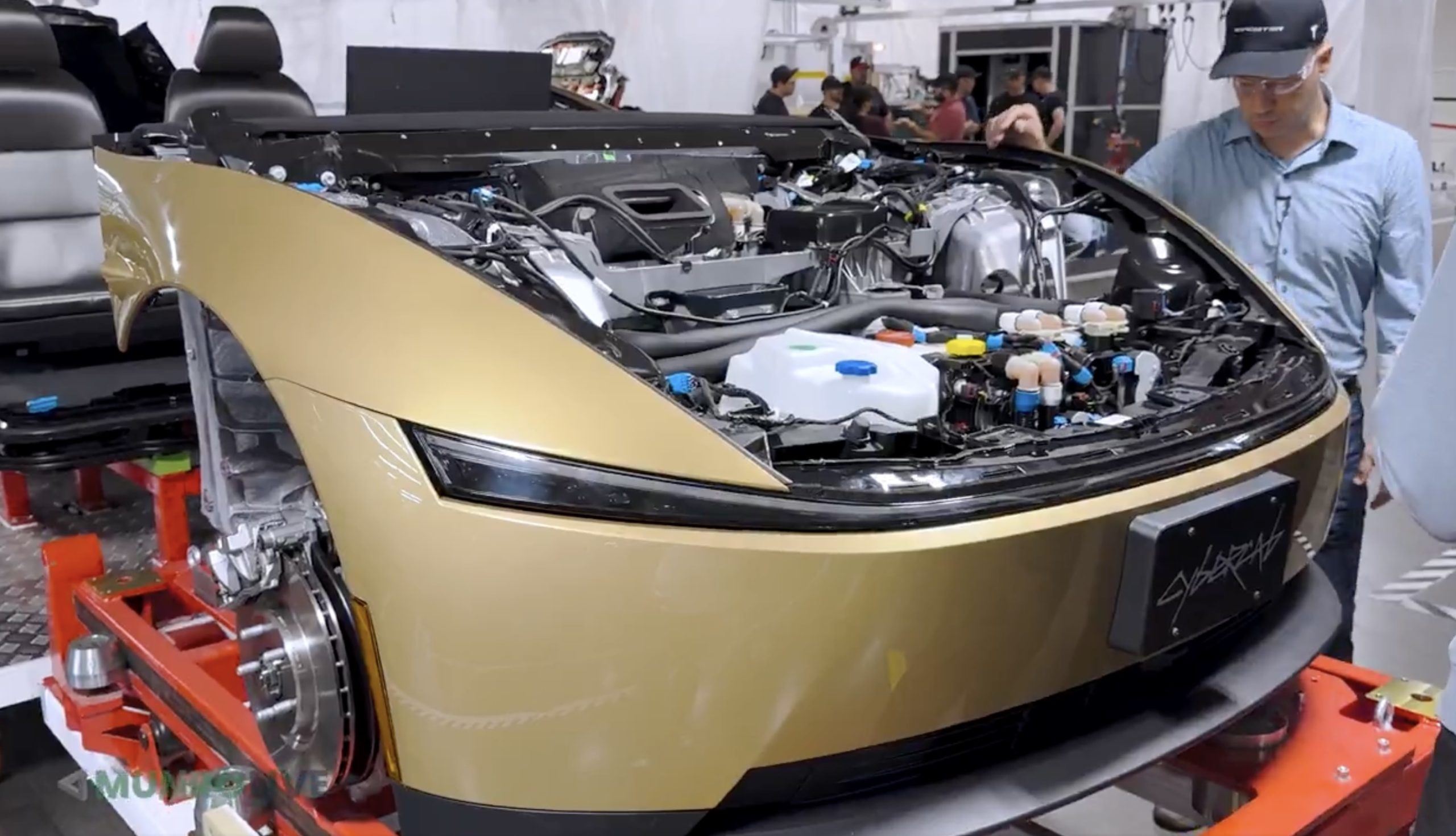
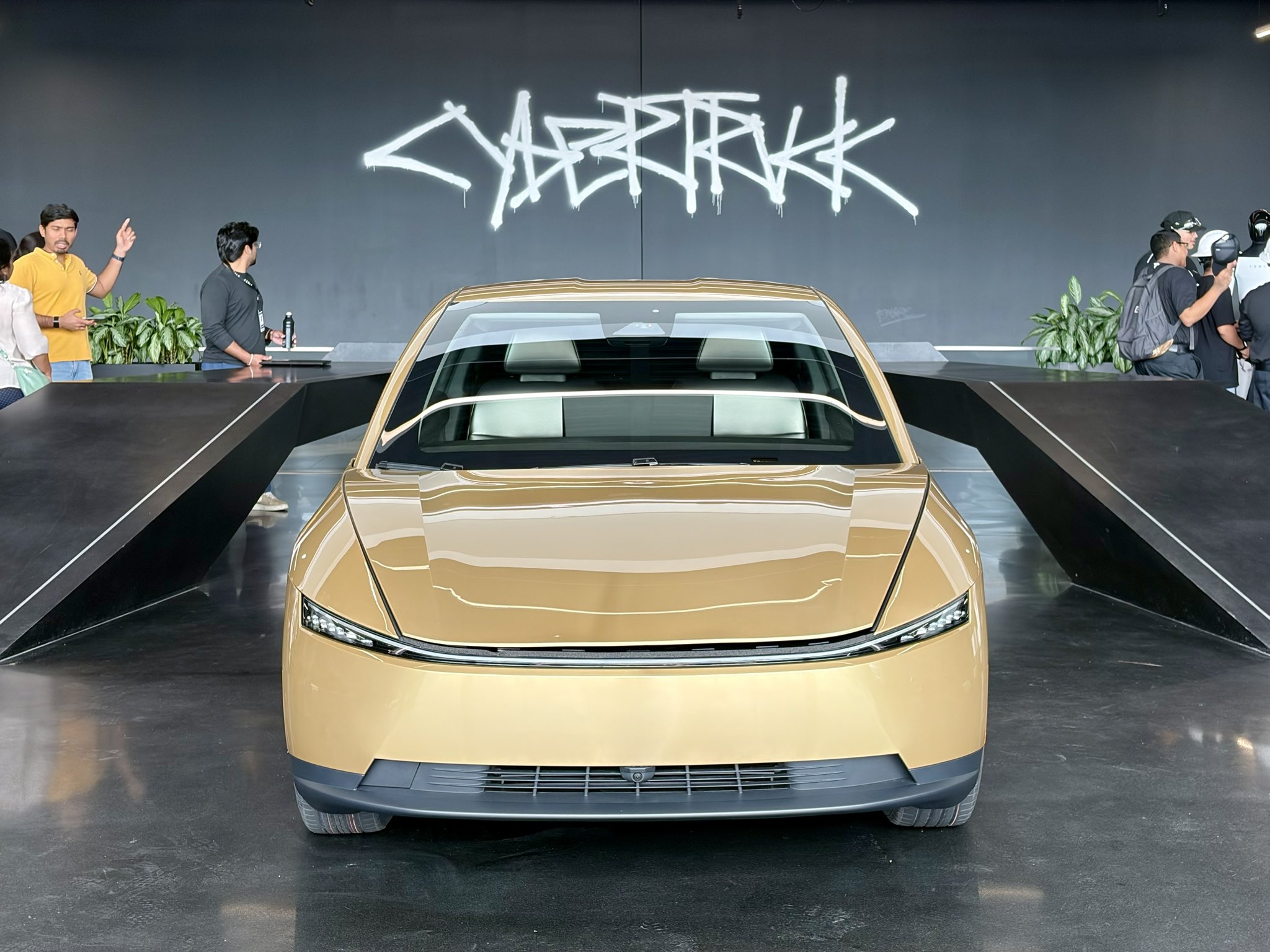
Tesla’s Cybercab line in Texas can now build the two seat robotaxi faster than the company can put it into service, according to Lars Moravy, Tesla’s Vice President of Vehicle Engineering. “We don’t run every day because the line can run so fast. It’s currently outpacing our deployments,” Moravy said in a new Cybercab deep dive from Munro Live. “So, it’s a bit of a race right now. Who’s going to go faster? Right now the manufacturing line’s ahead.”
Tesla’s official Robotaxi account shared a Cybercab analysis video on X on Monday, calling it a “Cybercab engineering deep dive.” Moravy’s comments go further than what he told analysts on the Q3 earnings call last week, when he said the Cybercab line’s listed capacity of more than 125,000 units a year undersells what it can actually run.
The tour shows where that speed comes from. Tesla’s unboxed process splits the Cybercab into front, rear, side and center modules that are built and tested on their own before they meet on a short final line. That final line has just 25 fully automated stations, which Tesla’s team estimated is a fifth to a tenth of what a Model Y needs. The full line is about 78% automated, the framing line is already at 100%, and the layout uses roughly 50% less floor space per vehicle. The stated goal is “100% automation in 10 second cycle time,” or one finished Cybercab every 10 seconds.
Tesla also deleted the paint shop. Only the side modules are coated, and the exterior panels get their color inside the molding machine. Engineers said the car is designed to run at least 500,000 miles, which matters for a vehicle that will spend most of its day carrying riders.
The battery got the same treatment. The Cybercab uses an 88S6P pack of 4680 cells in a steel enclosure, a first for Tesla, with each module potted separately so a single failed module can be swapped instead of the whole pack. Wireless battery management boards replace a wiring harness, and new contactors are fast enough to drop the pyro fuse entirely. Tesla’s battery director graded the pack an A minus, compared with a D for the Model Y structural pack and a B minus for Cybertruck. Up front, the drive unit runs an 11:1 gear ratio versus roughly 9:1 on most Teslas, since the Cybercab does not need a high top speed.
Cybercab engineering deep dive — Robotaxi (@robotaxi) October 26, 2026
The deployment side is now the bottleneck Moravy described. Tesla had more than 50 Cybercabs working the Formula 1 weekend in Austin, and Texas records show 463 Cybercabs registered. Tesla said on its earnings call that Cybercab service will launch in Dallas next month, and Moravy said the company is aiming to get Cybercabs to customers by the end of 2026. Every unit built so far has gone into Tesla’s own fleet since the line moved into volume production in April.
Munro Live also asked when it could get a Cybercab to tear down. Tesla’s answer: “Not yet.”

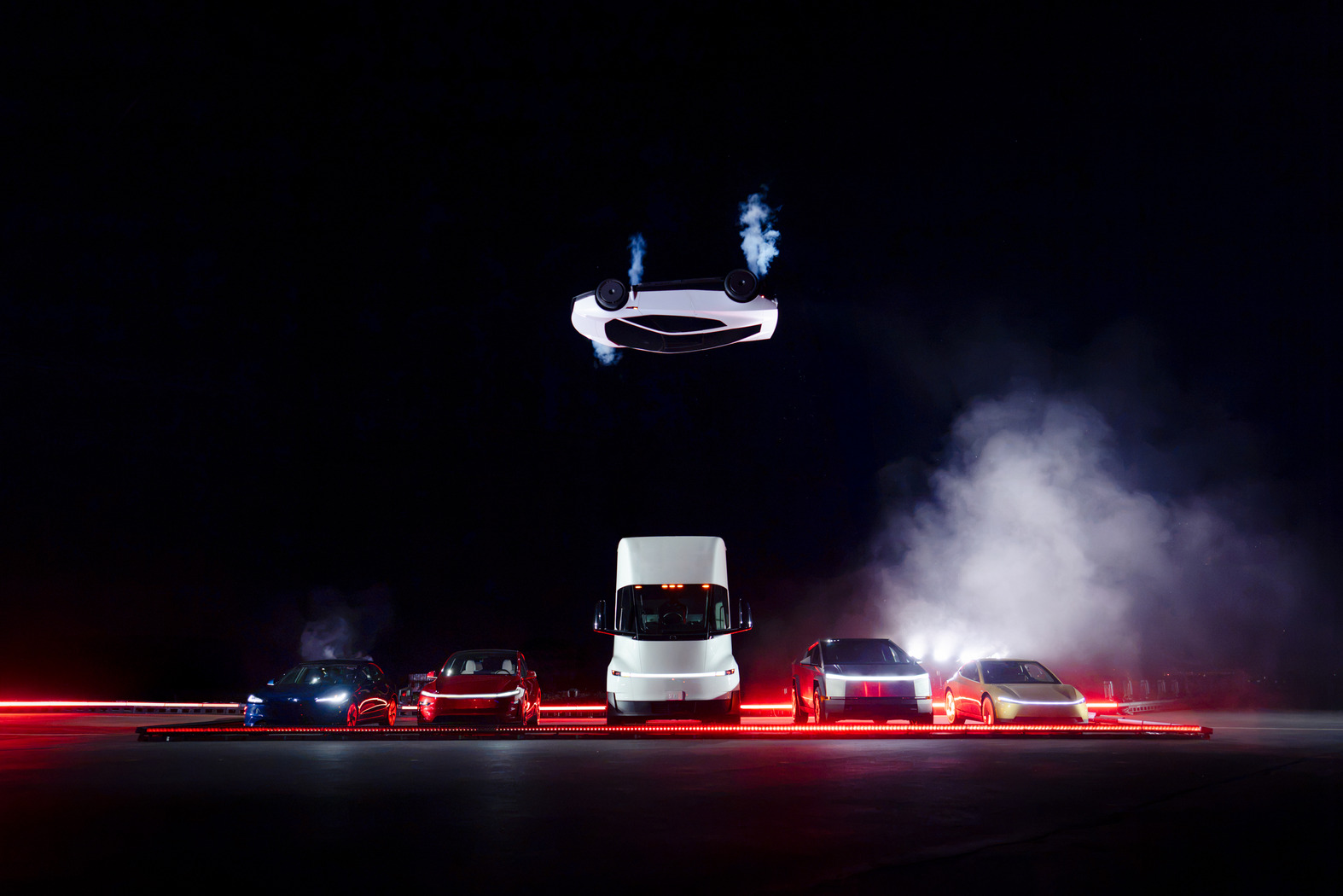
Tesla (NASDAQ: TSLA) reported its earnings for the third quarter of 2026, marking a reasonable performance on the various financial metrics. Tesla still plans to hold a call that will field investor questions at 5:30 p.m. ET, 4:30 p.m. CT.
Here’s where Earnings came in:
- Total Revenues: $28.046 reported vs. $28.34B expected
- Non-GAAP EPS: $0.48 reported vs. $0.45 expected
- Operating Margin: 2.6 % reported vs. 2.5% expected
- Operating Income: $718M reported vs. $721M expected
- Free Cash Flow: $1.531B reported vs. ~-$4.51B expected
Tesla $TSLA Earnings Results:
Revenues: $28.046B
Non-GAAP EPS: $0.48
Operating Margin: 2.6%
Operating Income: $718M
FCF: $1.531B— TESLARATI (@Teslarati) October 21, 2026
Major Takeaways
Full Self-Driving (Supervised)
“FSD (Supervised)⁴ attach rate continued to grow, reaching over 75% of new vehicle deliveries in North America – our most mature market – a nearly twenty percentage point sequential increase. We believe that FSD is driving demand in markets where it is available, and we continue to work with regulators to get it approved in other markets.”
Tesla Semi
“We began volume production of Tesla Semi, our Class 8 heavy-duty truck. The top variant can go 500 miles at full 82,000 lbs gross combination weight while achieving an efficiency of 1.7 kWh/mile. That efficiency allows the Tesla Semi to use a third of the energy used by a comparable diesel truck to haul the same payload. In a transportation market where energy is one of the largest components of total cost per mile, this will provide a meaningful advantage to Tesla Semi operators.”
SI Compute
“We plan to reach 400 MW of SI training compute by the end of the year, supporting the development of both vehicle and humanoid robot autonomy software. Additionally, we continued construction for the Austin Fab, where we plan to start commissioning equipment in 2027.”
Robotaxi
“We began deployment of Cybercab into our Robotaxi fleet in Austin. We reached nearly two million cumulative unsupervised miles for our Robotaxi service as of the end of the quarter. Operating hours in Austin are now 6am to midnight, and we expect to reduce wait times via increased fleet supply and improvement of Robotaxi orchestration algorithms. Grok is available in Cybercab with access to Grok Bot and Connectors, which allows users to manage their inbox, calendars, files, chats and tasks – all hands free via voice command – making Cybercab a mode of transport, a productivity space and, with our entertainment options, a second living room.”
Interested in ordering a Tesla? Use my referral code for three free months of Full Self-Driving (Supervised) here.
Tesla (NASDAQ: TSLA) reports its earnings for Q3 today. Here’s what to expect, as the company will reveal its balance sheet after the market closes on Wednesday.
Tesla already reported deliveries just after Q3 ended, and it demolished Wall Street consensus estimates of roughly 462,000 vehicles. Tesla delivered 486,532 cars in the third quarter, which was a big beat, but was down 2.1 percent from the same quarter last year. Energy storage deployments were 13.7 GWh, up year-over-year.
Tesla showrooms picked clean ahead of Q3 end as demand looks strong
For the quarter, analysts have already compiled their predictions for what Tesla will report this afternoon:
- Total Revenues: $28.34B
- Non-GAAP EPS: $0.43
- Operating Margin: 2.5%
- Operating Income: $721M
- Free Cash Flow: ~-$4.51B
Here are a few things we are looking forward to hearing about on the call:
Automotive Gross Margin and Overall Profitability
This was 16.3 percent in Q2, down from 19.2 percent in Q1, and was impacted by warranty charges and some fading regulatory credits. Consensus implies overall gross margin near 18 percent, but a miss here would potentially reinforce concerns about pricing pressure on its vehicles.
Pay attention to energy storage margins as well, especially since Tesla missed GWh expectations, although it was still a strong quarter.
Robotaxi/Cybercab, Unsupervised FSD, and Optimus Progress
The Say questions from retail investors usually focus on these types of projects, and this quarter is no different. Scaling the Cybercab fleet beyond Austin amid the open NHTSA safety review, timeline for Unsupervised FSD in customer cars, Robotaxi unit economics, and Optimus cost per unit plus when it could start generating revenue, are all things to be looking for.
Any concrete timelines or regulatory path details will likely move the stock more than the near-term numbers. SpaceX merger speculation, which was detailed during SpaceX’s earnings call last night, may also surface, although the key details were shared last night.
Elon Musk just confirmed the Tesla and SpaceX merger step everyone was waiting for
Say Investor Questions
- How does the Cybercab fleet scale past Austin, and what’s the regulatory path outside Texas given NHTSA’s open safety review?
- When can we anticipate FSD unsupervised in customer cars?
- When will the CyberCab be available for customer purchase/ownership?
- What’s the unit economics per paid robotaxi mile, and how does it compare to the thirty-cent target?
- Tesla has acknowledged that HW3 vehicles cannot support unsupervised FSD. When will owners know whether they can upgrade their hardware for free, and when will Tesla provide a clear plan?
The full Earnings Call will be streamed this evening after market close around 5 p.m. this evening.

Tesla has a Cybercab problem nobody saw coming

How SpaceX Is raising Raptor’s sea-level thrust while holding engine mass steady


