Investor's Corner
Tesla shareholder sells home to load up on stock, and it’s already paying off

Tesla shareholders are a rare breed, sometimes putting almost everything, and we mean everything, on the line in hopes of striking it big and making major waves in their own portfolios.
Jason DeBolt is one of those shareholders.
DeBolt, a shareholder since March 26, 2013, sold his home and bought around 10,000 shares. The additional 10,000 shares supplemented the 38,000 he already owned.
He began buying the 10,000 additional shares slowly over the last several weeks on margin, or using a loan from a brokerage to buy more shares, in the $128-139 range before the company’s most recent Earnings Call.
As of Thursday, he was up $250,000 on his most recent investment using funds from the sale of his home. “Closed out margin today with house proceeds. Have cash. Feeling good,” he Tweeted.
Sold my house and bought around 10,000 $TSLA shares. Own 48,000 shares now.
Purchased all shares slowly over last few weeks before earnings on margin in $128-139 range. Up $250k on these shares already. Closed out margin today with house proceeds. Have cash. Feeling good.$TSLA pic.twitter.com/aIW7m8d9FJ
— Jason DeBolt ⚡️ (@jasondebolt) January 26, 2023
In an exclusive interview with Teslarati, DeBolt shared his inspiration for the bold move. He noted that Tesla’s attractive stock price was what inspired him.
“Mainly, the attractive Tesla stock price is what drove me,” DeBolt detailed. “It was just too cheap to ignore. Tesla’s stock price had dropped 76 percent from an all-time high of $415 to $101 in a little over a year. During this period, Tesla grew revenue by 51 percent, doubled its net income, rolled out FSD to tens of thousands of people, and began ramping up Megapack production at Lathrop.”
The developments Tesla made over the past year were too good to ignore for DeBolt, even as some speculated that CEO Elon Musk’s acquisition of Twitter had caused the spiraling of the stock price.
“Many Tesla investors blamed Elon’s behavior for having a role in the drop, but I was trying to find a way to get cash to buy more shares. Selling my house was the obvious answer,” DeBolt said. I didn’t wait to receive the proceeds from my house sale and used a margin loan to accumulate 9,500 Tesla shares before earnings, resulting in a $400,000 gain two days after Tesla earnings on those shares alone. I currently hold 48,000 Tesla shares.”
His investments enabled him to retire from his day job as a software engineer on January 7th, 2021, at the age of 39.
DeBolt’s journey with Tesla shares began long before that. DeBolt has supported Tesla since he saw the Roadster in 2009 and the early Model S prototype at the San Mateo Maker Faire.
“I ordered a Model S in 2011 and took delivery in 2013. I purchased thousands of shares for about $2 a share after seeing the Fremont factory and driving my Model S for the first time,” DeBolt said. “I continued buying shares when nobody wanted the stock. It was obvious to me that Tesla was going to disrupt the entire automotive and oil industries back then because EVs are fundamentally superior to gas vehicles in every way, and there were no serious competitors to Tesla back then. This is true today as well.”
After selling his home, DeBolt rented a new place near the beach in Los Angeles, California.
Today I’m retiring from the corporate world at age 39.
Not selling any shares for the foreseeable future. $TSLA pic.twitter.com/wCDZJlPdoX
— Jason DeBolt ⚡️ (@jasondebolt) January 7, 2021
“There’s a bit more freedom. The last two years of retirement have been amazing. Still, I’m starting to look for something to build and do with my time, so I’m exploring areas such as machine learning, finance, and philosophy in addition to my ongoing Tesla research. My life is pretty dope, and I’m doing exactly what I want to be doing. I try to stay physically fit. I’m quite fortunate.”
Disclosure: Johnna is a $TSLA shareholder and believes in Tesla’s mission.
Your feedback is welcome. If you have any comments or concerns or see a typo, you can email me at johnna@teslarati.com. You can also reach me on Twitter at @JohnnaCrider1.
Teslarati is now on TikTok. Follow us for interactive news & more. Teslarati is now on TikTok. Follow us for interactive news & more. You can also follow Teslarati on LinkedIn, Twitter, Instagram, and Facebook.


Investor's Corner
Tesla unfolded its first European “folding Supercharger”
Tesla’s folding Supercharger just arrived in Europe and it changes how fast charging expands.

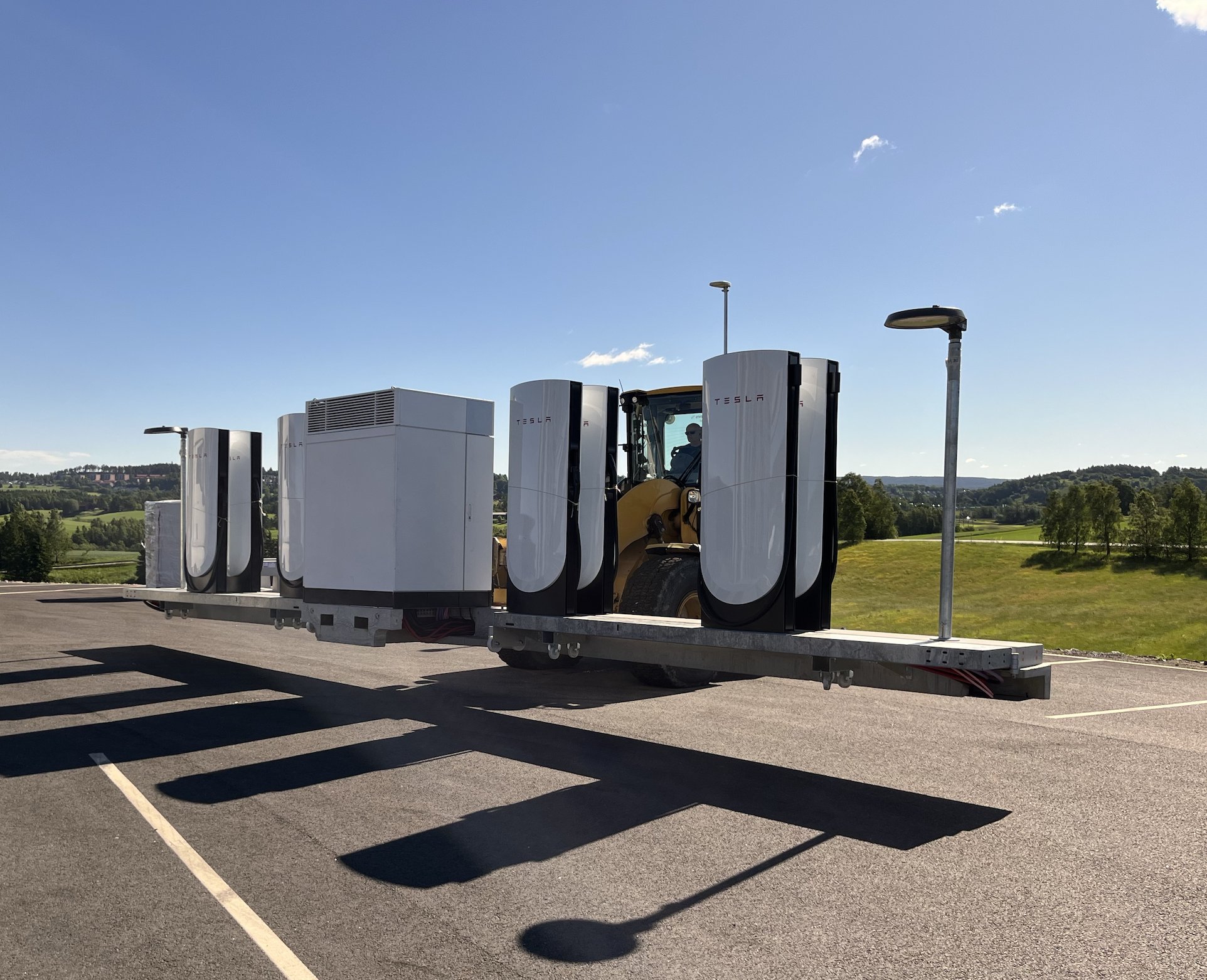
Tesla’s Folding Unit Supercharger has officially landed in Europe, with the company teasing a new installation in its effort for a broader rollout targeting major motorway rest stops across the European continent in Q3 2026. The arrival marks a notable shift in how Tesla is thinking about network expansion, moving from hardware performance alone to engineering the logistics chain itself.
While Tesla did not reveal the exact location for the new folding Supercharger in Europe, the photo shared on X heavily suggests that this maybe somewhere in Norway. Historically, whenever Tesla rolls out an entirely new infrastructure architecture in Europe, whether it was the original Supercharger stalls years ago or these brand-new modular V4 “Folding Units”, Norway is almost always the designated launch pad because of its unmatched EV adoption rate and supportive infrastructure
The Folding Unit, introduced in March 2026, is a factory pre-assembled V4 charging station built on an industrial hinge system mounted to a heavy-duty concrete base. The entire assembly arrives on site ready to unfold and connect. Tesla confirmed the units feature telescopic light poles specifically designed for easy transportation and fast on-site deployment, a detail that signals how carefully the logistics chain has been engineered alongside the hardware itself. The design allows 33% more stalls per delivery truck, cuts installation time roughly in half, and reduces overall deployment costs by more than 20% compared to traditional installations.
Tesla’s newest “Folding V4 Superchargers” are key to its most aggressive expansion yet
Tesla also noted telescopic light poles which provide benefits over traditional Supercharger installations that require fixed-height poles that are awkward to ship, slow to position on site, and often require separate crews and equipment to erect before charging hardware can even be staged. By engineering poles that compress for transit and extend on arrival, Tesla has removed one of the quieter bottlenecks in the physical deployment process. Every hour saved on a light pole installation is an hour redirected toward getting stalls energized. At scale, across dozens of new sites per quarter, those hours add up to a meaningful acceleration in how quickly a location goes from approved permit to serving its first customer.
Each Folding Unit pairs a single V4 power cabinet with eight charging posts. The V4 cabinet delivers up to 500 kW per stall for passenger vehicles and up to 1.2 MW for the Tesla Semi, supporting twice the stalls per cabinet at three times the power density of its predecessor. Longer cables make every new station immediately usable by non-Tesla vehicles, a priority as Tesla continues opening its network to Ford, GM, Rivian, Hyundai, Stellantis, and others.
As Teslarati reported when the Folding Unit was first unveiled, Tesla’s Gigafactory New York produced its final V3 Supercharger cabinet in March 2026 after more than seven years and 15,000 units, completing a full pivot to V4 production. The European arrival of the folding design is the next chapter in that transition.
Faster and cheaper deployment means Tesla can justify building in markets and corridors that were previously too expensive to serve, filling the coverage gaps that have slowed EV adoption outside major urban centers.
First Folding Unit Superchargers in Europe 🇪🇺 https://t.co/KNfYWJukkL pic.twitter.com/YR1udIpH1i
— Tesla Charging (@TeslaCharging) June 10, 2026

Tesla Full Self-Driving (Supervised) is currently listed as a Level 2 suite in terms of its passenger cars. As its Robotaxi platform continues to move quickly, it has been recognized as a Level 4 ride-sharing program by the State of Texas, as Tesla recently self-certified itself.
However, a Wall Street analyst is arguing that Tesla (NASDAQ: TSLA) has effectively achieved Level 4 autonomy in most conditions in all of its vehicles, drawing on personal experience and data released by the company.
Alex Potter of Piper Sandler said in a note to investors on Wednesday that “Tesla has solved the self-driving puzzle,” pointing to decisions to offer insurance discounts for FSD-enabled policies as a signal of confidence, which is backed up by stellar safety records compared to human driving.
Investing.com initially reported on Potter’s new note.
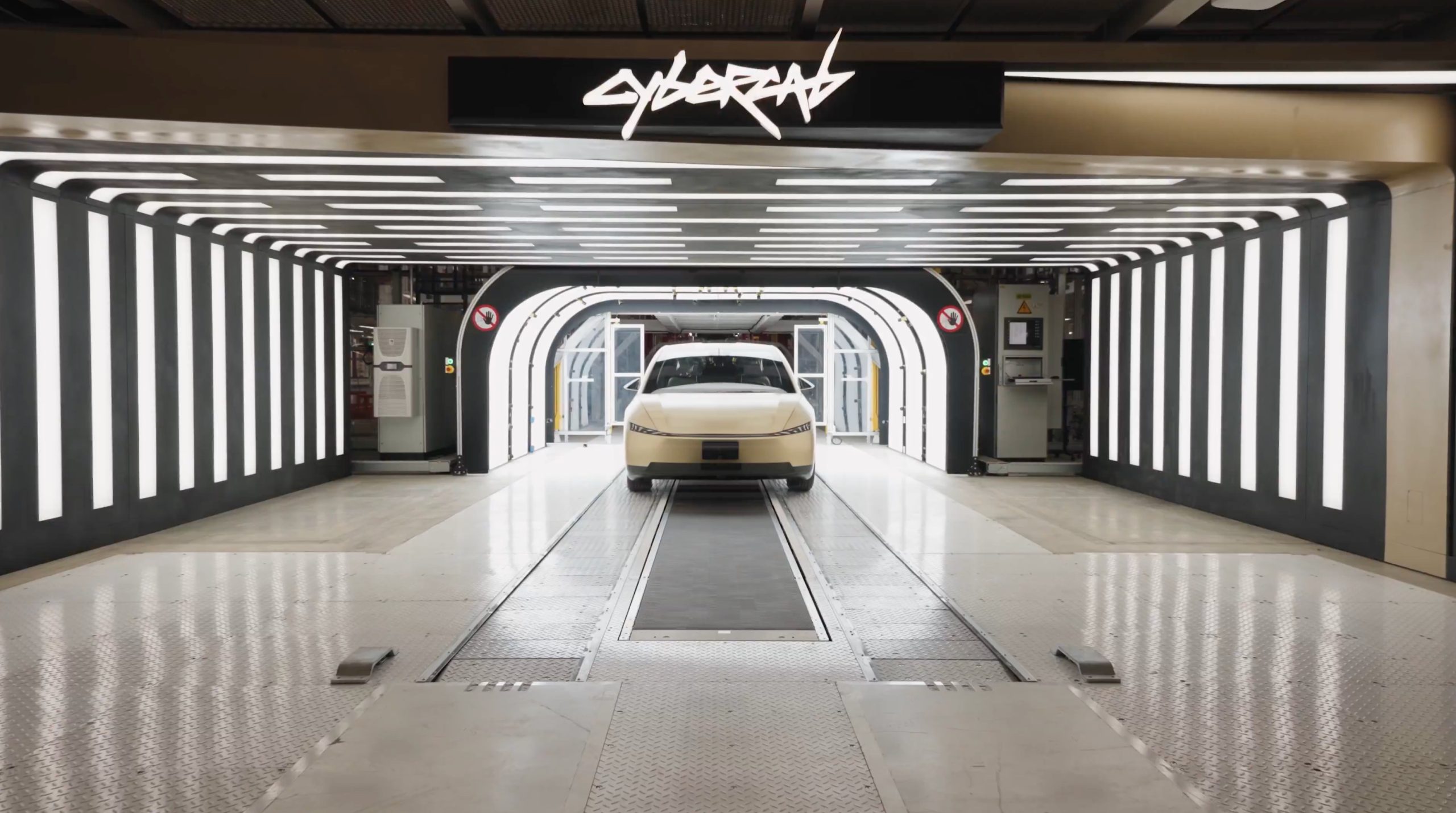
Additionally, Potter looks at the recent start of Cybercab production at Giga Texas as a potential indication that Tesla is ready to offer some level of unsupervised driving at least in the near future. The Cybercab has no steering wheel or pedals, completely eliminating the ability for human input.
He also sees Tesla’s allocation of “several hundred million USD (if not $1B+)” as confidence internally, seeing as it would be tough to set aside that amount of capital toward a project that the company does not see as relatively near-term.
Forward thinking, especially as Cybercab has no human controls, it would make sense that Tesla is at least close to self-driving. How close is another question.
Tesla has routinely teased that unsupervised FSD is close, but there are still a lot of things it feels as if the company has to roll out some more capability, including unsupervised parking features, known as “Banish,” better operation with regional self-driving performance, and other improvements.
That is not to say that Tesla FSD is super impressive already. It has already completed coast-to-coast drives across the United States and Canada, it routinely takes the stress out of driving for most people, and it has proven through Tesla Safety Reports that it is safer and involved in accidents less frequently than humans.
🚨 These are the first-ever FSD safety statistics out of the Netherlands, showing it was over 3.5x safer than human driving on Dutch roads.
The most recent numbers out of Tesla for North America show:
-Over 5.5 million miles between accidents for Teslas using FSD
-660k miles… https://t.co/XKlRzgSGEh pic.twitter.com/HX6kzh0ZKc— TESLARATI (@Teslarati) June 9, 2026
Even Potter believes it is capable, as he used it to go from Missoula, Montana, to Minneapolis, Minnesota, back in April.
“There’s no substitute for personal experience,” he wrote.
Investor's Corner
Tesla just did something in South Korea that no foreign carmaker has ever done
Tesla’s Model Y just became South Korea’s best-selling car, beating every domestic model in May.
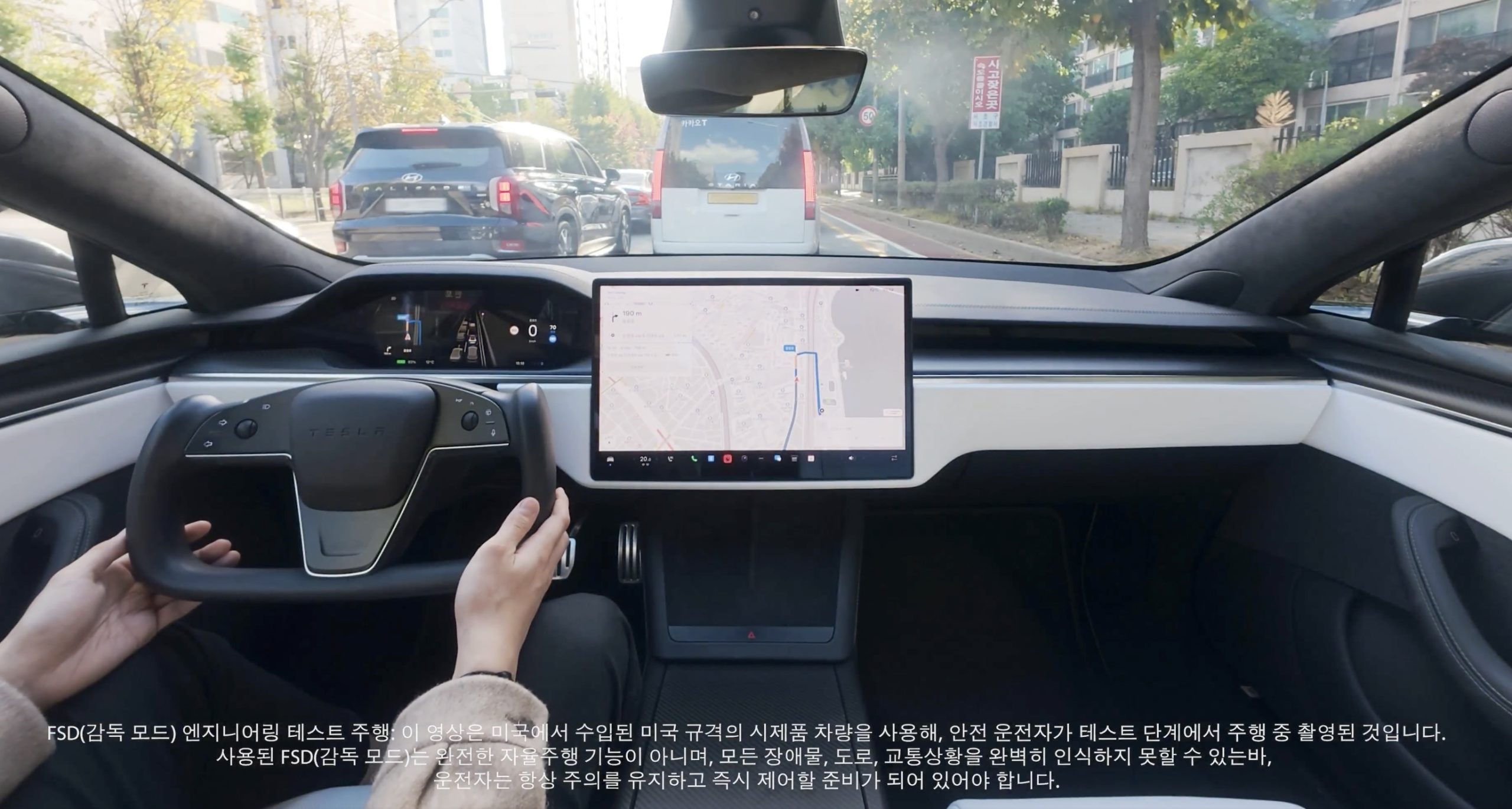
Tesla did something last month that no foreign car has ever done in South Korea by outselling every vehicle in the country, domestic or imported, finishing the month with Model Y as the single best-selling car across the entire Korean market. According to data from the Korea Automobile Importers and Distributors Association released on June 4, the Model Y recorded 8,762 units sold in May, pushing the Kia Sorento into second place at 7,836 units and the Hyundai Grandeur into third at 5,183 units. It is the first time an imported vehicle has outsold every domestic model on a single-month basis.
Tesla imported 10,866 cars into South Korea in May, making it the top import brand for the fourth consecutive month. BMW followed at 6,555 units, less than two-thirds of Tesla’s total, while BYD registered just 1,032 units. The combined domestic sales of GM Korea, Renault Korea, and KG Mobility last month totaled just 7,019 units, meaning a single Tesla model outsold three Korean automakers combined.
Tesla FSD earns high praise in South Korea’s real-world autonomous driving test
South Korea has historically been one of the hardest markets for foreign automakers to crack. Hyundai and Kia together control close to 70% of the overall market and carry deep consumer loyalty built over decades. Tesla’s path into this market was an uphill battle due to high import duties, limited service infrastructure, and early skepticism about charging networks. In 2024, the Model Y was the best-selling imported car in South Korea with 18,717 units for the full year. By 2025, after the Juniper refresh, it cleared 50,000 units and took the top spot among all EVs.
Year to date, Tesla has a 250.8% increase in the country over the same period last year, and now holds a 30.8% share of the entire imported car segment for 2026. EVs as a category represented 48.6% of all imported passenger car registrations in May. As Teslarati has reported, the Juniper refresh brought meaningful improvements to range, interior quality, and ride refinement that addressed the most common criticisms of earlier Model Y versions. Those upgrades appear to be resonating in markets like South Korea where buyers compare Tesla directly against high end domestic competitors.

Tesla unfolded its first European “folding Supercharger”

Tesla stuns with another FSD approval in Europe, its second in two days


