Investor's Corner
Tesla stock jumps and some think it’s because of this Elon Musk move

Tesla stock jumped over six percent on Monday morning, continuing gains that have the electric vehicle maker’s stock up over 19 percent so far in the past month.
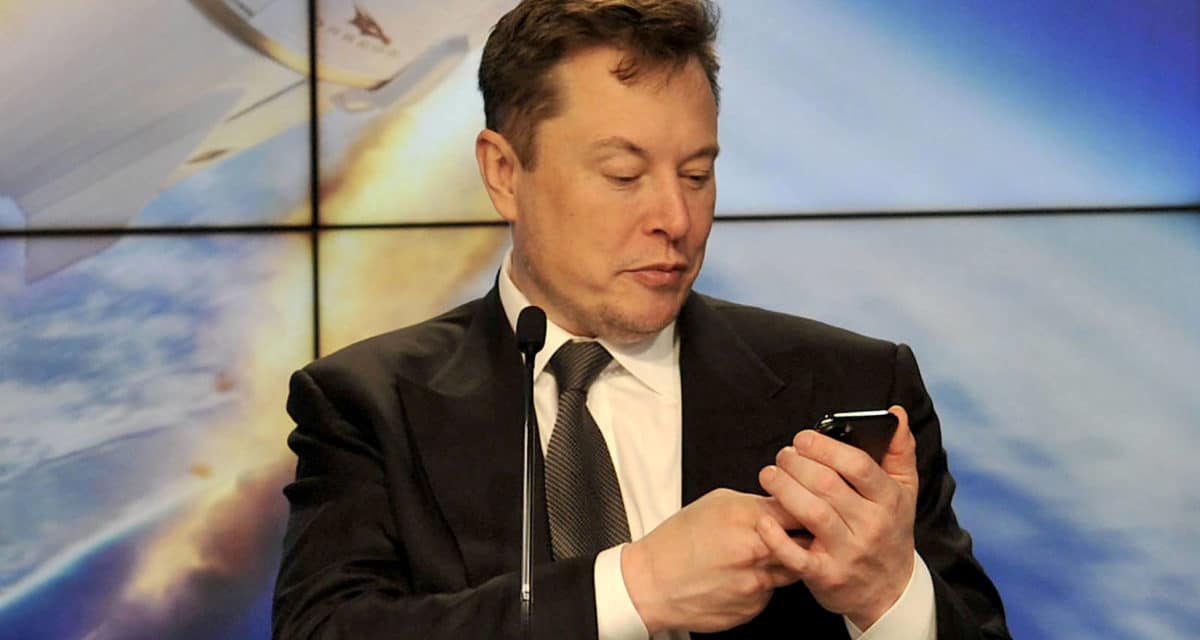
There is speculation as to why Tesla shares continue to climb into this week, and some believe it is because CEO Elon Musk followed Uber founder Travis Kalanick just over one month before the company is set to unveil its Robotaxi on August 8.
Kalanick is no longer affiliated with Uber as he departed the company in 2017. However, he has an established and proven track record of developing a ride-sharing platform, which is what Tesla eventually wants to turn its Robotaxi into based on past revelations on an app and other quotes made by Elon Musk.
Tesla’s Robotaxi unveiling a ‘historical moment’ in story, catalyst to $1T market cap: Wedbush
TESLA ADDS TO GAINS AS MUSK FOLLOWS KALANICK
Tesla is adding to gains after Elon Musk started following Uber founder Travis Kalanick on X. Kalanick is no longer involved with Uber, but speculators are beating on if this has anything to do with Tesla’s robo-taxi…
— *Walter Bloomberg (@DeItaone) July 1, 2024
However, while this is certainly something that is worth speculation, there are other reasons Tesla shares are gaining on Monday.
According to The Motley Fool, the gains are due to the Chinese EV market showing year-over-year growth. EV makers like BYD, who routinely has delivery figures in line with Tesla’s, reported 426,000 deliveries in Q2, which some believe could put Tesla somewhere around that number for the quarter.
Analysts are definitely torn between Tesla’s quarter and Wall Street’s expectation of a decrease from Q2 of last year but an increase from Q1 2024.
Analyst consensus puts expectations at 438,019 deliveries, which would put Tesla at less than 1 million vehicles for the first half of the year, as many hoped it would reach 2 million vehicles for the first time in its history.
However, Tesla is in between two growth waves as its next-generation platform and its Robotaxi will likely propel the company to more growth in the future. Even still, Tesla needs to execute and stay close to its projected timelines for these projects, something it has struggled to do in the past.
I’d love to hear from you! If you have any comments, concerns, or questions, please email me at joey@teslarati.com. You can also reach me on Twitter @KlenderJoey, or if you have news tips, you can email us at tips@teslarati.com.


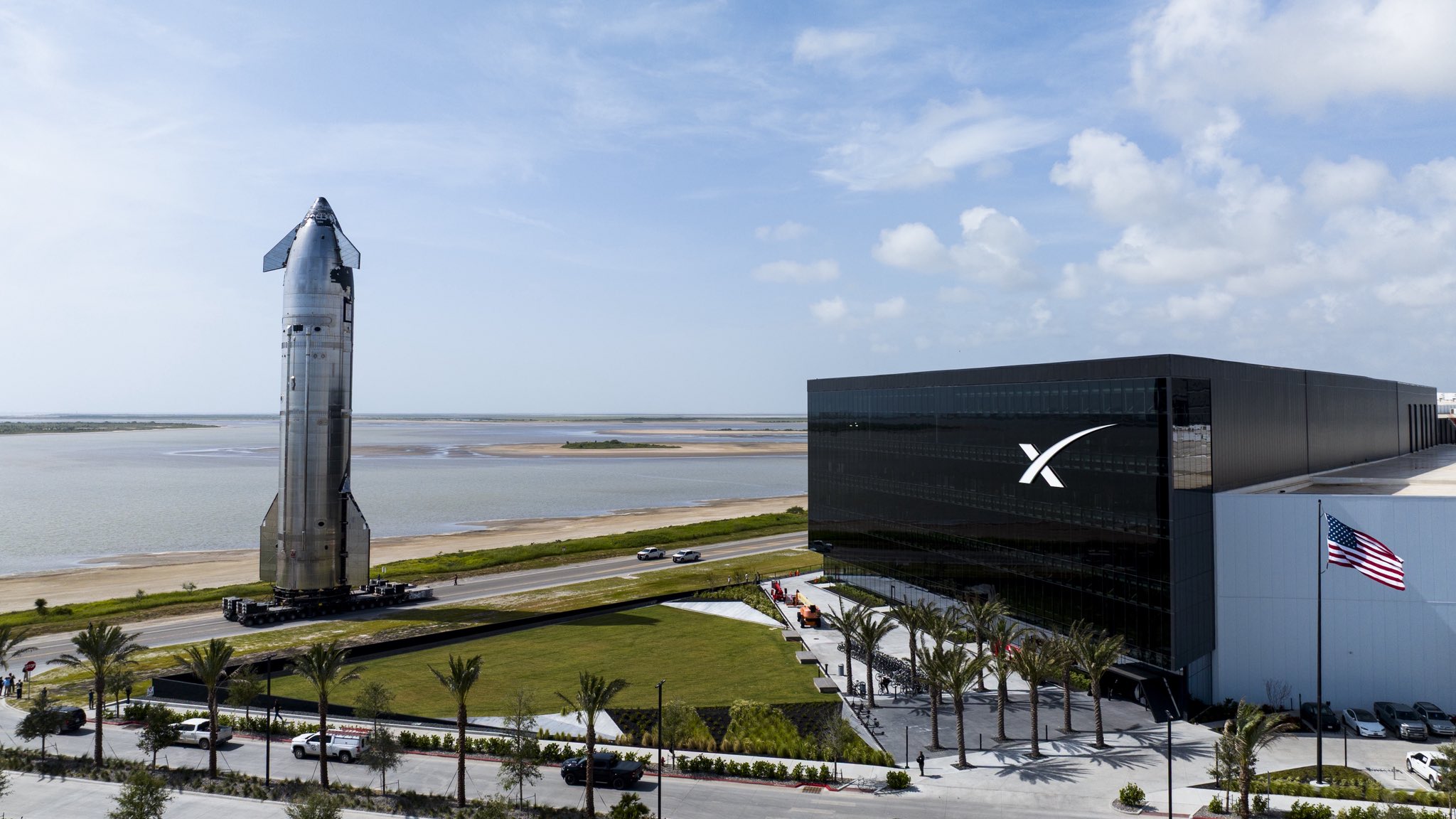
SpaceX announced today that it commenced its first-ever public bond offering, marking a significant step in the newly public company’s capital markets strategy.
The company announced an offering of senior unsecured notes expected to raise at least $20 billion.
The move comes just a short time after SpaceX completed one of the largest initial public offerings in history. In mid-June, the company priced shares at $135 and raised more than $85 billion, propelling founder Elon Musk’s net worth past the trillion-dollar mark and giving the firm substantial liquidity.
🚨 SpaceX has announced its inaugural offering of senior unsecured notes.
The net proceeds will be used to repay outstanding loans under its bridge loan facility in full.
This inaugural debt offering represents a financing milestone for SpaceX, which previously depended… pic.twitter.com/pcOZuVbTRv
— TESLARATI (@Teslarati) June 22, 2026
According to the company’s SEC filing, the net proceeds from the notes will be used primarily to repay in full the outstanding borrowings under its existing bridge loan facility, cover related fees and expenses, and fund general corporate purposes. The offering is being conducted under Rule 144A, as well as Regulation S, targeting qualified institutional buyers and non-U.S. investors. Notes will be unsecured obligations ranking equally with other unsubordinated debt.
The $20 billion bridge loan was used to refinance approximately $17.5 billion in higher-cost “junk” debt tied to X and xAI. SpaceX had merged with xAI in February 2026 in an all-stock deal. The bridge facility, which matures in September 2027, had represented the bulk of SpaceX’s long-term debt.
SpaceX officially acquires xAI, merging rockets with AI expertise
In connection with the bond launch, SpaceX disclosed it held approximately $100.8 billion in cash and cash equivalents as of June 19. Investor calls began on the announcement date, with pricing and launch expected shortly thereafter. Rating agencies have assigned investment-grade ratings to the proposed bonds, reflecting confidence in SpaceX’s dominant position in commercial launches and the growth trajectory of its Starlink internet offering.
The debt raise also allows SpaceX to optimize its balance sheet by replacing short-term, higher-cost bridge financing with longer-date, lower-cost fixed-income securities. This provides greater financial flexibility to support capital-intensive initiatives, including the development of Starship, the expansion of the Starlink constellation, and the integration of AI capabilities following the xAI combination.
SpaceX shares (NASDAQ: SPCX) fell sharply on the news, dropping over 16 percent overall on the market on Monday. The stock had surged initially after debuting but pulled back amid profit-taking and broader market dynamics.
Overall, the bond offering underscores SpaceX’s transition to a mature public company with access to diverse funding sources. It positions the firm to pursue its long-term vision of multiplanetary expansion and AI infrastructure, while maintaining a disciplined approach to its capital structure in a high-growth but capital-heavy industry.
Investor's Corner
SpaceX is launching a secret spacecraft that could change how things are made in space
SpaceX’s secret disk-shaped Starfall capsule is targeting a market no reentry vehicle has cracked.

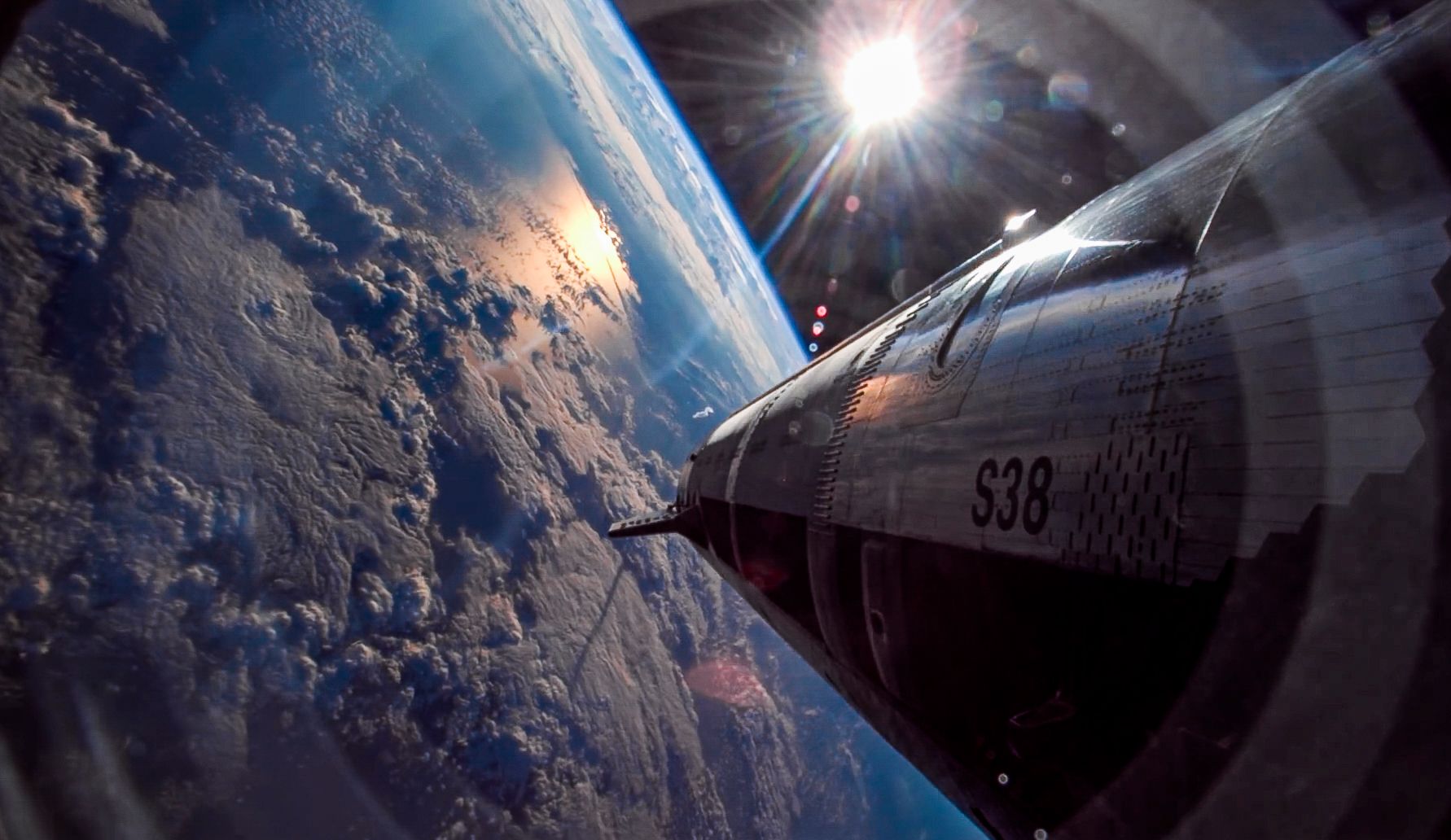
SpaceX is targeting Tuesday, June 23 for the first flight of Starfall, a reentry capsule the company has developed almost entirely in private. The Falcon 9 launch window opens at 6:43 a.m. ET from Space Launch Complex 40 at Cape Canaveral Space Force Station, with a backup window available the same time on June 24. SpaceX has made no public announcement about the vehicle, only providing launch details. Everything known about it has come through FAA and FCC regulatory filings.
What makes Starfall different starts with its shape. Rather than the traditional cone used by Dragon and every other cargo return capsule in operation, Starfall is a flat disk that measures roughly 10.2 feet (3.1 meters) wide and just 2.5 feet (0.75 meters) tall, and weighing 4,630 pounds (2,100 kg) and capable of returning up to 2,200 pounds (1,000 kilograms) of payload from orbit. The disk geometry maximizes structural efficiency and payload volume relative to mass, and the heat shield mechanically jettisons just before splashdown, allowing recovery teams to retrieve both the capsule and the shield separately from the Pacific Ocean.
The difference with Starfall from existing competitors, such as Varda Space Industries, which has largely built the orbital manufacturing market and returns heavy payloads per flight is that Starfall’s specification is roughly 30 times more per mission, and is designed to be mass-produced and launched on either Falcon 9 or Starship. That combination of volume and launch access is something no standalone startup can replicate, and it puts SpaceX in direct competition with the companies that currently pay it to reach orbit.
SpaceX to launch military missile tracking satellites through new Space Force contract
The intended market is orbital manufacturing: pharmaceuticals, protein crystals, semiconductors, and advanced optical fiber that physically cannot be produced in the presence of gravity. FAA documents describe Starfall’s long-term purpose as building a “self-sustaining commercial in-space manufacturing market” and as a potential successor to the industrial capabilities of the International Space Station, which is set to retire in the late 2020s. Military rapid global cargo delivery is a parallel application under active discussion with the Pentagon.
The reason some industries seek manufacturing in space comes down to gravity. On Earth, gravity causes materials to settle, separate, and deform during production. In microgravity, those constraints disappear.
SpaceX’s already controls launch access, which means it currently functions as the landlord for every competitor in the orbital manufacturing return space. Starfall converts that landlord position into vertical ownership, and it would no longer just carry other companies’ capsules to orbit, but rather operate the capsule, own the return logistics, and capture the service revenue directly. Viewed alongside Starlink, Colossus, and the xAI merger, Starfall fits a consistent pattern: SpaceX identifying infrastructure layers that others depend on and moving to own them outright. Orbital manufacturing return is the next layer on that list.
If Tuesday’s reentry, parachute sequence, and recovery demonstration goes as planned, the second FAA-approved test flight follows. A successful pair of demos would position SpaceX to begin offering Starfall as a commercial service, likely first to pharmaceutical and materials science customers before scaling toward the military and broader manufacturing segments.
Elon Musk
Elon Musk just upped his Tesla stake further fueling SpaceX merger conversation
Elon Musk just collected a $116 billion Tesla payday and the timing is eye-opening
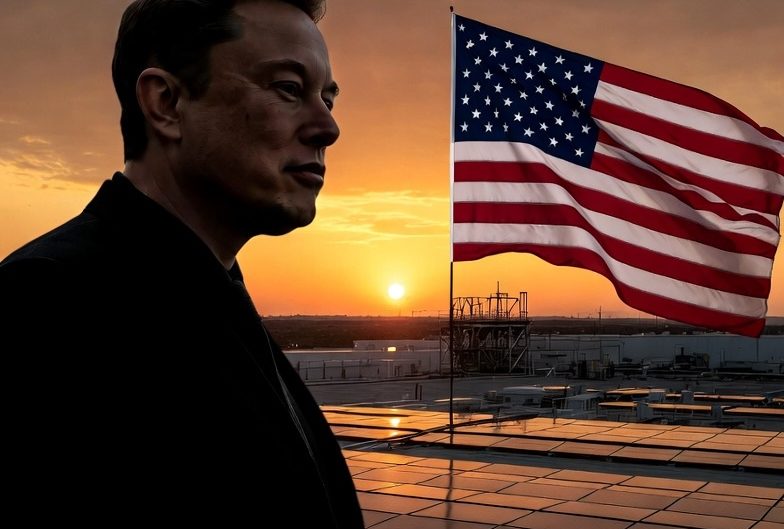
Elon Musk quietly collected one of the largest single-transaction paydays in corporate history on Monday. A Form 4 filed with the SEC on June 17, 2026 disclosed that Musk exercised 303,960,630 Tesla stock options from his 2018 compensation package, with the transaction dated June 16. No shares were sold on the open market.
The numbers are straightforward but striking. Musk exercised the options at a split-adjusted strike price of $23.34, with Tesla closing at $404.66 that day, putting the spread at $381.32 per share and generating roughly $115.9 billion in paper gains in a single transaction. To cover the exercise cost, Tesla withheld 17,531,857 shares through a net share settlement, meaning Musk paid nothing out of pocket.
For perspective, in 2018, Elon Musk’s award was originally approved by Tesla shareholders on March 21, 2018, and structured entirely around performance milestones that many analysts at the time called unreachable. Every tranche eventually vested. The original grant covered 20,264,042 shares at $350.02, which after Tesla’s 5-for-1 split in 2020 and 3-for-1 split in 2022 adjusted to 303,960,630 shares at $23.34. A Delaware court rescinded the award in January 2024, ruling the board was conflicted. As Teslarati reported, Tesla shareholders voted to ratify the package anyway in June 2024 by a wide margin. The Delaware Supreme Court reversed the decision in December 2025, finding full cancellation too extreme, and Tesla’s board signed an Implementation Agreement on April 21, 2026 to formally deliver the shares.
The Tesla and SpaceX merger everyone is talking about is quietly building
The timing and structure of the Form 4 filing carries more weight than a routine stock option exercise typically would. Musk exercised his 2018 Tesla award on June 16, a week into SpaceX completing its IPO and trading publicly, and giving SpaceX a public market valuation and share currency for the first time in the company’s history. A stock-for-stock merger between two companies requires the acquiring entity to have tradeable shares it can offer to the target’s shareholders, and SpaceX now has exactly that. At the same time, Musk just increased his direct Tesla voting power to approximately 20%, giving him greater influence over any shareholder vote that a merger would require. The restricted shares he received cannot be sold until 2033, which removes any near-term incentive to cash out and instead positions this stake as long-term structural collateral in a deal. Additionally, Musk’s two companies are already deeply intertwined through shared semiconductor fabrication at their joint TERAFAB facility in Austin, cross-company supply chain transactions, and Tesla’s $2 billion investment in xAI prior to the SpaceX-xAI merger.
Wedbush analyst Dan Ives has publicly placed the odds of a Tesla and SpaceX combination at 80% to 90% by early 2027. The Implementation Agreement that made Monday’s exercise possible was signed on April 21, 2026, roughly two months before the SpaceX IPO closed. That sequencing, building Musk’s Tesla ownership to its highest point ever immediately before SpaceX gains the public currency needed to acquire it, is either an extraordinary coincidence or a carefully staged foundation for the largest corporate merger in history.

Tesla pushes back against unfair reporting of accidents

Tesla gets another layer of gamification with Free Supercharging on the line


