News
I traded my ICE vehicle for a Tesla Model Y: here’s how it went
After working at Teslarati for six years and covering the EV space nearly every single day (I recently published my 5,000th article on here), I figured it was time to make a switch.

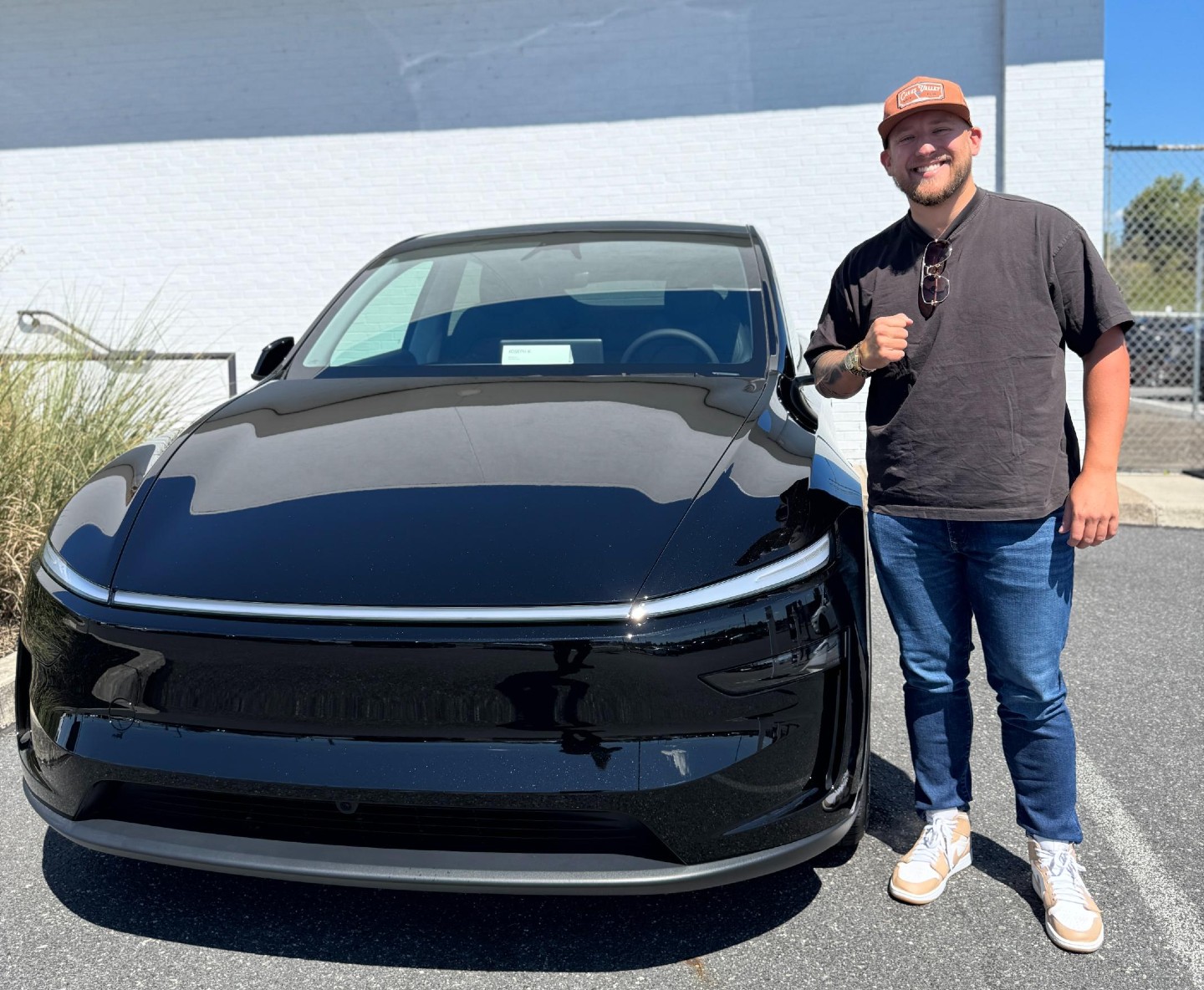
I recently decided, after a variety of things, that I was going to trade in my internal combustion engine (ICE) vehicle for a new Tesla Model Y. It was a long time coming.
After working at Teslarati for six years and covering the EV space nearly every single day (I recently published my 5,000th article on here), I figured it was time to make a switch. Over the past few years, there have been days when I would have been better off with an EV, but my Summer and Winter activities, as well as the price, kept me from making the switch.
Recently, I decided that it was time. My 2021 Ford Bronco Sport had been experiencing a number of issues, none major, but numerous sensor replacements. It was an affordable and fun car, but after fixing the Tire Pressure Monitoring System in the front right tire, an EVAP switch valve in the motor two months ago, and some other things, the Bronco became more of a chore (and a drain on my wallet) than anything.
With the timing of the $7,500 tax credit expiring and a substantial amount of positive equity in my Bronco, I knew it was time. My experience was excellent, but I would like to share some insights with our readers about the entire process, which may also help you make the jump. Others were more of a one-time thing, as they were things customers would only deal with as the tax credit went away.
My Decision
I knew I was going to get a Tesla, and my inability to enjoy a good sedan steered me to a Model Y (no hate toward the Model 3, it’s just not for me). I knew with the weather in Pennsylvania, all-wheel drive was a need, and the price difference between the rear-wheel-drive and AWD configurations of the Y made it a no-brainer.
Plus, I really would like to get this thing out on the beach, something I’ve done every Summer since buying the Bronco with my Fiancè.
🚨 COME WITH ME TO TRADE MY ICE VEHICLE FOR A NEW TESLA MODEL Y 🧵 https://t.co/tqNPOK94rF
— TESLARATI (@Teslarati) August 30, 2025
I actually ordered this car back in June, but ended up canceling the reservation to wait until the end of Summer. I ended up ordering the car I took delivery of on Saturday back on my birthday on August 16.
I was looking for Diamond Black with White Interior, and it was available in Pittsburgh for delivery. However, I really love the team at Tesla Mechanicsburg, so I opted to do a Black on Black Model Y that was a Fremont build, so I could pick it up from the guys up there. The interior color was not a dealbreaker for me. I just wanted to take delivery soon.
I ordered from inventory, which is not something that is possible now. There is no new Model Y inventory within 200 miles of me, a good sign for Tesla but a bad sign if you’re looking to buy something before the quarter ends. Luckily, the IRS is allowing people to enter an agreement for a car, so you could technically build the car of your choice, put a down payment on it, and take delivery after the September 30 cutoff.
Tesla Delivery Day
My appointment was at 12 p.m. and I arrived about ten minutes before. The team greeted me quickly, and I was able to walk right up and see my car with my name on it. It was pretty incredible and a feeling I have not felt in a long time. I’ll be honest, when I bought the Bronco, I never thought I’d own one. When I got one, it felt pretty surreal.
I felt that way yesterday. It was really cool to finally buy a car that I’d only dreamed of owning. It’s not the only car I dream of owning in my lifetime, but it is one I knew I wanted right now. Now that I was showing up to buy it, it really felt surreal.
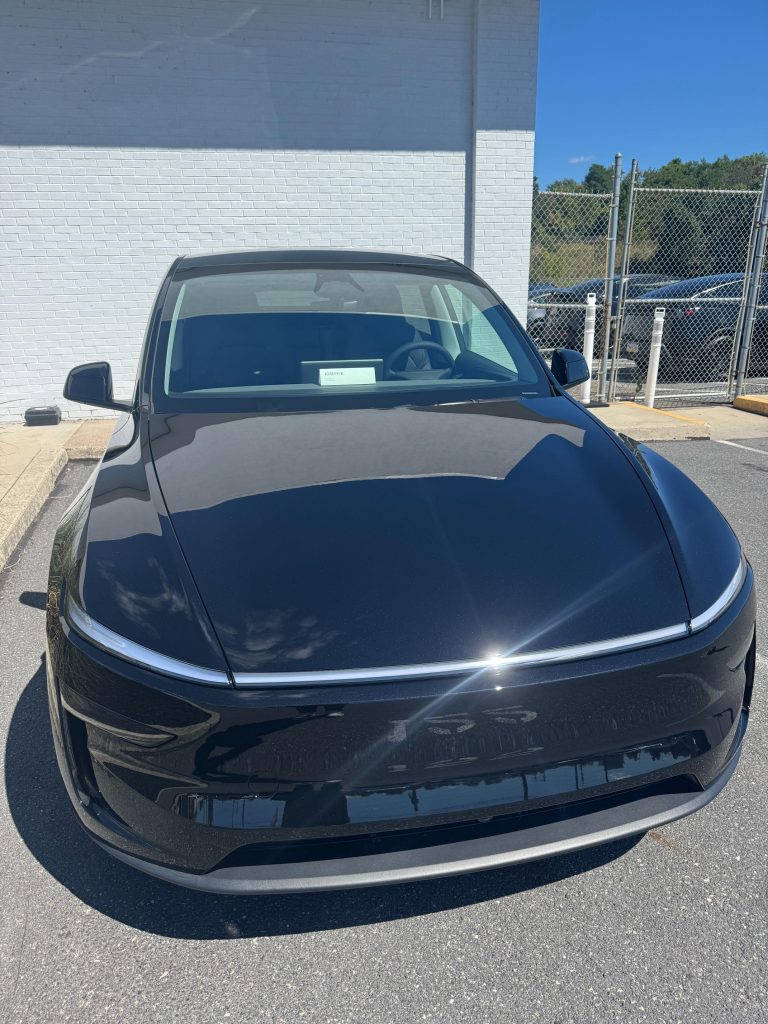
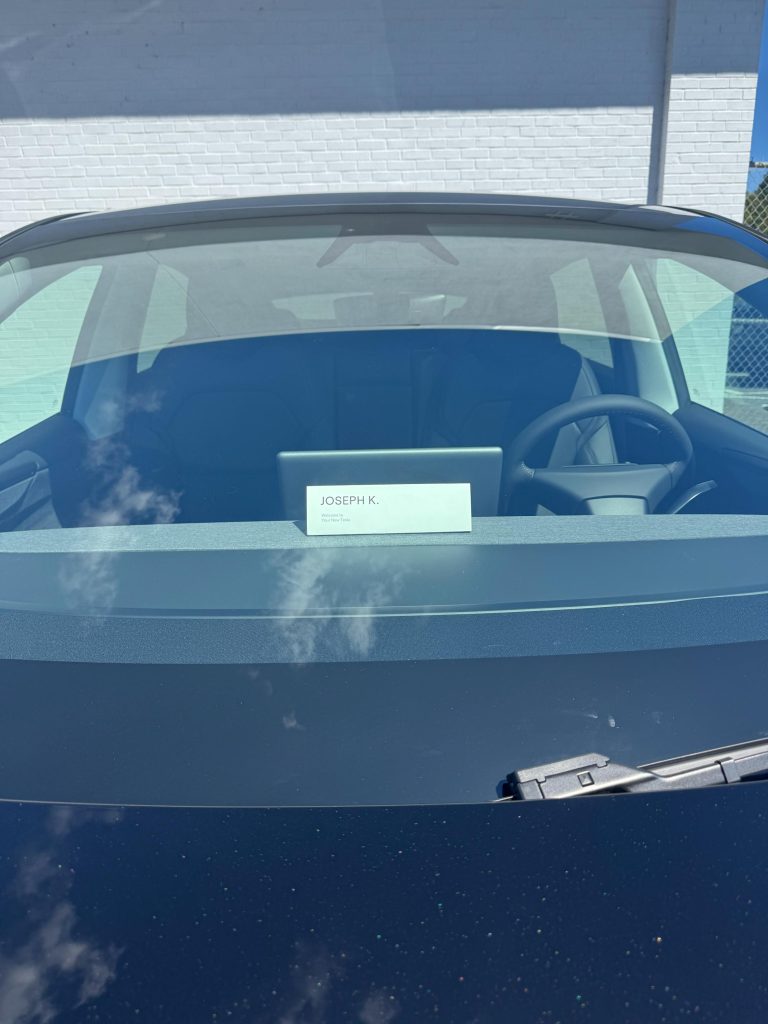
The process was really fast and efficient, and I could have been in and out in ten minutes if I wanted to. However, I hung around and talked to the guys there; they discussed some good accessories I should consider and suggested some tint.
I was on my way.
My First Drive and What to Expect
I stopped by my Fiancè’s work, showed her the new ride, brought her some lunch, and headed home to my pup. So far, I’ve driven about 60 miles, with most of it being done manually and about 10 miles using Full Self-Driving. I’ve enjoyed driving it myself so much as of right now, but I know FSD will come in handy plenty in the coming months.
My brand new ride! Thank you @tesla @elonmusk for building one badass car
— Joey Klender (@KlenderJoey) August 30, 2025
In the future, I plan to explore a wide range of topics as an owner. I do not currently have home charging, which is something that many people believe is a dealbreaker for owning an EV. I have two Superchargers very close to my place, so I’m not too concerned about it.
I have been in touch with my leasing office about installing a charger or chargers for the past few months, which seems like it could happen early next year.
So far, I’m really happy with how everything has worked out.


News
Tesla launches first ‘true’ East Coast V4 Supercharger: here’s what that means
What truly distinguishes this installation from the hundreds of “V4” stalls already scattered across the network? Most existing V4 dispensers, rolled out since 2023, feature welcome upgrades like longer cables, built-in touchscreen displays, integrated credit-card readers for non-Tesla users, and improved ergonomics.
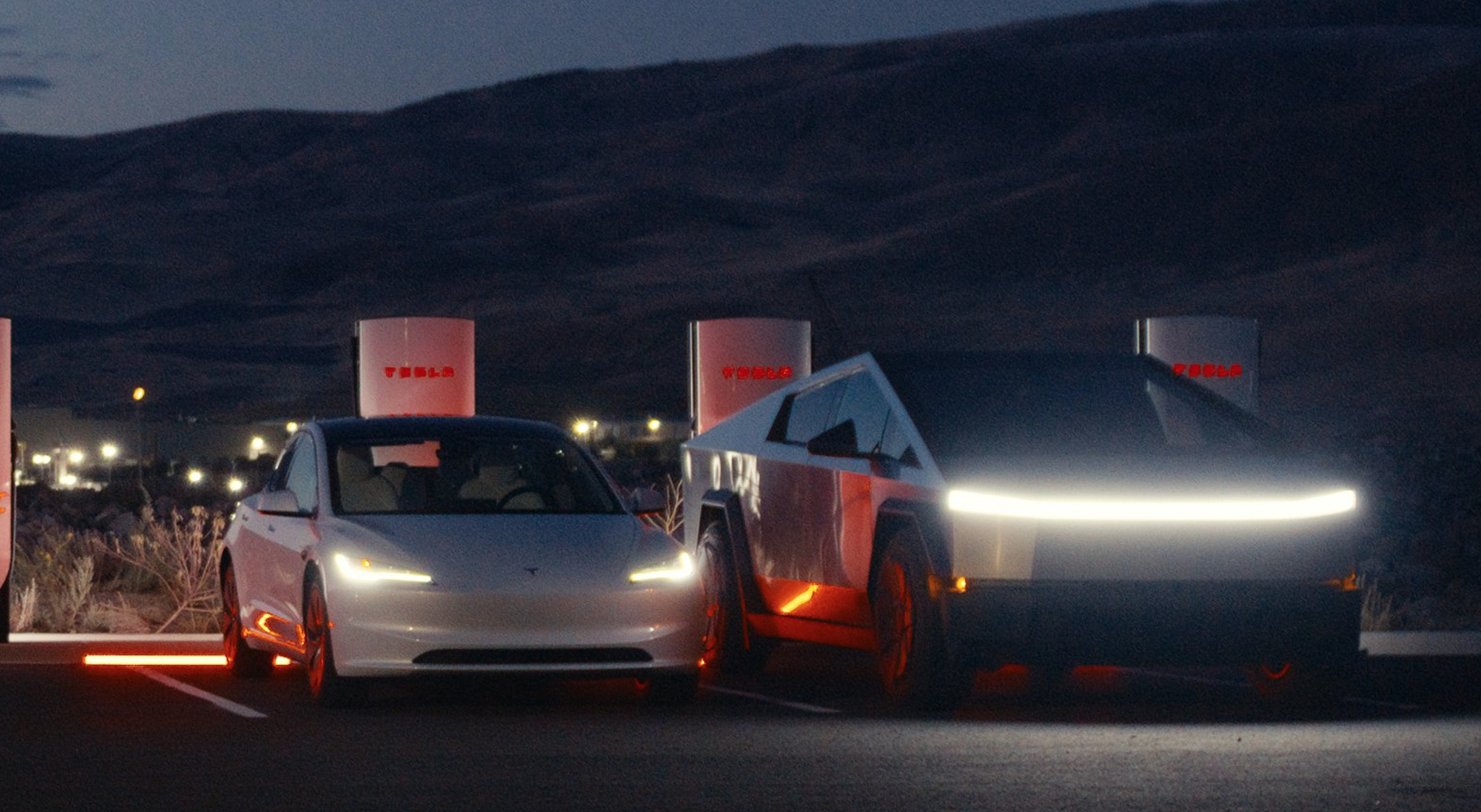
Tesla has launched its first “true” V4 Supercharger on the East Coast, and while that may be sort of confusing, here’s what we mean by that.
Tesla has opened its first true V4 Supercharging station on the East Coast in Kissimmee, Florida, just south of Orlando.
The eight-stall site, powered by an advanced 1.2 MW V4 power cabinet, is capable of delivering up to 500 kW, making it one of only four fully operational 500 kW-capable V4 stations in the United States.
Pricing is dynamic and competitive, as Tesla owners pay $0.40 per kWh during peak hours (8 a.m. to midnight), dropping to an attractive $0.20/kWh off-peak (midnight to 8 a.m.).
Non-Tesla EVs, which can now plug directly into the NACS ports thanks to the open standard, are charged a premium—$0.56/kWh peak and $0.28/kWh off-peak—reflecting Tesla’s strategy to monetize network access while rewarding its own customers.
What’s Makes This a “True” V4 Supercharger
What truly distinguishes this installation from the hundreds of “V4” stalls already scattered across the network? Most existing V4 dispensers, rolled out since 2023, feature welcome upgrades like longer cables, built-in touchscreen displays, integrated credit-card readers for non-Tesla users, and improved ergonomics.
However, nearly all of these have been paired with legacy V3 power cabinets. These hybrid setups, sometimes informally called V3.5, deliver charging curves virtually identical to standard V3 stations, typically topping out at 250-325 kW depending on the vehicle and site conditions.
In contrast, Kissimmee’s true V4 architecture incorporates next-generation 1.2 MW power cabinets. These support battery voltages up to 1,000 V (double the 500 V of V3 systems) and can push up to 500 kW per stall.
NEWS: Tesla has opened its first true V4 Supercharging station on the East Coast, capable of delivering up to 500 kW charging speeds.
• Location: Kissimmee, Florida (near Orlando)
• 8 charging stalls
• Fees for Tesla owners: $0.40/kWh ($0.20/kWh off-peak)
• Fees for all… pic.twitter.com/E8AkaibWsC— Sawyer Merritt (@SawyerMerritt) March 19, 2026
One compact cabinet efficiently powers all eight stalls, slashing the physical footprint and reportedly keeping deployment costs under $40,000 per stall, far cheaper than earlier designs.
Right now, the primary beneficiary is the Cybertruck, which can achieve dramatically faster charging at low states of charge.
Everyday models like the Model 3 and Model Y see little immediate difference in peak speeds, but the hardware lays the groundwork for future vehicles with higher-voltage batteries.
Tesla launches faster Cybertruck charging at all V4 Superchargers
This milestone signals Tesla’s accelerating push toward a high-power, future-proof Supercharger network.
As true V4 sites multiply, charging times will shrink, grid efficiency will improve, and the entire EV ecosystem, Tesla and non-Tesla alike, will benefit from the infrastructure lead Tesla continues to expand. For drivers in central Florida, the Kissimmee station is more than just another charging stop; it’s a glimpse of the faster, smarter charging era that’s finally arriving.
Elon Musk
Tesla reveals various improvements to the Semi in new piece with Jay Leno
Tesla Chief Designer Franz von Holzhausen and Semi Program Director Dan Priestley joined Leno in a 47-minute segment revealing all of the various things it did to make the Semi even better as it heads toward volume production this year.
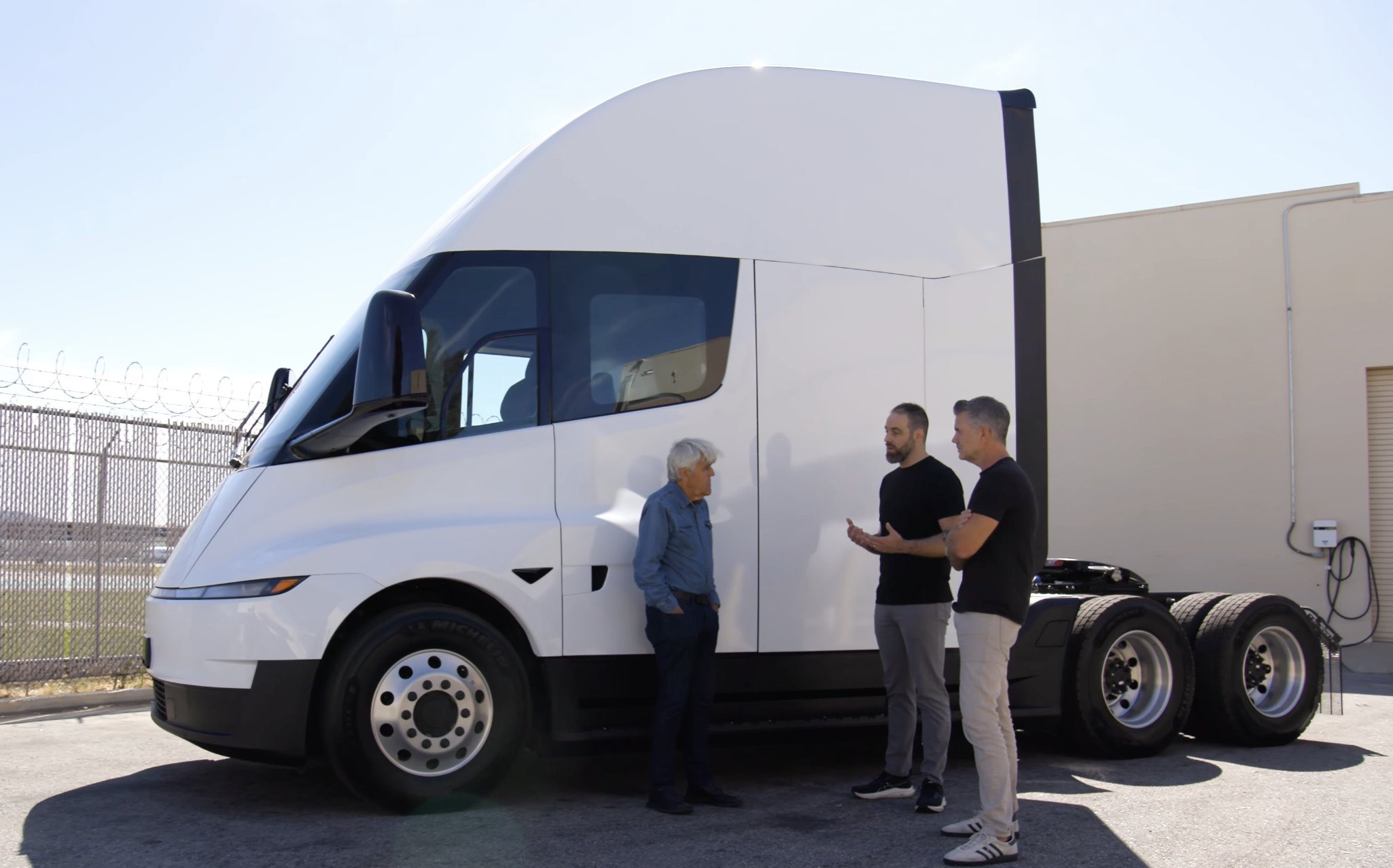
Tesla has revealed the various improvements it has made to the Semi with its redesign, which was unveiled late last year, on a new episode of Jay Leno’s Garage.
Tesla Chief Designer Franz von Holzhausen and Semi Program Director Dan Priestley joined Leno in a 47-minute segment revealing all of the various things it did to make the Semi even better as it heads toward volume production this year.
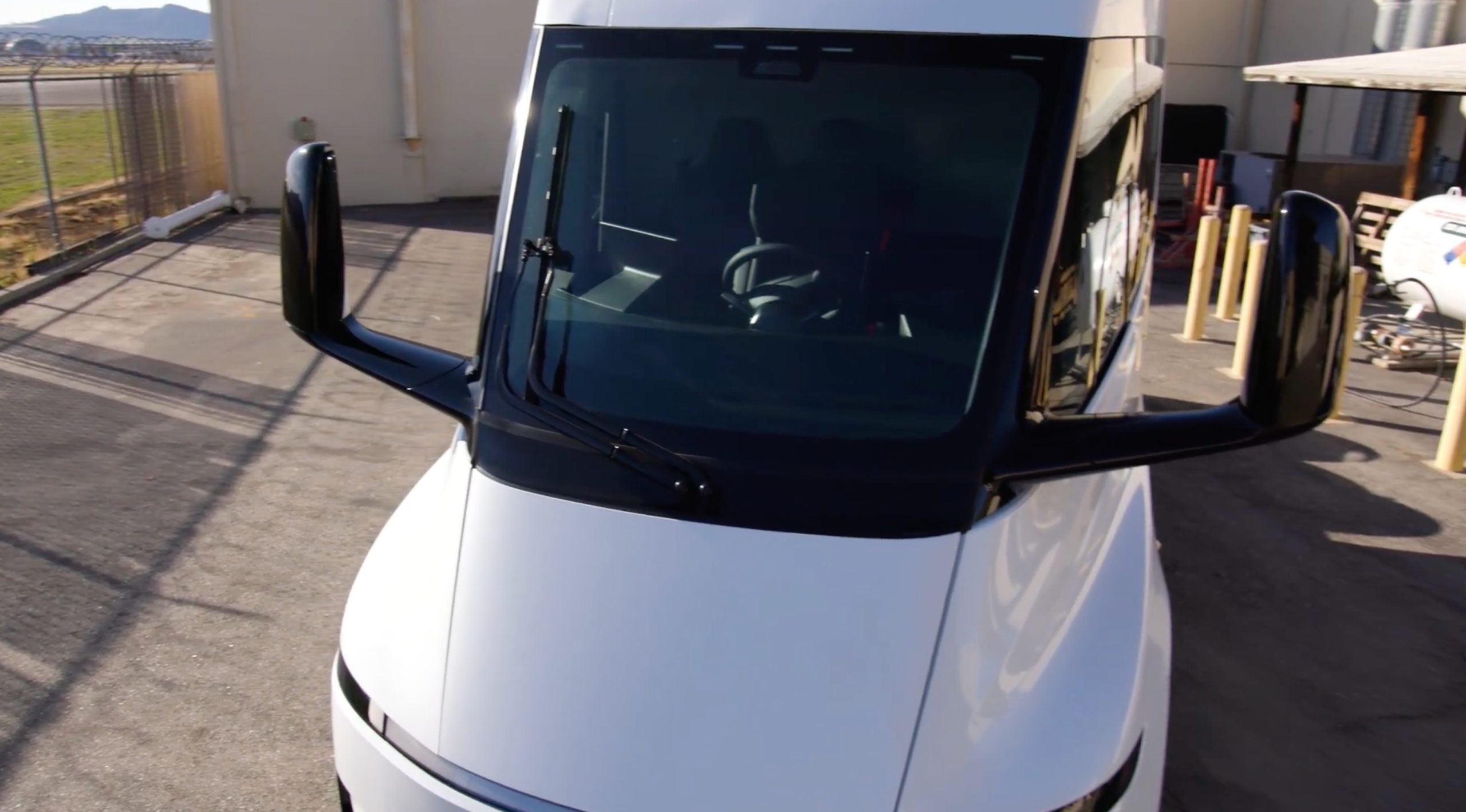
Last year, Tesla revealed it had updated the Semi design to fit the bill of its aesthetic, which, on its other vehicles, includes things like lightbars and a sleeker and more aerodynamic design. The changes were not all to appease the eye, but the drivers who will use the Semi on a daily basis to haul goods regionally as the program gets off the ground running.
Weight Reduction
Priestley revealed almost immediately that Tesla was able to cut out about 1,000 pounds of weight from the Semi compared to the previous version.
This does several things, all of which are positive to the mission of a Class 8 truck, which is to haul goods and obtain more efficient travel to cut down on logistics costs.
Initially, this can increase payload capacity, which is often the biggest value driver for fleets that frequently hit gross vehicle weight limits. Tesla’s early Pilot Program members, like PepsiCo. and Frito-Lay, are large-scale companies. They will benefit from a decreased overall weight.
Lighter vehicles also require less energy to accelerate, climb hills, and maintain highway speeds. This new design has that advantage, and as Leno said in his first drive with the Semi as he hauled another unit behind, “I don’t feel like I’m pulling anything.”
Drag Coefficient
Franz said one of the goals of the Semi was to get the drag coefficient down below that of a Bugatti Veyron. This would increase efficiency tremendously, a major need with a large truck like a Semi.
Drag coefficient is extremely valuable when it comes to electric vehicles, because the displacement of air is incredibly important for range ratings.
Franz said aerodynamic efficiency has been improved by 7 percent compared to the last model. He says the coefficient is around 0.4.
New Features and Improvements
Priestley shed some additional light on the Semi and some of the improvements the company has made under the hood.
These include:
- Fully Electric Steering Assist
- Cybertruck actuators are being used for more strength
- Tesla included a 48-volt architecture
- Semi will utilize 4680 battery cells, which are designed to last 1 million miles
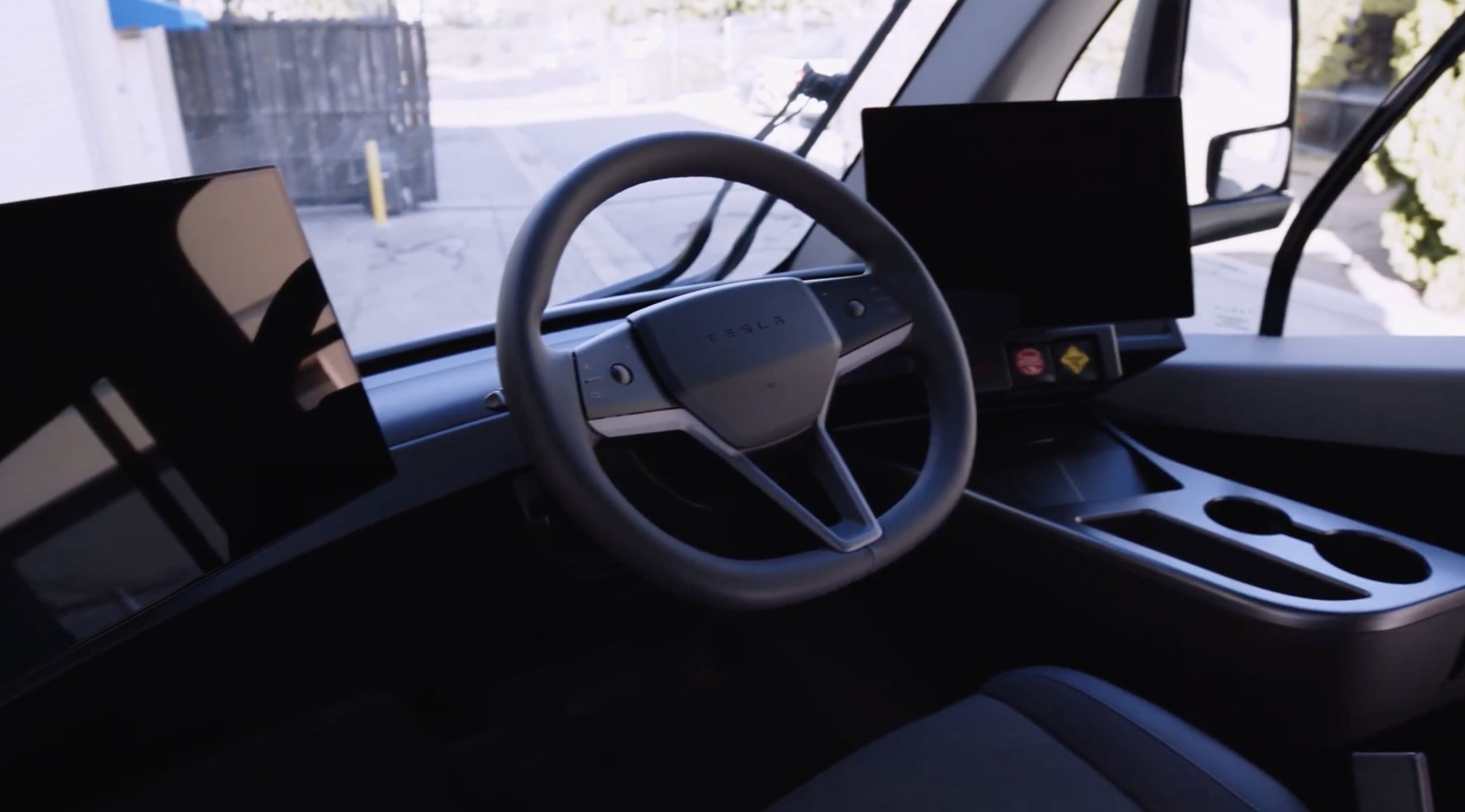
These changes come after Tesla rolled out the Semi to various companies for its Pilot Program, which yielded tremendous results. Due to the years it has been working with those companies, it knew what things it had to change and what it had to improve upon before selling the Semi openly.
Fleet Data
The fleet data Tesla has gathered from the Pilot Program has been one of the most widely discussed parts of the Semi program.
Franz and Priestley said that there are currently a few hundred Semi units in the real world, and Tesla has gathered 13.5 million miles. One of those units has traveled over 440,000 miles in the years it has been on the road.
Tesla Semi’s latest adoptee will likely encourage more of the same
Pilot Program members have reported an uptime of 95 percent, and Tesla’s maintenance and Service teams have kept things running:
“80% of breakdowns if you have one, are returned back to the customer in less than 24 hours, and half are back in less than 1 hour.”
Demand
Priestley says demand for the Semi has never been higher, and due to the recent political climate and the impact things have had on gas prices, Tesla has never received more inquiries for the Semi than it has recently.
Many companies will be surprised to hear that the Semi Pilot Program has been an overwhelming success. As Tesla begins to build out the infrastructure for the vehicle, it will only benefit the all-electric Class 8 trucks that keep things moving.
CEO Elon Musk said Tesla plans to start high-volume production this year. The company also plans to start deliveries this year.
News
Tesla launches amazing new feature for shared vehicles
Tesla has quietly introduced one of its most practical software features yet in update 2026.8: real-time visibility of the active driver profile directly in the Tesla mobile app. Available under the Security & Drivers section, this new tool lets owners see exactly who is behind the wheel or who last drove the vehicle.
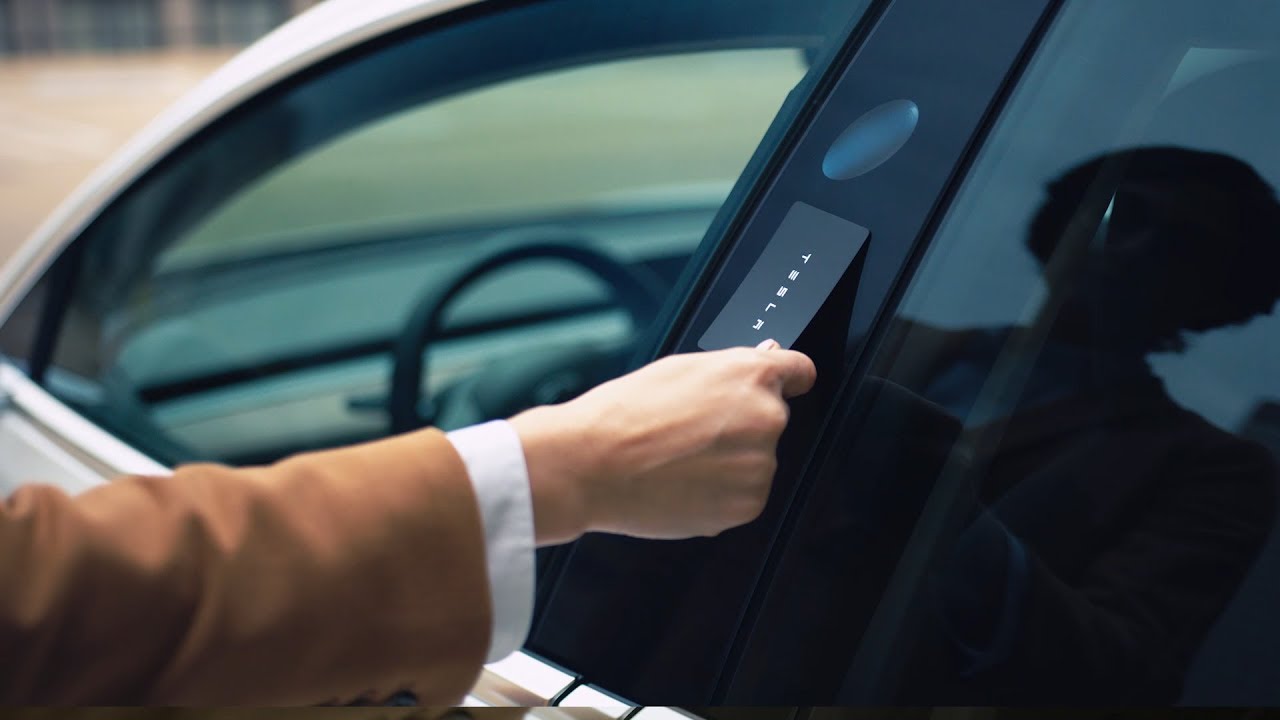
Tesla is launching an amazing new feature for shared vehicles, giving owners more transparency when they choose to have a Tesla ownership experience with another driver.
This is one of the many advantages of having a Tesla. New features are constantly rolled out through software updates and Over-the-Air fixes, which download directly to the car with an internet connection.
Tesla has quietly introduced one of its most practical software features yet in update 2026.8: real-time visibility of the active driver profile directly in the Tesla mobile app. Available under the Security & Drivers section, this new tool lets owners see exactly who is behind the wheel or who last drove the vehicle.
The feature works seamlessly. While the car is driving, the app displays the name of the currently selected driver profile in real time.
When the vehicle is parked or asleep, it shows the last active profile.
Requiring both the 2026.8 vehicle software and the latest Tesla app, the update brings this capability to every model in the lineup, including legacy Model S and Model X vehicles, which are unfortunately being phased out of the company lineup later this year.
Tesla makes latest move to remove Model S and Model X from its lineup
The feature was first reported on by Not a Tesla App.
Tesla driver profiles have always excelled at personalization, automatically adjusting seat positions, mirrors, steering wheel height, climate settings, navigation recents and favorites, and media preferences.
These profiles link to specific phone keys for automatic activation and support PIN protection for privacy and security. Restricted profiles for teens can also limit speed or features.
This feature shines brightest in single-car households with multiple drivers. Families, couples, and roommates frequently share one Tesla, leading to constant adjustments and questions about settings. Now, a quick app check reveals the current profile, allowing users to anticipate seat configurations or confirm usage without entering the vehicle.
Tesla’s cloud-synced driver profiles to bring custom settings across multiple cars
Parents particularly benefit: they can verify that teens are driving under their assigned (and possibly restricted) profiles, adding a layer of safety oversight and peace of mind. Teslas are already so incredibly safe that many parents dream of putting their kids in one.
Two kids around the same age could now share a Tesla, and this feature would make that effort, which is likely to be a difficult one at times, more seamless.
Beyond convenience, it promotes accountability and reduces everyday friction. No more manual profile switching or arguments over mirror positions. Before approaching the car, anyone can check the app and know exactly what to expect, no more wasted minutes readjusting everything.
In multi-driver setups, it transforms the shared EV into a truly intelligent, user-aware machine that respects individual preferences while keeping the primary owner informed.
Tesla’s commitment to over-the-air updates continues to enhance ownership value years after purchase.
This small but significant addition highlights how software can solve real-world problems in multi-user environments, making Tesla vehicles more family-friendly and practical than ever. For the millions of owners sharing a single car, the 2026.8 update delivers transparency, time savings, enhanced safety, and effortless personalization. It is a great new feature that is rolling out to vehicles now.

Tesla launches first ‘true’ East Coast V4 Supercharger: here’s what that means

Tesla reveals various improvements to the Semi in new piece with Jay Leno


