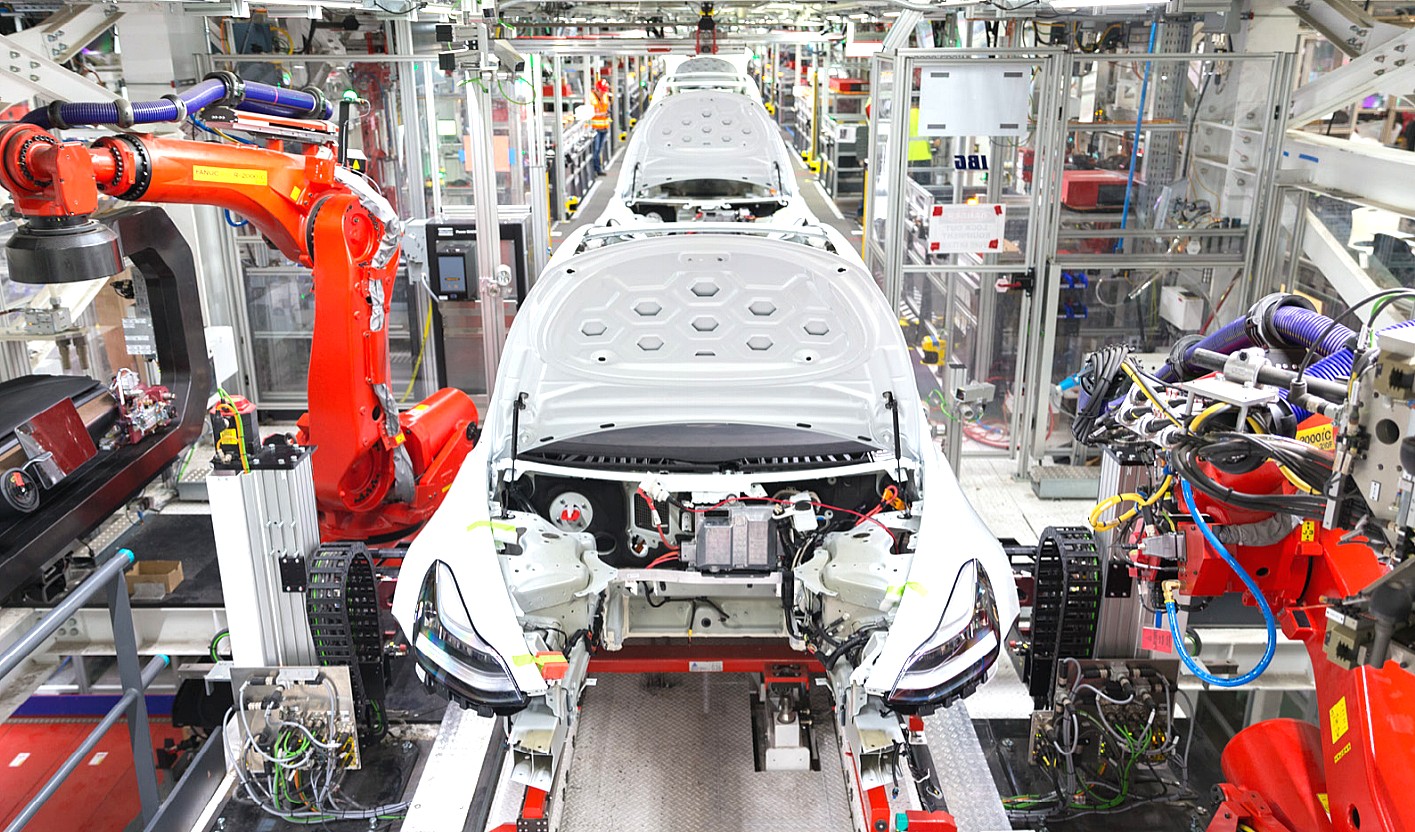

Tesla’s (NASDAQ:TSLA) first-quarter earnings call comes at a pivotal point for the electric car maker. Following a record-setting Q4 2018 that saw new highs for production and deliveries, Q1 2018 saw a drop in the company’s vehicle production and deliveries. Since then, the stock has been weighed down as reservations emerged about the company’s capability to sustain its profitability, which it attained in the third and fourth quarter of 2018.
Tesla announced a net loss of $702 million for the first quarter, translating to a loss of $4.10 per share. The company also listed $4.5 billion in revenue, which is below Wall Street expectations.
For today’s earnings call, Elon Musk and Tesla’s executives are expected to address questions surrounding the company’s financial standing and its capability to pursue its ongoing projects such as Gigafactory 3 in China and the Tesla Pickup Truck, among others. Questions from retail investors aggregated by investor communication firm Say are also expected to be included in the Q&A session.
The following are live updates from Tesla’s Q1 2019 earnings call. Fellow Teslarati reporter Dacia Ferris and I will be updating this article in real-time, so please keep refreshing the page to view the latest updates on this story.
Simon 15:35 PT: And that’s a wrap. Thanks for joining us on this Live Blog of Tesla’s Q1 2019 earnings call, everyone! Check out our coverage of Tesla’s Q1 2019 Update Letter here too, for more details on the electric car maker’s performance in the first quarter.
Dacia 15:32 PT: Thanks everyone! Let’s decide on a new soundtrack to rev up while waiting for next earnings call, shall we? I went down the 90s rock YouTube hole today. Open for better ideas. #justsaying
Simon 15:30 PT: Gigafactory 3 will likely be a huge piece in the Tesla puzzle. Elon Musk notes that by the end of the year, Tesla is aiming for a production rate of around 1,000 Model 3 per week, or maybe even 2,000 per week. “We expect multiple battery suppliers for Shanghai Giga,” Musk said, responding to a question about battery partners for the upcoming facility.
Dacia 15:30 PT: Elon says he gets daily photos of the Gigafactory 3 progress in Shanghai. “It looks like we’ll reach volume production by the end of this year…that’s what it looks like right now. If it’s not then, it will be shortly thereafter.”
Dacia 15:29 PT: “Our goal is the make our cars as affordable as possible,” Elon responds to a question about the logic of the pricing changes during the quarter. “The $39,500 Model 3 just really hit the sweet spot,” he says, referring to sales of the $35,000 Model 3.
Dacia 15:26 PT: “The upgraded powertrain for the S,X was at a significant cost down,” Elon says about the recent refresh. They took parts from the Model 3 that were highly efficient.
Dacia 15:25 PT: A Battery Investor Day in the future? “I think we’ll have another autonomy day later this year to go over cell and battery development in greater detail,” Elon says in response to a question on future chemistry and form factor changes in batteries.
Dacia 15:24 PT: Adding on Tesla Model Y reservations. “People read too much into this…we aren’t playing up the Model Y because it isn’t in production. You can’t read too much into it,” Elon notes as he responds to longtime TSLA bear David Tamberrino from Goldman Sachs.
Simon 15:24 PT: On Model Y reservations. “We’re not playing up Model Y because it is not in production,” Elon Musk says. “We don’t comment on future price changes,” he adds.
Dacia 15:22 PT: “Sales to a country overseas are affected by when the ship arrives,” Elon explains, citing that delays make it seem like something is wrong, when its just the ship schedule. GDP fluctuations resulting from ship deliveries are not accurate measures, he reiterates.
Dacia 15:20 PT: “We will continue to ADD stores in locations that are no brainers and close them…where the foot traffic doesn’t fall below the cost of having the store,” Elon admits and explains. People misunderstood “all sales online” to mean “all stores are closing.” I’ll admit, I thought that, too at first.
Simon 15:19 PT: On Tesla store closures. “I think Tesla is specifically didn’t handle the messaging of that well. We certainly will continue to have stores, and we will continue to add stores, provided that they are in locations with high foot traffic, and in areas with people with our target market. We will close stores where they are incredibly hard to find, and where foot traffic of potential customers is low. I think it’s just common sense,” Musk said.
Dacia 16:15 PT: “Tesla today is a far more efficiently operating organization than we were a year ago,” Elon doubles down on not needing additional capital. He says technically they did raise some capital for Gigafactory 3 in Shanghai.
Dacia 15:14 PT: “I don’t think raising capital should be a substitute for making the company work more effectively…we should be frugal with capital…. We need to be on a Spartan diet… It’s not the right time to raise capital,” Elon says on whether Tesla would be better served by better cash flow with raised capital. “I don’t think capital has been a constraint on our growth so far…I would have raised capital if I thought so,” he adds.
Dacia 15:10 PT: “There really do seem to be different market segments,” Elon says in response to a question about Model 3 cannibalizing Model S and X. Owners really just want to replace the car they have, not buy M3 over Model S,X, he concludes.
Dacia 15:08 PT: “I would prefer we were private,” Elon admits. He cites Warren Buffett, saying having a public company is like having someone stand outside your home and shout its price/value every day. He nonetheless admits that he does not have a solution for the issues that come from public company pressures.
Dacia 15:05 PT: On Full Self-Driving safety, Tesla will keep reporting their findings and numbers at “a broad brushstroke level”…”We do give some information to insurance companies to reduce rates,” Elon says, meaning FSD safety data to lower auto insurance rates for Tesla owners.
Dacia 15:03 PT: “We think it is important to unwind this wave [of deliveries] because it ends up being optimizing for one quarter but adding a lot of difficulty and not a great experience for customers,” Elon says. “We did adjust our pricing in Q1 which puts pressure on our margin,” Kirkhorn adds. Once all the unwinding is done, they feel confident profitability will return in Q3.
Simon 15:03 PT: Tesla appears to have absorbed the blows in the first quarter to ensure that the following quarters will be smoother. A return to 100k/year for Model S and Model X appears to be in the future.
Dacia 15:01 PT: On questions about weak demand in US — Elon sees demand returning to normal in the near future. “I don’t have a crystal ball…my impression is demand is quite solid,” he says. Retooling decreased production in Q1…ramping back up in Q2. “We will exit Q2 in higher production than Q1 on the S,X,” Kirkhorn chimes in.
Dacia 14:58 PT: “I’m a fan of tents, like real, hardcore tents. Not Boy Scout tents (which are fine),” Elon says, referring to adding space for Model Y production at Fremont. He’s confident they’ll find the space for it (not necessarily confirming it will made in tents).
Dacia 15:56 PT: “The SR+ Model 3… is just an incredibly compelling vehicle,” Elon touts. The upgraded S,X — it’s kind of a game changer. We are out of the Q1 winter hangup for new car sales (people don’t like buying cars in winter), all positive factors for the future, he says. “Overall, I feel pretty good about where things are headed.”
Dacia 15:54 PT: On Model Y production: Model Y production location being decided soon, per Elon. Close call between Nevada or Fremont. Decision in next few weeks.
Simon 14:54 PT: On the Tesla Semi, Elon Musk and Jerome Guillen note that the prototypes of the all-electric long-hauler are performing great. Production will likely be on Reno, NV. “The prototypes are working amazingly well,” says Elon.
Dacia 15:53 PT: How soon will owners get the new FSD upgrade? Elon said there’s no need for it for 2-3 months. Features will then be released that will have use for the FSD.
Simon 14:51 PT: Some questions from retail shareholders are addressed. The company notes that it is just waiting for the necessary approvals from the SEC with its Maxwell acquisition. On Tesla’s own insurance program, Elon says yes, the company will be rolling out one, hopefully in a month. “It will be much more compelling than anything out there,” Elon Musk said.
Dacia 15:45 PT: Model 3 growth margin declined slightly – pricing adjustment and product offering mixup both part of that decline, per Kirkhorn. Our product lineup has a good deal of excitement.
Simon 14:44 PT: The CFO notes that in spite of the launch of the Standard Range Model 3, a significant portion of Model 3 orders in the United States still correspond to the Long Range versions of the vehicle.
Dacia 15:43 PT: “The global expansion of Model 3 was a huge theme within the quarter,” Zachary Kirkhorn, Tesla’s new CFO begins his comments. Two key themes he cites: On the cash front $2.2 billion ending balance, reduction from payment of convertible note which was investment into service and systems; Q1 challenges aren’t expected to continue, and cash balance will increase.
Simon 14:41 PT: Zachary Kirkhorn, Tesla’s new CFO takes the floor. He describes how the first quarter of 2019 was a complex time for Tesla’s finances. Tesla is tracking in April the largest amount of deliveries in the company’s history.
Dacia 15:40 PT: – Elon now touts the Model S, X upgrades that were just released last night, highlights the free Ludicrous Mode upgrade for loyal customers. Motor Trend test drove the enhanced Model S from SF to LA on one charge – Elon compares it to a gas powered car, citing Model S’s superiority.
Simon 14:38 PT: Elon emphasizes that Model 3 international ramp is only beginning. He also mentions the improvements for the Model S and X, which include adaptive suspension, better range, and better charging speeds.
Dacia 15:38 PT: “We believe over time, we will be the best selling premium car in the world…In March we set a record for the highest car sales, period,” Elon says. He sounds positive, despite the report. Cites people paying more for a Model 3 than they’ve ever paid for another car because they **want** one.
Dacia 14:33 PT: “We believe we’ll have the most profitable autonomous taxi on the market,” Elon Musk says. Half of all deliveries occurred during the final 10 days of Q1, “which was an insane undertaking, basically,” he adds.
Simon 14:34 PT: Elon Musk takes the floor. Elon discusses Tesla’s Autonomy Day and reviews the points outlined during the event. Elon also discussed “good challenges” in Q1, particularly in terms of Model 3 deliveries in Europe and China. Highlights that half of Q1’s deliveries happened in the final 10 days of Q1 2019.
Simon 14:31 PT: And we are starting. No Elon Time today. Tesla Senior Director, Investor Relations Mr. Martin Viecha takes the floor.
Simon 14:30 PT: Welcome to our live blog for Tesla’s Q1 2019 earnings call. The electric car maker posted a loss of $702 million in Q1, which missed Wall Street estimates. It will be interesting to see how Elon Musk and Tesla’s other executives address these updates in the upcoming Q&A session.
Dacia 14:30 PT: Well, it’s said in some circles that when Tesla releases an earnings report late…it’s not gonna be happy news. Theory holds up today, but profitability is expected in Q3. We’ll see what Elon decides come then.


Elon Musk
FAA kicks off review of SpaceX’s bid to fly Starship nearly every day
FAA is reviewing SpaceX’s plan for 456 Starship launches a year, up from 25 today.

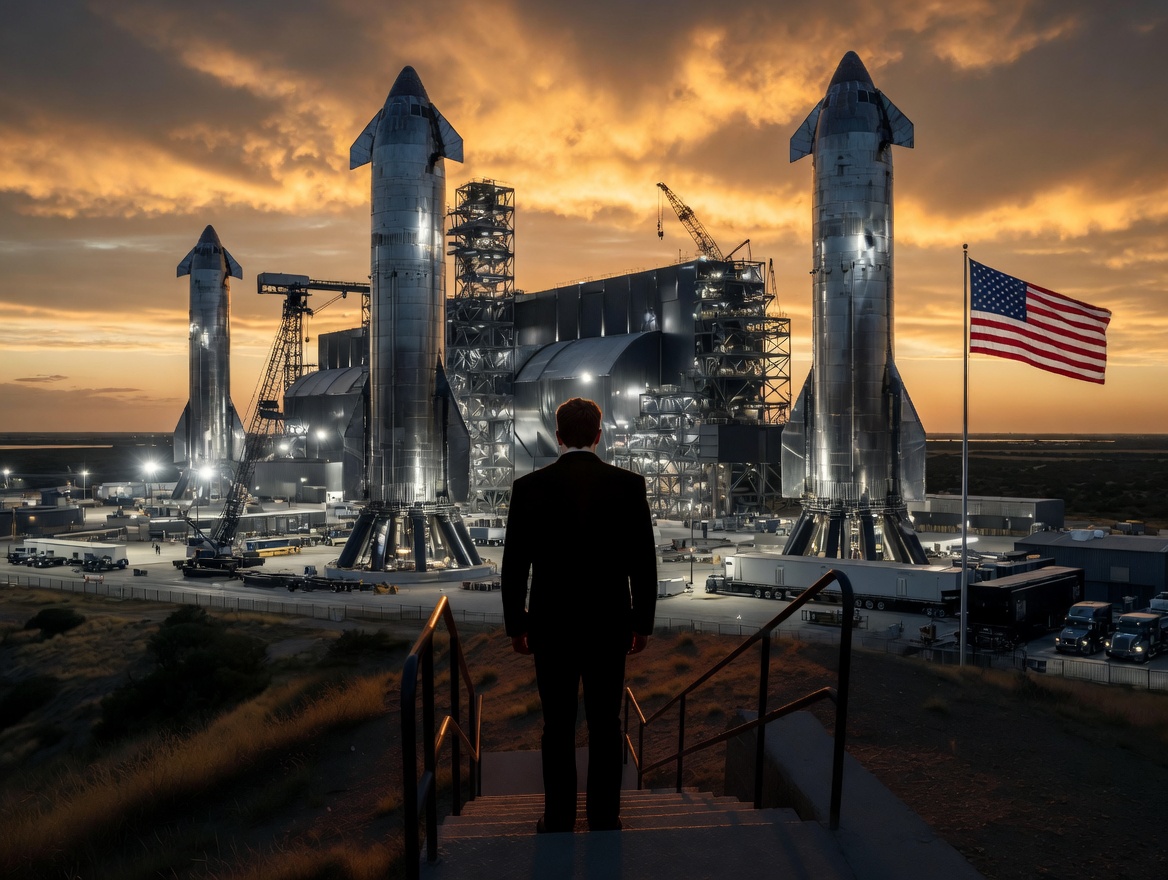
The FAA said Tuesday that it will prepare an environmental impact statement on SpaceX’s proposal to run as many as 456 Starship launches and 912 landings a year from Starbase, Texas. SpaceX is currently authorized for 25 launches and 50 landings annually, which makes the request roughly 18 times the existing ceiling. The notice of intent is set to publish in the Federal Register on Wednesday.
The plan comes in two phases. Phase 1 would allow up to 100 launches and 200 landings a year, on any day and at any hour. Phase 2, which the FAA says could arrive within several years, would raise the limit to the full 456 launches, still at any hour but only on weekdays. The agency noted that 912 landings is the upper limit for the Texas facility no matter where a given mission begins, and that Starship and Super Heavy could come down at the launch site or in the Gulf and open ocean.
A draft statement will be released for public comment at a later date, and the FAA has not said when. According to the Federal Registar, written comments are due November 30 on regulations.gov under docket FAA-2026-12808, with in person scoping meetings on November 17 in Brownsville and November 19 in Port Isabel, plus a virtual session on November 18. The review will weigh air quality, wildlife, coastal resources, water, noise, and aviation, and the FAA said any increase beyond this proposal would need its own separate review.
The numbers look large next to what Starbase has actually done. Starship has flown three times from Texas this year, including Flight 14 on September 28, the first orbital flight, which deployed 26 Starlink V3 satellites. Bloomberg reported that Starbase has never launched more than five times in a calendar year. The current cap of 25 comes from an FAA approval in May 2025. In February, the agency also approved up to 44 Starship launches a year from Launch Complex 39A in Florida, so Phase 1 in Texas alone would more than double that allowance.
Musk has said Starship could eventually fly more than once per hour within less than a decade, per Bloomberg. The nearer term target is Flight 15. Musk said on October 10 that it is hopefully four to six weeks away and will try to catch the ship with the tower, as Teslarati covered. That flight still runs under the existing 25 launch limit, and so would every Starbase launch for as long as the new review takes.
As of mid morning Pacific time on Tuesday, SpaceX had not posted about the filing on its own account.
Investor's Corner
Elon Musk drops a Thanksgiving hint about Starship’s biggest test yet
Elon Musk says Starship Flight 15 will try to catch the ship itself, a first.
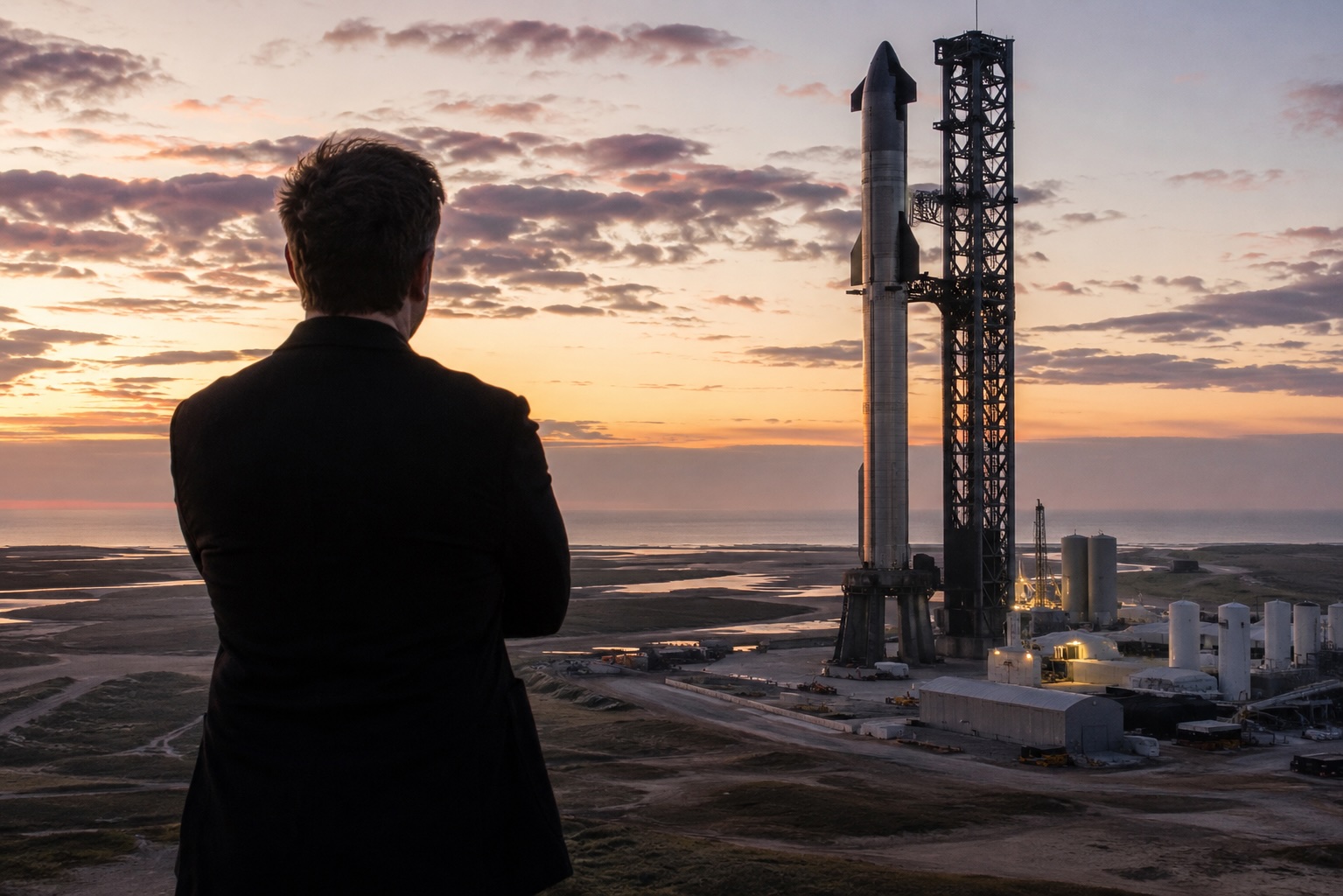
Elon Musk says SpaceX’s next Starship flight will try something nobody has done before, by catching the ship itself. Speaking to roughly 2,000 people at the X Takeover event at Giga Texas on Saturday, Musk said Flight 15 is about four to six weeks away and “probably launches a little bit before Thanksgiving, is my guess.”
That is a slip from earlier reporting, which had pointed to a launch as early as October 19. Musk explained why the date keeps moving. “We’re making a bunch of improvements to the rocket between every flight,” he said, adding that there are often hundreds, sometimes thousands, of small changes. This time the list is short, “but some of them take a fair bit of work and we’ve got to go inside the tank to make some of these changes.”
“We’re going to try to catch the ship, which is a super big deal,” Musk said. “If we do so, that’ll be the first time that there’s been full recovery of an orbital class rocket.” SpaceX has already caught the Super Heavy booster with the tower’s mechanical arms, and has talked about catching the ship since late 2025, but the upper stage has never been caught.
Musk also laid out what comes after. “The next big milestone would be to refly both the booster and the ship,” he said, describing a Flight 16 where “all parts of an orbital rocket are reflown.”
The reason SpaceX wants this comes down to cost and cadence. Every Starship ship so far has ended its flight in the ocean, and SpaceX expects most of those water landings to end in fireballs. A ship that returns to Starbase intact can be inspected and flown again. SpaceX’s IPO filing, says Starship V3 is designed to deliver 100 metric tons to orbit in a fully reusable configuration, that SpaceX aims to cut the cost to reach orbit by 99% or more versus the historical average, and that tower catches should allow “multiple launches per day.”
The payoff goes beyond cheaper launches. The next generation Starlink V3 satellites are too large for Falcon 9 and can only fly on Starship, which can carry up to 60 per flight. Flight 14 on September 28 deployed the first 26 of them after Starship reached orbit despite an early engine shutdown, as Teslarati reported. Musk blamed engine computer software, and said the heat shield “was extremely robust,” which he claimed in August had solved Starship’s biggest challenge.
NASA’s Moon plans depend on the same capability. NASA’s inspector general has described a lander mission that needs a propellant depot in low Earth orbit and more than 10 tanker flights, with SpaceX targeting one tanker launch every six days. That schedule only works if ships and boosters come back fast and fly again. Also, ship to ship propellant transfer has not been attempted yet.
One interesting hurdle yet to be explored is bringing the ship back to the launch site, with reentry over land, which will undoubtedly come with a lot of aviation safety reviews.
Investor's Corner
SpaceX reveals how its 1 Million AI satellite network will work and prevent space collisions
SpaceX reveals plans for one million Starmind AI satellites and calls out operators hiding maneuvers.
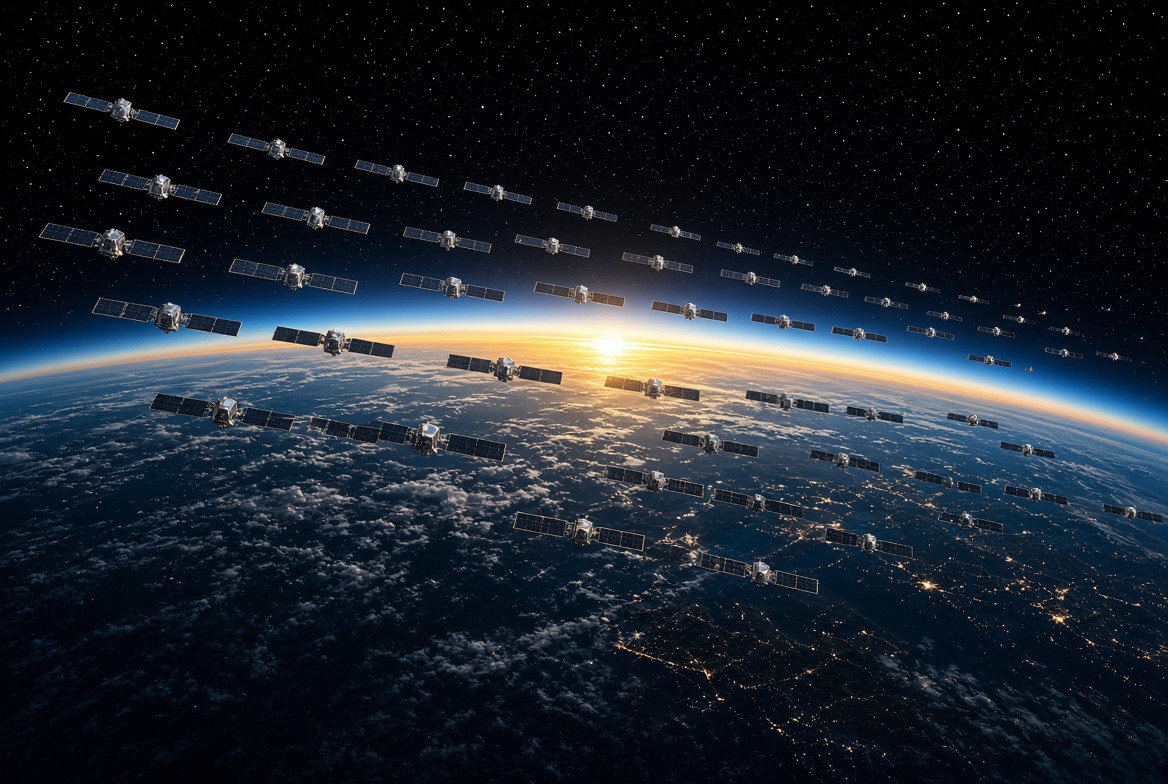
SpaceX has put the largest satellite count it has ever published into writing, and it says that plan only works if every other operator in orbit starts sharing what it knows.
In a new Space Safety page highlighted Tuesday morning by Sawyer Merritt on X, SpaceX said it “plans to operate up to 100,000 Starlink satellites and up to 1 million Starmind AI satellites to meet the growing demand for broadband and supercompute.” Starlink has a little over 11,000 satellites in orbit today, so the target alone implies roughly a ninefold expansion of the broadband network.
Starmind is SpaceX’s orbital AI compute constellation. Elon Musk confirmed the Starmind name in June after an xAI trademark filing surfaced, and in August SpaceX said it was working with Nvidia on the compute payload. The FCC accepted the filing for up to one million satellites back in February.
FCC accepts SpaceX filing for 1 million orbital data center plan
SpaceX also released a new render of what a full Starmind constellation could look like. Alongside it, SpaceX VP Michael Nicolls explained why the satellites will not operate on their own. “We need to operate clusters of satellites in tight formation to get enough coherent compute to run AI models efficiently,” Nicolls said. “A cluster will be 10-ish satellites connected with 10 terabits or so of bandwidth between them, and interconnected to the broader constellation.”
That is the most specific detail SpaceX has given on how Starmind will be built. Instead of a million independent servers, the network would work as tightly packed groups of about 10 satellites acting as one compute unit, with Starlink’s laser links carrying results back to Earth.
There is a bright and exciting future for humanity ahead – and space is fundamental to that future.
To achieve this, space safety must be done right. We encourage every operator to not only share ephemeris data proactively the same way Starlink already does, but to also adopt the high standards of space safety that SpaceX and Starlink use every day → https://t.co/QizAkQZvEm
— Starlink (@Starlink) October 6, 2026
Packing satellites that close together, at that scale, makes collision avoidance the central problem, and most of the Space Safety page is aimed at other operators. SpaceX said Starlink encountered collision risks with about 650 unique maneuvering third party satellites in 2026, and only about half of them shared data. Over six months, Starlink recorded roughly 164,000 more collision risks where the closest approach came within four hours of an unannounced maneuver.
Some operators keep maneuver plans private over proprietary concerns, while others cannot get government permission to share them. SpaceX called those policies “counterproductive,” saying they “largely only serve to create preventable collision risk between satellites.” Starlink is also offering a free ephemeris sharing and screening platform that returns risk results within a minute, backed by its Stargaze network of 30,000 optical sensors.
The push comes as the Starmind application draws opposition from astronomers and environmental groups. In a September filing with the FCC, SpaceX said each Starmind satellite could weigh up to 4,000 kg, nearly seven times the mass of a Starlink V2 Mini. Musk has brushed off crowding concerns before, telling viewers in June that “space is enormous” and that SpaceX already knows how to run very large constellations safely.
SpaceX’s Starmind page says its Gigasat factory in Bastrop, Texas, is designed to produce AI satellites at scale, with deployment of thousands of units starting as soon as late 2027.

Ukraine says Starlink is cutting out its military drones as Poland calls out Elon Musk

FAA kicks off review of SpaceX’s bid to fly Starship nearly every day

Tesla Roadster livestream: everything Tesla has revealed before Thursday night

The Pentagon taps Elon Musk to design the battlefield of the future

SpaceX reveals how its 1 Million AI satellite network will work and prevent space collisions


