News
Tesla Sentry Mode catches man spraying acid on Model 3 over parking disagreement

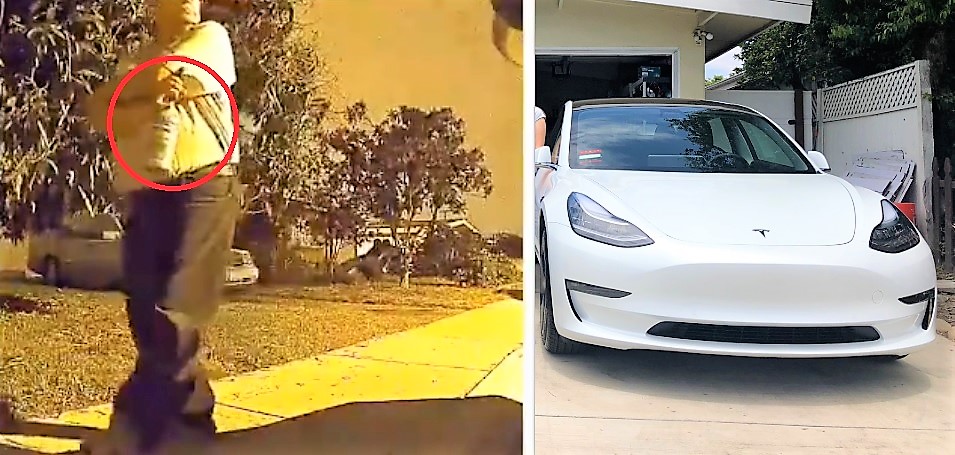
Tesla’s Sentry Mode has once again captured an act of vandalism, this time identifying a Model 3 owner’s neighbor inconspicuously spraying acid on the side of their vehicle at night in Anaheim, California. The motivation for the incident is thought to be related to parking disagreements between the suspect and the owner.
In video footage captured shortly after vehicle Mode was activated and later uploaded to Twitter, a man is seen slowly encircling the car with a bottle in hand, spraying its contents around the circumference of the vehicle. The substance in the container was not specifically identified, but the owner described it as a skin irritant similar to battery acid. At this time, a report has been filed with local police on the matter, and a damage assessment and repair estimate are pending completion before additional courses of action are pursued.
In a tweet describing the reporting process experienced while seeking justice for the vandalism, the Model 3 owner stated that the police recommended an assessment be completed first. “They said. And these are the exact words. Do you want to press any charges? If so you will have to find out how much the damages are then it will go from there,” he detailed on Twitter. Of particular interest is whether the acid used ate through the car’s ceramic coat. If the paint under the coat was damaged, the repair cost will be significantly higher than if not.
Sentry Mode has proven itself to be incredibly useful for Tesla owners. Since its release, it has assisted in identifying vandals, thieves, and hit-and-run suspects, as well as prevented insurance fraud claims. The security feature was created partly in response to a string of break-ins that seemed to be specifically targeting Tesla cars, and it operates primarily by automatically saving video footage from before and after a possible threat to the vehicle is sensed by its cameras. If an intrusion is detected, it plays Johann Sebastian Bach’s Toccata and Fugue in D Minor at a loud volume to bring as much attention to all-electric car as possible.
Other features have been added since Sentry Mode’s initial release to make it easier to use. A dedicated button matching the “eye” of the HAL-9000-styled screen displayed when the feature is active was added to the center touchscreen, and the feature can also activate when the car is put in park. More recently, voice command activation was also provided via an over-the-air update that allows Sentry Mode to be set using the phrase “Keep Summer Safe” from the Rick and Morty cartoon. Both of these updates are a nod to CEO Elon Musk’s fondness of including fun pop culture references in Tesla vehicles.
Sentry Mode now also has location-based activation options such “Exclude Home” and “Exclude Work”, among others. These options assure that Tesla owners’ vehicles will not trigger the security system while it is parked in places like their garage. As made obvious by this recent attack, however, some owners don’t seem to have a place where Sentry Mode can take a break.


Elon Musk
Elon Musk gives his most telling Tesla-SpaceX merger conversation yet
Elon Musk hinted a Tesla-SpaceX merger could be coming, and Wall Street is taking notice.

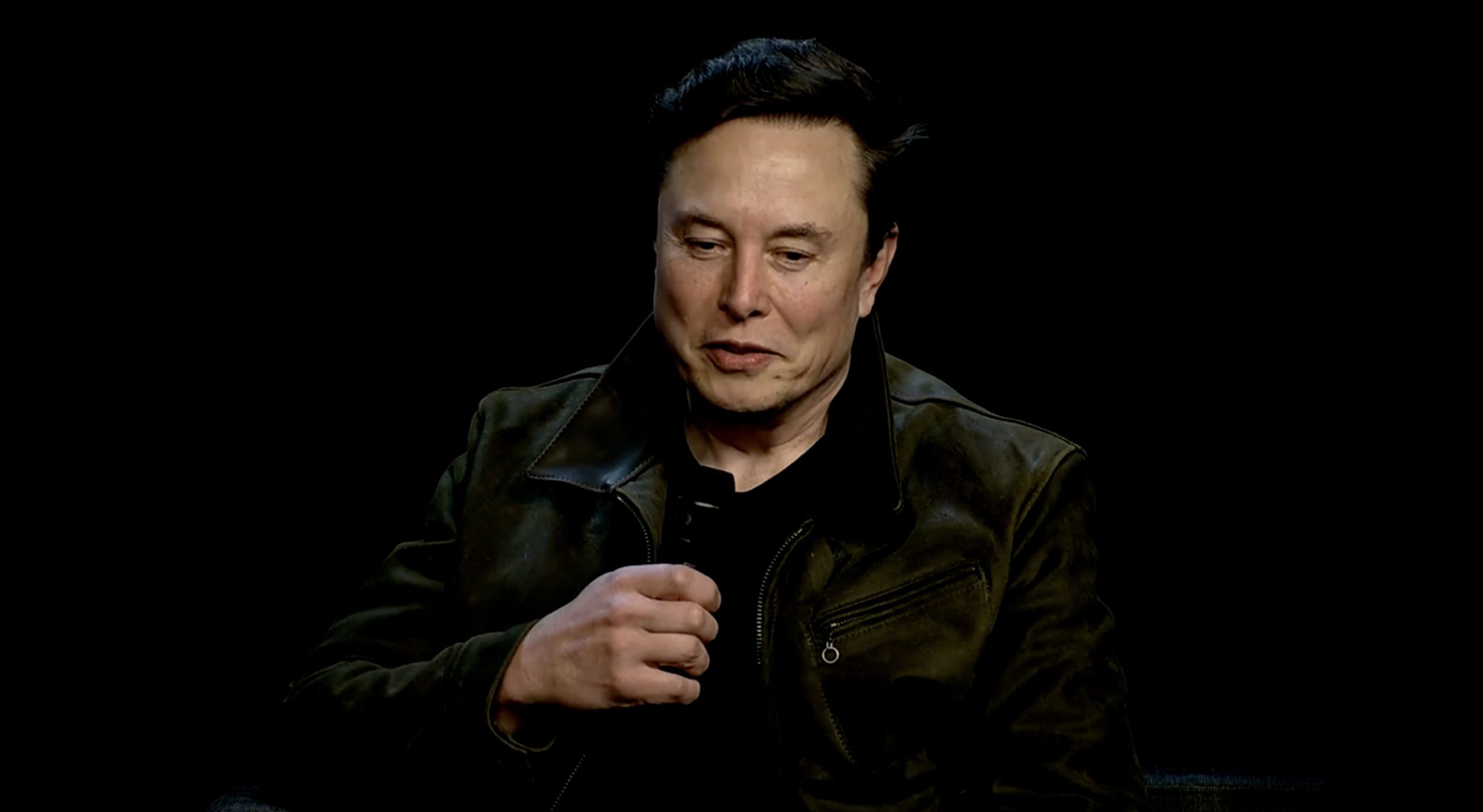
Elon Musk gave his clearest signal yet that Tesla and SpaceX could eventually combine, telling the All-In Summit in Los Angeles that the two companies’ deepening collaboration makes the question worth asking. Sawyer Merritt first surfaced the highlight on X Tuesday.
Asked directly why Tesla and SpaceX remain separate given how closely they already work together, Musk told hosts at the summit: “Great question there. With all this collaboration, on so many levels, who can imagine what action one might take when there’s so much close collaboration in so many areas.” SpaceX President Gwynne Shotwell, who joined Musk on stage, added that SpaceX personnel have already moved into xAI to fill leadership and engineering gaps, saying the businesses are integrating “faster than I thought,” though “not fully integrated yet,”
The comments landed on top of merger speculation that has been building on Wall Street for months. JPMorgan has called a tie-up “strategically coherent on paper,” pointing to overlapping ambitions in AI, robotics, energy, transportation and space. Jefferies went further, estimating Musk could retain roughly 55.3 percent voting control in a deal structured without a premium, a scenario that would still leave room for Tesla shareholders to come out ahead. On Kalshi, traders now put the odds of a merger before 2028 at 66 percent.
Tesla’s stake in SpaceX, still under one percent, traces back to its earlier investment in xAI, which converted to SpaceX equity after SpaceX absorbed the AI company. The two are also jointly building Terafab, a chip facility in Austin meant to serve both Tesla’s AI computing needs and SpaceX’s satellite ambitions. Wedbush analyst Dan Ives has stood by a 2027 merger timeline for months, and Cathie Wood’s ARK Invest recently floated a similar case, an idea Musk pushed back on directly at the time.
Another Tesla SpaceX merger prediction by ARK Invest has Elon Musk talking
The timing adds another layer. Tesla has scheduled an October 1 unveiling for its next generation Roadster at a venue near SpaceX’s McGregor, Texas test site, using the phrase “Go for launch” in its promotional material. Both stocks dipped roughly 2 percent Monday before recovering slightly in premarket trading Tuesday, with SpaceX shares up about 0.4 percent and Tesla essentially flat.
Musk stopped short of confirming anything is in motion. But unlike his past denials of a corporate restructuring, this response didn’t rule one out, and it came with Shotwell sitting next to him describing an integration that’s already underway.

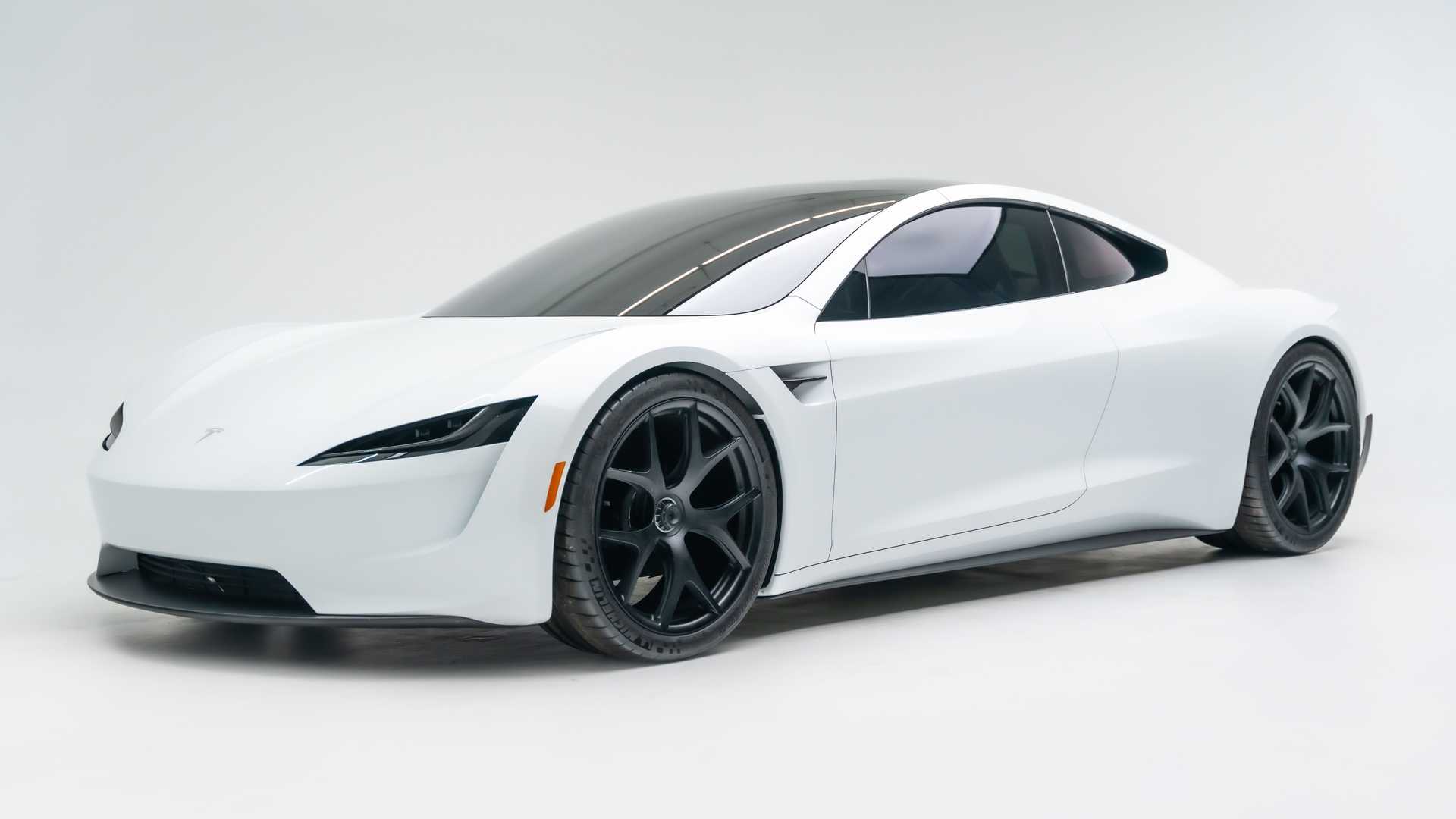
The Tesla Roadster unveiling is getting hyped up by the company’s CEO Elon Musk, who has been a big reason the product has such high expectations due to delayed timelines and a constant need to make it even more insane than before.
Tesla announced on September 12 that it would officially unveil the Roadster in Waco, Texas, on October 1, ending years of patience for fans and reservation holders who have waited for the all-electric supercar to enter production since 2017.
Musk has said that this event will be well worth the wait on several occasions, and last year on the Joe Rogan Experience, he said that there should be a closing chapter to supercars- the end of cars that aren’t focused on safety.
He said:
“Whether it’s good or bad, it will be unforgettable. My friend Peter Thiel once reflected that the future was supposed to have flying cars, but we don’t have flying cars. I think if Peter wants a flying car, he should be able to buy one. I think it has a shot at being the most memorable product unveil ever. This is some crazy technology in this car. Let’s just put it this way: if you took all the James Bond cars and combined them, it’s crazier than that.”
Musk’s teases have continued, and now that the event is roughly two weeks away, it seems like Roadster is finally going to show up and blow some minds:
It’s out of this world
— Elon Musk (@elonmusk) September 13, 2026
Excitement guaranteed
— Elon Musk (@elonmusk) September 13, 2026
Tesla has definitely dragged out the development of the Roadster, but there is a good reason for it.
Tesla has been working on many other projects, most notably self-driving efforts to increase passenger safety, and those simply took priority over the Roadster, a low-volume, high-performance sports car that has a lightning-fast acceleration rate of 0-60 MPH in just 1.1 seconds, could potentially fly, and contributes very little to the company’s mission.
However, many people have the Roadster on pre-order through the referral program or with their own money, and it is time that Tesla delivers on that.
Elon Musk
Elon Musk’s Boring Company has big plans for Las Vegas by year’s end
Elon Musk’s Boring Company says Vegas Loop stations will double by year end once again.
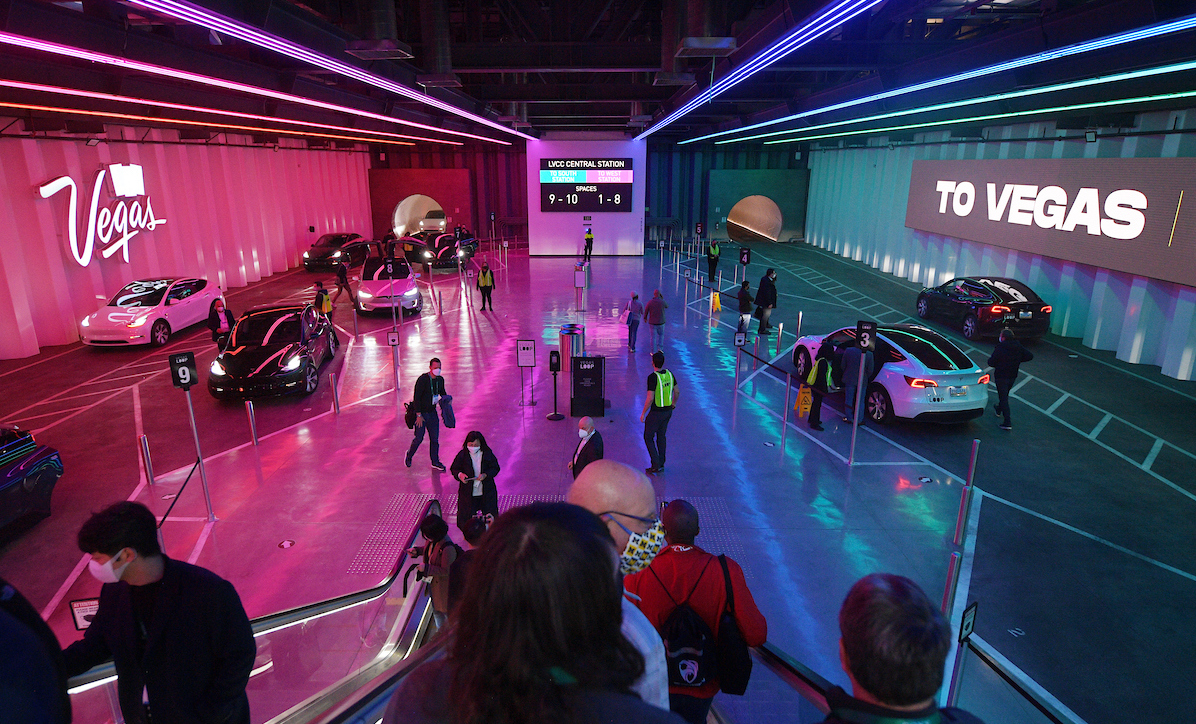
The Boring Company says the Vegas Loop’s station count will double by the end of the year, tying the target to a hiring push for drivers and operations managers in Las Vegas. “Vegas Loop is getting bigger – the station count will double by end of year!” the company wrote in a post on X, attaching listings for a Loop driver and a senior Loop operations manager.
The number checks out against what’s already public, with the Vegas Loop currently running 14 operational stations, while the Boring Company’s own project page lists 28 as the target for the end of 2026.
Vegas Loop is getting bigger – the station count will double by end of year!
Urgently hiring exceptional and enthusiastic Drivers and Ops Managers.
Apply here!
Driverhttps://t.co/ZUPXBYTONb
Senior Loop Ops Managerhttps://t.co/mV6V22V8jH pic.twitter.com/IZ9FqIw8WY
— The Boring Company (@boringcompany) September 14, 2026
Much of that growth is tied to tunnels that are already built and waiting on an opening date. A roughly two-mile dual tunnel system under Paradise Road, connecting Westgate to a planned station at 4744 Paradise Road, is expected to open in stages over the coming weeks, Las Vegas Convention and Visitors Authority chief executive Steve Hill told the Review-Journal last week. New stations at 4744 Paradise, Virgin Hotels Las Vegas, and the former Gordon Biersch site would come online with it, several of them built to speed up rides to Harry Reid International Airport ahead of Formula 1’s Las Vegas Grand Prix.
Clark County entitled Vegas Loop for 123 stations after approving 19 more in August, as Teslarati reported at the time. Entitlement and construction move at different speeds on this project, so county approval alone does not guarantee a station opens on any particular schedule.
Clark County approved 18 additional stations back in 2023, part of a plan that pushed the system’s target to 69 stations across 65 miles, doubling the network on paper for the first time. The target kept climbing after that, to roughly 93 stations by the end of that year and 104 by last year, before August’s vote pushed it to 123. This week’s announcement is the first time that doubling language has been attached to stations actually running rather than stations merely approved on a county map.
Ridership gives some sense of what a denser network could carry. Boring Company executive Mike Baier said in July that the Vegas Loop already moves around 40,000 passengers on busy convention days, a total that tops most light rail systems in the country despite the system running on a fraction of its planned tunnel mileage. Company leadership has projected ridership could triple or quadruple once the airport connector tunnels fully open.
Boring Company did not say which stations beyond those already under construction would open by year end, or whether the hiring push points to a fleet expansion alongside the new stops.

Elon Musk gives his most telling Tesla-SpaceX merger conversation yet

Tesla Roadster unveiling is getting hyped up by Elon Musk


