News
Tesla Model Y third-row seats: Latest images show they are not vestigial, provide enough legroom

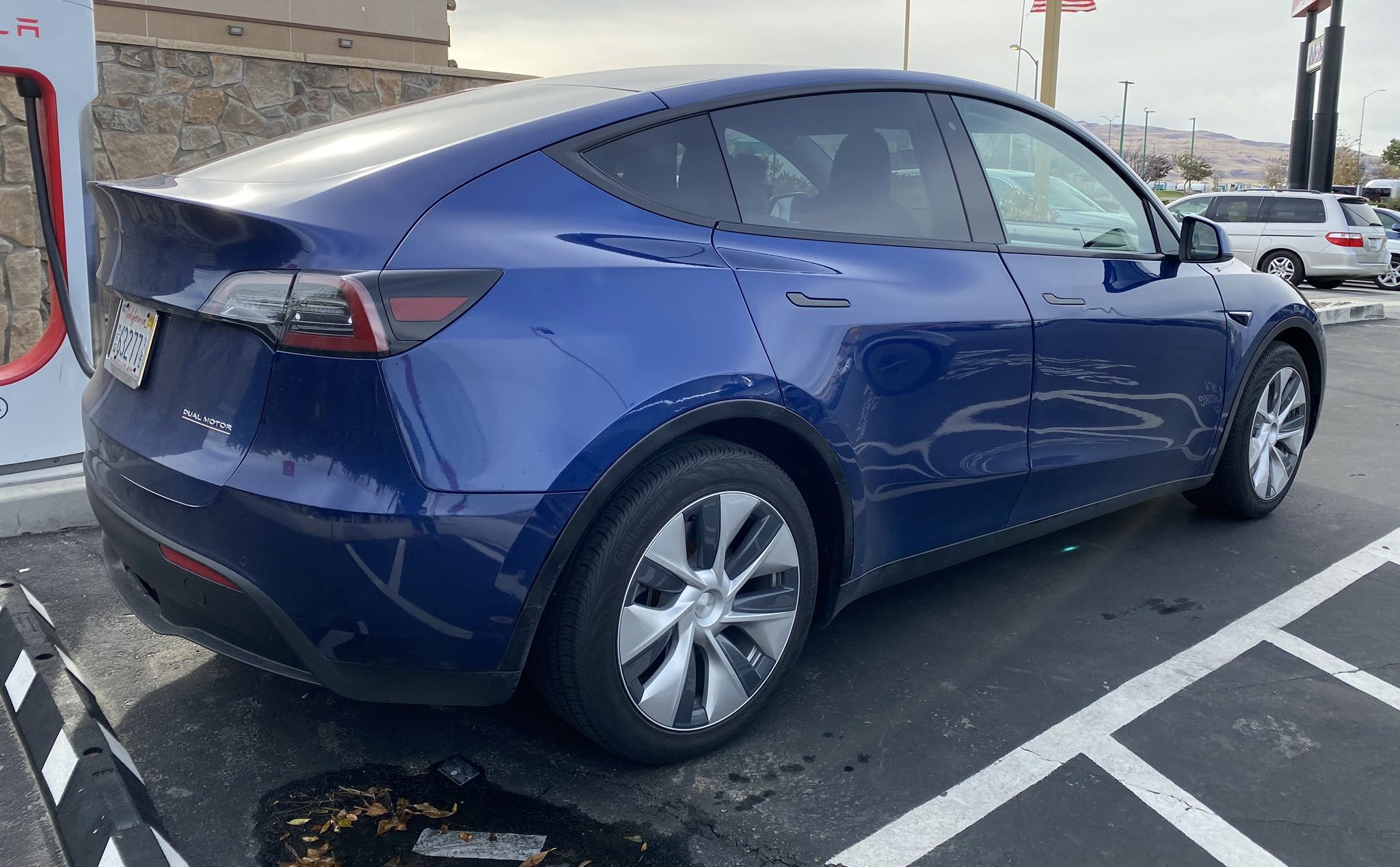
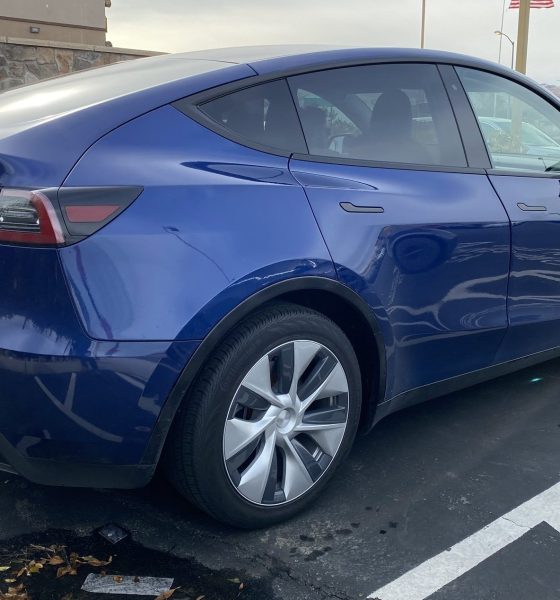
Tesla Model Y sightings have been whetting the appetite of electric vehicle fans but people are most curious about the third-row seats of the much-awaited electric crossover. New images of the Tesla Model Y third-row seats leaked online and give consumers a good idea of how much space is available.
The latest images of the Model Y third-row seats seems that it will not fit two adults or even two kids since the images show that there’s almost no space between the second and third-row seats. One might think the third-row seats are vestigial but upon closer inspection, there are car seat rails and this means occupants can adjust the second-row seats to give passengers enough room to be comfortable.
-
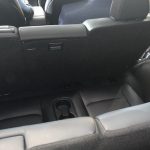
- Tesla Model Y Third-Row Seats (Source: News-coffee.com)
-
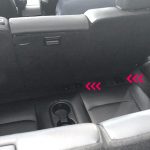
- Tesla Model Y Third-Row Seats (Source: News-coffee.com)
These Tesla Model Y interior images show that the upcoming all-electric crossover is a true seven-passenger vehicle with ample space to boot. Aside from having enough legroom, the bulge of the wheel well also suggests there will be enough shoulder room, and the third-row seats of the Model Y positioned just right to have enough head clearance before the rear windshield curves down.
The third-row seats will be Model Y’s X-Factor when it goes on a head-on collision with the BMW X3, Audi Q5, and the Jaguar I-Pace, which are all just five seaters. They can also influence the decisions of potential converts who want to switch from gas-guzzling roomy SUVs to zero-emission vehicles.
Likewise, the latest images may help those pondering a Model Y vs. Model X scenario. A recent sighting of the Model Y next to a Model X revealed that the two vehicles are similar in size. The electric crossover is about 65 inches tall while its SUV sibling is roughly 66 inches tall but the latter is heftier with a width of 78.7 inches when the mirrors are folded. If one is looking for extra seats to carry more passengers or to simply have that third-row factor, the Model Y will be a logical choice that’s worth the money.
The release of the Model Y is getting closer and closer. Aside from the more frequent sightings of the electric crossover in the wild, the California Air Resources Board published its certification recently. For context, when the Model 3’s CARB certificate was published in 2017, Tesla made the first deliveries of the vehicle 25 days after. The CARB certification specific to the Model Y Performance variant gave consumers a hint of the vehicle’s range and hinted that Model Y deliveries are imminent.
The electric crossover will be offered in three variants. The Performance version will go for $61,000 while the Dual Motor All-Wheel Drive Long Range and the Rear-Wheel Drive Long Range will set customers back by $52,000 and $48,000, respectively.
Production of the Model Y will kick off at Tesla’s Fremont factory this Summer. Likewise, CEO Elon Musk formally launched the Model Y program at the carmaker’s Gigafactory 3 in China. The soon to rise Gigafactory 4 in Germany will also produce the all-electric crossover.
-
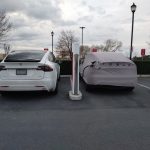
- Tesla Model Y next to a Tesla Model X (Source: Anonymous tip via Teslarati)
-
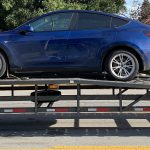
- Credit: Twitter/jzpchen
-
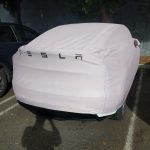
- Tesla Model Y spotted in downtown Mountain View CA (Source: u/gamerlike via Reddit)
-
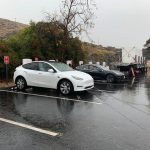
- Tesla Model Y Performance seen at SLO Supercharger in California (Source: Grant Cassingham)
H/T to u/Subculture1000


News
SpaceX just locked up a NASA record no other U.S. spacecraft can touch
SpaceX’s Crew-13 Dragon reached the ISS in under eight hours, and NASA confirmed a record.

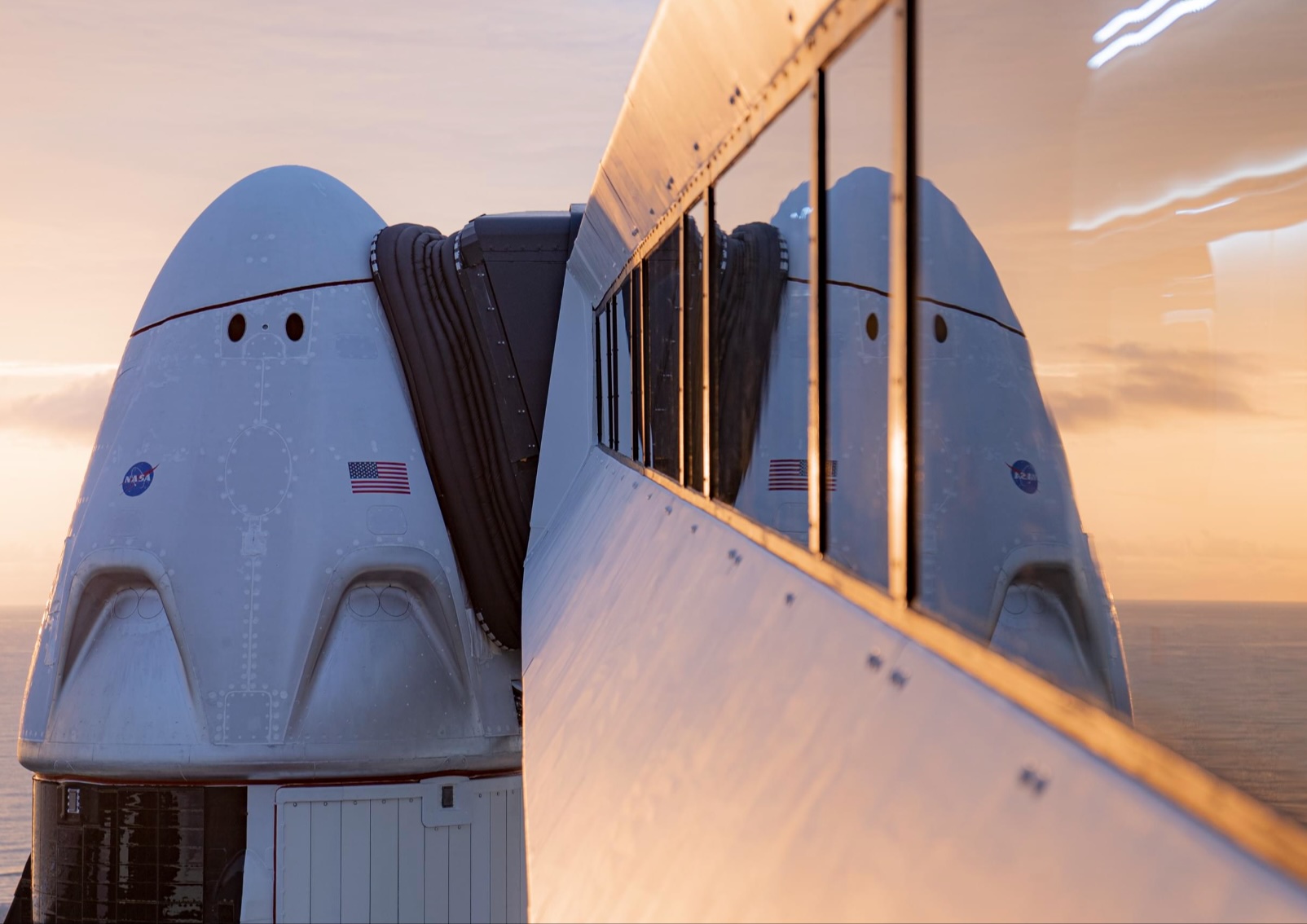
SpaceX now owns every spot on the list of the five fastest trips a U.S. spacecraft has ever made to the International Space Station, and its newest entry beat the old mark by more than four hours.
Crew Dragon Grace docked to the forward port of the station’s Harmony module at 7:05 p.m. ET on October 1, just 7 hours and 55 minutes after lifting off from Space Launch Complex 40 at Cape Canaveral. NASA confirmed the milestone in a space station blog update, writing that the flight “marked the fastest launch‑to‑docking of a U.S. spacecraft in the history of the International Space Station.”
The previous U.S. record also belonged to Dragon. SpaceX’s uncrewed CRS-31 cargo mission reached the station in a little over 12 hours in November 2024. The fastest crewed trip before last week was Crew-11, which took 14 hours and 43 minutes in August 2025, according to Space.com.
A post that Elon Musk reposted on Monday filled out the rest of the ranking. Behind Crew-13, CRS-31 and Crew-11 sit Axiom’s Ax-2 mission at 15 hours and 35 minutes and NASA’s Crew-4 at 15 hours and 44 minutes. All five flew on Dragon.
SpaceX turned a heralding moment for Starship into its greatest
Crew-13 carried NASA astronauts Jessica Watkins and Luke Delaney, Canadian Space Agency astronaut Joshua Kutryk, and Roscosmos cosmonaut Sergey Teteryatnikov. NASA had projected a docking around 8 p.m. ET, as Teslarati reported the day before launch, and Dragon arrived nearly an hour early. Our launch day coverage noted that the flight was lined up to be the quickest Crew Dragon transit yet.
The speed came from timing more than hardware. SpaceX’s Julianna Scheiman said the station “was in an opportune spot in space,” which let Dragon start closing the gap almost immediately after reaching orbit. “This is close to the fastest it could be,” she added. Most Crew Dragon flights still take close to a day, using a series of Draco thruster burns to raise and phase their orbit before arrival.
Dragon’s next job at the station is a departure. NASA said Monday it is targeting 8:05 a.m. ET on Wednesday, October 7, for Crew-12 to undock, setting up a splashdown off the coast of California around 11:34 a.m. on Thursday. Clearing that port makes room for CRS-35, a cargo Dragon carrying the final set of iROSA solar arrays.
Dragon remains NASA’s only operational ride to the station while Boeing’s Starliner stays grounded, and the agency recently added Crew-15, Crew-16 and Crew-17 to SpaceX’s contract in a $946 million modification.


Elon Musk has acknowledged that early discussions with Taiwan Semiconductor Manufacturing Company (TSMC) could bring the company into his ambitious Terafab semiconductor project, signaling a possible partnership with the world’s leading contract chipmaker.
Musk confirmed that early talks are underway, but as of right now, they are “just discussions.” There is no confirmation of a deal nor dismissal of the possibility of one, leaving open the prospect of one of the largest advanced-chip collaborations under discussion in the U.S.
@wholemars Just discussions, but something may come of it
— Elon Musk (@elonmusk) October 3, 2026
The report that speculated on potential discussions between Terafab and TSMC comes from Tim Culpan, who outlined a few ways the collaboration could operate. One is TSMC using the project as an “anchor customer” for future facilities in Texas, potentially contributing process expertise, operational know-how, or capacity while Terafab provides capital, long-term purchase commitments, or both.
Tesla and SpaceX jointly developed the Terafab project, with Intel already participating on the tech side. Elon Musk announced the project in March, and it intends to produce more than one terawatt of AI compute capacity annually once fully built.
Company statements place the first phase at approximately $16.8 billion in cost, with later filings pointing to a total that could reach well into the tens of billions across multiple stages.
Intel joined the effort in April 2026 and is expected to supply its 14A manufacturing process for the full-scale plant.
Musk has said existing suppliers, including Samsung and TSMC, remain important for near-term needs; Tesla already has production arrangements with Samsung for AI5 and AI6 chips, but that future demand from Optimus robots, Cybercab vehicles, and planned space-based data centers will eventually exceed what the global industry can currently deliver.
Terafab is positioned as the long-term answer to that projected shortfall, and Tesla did something similar during COVID to avoid a chip shortage. This is just a much larger-scale solution.
If the partnership were to materialize, it would add TSMC’s industry-leading strategies to a project that already combines Tesla’s and SpaceX’s capital and offtake with Intel’s process technology. For now, the only public confirmation is Musk’s brief acknowledgement that conversations are occurring.
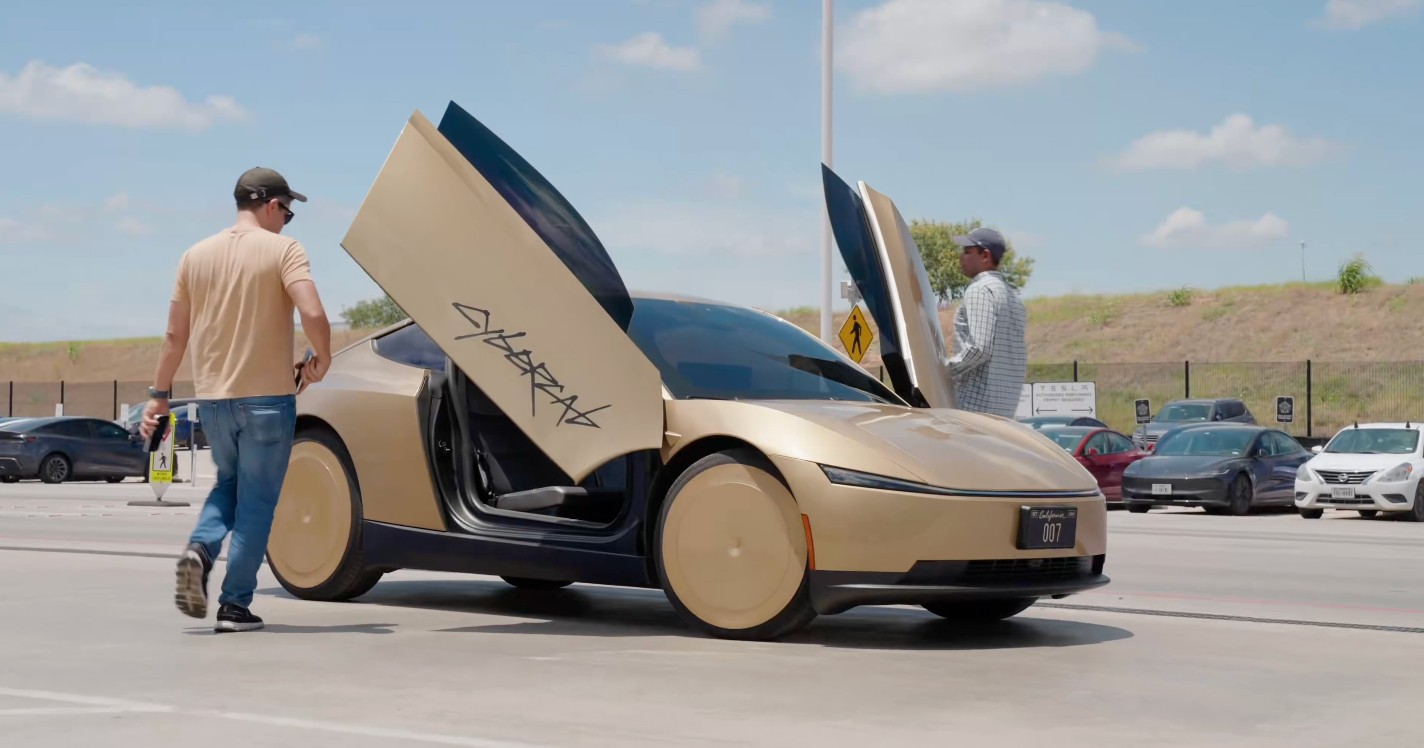
Tesla’s early strategy for charging units operating within its Robotaxi fleet reveals that the company surely has not lost any of that scrappy DNA that took it from an unlikely success story to the most valuable carmaker in the world.
An observer at a Tesla Supercharger in Austin spotted ten total Robotaxi vehicles arrive: one Cybercab and nine Model Y units. A Tesla employee was waiting at the lot and allowed each unit to park itself; every car that arrived had nobody in it.
Tesla wins FCC approval for wireless Cybercab charging system
The Tesla employee would walk around and plug each car in, adjusting the parking if needed:
So look at what I found. This is how Tesla charges unsupervised robotaxis at a public supercharger. Here is a driverless Cybercab showing up with no one in it. There are 9 other Model Ys that showed up too. A Tesla employee is walking around and plugging each of them in. She also moves the cars if they are not positioned well enough to charge. I love this process. One person charges multiple robotaxis at once
— Abhimanyu Yadav (@WorldlyReviewer) October 3, 2026
It’s a very interesting strategy, but extremely understandable at this early point in the Robotaxi program. It’s only been out for about 15 months, and Cybercab just entered the fleet in early September.
On top of that, Tesla is still working tirelessly on its wireless charging apparatus, and a new patent was just published regarding that product last week.
However, this is just another example of how Tesla still has plenty of that scrappy DNA leftover from the “production hell” days, when CEO Elon Musk slept on the floor of the factory, employees were working crazy hours, Tesla was building Sprung Structures to build cars in, and the company was tiptoeing on the brink of bankruptcy.
@Teslarati Sheer magnitude of the entire production system is hard to appreciate. Almost every element of production is >75% automated. Only wire harnesses & general assembly, which are <10% of production costs, are primarily manual.
— Elon Musk (@elonmusk) October 12, 2020
For now, Tesla is utilizing a simple system for recharging its ride-hailing vehicles, and that is a Tesla employee doing it manually until another solution presents itself. Sure, it’s not the most high-tech thing, and it certainly is not what people might have expected at this point in time, but it works, and it’s keeping the entire suite running.

SpaceX just locked up a NASA record no other U.S. spacecraft can touch

Elon Musk teases TSMC as potential Terafab partner


