News
Tesla, EV makers leave gas cars in the dust with new German stimulus bill

Tesla and other electric vehicle manufacturers who have a presence in Germany are poised to benefit from the country’s new stimulus bill that is worth €130 million. The bill offers specific incentives for sustainable vehicles, while no benefits are provided for cars equipped with the internal combustion engine.
The current EV incentive is €3,000, but German officials plan to double that figure to €6,000 if the car costs less than €40,000 brand new. Also, adjusted tax benefits for EVs are now available to any vehicle that costs €60,000. Previously, the limit was €40,000.
German state governments that host automotive manufacturers initially proposed incentives of €3,000 for internal combustion engine cars, and €4,000 for electric, hybrid, and fuel cell vehicles, E Auto Info reported. Another €1,000 would be given to anyone who scrapped a gas-powered car, with an additional €1,000 if an EV was purchased after getting rid of the petrol-powered vehicle.
This proposal was declined, and Germany favored an incentivized system that allowed electric vehicle owners to have more benefits. Meanwhile, gas-powered car owners would hold no financial benefit driving their vehicles. With this, the German government appears to be encouraging EV ownership by offering incentives for driving Earth-friendly automobiles.
The only incentive in the new stimulus bill that would benefit drivers of ICE vehicles is the lowering of Value Added Tax, or VAT. This has been decreased from 19% to 16%, but this incentive also applies to electric cars. To put this into perspective, a 3% drop in VAT and a €6,000 EV incentive would bring the cost of the Tesla Model 3 Standard Range+ from €40,990 to €36,881 after taxes.
Ultimately, Tesla stands to benefit significantly from the reformed stimulus package.
Tesla is currently in the process of building its Giga Berlin facility. As of June 3, construction crews on the site have laid the first layers of concrete, and the groundbreaking of the facility is underway.
Giga Berlin will produce 500,000 vehicles annually. With this number of cars rolling out of the facility, Europe will have a dedicated Tesla production plant in the region, alleviating the need for vehicles to be imported.
German citizens stand to benefit the most from Giga Berlin. Not only is the Gigafactory located in the country, but the government incentive plan will benefit consumers who choose to drive electric cars. Not only will this move stand to help drivers, but Tesla will likely see an increase in demand due to the tax breaks and government incentives.
The full list of the stimulus package’s benefits are listed below:
- Electric vehicle tax exemption prolonged from ending in 2025 to end 2030
- Increase of vehicle tax for CO2 heavy vehicles
- A decrease in electricity cost to consumers and business
- Support of the car industry (including suppliers) R&D of 2 billion in the next two years (this is general, includes ICE)
- Support of fleet electrification for social NGOs worth €200 million
- Support of EV R&D, charging infrastructure and battery manufacturing worth 2.5 billion euros (plan to require every gas station to have charging points)
- Program to electrify commercial and public bus and truck fleets worth 1.2 billion until the end of 2021, including a subsidy for electric buses and their charging infrastructure.
- Lowering of VAT from 19% to 16% for the second half of 2020
- Increase of EV subsidy from €3,000to €6,000 until the end of 2021


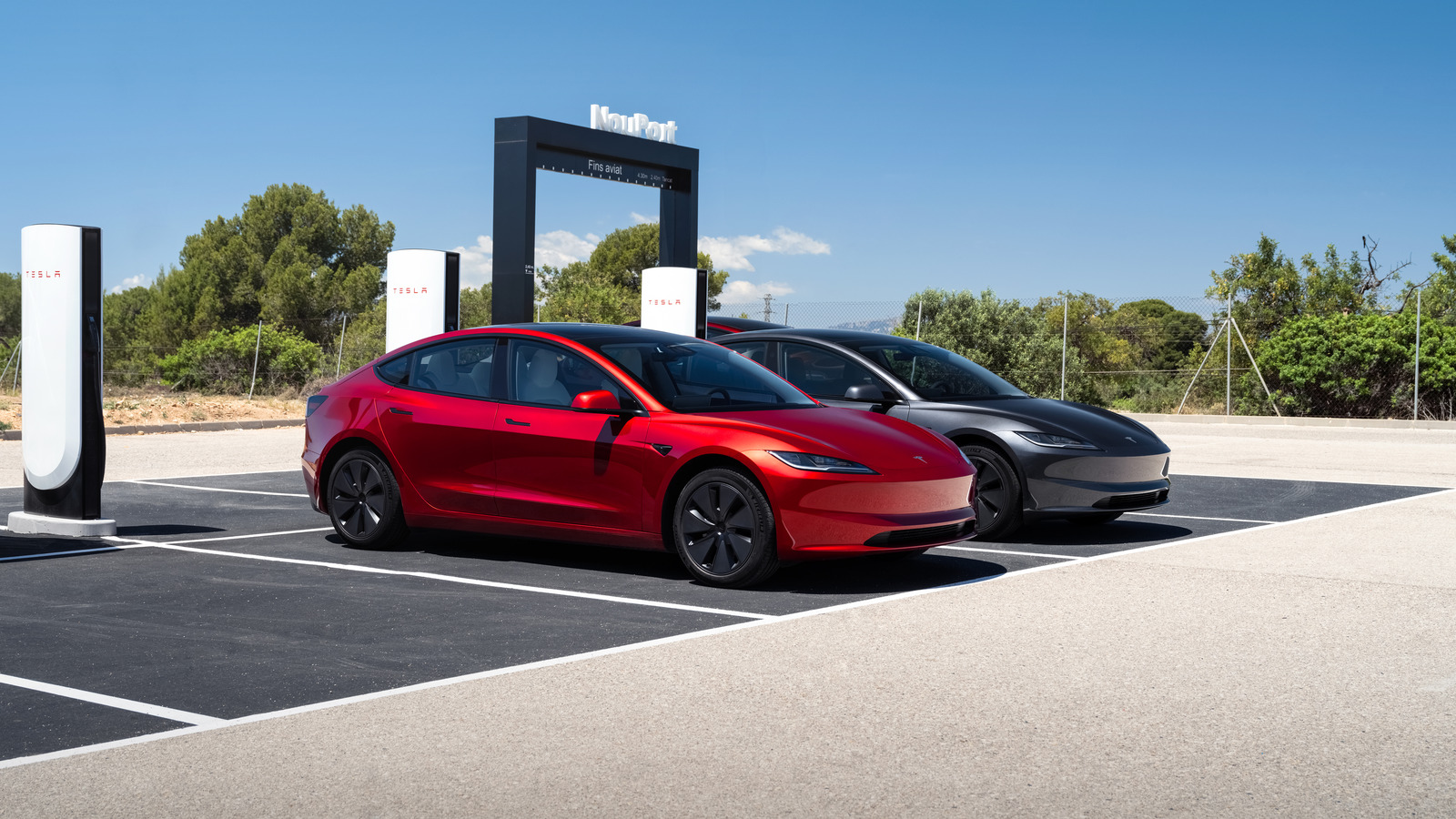
The Tesla App is now giving owners a better indication of what to expect when visiting a Supercharger site, as it is now sharing Site Maps in the app itself, making the feature no longer exclusively available in the car.
Tesla owners can now preview a Supercharger’s layout and live stall status from their phone thanks to the App’s new software version, v4.61.0. Zooming into a supported Supercharger on the charging map now switches the familiar street view into a site-specific map that shows stall positions, occupied bays, out-of-service posts, and a live count of open Superchargers.
It will even show you which specific Tesla model is charging at each occupied stall.
You can now see Live Site Maps in the latest Tesla app (4.61.0.) pic.twitter.com/JIL8QzR8hu
— Zack (@BLKMDL3) September 18, 2026
This is the same view drivers first saw inside the car with the 2025 Holiday Update, which started as a pilot for Tesla in California and Texas. Those early maps showed layout, nearby amenities, and the status of each operational stall. The feature has spread to most Superchargers in the U.S., but now Tesla wants the feature available through the Smartphone App, which is now rolling out to owners.
The in-vehicle screen maps remain a richer 3D canvas and originally required AMD Ryzen infotainment hardware, which left many Intel-based Model 3 and Model Y owners without the view. The app version removes that hardware barrier, so any owner can now get a preview of their upcoming Supercharger stop on their phone.
Anyone with the updated version of the app can open a Site Map on their phone. The feature has provided some additional peace of mind to anxious travelers and those who might be looking for a place that is less congested for faster charging speeds. It is a meaningful addition to many owners, especially for trips to unfamiliar locations.
You can now pick a Supercharger location that might be more aligned with what you are looking for or need: you can pick a site based on what stalls are open, where ADA stalls sit, how you will pull in, and more, instead of circling a crowded lot after arriving. Owners of older cars now have access to the feature without having to purchase a new vehicle altogether.
Site Mpas will not reserve a stall, nor will it change how Fast Charging works. Tesla does something simpler and more useful by giving owners a dedicated preview of the Supercharger they’re about to charge, turning an unknown parking lot into a place that may seem more familiar thanks to the preview.
Interested in ordering a Tesla? Use my referral code for three free months of Full Self-Driving (Supervised) here.
Investor's Corner
Tesla Optimus Gen 3 shows off a cleaner, factory-ready design in new app discovery
Renders hidden inside Tesla’s Android app show Optimus Gen 3’s design before any official reveal.

![Tesla Optimus Gen 3 [Credit: Tesla]](https://www.teslarati.com/wp-content/uploads/2026/03/tesla-optimus-gen3-diner.jpg)
Tesla may have accidentally given a first look at its newest Optimus Gen 3 humanoid robot when photos were found in the Tesla smartphone app.
Design files tucked inside a recent Android version of the Tesla app appear to show the third generation humanoid robot next to the older Gen 2.5 prototype. The assets were extracted from the app package by Tesla community member @wholemars, who posted the renders on X late Tuesday night before deleting them. The Tesla Newswire reshared the side by side comparison on Wednesday, and the images have circulated widely since.
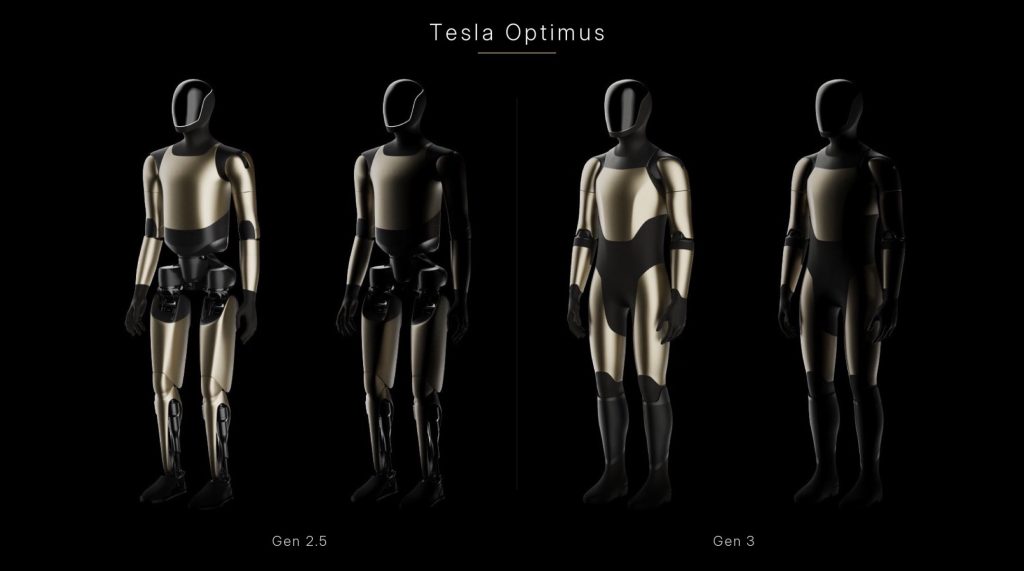
Tesla Optimus Gen 2.5 vs Gen 3 comparison via @WholeMars on X
The files are labeled “gen3” and were built as models for Tesla app’s own interface, as validated directly by Grok to be official.
The comparison shows a robot that looks built for a factory line rather than a lab bench. Gen 2.5’s exposed mechanical linkages and gold plating on the knees and shins are gone. In their place, Gen 3 uses matte black fairings on the lower legs, paired with a more contoured champagne gold body. Flexible covers now seal the joint where the torso meets the upper thighs, keeping bearings and moving parts sealed from debris and unnecessary contact.
The body panels fit more tightly, and the hands, which Tesla has said carry 22 degrees of freedom, look far more refined than those on earlier units.
This most recent leak fills a gap Tesla has left open for most of the year. Elon Musk said on March 31 that Optimus 3 was walking around but needed “some finishing touches” before it could be shown, a delay Teslarati covered when Tesla missed its first quarter reveal target. Musk later said Tesla would hold the design back until closer to production, partly to keep competitors from copying it. No reveal date has been announced.
The app itself has been preparing for Optimus for months. In July, code in the Tesla app pointed to a dedicated robot phone key, a consent screen for collecting video and spatial data while Optimus works inside a home, and an alert system for low battery and mechanical faults. Finished 3D models of Gen 3 suggest the interface owners will eventually use is moving past placeholder code toward something Tesla intends to ship.
Manufacturing is moving in parallel. Tesla tore out the original Model S and Model X lines at Fremont this summer to make room for Optimus production, with a planned capacity of one million robots a year. At Giga Texas, the steel frame of a dedicated Optimus factory is nearing completion ahead of a targeted 2027 start, with Musk pointing to an eventual output of 10 million units annually.
News
Tesla Semi lands the biggest electric truck deal in U.S. history
Tesla leads a record 2,500 truck order, but not every truck will be a Semi.
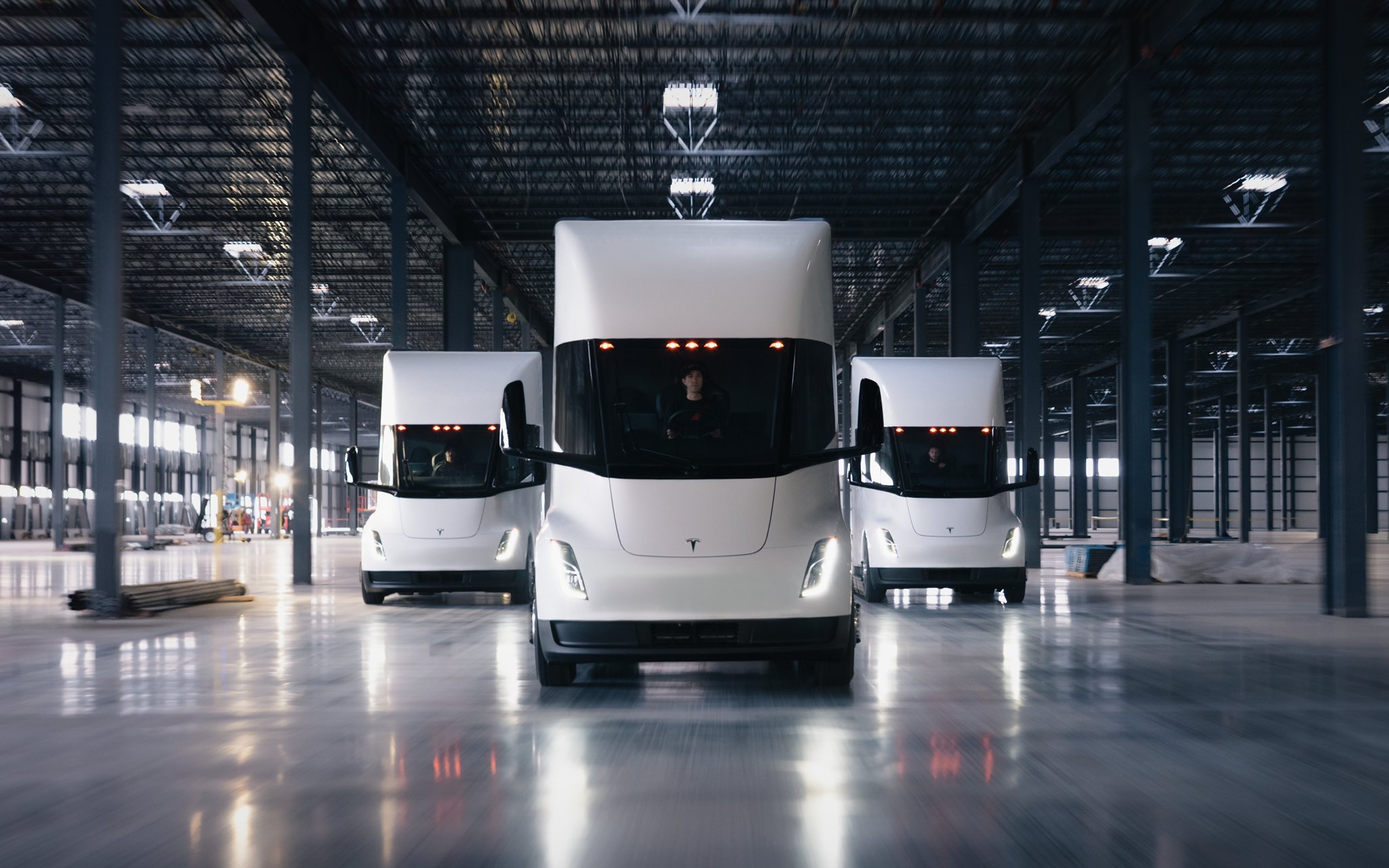
Tesla has landed the largest electric truck order in U.S. history. ZET SCALE, a new alliance of shippers and carriers, named Tesla its primary manufacturer on Tuesday for an initial order of 2,500 electric Class 8 trucks. The deal alone would nearly double the number of electric heavy trucks operating in the country.
According to the press release from Catalyst Mobility, the nonprofit formerly known as CALSTART, Kenworth, RIDE and Volvo were also selected as secondary manufacturers that carriers can pick if their operations call for it. No split between the four brands has been published, so the exact number of Semis in the order is not yet known.
Tesla was selected as the primary OEM for the largest electric Class 8 order in the US by ZET SCALE, a new shippers’ alliance
With 2,500 Semis on order, this will double the entire US electric Class 8 fleet
We’re serious about scale, and ZET SCALE is too!… pic.twitter.com/IiTAdzgken
— Tesla Semi (@tesla_semi) September 22, 2026
Tesla won the top slot through a competitive request for proposals. The alliance, which Catalyst Mobility runs with the Smart Freight Centre, scored bidders on price, range, charging capability and production capacity. Pooling freight demand from founding shippers, including Microsoft and PepsiCo, let every truck maker bid lower than it would for a single fleet. “The Tesla Semi is designed for lower cost per mile operations than diesel,” said Dan Priestley, director of the Tesla Semi program, as noted in the press release.
The financing is built to pull in carriers who have avoided electric trucks. ZET Financial is issuing the purchase order for all 2,500 units and will place them with fleets through a fair market value lease. The trucks will be deployed over the next few years across 10 freight hubs in Los Angeles, Stockton, Bakersfield, Seattle and Tacoma, Houston, Dallas, San Antonio, Chicago, Atlanta, and the Newark and New York area. ZET SCALE says the first order is only the opening round, with a longer term goal of 10,000 trucks or more.
Even if Tesla ends up with only a majority share, it would still be the biggest Semi deal to date. Einride’s 500 unit order in August was the previous record, and WattEV’s 370 truck order in May was the largest California deal at the time. Einride’s CEO has since said he expects all 500 trucks delivered by the end of 2027.
The announcement lands two days before Tesla formally inaugurates its Semi factory in Nevada on September 24. The 1.7 million square foot plant sits next to Gigafactory Nevada’s 4680 cell lines and is designed for 50,000 trucks a year.

Tesla App now shows you what your Supercharger will look like upon arrival
![Tesla Optimus Gen 3 [Credit: Tesla]](https://www.teslarati.com/wp-content/uploads/2026/03/tesla-optimus-gen3-diner-80x80.jpg)
Tesla Optimus Gen 3 shows off a cleaner, factory-ready design in new app discovery


